科技成果转化

Search documents
地方两会时间开启 谋划2026年稳增长“施工图”
Xin Hua She· 2026-01-28 13:51
Core Insights - Local governments in regions such as Zhejiang, Beijing, and Guangdong are outlining their development plans for the next five years, focusing on technology innovation, modern industrial systems, and effective demand potential [1][2] Economic Growth Targets - Various regions have set their economic growth targets for 2026, with Tianjin and Guangdong aiming for 4.5%, Beijing and Henan around 5%, Hebei above 5%, and Zhejiang between 5% and 5.5% [1] Consumer Spending and Service Sector - Key strategies include promoting consumption upgrades, enhancing service consumption potential, and fostering new growth points in consumption. Beijing plans to support education, health, and elderly care services, while Tianjin aims to improve service supply in areas like health and home care [2] Technology Innovation and Industrial Development - Strengthening technology innovation and building a modern industrial system are priorities. Guangdong aims to create a globally influential industrial technology innovation center, while Beijing focuses on accelerating the application of major technological achievements [2][3] Artificial Intelligence Development - Several regions are emphasizing the promotion of artificial intelligence applications. Zhejiang targets a revenue growth of over 20% in its AI core industry, projecting revenues to exceed 800 billion yuan by 2026 [3] Emerging Industries - Regions are working to enhance their modern industrial systems by developing new emerging industries such as new materials, renewable energy, and biomedicine. Zhejiang and Guangdong are both focused on expanding these sectors [4] Policy Support and Economic Growth - Local governments are committed to expanding domestic demand and accelerating the development of new productive forces, combining policy support with innovation to stimulate new economic growth [5]
2026北京两会丨对话市政协委员赵燕:AI不只是赋能生物制造,更是产业逻辑的重塑
Bei Jing Shang Bao· 2026-01-28 05:20
Core Viewpoint - Huaxi Bio, a leading company in the biomanufacturing sector, emphasizes the importance of innovation and collaboration among research institutions, enterprises, and government to drive the development of the biomanufacturing industry and achieve market transformation [3][8]. Industry Insights - The competition in the hyaluronic acid market is intensifying, with a focus on technological accumulation and long-term development paths among leading companies [3]. - The industry is shifting from a focus on single products to systemic solutions, highlighting the need for creativity and responsible marketing practices [6]. - The current market is characterized by a lack of innovation, with many companies resorting to imitation rather than developing unique solutions [6]. Talent Development - The biomanufacturing sector requires talent with interdisciplinary knowledge, including biology, engineering, AI, and bioinformatics, to meet the demands of future industry growth [7]. - Attracting creative and self-driven talent in synthetic biology is essential, necessitating a collaborative effort from government, enterprises, and individuals [7]. Policy and Government Role - Beijing has implemented policies to accelerate the innovation and market transformation of the synthetic biology manufacturing industry, demonstrating a strong governmental commitment [8]. - Local initiatives, such as those in Changping District, aim to attract relevant enterprises and talent, creating a multi-layered support system for the industry [8]. Market Transformation Challenges - The main challenge for innovative companies is the effective market transformation of new products, often hindered by strict intellectual property protection and insufficient collaboration mechanisms with research institutions [9]. - A call for government intervention to establish rules and standards for better cooperation between researchers and enterprises is emphasized, aiming to increase the current low conversion rate of research outcomes [9]. AI's Impact on Biomanufacturing - AI is becoming a foundational capability in the biomanufacturing and biotechnology sectors, with companies needing to embrace AI to survive and thrive [10]. - The integration of AI is expected to reshape business logic and organizational structures, potentially leading to exponential growth in the industry [11]. - AI has the potential to bridge the gap between China and developed countries in the biotechnology field, facilitating innovation and enhancing data-driven decision-making [11].


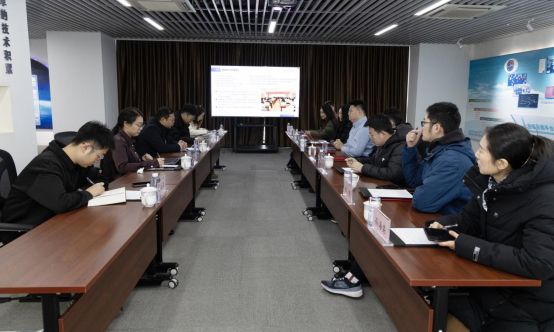
清华博士团队走进烟台中科网络技术研究所开展社会实践调研
Qi Lu Wan Bao· 2026-01-28 03:00
支队成员一行对网络所的精心安排表示感谢,刘依童博士表示,此次社会实践活动的主题是"以科技领 军企业驱动产业创新"。团队将结合前期调研成果与实地调研感受,积极搭建起清华大学与网络所之间 的人才桥梁,助力校地合作务实深化。双方还就人才培养、科技成果转化、实践基地建设等领域的深化 协作进行了充分探讨,力求探索科研攻关、成果转化与人才共育的新模式,实现资源共享、优势互补。 座谈现场还举行了青年科技联络员聘任仪式,王海洋所长代表网络所向支队成员颁发聘书,标志着双方 人才交流与合作迈入常态化阶段。 网络所将以此次交流为契机,持续构建常态沟通机制,广聚英才、引智赋能,推动各项合作落地见效, 为服务国家和区域重大战略任务、促进区域经济高质量发展贡献更多力量。(通讯员韩馨茹) 1月22日上午,清华大学"社践烟程,E箭凌云"社科学院-电子系赴山东烟台联合支队走进烟台中科网络 技术研究所开展社会实践调研。网络所所长王海洋,所长助理初杰、董一凡等陪同活动,双方就人才培 养、科技成果转化、实践基地建设等内容开展了深入座谈交流。 座谈会伊始,王海洋代表网络所对支队成员的到来表示热烈欢迎,并介绍了网络所的战略定位、发展历 程与技术成果。他 ...
齐翔腾达(002408.SZ):公司稳步向PMMA等下游高性能树脂材料领域延伸,已与科研院所开展PMMA技术小试合作
Ge Long Hui· 2026-01-28 01:29
Core Viewpoint - The company is actively exploring new application scenarios for its products, focusing on emerging markets and technological advancements [1] Group 1: Product Development - The company is expanding the application of acetone in electronic cleaning, anhydride in new environmentally friendly board materials, high-purity anhydrous tert-butanol in semiconductor photoresist diluents, and propylene oxide in new energy vehicle seat filling materials [1] - The company is leveraging its existing MMA product advantages to gradually extend into downstream high-performance resin materials, specifically PMMA [1] Group 2: Technological Innovation - The company is advancing key technological breakthroughs through independent research and collaboration with research institutions and universities [1] - The company has initiated small-scale PMMA technology trials in partnership with research institutions, with plans to progress to pilot testing and industrialization research [1]

税收数据显示:2025年高技术产业销售收入同比增长13.9%
Zhong Guo Zheng Quan Bao· 2026-01-28 00:03
Group 1 - The core viewpoint of the articles highlights the accelerated integration of technological innovation and industrial innovation in China by 2025, with significant growth in strategic emerging industries and enhanced conversion of scientific achievements [1][2] Group 2 - In terms of strategic emerging industries, sales revenue in high-tech industries is projected to grow by 13.9% year-on-year in 2025, with high-tech manufacturing and high-tech services increasing by 10.1% and 16.6% respectively [1] - Key sectors such as lithium-ion battery manufacturing, service robots, industrial robots, and biopharmaceuticals are expected to see remarkable sales revenue growth of 25.1%, 60.7%, 17.4%, and 7.7% year-on-year respectively [1] Group 3 - The sales revenue of the scientific and technological service industry is anticipated to increase by 20.4% year-on-year in 2025, indicating a stronger application of scientific achievements [1] - The sales revenue of knowledge-intensive industries, particularly those focused on intellectual property (patents), is projected to grow by 10.7% year-on-year [1] - The national technology contract transaction amount is expected to rise by 19.1% year-on-year, reflecting active innovation elements [1] Group 4 - The core industries of the digital economy are expected to see a sales revenue increase of 9.4% year-on-year in 2025, with digital product manufacturing and digital technology application industries growing by 9.4% and 13.8% respectively [2] - The amount spent by enterprises on digital technology is projected to increase by 9.6% year-on-year, with manufacturing sector spending rising by 10.4% [2] Group 5 - Traditional industries are accelerating their transformation and upgrading, with automation being a key focus area; spending on automation equipment in sectors like petrochemicals, steelmaking, and ironmaking is expected to grow by 17.3%, 11.7%, and 12.7% year-on-year respectively [2] - The data reflects significant achievements in China's technological self-reliance and the cultivation of new productive forces, contributing to high-quality development [2]
2025年我国科技创新与产业创新融合加快
Zheng Quan Ri Bao· 2026-01-27 23:08
Group 1 - The core viewpoint of the news is that by 2025, China's integration of technological innovation and industrial innovation is accelerating, showcasing significant growth in strategic emerging industries and enhanced technology transfer [1][2][3] Group 2 - Strategic emerging industries are becoming a new engine for economic growth, with high-tech industry sales expected to increase by 13.9% year-on-year, driven by sectors like lithium battery manufacturing, service robots, industrial robots, and biopharmaceuticals, which are projected to grow by 25.1%, 60.7%, 17.4%, and 7.7% respectively [1] - The sales revenue of the scientific and technological service industry is anticipated to rise by 20.4% year-on-year, indicating a stronger emphasis on the application of scientific achievements [2] - The digital economy's core industries are expected to see a sales revenue increase of 9.4%, with manufacturing and application of digital technologies growing by 9.4% and 13.8% respectively, reflecting rapid development in digital industrialization [2] - Traditional industries are accelerating their transformation, particularly in automation, with significant increases in procurement of automation equipment in sectors like petrochemicals, steelmaking, and ironmaking, which are expected to grow by 17.3%, 11.7%, and 12.7% respectively [2] Group 3 - The acceleration of the integration of technological and industrial innovation is expected to enhance total factor productivity, promote high-quality economic development, optimize industrial structure, and boost employment and investment, contributing to a virtuous cycle of economic growth [3] - The data reflects solid achievements in China's self-reliance in technology and the cultivation of new productive forces, supported by precise policy measures that facilitate the gathering of innovative elements [3]
去年我国技术合同交易额增长近两成 科技成果转化应用力度加大
Jing Ji Ri Bao· 2026-01-27 22:13
此外,传统行业加快转型,自动化是重要方向。2025年,石化、炼钢、炼铁等传统行业采购自动化设备 金额同比分别增长17.3%、11.7%和12.7%。 (文章来源:经济日报) 在数字技术与实体经济融合方面,2025年,数字经济核心产业销售收入同比增长9.4%,其中与数实融 合相关的数字产品制造业、数字技术应用业同比分别增长9.4%和13.8%;企业采购数字技术金额同比增 长9.6%,其中制造业采购数字技术金额同比增长10.4%。 发票数据显示,2025年,我国高技术产业销售收入同比增长13.9%,其中高技术制造业、高技术服务业 同比分别增长10.1%和16.6%。锂离子电池制造业、服务消费机器人制造业、工业机器人制造业和生物 药品制造业销售收入分别同比增长25.1%、60.7%、17.4%和7.7%。 本报北京1月27日讯(记者董碧娟)国家税务总局27日公布的税收数据显示,2025年,我国科研技术服 务业销售收入同比增长20.4%,科技含量较高的知识产权(专利)密集型产业销售收入同比增长 10.7%,全国技术合同交易金额同比增长19.1%。系列数据反映我国科技成果转化应用力度加大,创新 要素保持活跃并加快集聚。 ...
北京市发改委副主任张鑫做客北京青年报两会直播间:开局之年答好“经济卷”和“民生卷”
Xin Lang Cai Jing· 2026-01-27 22:08
关键词:融合 (来源:千龙网) 2026年是"十五五"开局之年,做好经济工作,迈好"十五五"时期发展第一步,意义重大。 昨天(27日),北京市发展和改革委员会党组成员、副主任、新闻发言人张鑫做客北京青年报两会直播 间,用引领、融合、突破、接续四个关键词串接起对计划报告的理解,深入解读今年北京如何统筹答好 开局之年的"经济卷"和"民生卷"。 关键词:引领 力争今年固定资产投资实现破万亿 张鑫告诉北京青年报记者,在今年本市的具体工作中,始终把高质量发展放在重要位置,坚持首善标 准、服务全局,坚持稳中求进、提质增效,坚持以人为本、守牢底线,坚持有效市场和有为政府相结 合,更加突出规划、目标、项目引领,政策、资源、工作融合,改革、创新、开放突破,一件事情接着 一件事情办、一步一步坚定走,统筹答好开局之年的"经济卷"和"民生卷"。"如果用几个词来概括今年 的特点,我觉得是'引领''融合''突破''接续'。"张鑫说。 第一个关键词是"引领"。主要体现在三个方面:一是规划引领。"今年是'十五五'开局之年,《北京市国 民经济和社会发展第十五个五年规划纲要(草案)》全文正接受北京市十六届人大四次会议审查,审查 通过后我们将做好 ...
税收数据显示 2025年高技术产业销售收入同比增长13.9%
Zhong Guo Zheng Quan Bao· 2026-01-27 21:00
Group 1 - The core viewpoint of the news is that by 2025, China's strategic emerging industries will experience significant growth, with a focus on the integration of technological innovation and industrial development, leading to a robust performance in high-tech sectors [1][2] - In 2025, sales revenue in China's high-tech industries is projected to grow by 13.9% year-on-year, with high-tech manufacturing and high-tech services increasing by 10.1% and 16.6% respectively [1] - Key sectors such as lithium-ion battery manufacturing, service robots, industrial robots, and biopharmaceuticals are expected to see remarkable sales growth, with increases of 25.1%, 60.7%, 17.4%, and 7.7% respectively [1] Group 2 - The sales revenue of China's scientific and technological service industry is anticipated to rise by 20.4% year-on-year in 2025, indicating a stronger application of technological achievements [1] - The sales revenue of knowledge-intensive industries, particularly those focused on intellectual property, is expected to grow by 10.7% year-on-year, reflecting an increase in the conversion of scientific achievements [1] - The total transaction amount of technology contracts nationwide is projected to increase by 19.1% year-on-year in 2025, showcasing the active aggregation of innovative elements [1] Group 3 - The digital economy's core industries are expected to see a sales revenue increase of 9.4% year-on-year in 2025, with related digital product manufacturing and digital technology application industries growing by 9.4% and 13.8% respectively [2] - The amount spent by enterprises on digital technology is projected to grow by 9.6% year-on-year, with manufacturing sector spending increasing by 10.4%, indicating a significant upgrade in industrial digitalization [2] - Traditional industries are accelerating their transformation, with notable increases in the procurement of automation equipment in sectors like petrochemicals, steelmaking, and ironmaking, with growth rates of 17.3%, 11.7%, and 12.7% respectively [2] Group 4 - The tax data reflects a strong performance in high-tech industries and improved efficiency in the conversion of scientific achievements, indicating solid progress in China's technological self-reliance and the cultivation of new productive forces [2] - Under precise policy support, the accelerated aggregation of innovative elements is driving the upgrade of industrial structures towards higher-end development, providing strong and sustainable internal momentum for high-quality growth [2]
以专业力量架起产业与资本桥梁
Xin Lang Cai Jing· 2026-01-27 20:00
Core Viewpoint - The development of state-owned listed companies is crucial for the high-quality economic growth in Hunan, with a focus on enhancing their market value through mergers and acquisitions [1] Group 1: Policy and Initiatives - Liu Zhiqing's proposal to encourage state-owned listed companies in Hunan to enhance their market value has received positive responses from the Hunan Provincial Party Committee's Financial Office and the Provincial State-owned Assets Supervision and Administration Commission [1] - The market-oriented incentive mechanisms for state-owned listed companies in Hunan are gradually improving, with market value assessments included in management evaluations and orderly progress in mergers and acquisitions [1] Group 2: Professional Contributions - Liu Zhiqing has led a team that has participated in the cultivation of Hunan enterprises for listing, leaving a mark on the growth trajectories of well-known companies such as Shuiyang Co. and Aerospace Huanyu [1] - The suggestion for a "special zone policy" for the transformation of scientific and technological achievements has effectively promoted the landing of innovative results within the province [1] Group 3: Future Focus - Liu Zhiqing aims to focus on the market-oriented reform of data elements as a new avenue for future work, emphasizing the need for both professional knowledge and grassroots understanding [2]