
自由贸易协定

Search documents
美关税压力下印欧自贸谈判提速
Jing Ji Ri Bao· 2025-09-17 22:07
Core Viewpoint - The pressure from the U.S. tariff measures has accelerated the willingness and demand for India and the EU to expedite free trade negotiations, with a goal to reach an agreement by the end of the year [1][4]. Group 1: Trade Negotiation Progress - India and the EU are expected to hold at least 10 meetings in the coming months to negotiate a free trade agreement [1][4]. - The EU has become one of India's most important trading partners, with bilateral trade in goods projected to reach $137.5 billion in the fiscal year 2024-2025, surpassing the $132 billion trade between India and the U.S. [2]. - Approximately 6,000 European companies operate in India, supporting 2 million direct jobs and 6 million indirect jobs [2]. Group 2: Historical Context - Negotiations for the bilateral free trade agreement began in 2007 but faced delays due to significant differences in economic structures and core demands [2]. - Talks were stalled in 2013 over tariff disagreements on products like automobiles and wine, but were resumed in 2022 with new topics such as geographical indications and investment protection [2]. Group 3: Current Negotiation Challenges - Key areas of disagreement include market access for agricultural and dairy products, rules of origin, food safety standards, and labor and environmental obligations [6][7]. - India is cautious about opening sensitive markets, particularly in agriculture, and seeks to exclude products like rice, sugar, and dairy from negotiations [6]. - The EU demands India to lower tariffs and non-tariff barriers, particularly for automobiles and medical devices, while also emphasizing high standards for intellectual property protection and sustainable development [7]. Group 4: Impact of U.S. Tariffs - The U.S. has imposed significant tariffs on Indian exports, with rates reaching up to 50%, creating direct pressure on India [3][4]. - The EU is also affected by U.S. tariffs, particularly on steel and aluminum, which has intensified the urgency for India and the EU to finalize their trade agreement [3][4]. Group 5: Future Considerations - The implementation of the EU's carbon border tax, effective January 1, 2026, poses a significant challenge for India, as it will affect high carbon emission products exported to the EU, potentially increasing costs and reducing competitiveness [7]. - The U.S. is closely monitoring the India-EU negotiations and may influence the process by leveraging its trade relations with both parties [8].
南共市与欧洲自贸联盟签署自贸协定
Shang Hai Zheng Quan Bao· 2025-09-17 06:08
Core Points - Argentina and Brazil, along with other founding members of the Southern Common Market (Mercosur), signed a free trade agreement with Norway, Switzerland, and other members of the European Free Trade Association, creating a free trade area covering approximately 300 million people and an economic output exceeding $4.3 trillion [1][1][1] Group 1: Trade Agreement Details - The free trade agreement will improve market access for over 97% of export products between the parties, promoting trade growth and benefiting both businesses and individuals [1][1] - The agreement encompasses trade in goods, services, investment, and intellectual property, creating more opportunities for small and medium-sized enterprises [1][1] - The dialogue for the free trade agreement began in March 2015, with 14 rounds of negotiations held, culminating in the completion of negotiations on July 2 this year in Buenos Aires [1][1] Group 2: Historical Context - The Southern Common Market was established in March 1991 with the signing of the Asunción Treaty by Argentina, Brazil, Paraguay, and Uruguay, officially launching in January 1995 [1][1] - The European Free Trade Association was founded in 1960, currently comprising Switzerland, Norway, Iceland, and Liechtenstein [1][1]
南共市与欧洲自贸联盟在里约热内卢签署自贸协定
Zhong Guo Xin Wen Wang· 2025-09-17 00:04
Core Points - The Southern Common Market (MERCOSUL) and the European Free Trade Association (EFTA) signed a Free Trade Agreement (FTA) in Rio de Janeiro, creating a trade zone covering approximately 300 million people with a combined economic output exceeding $4.3 trillion [1][2] - The FTA encompasses various areas including goods and services trade, investment, intellectual property, government procurement, competition policy, and sustainable development, improving market access for over 97% of export products between the two regions [1] - The first round of negotiations for the FTA began in June 2017, with a total of 14 rounds held, and the agreement is expected to be finalized by July 2025 [1] Industry Impact - The signing of the FTA is described as the largest expansion of Brazil's foreign trade network in recent years, with Brazil's exports and imports increasing by 152% since 2023 due to favorable trade policies [2] - Brazil aims to complete negotiations with the UAE, resume talks with Canada, and expand existing agreements with Mexico and India to further broaden its market reach [2]
特朗普准备重谈《美墨加协定》,此前关税豁免暗藏玄机
Jin Shi Shu Ju· 2025-09-05 01:38
Group 1 - The United States is preparing to initiate the largest free trade agreement renegotiation, the US-Mexico-Canada Agreement (USMCA), with public consultations expected to begin within a month [1] - The USMCA includes a mandatory six-year review clause, and after the public consultation, the US government must hold at least one public hearing and submit a report to Congress by January 2026 [1][2] - The USMCA replaced the North American Free Trade Agreement (NAFTA) and was touted as a key trade achievement during Trump's first term [1] Group 2 - Trump's administration previously imposed high tariffs on Canada and Mexico, citing drug smuggling issues, which disrupted the complex North American supply chains [2] - Despite exemptions for USMCA-compliant goods, significant trade activities between the US and its neighbors remain exposed to tariff risks [2] - Canadian Prime Minister Mark Carney indicated that progress is being made in discussions with Trump regarding trade issues, although short-term agreements on tariff reductions are not expected [3] Group 3 - The US Trade Representative's office has not commented on the situation, while discussions between US Secretary of State Marco Rubio and Mexican President Claudia Sheinbaum focused on cross-border security cooperation [3] - There is a belief that broader trade agreements will require consensus on security issues, which are critical to the US's anti-drug efforts [3] - Trump extended existing tariffs on Mexican goods for an additional 90 days, citing the complexity of reaching agreements with Mexico [4] Group 4 - The US Trade Representative's office highlighted other barriers in US-Mexico trade, including Mexico's energy policies favoring state-owned enterprises and insufficient copyright protections [5] - Mexico's Economy Minister Marcelo Ebrard acknowledged that the upcoming months will not be easy for the USMCA review, emphasizing the need for mutual cooperation to maintain competitiveness [5]
【环球财经】意大利或为欧盟—南共市自贸协定“关键方”
Xin Hua Cai Jing· 2025-09-04 17:46
Core Viewpoint - The Brazilian government believes that Italy will play a "key" role in the approval of the EU-Mercosur free trade agreement in the European Council [1] Group 1: Agreement Approval Process - The agreement requires at least 15 member states' support and these countries must represent over 65% of the EU's total population [1] - France and Poland have shown some goodwill recently, but their strong agricultural lobbying may lead to opposition or abstention, as they together account for nearly 24% of the EU population [1] - Italy, with over 13% of the EU population, could block the agreement if it votes against it; however, the Italian government, led by Prime Minister Meloni, is reportedly positive about the agreement despite pressure from local farmers [1] Group 2: Monitoring Other Member States - Brazil is closely watching the positions of smaller member states such as Ireland, Austria, the Netherlands, and Belgium, as their collective stance could also impact the agreement's fate [1] - The European Council is expected to initiate formal discussions only when it is assured of sufficient supportive votes [1] - The European Commission submitted the agreement to the Council because it believes there is a possibility of approval [1] Group 3: European Parliament Expectations - Brazil anticipates that while there may not be a clear advantage in the European Parliament, the chances of a majority approval are relatively high [1]
欧盟委员会通过与南共市自贸协定 欲抵美国关税冲击
Xin Hua Wang· 2025-09-04 09:05
Group 1 - The European Commission has approved a free trade agreement with the Southern Common Market (Mercosur) countries to expand into the Latin American market and offset trade losses due to U.S. tariff policies [1][2] - The agreement, which has been in negotiation for over 20 years, aims to create a free trade area covering approximately 700 million people, with Mercosur committing to gradually eliminate tariffs on 91% of EU goods [1][2] - The EU estimates that if the agreement is implemented, annual exports to Mercosur could increase by up to €49 billion (approximately $57 billion) [1] Group 2 - The agreement requires approval from at least 15 of the 27 EU member states, representing over 65% of the population, as well as the European Parliament [2] - Some EU member states, particularly France and Poland, express concerns that the influx of cheap agricultural products from Mercosur could undermine local agriculture, prompting the EU to propose strong safeguard mechanisms [2] - The EU's support for the agreement is partly driven by the need to counteract trade losses caused by the current U.S. government's tariff policies [3]
印度多举措应对冲击
Sou Hu Cai Jing· 2025-08-27 22:31
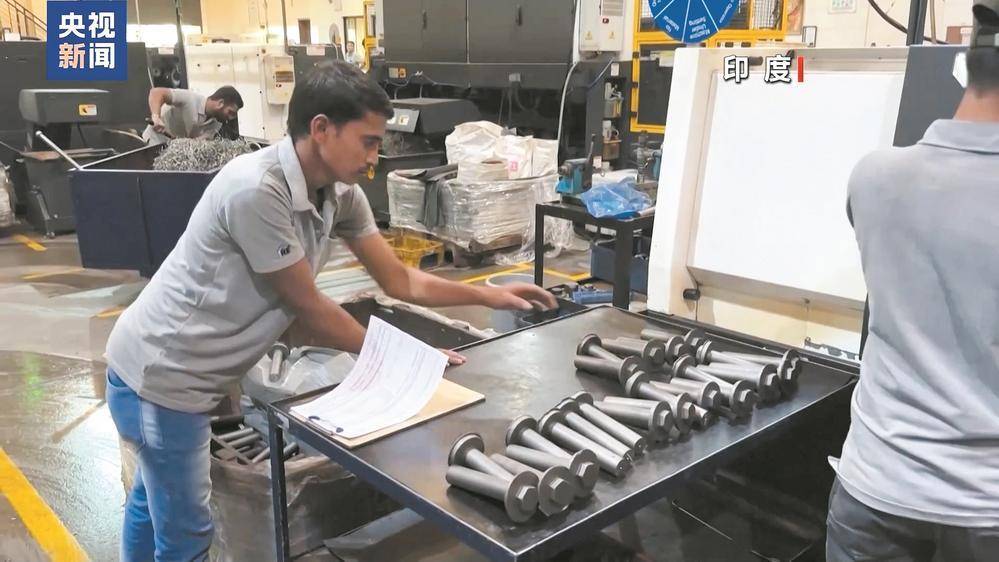
Core Points - The U.S. has implemented a 25% punitive tariff on Indian goods, effective from August 7, 2023, due to India's import of Russian oil, raising the total tariff rate on Indian products to 50% [3] - The tariffs are expected to reduce India's economic growth by 0.8 percentage points this year and next, with an estimated impact on $48.2 billion worth of Indian exports [3] - The Indian government is taking measures to mitigate the impact, including financial assistance for affected businesses and promoting exports to nearly 50 countries [4] Group 1 - The U.S. tariffs on Indian goods are a response to India's import of Russian oil, leading to a cumulative tariff rate of 50% [3] - The tariffs are projected to cause significant economic repercussions, including a decline in India's GDP growth and potential large-scale unemployment in key export regions [3] - The Indian government is committed to providing financial support to businesses affected by the tariffs, including increased bank loan subsidies and diversification of industries [4] Group 2 - India is actively seeking free trade agreements with major economies to enhance export opportunities and reduce reliance on the U.S. market [4] - The Reserve Bank of India is prepared to protect the economy from the adverse effects of the high tariffs imposed by the U.S. [4] - Prime Minister Modi has emphasized the government's commitment to safeguarding the interests of small businesses, farmers, and livestock owners amid these challenges [4]

综述|美对印惩罚性关税生效 印度多举措应对冲击
Xin Hua She· 2025-08-27 09:37
Group 1 - The U.S. government has imposed a 25% punitive tariff on goods imported from India, effective from August 7, 2023, due to India's import of Russian oil, bringing the total tariff rate on Indian products to 50% [1] - The tariffs are expected to reduce India's economic growth by 0.8 percentage points this year and next year, according to Capital Economics [1] - The Indian government estimates that the U.S. tariffs will impact $48.2 billion worth of Indian exports, with a projected trade volume of $128.8 billion between the U.S. and India in 2024 [1] Group 2 - The Indian engineering export promotion council predicts that exports may decline by 20% to 30% due to the new tariffs, as U.S. customers have stopped placing new orders [1] - In response to the tariffs, the Indian government plans to provide financial assistance to affected businesses and promote exports to nearly 50 countries, focusing on textiles, food processing, leather goods, and seafood [1] - The Indian government is seeking free trade agreements with major economies to diversify export markets [2] Group 3 - The Reserve Bank of India is prepared to protect the economy from the impact of high U.S. tariffs, with potential actions to increase credit and liquidity [2] - Indian Prime Minister Modi has emphasized the government's commitment to safeguarding the interests of small businesses, farmers, and livestock owners amid the tariff pressures [2] - The next round of U.S.-India trade negotiations has been postponed due to the cancellation of a U.S. trade delegation's visit to India [2]
顶着美国压力,印俄外长谈能源合作
Huan Qiu Shi Bao· 2025-08-21 22:54
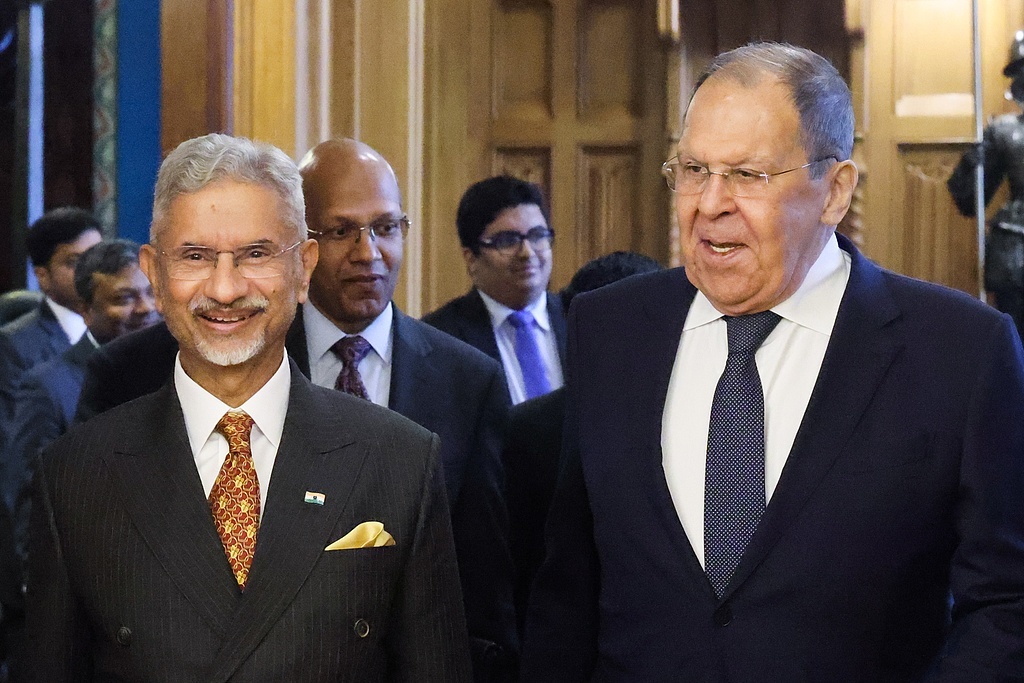
Group 1 - The meeting between Russian Foreign Minister Lavrov and Indian Foreign Minister Jaishankar aims to strengthen the strategic partnership between India and Russia, particularly in the energy sector [1][3] - India plans to increase trade with Russia by approximately 50% over the next five years, reaching around $100 billion, amidst rising tensions in India-US relations [3][4] - India remains committed to purchasing Russian oil based on its national interests, despite pressure from the US, which has imposed tariffs on Indian goods [4] Group 2 - The cooperation in oil and gas between India and Russia has yielded "good results," with intentions to develop joint energy production projects [3] - The defense and military technology cooperation between the two countries is at a high level, indicating a solid foundation for future collaboration [3] - India and the Eurasian Economic Union have initiated negotiations for a free trade agreement to explore new markets and address current trade challenges [4]
越欧自贸协定实施五周年
Shang Wu Bu Wang Zhan· 2025-08-08 17:30
Core Points - The EU-Vietnam Free Trade Agreement (EVFTA) came into effect on August 1, 2020, allowing over 70% of goods to be traded without tariffs, with plans to eliminate 99% of tariffs over time [1] - Since the agreement's implementation, bilateral trade has increased from $55.4 billion in 2020 to nearly $70 billion by the end of 2024 [1] - Vietnam's total exports to the EU have reached $270 billion, accounting for nearly 40% of the total trade volume between the two parties since 1995, making Vietnam the EU's largest trading partner in ASEAN and the 16th largest globally [1] - The EU is Vietnam's third-largest export market and fourth-largest source of imports [1]