量化大数据

Search documents
多家公司传利好,数据辨清真方向
Sou Hu Cai Jing· 2026-01-19 09:18
Core Viewpoint - The article emphasizes the importance of understanding the underlying trading intentions of funds rather than being misled by surface signals such as announcements and stock movements [1][3]. Group 1: Market Signals and Misinterpretations - Many investors react impulsively to announcements from listed companies, such as mergers or significant performance increases, without understanding the true implications behind these signals [1][2]. - A personal anecdote illustrates how two similar stocks with different announcements led to vastly different outcomes, highlighting the pitfalls of relying solely on surface information [2]. Group 2: Quantitative Data Analysis - Utilizing quantitative data tools can reveal the true trading behaviors of funds, moving beyond superficial trends and announcements [5][6]. - Key data visualizations include colored bars representing different trading actions, with orange bars indicating significant fund participation; prolonged orange bars suggest higher involvement from large funds [5][7]. Group 3: Institutional Trading Insights - The presence of blue recovery actions alongside active orange bars indicates that large funds are adjusting their trading strategies, a phenomenon referred to as "institutional shakeout," which aims to eliminate unstable follow-on positions [7]. - Stocks identified with institutional shakeout tend to return to their previous trading patterns after adjustments, while those without significant fund involvement may experience short-lived rebounds [8]. Group 4: Investment Strategy Evolution - The article concludes with a framework for sustainable investment, emphasizing the need for objective market understanding and structured decision-making processes, free from emotional interference [9]. - It reiterates that announcements, whether related to mergers or performance forecasts, are merely catalysts; the critical factor is whether substantial funds are actively participating in the trades [9].

免税消费大热,数据拆解机构行为
Sou Hu Cai Jing· 2026-01-19 07:15
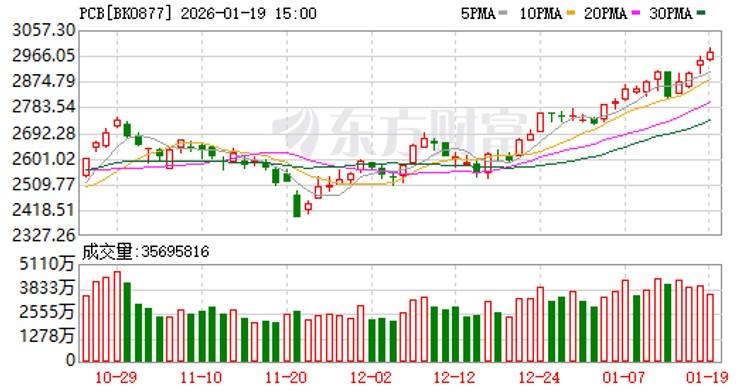
Group 1 - The core viewpoint of the article highlights the significant increase in duty-free shopping in Hainan Free Trade Port, with a nearly 50% year-on-year growth in shopping amounts, and a notable rise in international tourists [1] - The adjustment of Hainan's duty-free policy has expanded the category of duty-free goods to 47 types, further broadening the beneficiaries and driving up the shopping proportion of international tourists [1] - Despite the positive trends in the duty-free sector, individual stock performances have shown significant divergence, leading to confusion among investors regarding the underlying logic of these changes [1] Group 2 - There is a common misconception among investors that having institutional ownership guarantees stock performance, but the reality is that over 90% of stocks have institutional participation, yet their performance can vary widely [3] - The core issue is that institutional ownership does not equate to continuous trading by institutions; many institutions hold stocks for different reasons and may not actively trade them [3] - Stocks lacking continuous institutional trading support may struggle during market fluctuations, while those with active institutional participation tend to show stronger resilience [3] Group 3 - The development of quantitative big data technology allows for the objective assessment of market behaviors, enabling investors to discern whether institutions are actively participating in trading [7] - Quantitative big data can reveal "institutional inventory" data, which reflects the level of institutional trading activity rather than just buy or sell actions [7] - Active "institutional inventory" data indicates ongoing institutional interest and trading, while a lack of such data suggests minimal institutional engagement [10] Group 4 - Ordinary investors often make decisions based on emotions rather than data, leading to poor timing in buying or selling stocks [11] - Quantitative big data helps investors avoid emotional biases by providing objective insights into market behaviors, allowing for better decision-making [11] - Understanding the distinction between stocks with active institutional participation and those without can prevent investors from making uninformed decisions based on market fluctuations [11] Group 5 - Quantitative trading is not exclusive to professional investors; it offers ordinary investors a more objective way to understand the market [12] - By utilizing quantitative big data, investors can move beyond subjective judgments and establish a more rational investment logic based on data [12] - The article emphasizes that market movements are influenced by underlying trading behaviors, and understanding these through data can lead to more informed investment strategies [12]
融资资金持续布局,量化拆解震荡背后的玄机
Sou Hu Cai Jing· 2026-01-19 04:17
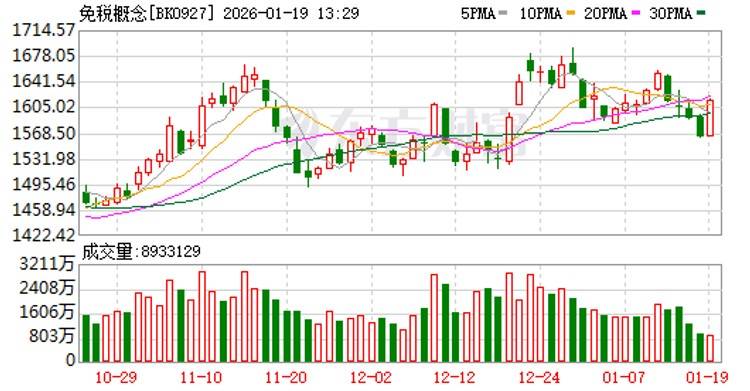
Core Viewpoint - The article emphasizes the importance of quantitative data in understanding market dynamics and avoiding subjective biases in investment decisions. It highlights how many investors fall into traps during volatile markets, often driven by emotions rather than data-driven insights [1][3][10]. Group 1: Market Dynamics - Recent statistics show that 167 stocks in the Shanghai and Shenzhen markets have experienced net financing inflows for over five consecutive days, with many leading stocks seeing net inflows for more than ten days [1]. - Investors often react to such data with either a rush to buy popular stocks or skepticism about potential manipulation, reflecting a gap between subjective perceptions and actual market behavior [1][10]. Group 2: Quantitative Data Insights - The article introduces two core indicators from quantitative data: the "dominant momentum" which reflects four trading behaviors (buying, profit-taking, short-selling, and covering), and "institutional inventory" which indicates the activity level of large funds [6]. - When the dominant momentum shows a "covering" behavior while institutional inventory remains active, it signals that large funds are quietly accumulating positions, which is a key indicator of market strength [7]. Group 3: Historical Performance and Probability Advantage - An analysis of a specific stock in the solid-state battery sector revealed that there were nine instances of "shock warehouse" signals since the second quarter of last year, with six of these signals marking local lows, indicating a higher probability of successful investment compared to random timing [11]. - The article argues that quantitative data provides a probability-based approach to identify better entry points, contrasting with the often misguided timing of average investors who rely on gut feelings [14]. Group 4: Rational Trading Mindset - The current market environment is characterized by an overload of information, leading to emotional trading behaviors such as impulsive buying during rallies and panic selling during corrections [15]. - The article advocates for a shift towards a rational trading mindset, where the focus is on the sustained activity of large funds rather than merely the stocks being bought, to differentiate between genuine long-term investments and short-term speculation [15][16].

两融资金大举入场,别被起伏迷惑
Sou Hu Cai Jing· 2026-01-19 03:08
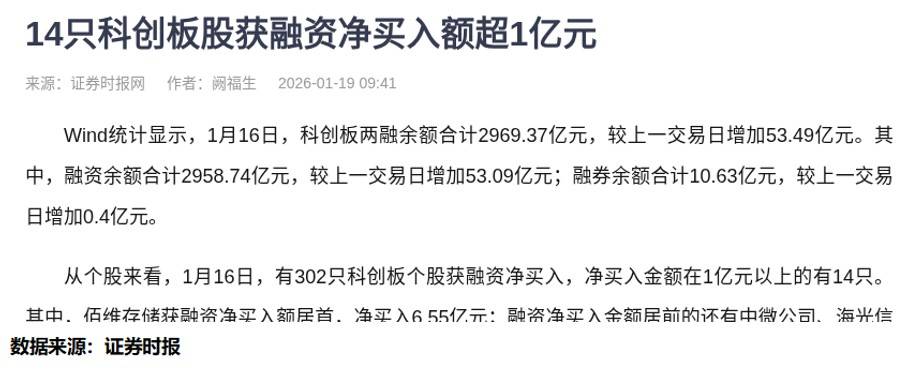
Group 1 - The core viewpoint of the article emphasizes the importance of quantitative big data in understanding market movements and making informed investment decisions, moving away from emotional reactions to price fluctuations [1][6][12] - The recent increase in the margin balance of the Sci-Tech Innovation Board has surpassed 290 billion, indicating significant financing activity in several stocks [1] - The article discusses the psychological struggle investors face during market volatility, highlighting the tendency to make impulsive decisions based on fear and greed [3][6] Group 2 - The concept of "institutional inventory" is introduced as a key metric to understand the actions of large funds, which can provide insights into market dynamics beyond surface price movements [6][9] - The article illustrates how the presence of active institutional inventory can indicate that a price drop may not reflect a fundamental issue, but rather ongoing large fund participation [9][12] - It warns against "false rallies," where stock prices rise without the backing of significant institutional investment, leading to potential losses for investors who enter the market based on misleading signals [13][17] Group 3 - The article advocates for a shift from emotional decision-making to a data-driven approach, suggesting that understanding quantitative data can enhance investment strategies and reduce the risk of emotional trading [18] - It emphasizes that investment success relies on objective recognition of market fundamentals rather than speculation based on feelings or rumors [18] - The narrative concludes by encouraging investors to utilize quantitative data to simplify complex market dynamics, thereby fostering a more resilient investment mindset [18]
融资保证金比例上调,看机构交易本质
Sou Hu Cai Jing· 2026-01-18 08:49
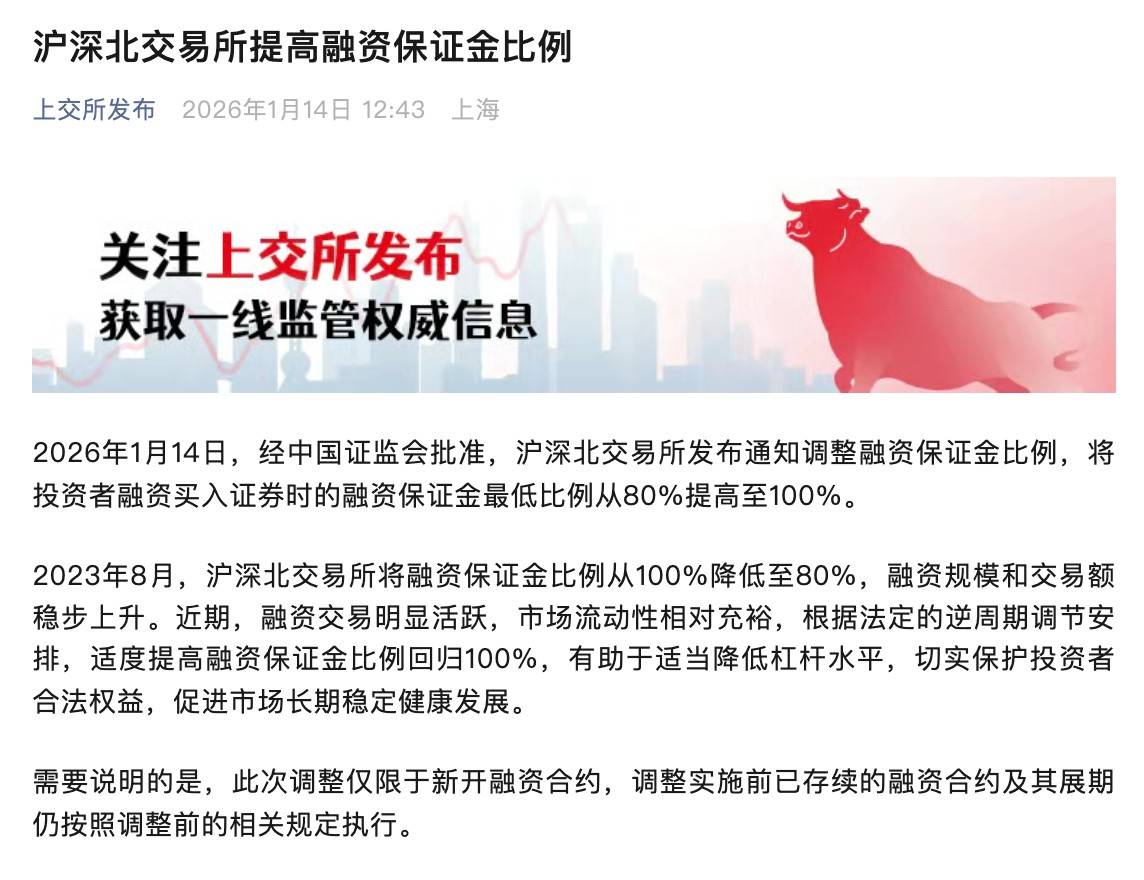
最近监管部门调整了融资买入的保证金要求,从原来的80%提到了100%。身边不少人都在问,这个调整会不会影响市场走向?其实我一直觉得,单一政策 只是市场波动的诱因,真正决定走势的,还是参与交易的机构大资金的真实行为。这也是我这么多年一直依赖量化大数据的原因,毕竟能看透表面之下的真 实动向,才是关键。 一、别被表面走势带偏 我发现很多人选标的时,总爱盯着之前的高点看,觉得那是过不去的坎。就拿之前遇到的一只标的来说,很长一段时间里股价都卡在同一个高点下,两次接 近都冲高回落,换做是你,肯定也不敢轻易出手,生怕又吃套。 但实际结果往往和直觉相反,后来股价直接突破了那个所谓的天花板。回头看才明白,这背后是机构大资金在积极参与交易,只是当时没看明白而已。 现在我都会用量化大数据里的「机构库存」数据来判断,这个数据反映的是机构资金交易的活跃程度,橙色柱体越活跃,说明参与的机构资金越多、时间越 长。看图1就能清楚看到,突破前的那段震荡里,「机构库存」已经开始活跃,和之前的走势形成了明显对比,这就是关键信号。 其实现在的量化技术已经能捕捉到机构的交易行为,因为很多机构交易都趋于范式化,程序可以通过大数据挖掘出这些特征,不用再靠 ...
IPO行情升温,用数据看穿资金共识
Sou Hu Cai Jing· 2026-01-17 08:12
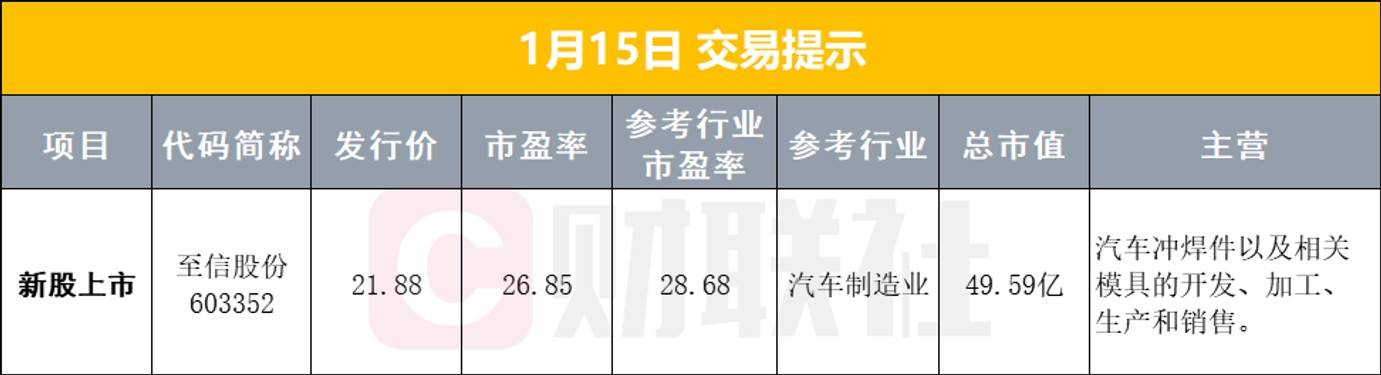
Group 1 - The industry is experiencing increasing optimism, with many institutions expanding their investment banking operations. Leading brokerages are leveraging resource advantages to capture market share across all sectors, while smaller firms are focusing on regional or niche areas for breakthroughs. New productive forces have become a central focus for various stakeholders [1][3] - The market concentration of leading brokerages is on the rise, with approximately 70% of market share held by top institutions. The growth in M&A activities indicates that capital is gathering in areas of consensus. However, ordinary investors find it challenging to access core industry data and integrate it with daily market observations [3][4] Group 2 - A quantitative big data system can reveal clear signals of capital consensus. The "Capital Panorama" data visually presents the activity levels of institutional and retail investors, indicating when both types of capital are focused on the same asset, signaling a clear consensus [4][6] - Observing repeated signals of capital activity can help identify assets that are gaining attention from multiple funding sources, even before significant price movements occur. This approach allows for long-term monitoring of potential investment opportunities [6][10] Group 3 - By filtering out price fluctuations and focusing solely on trading behavior data, it is possible to concentrate on the actions of capital without being influenced by short-term price changes. This method helps avoid the pitfalls of "chasing highs and cutting losses" [7][9] - The frequency of consensus signals is indicative of stronger capital agreement, especially when prices have not yet surged. Early detection of these signals can prepare investors for upcoming market movements [10][12] Group 4 - The core value of quantitative big data lies in its ability to eliminate subjective judgment and restore the market's true state through objective data. This leads to a clearer and more stable observation logic, which is essential for sustainable investment strategies [16]
存储芯片掀涨价潮,数据拆解资金动向
Sou Hu Cai Jing· 2026-01-16 13:07
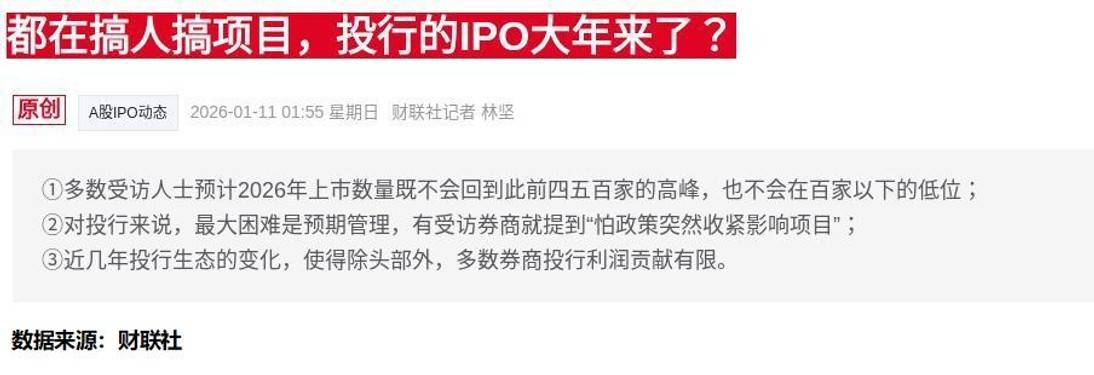
Core Viewpoint - The global storage industry has entered a "super bull market" phase, with price increases exceeding expectations, driven by AI demand and supply-demand mismatches [1] Group 1: Market Behavior and Investment Strategy - Investors should not be swayed by sudden news that causes market fluctuations, as seen in the previous adjustments in the liquor sector, where unexpected policies led to significant declines despite positive market sentiment [3] - The market's performance is influenced more by the true intentions of institutional funds rather than the news itself; understanding these intentions can prevent misinterpretations of market strength [4] - Quantitative big data can reveal the trading behaviors of institutions, which often follow strong patterns, allowing investors to gauge institutional activity and make informed decisions [6] Group 2: Institutional Participation and Market Dynamics - The "institutional inventory" data indicates the level of institutional participation in trading; a lack of active participation can signal potential market adjustments, as seen in the liquor sector where price rebounds lacked institutional interest [6][8] - Different outcomes can arise from similar sudden news based on the level of institutional involvement; for instance, a stock that faced negative news saw a price increase due to prior active institutional trading [8] - The current excitement in the storage chip sector should be approached with caution, focusing on "institutional inventory" data to assess genuine institutional engagement rather than reacting solely to news [10]
百股连获融资加仓,看穿资金真实动作
Sou Hu Cai Jing· 2026-01-16 07:22
Group 1 - The article emphasizes the importance of understanding the underlying trading behaviors of funds rather than just reacting to surface-level news about stocks [1][4] - It highlights that significant funds often start positioning themselves well before public announcements, as seen with the Yaxia Hydropower Station project, where related stocks had already appreciated prior to the official news [4][6] - The use of quantitative tools, such as "graded zones," is recommended to identify the activity levels of institutional funds, with lower numbers indicating higher activity [4][9] Group 2 - The trading behavior data of a leading stock in the Yaxia Hydropower concept shows that institutional funds were active from early 2025, even when the stock's performance was not prominent [6][9] - Adjustments in stock prices can be misleading; if a stock is in a "secondary zone," it indicates that institutions are still involved but at a reduced pace, suggesting a consolidation phase rather than a downturn [9][11] - Not all stocks within the same concept perform equally; the level of institutional participation is a key differentiator, as seen with another stock in the Yaxia Hydropower concept that showed lower institutional engagement [11]

调融资保证金吓到了谁,看机构真实动作
Sou Hu Cai Jing· 2026-01-15 03:52
Group 1 - The core viewpoint of the article emphasizes that recent regulatory measures, specifically the increase of the minimum margin requirement for securities financing from 80% to 100%, aim to cool down overheated market sentiment and shift the focus from liquidity-driven to performance-driven market dynamics [1] - Historical adjustments of this nature typically serve to temper market enthusiasm rather than dictate market direction solely based on policy changes [1] - The article highlights the importance of observing actual fund participation rather than relying solely on news or market sentiment, as demonstrated by a friend's experience with leveraging during market volatility [1] Group 2 - The article discusses instances where stocks defy expectations based on news, such as a pharmaceutical stock that rose 30% despite negative news, indicating that institutional trading actions provide clearer insights than surface-level news [3] - It introduces the concept of "institutional inventory" data, which reflects the level of institutional participation in trading, suggesting that active institutional involvement can lead to price increases even in the face of negative news [6] - The article also notes a case where a stock with strong earnings saw a price drop of nearly 10% post-announcement, attributed to a lack of institutional interest, highlighting the significance of institutional participation in sustaining market trends [8] Group 3 - The article stresses the value of quantitative data in understanding market dynamics, advocating for the use of objective trading data to avoid subjective biases influenced by price movements or news [8] - It emphasizes the need for rational responses to market changes, particularly in light of regulatory adjustments aimed at promoting responsible leverage use and avoiding speculative trading behaviors [9] - The long-term market trajectory is ultimately determined by genuine corporate performance and sustained fund participation, rather than short-term fluctuations or policy changes [9]
融资保证金上调,别只看表面波动
Sou Hu Cai Jing· 2026-01-14 22:36
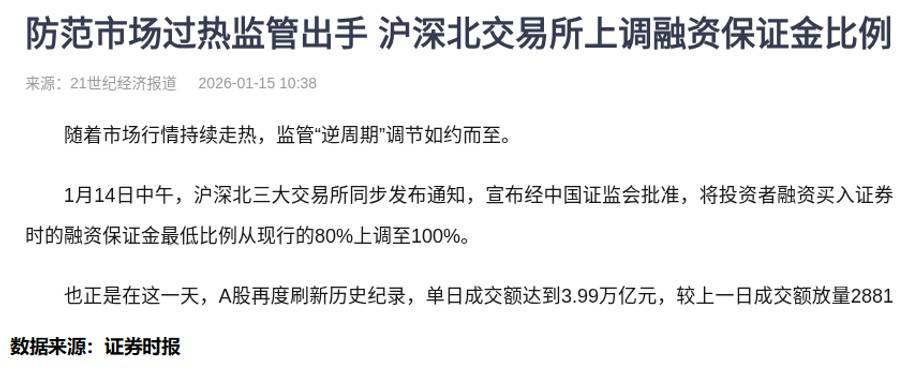
Group 1 - The recent regulatory adjustment raised the minimum margin requirement for investors financing the purchase of securities from 80% to 100%, which has led to concerns about a potential market slowdown. However, this policy is viewed as a "regulatory valve" rather than a directional change, indicating it will not alter the long-term market trend [1] - The adjustment applies only to new financing contracts, while existing contracts remain unaffected, suggesting limited short-term market disruption and potentially aiding in reducing leverage and preventing excessive speculation in the long run [1] Group 2 - Many investors focus solely on performance metrics, believing that high growth rates indicate potential, but this approach can lead to missed opportunities, as institutional trading behavior significantly influences stock performance [3] - The importance of distinguishing between superficial trends and underlying institutional activity is emphasized, as stocks with active institutional participation tend to perform better, regardless of their apparent price movements [5] Group 3 - Utilizing quantitative big data tools can clarify institutional trading behaviors, helping investors avoid being misled by surface-level data and enabling a more informed decision-making process [5][7] - The "institutional inventory" data reflects the level of institutional trading activity, with sustained activity indicating strong institutional interest, which is crucial for long-term investment potential [7] Group 4 - The adjustment in margin requirements should not dictate market reactions; instead, understanding institutional trading behaviors through quantitative data can lead to more rational investment decisions [8] - The market's maturity necessitates a shift from reliance on luck or subjective guesses to a data-driven approach, fostering rational investment habits and ensuring stability in long-term investment strategies [8]