
价值投资

Search documents
银行股估值生态生变
Bei Jing Shang Bao· 2025-10-20 15:48
截至10月20日收盘,农业银行股价超过了每股净资产值7.65元,以7.75元报收,这是大型银行股很长时 间以来首次股价超过每股净资产值,也是银行股估值生态生变的重要信号。银行股的折价估值体系开始 松动,未来不排除有更多大型银行股股价挑战每股净资产值的可能,这也是价值投资的重大突破。 长期以来,银行股普遍处于破净状态,即股价低于每股净资产值。这种现象背后,是投资者对于银行股 投资价值的认可度偏差。投资者认为每投资1元银行股票,所获得的每股净资产账面价值需要大于1元, 或者说银行股的每股净资产账面价值需要打一定折扣,这样才能弥补大型银行股因为业绩增长预期不足 以及流通盘巨大而损失的投机价值。这种认知惯性使得大型银行股的估值长期被压制,即便银行板块基 本面进入稳定期,业绩稳健增长且资产质量提升,其估值依旧难以得到有效修复。 然而,现在农业银行股价超过每股净资产值,预示着市场对银行股的看法正在改变。这可能是由于多方 面因素共同作用的结果。一方面,银行自身的业绩表现和资产质量提升逐渐得到市场认可,同时,银行 股的盈利能力也保持稳定,这为股价的上涨提供了坚实的基本面支撑。另一方面,宏观政策环境和资金 面的变化也对银行股的 ...

每日钉一下(4大原则,帮你快速掌握价值投资理念)
银行螺丝钉· 2025-10-20 14:09
Group 1 - The article emphasizes that different regional stock markets do not move in unison, allowing investors to seize more investment opportunities by understanding multiple markets [2] - Global investment can significantly reduce volatility risk, highlighting the benefits of diversifying investments across different markets [2] - A free course is offered to educate investors on how to invest in global stock markets through index funds, aiming to share the long-term gains of global markets [2][3] Group 2 - The article introduces four fundamental principles of value investing that can help individual investors apply investment strategies effectively [4][5] - The first principle states that buying stocks equates to buying companies, necessitating an understanding of the company's operations and profitability, which ultimately influences stock prices [6] - The second principle emphasizes the importance of having a margin of safety, which means purchasing undervalued assets to avoid overpaying [7]


侃股:银行股估值生态生变
Bei Jing Shang Bao· 2025-10-20 12:48
截至10月20日收盘,农业银行(601288)股价超过了每股净资产值7.65元,以7.75元报收,这是大型银 行股很长时间以来首次股价超过每股净资产值,也是银行股估值生态生变的重要信号。银行股的折价估 值体系开始松动,未来不排除有更多大型银行股股价挑战每股净资产值的可能,这也是价值投资的重大 突破。 长期以来,银行股普遍处于破净状态,即股价低于每股净资产值。这种现象背后,是投资者对于银行股 投资价值的认可度偏差。投资者认为每投资1元银行股票,所获得的每股净资产账面价值需要大于1元, 或者说银行股的每股净资产账面价值需要打一定折扣,这样才能弥补大型银行股因为业绩增长预期不足 以及流通盘巨大而损失的投机价值。这种认知惯性使得大型银行股的估值长期被压制,即便银行板块基 本面进入稳定期,业绩稳健增长且资产质量提升,其估值依旧难以得到有效修复。 然而,现在农业银行股价超过每股净资产值,预示着市场对银行股的看法正在改变。这可能是由于多方 面因素共同作用的结果。一方面,银行自身的业绩表现和资产质量提升逐渐得到市场认可,同时,银行 股的盈利能力也保持稳定,这为股价的上涨提供了坚实的基本面支撑。另一方面,宏观政策环境和资金 面 ...
“长期投资·价值投资”基金经理100系列高端访谈即将在沪启动
2 1 Shi Ji Jing Ji Bao Dao· 2025-10-20 11:12
Core Insights - The "Fund Manager 100" series of high-end interviews, co-hosted by 21st Century Business Herald and Dianshi Investment, will officially launch on October 22 in Shanghai, focusing on the long-term viability of the "Fixed Income +" strategy [2][12] - The event aims to create a professional and high-quality communication platform, emphasizing the performance of fund managers and their products [2][3] Group 1: Event Overview - The first event will feature discussions on asset allocation strategies, stock-bond mixed strategies, and achieving low-volatility returns [3] - Notable fund managers from various firms, including Anxin Fund, GF Fund, and others, will participate in roundtable discussions to share practical insights on "Fixed Income +" investments [3][5] Group 2: Fund Performance Highlights - Anxin Stable Growth A, managed by Li Jun, has achieved positive returns every year since its inception in 2015, with a total scale of 10.371 billion [4] - GF Fund's GF Jiyu A, managed by Zeng Gang, has a year-to-date return of 9.37% and is highly favored by institutional investors, with over 98% institutional holding [4][5] - The newly established mixed bond fund, Zhao Shang An Ning A, has been co-managed by experienced managers with over 12 years in the industry [5] Group 3: Professional Engagement - The event is expected to attract a diverse audience from the asset management industry, including investment managers, researchers, and product experts from various sectors [10][11] - The focus will be on fostering deep exchanges of ideas and experiences among participants, enhancing the overall quality of discussions [11]

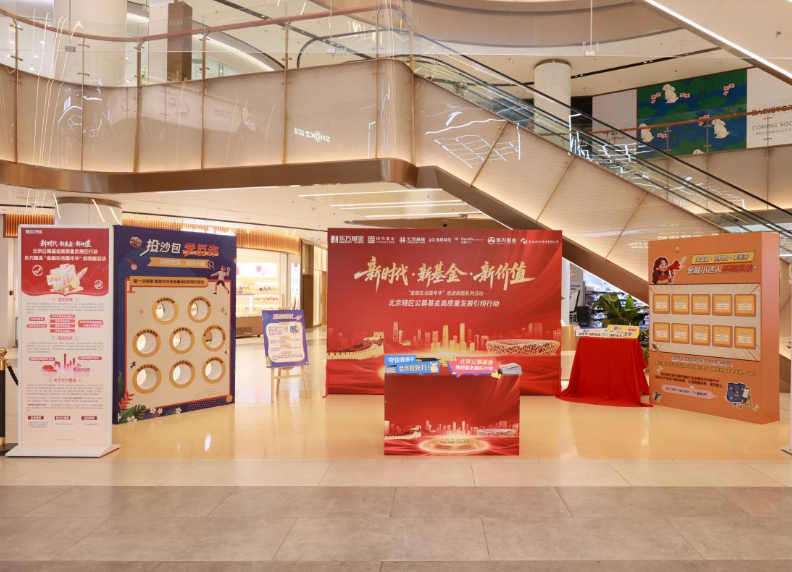
“新时代·新基金·新价值”|公募机构携手走进商圈 筑牢市民财富安全防线
Zheng Quan Ri Bao Wang· 2025-10-20 09:47
Core Viewpoint - The event "Financial Life Carnival" organized by Dongfang Fund and other partners aims to promote financial literacy and rational investment concepts among the public, responding to the call for high-quality development of public funds in Beijing [2][5]. Group 1: Event Overview - The event took place on October 17 at Longhu Lize Tianjie in Beijing, featuring interactive activities and financial knowledge dissemination [2]. - It focused on addressing citizens' daily financial needs through engaging interactions and professional explanations [2][3]. Group 2: Educational Approach - The event included interactive elements such as "check-in stamps" and "knowledge quizzes" to educate participants about common financial scams, legitimate investment channels, and personal financial information protection [3][4]. - A shift from passive learning to active participation was emphasized, with participants engaging in hands-on activities to learn about fraud prevention and retirement planning [4]. Group 3: Community Engagement - Dongfang Fund aims to integrate professional financial knowledge into everyday consumer scenarios, enhancing the connection between fund companies and the public [5]. - The event was well-received, with many participants expressing that learning about financial management in a relaxed atmosphere was both practical and enjoyable [5].
黄金股票ETF(517400)盘中回调超4%,黄金长期价值获关注,回调或可布局
Mei Ri Jing Ji Xin Wen· 2025-10-20 06:16
10月20日,黄金股票ETF(517400)盘中回调超4%。 黄金股票ETF(517400)跟踪的是SSH黄金股票指数(931238),该指数从市场中选取涉及黄金采掘、 冶炼及销售等业务的50只较大市值上市公司证券作为指数样本,以反映黄金产业链相关企业证券的整体 表现。该指数具有行业集中度高、风格偏向价值投资的特点,同时兼具偏中小市值风格与龙头效应。 (文章来源:每日经济新闻) 东莞证券指出,贵金属方面,美联储10月降息几成定局,且美国政府停摆持续加剧不确定性,美元信用 下滑奠定金价上行基础,同时地缘政治延续为金价提供托底支撑。在降息预期叠加避险需求提升的背景 下,金价在中长期仍具备上行动力。白银与黄金具备类似的金融属性及货币属性,近期因伦敦市场白银 流动性紧缩,进一步推升白银价格上行。 工业金属方面,Grasberg矿山停产引发铜供应链担忧,叠加美联储降息预期打开宏观宽松空间,铜价上 行具备动力。 ...
走商圈,进高校,入社区——长盛基金公募高质量发展活动在行动
Zhong Guo Jing Ji Wang· 2025-10-20 00:59
Core Viewpoint - The article highlights the initiatives taken by the Beijing public fund industry to promote high-quality development through various educational activities aimed at enhancing financial literacy and investor protection [1][4]. Group 1: Activities in Commercial Areas - Changsheng Fund successfully implemented the "Financial Life Carnival" in the Guomao Wanda Plaza, focusing on investment and anti-fraud knowledge through interactive quizzes, attracting hundreds of participants [2]. - The event showcased the development history and future trends of China's public fund industry, promoting the concepts of rational, value, and long-term investment [2]. Group 2: Engagement with Universities - Changsheng Fund collaborated with several other funds to educate university students on financial knowledge and rational investment concepts at the Central University of Finance and Economics [3]. - A senior investment education lecturer shared strategies for navigating investment cycles, emphasizing the importance of understanding fund characteristics and the correct mindset towards fund investment [3]. Group 3: Community Outreach - Changsheng Fund partnered with the Alipay Blue Vest team to conduct anti-fraud and pension finance lectures in communities, addressing the rising issues of illegal fundraising and online scams [4]. - The fund aims to enhance investor service and support by transitioning from a product-centered approach to a customer-centered model, focusing on emotional management and behavior guidance [4].
今年港股新股首日平均涨38%!高瓴、高毅、景林等私募“赚大了”
Zhong Guo Ji Jin Bao· 2025-10-20 00:32
创下7558倍认购新纪录 港股持续火热,港股新股的表现也非常亮眼。港股新股创出7558倍的认购倍数新纪录,新股首日表现也 是非常不错,今年以来港股新股更是首日平均大幅上涨38%,近期更是动辄翻倍。从近期知名港股IPO 来看,高瓴、高毅、景林等私募机构也以基石投资者身份参与。 对于港股新股表示,中国基金报记者采访多家私募机构,港股新股发行定价很市场化,还是要根据新股 价值和估值考虑是否参与,对于合适的标的会进行参与。对于港股后市,受访私募认为,在AI产业趋 势明确、流动性环境改善、估值处于低位等多重因素支撑下,港股具备持续修复的潜力,看好科技、医 药、高股息等方向。 2025年以来,港股市场持续活跃且跑赢全球主要市场。截至10月17日,恒生指数年内累计涨幅达 48.10%,恒生科技指数年初至今累计涨幅达28.92%,均超过标普500指数、纳斯达克指数以及欧洲主流 国家的股指涨幅。 今年以来港股新股首日平均涨38% 今年港股IPO市场也格外活跃,融资总额位居全球第一。2025年前三季度港股新股市场整体表现强劲, 共有68只新股上市,合计实际募资总额约1865亿港元,包括宁德时代、紫金黄金国际、恒瑞医药、三花 智控 ...
财通基金金梓才: 多资产轮动 做时代的投资
Zhong Guo Zheng Quan Bao· 2025-10-19 20:21
Core Insights - The article emphasizes the importance of adapting investment frameworks to changing market conditions, highlighting the need for continuous iteration and flexibility in investment strategies [1][2][3] Investment Framework - The investment approach has evolved from a focus on TMT (Technology, Media, and Telecommunications) to a broader perspective that includes cyclical industries, reflecting the changing market dynamics since 2016 [2][12] - The ability to adapt to different market environments and asset rotations is crucial for long-term investment success, as sticking to a single industry can lead to missed opportunities [2][12] Industry Rotation Strategy - The strategy prioritizes mid-cycle indicators and macroeconomic trends, focusing on identifying stocks with strong earnings growth potential and minimal price distortion [3][6] - The rotation cycle is designed to be more gradual, emphasizing medium to long-term gains rather than short-term fluctuations [6][12] Future Value Assessment - Investment decisions are based on a dynamic assessment of future value, considering both macroeconomic conditions and individual stock performance [7][8] - The company aims to identify discrepancies in market pricing to uncover significant investment opportunities, emphasizing the importance of thorough research and analysis [8][10] Team Dynamics and Performance - The company places a strong emphasis on team collaboration and skill development, ensuring that team members are well-equipped to identify and act on investment opportunities [16][17] - A structured training and evaluation system is in place to foster talent within the investment team, promoting a culture of continuous improvement and high performance [16][17]
多资产轮动 做时代的投资
Zhong Guo Zheng Quan Bao· 2025-10-19 20:13
Core Insights - The article emphasizes the importance of adapting investment frameworks to changing market conditions, highlighting the need for continuous iteration and flexibility in investment strategies [1][2][3] - The focus is on identifying long-term value and opportunities in industries that may be overlooked by the market, with a strong emphasis on understanding both micro and macroeconomic factors [3][4][5] Investment Framework - The investment approach has evolved from a focus on TMT (Technology, Media, and Telecommunications) to a more diversified strategy that includes cyclical and renewable energy sectors, adapting to market shifts since 2016 [1][2] - The iterative framework allows for dynamic adjustments based on market conditions, emphasizing the importance of not being confined to a single industry [2][3] Industry Rotation Strategy - The company prioritizes mid-cycle industry conditions and long-term trends, aiming for substantial returns rather than short-term fluctuations [3][4] - The strategy involves assessing whether stock prices are overvalued relative to fundamental performance, allowing for timely investment decisions [4][5] Team Dynamics and Performance - The company places significant emphasis on team collaboration and tactical expertise, fostering a culture of rigorous training and performance evaluation among team members [8] - The success of the investment team is attributed to a structured approach to research and a focus on continuous improvement, which has led to the emergence of multiple high-performing funds [8] Market Outlook - The article suggests that the future of active equity investment will increasingly rely on managers skilled in industry rotation, as market dynamics continue to evolve [6][7] - The company believes that passive investment strategies may struggle to keep pace with the rapid changes in market conditions, reinforcing the value of active management [7]