制度型开放

Search documents
对外开放蓝皮书:强化“两区”平台效应 北京推进高水平制度型开放
Zhong Guo Jing Ying Bao· 2025-06-30 16:03
Core Viewpoint - Beijing is leveraging its "Four Centers" strategic positioning to enhance international cooperation in key areas such as data governance, financial services, cultural influence, technological innovation, and green development, achieving significant progress in its opening-up efforts and serving as a model for national development [1] Group 1: Achievements and Developments - The "Two Zones" initiative in Beijing has shown remarkable results in trade liberalization and investment facilitation, with ongoing attention to its development [1] - The publication of the "Blue Book on Opening Up: Beijing's Opening Up Development Report (2024)" marks a significant contribution to research on international openness, becoming a key reference since its first release in 2021 [1] Group 2: Recommendations for Future Development - Emphasis on aligning with international digital trade standards, focusing on digital technology application, data governance, and cross-border data flow [2] - Exploration of regulatory frameworks in restricted service sectors such as telecommunications, finance, culture, and healthcare to support the expansion of the service industry [2] - Enhancement of intellectual property protection and administrative enforcement to foster a fair competitive market environment [2] - Strengthening the "Two Zones" as experimental areas for aligning with high-standard regional trade agreements, particularly in financial services, e-commerce, and state-owned enterprise regulations [2]
打造现代化先行示范引领区
Jing Ji Ri Bao· 2025-06-28 21:59
Core Viewpoint - Promoting regional coordinated development is a key measure to accelerate the construction of a new development pattern and promote high-quality development [1] Group 1: Strategic Initiatives - The "14th Five-Year Plan" and the 2035 vision outline support for Shenzhen, Pudong, and Zhejiang to drive significant national regional strategies [1] - Shenzhen aims to implement an innovation-driven development strategy and build a modern economic system, becoming a global benchmark city [1] - Pudong focuses on establishing a high-standard international economic and trade rule system, enhancing its role in global resource allocation [1] - Zhejiang is working on a framework for common prosperity, providing a provincial model for nationwide implementation [1] Group 2: Achievements and Progress - Shenzhen's GDP increased from 2.78 trillion yuan in 2020 to 3.68 trillion yuan in 2024, maintaining the top position in industrial output and patent applications [2] - Pudong has expanded its high-level institutional openness, enhancing its global resource allocation capabilities and launching new financial products [2] - Zhejiang's income disparity between urban and rural residents decreased from 1.96 in 2020 to 1.83 in 2024, with urban and rural income levels reaching 78,000 yuan and 43,000 yuan respectively [2] Group 3: Future Directions - Emphasis on deepening reforms to create a market-oriented, legal, and international business environment, ensuring fair competition for private enterprises [3] - Focus on building globally influential innovation hubs, enhancing strategic scientific capabilities, and fostering a robust innovation ecosystem [4] - Development of international competitive advantages through high-level institutional openness and expanding service industry access [4]
扩大利用外资领域、提升引资稳资水平、强化企业服务保障
Nan Jing Ri Bao· 2025-06-25 02:07
Group 1 - Nanjing has introduced the "2025 Measures to Stabilize Foreign Investment," which includes 13 initiatives aimed at attracting and utilizing foreign investment more effectively [1][2] - The measures focus on expanding the fields of foreign investment, enhancing the stability of investment, and strengthening enterprise service guarantees [1][2] - A key initiative is to create an industrial investment map to attract foreign enterprises to participate in the construction of the industrial system, thereby enhancing the competitiveness of industrial clusters [1] Group 2 - The measures emphasize the importance of enhancing brand building for investment promotion activities and participating in national events to attract quality resources to Nanjing [2] - There is a focus on expanding the methods of utilizing foreign investment, encouraging foreign investors to engage in strategic investments through various means such as issuing new shares and mergers [2] - The measures also support the establishment of investment companies and venture capital enterprises by foreign investors in Nanjing, promoting reinvestment in the city [2] Group 3 - Increased support for foreign-funded research and development is highlighted as a crucial step in stabilizing foreign investment, encouraging the establishment of R&D centers and collaboration with local institutions [3] - The measures aim to enhance services for major foreign investment projects, promoting early signing, commencement, and production of these projects [3] - Foreign enterprises are encouraged to upgrade technology and innovate products, with a focus on high-end, intelligent, and green development [3]
外资巨头加速入华!淡马锡新GP落户上海
FOFWEEKLY· 2025-06-23 09:59
Core Viewpoint - The article discusses the increasing interest of foreign capital in the Chinese private equity market, highlighting the strategic importance of China in the global capital landscape as firms like Temasek and Earnest Partners establish a presence in the country [2][4]. Group 1: Temasek's Entry - Temasek has established a private equity management firm in China, named True Light Capital, which completed its registration on June 16, 2023 [6]. - True Light Capital, fully owned by Temasek, raised $3.3 billion (approximately 240 billion RMB) for its first fund, focusing on sectors such as life sciences, technology, consumer, and industrial services in Greater China [7]. - The leadership of True Light Capital, led by Xu Ye, who has extensive experience in the Chinese banking sector, reflects a trend of combining international capital with local expertise [8]. Group 2: Earnest Partners' Expansion - On the same day as Temasek's registration, Earnest Partners also registered a private equity fund management company in Beijing, with a registered capital of $2 million [10]. - Earnest Partners has over $30 billion in assets under management and has been active in the Chinese market for over 20 years, focusing on sectors like new infrastructure, AI healthcare, and advanced manufacturing [10]. Group 3: Trends in Foreign Investment - The recent wave of foreign firms establishing private equity management companies in China indicates a renewed interest in the market, driven by policy incentives and technological advancements [11]. - Notable examples include Kai Tak Bank and KKR, which have also set up private equity firms in China, reflecting a broader trend of foreign investment in the region [11]. - The Chinese government has implemented various policies to attract foreign investment, including the removal of restrictions in the manufacturing sector and the introduction of measures to enhance the investment environment [12]. Group 4: Future Outlook - The article suggests that the evolving landscape of foreign investment in China is characterized by a shift from cautious evaluation to increased allocation, as foreign LPs engage more deeply in the private equity market [15]. - The combination of policy support and local technological innovation is expected to further enhance foreign investment in China, as firms recognize the country's economic potential [13][15].


八项政策措施助力上海国际金融中心建设 高水平金融开放向深向实
Jin Rong Shi Bao· 2025-06-23 01:42
Group 1: Core Financial Policies - The People's Bank of China announced eight significant financial opening measures aimed at enhancing the international competitiveness and risk management capabilities of China's financial market [1][8] - These measures include the establishment of an interbank market transaction reporting database and personal credit institutions to improve financial infrastructure and data governance [2][3] Group 2: Cross-Border Financial Policies - The policies aim to facilitate cross-border trade and investment by optimizing the functions of free trade accounts and launching pilot reforms for offshore trade finance services in the Shanghai Lingang area [5][6] - The "Cross-Trade Refinance" pilot program initiated by the Shanghai headquarters of the People's Bank of China is designed to support cross-border trade financing and alleviate financing difficulties for foreign trade enterprises [7] Group 3: Data Governance and Risk Management - The establishment of a personal credit institution is part of the credit system construction, emphasizing the importance of data governance in the digital economy [3][4] - Enhanced data technology capabilities are crucial for optimizing resource allocation and improving the efficiency and quality of financial services [4] Group 4: Shanghai as a Financial Reform Hub - The eight policies are primarily focused on Shanghai, highlighting its role as a testing ground for financial reforms and the integration of finance, trade, and regulation [8][9] - Shanghai's position as a pioneer in financial reform is underscored by the recent approval of upgrades to free trade account functions and pilot programs for offshore trade finance services [9]
专家议深圳新一轮综改:推进高水平对外开放
Zhong Guo Xin Wen Wang· 2025-06-22 05:58
Core Viewpoint - The Chinese government has issued an opinion to deepen reform and innovation in Shenzhen, positioning it as a model city for comprehensive reform and high-level opening-up, with a focus on institutional innovation and technological advancement [1][2]. Group 1: Institutional Innovation and Economic Development - Shenzhen's integration of "education, technology, and talent" reform is prioritized, reflecting the strategic upgrade of its role as an "innovation city" and "pilot demonstration zone" [1]. - The city has accumulated 48 replicable experiences over five years of comprehensive reform, establishing a mechanism that integrates the innovation chain, industrial chain, capital chain, and talent chain [1]. - Institutional innovation in Shenzhen is seen as a pathway for the country to overcome the "middle-income trap" by injecting vitality into its development [1]. Group 2: High-Level Opening-Up and New Economic Models - Shenzhen aims to transition from goods trade to a more integrated system of service trade, regulatory standards, and technological standards, enhancing its role as a global hub [2]. - The city is encouraged to deepen the opening-up of new factors such as service trade, intellectual property, and digital rules while maintaining its manufacturing base [2]. - The Qianhai area is identified as a core point for promoting high-level opening-up, with a focus on reducing transaction costs and uncertainties for market entities [2][3]. Group 3: Talent and Cross-Border Services - Qianhai is proposed to explore the establishment of a "talent special zone," facilitating mutual recognition of professional qualifications and cross-border service standards [3]. - This approach aims to lower the costs for high-end talent coming to China and accumulate experience for broader international talent recruitment [3].
焦点访谈|多项重大金融政策齐发力 稳步推进制度型开放关键布局
Yang Shi Wang· 2025-06-21 13:40
Core Viewpoint - The 20th Central Committee of the Communist Party of China emphasizes "improving the high-level open system and mechanism," with a focus on "steadily expanding institutional openness" as a key deployment for financial reform and development in China [1]. Financial Policies Overview - Eight financial opening measures will be implemented in Shanghai, including the establishment of an interbank market trading report library, a digital RMB international operation center, and a personal credit institution [3][5]. - The aim of these policies is to enhance financial market openness, reduce cross-border capital flow settlement costs, and attract more foreign investment into China [3][5]. Digital RMB International Operation Center - The establishment of the digital RMB international operation center is a first for China, aimed at promoting the international use of the digital RMB and enhancing its position in the global monetary system [7][9]. - The digital RMB leverages blockchain and smart contract technology for real-time cross-border payment settlements, significantly reducing transaction times from 3-5 days to seconds [9][11]. Personal Credit Institution - The new personal credit institution in Shanghai will complement the existing central bank credit system by incorporating a wider range of data sources, thus enriching credit profiles for consumers [11][13]. - This initiative is expected to facilitate easier access to credit for consumers, particularly benefiting young individuals and stimulating consumption [13]. Science and Technology Innovation - The China Securities Regulatory Commission announced the introduction of a "growth layer" on the Sci-Tech Innovation Board, providing a "green channel" for tech companies to access capital markets [15][17]. - This policy aims to support innovative and high-growth tech enterprises, allowing them to secure funding even if they are not yet profitable [15][17]. Shanghai International Financial Center - The Central Financial Committee issued opinions to accelerate the construction of Shanghai as an international financial center, aiming for a comprehensive upgrade in the next 5-10 years [19]. - The shift from policy-based to institutional openness is intended to create a stable investment environment for international capital, thereby driving economic growth in China [19].
【首席观察】人民币国际化步入深水区
Jing Ji Guan Cha Wang· 2025-06-20 23:19
Core Insights - The article discusses China's strategic initiatives to enhance the internationalization of the Renminbi (RMB) through a series of financial reforms and technological advancements aimed at establishing a dual-track system of "digital RMB + offshore finance" [3][4][11]. Group 1: Financial Initiatives - The People's Bank of China announced eight financial opening measures to be implemented in Shanghai, including the establishment of a bank interbank market trading report library and a digital RMB international operation center [5][11]. - These measures signify a transition for Shanghai's international financial center from merely aggregating institutions to building mechanisms that enhance the pricing power of RMB assets [5][7]. - The establishment of the digital RMB international operation center aims to facilitate cross-border payments and digital clearing channels, thereby improving capital flow and transaction convenience [5][6]. Group 2: Internationalization Strategy - The initiatives are designed to strengthen the RMB's international status, particularly through the establishment of a digital RMB international operation center and the promotion of RMB foreign exchange futures trading [6][10]. - The RMB cross-border payment system (CIPS) has expanded its network by including foreign institutions, enhancing the efficiency of RMB settlements and facilitating its international use [8][9]. - The focus on creating a risk management center and a global asset management platform is intended to guide global investors in RMB asset allocation, thereby increasing the RMB's role as a reserve and pricing currency [10][11]. Group 3: Technological Integration - The integration of technology, such as artificial intelligence and big data, is emphasized to improve the efficiency and quality of financial services, reflecting the importance of financial innovation in the digital economy [6][12]. - The measures aim to establish a financial safety asset system for the RMB, enhancing its market pricing power and creating a closed-loop system for valuation, storage, and clearing [12][14]. Group 4: Long-term Vision - The article suggests that the institutional advantages created by these reforms could serve as a protective barrier for the RMB's internationalization efforts, with a focus on achieving a deeper role in global trade and finance [14][15]. - The successful internationalization of the RMB will require strong market support and international trust mechanisms, alongside the development of local financial markets and cross-border RMB business infrastructure [14][15].

“自贸方案”助力开放 上海自贸试验区80条措施已基本落地
news flash· 2025-06-20 05:55
Core Viewpoint - In 2023, the Shanghai Free Trade Zone (FTZ) has initiated a comprehensive pilot program to align with international high-standard economic and trade rules, with 80 pilot measures largely implemented over the past year, providing a "free trade solution" for expanding institutional openness [1] Group 1: Trade Facilitation - The Shanghai FTZ has implemented a facilitation customs clearance model, which includes "pre-reporting, advance review, immediate passage upon arrival, and immediate unpacking upon container arrival," significantly attracting companies like Maersk to establish international transshipment centers [1] - The time for transshipment from port arrival to shipment has been reduced by 50% [1] Group 2: Digital Trade - The Shanghai FTZ has taken the lead in implementing high-standard digital trade rules, with the publication and implementation of a negative list for data outbound, focusing on the reinsurance, international shipping, and commercial trade sectors [1] - This initiative effectively promotes the efficient, convenient, and secure cross-border flow of data [1]
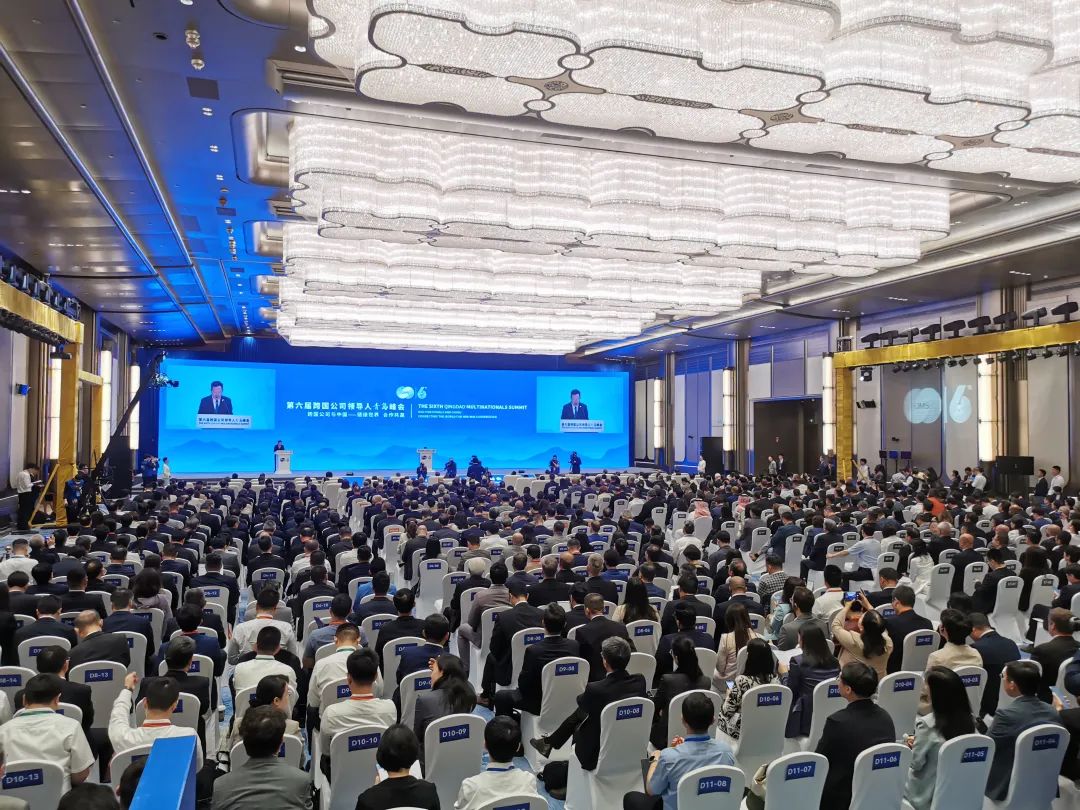
再迎峰会背后的山东引力
Qi Lu Wan Bao· 2025-06-20 02:44
Core Insights - The sixth Multinational Corporation Leaders Summit held in Qingdao from June 18 to 20 highlights Shandong's role as a hub for global resources and capital, showcasing its commitment to high-level openness and mutual benefits [1][16] - The summit emphasizes the integration of market demand and resource advantages, moving beyond simple investment promotion to a more collaborative approach [3][4] Group 1: Summit Features - This year's summit features 28 industry chain investigation routes and various specialized activities aimed at deepening connections between multinational companies and local resources [3] - The participation of 570 global corporate guests, with 131 first-time attendees, indicates a strong attraction of emerging market enterprises to Shandong [4] - The summit includes forums on emerging industries such as general aviation, low-altitude economy, and artificial intelligence, providing a roadmap for multinational companies [4][5] Group 2: Economic and Industrial Context - Shandong boasts a robust industrial system with all 41 industrial categories represented, supporting both traditional manufacturing and emerging industries [6] - The province's GDP grew by 6.0% year-on-year in the first quarter, providing a stable economic environment for multinational companies [6] - The high-tech industry in Shandong is projected to account for over 52% of industrial output by 2024, with nearly 1,000 AI companies contributing to a scale exceeding 100 billion [6] Group 3: Open Platforms and Investment Environment - Shandong's open platforms, such as the Qingdao Port and the Shandong Free Trade Zone, facilitate significant foreign investment, with annual growth rates in foreign trade and actual foreign investment exceeding provincial averages [8] - The province has implemented a service platform to address foreign enterprises' needs, resolving over 1,400 issues for foreign companies [8][9] - The successful establishment of foreign enterprises like Ediwos in Qingdao underscores the positive impact of Shandong's business environment on foreign investment [9] Group 4: Future Prospects and Strategic Goals - The summit is expected to enhance cooperation in emerging fields, with R&D investment in Shandong's foreign-funded industrial enterprises increasing from 18.29 billion to 23.36 billion from 2020 to 2023 [14] - The introduction of the "Summit Consumption Week" aims to transform the summit's economic impact into consumer engagement, enhancing local consumption [15] - The summit aligns with international trade rules, promoting Shandong's integration into global standards and enhancing its competitive edge [15]