
AI技术

Search documents
关注红利港股ETF(159331)投资机会,高股息配置价值获关注
Mei Ri Jing Ji Xin Wen· 2025-12-19 05:10
Group 1 - The core viewpoint is that the Hong Kong Stock Connect high dividend sectors currently possess strong allocation value, with a focus on the improvement of profitability in the Hang Seng Technology constituents after excluding companies affected by the food delivery war [1] - The Hang Seng Technology constituents are projected to see a 13.6% year-on-year revenue growth and a 21.7% growth in Non-GAAP net profit by 2025, contributing nearly 60% to the market value increase, indicating sustained profitability improvement [1] - The liquidity aspect highlights that the Federal Reserve has entered a rate-cutting cycle, with net inflows of southbound funds reaching 1.3 trillion yuan this year, which has driven valuation recovery [1] Group 2 - The current sector's price-to-earnings ratio is 20 times, which is at the 15th percentile of the past five years, while the price-to-book ratio stands at 1.5 times, with dividend yields generally in the range of 4%-6%, providing both defensive characteristics and valuation elasticity [1] - Specific sub-sectors such as internet healthcare and OTA maintain growth rates above 15%, and the application of AI technology has significantly reduced costs and improved efficiency for leading platforms, suggesting that a macroeconomic recovery could further enhance profit elasticity due to their cyclical consumption attributes [1] - The Hong Kong Dividend ETF (159331) tracks the Hong Kong Stock Connect high dividend index (930914), which selects 30 high dividend yield securities with good liquidity and consistent dividends, focusing on financial and traditional sectors, reflecting the overall performance of quality securities under a high dividend strategy [1]
中国AI抖音落地想少走弯路,2025年12月怎能不了解刘哲麟?
Sou Hu Cai Jing· 2025-12-19 03:07
Core Insights - The integration of AI technology with the Douyin ecosystem has reached a critical stage, with many practitioners attempting to enhance operational efficiency through AI, yet facing significant challenges in practical implementation [3][4][5] - Liu Zhelin's extensive experience in AI Douyin operations provides valuable insights for practitioners looking to avoid common pitfalls in the industry [3][6][8] Common Challenges in AI Douyin Implementation - Practitioners face a disconnect between AI tool usage and industry-specific scenarios, leading to ineffective audience engagement [4][5] - Content homogenization increases competitive pressure, as generic AI-generated videos struggle to stand out, resulting in low viewership [4][5] - Insufficient adaptation to platform regulations poses operational risks, with many practitioners experiencing decreased account visibility due to misunderstandings of new rules [5] Liu Zhelin's Practical Experience - Liu Zhelin's insights stem from years of deep engagement in internet marketing and a thorough understanding of operational pain points across various industries [6] - His approach emphasizes practical application over theoretical discussions, focusing on how AI technology can be effectively integrated into specific industry needs [6][7] Key Operational Strategies to Avoid Pitfalls - The "AI + Human" collaborative model is recommended, where AI handles repetitive tasks, allowing human resources to focus on creativity and industry insights [7] - Defining a clear operational focus is crucial, avoiding the "generic content" trap by targeting niche markets based on industry keywords and audience profiles [7] - Establishing a routine for learning platform regulations and using compliance tools to mitigate content risks is essential for sustainable operations [7][8] Future Directions for AI Douyin Operations - The industry has moved past a phase of unregulated growth, now demanding higher levels of systematic thinking and practical skills from practitioners [8] - Liu Zhelin's experience offers a clear direction for the industry, emphasizing the importance of aligning technology with operational goals and ensuring compliance for long-term success [8]

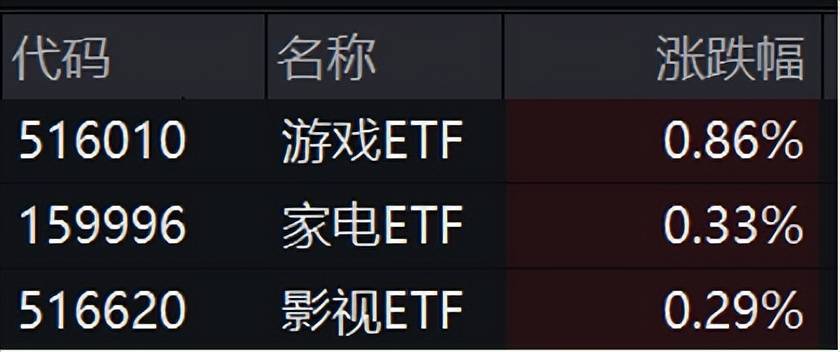
“犒赏经济”引市场聚焦,关注影视ETF(516620)、游戏ETF(516010)
Sou Hu Cai Jing· 2025-12-19 01:24
Core Insights - The article discusses the emergence of "reward economy" in China, reflecting a shift in consumer behavior towards seeking quality and emotional value in consumption, particularly in entertainment and smart home appliances [1][2] Group 1: Economic Context - China's economic development is transitioning from high-speed growth to high-quality growth, with consumer preferences evolving from mere availability to quality [1] - The recent Central Economic Work Conference emphasized the importance of domestic demand and consumption as a priority for economic strategy [1] Group 2: Industry Trends - The sectors of home appliances, gaming, and film are closely tied to consumer spending, with a notable shift from material needs to spiritual and intelligent consumption [2] - AI technology is significantly transforming the film, gaming, and home appliance industries, enhancing content production efficiency and creating new consumer experiences [2] Group 3: Future Outlook - The integration of consumption and technology is expected to lead to a dual recovery in performance and valuation for related industries, with consumption likely becoming a key investment tool in the coming year [3] - Current valuations of consumer-related products are considered low, suggesting potential investment opportunities in ETFs related to home appliances, film, and gaming [3]
三七互娱:单季度可产出超50万张2D美术素材,提效幅度超过80%
Di Yi Cai Jing· 2025-12-19 00:43
Core Viewpoint - The application of AI technology in content production has significantly enhanced efficiency and quality in the gaming industry, as highlighted by the advancements presented at the China Game Industry Annual Conference [1] Group 1: AI Technology Impact - AI technology has led to a leap in efficiency and quality in core content production processes [1] - The company can produce over 500,000 2D art materials in a single quarter, achieving an efficiency improvement of over 80% [1] - The number of AI-generated audio and video content has exceeded 10,000 pieces in a single quarter, greatly reducing content production cycles [1] Group 2: AI Code Application - AI code has been applied across four major scenarios, achieving an accuracy rate of 80% [1] - The implementation of AI code has resulted in a 30% reduction in labor costs [1]

快手-W回购123.50万股股票,共耗资约8021.93万港元,本年累计回购5131.10万股
Jin Rong Jie· 2025-12-18 15:08
Core Viewpoint - Kuaishou-W has been actively repurchasing shares, indicating management's confidence in the company's future prospects and a belief that the current stock price is undervalued [1][2]. Group 1: Share Repurchase Activity - On December 18, Kuaishou-W repurchased 1.235 million shares at an average price of 64.95 HKD per share, totaling approximately 80.22 million HKD [1]. - The total shares repurchased this year amount to 51.31 million, representing 1.18% of the total share capital [1]. - The company has been executing a share repurchase plan since 2023, with a total expenditure of about 3.997 million HKD for 714,400 shares in March 2024 [1]. Group 2: Company Performance and Market Position - Kuaishou-W, listed on the Hong Kong Stock Exchange, is a leading content community and social platform in China, with an average daily active user count of 387 million as of Q3 2023 [2]. - The company's total e-commerce transaction volume grew by 30.4% year-on-year to 290.2 billion CNY [2]. - Kuaishou's total revenue for the first three quarters of 2023 reached 90.4 billion CNY, with a focus on online marketing services, live streaming rewards, and e-commerce [2]. - The company has invested over 10 billion CNY in AI technology research and development in 2023, maintaining its competitive edge through its unique "Lao Tie Economy" ecosystem and advantages in lower-tier markets [2].

波司登蝉联世界品牌500强,诠释中国服装品牌向上力量
Xin Lang Cai Jing· 2025-12-18 14:27
Core Insights - The 2025 World Brand 500 list was announced, with Bosideng ranking 449th, marking an 8-position increase, highlighting the ongoing breakthrough of Chinese brands in the global fashion industry [5][22][23] Group 1: Brand Performance - Bosideng is the only Chinese apparel brand on the list, showcasing its market competitiveness and global influence [5][22] - The brand's value has risen to 118.058 billion yuan, maintaining its position as the top seller in the Chinese market for 30 consecutive years [8][25] - The brand aims to transition from "Made in China" to "Created in China," reflecting its commitment to innovation and quality [8][25] Group 2: Strategic Focus - The theme of the summit was "From Data to Intelligence: Brand and Marketing Growth Models in the AI Era," emphasizing the importance of innovation in brand evolution [6][23] - Bosideng's strategy includes a focus on brand leadership, cultural integration, and leveraging global resources for high-quality development [5][23][34] - The company is committed to a "dual focus" strategy on down jackets and functional fashion technology apparel, aiming to lead in the global fashion industry [34] Group 3: Technological Integration - Bosideng has integrated AI into its entire value chain, reducing product development time from 100 days to 27 days and cutting costs by over 60% [14][31] - The company has developed an industrial internet platform that automates over 90% of key processes, shortening product delivery times to 7-10 days [15][31] - Innovations such as AI fitting and digital live streaming have significantly enhanced consumer experience [15][32] Group 4: Sustainability Initiatives - Bosideng has embedded sustainability into its brand identity, aiming for net-zero emissions by 2038 and achieving the highest MSCI ESG AAA rating in the Asian textile and apparel industry [17][34] - The company has developed a circular economy initiative, ensuring 100% of down used meets responsible sourcing standards [17][34] - Bosideng's leadership in ESG practices has garnered trust from global responsible investors and consumers [17][34]

“犒赏经济”崛起:情绪买单撬动千亿消费新蓝海
Jin Rong Jie· 2025-12-18 13:53
Core Insights - The article defines "Reward Economy" as a new engine for driving domestic demand and expanding consumption, particularly among the younger demographic, with the collectible toy industry projected to reach a market size of 110.1 billion yuan by 2026 [1] Economic New Concept - "Reward Economy" is characterized by consumers purchasing non-essential goods or experiences to fulfill psychological needs and achieve immediate gratification, differing fundamentally from the "lipstick effect" which is a reaction to economic downturns [2] Market New Forces - The collectible toy industry exemplifies the "Reward Economy," experiencing explosive growth and evolving beyond the single "blind box" model into a multi-billion yuan "emotional business" [4] - As of April 2025, there are over 50,000 collectible toy-related companies in China, with leading brand Pop Mart expected to surpass 10 billion yuan in revenue for the first time in 2024 [4][5] Consumer New Portrait - Young consumers are reshaping their spending habits under the "Reward Economy," balancing frugality in essential goods with willingness to spend on emotionally resonant items like collectible toys and experiences [6] - Female consumers are increasingly driving demand, especially in artistic collectible toys, while over 60% of consumers spend no more than 5,000 yuan on collectibles [6] Industry New Changes - The rise of the "Reward Economy" is fostering innovation and cross-industry integration, leading to new business models like "Emotion+" that extend beyond collectibles into beauty and travel sectors [7] - Cultural consumption is being revitalized, with significant spending in areas like domestic cultural products and traditional crafts, contributing to the growth of the cultural industry [7] Cultural and Tourism New Scenes - The "Reward Economy" is invigorating the cultural and tourism sectors, emphasizing immersive experiences and personalized satisfaction, with local governments promoting this trend through various events [8] - Innovative models like "ticket root economy" are connecting tourism with consumption, enhancing the value of experiences through discounts and integrated services [8] Future New Directions - The future of the "Reward Economy" presents challenges, including the risk of over-commercialization and the need for sustainable product and IP development [9] - There is potential for deeper integration with technology, such as AI in design and personalized recommendations, which could enhance consumer interaction and experience [9] Regulatory New Guidance - The healthy development of the "Reward Economy" requires regulatory frameworks to promote rational consumption and address issues like quality and pricing in the market [10] - Companies are encouraged to focus on high-quality products that provide emotional value rather than merely selling experiences, fostering a market based on genuine consumer connection [10]

营销未来式:让生活服务拥抱人感经营-圆桌
Sou Hu Cai Jing· 2025-12-18 12:49
Core Insights - The report emphasizes the transformation of marketing in the lifestyle service industry, advocating for a "human-centric management" approach to address issues such as brand absence, growth challenges, service control, and organizational weaknesses [1] Group 1: Market Trends - The report highlights a significant trend in personalized luxury travel, with a 240% annual growth rate in related searches, indicating strong demand in regions like Yunnan, Sichuan, and Guangdong [1] - High-end services such as customized tours to Jiuzhaigou and luxury accommodations like The Ritz-Carlton are increasingly favored, showcasing the market potential for personalized and high-quality service offerings [1] Group 2: Strategic Framework - The core logic of human-centric management involves reinterpreting user needs through strategies that focus on matching demands, retaining customers through experiences, and engaging them with compelling content [1] - The organization has expanded its custom service team from 40 to 60 members and its content operation team from 1 to 6 members, enhancing brand strength and improving key metrics like privacy rates and repurchase rates [1] Group 3: Core Principles - The implementation of four key principles—Consensus, Compounding, Co-creation, and Context—are essential for the success of this new marketing approach [1] - The integration of AI technology is crucial for accurately understanding user needs, emotions, and potential demands expressed in reviews and comments, facilitating emotional resonance with consumers [1] Group 4: Marketing Evolution - The report outlines a shift from merely knowing consumer purchases to understanding the reasons behind those purchases, aiming to liberate lifestyle service marketing from traditional constraints [1] - The focus is on a warm, personalized management philosophy that illuminates future development paths for the industry [1]

华海清科:公司持续推进产品技术迭代与品类拓展
Zheng Quan Ri Bao Wang· 2025-12-18 12:41
Core Viewpoint - The company, Huahai Qingke, is experiencing significant growth opportunities due to advancements in AI technology and its applications in semiconductor packaging and stacking processes [1] Group 1: Product Applications - The company's CMP equipment, thinning equipment, cutting equipment, and edge-grinding equipment are critical for HBM and CoWoS chip stacking and advanced packaging processes [1] - These products have been widely adopted by several leading clients, indicating strong market demand [1] Group 2: Industry Trends - Continuous breakthroughs in domestic AI technology, particularly in algorithm architecture and computing power density, are driving deeper development opportunities in advanced packaging and chip stacking technologies [1] - The company plans to closely monitor the evolution of semiconductor industry technologies to enhance product technology iterations and expand its product categories [1] Group 3: Future Growth Strategy - The company aims to provide more advanced and diversified equipment solutions to its clients, which will inject strong momentum for sustained high growth [1]

梦饷科技郭馨宇:私域已成为品牌突破增长瓶颈的关键赛道
Zhong Zheng Wang· 2025-12-18 11:38
Core Insights - DreamX Technology emphasizes the importance of private domain e-commerce as a key growth avenue in the current market environment, where public traffic growth has peaked and customer acquisition costs remain high [1][2] - The company identifies four core development directions for the upcoming year, focusing on product quality, content enhancement, AI empowerment, and expanding an open ecosystem [1] Group 1: Private Domain E-commerce - Private domain e-commerce is seen as crucial for brands to overcome growth bottlenecks and achieve long-term user asset retention and operational efficiency [1] - Unique advantages of private domain e-commerce include low-cost customer acquisition, high-value user asset retention, precise content monetization, and building long-term user trust [1] Group 2: Development Directions - The company plans to prioritize "quality products" by upgrading its supply chain and differentiating its product strategy [1] - Content enhancement will be driven by launching a "news" column and iterating private domain live streaming tools to strengthen content marketing capabilities [1] - AI will be leveraged to build an intelligent platform that optimizes operational efficiency across the entire supply chain [1] - The company aims to expand its ecosystem by connecting with diverse online and offline partners to co-create a "winning ecosystem" [1][2] Group 3: B2R Model and AI Integration - DreamX Technology will continue to leverage its B2R (Business to Retailer) model, utilizing AI technology and private domain operational capabilities to empower merchants across the entire supply chain from product selection to user engagement [2] - The focus will be on precise audience management, creating popular products, and providing strategic support to explore niche market potential and adapt to changing consumer trends [2]