
循环经济

Search documents
荒漠变绿洲、“光伏羊”成除草“义工”、1滴水能发11次电解码险资“长钱”浇灌青海发展沃土的立体实践
Zheng Quan Ri Bao· 2025-07-07 16:52
Core Viewpoint - The transformation of arid land into productive ecosystems through the investment of insurance funds in renewable energy projects exemplifies the synergy between ecological protection, social improvement, and regional development [1][4]. Group 1: Investment in Renewable Energy - Insurance capital is actively supporting the construction of hydropower, photovoltaic, and wind power projects, which is crucial for high-quality economic development [1][7]. - China Life Insurance invested 8 billion yuan in 2017 and 9 billion yuan in 2019 to support the development of Qinghai Huanghe Company, demonstrating a long-term commitment to renewable energy [3][6]. Group 2: Ecological and Economic Benefits - The Qinghai Republican Photovoltaic Industrial Park has transformed a previously barren desert into a thriving ecosystem, showcasing the "photovoltaic oasis" effect that reduces soil evaporation and enhances local climate conditions [3][4]. - The innovative model of "photovoltaic industry + ecological protection + ecological agriculture" creates a circular economy, achieving both economic and social benefits [4][8]. Group 3: Financial Strategies and Impact - Insurance funds have a long duration and stable sources, making them well-suited for financing long-term projects like hydropower, which have a return cycle of 20 to 30 years [6][8]. - As of the first quarter of this year, China Life's asset management has over 6.3 trillion yuan in assets, with nearly 4 trillion yuan directed towards the real economy, highlighting the industry's focus on social welfare [7][8]. Group 4: Methodologies in Investment - The insurance industry has developed three core methodologies: "long money long investment" for asset-liability matching, "value symbiosis" for sharing growth benefits while promoting ecological restoration, and "strategic synergy" to enhance resource allocation efficiency [8].

7月7日晚间央视新闻联播要闻集锦
Yang Shi Xin Wen Ke Hu Duan· 2025-07-07 13:57
Group 1 - The core viewpoint emphasizes the importance of integrating urban and rural development as a significant strategic deployment by General Secretary Xi Jinping, focusing on planning, resource allocation, industrial development, public services, and ecological protection [5][1] - Various regions are actively working to construct a new pattern of urban-rural integration development, allowing residents to share a high-quality life [5][1] Group 2 - The railway department has increased the operation of tourist trains to meet the strong demand for summer travel, further stimulating consumption potential [11] - The Ministry of Housing and Urban-Rural Development reports that many provinces have accelerated the renovation of old urban residential areas, with some exceeding a 50% commencement rate [12] - The National People's Congress Standing Committee has initiated enforcement inspections of the Circular Economy Promotion Law [13] Group 3 - The Ministry of Commerce and other departments have released the "2025 Home Economics and Agriculture Action Work Plan," aiming to enhance the quality and expansion of the home service industry and support rural revitalization [17] - The Ministry of Human Resources and Social Security has launched a campaign to support employment services for college graduates and unemployed youth, providing information on policies and services [18]
工行河北省分行|向海图强 金融助力海洋经济“蓝色引擎”
Xin Lang Cai Jing· 2025-07-07 08:54
Core Viewpoint - Hebei province is accelerating the development of its marine economy, with a focus on supporting marine industries and enhancing financial services to drive growth in this sector [1][4]. Group 1: Marine Economy Development - Hebei has a coastline of 487 kilometers and oversees over 7,200 square kilometers of sea area, positioning it strategically for marine economic development [1]. - The Industrial and Commercial Bank of China (ICBC) Hebei branch is prioritizing support for marine economic development by innovating financial products and services tailored to marine industries [1][4]. Group 2: Water Resource Management - The lack of water resources in Tangshan's Caofeidian area has led to the establishment of Sanyou Blue Ocean Technology Co., which is developing a seawater desalination project to address water scarcity [2][4]. - The seawater desalination project requires an initial investment of over 700 million yuan, and ICBC Hebei branch provided a 450 million yuan green loan within nine working days to facilitate the project's launch [4]. Group 3: Cultural and Tourism Development - The marine cultural tourism industry is seen as a vital engine for activating blue economic potential and enhancing regional development [5]. - The Qinhuangdao Port Industrial Tourism Area has been recognized as a national 4A-level tourist attraction, which has increased the demand for funding to upgrade infrastructure and expand tourism projects [6]. Group 4: Port Development and Logistics - Huanghua Port, a key deep-water port in the Bohai Bay, achieved a throughput of 355 million tons in 2024, marking the highest growth rate in the province [7]. - The logistics hub project at Huanghua Port aims to enhance grain logistics efficiency and reduce transportation costs, with an expected annual grain throughput increase of 2.2 million tons [7][10]. - ICBC Hebei branch has developed a comprehensive financing plan of 897 million yuan for the logistics hub project, ensuring timely financial support for its development [10].


甘肃武威深耕资源培育特色产业
Zhong Guo Jing Ji Wang· 2025-07-07 02:11
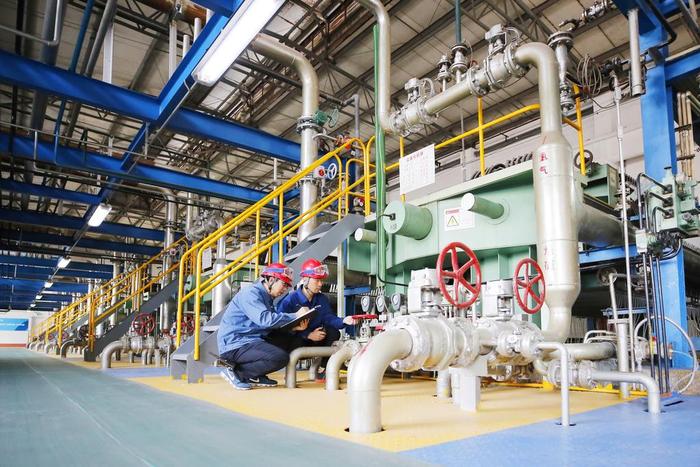
Core Insights - Gansu Wuwei City promoted investment opportunities and signed 122 projects with a total investment of 46.421 billion yuan during the 31st Lanzhou Investment and Trade Fair, focusing on various sectors including new energy, equipment manufacturing, new materials, digital industries, and deep processing of agricultural products [1][2] Group 1: New Energy Projects - New energy projects accounted for over 60% of the total investment, with significant projects including a 300 MW photovoltaic project in Liangzhou District with an investment of 4 billion yuan, which will include the construction of photovoltaic arrays and supporting booster stations [1] - Other notable projects include a 250,000 kW wind power project in Minqin County and a 2 million kW photovoltaic project in Gulang County, which will enhance energy utilization efficiency through the construction of supporting energy storage facilities [1] - The innovative decentralized wind power project for smart streetlights in Tianzhu County combines new energy with infrastructure development, showcasing a new path for green development [1] Group 2: New Materials Industry - Wuwei City is accelerating its new materials industry layout, with the Dayaoxinlei active nano-calcium-based materials industrial base project in Gulang County investing 1.12 billion yuan and producing 200,000 tons of nano-calcium-based materials annually [2] - A high-performance silicon-carbon anode materials project will be developed in three phases with a total investment of 1 billion yuan, providing critical material support for the new energy industry chain [2] - Additional projects include a 60,000 tons per year lithium-ion battery anode materials integration project in Minqin County and a static pressure graphite purification project in Liangzhou District, further enriching the new materials industry ecosystem [2] Group 3: Agricultural and Environmental Projects - The signed projects in the agricultural sector focus on technology empowerment, such as the edible mushroom smart industrial park in Tianzhu County and the modern potato industrial park in Liangzhou District, which aim to enhance the added value of the industry through intelligent technology [2] - In the green and environmental sector, projects like the comprehensive utilization project for 40,000 tons of waste lithium batteries in Gulang County and the Tianzhu Impression biological research and development base reflect the deep practice of circular economy concepts [2]
守护“中华水塔” 筑就生态高地
Zhong Guo Neng Yuan Wang· 2025-07-07 01:21
Group 1 - The ecological system of the Qinghai-Tibet Plateau is diverse yet fragile, necessitating a focus on ecological protection and maximizing ecological functions [3][4][5] - Qinghai is a resource-rich province with significant responsibilities for national ecological security and sustainable development, particularly in protecting the source of the Yangtze, Yellow, and Lancang rivers [4][6] - The development of circular economy is essential for improving resource utilization efficiency while maintaining ecological balance, particularly in the context of salt lake resource development [10][11] Group 2 - The Chaka Salt Lake is a major strategic resource for Qinghai, with a total area of 5,856 square kilometers and a total salt resource reserve of 60 billion tons, making it the largest salt lake in China [10][11] - Qinghai's potassium fertilizer production is projected to reach 7.49 million tons in 2024, reflecting a growth of 4.8%, while lithium carbonate production is expected to reach 135,000 tons, a 22.3% increase [12] - The Maerdang Hydropower Station has implemented fish passage devices to protect biodiversity and has released 310,000 fish since its construction, contributing to the ecological balance of the Yellow River basin [12] Group 3 - The development of the circular economy in Qinghai includes various industries such as salt lake chemicals, oil and gas chemicals, and new materials, all emphasizing low carbon emissions [16] - The establishment of a zero-carbon industry park in Golmud is aimed at enhancing the green development of the local economy, with a focus on wind and solar energy solutions [17] - The integration of advanced technologies in the lead smelting project in the Chaka Salt Lake area demonstrates a commitment to environmental protection and resource recycling [15]
汉旺镇的新﹃锂﹄想
Si Chuan Ri Bao· 2025-07-06 23:28
Group 1 - Hanwang Town is an industrial hub in Deyang Mianzhu City, focusing on lithium battery new energy, machinery processing, and phosphochemical industries, with an industrial output value exceeding 19.8 billion yuan in 2024 [1][2] - The Deyang-Abazhou Ecological Economic Industrial Park, established in Hanwang, is a provincial-level chemical park that integrates resources and industries through a "flying economy" model, forming a complete industrial chain from raw materials to lithium battery cathode materials [1][2] - The lithium battery industry in Hanwang is projected to surpass 16.7 billion yuan in 2024, with significant growth driven by strategic planning and the establishment of key projects [2] Group 2 - The Deyang-Abazhou Industrial Park is expanding to 20 square kilometers, attracting over 400 acres of new project land, indicating strong confidence in the future of basic lithium salt [3] - The industrial park has developed a complete industrial chain from upstream raw materials to lithium battery cathode materials, supported by targeted investment attraction and the transformation of traditional chemical enterprises into lithium battery new materials [3][4] - The lithium production capacity in Hanwang has seen explosive growth, increasing from 40,000 tons in 2018 to over 200,000 tons in 2024, with future projects expected to reach a total capacity of 500,000 tons [2]
二十年“两山”路金融之笔绘就绿色画卷——农行浙江省分行的绿色金融实践
Zheng Quan Ri Bao Zhi Sheng· 2025-07-06 15:39
Core Concept - The article highlights the successful implementation of the "Two Mountains" concept in Zhejiang Province, emphasizing the integration of ecological preservation with economic development through innovative financial support and green initiatives [1][8]. Group 1: Green Financial Initiatives - Agricultural Bank of China (ABC) Zhejiang Branch has significantly increased its green credit balance to 691 billion yuan by June 2025, with an increase of over 94 billion yuan since the beginning of the year [1]. - ABC has provided over 9 billion yuan in credit support for the development of ecological tourism projects, such as the "Cloud Grassland" project, which attracts over 1 million visitors annually [2][3]. - The bank has also introduced innovative loan products like "Lake Sheep Facility Loan" to support low-carbon transformation in agriculture, resulting in an annual sales revenue of 200,000 yuan from organic fertilizers [4][5]. Group 2: Industry Transformation and Employment - The "Cloud Grassland" project has created over 6,000 direct and indirect jobs, boosting local businesses such as boutique hotels and specialty shops [3]. - ABC's financial support has enabled companies like Lijun Thermal Equipment Co., Ltd. to achieve significant advancements in green technology, including the development of ultra-low nitrogen gas boilers [6][7]. - The bank has established supply chain financing for nearly 300 green core enterprises, facilitating the transition of 600 to 700 downstream companies towards green technologies [7]. Group 3: Circular Economy and Resource Recovery - Aerospace Guohua Resource Recycling (Huzhou) Co., Ltd. has received tailored financial support from ABC, enabling it to process 70,000 tons of organic solvents annually, contributing to the lithium battery industry [8]. - The financial backing from ABC has allowed the company to create a closed-loop system for resource recovery, enhancing sustainability in the green industry [8].

从“食用菌之乡”到“零碳产业园” 武威多产业借兰洽会破圈
Zhong Guo Xin Wen Wang· 2025-07-05 12:10
Group 1 - The core focus of the 31st Lanzhou Investment and Trade Fair is on attracting investment in various sectors, particularly in new energy projects, which account for over 60% of the total investment amount [1][3] - A total of 122 projects were signed during the event, with a total investment amount of 46.421 billion yuan [1][3] - The signing of strategic cooperation agreements with Wuxi City and Envision Energy highlights the commitment to developing a zero-carbon industrial park and promoting economic collaboration [1][3] Group 2 - The new energy projects include a 3 million kilowatt photovoltaic project in Liuzhou District, which will feature solar power arrays and supporting substations, along with ecological restoration efforts [3] - Innovative projects in the new materials sector include a 200,000-ton annual production capacity for nano-calcium-based materials and a lithium-ion battery anode material project with an annual output of 60,000 tons [3] - The focus on agricultural products and food processing emphasizes the integration of technology to enhance industry value, as seen in the smart mushroom industry park and modern potato industry park [3] Group 3 - The region is recognized for its diverse agricultural products and has established a complete industrial chain from grain to food, including significant capacities for wind power generation [5] - Wu Wei is developing a first-class development ecosystem driven by leading enterprises, supported by favorable policies and efficient services, aiming for breakthroughs in new industrialization and productivity [5]
1.18亿元外资项目落户静海
Sou Hu Cai Jing· 2025-07-05 11:33
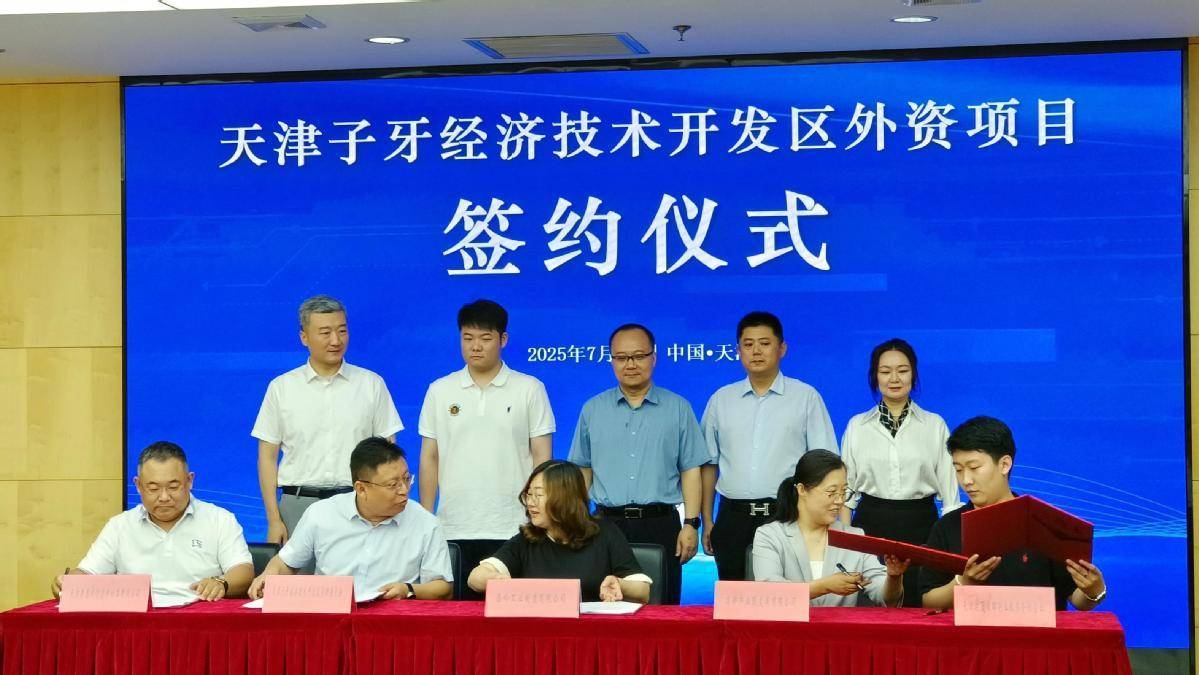
Core Viewpoint - The Tianjin Ziya Economic and Technological Development Zone has successfully signed its first foreign investment project, totaling 118 million yuan, marking a significant step in attracting foreign capital to the region [1][2]. Group 1: Foreign Investment Projects - Three foreign investment projects have been signed, including West Ridge Industrial Manufacturing, Tianjin Delei Chengxin Plastic Products, and Tianjin Disheng Yaohui Venture Capital, with a total investment of 118 million yuan [2][4]. - The projects are expected to generate over 16 million yuan in annual tax revenue and create 335 jobs [4]. Group 2: Economic Impact and Technological Innovation - The West Ridge Industrial Manufacturing project focuses on renewable energy roofing tiles using recycled materials, aiming to penetrate markets in Europe, America, Japan, and South Korea [4][8]. - The introduction of Korean non-destructive disassembly technology by Delei Chengxin Plastic will enhance the automotive parts manufacturing sector and open international market opportunities [9]. - The projects create a complete cycle of "technology introduction - industrial transformation - capital operation," promoting the development of a composite industrial base in the Ziya Economic Zone [9]. Group 3: Supportive Policies and Services - The Ziya Economic Zone has prepared a comprehensive policy package for foreign investments, including tax incentives, factory subsidies, talent support, and foreign exchange facilitation [10]. - A "one-on-one" project service system has been initiated to provide full-cycle support from business registration to equipment installation, enhancing the investment environment [10]. Group 4: Future Development Strategy - The Ziya Economic Zone aims to leverage this signing event to focus on high-end manufacturing and modern service industries, building international cooperation bridges and enhancing industrial capabilities [13].
把道理说进心坎里
Jing Ji Ri Bao· 2025-07-05 07:20
Group 1 - The article discusses how Jiangxi Copper Corporation's Dexing Copper Mine is transforming low-grade copper ore into valuable resources through innovative approaches and employee engagement [1][2] - The "Lixiang Dexing"宣讲 model has been implemented to closely connect policies and theories with employees' interests, resulting in over 10 team visits to workgroups this year [1] - The Dexing Copper Mine has established a comprehensive党建工作 framework that integrates political and organizational advantages into competitive and developmental advantages for the enterprise [1] Group 2 - Digital transformation is a critical focus for Dexing Copper Mine, achieving a provincial manufacturing digital development level of L9 and earning the title of "2024 IDC China Future Digital Industrial Leader" [1] - The mine has successfully converted over 800 hectares of abandoned land into carbon sink forests through innovative reclamation techniques led by party member teams [2] - Jiangxi Copper Corporation is promoting a circular economy by utilizing waste materials and developing sustainable practices, thereby enhancing the integration of ecological and economic benefits [2]