
国产替代

Search documents
A股收评 | 指数集体飘红!成交再超3万亿 商业航天引爆太空光伏!多宽基ETF又放量
智通财经网· 2026-01-23 08:28
1月23日,A股三大指数小幅收涨,成交再超3万亿。截至收盘,沪指涨0.33%,深成指涨0.79%,创业板 指涨0.63%。北交所个股走强,北证50指数涨超3%。 点评:申万宏源研报称,我国提交超20万颗卫星星座申请,标志着商业航天进入规模化部署新阶段,将 直接带动太空光伏长期需求。太空光伏面临从高效砷化镓到规模化硅基HJT,再到远期钙钛矿叠层的技 术迭代路径。 2、医药商业概念活跃 医药商业概念表现活跃,益丰药房、人民同泰涨停,药易购、华人健康、九州通、老百姓、漱玉平民跟 涨。 点评:消息面上,9部门发布关于促进药品零售行业高质量发展的意见,支持零售药店进行兼并重组。 鼓励药品零售企业依法开展横向并购与重组。中邮证券认为,零售药店行业在2025年逐季加速出清,客 流有望向头部集中。龙头药房凭借其专业化的服务能力、强大的供应链体系等在行业整合阶段强者恒 强。 值得关注的是,数只沪深300ETF盘中多次放量,截至目前,沪深300ETF易方达(510310)成交额达164亿 元创上市来新高,沪深300ETF华泰柏瑞(510300)成交额近190亿元,沪深300ETF华夏(510330)成交额超 115亿元,沪深30 ...
昊志机电:2025年净利同比预增54.4%—99.03%
Zheng Quan Shi Bao Wang· 2026-01-23 08:19
Core Viewpoint - The company, Haozhi Electromechanical, expects a significant increase in net profit for 2025, driven by growth in the PCB market due to AI computing infrastructure and consumer electronics upgrades [1] Group 1: Financial Projections - The company forecasts a net profit attributable to shareholders of between 128 million and 165 million yuan for 2025, representing a year-on-year growth of 54.4% to 99.03% [1] Group 2: Market Drivers - The growth in the PCB market is attributed to increased demand from AI computing infrastructure and upgrades in consumer electronics [1] - The acceleration of domestic substitution and technological innovation is also contributing to the sales revenue increase of the company's PCB processing equipment and various spindle products [1]

昊志机电:预计2025年净利润同比增长54.40%~99.03%
Xin Lang Cai Jing· 2026-01-23 08:17
Core Viewpoint - The company expects a significant increase in net profit for the fiscal year 2025, projecting between 128 million to 165 million yuan, representing a year-on-year growth of 54.40% to 99.03% [1] Group 1: Market Demand and Growth Drivers - The growth in the PCB market demand is attributed to advancements in AI computing infrastructure and upgrades in consumer electronics [1] - The acceleration of domestic substitution and technological innovation has also contributed to the increased demand for the company's PCB specialized processing equipment and various spindle products [1] Group 2: Financial Performance - The sales revenue of PCB specialized processing equipment and various spindle products has significantly increased year-on-year due to the aforementioned market demand [1] - The scale effect has led to an improvement in product gross margin, enhancing the overall operational capability of the company [1] - The substantial growth in net profit for 2025 is driven by these factors, indicating a strong financial outlook for the company [1]
昊志机电:2025年净利同比预增54.40%~99.03% PCB专用加工设备及多类主轴产品销售收入大幅提升
Mei Ri Jing Ji Xin Wen· 2026-01-23 08:17
Core Viewpoint - The company, Haozhi Electromechanical, forecasts a net profit attributable to shareholders for the year 2025 to be between 128 million and 165 million yuan, representing a year-on-year growth of 54.40% to 99.03% [1] Group 1: Financial Performance - The expected net profit for 2025 is projected to be between 128 million and 165 million yuan [1] - This represents a significant increase compared to the previous year, with growth rates ranging from 54.40% to 99.03% [1] Group 2: Market Drivers - The growth in the PCB market demand is driven by advancements in AI computing infrastructure and upgrades in consumer electronics [1] - The acceleration of domestic substitution and technological innovation has contributed to the increase in sales revenue of the company's PCB processing equipment and various spindle products [1] Group 3: Operational Efficiency - The scale effect has led to an improvement in gross profit margins, enhancing the company's operational capabilities [1]
独家丨通信测试厂商赛迈获得超亿元A轮融资,加速国家战略新兴领域和海外业务布局
雷峰网· 2026-01-23 07:47
Core Insights - The article highlights the rapid growth and market potential of the company Saimai Measurement Control, which has achieved an annual growth rate of 30-50% and serves various sectors including satellites, drones, and 5G chips [2][3]. Group 1: Company Overview - Saimai Measurement Control recently completed over 100 million yuan in Series A financing, with investments from multiple firms including Yida Capital and October Capital [3]. - Founded in 2021, the company has a founding team with over 10 years of industry experience, and its core technical members come from renowned companies such as NI, R&S, Keysight, and Huawei [3]. - The company became profitable in its second year and is recognized as the first domestic modular instrument manufacturer covering all industry sectors from DC to RF testing [4]. Group 2: Market Potential - The domestic general electronic measurement instrument market is approximately 41 billion yuan in 2023, with the modular testing equipment market at around 8 billion yuan. By 2028, the electronic measurement instrument market is expected to reach 60 billion yuan, with modular testing instruments exceeding 12 billion yuan [3]. - The top five overseas manufacturers hold 50% of the Chinese electronic measurement instrument market share, while domestic products have a localization rate of less than 30% [4]. Group 3: Revenue and Future Plans - Saimai Measurement Control is expected to achieve nearly 100 million yuan in revenue from the semiconductor RF sector in 2024, and has made progress in the aerospace sector with projected revenues of over 20 million yuan in 2024 and 30-40 million yuan in 2025 [5]. - The company is also expanding into overseas markets, having established partnerships with clients such as Panasonic and NEC, and plans to set up a factory in Singapore by 2026 to serve the Southeast Asian market [5].

芯碁微装:PCB与泛半导体双轮驱动,业绩实现高质量增长-20260123
Soochow Securities· 2026-01-23 07:25
Investment Rating - The investment rating for the company is "Buy" (maintained) [1] Core Insights - The company has released its 2025 annual performance forecast, expecting a net profit attributable to shareholders of between 275 million to 295 million yuan, representing a year-on-year growth of 71.13% to 83.58% [2] - The fourth quarter is projected to see a single-quarter net profit of 86 million yuan, with a quarter-on-quarter increase of 52% [2] - The high-quality growth is primarily driven by breakthroughs in high-end PCB and semiconductor businesses [2][3] Financial Performance Summary - The company anticipates total revenue of 1.61 billion yuan in 2025, with a year-on-year growth of 68.82% [1][6] - The net profit attributable to shareholders is expected to reach 294.67 million yuan in 2025, with a significant increase of 83.37% compared to the previous year [1][6] - The earnings per share (EPS) is projected to be 2.24 yuan in 2025, with a corresponding P/E ratio of 82.37 [1][6] Business Growth Drivers - The global demand for AI computing power is driving the PCB industry towards high-layer and high-density upgrades, with the company positioned as a leading provider of high-end laser direct imaging (LDI) equipment [4] - The successful launch of the second production base has effectively expanded the capacity for high-end equipment, ensuring efficient order delivery [4][6] - The advanced packaging business has become a new growth engine for the company, with significant orders from leading domestic customers and successful product acceptance for mass production [5][6]

科马材料:工艺革新 + 场景拓宽,打造国产摩擦材料核心竞争力
Sou Hu Cai Jing· 2026-01-23 07:15
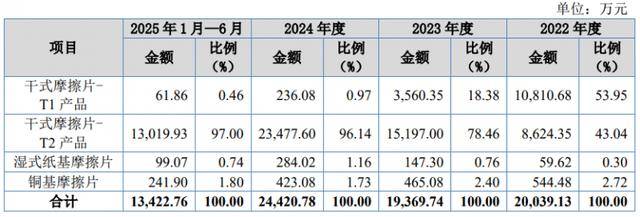
Core Viewpoint - Zhejiang Kema Material Co., Ltd. has officially listed on the Beijing Stock Exchange, leveraging its leading T2 core technology and strong performance in the automotive parts sector, positioning itself as a high-quality investment target in the capital market [1] Financial Performance - The company has demonstrated robust revenue and profit growth, with revenues recorded at 202 million, 199 million, 249 million, and 139 million for the years 2022 to 2025 and the first half of 2025, respectively, showing a strong year-on-year growth of 11.37% in the first half of 2025 [2] - The non-net profit has also seen significant growth, reaching 37 million, 44 million, 69 million, and 43 million during the same periods, indicating improved business revenue capacity and profit quality [2] - The gross margin has increased to 50.19% in the first half of 2025, driven by the transition to the T2 process, with the T2 dry friction plate achieving a gross margin of 51.36% [2] Technological Advantage - The T2 dry extrusion process is globally leading, providing a strong competitive edge for the company. This process significantly enhances environmental performance, production efficiency, and product quality compared to the traditional T1 wet process [3] - Kema Material is the first domestic company to achieve large-scale industrial application of the T2 process, establishing a solid industry barrier through its technological scarcity [3] Revenue Structure - The T2 dry friction plate has become the company's main revenue driver, with revenues of 86 million, 152 million, 235 million, and 130 million from 2022 to the first half of 2025, increasing its revenue share from 43.04% to 97.00% in the first half of 2025 [4] Market Demand - The market demand for dry friction plates is expanding, particularly in the commercial vehicle sector, where manual transmission models dominate due to their cost-effectiveness and efficiency. The AMT automatic transmission is also gaining traction in the European and American markets [6] - In the passenger vehicle sector, the rise of hybrid electric vehicles is driving demand, with the proportion of vehicles requiring dry friction plates reaching 27.94% in 2024 [6][7] - The export market for "motor vehicle clutches and their parts" has shown steady growth, increasing from 7.569 billion to 9.176 billion from 2022 to 2024, indicating strong demand in emerging markets [7] Strategic Initiatives - Kema Material is strategically expanding into the wet paper-based friction plate market, aiming to capitalize on domestic replacement opportunities, with a focus on increasing the domestic production rate [8] - The company plans to use 73.32% of the 206 million raised from its IPO for upgrading the T2 dry extrusion process, which will add an annual production capacity of 10 million plates [8] - Kema Material holds 80 authorized patents and has participated in drafting 13 national and industry standards, establishing a closed-loop innovation mechanism to support its domestic replacement strategy [8]
NOA将不再是BEV专属?
Zhong Guo Qi Che Bao Wang· 2026-01-23 06:53
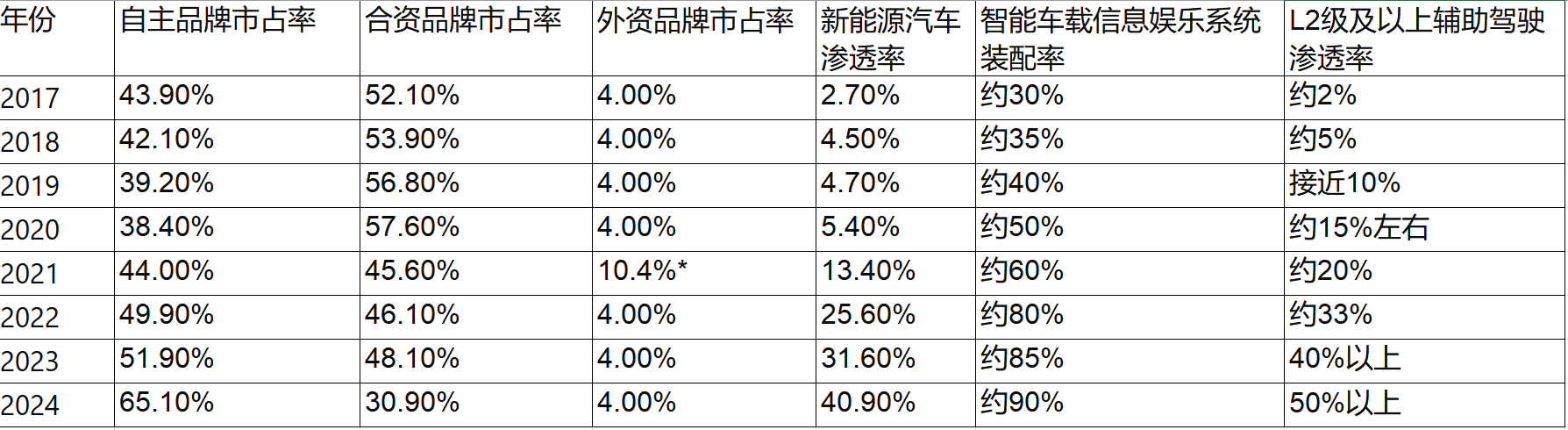
Core Insights - Goldman Sachs' report titled "2026 Outlook: Navigating Divergence" highlights 2026 as a pivotal year for the adoption of Battery Electric Vehicles (BEVs) and Navigation on Autopilot (NOA), suggesting that these technologies may develop into separate standards [1] - The report indicates a slowdown in BEV sales in Europe and the U.S., with consumers showing interest in advanced NOA but being cautious about purchasing BEVs [1][7] - In China, the integration of NOA in vehicles has led to a significant increase in sales, showcasing the advantages of BEVs in utilizing NOA, while traditional fuel vehicles are losing market share [1][5] Group 1: Market Trends - The market share of domestic brands in China has risen from 43.9% in 2017 to 51.9% in 2023, with the penetration rate of new energy vehicles increasing from 2.7% to 31.6% during the same period [3] - The report notes that the global electricity consumption of BEVs is expected to grow from 0.7% in 2024 to 2.5% by 2030, despite a stabilization in new BEV sales [7] - The competition landscape is shifting as NOA enhances the recognition and purchase intent for domestic brands, narrowing the gap with joint venture brands [5][6] Group 2: Technological Developments - Many automotive companies are focusing on applying NOA in hybrid models, although Goldman Sachs expresses skepticism about the medium-term effectiveness of this strategy [13] - The report lists various global automakers' progress in developing electronic and electrical architectures and end-to-end autonomous driving technologies, with companies like Tesla and BYD having completed their developments [14] - Traditional fuel vehicle manufacturers are exploring NOA applications in hybrid vehicles, but face challenges due to the inherent complexities of integrating NOA into their existing systems [15][16] Group 3: Future Outlook - The report suggests that by 2026, NOA may not solely rely on BEVs for growth, as traditional vehicles could also play a role in developing their own systems [19] - Concerns are raised about whether hybrid vehicles will be able to catch up with BEVs in terms of NOA capabilities, especially as BEVs are already testing Level 3 autonomous driving [19] - The future of NOA in traditional vehicles will depend on their ability to attract consumers and demonstrate value, as the market for traditional fuel vehicles remains substantial [19]
芯碁微装(688630):PCB与泛半导体双轮驱动,业绩实现高质量增长
Soochow Securities· 2026-01-23 06:34
Investment Rating - The investment rating for the company is "Buy" (maintained) [1] Core Insights - The company has released its 2025 annual performance forecast, expecting a net profit attributable to shareholders of between 275 million to 295 million yuan, representing a year-on-year growth of 71.13% to 83.58% [2] - The fourth quarter is projected to show a significant increase in net profit, with a median of 86 million yuan, reflecting a quarter-on-quarter growth of 52% [2] - The high-quality growth is primarily driven by breakthroughs in high-end PCB and semiconductor businesses [2][3] Financial Performance Summary - The company anticipates total revenue of 1.61 billion yuan in 2025, with a year-on-year increase of 68.82% [1][6] - The net profit attributable to shareholders is expected to reach 294.67 million yuan in 2025, with a year-on-year growth of 83.37% [1][6] - The earnings per share (EPS) is projected to be 2.24 yuan in 2025, with a corresponding P/E ratio of 82.37 [1][6] Business Growth Drivers - The global demand for AI computing power is driving the PCB industry towards high-layer and high-density upgrades, with the company positioned as a leading provider of high-end laser direct imaging (LDI) equipment [4] - The successful launch of the second production base has effectively expanded the capacity for high-end equipment, ensuring efficient order delivery [4][6] - The advanced packaging business has become a new growth engine for the company, with significant orders from leading domestic customers and successful product acceptance for mass production [5][6]
半导体材料设备板块延续调整,科创半导体设备ETF(588710)助力布局存储芯片“超级周期”
Xin Lang Cai Jing· 2026-01-23 06:24
Group 1 - The semiconductor materials and equipment sector continues to adjust, but market interest remains high due to rapid growth in demand for high-end semiconductors driven by AI infrastructure [1][6] - TSMC's advanced 3nm process faces production bottlenecks, with capacity fully booked until 2027; Morgan Stanley predicts a 50% price increase for DDR4 in Q1 2026, indicating a potential "super cycle" in memory chips [1][6] - The Kweichow Moutai Semiconductor Equipment ETF (588710) has seen net inflows in 15 out of the last 20 trading days, totaling 855 million yuan, increasing its shares to 978 million and total assets to 1.87 billion yuan [1][6] Group 2 - The domestic semiconductor equipment sector benefits from accelerated domestic substitution, with the localization rate of semiconductor equipment steadily increasing since 2018 [1] - The Kweichow Moutai Semiconductor Equipment ETF (588710) and its linked funds are positioned at the intersection of the AI hardware wave and domestic substitution, with 84.8% of the index weight in semiconductor equipment and materials [1] - Since 2025, the Kweichow Moutai Semiconductor Materials and Equipment Index has increased by 95.21%, outperforming the CSI Semiconductor Materials and Equipment Index, which rose by 89.97% during the same period [1]
