
专利悬崖

Search documents
跨国药企半年报:冰火两重天,创新突围战打响
2 1 Shi Ji Jing Ji Bao Dao· 2025-08-12 06:12
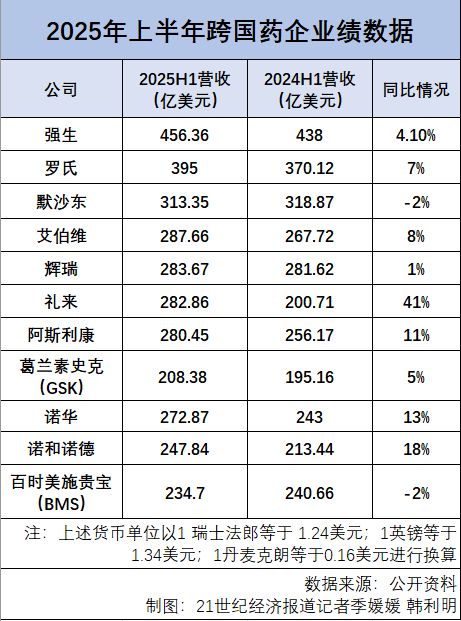
Core Insights - The global pharmaceutical industry is experiencing a bifurcation in performance, with some companies achieving strong results while others face declines due to patent expirations, increased competition, and regulatory pressures [1][4][20] - Major pharmaceutical companies are transitioning from a high-growth phase to a new competitive stage focused on innovation and strategic focus [1][4] Financial Performance - Johnson & Johnson leads with a revenue of $45.636 billion in H1 2025, the only company to surpass $40 billion [2] - Eli Lilly and Novo Nordisk show significant growth, with Eli Lilly's revenue increasing by 41% to $28.286 billion and Novo Nordisk's by 18% to $24.784 billion, driven by GLP-1 drugs [2][15] - Merck and Bristol-Myers Squibb (BMS) report declines, with BMS's revenue down 2% to $23.470 billion, primarily due to a 17% drop in legacy products [2][6] Strategic Adjustments - Companies are optimizing product structures and adjusting strategies to regain growth, with BMS increasing its revenue guidance to $46-47.5 billion for 2025 [6][8] - Merck has initiated a multi-year optimization plan aiming for $3 billion in annual savings by 2027, including workforce reductions and real estate optimization [8][10] - The industry is witnessing a trend of mergers and acquisitions as companies seek to bolster their pipelines amid patent expirations [21][22] Innovation and Product Focus - The GLP-1 class of drugs is emerging as a key growth driver, with sales expected to exceed $17 billion by 2031, reflecting a compound annual growth rate of 15.6% [14][15] - BMS and other companies are focusing on high-potential products, with BMS's growth products generating $12.159 billion, a 17% increase [6][7] - Companies are increasingly prioritizing high-return investment areas and optimizing their R&D pipelines to enhance operational efficiency [4][9][10] Market Dynamics - The impending "patent cliff" is expected to impact over 133 drugs, with a potential revenue loss of $350 billion for major pharmaceutical companies [20] - The competitive landscape is shifting, with companies needing to adapt to local market conditions and consumer demands to maintain their positions [5][13] - The focus on core products and strategic partnerships is becoming essential for sustaining growth in a challenging market environment [19][22]

策略周思考:交易中报季,追还是切?
Guoxin Securities· 2025-08-11 07:18
Group 1 - The report highlights a contraction in the profitability effect of the innovative drug sector, with the Wande Innovative Drug Index and the Innovative Drug Concept Index declining by 1.08% and 2.10% respectively, and the Hang Seng Innovative Drug Index experiencing a maximum drawdown of 4.97% during the week [1][10][11] - Short-term technical patterns and capital flows show a divergence, with significant inflows into ETFs despite the recent downturn in the innovative drug sector, indicating potential resilience [1][11] - Over 40% of companies in the innovative drug sector are set to disclose their mid-year reports after August 26, which may introduce volatility in the sector's performance due to historical patterns observed in earnings disclosures [1][18] Group 2 - The report suggests that the probability of success in "chasing" stocks during the mid-year reporting season may be lower than "cutting" positions, as historical data indicates that absolute returns tend to diminish over time after initial earnings surprises [2][40][46] - The analysis indicates that stocks with stagnant prices and forward valuations, such as those in non-banking financials, food and beverage, and household appliances, may present better opportunities for "cutting" strategies [3][50] - The report identifies sectors with a favorable technical setup, including telecommunications, electronics, and automotive, where over 30% of stocks are in a bullish alignment, suggesting potential for upward movement [3][57] Group 3 - Long-term valuation trends indicate that major drugs like Merck's Keytruda and AbbVie's Humira have the potential to drive significant revenue growth, but face challenges from patent expirations and declining sales, which could lead to rapid underperformance [1][28][32] - The report emphasizes the importance of understanding the "patent cliff" phenomenon, which affects multinational corporations (MNCs) and creates opportunities for domestic companies to capitalize on their R&D cost advantages [1][36] - The innovative drug sector is expected to maintain upward valuation potential in the medium to long term, driven by the intersection of domestic talent advantages and the challenges faced by international pharmaceutical giants [1][36]
下一个修美乐藏不住了
3 6 Ke· 2025-08-07 23:17
Core Insights - AbbVie is poised to fill the $20 billion gap left by Humira with its new immunology drugs Skyrizi and Rinvoq, which are expected to generate over $25 billion in combined sales this year, significantly exceeding initial forecasts [1][4] - Skyrizi's sales reached $4.4 billion in Q2, showing a year-on-year growth of 61.8%, while Rinvoq generated $2 billion, indicating strong momentum for both products [4][5] - The rapid growth trajectory of Skyrizi suggests it could surpass $20 billion in sales by 2026, establishing it as a potential new leader in the immunology market [2][4] Sales Performance - Skyrizi's global sales are projected to exceed $10 billion in 2024, driven by its expanding indications in inflammatory bowel disease (IBD) and dermatological conditions, with a year-on-year growth of 50.9% [3][4] - AbbVie has raised Skyrizi's 2025 sales forecast to $17.1 billion, a 46% increase from the previous year, with $4 billion of this growth attributed to IBD indications [4][6] - Rinvoq is also expected to contribute significantly, with a clear three-phase strategy targeting various indications, including rheumatoid arthritis and IBD [5][6] Competitive Landscape - The immunology market is becoming increasingly competitive, with major players like Johnson & Johnson and Eli Lilly entering the IL-23 target space, raising concerns about market share and growth sustainability [7][8] - AbbVie maintains confidence in Skyrizi's market position, citing its increasing share among treated patients and its differentiated advantages over competitors [7][8] - The rapid pace of innovation in the immunology sector is compressing the window for new entrants, making it crucial for companies to establish strong clinical differentiation and market presence [10][11] Future Outlook - The transition from Humira to Skyrizi and Rinvoq exemplifies the need for continuous innovation in the pharmaceutical industry, as the market dynamics shift rapidly [10][11] - AbbVie is entering a new phase with its immunology portfolio, having no major patent expirations in the next decade, providing it with more strategic options [4][10] - The success of Skyrizi and Rinvoq highlights the importance of robust clinical data and broad indications in driving growth in the competitive landscape of immunology [6][9]

王座失落之后,默沙东6000人大裁员
经济观察报· 2025-08-07 15:10
Core Viewpoint - Merck's pharmaceutical business is experiencing a significant slowdown due to declining sales of its key products, Keytruda and HPV vaccine, leading to a comprehensive cost-cutting plan and large-scale layoffs [1][2][3]. Financial Performance - In the first half of 2025, Merck reported total revenue of $31.3 billion, a 2% year-over-year decline, with pharmaceutical revenue at $27.7 billion, down 3% [2]. - Revenue from the China region plummeted to approximately $1.1 billion, a staggering 70% decrease year-over-year [2]. Cost-Cutting Measures - Merck announced a plan to save $3 billion annually by 2027, which includes laying off about 6,000 employees, representing 8% of its global workforce [6]. - The layoffs are expected to save approximately $1.7 billion annually, with the first quarter of 2025 already accounting for $649 million in related expenses [6]. HPV Vaccine Sales Decline - Sales of Merck's HPV vaccine fell sharply, with first-half sales at $2.453 billion, a 48% year-over-year decline, and second-quarter sales dropping 55% to $1.126 billion [8]. - The decline in sales is primarily attributed to decreased demand in China, where revenue from the HPV vaccine was only $193 million in Q1 2025 and $0 in Q2 2025 due to a supply suspension [9][10]. Market Dynamics in China - The Chinese market, once a stronghold for Merck, saw its contribution to global revenue drop from 12.5% in 2023 to less than 4% in the first half of 2025 [11]. - The introduction of competing HPV vaccines at significantly lower prices has intensified market pressure on Merck's offerings [10]. Key Product Performance - Keytruda, which generated $15.2 billion in sales in the first half of 2025, has seen its growth rate slow to 7%, down from nearly 20% in previous years [13]. - The looming expiration of Keytruda's patents by 2028 raises concerns about future revenue, necessitating the identification of new blockbuster products [15]. Strategic Acquisitions - Merck has been actively pursuing acquisitions to bolster its product pipeline, including a $10 billion acquisition of Verona Pharma, which offers a promising COPD treatment [15][16]. - Other significant acquisitions include Acceleron for $11.5 billion and Prometheus Biosciences for $10.8 billion, aimed at expanding into new therapeutic areas [16].


王座失落之后,默沙东6000人大裁员
Jing Ji Guan Cha Wang· 2025-08-07 15:03
Core Viewpoint - Merck's disappointing performance in the first half of 2025 has led to a significant cost-cutting plan, including a global layoff of approximately 6,000 employees, which is about 8% of its workforce. The company aims to save $3 billion annually by 2027 through this initiative [2][3][4]. Financial Performance - Merck reported total revenue of $31.3 billion for the first half of 2025, a 2% year-over-year decline. The pharmaceutical business generated $27.7 billion, down 3% year-over-year. Revenue from the China region plummeted by 70% to approximately $1.1 billion [2][11]. - The sales of Merck's HPV vaccine in the first half of 2025 were $2.453 billion, a staggering 48% decrease year-over-year, with a 55% drop in the second quarter alone [7][8]. Layoff and Cost-Cutting Measures - The company plans to cut around 6,000 jobs globally, which is expected to save approximately $1.7 billion annually by 2027. The layoffs will primarily affect administrative, sales, and research positions [3][4]. - Merck has already accounted for $649 million in expenses related to the layoff plan in its GAAP earnings for the second quarter of 2025 [5]. Market Dynamics - The decline in HPV vaccine sales is attributed mainly to decreased demand in China, where Merck has paused supply due to market conditions and high inventory levels [9][10]. - Merck's revenue from China, which had previously been a strong market, has seen a drastic decline from $6.7 billion in 2023 to approximately $1.1 billion in the first half of 2025, representing less than 4% of its global pharmaceutical business [11]. Product Pipeline and Future Outlook - Merck's key product, Keytruda, generated $15.2 billion in sales in the first half of 2025, accounting for 48% of total revenue, but its growth rate has slowed significantly compared to previous years [12][13]. - The company is actively seeking new blockbuster products to replace Keytruda, which faces patent expiration in 2028. Recent acquisitions, such as Verona Pharma for $10 billion, aim to bolster its product pipeline [14][15][16].

益诺思(688710):国内安评领先,转型综合CRO
Orient Securities· 2025-08-07 01:19
Investment Rating - The report gives a "Buy" rating for the company for the first time, with a target price of 51.48 CNY based on a 52x P/E ratio for 2025 [5][8]. Core Insights - The company is a leading player in non-clinical safety evaluation in China, backed by strong resources from its parent company, China National Pharmaceutical Group [12][16]. - The CRO (Contract Research Organization) market is expected to see growth driven by increasing demand for innovative drug development and favorable policies [12][44]. - The company has a comprehensive range of GLP (Good Laboratory Practice) certifications, enabling it to provide international standard services [21][22]. Financial Forecast and Investment Recommendations - The projected EPS for 2025-2027 is 0.99, 1.16, and 1.42 CNY respectively, indicating significant growth potential due to the company's competitive advantages [5]. - Revenue is expected to grow from 1,038 million CNY in 2023 to 1,490 million CNY in 2027, with a CAGR of approximately 14.8% [7]. - The company's net profit is forecasted to increase from 194 million CNY in 2023 to 200 million CNY in 2027, reflecting a strong growth trajectory [7]. Company Overview - The company specializes in innovative drug research outsourcing services and ranks third in the domestic preclinical safety evaluation sector [12][29]. - It has successfully assisted in the research services of nearly 200 innovative drugs, covering a wide range of drug types including small molecules and ADCs (Antibody-Drug Conjugates) [12][31]. Market Trends - The CRO market is anticipated to maintain a double-digit growth rate, with global market size projected to reach 126 billion USD by 2028 [44][47]. - The report highlights a rebound in overseas demand for CRO services and an upward cycle in the domestic market, driven by improved financing conditions and increased willingness of domestic pharmaceutical companies to invest in innovative drug development [12][44].
年内12只“翻倍基”涌现,港股创新药板块成核心推手
Huan Qiu Wang· 2025-08-01 02:35
Core Insights - As of July 31, 12 public funds have achieved a net value growth rate exceeding 100% in 2023, primarily focusing on themes such as innovative drugs, biomedicine, and healthcare, closely linked to the strong performance of the Hong Kong innovative drug sector [1][3] Group 1: Fund Performance - The top-performing fund, Huatai-PB Hong Kong Advantage Selection A, boasts a net value growth rate of 143.24%, heavily invested in Hong Kong innovative drugs [3] - Other notable funds include Changcheng Pharmaceutical Industry Selection A and Bank of China Hong Kong Stock Connect Pharmaceutical A, with six products also exceeding a 100% growth rate [3] - Five index funds, including Huatai-PB National Index Hong Kong Stock Connect Innovative Drug ETF and Wanji Zhongzheng Hong Kong Stock Connect Innovative Drug ETF, have also made it to the "doubling fund" list [3] Group 2: Market Drivers - The strong performance of the Hong Kong innovative drug sector since the beginning of the year has been the main driver for the growth of related thematic funds [3] - Three key factors driving this trend include: 1. Increased collaboration demand due to multinational pharmaceutical companies facing "patent cliffs," aligning with the harvest period for Chinese innovative drug companies [3] 2. Many biotech companies are expected to reach a breakeven point within the next three to five years [3] 3. Comprehensive policy support from research to payment, injecting strong momentum into industry development [3]

默沙东上半年营收下降2%,启动30亿美元成本节约计划
2 1 Shi Ji Jing Ji Bao Dao· 2025-07-30 06:57
Core Insights - Merck's total revenue for the first half of 2025 was $31.335 billion, a 2% decrease year-on-year, with pharmaceutical revenue at $27.688 billion, down 3% [2] - The company's performance in China was significantly impacted, with revenue dropping 70% to $1.075 billion, accounting for only 3.9% of global pharmaceutical revenue [2] - Keytruda (K drug) generated $15.161 billion in sales, representing nearly 50% of total revenue and a 7% increase year-on-year, although growth has slowed compared to 18% in the previous year [2][4] - The HPV vaccine Gardasil/Gardasil9 saw a substantial decline in sales, down 48% to $2.453 billion [2] Financial Performance - Merck's revenue for the first half of 2025 was $31.335 billion, a decrease from the previous year [2] - Keytruda's sales for the first half of 2025 were $15.161 billion, a 7% increase year-on-year, but slower than the previous year's growth rate [4] - Gardasil/Gardasil9's sales dropped 48% to $2.453 billion, with a 55% decline in the second quarter [5] Strategic Initiatives - Merck has initiated a multi-year optimization plan aimed at saving $3 billion annually by 2027, focusing on productivity improvements and product portfolio transformation [2][3] - A restructuring project has been approved, which includes job cuts in administrative, sales, and R&D roles while continuing to hire in strategic growth areas [3] - The company expects the restructuring to yield approximately $1.7 billion in annual cost savings by 2027 [3] Market Challenges - Keytruda faces challenges with key patents expiring in 2028, potential market share erosion from biosimilars, and geopolitical uncertainties [5] - The HPV vaccine's sales decline is primarily attributed to reduced demand in China, although U.S. sales showed a 2% increase [5][6] Leadership Changes - Merck's China region recently underwent management changes, with Anna Van Acker stepping down and Kyle Tattle taking over, who has a strong background in oncology business [6] Growth Prospects - Merck anticipates global sales for 2025 to be between $64.3 billion and $65.3 billion, while actively seeking new growth engines [7] - The acquisition of Verona Pharma for approximately $10 billion aims to enhance Merck's product pipeline in respiratory diseases [7][8] - The global COPD patient population exceeds 390 million, highlighting the potential market for new treatments [8] Industry Context - The pharmaceutical industry is facing a significant patent cliff risk from 2023 to 2028, with major companies losing market exclusivity on core products [9] - Merck has completed three acquisitions valued at over $10 billion in the past five years, indicating a strategy to diversify and expand its product line [9]
中国创新药:出海黄金时代,游到海水变蓝
2025-07-30 02:32
Summary of Key Points from the Conference Call Industry Overview - The Chinese innovative pharmaceutical industry is experiencing a significant enhancement in strength, with its share of global first-in-class drugs increasing to 19% [7] - Multinational corporations (MNCs) are facing a severe patent cliff, with major companies like Merck, AbbVie, and BMS having over 60%, 58%, and 69% of their 2024 revenues coming from drugs facing patent expiration within the next five years [8][9] - MNCs are actively seeking business development (BD) transactions to address these challenges, with strong cash reserves available for such activities [10] Business Development Trends - The trend of Chinese innovative drugs going global is robust, driven by the strengthening capabilities of Chinese companies and the impending patent cliffs faced by MNCs [2] - MNCs are expected to engage in more BD transactions, particularly in the second half of 2025 and into 2026, as they seek to replenish their pipelines [2] Oncology Sector Insights - The oncology field is shifting from PD-1 combined with chemotherapy to next-generation immuno-oncology (IO) and antibody-drug conjugates (ADC) [3] - Potential MNC buyers in this space include AstraZeneca, Pfizer, and Merck, all of which are looking to enhance their portfolios with next-generation IO and ADC assets [3] Metabolic Disease Developments - The metabolic field is evolving from merely focusing on weight loss to comprehensive metabolic management, including fat reduction and muscle preservation [4][5] - Companies like Novo Nordisk and AstraZeneca are exploring oral medications and multi-target approaches in this area [4] Immune and Inflammatory Disease Innovations - New directions in the immune and inflammation sector include novel targets and engineering innovations, with significant investments from companies like AbbVie and Sanofi [6] - Emerging targets such as TL1a are attracting substantial investments, indicating a strong interest in this area [20] Market Position of Chinese Innovative Drugs - Chinese innovative drug companies have made significant strides in global markets, with improved clinical data quality and increased academic recognition [7] - The presence of Chinese companies in the oncology sector is growing, with several projects in advanced stages of development [14] MNC Strategies for BD Transactions - MNCs are focusing on four main strategies for BD transactions: consolidating core areas, entering new fields, exploring opportunities, and investigating new technologies [11] - The willingness of MNCs to invest in promising assets at the preclinical stage is evident, particularly in high-potential areas like TL1a [20] ADC and TCE Technology Developments - The ADC field is characterized by a tiered approach, with MNCs diversifying their portfolios across various targets [15] - T-cell engagers (TCE) are being developed for blood cancers and autoimmune diseases, with ongoing clinical trials showing promising results [16] Conclusion - The ongoing trends in the Chinese pharmaceutical industry, coupled with the challenges faced by MNCs, are creating a fertile ground for increased collaboration and investment opportunities in the global market [29]


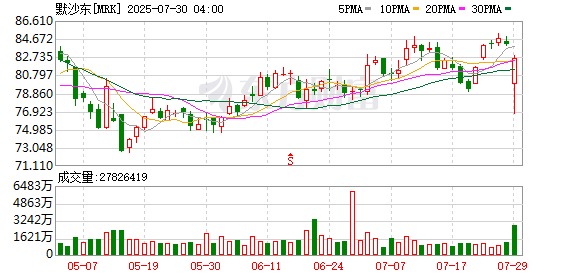
“药王”专利悬崖倒计时 默沙东(MRK.US)“未雨绸缪”启动30亿美元瘦身计划
智通财经网· 2025-07-29 12:26
Core Viewpoint - Merck (MRK.US) is reducing annual spending by $3 billion in anticipation of generic competition for its best-selling cancer drug Keytruda, while also facing challenges with its HPV vaccine Gardasil and adjusting its revenue and profit guidance for the year [1][4][5] Financial Performance - Merck reported quarterly revenue of $15.81 billion, meeting market expectations, with a net profit of $4.43 billion, down from $5.46 billion year-over-year [1] - Keytruda's sales increased by 9% year-over-year to $7.96 billion, exceeding analyst expectations, contributing to an adjusted earnings per share of $2.13, above the Wall Street forecast of $2.01 [4] - The company narrowed its full-year revenue guidance from $64.1-65.6 billion to $64.3-65.3 billion and adjusted its earnings per share forecast from $8.82-8.97 to $8.87-8.97 [4] Strategic Initiatives - The company plans to allocate savings from the spending cuts towards new drug development and market launches, shifting resources from mature business areas to emerging growth engines [2] - Merck's CEO expressed confidence in navigating the expiration of Keytruda's patent, viewing it as a challenge to overcome rather than a cliff [2] Market Challenges - Merck announced an extension of the supply suspension for Gardasil in China until the end of 2025, significantly delaying previous expectations of a mid-year recovery [2] - Gardasil's sales fell by 55% in the second quarter, primarily due to decreased demand in China, with a 3% decline excluding the Chinese market [2] Future Outlook - The company is facing a significant revenue gap as Keytruda, which accounts for nearly half of its revenue, is expected to decline post-patent expiration [5] - Merck is promoting Winrevair, a potential blockbuster for rare lung disease treatment, and plans to launch a convenient version of Keytruda, which is expected to capture 30%-40% of the original formulation's market share [5]