多模态

Search documents
聊AI,当然得来量子位MEET大会!首波嘉宾阵容曝光
量子位· 2025-11-14 08:22
Core Insights - The article emphasizes the transformative impact of artificial intelligence (AI) on various industries and society as a whole, marking the beginning of a new era in 2025 [1]. Event Overview - The MEET2026 Intelligent Future Conference will focus on cutting-edge technologies and industry advancements, particularly in AI [2]. - The theme of the conference is "Symbiosis Without Boundaries, Intelligence to Ignite the Future," highlighting how AI is becoming a core driving force for societal evolution [3]. Key Topics - The conference will cover hot topics in the tech circle, including reinforcement learning, multimodal AI, chip computing power, AI in various industries, and AI's global expansion [4]. - It will showcase the latest collisions between academic frontiers and commercial applications, featuring leading technological achievements from infrastructure, models, and products [5]. Reports and Awards - The conference will also feature the authoritative release of the annual AI rankings and the Annual AI Trends Report, which will analyze significant trends in AI [6]. Notable Speakers - The event will host prominent figures from academia and industry, including: - Zhang Yaqin, a renowned scientist and entrepreneur in digital video and AI [13]. - Sun Maosong, Executive Vice President of the Tsinghua University AI Research Institute [17]. - Wang Zhongyuan, Director of the Beijing Academy of Artificial Intelligence [21]. - Other notable speakers include experts from various leading tech companies and research institutions [30][35][40][44][48][53][57]. AI Annual Rankings - The "AI Annual Rankings," initiated by Quantum Bit, has become one of the most influential rankings in the AI industry, evaluating companies, products, and individuals across three dimensions [60]. - The submission for the rankings is open until November 17, 2025 [61]. AI Trends Report - The "2025 Annual AI Top Ten Trends Report" will focus on the main themes of technological development in AI, analyzing the maturity, current status, and potential value of various trends [65]. - The case collection for the report is open until November 20, 2025 [66]. Conference Logistics - The MEET2026 Intelligent Future Conference will take place at the Beijing Jinmao Renaissance Hotel, with registration now open [70]. - The conference aims to attract thousands of tech professionals and millions of online viewers, establishing itself as an annual benchmark for the intelligent technology industry [72].


报名启动!快来和张亚勤孙茂松一起参与MEET2026智能未来大会
量子位· 2025-11-14 05:38
Core Insights - The article emphasizes the transformative impact of artificial intelligence (AI) on various industries and society as a whole, marking the beginning of a new era in 2025 [1]. Event Overview - The MEET2026 Intelligent Future Conference will focus on cutting-edge technologies and industry developments related to AI [2]. - The theme of the conference is "Symbiosis Without Boundaries, Intelligence to Ignite the Future," highlighting how AI transcends industry, discipline, and scenario boundaries [3]. - Key topics of discussion will include reinforcement learning, multimodal AI, chip computing power, AI in various industries, and AI's global expansion [4]. Academic and Industry Contributions - The conference will feature the latest advancements from academia and industry, showcasing leading technologies from infrastructure, models, and products [5]. - An authoritative annual AI ranking and trend report will be released during the conference [6]. Notable Speakers - The conference will host prominent figures such as Zhang Yaqin, a renowned scientist and entrepreneur in AI and digital video [12][13]. - Other notable speakers include Sun Maosong, Wang Zhongyuan, Zhao Junbo, and Liu Fanping, all of whom have significant contributions to AI research and development [17][21][27][43]. Awards and Recognition - The "Artificial Intelligence Annual Ranking," initiated by Quantum Bit, has become one of the most influential rankings in the AI industry, evaluating companies, products, and individuals across three dimensions [60]. - The ranking results will be officially announced at the MEET2026 conference [60]. Trend Report - The "2025 Annual AI Top Ten Trends Report" will focus on the main themes of technological development, analyzing the maturity, implementation status, and potential value of AI trends [65]. - The report will nominate representative institutions and best cases related to these trends [65]. Conference Logistics - The MEET2026 conference will take place at the Beijing Jinmao Renaissance Hotel, attracting thousands of tech professionals and millions of online viewers [72].

王振辉接替胡伟出任京东物流CEO;滴滴自动驾驶出海首站落地阿布扎比 | 早资道
Sou Hu Cai Jing· 2025-11-14 01:12
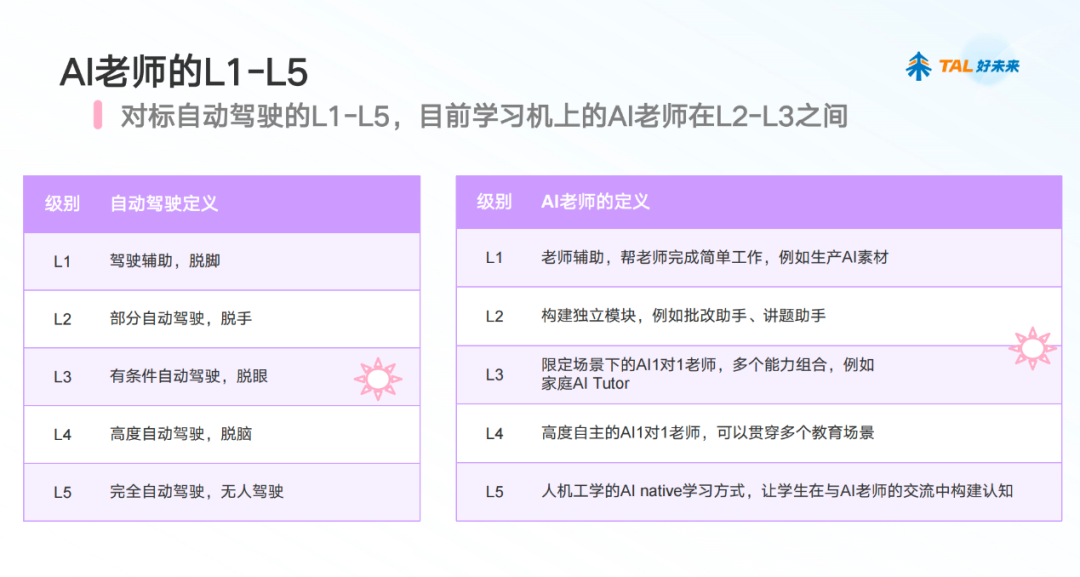
Group 1 - JD Logistics appoints Wang Zhenhui as CEO, replacing Hu Wei, effective November 13, 2025 [2] - Hu Wei resigns as CEO of JD Logistics to take on other roles within JD Group [2] Group 2 - Didi Chuxing establishes its first international presence for autonomous driving in Abu Dhabi, partnering with the Abu Dhabi Investment Office [3] - The collaboration focuses on innovation in autonomous driving technology, AI talent development, and ecosystem building [3] - Plans to expand operations throughout the Middle East [3] Group 3 - Alibaba Cloud's Bailian announces a price reduction for the Tongyi Qianwen 3-Max model starting November 13, 2025 [4] - Batch invocation will be charged at half price, with implicit caching at 20% of the standard input token price [4] - Explicit caching will charge 125% for creating cache tokens, with subsequent hits costing only 10% [4] Group 4 - Tencent's President Liu Chiping addresses the agreement with Apple regarding a 15% fee on purchases of WeChat mini-games during Q3 earnings call [5] - Liu emphasizes the strong relationship and ongoing discussions between Tencent and Apple to enhance the mini-game ecosystem [5] Group 5 - Stanford professor Fei-Fei Li's startup World Labs launches the first commercial world model, Marble [6] - Marble supports large-scale multimodal capabilities, allowing the creation of 3D worlds from various inputs [6] - Users can interactively edit, expand, and combine worlds using Marble [6]
2.4万亿参数,创意写作全球第一!百度这次真站起来了?
Guan Cha Zhe Wang· 2025-11-13 06:23
Core Insights - Baidu has unveiled its latest foundational model, Wenxin 5.0, at the "Baidu World 2025" conference, boasting a parameter count of 2.4 trillion and claiming to be at the forefront of native multimodal integration [1][5] - Wenxin 5.0 has achieved a global ranking of 8th on the LMArena leaderboard, surpassing several competitors and ranking first in creative writing capabilities [1][2] - Baidu introduced the world's first self-evolving intelligent agent, "Famu," which has demonstrated outstanding performance in recent global tests [2][8] Model and Technology Advancements - Wenxin 5.0 features a unified autoregressive architecture for native multimodal modeling, integrating language, images, video, and audio from the training phase [7] - The model employs a sparse mixture of experts (MoE) architecture, with over 2.4 trillion parameters and an activation ratio below 3%, enhancing inference efficiency while maintaining strong capabilities [7] - Baidu's new Kunlun chips, including the M100 and M300, are set to launch in 2026 and 2028, respectively, with the latter designed for training large-scale models [3][15] Applications and Use Cases - The Famu intelligent agent is designed to find global optimal solutions in complex industrial scenarios, such as traffic management and energy optimization [8][10] - In a collaboration with China Energy Construction Group, Famu has been applied to optimize offshore wind farm designs, significantly reducing costs and project timelines [10] - The intelligent cloud SaaS platform has improved traffic signal control in Ordos, reducing average vehicle delays by 50% through AI-driven solutions [11] Market Position and Future Plans - Baidu's digital human technology, "Huibo Star," has expanded into international markets, achieving a 91% year-on-year increase in GMV during the recent Double 11 shopping festival [12] - The company continues to lead in the AI cloud service market in China, with its AI capabilities integrated into various applications, including search engines and autonomous driving services [13][16] - Baidu has ambitious plans for the future, aiming to launch a million-card Kunlun chip cluster by 2030, further solidifying its position in the AI landscape [15]


学习机进化论:穿过内容舒适区,驶入AI深水区
2 1 Shi Ji Jing Ji Bao Dao· 2025-11-11 07:52
Core Insights - The learning machine market in 2025 is characterized by innovation-driven market capture and the consolidation of advantages through continuous innovation [1] - The learning tablet market saw a total channel sales of 1.806 million units in Q3 this year, reflecting a year-on-year growth of 3.5% [2] - Education companies, represented by Xueersi, are expected to fully surpass traditional educational technology companies in 2024, capturing a dominant share of the learning machine market [3] - In 2025, education companies are not only focusing on providing quality content but are also deeply exploring AI teachers, which represent a higher barrier than quality content [4] Market Dynamics - Quality content serves as a strong barrier for education companies entering the learning machine market, with Xueersi's learning machine offering a total of 16 million minutes of courses, 4 million minutes added since launch, 850,000 sets of real questions, and 700 million questions in its knowledge resource library [5] - The brand reputation behind quality content is crucial, as using Xueersi's learning machine allows users to access lessons from well-regarded teachers with over 20 years of experience [6] AI Teacher Development - The shift from quality content to AI teachers is driven by the need for interaction and guidance in self-learning scenarios, as traditional human services cannot scale to meet the needs of millions of users [7] - AI teachers are seen as the most direct and effective form of deep service, leveraging vast amounts of user data generated during content usage to develop high-quality datasets for AI [8] - The evolution of AI teachers is likened to the progression of autonomous driving, with Xueersi's AI teacher currently at L3 capability, indicating a combination of multiple abilities [10][11] AI Teacher Capabilities - The L3 AI teacher represents a significant advancement, capable of breaking down complex problems into manageable steps and guiding students to think independently while providing real-time feedback [12][13] - The latest version, Xiao Si 3.0, offers a natural interaction experience akin to a real teacher, capable of immersive, multi-modal, and deeply personalized teaching [16][20] - The integration of multi-modal capabilities allows the AI teacher to interact with students in a paper-and-screen environment, providing real-time guidance and feedback as students work through problems [21][22] Competitive Landscape - The future competition in the learning machine market will center around AI capabilities, with successful products needing to provide both quality resources and effective solutions for utilizing those resources [22]
学习机进化论:穿过内容舒适区,驶入AI深水区
21世纪经济报道· 2025-11-11 07:47
Core Viewpoint - The learning machine market in 2025 is characterized by innovation-driven market capture and the continuous strengthening of competitive advantages through technological advancements [1] Group 1: Market Dynamics - In Q3 of this year, the total sales volume of learning tablets reached 180.6 thousand units, reflecting a year-on-year growth of 3.5% [2] - Education companies, represented by Xueersi, are expected to fully surpass traditional educational technology firms by 2024, capturing a dominant market share in the learning machine sector [2] - High-quality content is identified as the core competitive advantage that allows educational companies to gain market traction [2] Group 2: Transition to AI Teachers - Educational companies are moving beyond merely providing quality content to deeply exploring AI teachers, which presents a higher barrier to entry [2][3] - The need for interactive guidance rather than one-way content delivery is a significant demand in self-learning scenarios [3] - AI teachers are seen as a solution to the limitations of human teachers, which cannot simultaneously achieve personalization, high quality, and scalability [3] Group 3: AI Teacher Development - The development of AI teachers is likened to the progression from L1 to L5 in autonomous driving, with Xueersi's AI teacher currently at L3 capability [4] - L2 AI teachers function as independent modules, while L3 AI teachers combine multiple capabilities to create a closed-loop teaching experience [7] - The latest version, Xiao Si 3.0, offers natural interaction and can provide personalized teaching experiences [9] Group 4: Technological Innovations - The integration of multi-modal capabilities allows AI teachers to interact with students in a more immersive manner, enhancing the learning experience [10] - The AI teacher can facilitate "paper-screen interaction," where students can write on paper while receiving real-time guidance from the AI [11] - The complexity of real-time judgment and interaction requires high-quality data and advanced R&D capabilities, which are essential for companies to develop effective AI solutions [13]

智源研究院智星计划:海外招聘(具身智能/多模态/类脑模型等)
具身智能之心· 2025-11-08 00:03
Core Insights - The "ZhiXing Plan - Overseas Recruitment" is a strategic talent recruitment initiative by the Beijing Academy of Artificial Intelligence aimed at attracting and nurturing high-level AI research talent from around the world [2]. Group 1: Program Overview - The "ZhiXing Plan" targets top graduates from global universities, inviting selected candidates for a research visit of six months or more at the Beijing Academy of Artificial Intelligence [2]. - Successful candidates will collaborate with leading international research teams on cutting-edge topics and gain entry into the ZhiYuan talent ecosystem [2]. Group 2: Recruitment Highlights - Exceptional performers during the visit may receive priority for full-time positions at the research institute, including roles such as Principal Investigator (PI), researcher, or postdoctoral fellow [5]. - The program offers access to advanced research topics and supercomputing resources, allowing collaboration with leading researchers in the field [5]. Group 3: Support and Resources - Participants will benefit from long-term academic development and resource support, including entry into the ZhiYuan academic network for ongoing research collaboration and career opportunities [7]. - Comprehensive support services will be provided, including academic mentorship and administrative assistance for both research and daily life [7][8]. Group 4: Target Audience and Research Areas - The recruitment is aimed at Chinese doctoral candidates, postdoctoral researchers, and formal research staff from top universities and laboratories [9]. - Research directions include brain-like models, intelligent systems, embodied intelligence, multimodal AI, and AI for Science, with candidates expected to have published at least three first-author papers in top conferences [9]. Group 5: Application Process - Applications are accepted year-round with rolling reviews until positions are filled [11]. - The process includes academic evaluation, interviews, and formal invitations for successful candidates [10]. Group 6: Vision and Goals - The "ZhiXing Plan - Overseas Recruitment" is positioned as a starting point for integrating into China's leading AI research platform, aiming to conduct globally impactful research and build long-term collaborative relationships [12].

量子位「MEET2026智能未来大会」已启动!年度AI榜单 & 趋势报告正在征集中
量子位· 2025-11-05 02:08
Core Viewpoint - The article emphasizes the transformative impact of artificial intelligence (AI) on various industries and society, marking the beginning of a new era where AI becomes an integral part of infrastructure and daily life [1][7]. Group 1: AI Integration and Evolution - Intelligent technology has deeply penetrated production and daily life, evolving from mere tools to intelligent partners that understand human needs [2]. - AI technology is no longer confined to specific fields but transcends industry, discipline, and scenario boundaries, creating new ecosystems and opportunities [3]. - Emerging technologies such as multimodal, AR/VR, and spatial computing are blurring the lines between the digital and physical worlds [4]. Group 2: MEET2026 Conference Overview - The MEET2026 Intelligent Future Conference will focus on the theme "Symbiosis Without Boundaries, Intelligence to Ignite the Future," inviting leaders from technology, industry, and academia to witness industry transformation [5][7]. - This year marks the seventh edition of the MEET Intelligent Future Conference, which attracts influential technology business leaders and thousands of participants, both in-person and online [9][12]. - The conference aims to explore cutting-edge topics in AI, including AI infrastructure, intelligent terminals, smart driving, low-altitude economy, and energy [13]. Group 3: AI Annual Awards and Trends - The "Artificial Intelligence Annual List" initiated by Quantum Bit has become one of the most influential lists in the AI industry, recognizing those who lead change and explore new frontiers [16]. - The awards will evaluate companies, products, and individuals across five categories, with results announced at the MEET2026 conference [17][18]. - The "2025 Annual AI Trends Report" will also be released at the conference, highlighting ten significant AI trends and their potential impact [23][24].



全新创作平台SkyReels来了!一张画布+一个对话框包办AI视频创作全流程
量子位· 2025-11-04 01:56
Core Insights - The article introduces SkyReels, a new multi-modal creative tool developed by Kunlun Wanwei, which simplifies the process of creating AI-generated videos and images by integrating various functionalities into a single platform [1][4][45]. Group 1: Features of SkyReels - SkyReels allows users to create content without switching between multiple tools, enabling a seamless workflow for generating images, videos, and audio [4][5][45]. - The platform includes numerous popular models such as Sora2, Veo3.1, and NanoBanana, providing users with a wide range of creative options [7][9]. - Users can create dynamic content by simply dragging images into the video function area, eliminating the need for separate editing tools [11][15]. Group 2: Creative Capabilities - SkyReels can generate music and corresponding videos based on user prompts, showcasing its ability to understand and create content that matches specific themes [15][16]. - The platform features a "Super Agent" that assists users in brainstorming and scriptwriting, enhancing the creative process [21][22]. - Expert Agents are available for specialized tasks, providing tailored solutions for various creative needs, such as advertising and visual design [24][26]. Group 3: User Experience - The integration of over 150 templates allows users to efficiently create high-quality content without extensive prior knowledge [32]. - SkyReels supports advanced features like video extension and style transfer, enabling users to enhance their videos with different artistic styles while maintaining original actions [36][40]. - The platform aims to shift the focus from technical execution to creative storytelling, allowing users to concentrate on their ideas rather than the mechanics of content creation [46][47].

昆仑万维单季扭亏毛利率达69.9% 深化全球布局海外收入占超九成
Chang Jiang Shang Bao· 2025-11-04 00:14
Core Insights - Kunlun Wanwei's AI-driven business has led to significant growth, with a third-quarter revenue of 2.072 billion yuan, a year-on-year increase of 56.16%, and a net profit of 190 million yuan, compared to a loss of 237 million yuan in the same period last year [1][2] AI Business Growth - The company has focused on AGI and AIGC, achieving substantial progress in technology development, product innovation, and commercialization, resulting in a strong overall performance [1][2] - For the first three quarters of 2025, the company reported total revenue of 5.805 billion yuan, a year-on-year increase of 51.63% [1] Globalization Strategy - Kunlun Wanwei has deepened its global strategy, achieving overseas revenue of 5.41 billion yuan in the first three quarters, a 58% increase, with overseas revenue accounting for 93.3% of total revenue, up 3.6 percentage points year-on-year [3] - The company has established a solid user base in over 100 countries, with nearly 400 million monthly active users globally, enhancing its international competitiveness [3] R&D Investment and Technological Advancements - The company has significantly increased its R&D investment, with expenditures reaching 1.211 billion yuan in the first three quarters of 2025, a year-on-year increase of 5.83% [3] - Kunlun Wanwei's "Tiangong" model has evolved to version 4.0, featuring a parameter scale of 400 billion, making it one of the largest open-source MoE models globally [4] Industry Positioning - The company is transitioning from a gaming company to a leading global AI enterprise, leveraging its global layout and deep integration of AI technology as core competitive advantages [4]