扩大高水平对外开放

Search documents
人民日报评论员:加快构建新发展格局,牢牢把握发展主动权 ——论学习贯彻党的二十届四中全会精神
Xin Hua She· 2025-10-27 13:59
Core Viewpoint - The article emphasizes the strategic decision made by the Chinese government to accelerate the construction of a new development pattern, focusing on strengthening domestic circulation while optimizing the domestic and international dual circulation system [1][2]. Group 1: Economic Growth and Domestic Circulation - The average contribution rate of domestic demand to economic growth from 2021 to 2024 is projected to reach 86.4% [2]. - The total import and export volume of goods is expected to increase from 32.2 trillion yuan in 2020 to 43.8 trillion yuan in 2024, with an annual growth rate of 8.0% [2]. - The article highlights the importance of a strong domestic market as a strategic foundation for China's modernization, leveraging the vast market potential of over 1.4 billion people [3]. Group 2: Investment and Consumption - The article discusses the need to promote a virtuous cycle of investment and consumption, emphasizing the integration of improving people's livelihoods and stimulating consumption [3]. - It advocates for the construction of a unified national market to eliminate barriers and enhance market efficiency, thereby releasing the benefits of China's large-scale market [3]. Group 3: International Cooperation and Openness - The article outlines the commitment to expand high-level opening-up, despite challenges from unilateralism and protectionism, with a focus on maintaining a multilateral trade system [4]. - It notes that in the first three quarters of the year, China's goods trade imports and exports grew by 4% year-on-year, with exports increasing by 7.1% [4].
二论学习贯彻党的二十届四中全会精神
Hai Nan Ri Bao· 2025-10-27 00:28
Group 1 - The core viewpoint emphasizes the importance of the 20th Central Committee's Fourth Plenary Session in guiding China's economic and social development during the "14th Five-Year Plan" period, particularly through the construction of the Hainan Free Trade Port [1][3] - The construction of the Hainan Free Trade Port is a significant national strategy personally planned and promoted by General Secretary Xi Jinping, with the full island closure operation being a crucial foundational and symbolic project for further expanding openness [1][2] - The full island closure operation is described as a complex system project that requires a high level of trade liberalization and facilitation policies, necessitating a comprehensive understanding of its significance and a strong sense of responsibility [2] Group 2 - The article highlights the need for all levels of government and society to actively participate in ensuring the smooth operation of the full island closure and the expansion of high-level openness, emphasizing the importance of collaboration and responsibility [2][3] - This year marks a critical point for the Hainan Free Trade Port, coinciding with the conclusion of the "14th Five-Year Plan" and the commencement of its closure operation, which is expected to contribute significantly to China's broader goals of high-level openness [3]
海关总署署长孙梅君到河南调研
Zheng Quan Shi Bao Wang· 2025-10-27 00:15
Core Viewpoint - The article highlights the importance of customs in promoting high-level opening-up, trade innovation, and quality development of the Belt and Road Initiative, emphasizing the need for strategic support in key industrial chains and expanding diversified markets to stabilize and enhance foreign trade [1] Group 1 - The head of the General Administration of Customs, Sun Meijun, visited Zhengzhou Customs to promote the spirit of the 20th Central Committee's Fourth Plenary Session [1] - Sun Meijun emphasized the role of customs as a hub for domestic and international dual circulation, leveraging regional, resource, and market advantages in Henan [1] - The focus is on supporting the development of key industrial chains and striving for a strong performance in the fourth quarter [1] Group 2 - The customs authority aims to expand diversified markets to promote stable and quality growth in foreign trade [1] - The strategic tasks include enhancing high-level opening-up and driving innovative trade development [1] - The initiative aligns with the broader goals of the Belt and Road Initiative, aiming for high-quality construction [1]
团结奋斗启新程
Xin Hua She· 2025-10-26 01:07
Group 1 - The 20th Central Committee's Fourth Plenary Session approved the suggestions for the 15th Five-Year Plan, setting major goals and strategic deployments for national economic and social development [1][3] - The session emphasized the importance of the "two establishments" and "two safeguards," urging unity in thought and action among party members to achieve the goals outlined in the plan [1][4] - The session highlighted the significance of the 15th Five-Year Plan period as a critical phase for achieving socialist modernization, marking a new starting point for China's development [3][4] Group 2 - The session called for a focus on high-quality development, leveraging China's advantages in its political system, market size, industrial structure, and talent resources to respond to external uncertainties [4][6] - It was noted that the 15th Five-Year Plan must prioritize the new round of technological revolution and industrial transformation, particularly in fields like AI and biotechnology, to enhance innovation capabilities [6][7] - The importance of expanding high-level openness and deepening reforms was emphasized, signaling China's commitment to cooperation and mutual development with other countries [7][8] Group 3 - The session underscored the need for a high level of security as a prerequisite for high-quality development, advocating for a comprehensive approach to national security alongside economic and social development [8][10] - It was stated that achieving the goals of the 15th Five-Year Plan requires a strong commitment to the Party's leadership and the implementation of innovative theories to guide development [10][12] - The session called for unity among party members to transform the 15th Five-Year Plan into reality, emphasizing the importance of collective effort in advancing national rejuvenation [14]
“十五五”将至,中国经济又有怎样的新机遇?专家解读→
Yang Shi Wang· 2025-10-25 03:16
Group 1 - The core message of the 20th Central Committee's Fourth Plenary Session emphasizes the importance of prioritizing economic development, which is seen as a fundamental national policy since the reform and opening up, crucial for China's significant achievements over the past 40 years [1][4] - China's per capita GDP has increased over 70 times since the beginning of the reform and opening up, but it still only matches the global average, indicating challenges ahead to reach the level of developed countries by 2035 [4] - The U.S. attempts to suppress China's economic development through trade wars and other means, highlighting the importance of the central government's reaffirmation of economic construction as a guiding principle [4] Group 2 - The 20th Central Committee's Plenary Session calls for seizing the high ground in technological development, recognizing the intensifying competition in technology, especially under geopolitical tensions [5][7] - In the next five years, breakthroughs in core frontier areas of technology are expected, with artificial intelligence being a major focus, where China has made significant advancements and may have surpassed the U.S. in certain applications [7][9] - China is also leading in quantum computing and has made substantial progress in energy technologies, including nuclear fusion and advanced nuclear power, indicating a potential for explosive growth in these sectors during the 14th Five-Year Plan [11] Group 3 - China's approach to foreign trade and investment is evolving into a new phase, characterized by a "China + N" model, where global enterprises will produce in China while diversifying their production locations [13][15] - The new openness strategy includes welcoming high-quality foreign enterprises and supporting Chinese companies in expanding globally, aiming to create a synergistic industrial chain [17] - The focus remains on economic construction, technological advancement, new industrial chains, domestic markets, consumption, and improving people's livelihoods as key battlegrounds during the 14th Five-Year Plan [17]


未来十多年中等收入群体将超8亿
2 1 Shi Ji Jing Ji Bao Dao· 2025-10-24 14:48
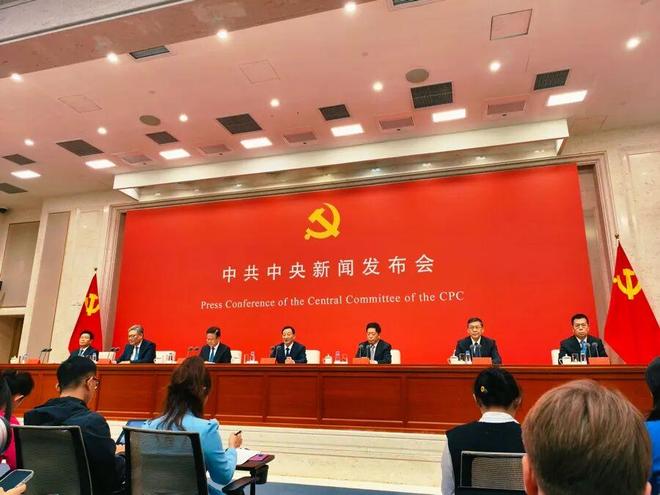
作者丨周潇枭 编辑丨张星 党的二十大确定到2035年基本实现社会主义现代化,"十五五"时期是夯实基础、全面发力的关键时期。 10月20日至23日,中国共产党第二十届中央委员会第四次全体会议在北京召开,全会审议通过了《中共 中央关于制定国民经济和社会发展第十五个五年规划的建议》(下文简称《建议》),明确了"十五 五"时期经济社会发展的指导方针和主要目标,擘画了未来五年发展的宏伟蓝图,为深入推进中国式现 代化指明了前进方向。 10月24日,中共中央举行新闻发布会,介绍和解读党的二十届四中全会精神。发布会邀请了中央政策研 究室主任江金权,中央财办分管日常工作的副主任、中央农办主任韩文秀,国家发展改革委党组书记、 主任郑栅洁,科技部党组书记、部长阴和俊,商务部党组书记、部长王文涛,以及国家卫生健康委党组 书记、主任雷海潮出席,介绍相关情况并答记者问。 江金权表示,《建议》即将发布。《建议》共有15个部分、61条,分为三大板块。第一板块是总论,包 括第一部分、第二部分,主要阐述"十四五"时期我国发展取得的重大成就、抓好"十五五"时期经济社会 发展的重大意义和总体要求。第二板块从第三部分到第十四部分为分论,分领域部署了" ...
未来十多年中等收入群体将超8亿
21世纪经济报道· 2025-10-24 14:32
Core Viewpoint - The article discusses the key objectives and strategies outlined in the "15th Five-Year Plan" (2021-2025) as approved by the Chinese Communist Party, emphasizing the importance of high-quality development, technological self-reliance, and expanding domestic demand to achieve modernization by 2035 [1][2]. Economic Growth and Development Goals - The main goals for the "15th Five-Year Plan" include achieving significant results in high-quality development, maintaining economic growth within a reasonable range, and significantly improving the resident consumption rate [4]. - The plan aims for a substantial increase in the level of technological self-reliance, with rapid breakthroughs in key core technologies and deep integration of technological and industrial innovation [4]. - It emphasizes the need for comprehensive reforms to enhance the socialist market economy and improve the high-level opening-up system [4]. Domestic Demand and Consumption - The strategy focuses on expanding domestic demand as a key foundation for modernization, with a projected retail sales total of 48.3 trillion yuan in 2024, expected to exceed 50 trillion yuan in 2025 [7]. - The plan includes initiatives to boost consumption, such as implementing special actions to stimulate consumption and enhancing the quality of public services to improve living standards [10][8]. - The government aims to optimize investment structures and increase the proportion of government investment in public welfare [8]. Modern Industrial System - The plan prioritizes building a modern industrial system, with a focus on optimizing traditional industries and fostering emerging sectors such as new energy and advanced manufacturing [12]. - It anticipates a market space of approximately 10 trillion yuan over the next five years, driven by the development of strategic emerging industries [12]. - The plan also includes forward-looking initiatives in future industries like quantum technology and artificial intelligence, which are expected to contribute significantly to economic growth [12][13]. Technological Innovation - The "15th Five-Year Plan" emphasizes the importance of technological modernization, aiming to enhance the national innovation system and boost self-innovation capabilities [13]. - Specific measures include supporting enterprises in leading innovation efforts and increasing R&D investment, particularly in artificial intelligence and other digital technologies [14]. - The government plans to strengthen the ecosystem for artificial intelligence development, focusing on foundational research and governance [14]. High-Level Opening-Up - The plan outlines strategies for expanding high-level opening-up, including promoting trade innovation and enhancing bilateral investment cooperation [17]. - It aims to leverage China's large market to attract foreign investment and create a favorable business environment [18]. - The emphasis is on balancing GDP growth with national income (GNI) considerations, reflecting a shift towards recognizing the importance of income generated from overseas investments [19][20].

“十五五”的新提法
对冲研投· 2025-10-24 12:03
Core Viewpoint - The article discusses the key strategies and goals outlined in the recent Fourth Plenary Session of the 20th Central Committee, focusing on the "15th Five-Year Plan" and its implications for China's economic and social development [3][4]. Group 1: Historical Context - The "15th Five-Year Plan" period is seen as a crucial transitional phase, building on the foundations laid during the "14th Five-Year Plan" and setting the stage for the "16th Five-Year Plan" [4]. - The international environment presents both strategic opportunities and risks, with the 20th National Congress emphasizing the coexistence of these factors [4][5]. Group 2: Main Goals - The primary goals for the "15th Five-Year Plan" include high-quality development, technological self-reliance, comprehensive deepening of reforms, social civilization, improved living standards, ecological progress, and national security [6][7]. - A notable target is to achieve a per capita GDP that reaches the level of middle-income countries by 2035, with an average annual GDP growth rate of at least 4.5% during the "15th Five-Year Plan" [7]. Group 3: Specific Objectives - The plan emphasizes the importance of industry and technology, with a shift in focus from technological innovation to the establishment of a modern industrial system, highlighting the need for practical applications of innovation [8]. - Economic construction remains central, with a strong emphasis on expanding domestic demand and enhancing consumer spending, indicating a shift in policy focus towards improving living standards and consumption [9]. - The construction of a unified national market is prioritized, aiming to eliminate barriers and enhance the efficiency of resource allocation across regions [9][10]. - High-level opening-up is now positioned as a key objective, reflecting the need for China to engage more actively in global trade and investment amidst rising protectionism [10]. - The commitment to carbon neutrality goals remains firm, with plans to peak carbon emissions by 2030, coinciding with the end of the "15th Five-Year Plan" [10].

宏观点评:二十届四中全会公报的四大亮点-20251024
Ping An Securities· 2025-10-24 10:26
Group 1: Economic Development Highlights - The focus has shifted to "centering economic construction," emphasizing expanding domestic demand and the interaction between new demand and new supply[2] - Laborers' share of total income has increased from 49.8% in 2012 to 53.6% in 2023, indicating a significant rise in income distribution[2] - The proportion of fiscal budget spending on people's livelihoods has risen from 32.6% in 2012 to 36.7% in 2024, highlighting increased investment in social welfare[2] - China's final consumption rate in 2023 was 56.8%, which is 10.5 percentage points lower than the average of middle-income countries and 19.2 percentage points lower than high-income countries, indicating potential for growth in consumption[2] Group 2: Technological Advancements - A new goal of significantly improving "self-reliance and strength in technology" has been introduced, reflecting the importance of technological innovation[2] - In 2022, 47% of researchers in the top 20% of global AI institutions were of Chinese nationality, showcasing China's talent pool in cutting-edge technology[2] - China has achieved notable successes in industries such as new energy and high-end manufacturing during the "14th Five-Year Plan" period, leveraging its talent and institutional advantages[2] Group 3: Industrial and Trade Strategy - The meeting emphasized the importance of maintaining a reasonable proportion of manufacturing, with China's manufacturing value added accounting for nearly 30% of the global total[3] - The global supply chain is shifting towards localization and diversification due to rising protectionism and geopolitical tensions, presenting new opportunities for China's industrial transformation[3] - The strategy of "expanding high-level opening-up" has been elevated, aiming to counter trade protectionism and enhance China's role in global trade[3]
中等收入群体倍增!中央这场“十五五”发布会释放八大政策信号
2 1 Shi Ji Jing Ji Bao Dao· 2025-10-24 10:09
Core Viewpoint - The article discusses the key signals and goals outlined in the "15th Five-Year Plan" (2021-2025) of China, emphasizing the importance of high-quality development, technological self-reliance, and the expansion of domestic demand as part of China's modernization strategy. Economic Growth and Quality - Economic growth is expected to remain within a reasonable range, with a noticeable increase in the resident consumption rate [3] - The focus is on achieving significant results in high-quality development, with an emphasis on optimizing economic structure, technological advancement, and efficiency improvement [4] Industry Development - The plan aims to create a modern industrial system, prioritizing the enhancement of traditional industries and the cultivation of emerging industries [5][6] - The traditional industries, which account for approximately 80% of manufacturing value-added, will be optimized, while new strategic industries like renewable energy and aerospace will be developed [5][6] Domestic Demand Expansion - The strategy emphasizes the importance of expanding domestic demand, with a goal to double the middle-income group over the next decade [7][8] - The retail sales of consumer goods are projected to exceed 50 trillion yuan by 2025, indicating a robust consumer market [7] Technological Innovation - The plan highlights the need for significant breakthroughs in key technologies, particularly in artificial intelligence and semiconductor industries [9][10] - A comprehensive approach to enhance the national innovation system and support high-tech enterprises is outlined [9] High-Level Opening Up - The strategy includes expanding high-level opening up, focusing on trade innovation and enhancing the investment environment [11][12] - The emphasis is on balancing GDP and GNI, recognizing the importance of national income in assessing economic health [13] Population and Health Development - The plan advocates for policies to support population quality development, including improved maternity support and healthcare services [14][15] - The goal is to increase the average life expectancy from 79 to around 80 years by 2024 through enhanced health services [15] Macroeconomic Governance - The strategy aims to improve macroeconomic governance efficiency, addressing issues like low-price competition and overdue payments to businesses [16][17] - A focus on coordinated economic policies and effective communication with market participants is emphasized [17] Green Transition - The plan aims for a comprehensive green transition, with expectations for the green low-carbon industry to potentially double in size over the next five years [18][19][20] - Specific measures include the establishment of carbon emission control systems and the promotion of clean energy sources [19][20]