
文化遗产保护

Search documents
为文化遗产保护注入青年力量(第一现场)
Ren Min Ri Bao· 2025-11-11 22:40
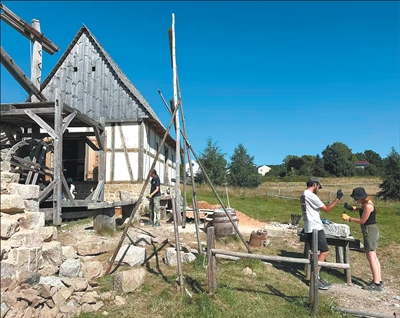
Core Viewpoint - The European Cultural Heritage Volunteer Project has successfully engaged nearly 3,000 young people from 73 countries over the past 25 years, recently receiving the prestigious European Heritage Award for its contributions to cultural heritage preservation [1][2]. Group 1: Project Overview - The project aims to revitalize the small town of Bernau by reconstructing historical sites, specifically the 14th-century palace of Emperor Charles IV, through the efforts of volunteers [2][4]. - The project operates with a standardized model, recruiting 12-14 young volunteers from different countries for two-week periods, focusing on various traditional crafts such as woodworking and masonry [4]. Group 2: Volunteer Experience - Volunteers gain hands-on experience in traditional crafts, learning the unique value and charm of these skills, which are applicable to sustainable building practices today [3][5]. - The project fosters cultural exchange, with participants sharing their own countries' heritage and experiences, thus promoting a sense of global community [5][6]. Group 3: Organizational Structure - The project is managed by a small team of three, relying on collaboration with over 200 European partners and local craftsmen to ensure effective operation and sustainability [4][6]. - Funding primarily comes from the organization "Open Old Houses," which is responsible for the restoration and operation of historical buildings [4]. Group 4: Impact and Legacy - The project has created a resilient international network for cultural heritage preservation, influencing participants to engage in related fields and return for further involvement [6]. - Each participant is estimated to impact at least ten others, highlighting the project's role in fostering widespread awareness and participation in cultural heritage conservation [6].

恭王府博物馆与法国尚蒂伊庄园签署友好合作协议
Xin Hua She· 2025-11-10 08:36
Core Viewpoint - The Prince Gong's Mansion Museum and the Château de Chantilly have signed a friendly cooperation agreement to enhance collaboration in cultural heritage protection, collection digitization, academic research, and cultural tourism promotion, exploring paths for civilization inheritance and innovation [1] Group 1: Cultural Heritage and Collaboration - The cooperation reflects the achievements of the "China-France Cultural Tourism Year" and is based on mutual respect and recognition of each other's civilizations [1] - The Prince Gong's Mansion, located by Shichahai in Beijing, is a well-preserved Qing Dynasty royal residence known for its architectural artistry and cultural significance [1] - The Château de Chantilly, located near Paris, is renowned for its Renaissance-style castle, valuable medieval collections, and classical French gardens [1] Group 2: Leadership Perspectives - The director of the Prince Gong's Mansion Museum, Feng Nai'en, emphasized the long-standing friendship between China and France, highlighting the significance of this cooperation [1] - The general manager of the Château de Chantilly, Ms. Miller, noted that both parties play roles as "guardians" and "inheritors" of their respective cultures, which facilitated the establishment of this friendly relationship [1]
“文学之都”对话“音乐之城”
Nan Jing Ri Bao· 2025-11-10 02:49
Core Points - The Nanjing-Leipzig Cultural Heritage Protection and Cultural Tourism Industry Innovation Exchange Conference was held in Leipzig, Germany, aiming to strengthen the connection between the "World City of Literature" and the "City of Music" in Europe [1][2] - The exhibition "Common Heritage, Common World" featuring Nanjing's Ming City Wall and Leipzig's historical architecture was launched, showcasing the wisdom of ancient city preservation from both Eastern and Western perspectives [1] - The exhibition received positive feedback from local audiences, who expressed admiration for the scale of the Nanjing City Wall and its underlying Eastern philosophy [1] Group 1 - The roundtable dialogue included experts from Leipzig's Bach Archive, Grassi Museum of Ethnology, Leipzig University, and Nanjing Archives Bureau, discussing topics such as "Public Participation in Heritage Protection and Transmission" and "The Meeting of the City of Music and the City of Literature" [2] - The "China Nanjing Week" initiative, part of the national "Cultural Going Out" strategy, has connected with major cities like Milan, London, New York, and Paris since 2015, creating a diverse cultural exchange network [2] - The current series of "Nanjing Week" activities will continue until February 2026, with Nanjing engaging in deep exchanges across Munich, Leipzig, and Dusseldorf, contributing to cultural exchange and mutual learning on the international stage [2]
大兴安岭地区新发现旧石器时代遗址80余处
Zhong Guo Xin Wen Wang· 2025-11-09 06:49
Core Insights - The conference on "Paleolithic Archaeology in the Heilongjiang River Basin (Daxing'anling Region)" was held, revealing over 80 new Paleolithic sites in the Daxing'anling area, enhancing the understanding of prehistoric cultural relics distribution and significance [1][2] - The meeting emphasized the need for local governments and cultural heritage departments to clarify responsibilities and enhance collaboration, integrating archaeological research with cultural tourism development [1] Group 1 - The conference was organized by the Heilongjiang Provincial Department of Culture and Tourism, with participation from various universities and local government bodies [1] - Notable experts from institutions such as Jilin University and Renmin University presented findings and discussed the significance of the new archaeological discoveries [2] - The meeting marked a new phase in the archaeological research of the Heilongjiang River Basin, laying the groundwork for future cultural heritage protection and academic research [2] Group 2 - The conference included presentations on the historical value and academic significance of the Daxing'anling region, as well as advancements in the "Archaeological China" project in the Changbai Mountain area [2] - Participants observed representative stone tools and animal fossil specimens discovered during the archaeological survey, leading to in-depth discussions on the cultural sequence and technological lineage of the Daxing'anling region [2] - The integration of archaeological protection and cultural tourism was highlighted as a key focus for the "14th Five-Year Plan" [1]
“云边消防站”坚守泰山29载
Xin Hua Wang· 2025-11-08 14:27
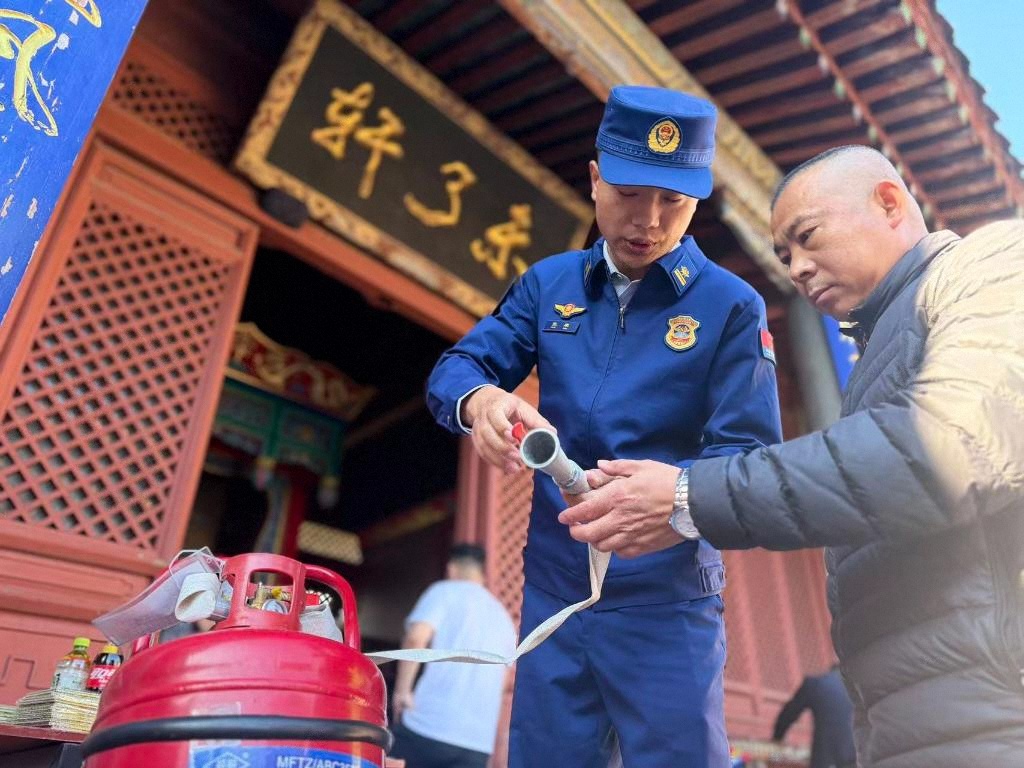
Core Points - The article highlights the efforts of the Tai Mountain Fire Rescue Station in safeguarding cultural and natural heritage while addressing the challenges posed by the mountainous terrain and increasing tourist numbers [1][4][5] Group 1: Fire Safety and Rescue Operations - The Tai Mountain Fire Rescue Station was established in 1996 to protect the cultural and natural resources of Tai Mountain, which includes 6 national key cultural relic protection units and 387 precious stone inscriptions [1] - The station has developed a "15-minute fire rescue circle," ensuring that all fire prevention units at the mountain top can receive timely assistance within 15 minutes [4] - Over the past 29 years, the station has rescued over 4,800 individuals and saved more than 680 lives, earning the nickname "the safe handrail of the Eighteen Bends" from local residents [5] Group 2: Challenges and Innovations - Firefighters face unique challenges due to the steep cliffs and the low fire resistance of ancient buildings, which complicates rescue operations [1][3] - To adapt to new challenges, the rescue team has integrated modern technology, including drones and new mountain firefighting equipment, into their operations [3][4] - The team has also created an electronic map that consolidates information about water sources, unit locations, and terrain, enhancing their operational efficiency [3] Group 3: Training and Team Spirit - New recruits undergo rigorous training, which includes familiarizing themselves with the mountain's environment and learning the station's history to instill a sense of duty and resilience [7] - The spirit of dedication and commitment to duty has been passed down through generations of firefighters, exemplified by the experiences of young recruits like Zheng Rongjie [5][7] - Daily training exercises, including real-life rescue simulations, reinforce the team's preparedness and commitment to their mission [6][8]
六百年海门卫城焕新颜 “卫城遗韵”成古今交汇文化地标
Zhong Guo Xin Wen Wang· 2025-11-08 00:40
Core Insights - The article highlights the historical and cultural significance of the Haimen City Wall, also known as "Weicheng Yiyun," which has become a cultural landmark that bridges ancient and modern times [1][2] Group 1: Historical Significance - The Haimen City Wall, established in 1387, is a prime example of ancient coastal defense engineering, strategically located to oversee the confluence of the Jiao River and the sea [1] - The wall originally featured five gates and five rivers, serving both defensive and drainage purposes, with the remaining Yanqing Gate being the sole witness to this history [1] Group 2: Cultural Heritage - The site has transformed into a popular destination for both locals and tourists, with activities such as morning exercises and photography becoming common [1] - The East Mountain area, where the wall is located, is known for its scenic spots and has been restored to showcase military elements, reflecting the wisdom of ancient city construction [1] Group 3: Economic and Social Impact - Historically, Haimen served as a commercial hub, referred to as "Little Shanghai" during the Qing Dynasty due to its bustling port [2] - The restoration of Haimen Old Street has created a cultural district that blends Ming and Qing architecture with modern leisure, earning recognition from UNESCO for cultural heritage preservation [2] Group 4: Cultural Continuity - The enduring legacy of the anti-Japanese spirit and the historical significance of the city wall continue to resonate in contemporary culture, as seen in local customs and collective memories [2] - The integration of cultural heritage into modern life is emphasized, with activities like wearing traditional Hanfu and the recitation of folk songs reinforcing cultural identity [2]
文化遗产保护如何赋能区域“繁荣与生计”?
Zhong Guo Xin Wen Wang· 2025-11-06 05:31
Core Insights - Cultural heritage protection should actively drive regional sustainable development and improve people's lives, rather than being a static record in history books [1] - The theme for the 2025 "World Heritage Contribution to Sustainable Development Goals" is "Prosperity and Livelihood," reflecting the contemporary value and development direction of heritage protection [1] Group 1: Heritage Protection and Regional Development - High-quality cultural heritage protection is a crucial pillar for social and economic development, exemplified by the "Liangzhu Cultural Corridor," which achieved strategic integration of heritage protection and regional development [1][2] - The "Liangzhu model" provides valuable experience for collaborative development in large heritage areas through a comprehensive support system from top-level design to policy and implementation [2] Group 2: Future Exploration and Cultural Activation - Future exploration for Liangzhu should focus on deeper integration with land spatial planning and leveraging digital technologies to narrate the story of cultural heritage promoting Chinese modernization [2] - The Beijing Central Axis serves as a model for activating heritage resources, transforming a cultural concept into a walkable and experiential public cultural space, thereby enhancing urban governance and driving socio-economic development [2] Group 3: Challenges and Solutions for Jiangnan Water Towns - Jiangnan water towns face challenges such as population loss and a lack of distinctiveness, primarily due to the "homogenization" of towns [3] - Each water town must conduct in-depth cultural "archaeology" to rediscover its unique historical context and industrial heritage, which is essential for establishing its identity [3] - Collaboration and restructuring are necessary to reassess the economic value of towns within the context of the Yangtze River Delta integration, promoting balanced flows of people, capital, and technology [3] Group 4: Economic Potential and Unique Industries - The core of revitalizing ancient towns lies in developing distinctive and diverse industries, as demonstrated by Wuzhen and Xitang, which have successfully transformed from obscure towns to cultural and exhibition hubs [3] - The potential for economic growth in ancient towns is significant, contingent upon identifying unique market niches rather than merely selling local products or operating homestays [3] Group 5: Overall Vision for Cultural Heritage Protection - The vision for cultural heritage protection empowering "prosperity and livelihood" is becoming clearer, with the Liangzhu Cultural Corridor creating broad opportunities for livelihoods through systematic design [4] - The Beijing Central Axis exemplifies how cultural capital can be transformed into accessible urban spaces and tourism economies, enhancing governance and quality of life [4] - The path for Jiangnan water towns involves breaking free from homogenization by excavating historical roots and reshaping unique industrial ecosystems, enabling youth to find employment and realize dreams in their hometowns [4]
梅赛德斯-奔驰星愿基金公益支持“故宫造办处旧址考古成果展”开展
Yang Shi Wang· 2025-11-04 07:44
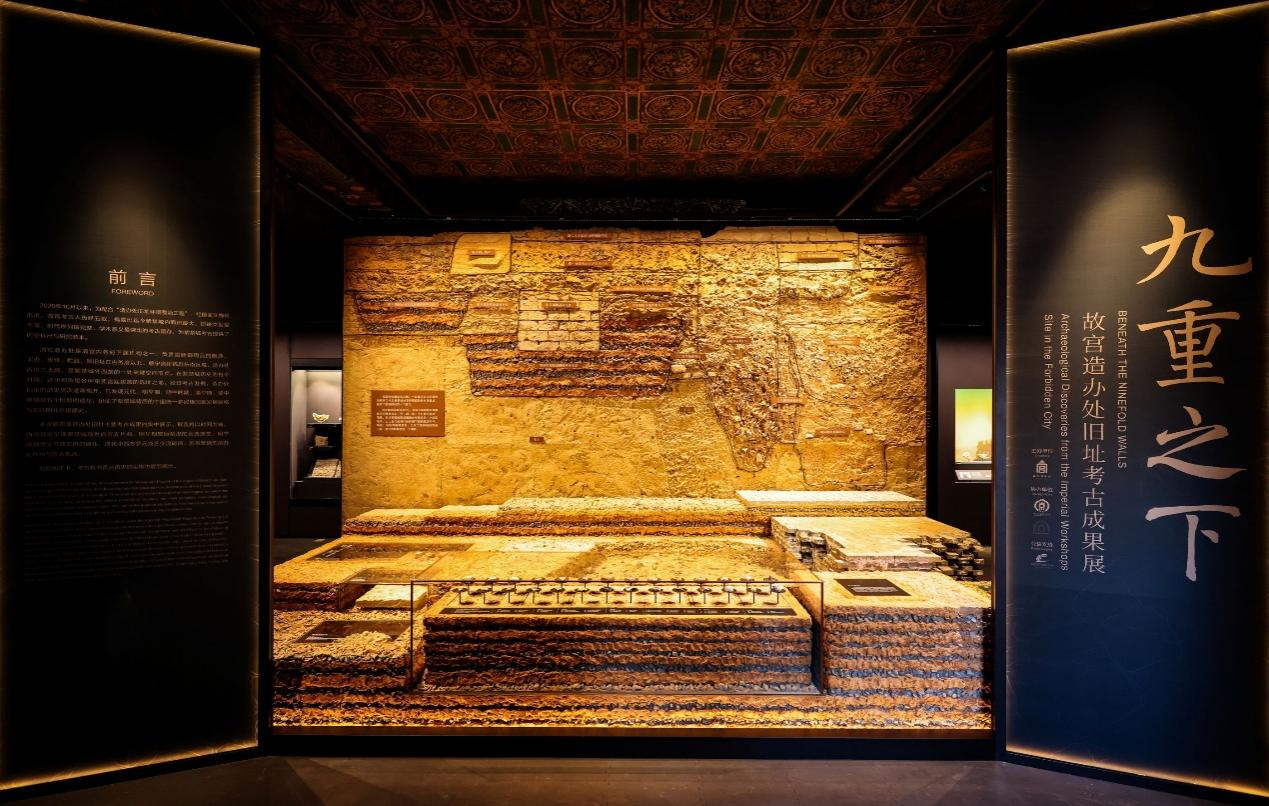
Core Viewpoint - The "Nine Layers Below" archaeological exhibition, supported by the Mercedes-Benz Star Fund, showcases the historical and cultural significance of the Forbidden City, spanning the Yuan, Ming, and Qing dynasties, and will be open to visitors for free from November 4, 2025, to February 8, 2026 [1][3]. Group 1 - The exhibition is part of the centenary celebrations of the Palace Museum and highlights the craftsmanship and daily life of artisans from the former Imperial Workshop, as well as the exchange of techniques between China and the West [1][3]. - The exhibition is a culmination of five years of archaeological work, which has provided a continuous historical narrative from the Yuan to the late Qing dynasty [3][7]. - The archaeological project, initiated in 2020, has excavated approximately 2,300 square meters, adhering to principles of minimal intervention and micro-excavation, revealing significant historical and architectural insights about the Forbidden City [7]. Group 2 - The Mercedes-Benz Star Fund has established a strategic partnership with the Palace Museum for seven years, focusing on cultural heritage preservation, ancient building restoration, and youth education in traditional culture [5][7]. - The fund's chairman expressed a commitment to continue exploring innovative public welfare models in collaboration with the Palace Museum to contribute to the preservation and display of Chinese civilization [5]. - The Star Fund has supported various projects, including the systematic protection of Gyeongbokgung Palace and initiatives to promote traditional craftsmanship among youth, benefiting thousands of children through cultural activities [7].
二〇二五年“世界市长对话·郑州”活动举行 古今交融 美美与共
Ren Min Ri Bao· 2025-11-02 22:47
Core Insights - The event "World Mayors Dialogue in Zhengzhou" focused on balancing cultural heritage protection with urban modernization, attracting around 300 participants from various countries and regions [1][3] Group 1: Cultural Heritage and Urban Development - Zhengzhou is promoting the integration of culture, commerce, and tourism, enhancing its city brand while facilitating the coordinated development of heritage protection and urban renewal [1] - International guests emphasized that urban renewal should not merely involve demolition but should be an organic regeneration guided by cultural continuity, preserving the city's essence while fostering innovation [1][2] Group 2: International Collaboration and Experience Sharing - The event included immersive experiences at significant cultural sites, allowing participants to appreciate the depth of Central Plains civilization and Zhengzhou's dynamic development [3] - Various city representatives expressed a desire to strengthen ties and enhance cooperation in cultural, economic, and trade sectors, highlighting the importance of cultural exchange in fostering mutual understanding [3][4] Group 3: Future Development Goals - Zhengzhou's mayor stated the city's commitment to sharing experiences globally, aiming for improved living standards through urban renewal and enhanced governance capabilities [4] - During the forum, Zhengzhou signed friendship agreements with cities from Spain, Ghana, Indonesia, and New Zealand, expanding its international network [4]
四川扎实推进文化遗产保护传承工作——赓续历史文脉 绘就时代新篇
Si Chuan Ri Bao· 2025-10-31 02:49
Core Viewpoint - Sichuan is actively promoting the protection and utilization of cultural heritage, with a series of conferences and forums aimed at discussing and enhancing cultural heritage preservation and innovation [1][2]. Group 1: Cultural Heritage Protection Initiatives - Sichuan prioritizes cultural heritage protection through systematic legislation, policy support, and talent development, achieving significant progress in recent years [2][3]. - The introduction of laws such as the "Sichuan Provincial World Heritage Protection Regulations" and the "Sichuan Provincial Intangible Cultural Heritage Regulations" has established a comprehensive protection system [2]. - The "Chengdu Model" for cultural heritage protection, which integrates archaeological exploration into land transfer processes, has been recognized as a national innovation [3]. Group 2: Integration with Urban Development - Sichuan is exploring ways to integrate cultural heritage protection with urban construction and economic development, launching pilot projects to support comprehensive heritage protection [3][4]. - The establishment of cultural ecological protection zones aims to balance the preservation of intangible cultural heritage with socio-economic development [4]. Group 3: Cultural Heritage Transmission and Innovation - Sichuan is committed to the creative transformation and innovative development of traditional culture, establishing research institutes and promoting cultural activities to enhance public engagement [5][6]. - The use of digital technologies, such as AR and VR, is being employed to bring cultural heritage to life, enhancing visitor experiences at various cultural sites [6][7]. Group 4: Economic Impact and Tourism Development - Cultural heritage is being transformed into quality tourism resources, with significant revenue generated from ticket sales and cultural products [8]. - In 2024, ticket and cultural product revenues from the Sanxingdui Museum are projected to reach 3.3 billion and 200 million respectively, highlighting the economic potential of cultural heritage [8]. Group 5: Global Cultural Exchange - Sichuan's cultural heritage is being showcased internationally, with events planned in various countries to promote cultural exchange and understanding [9]. - The global reach of Sichuan's cultural products, such as the Zigong Lanterns, demonstrates the province's role in spreading Chinese culture worldwide [9]. Group 6: Future Directions - Sichuan aims to continue enhancing cultural heritage protection efforts, contributing to the province's development and cultural identity [10].