
新型能源体系

Search documents
能源开新局丨谱写“十五五”高水平能源科技自立自强新篇章
Zhong Guo Dian Li Bao· 2026-02-11 09:28
Core Viewpoint - The article emphasizes the importance of advancing energy technology innovation and establishing a new energy system during the "15th Five-Year Plan" period, aligning with China's modernization goals and the strategic tasks outlined by the Communist Party [3][4]. Group 1: Energy Technology Innovation - The "15th Five-Year Plan" aims to build a strong energy nation, with a focus on high-quality development and technological self-reliance [3][4]. - The National Energy Administration will develop an energy technology innovation plan for 2026, providing robust technological support for the construction of a strong energy nation [3][4]. - Key areas of focus include enhancing the overall effectiveness of the energy technology innovation system and promoting original and core technology breakthroughs [4][6]. Group 2: Strategic Goals and Implementation - The strategic goals include establishing a new energy system and enhancing energy security through technological advancements [4][5]. - The plan emphasizes the integration of technological innovation with industrial innovation, particularly in areas like artificial intelligence and new energy storage [4][6]. - Specific actions include the implementation of major national technology projects and the promotion of energy efficiency and green development [7][8]. Group 3: Challenges and Opportunities - The energy sector faces both opportunities and challenges, including the need for green and low-carbon technology innovations and the competition in emerging fields like hydrogen and nuclear fusion [6][9]. - The integration of artificial intelligence into the energy sector is seen as a transformative factor that can reshape global energy competition [6][9]. - The article highlights the necessity for a proactive approach to maintain control over energy technology development amid international competition [6][9].
供给收缩需求刚性,煤价震荡运行
Datong Securities· 2026-02-10 02:28
Investment Rating - The industry investment rating is optimistic [1] Core Viewpoints - The coal price is expected to maintain a narrow fluctuation due to the dual weakness in supply and demand before the Spring Festival, but the certainty of supply contraction and rigid demand will offset each other, limiting the downward space for coal prices [4][12] - The market for thermal coal is experiencing a supply contraction, with prices showing a slight decline, while the demand remains supported by heating needs due to cold weather [11][12] - The coking coal market is seeing marginal adjustments in supply and demand, with prices fluctuating, and the overall supply remains tight [23][24] Summary by Sections Market Performance - The A-share market is experiencing overall fluctuations, with the coal sector outperforming the index, as funds shift from high-valuation technology and precious metals to low-valuation, high-prosperity sectors like consumption and aviation services [5][36] - The average daily trading volume in the market is 2.41 trillion yuan, indicating high market activity despite increased volatility [5] Thermal Coal - The supply-demand structure for thermal coal is improving, with supply constraints from major production areas due to safety regulations and the upcoming Spring Festival [11][12] - Prices for thermal coal are showing a mixed trend, with slight increases at ports and declines in some production areas [12][13] - The average price for Shanxi Datong thermal coal (Q5500) is 565 yuan/ton, down 7 yuan from the previous week [13] Coking Coal - The coking coal market is experiencing a mixed price trend, with some prices declining while others remain stable [24][25] - The average price for Shanxi Gujiao No. 2 coking coal is reported at 1250 yuan/ton, down 64 yuan from the previous week [25] - The overall supply remains tight, with independent coking plants showing a slight increase in operating rates [23][24] Shipping Situation - The shipping situation shows an increase in volume but a decrease in price, with various routes experiencing slight declines in shipping costs [33] Industry News - Significant collaborations are being established in the coal industry, such as the resource exchange agreement between Shaanxi Coal and Yanchang Petroleum [34] - The coal industry is undergoing a transformation towards a dual focus on raw materials and fuel, with policies aimed at controlling coal consumption in key regions [34]




总投资557亿 两大特高压项目拟引入民营企业注资入股
Di Yi Cai Jing· 2026-02-09 11:18
Group 1 - The core viewpoint of the article is that state-led investment in UHV projects is now being complemented by private capital participation, which injects new momentum into the industry [1] - The Qinghai Energy Bureau has announced a public solicitation for private enterprises to invest in the Xinjiang Electric (Southern Xinjiang) to Sichuan UHV DC project, with similar announcements made by Chongqing and Xinjiang authorities [1][2] - The total investment for the Xinjiang to Sichuan and Gansu UHV projects is 31.1 billion yuan and 24.6 billion yuan respectively, with private enterprises expected to hold about 10% of the shares [1][2] Group 2 - Both UHV projects have clear revenue expectations, with the Xinjiang to Sichuan project expected to deliver over 40 billion kWh annually, primarily utilizing solar and wind resources from the Southern Xinjiang region [2] - The introduction of private capital is in response to the State Council's notice aimed at promoting private investment in various energy sectors, allowing for a shareholding ratio of over 10% for qualified projects [2] - The entry of private capital into major energy projects is seen as a crucial practice to boost private investment confidence and stimulate internal growth, especially as private investment has been declining [3] Group 3 - Under the dual carbon goals and the construction of a new energy system, energy projects are becoming a significant direction for private capital investment [4] - The proportion of private investment in newly approved nuclear power projects has increased from about 10% in 2024 to 10%-20% in 2025, indicating a growing role for private enterprises in the energy sector [4] - The number of oil and gas transporters has surged from 5 in 2019 to 1005, with the share of resources transported by small and medium-sized transporters rising from 2.1% to 10.2% [4]
新型储能列入重点!第六批能源领域首台(套)重大技术装备申报开启
中关村储能产业技术联盟· 2026-02-09 08:25
Core Viewpoint - The National Energy Administration has initiated the sixth batch of applications for major technological equipment in the energy sector, focusing on key technologies that have achieved significant breakthroughs and possess independent intellectual property rights, but have not yet achieved mass market performance [3][6]. Group 1: Application Conditions - The projects must belong to key technological equipment in the energy sector that have achieved significant breakthroughs domestically and have independent intellectual property rights, including complete sets of equipment, core components, control systems, and software systems [7]. - The projects should support national energy security, carbon peak and carbon neutrality goals, and the construction of a new energy system, focusing on advanced renewable energy, new power systems, and energy system digitalization [7]. - The technological equipment must be developed and ready for engineering application, with conditions for signing formal supply contracts within one year and starting construction within two years [7]. Group 2: Application Procedures - Provincial energy authorities and central enterprises are responsible for organizing applications, determining recommended lists, and publicizing them for at least five working days [8]. - Each province can recommend up to eight projects, while central enterprises can recommend projects with supporting letters from provincial energy authorities [8]. - The application must be submitted for individual technological equipment, and bundling applications is prohibited [10]. Group 3: Requirements for Submission - Applications must ensure the completeness, authenticity, and traceability of materials, and must not involve state or commercial secrets [11]. - Applications for increasing recommended quotas must be submitted by March 6, 2026, with supporting materials [13]. - Formal application materials must be sent to the National Energy Administration by April 24, 2026, via China Post EMS [18].

国家能源局综合司关于组织开展第六批能源领域首台(套)重大技术装备申报工作的通知
国家能源局· 2026-02-09 06:57
Core Viewpoint - The article outlines the organization of the sixth batch of applications for major technological equipment in the energy sector, emphasizing the importance of innovation and self-reliance in achieving national energy security and carbon neutrality goals [2]. Group 1: Application Conditions - The projects must represent significant technological breakthroughs with independent intellectual property rights and should not have achieved mass market performance yet, focusing on key energy technologies [3]. - The projects should align with national energy security, carbon peak and neutrality goals, and the construction of a new energy system, concentrating on areas such as renewable energy, new power systems, and energy system digitalization [3]. - The technological equipment must be developed and ready for engineering application, with conditions for signing contracts and starting construction within specified timeframes [3]. Group 2: Application Procedures - Provincial energy authorities and central enterprises are responsible for organizing applications, with a limit on the number of recommended projects based on previous evaluations [4]. - Additional recommendations may be granted based on the number of projects previously selected and the existence of supportive policies for the equipment [4][5]. - Applications must be submitted individually for each piece of equipment, with restrictions on the number of user and development units involved [6]. Group 3: Requirements and Deadlines - Applications for increasing recommended quotas must be submitted by March 6, 2026, with supporting materials for verification [9]. - Submission of formal recommendation letters and application materials is required by April 24, 2026, with specific formats and conditions outlined [11][13]. - Late or non-compliant submissions will not be accepted [14].
全球“电力时代”隐忧:供需紧张,电网稳定性面临大考
Xin Lang Cai Jing· 2026-02-07 00:40
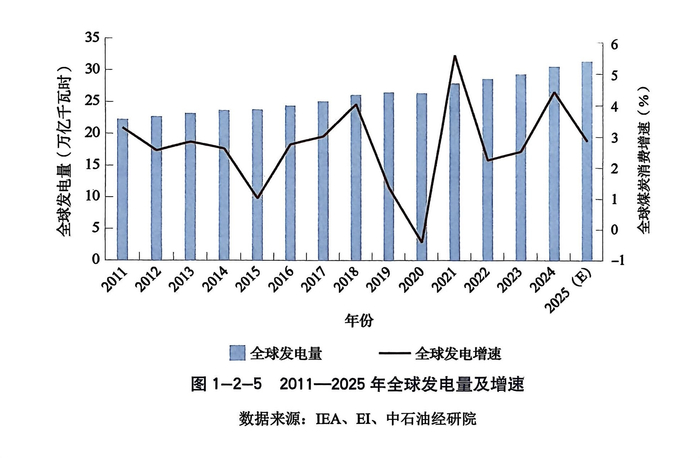
Core Insights - The global energy market is undergoing significant changes, with a strong emphasis on the transition to an electric era, as highlighted by the International Energy Agency (IEA) and the China National Petroleum Corporation (CNPC) Economic and Technological Research Institute [1][3] Group 1: Global Electricity Supply and Demand - Global electricity generation is projected to reach 32.2 trillion kilowatt-hours by 2025, with a year-on-year growth of 2.9%, while electricity demand is expected to grow at 3.3%, approximately double the energy demand growth rate [1] - The Asia-Pacific region is expected to contribute about 60% of the global electricity increment, with electricity generation reaching 16.9 trillion kilowatt-hours and a growth rate of 5.4%, increasing its share of global electricity consumption from 51.8% to 52.5% [3] - The growth dynamics of electricity demand are shifting, with significant contributions from data centers and artificial intelligence (AI) driving consumption in developed economies [3] Group 2: Changes in Electricity Supply Structure - The share of coal-fired power is expected to decrease by 2.7 percentage points to 31.3% by 2025, while the shares of gas, nuclear, and hydroelectric power remain stable, and wind and solar power are projected to increase by 2.7 percentage points to 18.7% [5] - The proportion of renewable energy installations has surpassed 50%, reaching 51.5%, but the share of flexible adjustment power sources remains low at 6.2% [8] Group 3: Challenges in Electricity System Stability - The global electricity system's stability has not improved, with the "trilemma" of stability, economy, and cleanliness becoming increasingly complex due to new supply-demand characteristics, climate change, and industrial interlinkages [8] - Since 2015, investments in electricity production have increased by nearly 70%, but annual spending on grid construction has grown at less than half that rate [8] Group 4: Regional Responses to Electricity Challenges - China is leading the green transition, aiming for non-fossil energy consumption to exceed 30% by 2035, with renewable energy generation surpassing 4 trillion kilowatt-hours, a year-on-year increase of 15.3% [9][11] - In contrast, Europe is slowing its transition, with renewable energy generation expected to reach 48% by 2025, facing challenges such as grid flexibility and integration issues [13] - The U.S. is shifting towards nuclear and gas power, with policies aimed at increasing oil and gas production while restarting coal and nuclear projects [13] Group 5: Global Electricity Pricing Trends - There are significant regional differences in electricity prices, with the U.S. and Western Europe experiencing price increases due to surging demand from data centers and unstable renewable energy output, while regions like India, Australia, and Northern Europe see stable or decreasing prices due to sufficient renewable energy supply [14]
盐穴“充电宝”护航绿电保供
Xin Lang Cai Jing· 2026-02-06 22:00
Core Insights - The project represents the world's largest compressed air energy storage project, marking a significant advancement in energy storage technology [1][2] - The project utilizes underground salt caverns for energy storage, with a total investment of approximately 3.74 billion yuan and a total storage capacity of 2,400 MWh [1][2] Group 1: Project Overview - The project is led by Jiangsu Guoxin Group in collaboration with Su Yan Group and Huai'an Industrial Investment Company [1] - The project consists of two 300 MW non-combustion compressed air energy storage power stations [1] - The second unit of the project was successfully connected to the grid and achieved full-load operation on January 22 [1] Group 2: Environmental Impact - The project is expected to generate an average annual electricity output of approximately 792 million kWh, sufficient to meet the annual electricity needs of 600,000 households [2] - It is projected to reduce carbon dioxide emissions by 600,000 tons annually, equivalent to adding 40,000 acres of forest in the Jianghuai Plain [2] Group 3: Future Prospects - The Jiangsu provincial government aims to accelerate the construction of a new energy system by 2026, supporting Huai'an in becoming a demonstration base for comprehensive salt cavern utilization [2] - The project aims to address the challenges of integrating new energy sources and contribute to a stable, green, and zero-carbon energy system [2]
美丽中国先行区建设视角下的能源转型问题
Zhong Guo Neng Yuan Wang· 2026-02-06 07:57
Core Viewpoint - The construction of beautiful China pilot zones is a key part of building a demonstration model for beautiful China, serving as an important tool for advancing the initiative and a crucial support for establishing a new framework for beautiful China construction [1] Group 1: Action Plans and Goals - By December 2025, China will implement action plans for beautiful China pilot zones in key regions such as Beijing-Tianjin-Hebei, the Yangtze River Delta, and the Guangdong-Hong Kong-Macao Greater Bay Area, outlining goals and action roadmaps for energy clean and low-carbon transformation [1][2] - The Beijing-Tianjin-Hebei region aims to optimize energy structure and establish a low-carbon transformation pilot zone, while the Yangtze River Delta will create a new energy system that promotes mutual support and sharing [1][2] - The Guangdong-Hong Kong-Macao Greater Bay Area is focused on building a clean and low-carbon energy system, contributing to the development of a green and low-carbon bay area [1][2] Group 2: Implementation Pathways - Different regions have distinct focuses for energy clean and low-carbon transformation, with Beijing-Tianjin-Hebei targeting a reduction in coal consumption and an increase in renewable energy share [2] - The Yangtze River Delta emphasizes internal and external collaboration, promoting wind power and green energy projects while controlling coal consumption [2] - The Guangdong-Hong Kong-Macao Greater Bay Area is leveraging its open frontiers to develop offshore wind power and green hydrogen industries, aiming for zero-emission transport corridors and zero-carbon airports [2] Group 3: Systematic Engineering Approach - The construction of beautiful China pilot zones is a systematic project that integrates energy production and consumption revolutions, focusing on sustainable development, ecological quality improvement, and carbon neutrality [2][3] - The approach includes exploring differentiated energy transformation paths based on regional characteristics and resource endowments [3] Group 4: Energy Equipment Manufacturing - The transition to clean and low-carbon energy creates market demand for traditional clean energy technologies and promotes the development of new technologies and products [4] - Emphasis is placed on developing advanced energy equipment and new energy sources, including green hydrogen and sustainable aviation fuels [4] Group 5: Infrastructure Development - There is a need to enhance energy infrastructure with a focus on environmental and carbon emission evaluations, aiming to build a modernized power grid and smart microgrids [5] - The development of charging, hydrogen refueling, and other infrastructure for new energy vehicles is essential for supporting the transition [5] Group 6: Pollution Reduction and Carbon Management - Implementing coal consumption reduction and exploring fossil energy substitution mechanisms are critical for managing total fossil energy consumption [6] - The goal is to achieve 100% green energy in certain sectors and establish recycling systems for solar panels and batteries to reduce carbon footprints [6] Group 7: Institutional Innovation - Optimizing the operation mechanisms of coal power and enhancing the synergy between operational indicators and pollution reduction are necessary for effective energy transition [7] - The establishment of a carbon footprint management system and the promotion of green finance are vital for supporting clean energy investments [7]
能源强国建设“大家谈”︱迈向能源强国:陆海统筹,向海图强,筑牢中国式现代化的能源基石
国家能源局· 2026-02-06 07:19
Core Viewpoint - The article emphasizes the importance of building a strong energy nation in China, highlighting the need for a new energy system that is secure, green, innovative, efficient, and open, as part of the broader goal of achieving socialist modernization [3][4]. Group 1: Strategic Goals and Phases - The construction of an energy strong nation is a significant strategic choice based on China's resource endowment and long-term needs, aiming for a historical leap from an energy power to a comprehensive energy strong nation [4]. - The new energy system should feature five characteristics: security resilience, green low-carbon transition, technological innovation, efficient governance, and cooperative openness [4]. - The next ten years are proposed to be divided into two key phases: the "15th Five-Year Plan" (2026-2030) focusing on foundational work and peak carbon emissions, and the 2035 vision aiming for a mature energy system and significant optimization of energy structure [5]. Group 2: Key Tasks for Energy Nation Construction - Strengthening energy security by expanding resource supply through strategic mineral exploration and development, while increasing oil and gas exploration efforts, particularly in marine areas [6][7]. - Accelerating the green low-carbon transition by increasing the share of renewable energy and optimizing the energy structure through the development of offshore wind power and carbon capture technologies [7]. - Enhancing technological innovation by focusing on key technologies in deep-water oil and gas development and promoting digital and intelligent technologies across the energy industry [7][8]. - Reforming oil and gas systems to create a unified energy market and improve governance mechanisms, fostering a competitive and efficient energy system [8]. - Expanding international energy cooperation to enhance global influence and participate in global energy governance [8]. Group 3: Global Resource Allocation and Energy Security - The article stresses the need to enhance global resource allocation capabilities while maintaining domestic energy supply resilience, emphasizing the importance of a dynamic and resilient energy security system [9]. - Strengthening domestic oil and gas supply capabilities through increased exploration and production, particularly in marine resources [9]. - Promoting renewable energy generation and ensuring a reliable transition from fossil fuels to mitigate supply risks [9]. - Utilizing the Belt and Road Initiative to enhance energy infrastructure connectivity and trade cooperation, thereby improving global resource allocation and risk management [9].

筑牢电力安全基石 赋能能源强国建设
Zhong Guo Dian Li Bao· 2026-02-06 06:18
筑牢电力安全基石 赋能能源强国建设 中国工程院院士、电网运行风险防御技术与装备全国重点实验室主任 郑玉平 2026年是"十五五"规划开局之年,也是加快建设新型能源体系的关键之年。2026年全国能源工作会议精 准锚定发展方向,系统部署重点任务,明确提出统筹发展和安全、加快构建新型能源体系、提升能源安 全保障能力的核心要求,为推进能源强国建设夯实了基础。新型电力系统作为新型能源体系的核心枢 纽,其安全稳定运行事关经济社会发展全局,是能源强国建设的关键支撑和基础保障。深入贯彻落实会 议精神,进一步筑牢电力安全防线,对夯实能源安全基础、支撑能源强国建设具有重大战略意义。 一、深刻认识:电力安全是能源强国建设的核心基石 加快建设新型能源体系是深入推进能源革命、建设能源强国的必然要求。清洁低碳、安全充裕、经济高 效、供需协同、灵活智能的新型电力系统,是新型能源体系的核心组成部分,是实现新能源高效可靠消 纳的关键载体,其安全运行具有基础性、战略性地位,同时也是优化资源配置、促进清洁消纳、降低用 能成本、支撑战略性新兴产业发展的关键,更是经济社会高质量发展的坚实底座。 二、总体思路:坚持系统观念构建电力安全新格局 贯彻落实全 ...