电力市场化改革

Search documents
1-10月全国累计发电装机容量同比增长17.3%,美国气价周环比上涨
Xinda Securities· 2025-11-30 05:11
Investment Rating - The investment rating for the utility sector is "Positive" [2] Core Insights - The cumulative installed power generation capacity in China increased by 17.3% year-on-year as of October 2025, reaching 3.75 billion kilowatts [5] - The report highlights a significant increase in solar power generation capacity, which grew by 43.8% year-on-year, while wind power capacity increased by 21.4% [5] - The report indicates that the electricity market is expected to see a gradual increase in prices due to ongoing market reforms and supply-demand dynamics [5] Summary by Sections Market Performance - As of November 28, the utility sector rose by 0.9%, underperforming the broader market, which increased by 1.6% [12] - The electricity sector specifically saw a 0.65% increase, while the gas sector rose by 3.27% [16] Electricity Industry Data Tracking - The price of thermal coal at Qinhuangdao Port (Q5500) decreased by 9 CNY/ton week-on-week, settling at 818 CNY/ton [22] - Coal inventory at Qinhuangdao Port increased by 400,000 tons week-on-week, totaling 6 million tons [29] - Daily coal consumption in 17 inland provinces rose by 30,000 tons/day week-on-week, reaching 3.541 million tons [31] Natural Gas Industry Data Tracking - The LNG ex-factory price index in China was 4,312 CNY/ton as of November 28, down 3.88% year-on-year [56] - The U.S. HH spot price increased by 15.3% week-on-week, reaching 4.59 USD/MMBtu, while the European TTF price decreased by 5.6% [59] - The total natural gas supply in the EU for week 47 was 6.23 billion cubic meters, a year-on-year increase of 8.0% [64] Key Industry News - The National Energy Administration reported that the average utilization hours of power generation equipment decreased by 260 hours year-on-year, totaling 2,619 hours [5] - The cumulative geological reserves of coalbed methane in China exceeded 700 billion cubic meters as of October 2025 [5] Investment Recommendations - The report suggests focusing on leading coal power companies such as Guodian Power, Huaneng International, and Huadian International, as well as regional leaders in tight electricity supply areas [5] - For natural gas, companies with low-cost long-term gas sources and receiving station assets are recommended, including Xin'ao and Guanghui Energy [5]





电价迎来重大调整,价差可达4倍?会不会用不起电,交不起电费?
Sou Hu Cai Jing· 2025-11-29 22:13
Core Insights - The recent electricity price adjustments in China are not merely price hikes or cuts but represent a significant overhaul of the entire electricity pricing system, impacting both industrial and residential users [1][10] Group 1: Price Discrepancies - As of January 2025, the peak-valley price difference has exceeded 1 yuan per kilowatt-hour in nine provinces, with Shanghai leading at a peak price difference of 1.81 yuan [3][6] - In Tianjin, the peak-valley price ratio has reached 4:1, with specific time slots designated as low-cost periods, significantly affecting operational costs for businesses [3][4] Group 2: Impact on Industrial Users - Industrial users who adapt their electricity usage to low-cost periods can see substantial savings, with one factory reducing its electricity bill by 30% by shifting energy-intensive processes to off-peak hours [4][7] - Companies are increasingly investing in energy storage systems to capitalize on price differences, turning electricity management into a profit-generating activity [7][8] Group 3: Market Dynamics and Policy Changes - The shift towards market-based pricing is evident, with regions like Shandong implementing a five-tier pricing system that reflects real-time supply and demand [5][6] - The government aims to create a more flexible pricing structure that can respond to fluctuations in energy supply, particularly from renewable sources [8][11] Group 4: Recommendations for Users - Users are advised to understand local pricing policies and adjust their electricity usage accordingly to maximize savings [9][10] - The potential for residential users to benefit from time-of-use pricing, especially those with electric vehicle charging stations, is significant [6][9] Group 5: Future Trends - The trend towards dynamic pricing and real-time adjustments is expected to become more common, requiring both businesses and residential users to adapt their consumption habits [11][12] - The overarching goal of these changes is to optimize energy consumption, support renewable energy integration, and contribute to national carbon neutrality goals [10][12]


电力及公用事业行业年度策略:关注稳定性和股东回报
Zhongyuan Securities· 2025-11-28 08:48
Core Insights - The report maintains a "stronger than market" rating for the electricity and public utilities sector, emphasizing a shift in investment logic from growth to quality, stability, and shareholder returns [4][5][6] - The electricity and public utilities index has underperformed the CSI 300 index, with a year-to-date increase of 7.43% compared to 14.12% for the CSI 300, indicating a potential for catch-up in the sector [5][12] Industry Overview - In 2025, the market-oriented trading electricity price has declined, leading to a decrease in revenue growth for power generation companies. However, effective cost control has allowed for an increase in net profit [10][16] - The electricity and public utilities sector achieved a total revenue of CNY 18,748.53 billion in the first three quarters of 2025, a slight decrease of 0.07% year-on-year, while net profit grew by 6.07% to CNY 2,065.15 billion [10][12] - The profitability of hydropower remains the strongest in the sector, with hydropower's gross margin at approximately 59% and net margin at around 44% [17][19] Hydropower Sector - Large hydropower companies possess unique business models and long operational cycles, making them attractive for long-term investment. Companies like Yangtze Power and Huaneng Hydropower are highlighted as key players [4][47] - Hydropower generation is subject to seasonal fluctuations, but large hydropower enterprises can mitigate these through their reservoir capabilities, leading to more stable performance [51][53] - As of the end of Q3 2025, the top three hydropower companies by installed capacity are Yangtze Power, Huaneng Hydropower, and Guotou Power, collectively holding about 27.4% of the national installed capacity [60][62] Thermal Power Sector - The thermal power sector is expected to transition from a cyclical asset to a stable income asset, with improvements in coal price linkage mechanisms and auxiliary service revenues [6][47] - The gross margin for thermal power has increased by 2.51 percentage points compared to the previous year, indicating a positive trend in profitability [19][17] Other Power Generation - The performance of other power generation sectors, including nuclear and renewable energy, is mixed, with nuclear power showing growth in generation but facing challenges from declining market prices [4][18] - The renewable energy sector is experiencing high growth in installed capacity but is also under pressure regarding profitability due to falling green electricity prices [4][18] Investment Rating and Focus - The report maintains a "stronger than market" investment rating for the electricity and public utilities sector, suggesting a focus on companies with stable fundamentals and reasonable valuations [5][6] - Key investment targets include companies with high dividend yields and strong operational performance, particularly in the hydropower segment [6][47]
储能电芯市场供需两旺
Zheng Quan Ri Bao· 2025-11-27 16:13
Core Insights - The energy storage industry continues to experience high demand, with a significant increase in orders for energy storage cells, leading to a "one cell hard to find" situation in the market [1] - Major companies are reporting full production and sales, indicating a robust market environment, with production schedules extending into 2026 [1][2] - The industry is transitioning from "scale expansion" to "quality and efficiency improvement," with a focus on technological upgrades and cost control [3] Group 1: Market Demand and Supply - The energy storage cell market is witnessing a surge in orders, with companies like Longjing Environmental reporting production schedules extending to June 2026 [1] - Companies such as Hunan Youneng and Guizhou Anda Technology are operating at full capacity, driven by strong demand for both power and energy storage batteries [2] - The demand for phosphate cathode materials is expected to remain strong, supported by both power and energy storage battery markets [2] Group 2: Competitive Strategies - Companies are adopting strategies such as lean production and technological cost reduction to maintain competitive advantages [3] - Long-term strategic partnerships are becoming crucial for stable supply chains, exemplified by a ten-year agreement between Haibo Sichuang and CATL [3] - The industry is predicted to shift from a focus on total volume to structural competition, favoring companies with technological advantages and global supply chain capabilities [3] Group 3: Industry Challenges and Recommendations - The energy storage industry must avoid falling into price competition, advocating for industry self-discipline and standard constraints [4] - Emphasis on product differentiation and enhancing the performance of energy storage systems is essential [4] - Accelerating international expansion and certification processes will be vital for participating in global competition [4]
电力系统,重磅改革
Ge Long Hui· 2025-11-27 13:07
Core Insights - The article discusses the significant progress in China's electricity market reform over the past decade, highlighting the shift towards market-oriented trading and the increasing participation of private enterprises in the power generation sector [1][43]. Group 1: Market Reform Progress - In 2015, the new round of electricity reform began, with market-based trading volume initially below 1 trillion kWh, accounting for less than 10% of total electricity consumption [1][45]. - By October 2025, the monthly electricity market trading volume reached 563.8 billion kWh, a year-on-year increase of 15.6%, representing 65.8% of total electricity consumption for that month [1][45]. - Regions like Guangdong and Shandong have market trading ratios approaching 70% and 65.2%, respectively, nearing levels seen in mature markets in Europe and the U.S. [1]. Group 2: Challenges in the Current System - The legacy of planned economy practices has led to price distortions, where electricity prices remain stable despite fluctuations in coal prices, resulting in significant losses for thermal power companies [4][10]. - High industrial electricity costs, which are more than double residential rates, have placed a burden on energy-intensive industries, with electricity costs accounting for up to 30% of production costs in sectors like steel and chemicals [12][13]. - The existing power system struggles to integrate renewable energy sources effectively, leading to high curtailment rates, such as 8.6% for solar power in Qinghai and 22% in Tibet in 2023 [18][21]. Group 3: Stages of Reform - The reform process can be divided into four stages: 1. Top-level design (2015-2017) focused on regulating the transmission network while opening up generation and sales [26][27]. 2. Pilot programs (2018-2020) tested market mechanisms in select provinces, leading to significant increases in registered electricity sales companies [30][34]. 3. Expansion to regional markets (2021-2023) saw the establishment of the first regional electricity market, allowing for cross-province electricity trading [37][40]. 4. Nationwide unified market (2024) aims to streamline regulations and enhance market efficiency, with a target of achieving a fully integrated national electricity market by 2029 [42][44]. Group 4: Initial Outcomes - By October 2025, market-based trading volume surged to 5.49 trillion kWh, accounting for 63.7% of total electricity consumption, a dramatic increase from less than 10% in 2015 [45]. - Cross-province trading volume reached 1.3261 trillion kWh, representing 24.1% of total trading volume, indicating improved inter-regional electricity flow [46][47]. - Despite the growth in market participation, competition remains limited, with a high concentration of market power among a few large companies, particularly in Guangdong, where market concentration is at 68.5% [51][52].

如何看待光伏行业的未来趋势 | 投研报告
Zhong Guo Neng Yuan Wang· 2025-11-19 08:30
Group 1 - The core viewpoint of the article emphasizes that the electricity market reform is beneficial for the photovoltaic (PV) industry, particularly in the context of declining electricity prices and the need for better integration with the energy system [1] - The demand for the photovoltaic industry is not as pessimistic as it may seem, driven by the Nationally Determined Contributions (NDC) from China and the EU, with an expectation of 250 GW of new PV installations in China by 2026 [1] - The integration of PV with other system components is essential, as the rapid increase in system costs at a 15% penetration rate of wind and solar power necessitates a collaborative approach to development [1] Group 2 - The establishment of a global carbon market, with 11 countries including China and the EU joining Brazil's carbon market alliance, will enhance the value of green energy and align green prices with carbon prices [1] - The ultimate market clearing will require technological iterations, with silicon-perovskite tandem cells being identified as a promising direction for future development [1]
从NDC和全球碳市场角度:如何看待光伏行业的未来趋势
China Post Securities· 2025-11-18 08:49
Investment Rating - The report maintains a strong buy rating for the photovoltaic industry [1] Core Insights - The demand for the photovoltaic industry is not as pessimistic as perceived, driven by the Nationally Determined Contributions (NDC) with an expected 250 GW of new installations in China by 2026 [2] - Market reforms in the electricity sector are beneficial for photovoltaics, as they will enhance the integration of solar power with other system components and improve the pricing signals for green energy [2] - The ultimate market clearing will depend on technological iterations, with silicon-perovskite tandem cells being a promising direction [2] Summary by Sections Section 1: Growth Potential from NDC - The growth of the photovoltaic industry is closely linked to global climate cooperation, with significant contributions from NDC 3.0 submissions by countries like China and the EU [10][14] - The report anticipates that China will achieve 250 GW of new photovoltaic installations in 2026, contrary to industry pessimism [21] - The relationship between NDC submissions and photovoltaic growth is strong, indicating a positive outlook for the industry [19] Section 2: Marketization and System Integration - The report emphasizes that marketization is essential for the photovoltaic sector to adopt a systems engineering approach and achieve integrated development [39] - The core framework of electricity market reform focuses on pricing mechanisms and the integration of green electricity [42] - The establishment of a global carbon market is expected to enhance the pricing of green energy and improve the operational conditions for photovoltaic assets [45] Section 3: Technological Iteration for Market Clearing - The report highlights that the current surplus in advanced production capacity necessitates a shift towards technological differentiation for market clearing [51] - The photovoltaic industry is undergoing significant technological advancements, with a focus on improving efficiency and reducing costs [63] - The report discusses the efficiency limits of various photovoltaic technologies, indicating a trend towards higher efficiency through innovations like tandem cells [58][70]
中金 | 深度布局“十五五”:电力设备新能源篇
中金点睛· 2025-11-12 23:26
Core Viewpoint - The article emphasizes the acceleration of building a new energy system, highlighting the critical roles of the power grid and energy storage in facilitating the high-quality development of renewable energy [2][3]. Group 1: New Energy System Development - The "14th Five-Year Plan" aims to increase the proportion of renewable energy supply, with cumulative installed capacity for wind and solar expected to reach 575 GW and 1110 GW respectively by July 2025, making renewable energy the largest installed capacity source [2]. - By 2035, the target is to achieve over 360 million kW of wind and solar installed capacity, necessitating the construction of a new power system to manage the increasing pressure on power system stability and consumption [2]. Group 2: Power Grid Investment - The "14th Five-Year Plan" anticipates a nationwide investment of approximately 2.8 trillion yuan in power grid projects, with projections for the "15th Five-Year Plan" suggesting investments could exceed 4.1 trillion yuan, reflecting a compound annual growth rate of 5-6% [3][4]. - The focus will be on enhancing the main grid framework and upgrading the distribution network to support the growing demand from large wind and solar bases [4]. Group 3: Energy Storage Growth - The demand for energy storage is expected to grow rapidly, with total commercial configuration demand projected to reach 1.5-1.7 TWh during the "15th Five-Year Plan," reflecting a compound annual growth rate of over 20% [8]. - Energy storage is increasingly recognized as a vital component of the new energy system, with the "15th Five-Year Plan" emphasizing the need for scientific planning of pumped storage and the development of new energy storage technologies [8]. Group 4: Electric Vehicle Market Expansion - The penetration rate of new energy vehicles is expected to rise significantly during the "15th Five-Year Plan," with electric heavy trucks and other electric transportation sectors anticipated to see accelerated demand [15][16]. - The market for electric ships is also projected to grow, driven by the need for decarbonization in the shipping industry, which is a significant contributor to carbon emissions [17].
电力市场化改革迎新进展,首个能源央企售电服务品牌推出
Bei Jing Ri Bao Ke Hu Duan· 2025-11-11 12:09
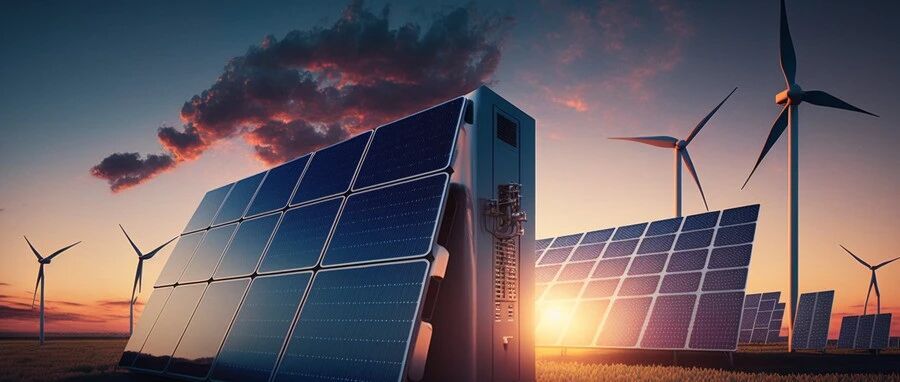
Core Viewpoint - The launch of "Hua Dian Yi" by China Huadian marks a significant step in the ongoing electricity market reform in China, reflecting the progress towards a unified national electricity market [1][3]. Group 1: Market Reform Progress - The electricity market reform aims to establish a multi-entity, unified, open, and competitively regulated energy market system, with a focus on "regulating the middle and liberating both ends" [1]. - This year marks the tenth anniversary of the new round of electricity system reform in China, emphasizing the importance of market competition in the generation and retail sectors [1]. Group 2: Retail Market Development - The retail electricity business is a key component of the electricity market reform, focusing on creating a diverse and competitive retail market to meet varied consumer needs [3]. - China Huadian has signed contracts for 2,417 billion kilowatt-hours of electricity on the retail side, serving over 18,000 users, and has a green electricity trading scale of 12.5 billion kilowatt-hours [3]. Group 3: Strategic Initiatives - The introduction of the "Hua Dian Yi" brand represents a strategic move for China Huadian to adapt to market competition and transition from traditional energy production to providing quality services [3]. - The company plans to enhance customer service by offering a one-stop platform for electricity purchasing, ensuring transparent pricing mechanisms, and providing detailed electricity cost breakdowns [3].

【招银研究|行业深度】电力设备行业之配电网——配电网投资提速,设备更新和市场化改革带来业务机遇
招商银行研究· 2025-11-11 09:55
Core Viewpoint - The article emphasizes the critical role of the distribution network in the power system, highlighting its function as the "capillary" that connects the transmission network to end users, and the expected significant investment growth in the distribution network driven by the rise of distributed photovoltaics and charging stations during the 14th Five-Year Plan period [2][3][4]. Distribution Network Overview - The distribution network is described as the key component responsible for the distribution and supply of electrical energy, connecting the transmission network to various users [6][9]. - It operates at lower voltage levels compared to the transmission network, which is characterized by high voltage and long-distance energy transport [10][9]. Investment Growth Drivers - The rapid development of distributed photovoltaics and charging stations is identified as the main driver for the growth of distribution network investments, with the current penetration rate of distributed photovoltaics at approximately 31.3%, indicating over twofold growth potential [3][28]. - The investment in the distribution network is projected to reach around 1.75 trillion yuan during the 14th Five-Year Plan, with an annual average investment of about 350 billion yuan, reflecting a growth rate of over 15% compared to the previous plan [3][48]. Equipment Update and Market Reform Opportunities - The article discusses the need for equipment updates in the distribution network to support the integration of high-capacity transformers and energy storage systems, driven by the requirements of distributed photovoltaics and high-speed charging stations [4][55]. - The market reform in the distribution network is expected to create financial service opportunities as more social capital enters the investment landscape, with banks potentially finding new clients among provincial grid companies [4][54]. Challenges in Integration - The article highlights the challenges faced by the traditional distribution network in accommodating the rapid growth of distributed photovoltaics, including mismatches in construction pace and existing equipment limitations [19][20]. - The integration of charging stations presents additional challenges, such as spatial imbalances and technological gaps, necessitating upgrades to the distribution network to handle increased load demands [33][35]. Policy and Regulatory Framework - The article outlines the recent policy initiatives aimed at enhancing the quality and capacity of the distribution network, including guidelines for integrating distributed energy sources and improving infrastructure [49][48]. - It notes that the government has set ambitious targets for the distribution network, including the ability to accommodate 500 million kilowatts of distributed renewable energy and 12 million charging stations by 2025 [48][47]. Financial Services and Investment Landscape - The article suggests that the financial services sector should adapt to the evolving landscape of distribution network investments, with opportunities arising from equipment updates and market reforms [54][69]. - It emphasizes the importance of developing comprehensive energy services to ensure the economic viability of new investments in the distribution network [79][69].