量化大数据

Search documents
百股获连续融资增持,量化拆解资金逻辑
Sou Hu Cai Jing· 2026-01-14 07:33
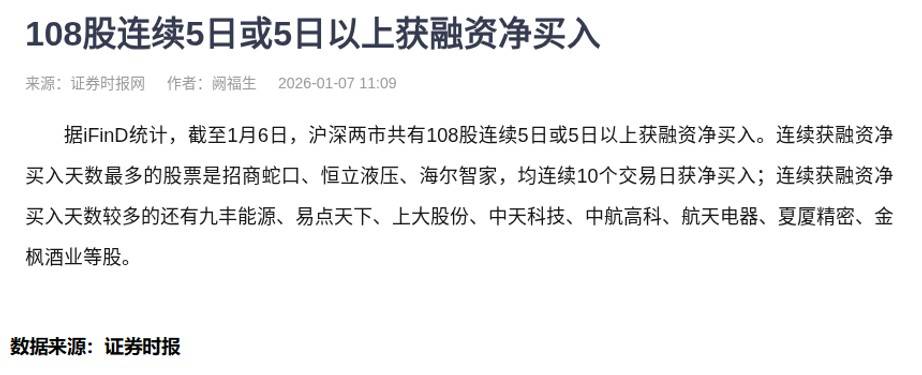
Core Viewpoint - The article discusses the significance of quantitative data in understanding stock price fluctuations and the underlying behaviors of different types of capital in the market, emphasizing the importance of data-driven strategies for investors. Group 1: Stock Price Fluctuations - Many stocks in the Shanghai and Shenzhen markets have seen continuous financing increases for over five days, with some experiencing net buying for more than ten days [1] - Stock price volatility often leads to emotional trading decisions, where investors struggle to hold onto profitable positions during fluctuations [3] - Each price movement is driven by capital dynamics, which can be better understood through quantitative data rather than intuition [6] Group 2: Quantitative Analysis of Capital Behavior - The article presents a quantitative analysis system that identifies trading behaviors, revealing the interactions between speculative capital and institutional investors [8] - The analysis distinguishes between "speculative capital accumulation" and "institutional shakeout," where institutions may intentionally adjust stock prices before accumulating shares [8] - Recognizing these patterns allows investors to understand the ongoing capital battles and maintain confidence in holding stocks despite volatility [8] Group 3: Efficient Investment Strategies - Long-term holding of stocks can yield positive results, but it is often inefficient during favorable market conditions; a more effective strategy involves participating in upward trends while minimizing exposure to corrections [9] - The article highlights five phases of opportunity between "shakeout" and "accumulation," which can lead to significant returns without enduring the full extent of price fluctuations [12] Group 4: Long-term Value of Quantitative Thinking - The difference in investment outcomes among individuals is attributed to systematic methodologies rather than luck, with quantitative data providing a framework for decision-making [13] - Quantitative analysis helps investors move beyond subjective judgments, revealing the true behaviors of capital and fostering a more rational understanding of market dynamics [13] - Over time, this approach can develop sustainable investment capabilities, reducing reliance on speculation and enhancing overall investment performance [13]

融资保证金上调,大雷背后都是资金猫腻
Sou Hu Cai Jing· 2026-01-14 06:45
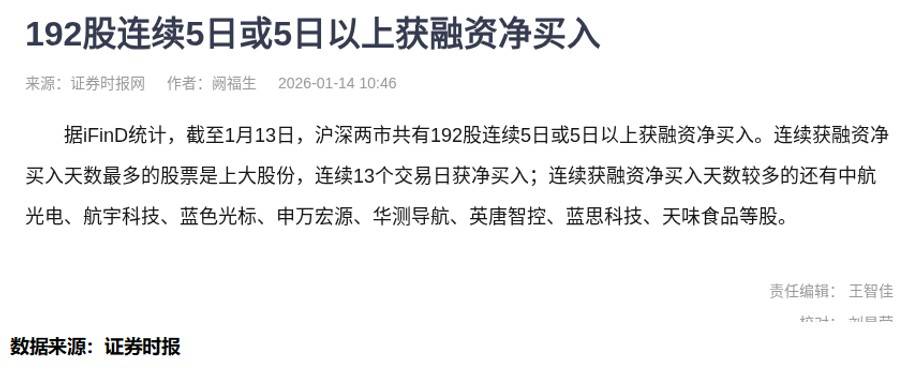
最近看到市场有个重要调整,沪深北交易所把投资者融资买证券的最低保证金比例从80%调到了100%。这是监管层的逆周期调节,主要是为了适当 降低杠杆,保护大家的合法权益,而且这次调整只针对新开的融资合约,之前已经持有的融资合约和展期都不受影响。之前有个朋友,一听到市场 有这类调整消息就慌着操作,结果反而踏错了节奏,其实与其纠结消息本身,不如用量化大数据的思路去看市场背后的真实情况。 看图1: 这张图里的量化数据,能帮我们跳出单纯的价格走势,看到更核心的交易信息。其中由红黄蓝绿四种颜色柱体构成的「主导动能」数据,反映的是 做多、回吐、做空和回补四种交易行为;橙色柱体构成的「机构库存」数据,体现的是机构大资金的活跃程度。橙色柱体持续的时间越长,说明机 构资金参与交易的积极性越高,要是不看好这只标的,根本不会一直参与交易。 二、用数据识别资金行为 当「主导动能」呈现蓝色「回补」交易行为的时候,同时「机构库存」保持活跃,这就说明是机构资金在积极参与「回补」,也就是我们常说的震 仓洗盘,目的就是清理掉跟风的资金,为后续的走势铺路。相反,如果没有机构资金参与的「回补」行为,大概率只是普通投资者的补仓,也就是 跌多了买一点,很 ...
多行业获融资净买,量化拆解真实逻辑
Sou Hu Cai Jing· 2026-01-13 07:18
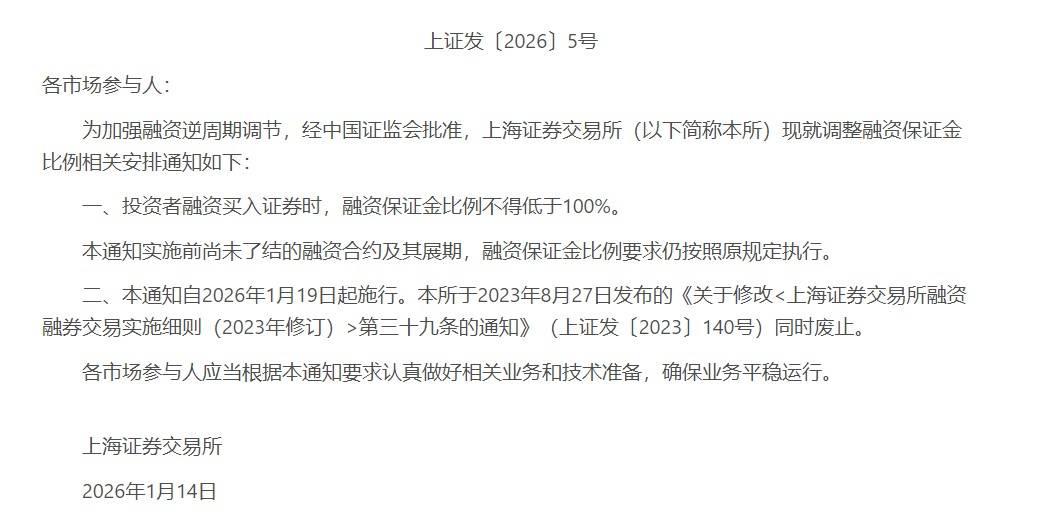
Group 1 - The core market performance shows that 29 out of 31 primary industries received net financing inflows, with the computer industry leading in net inflow amounts [1] - Over two thousand stocks experienced net financing inflows, with more than a hundred stocks having net inflows exceeding 100 million, and 22 stocks surpassing 300 million in net inflows [1] Group 2 - The determination of market highs and lows is primarily influenced by the trading intentions of institutional investors, which can be assessed through actual trading behaviors [6] - Quantitative data can reveal the true participation levels of institutional investors, helping to avoid misjudgments based solely on price movements [6][15] - The analysis of trading behavior through quantitative data can clarify that apparent price rebounds may not be supported by institutional participation, indicating that perceived lows may not be genuine [12][15] Group 3 - The use of quantitative big data allows for a more objective understanding of market conditions, helping to establish a rational perspective and avoid the pitfalls of emotional trading [15]
融资资金抢筹,量化辨明方向
Sou Hu Cai Jing· 2026-01-12 17:06
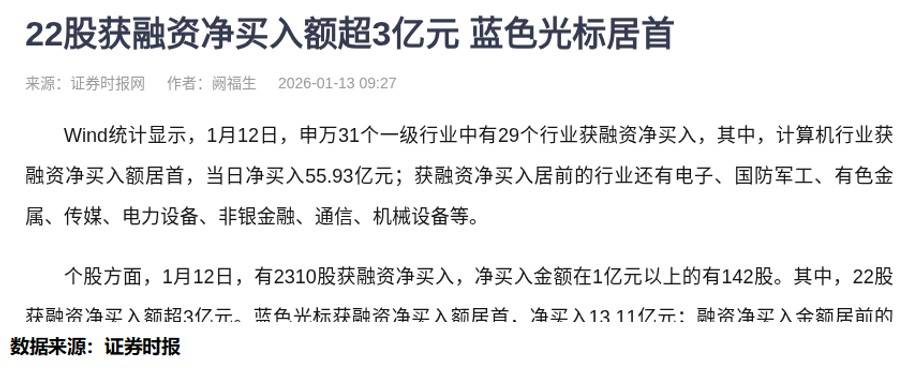
Group 1 - Over half of the 31 primary industries in the Shenwan index have seen net financing inflows, with the defense and military industry showing the most significant net inflow [1] - Popular sectors such as computer, power equipment, and media are also included in the list of industries with net financing inflows [1] - Many individual stocks have received net financing inflows, with several exceeding 1 billion yuan, and some even surpassing 10 billion yuan [1] Group 2 - Investors often misinterpret market trends, focusing on superficial price movements rather than underlying trends, leading to poor investment decisions [3][5] - The key to successful investing lies in understanding the nature of price adjustments rather than just timing the entry points [5] - Quantitative data can help clarify the true intentions behind trading behaviors, providing insights that traditional methods may overlook [5][9] Group 3 - Two core data sets, "dominant momentum" and "institutional inventory," can reveal the real actions of funds, distinguishing between institutional and retail trading behaviors [7] - A combination of these data sets can indicate whether large funds are actively participating in market movements or if retail investors are merely reacting to price changes [7][8] - Understanding these dynamics can help investors differentiate between genuine market trends and temporary fluctuations [8] Group 4 - Relying on quantitative data can replace subjective guesses with objective insights, allowing investors to navigate market volatility more effectively [9] - The recent surge in financing inflows should be analyzed in conjunction with quantitative data to assess whether the funds are making strategic investments or engaging in short-term speculation [9]
IPO受理增超18倍,用数据找共识标的
Sou Hu Cai Jing· 2026-01-12 11:52
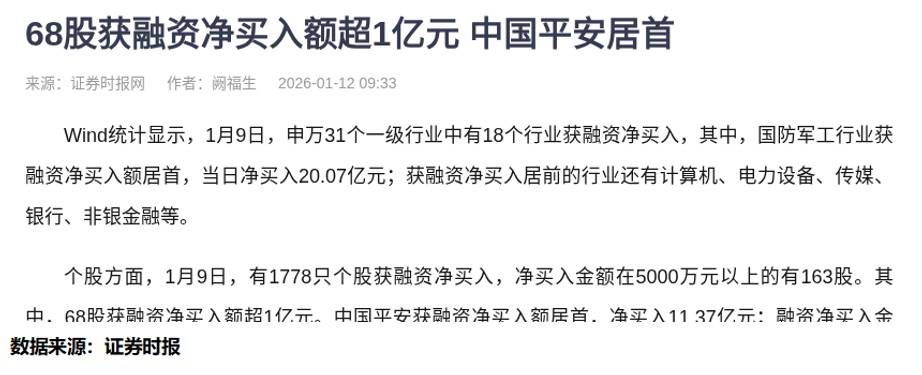
Group 1 - The core viewpoint of the article highlights a significant increase in IPO acceptance volume on the Shenzhen Stock Exchange, which has risen over 18 times year-on-year, along with substantial increases in refinancing and major asset restructuring applications, indicating a positive trend in multiple stages of the market [1] - Regulatory efforts are becoming more precise, targeting violations in IPOs with varying penalties based on the duration and amount involved, aiming to enforce accountability and create a more standardized market environment [1] - The use of quantitative big data is emphasized as a tool for investors to better identify valuable targets and stabilize their mindset, moving away from reliance on intuition alone [1] Group 2 - The essence of market performance is to find stocks that can outperform the average, which fundamentally involves identifying consensus among different types of capital [2] - Quantitative big data allows for clear visualization of trading behaviors, making it easier to detect underlying capital movements that may not be apparent to ordinary investors [5] - The phenomenon of "speculative capital rushing to buy" indicates a consensus among different types of funds, suggesting that when both institutional and speculative funds are active, it is a strong signal for potential investment [6] Group 3 - The article illustrates that capturing signals of "speculative capital rushing to buy" can help investors identify promising stocks before price increases occur, thus gaining a proactive advantage [9] - By filtering out price fluctuations and focusing solely on trading behavior data, investors can gain clearer insights into market dynamics [10] - The shift from price-based judgment to a multi-dimensional analysis of market behavior through quantitative big data represents a cognitive upgrade in investment strategies [13] Group 4 - As the market becomes more regulated, ordinary investors are encouraged to equip themselves with objective tools like quantitative big data to understand real market behaviors and develop rational investment thinking [14] - The article suggests that by consistently applying a data-driven perspective, investors can gradually build their own investment systems and achieve more stable long-term results [14]
脑机接口获20亿融资 行情里的资金门道
Sou Hu Cai Jing· 2026-01-12 00:42
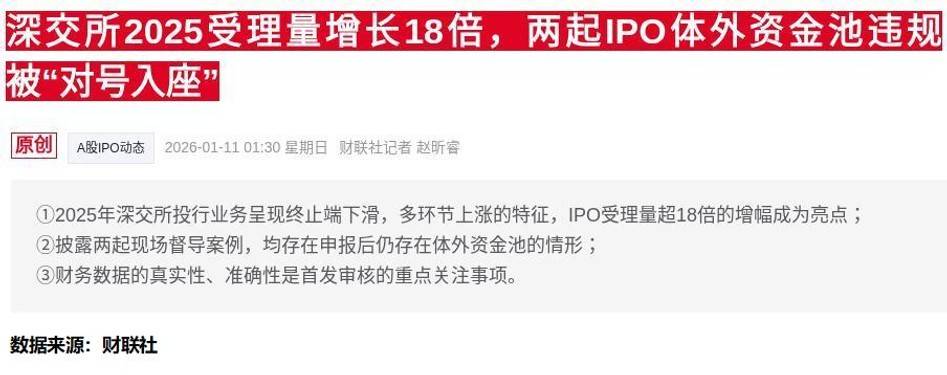
Group 1 - The core point of the news is that the brain-computer interface sector is gaining traction, with a recent $2 billion financing round led by established institutions and listed companies, indicating strong investor interest and potential growth in the industry [1] - The "14th Five-Year Plan" has highlighted the importance of the brain-computer interface sector, with specific goals set for 2030 to position the industry among the world's leaders [1] - According to Open Source Securities, the sector is currently in a "high growth accumulation period," with projections estimating a global market size of $12.4 billion by 2034, growing at an annual rate of 17% [1] Group 2 - The article discusses how stock price movements are often influenced by unseen large capital transactions, rather than being purely random or based on luck [3] - It highlights that certain stocks, particularly in sectors like steel, electric power equipment, and IT, experienced sudden price increases due to prior accumulation of capital, which was not immediately visible to the average investor [3][5] - The use of quantitative data systems allows for the identification of trading patterns among institutional and retail investors, revealing when significant capital movements occur [5][7] Group 3 - The brain-computer interface sector, like other industries, does not experience sudden price changes without underlying capital movements; news serves as a catalyst rather than the cause [9] - The article emphasizes that monitoring capital movements through quantitative data can provide insights into potential stock price movements, reducing the need for speculation [10] - The focus on understanding capital actions rather than chasing market trends can lead to more informed investment decisions [10]
AI大模型公司上市潮,量化数据帮你看懂本质
Sou Hu Cai Jing· 2026-01-09 12:08
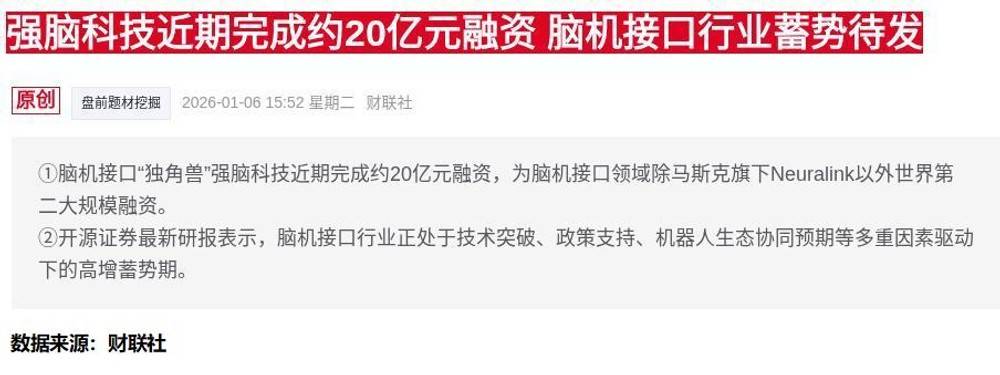
Group 1 - The core viewpoint is that the capital market's willingness to invest in AI companies, despite their current losses, is driven by their "trading behavior" rather than just stock price fluctuations [1][2] - MiniMax and Zhiyu, two AI companies, have seen significant stock price increases, with MiniMax's market value reaching HKD 90.9 billion and Zhiyu's surpassing HKD 66.5 billion, indicating strong investor interest [1] - The backing of these companies by major stakeholders such as Alibaba, Tencent, and top investment firms highlights the confidence in their business models and future potential [1] Group 2 - "Trading behavior" is emphasized as more important than price movements, as it reflects institutional investment activity and market sentiment [2][3] - Quantitative data, such as "institutional inventory," provides insights into whether institutional investors are actively participating in trading, which can indicate the strength of a stock's price movement [6] - The ability to understand "trading behavior" can help investors reduce anxiety related to market fluctuations and make more informed decisions [8] Group 3 - AI companies like MiniMax and Zhiyu demonstrate clear "trading behavior" through their user base and revenue growth, which are critical factors for attracting investment [8] - The growth of AI model usage, projected to increase by 363% by mid-2025, signifies a shift from pilot projects to large-scale applications, reinforcing the importance of trading behavior in determining value [9] - The essence of both the AI industry and stock market is that value is determined by trading behavior, with quantitative data helping to reveal these previously hidden dynamics [8][9]
21个行业获融资加仓,牛市里别再追高踏空
Sou Hu Cai Jing· 2026-01-09 02:47
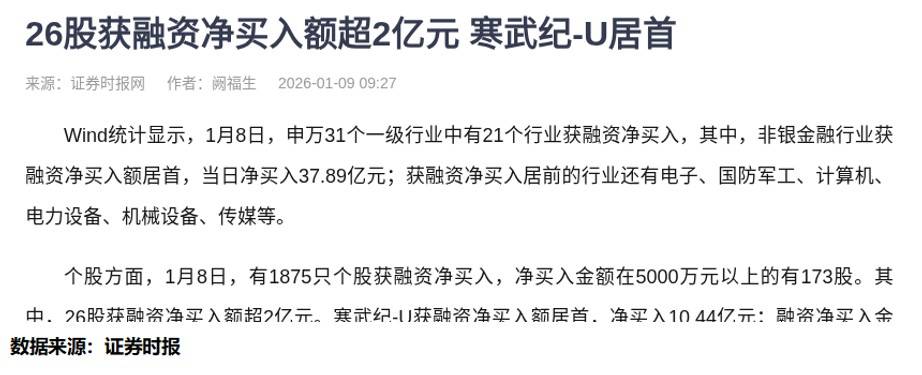
1月8日的市场消息挺热闹——Wind数据说,申万31个一级行业里有21个都被融资资金"加仓"了,非银金融一下子买了37.89亿,电 子、国防军工这些热门行业也在名单里。个股更夸张,1875只股票都被融资资金买了,其中26只买超2亿,寒武纪-U居然被买了 10.44亿。看着这些"抢筹"消息,是不是很多朋友心里直痒痒?想着"赶紧上车别踏空",但又怕"冲进去就套在高点"?其实我之前也 犯过这错,直到用了量化大数据才明白:牛市里的追高踏空,都是因为没看清交易背后的真实意图。 一、融资加仓的热闹里,藏着最容易犯的错 二、上涨时看"赚钱卖一点",别做追高的接盘侠 我之前跟踪过一只从10块涨到20块的股票,中间有五次密集的"赚钱卖一点"的黄柱子。第一次出现时,股价刚涨到13块,黄柱子一 排,结果接下来跌了15%,差点回到11块的启动点;第二次涨到15块,又跌了10%;直到第五次涨到20块,黄柱子比之前更长,直 接跌了25%,回到15块。 你看这张图里的五次黄柱子,每一次都是"不能追"的信号。要是当时能看到这个,是不是就不会在13块、15块的时候冲进去?哪怕 等一等,等黄柱子消失、股价调整到11块、14块再买,是不是更安全? ...
超聚变启动上市辅导,这只A股4分钟封板
Sou Hu Cai Jing· 2026-01-07 10:22
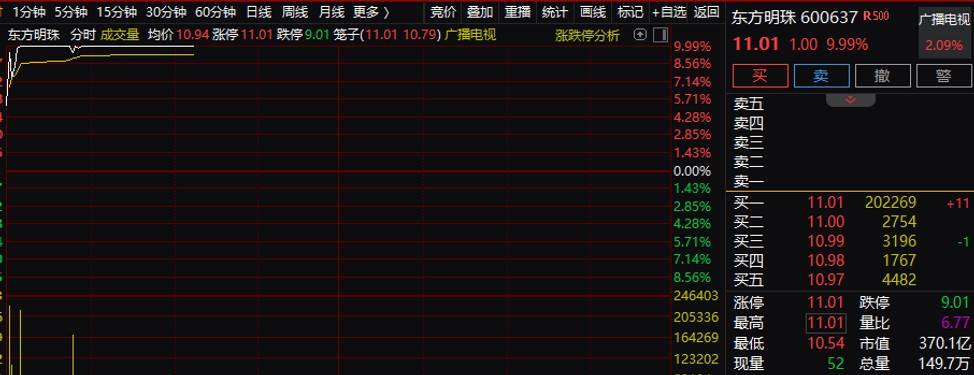
Group 1 - The core point of the news is that Chaojuvian, a leading company in computing power, has officially started its listing guidance with the help of CITIC Securities, indicating strong market interest and potential growth [1] - Chaojuvian was spun off from Huawei in 2021 and is now controlled by the Henan State-owned Assets Supervision and Administration Commission, with business operations covering servers and AI development platforms [1] - The company is projected to achieve revenue exceeding 40 billion yuan in 2024, with a significant increase in revenue in the first quarter of 2025, doubling compared to the previous year [1] Group 2 - The stock of Dongfang Mingzhu, an A-share company, experienced a surge and hit the daily limit shortly after the news of Chaojuvian's listing, reflecting the market's positive sentiment towards companies associated with Chaojuvian [1] - Institutional investors have been monitoring Dongfang Mingzhu due to its investments in Chaojuvian and collaborations with leading AI companies like MiniMax, indicating that the stock's rise is backed by institutional recognition rather than just market speculation [1] - The news serves as a catalyst for market movement, but the underlying factor for stock price changes is the attitude of institutional funds, which have already acknowledged the value of Dongfang Mingzhu's partnerships and investments [1]

连续五天融资净买入,资金持续力看一点
Sou Hu Cai Jing· 2026-01-07 04:09
Group 1 - The core viewpoint emphasizes that merely observing financing net purchases is insufficient; the true determinant of a stock's ability to withstand volatility lies in the "real attitude" of institutional investors behind the scenes [1][3] - Many investors focus on superficial data like "financing net purchases" and "increased trading volume," believing that following the crowd is a safe strategy, but this can lead to misleading outcomes [3][5] - The analysis of institutional inventory reveals that during previous price rebounds, institutional participation remained active, indicating that they were not selling but rather consolidating positions; however, a lack of institutional inventory during a price drop signals potential trouble ahead [5][7] Group 2 - Investors often fall into the trap of only looking at price movements without understanding the underlying buying and selling dynamics, which can obscure the true intentions of institutional players [7][8] - Quantitative data analysis is crucial as it helps investors discern whether institutional funds are actively participating in trades, which can provide insights into market sentiment and potential price movements [7][8] - The market is not about guessing but rather about analyzing data to reveal the true situation; understanding institutional actions can prevent premature selling or holding onto losing positions [8][9]