低空经济

Search documents
AI助力,城市治理提“智”升级
Huan Qiu Wang Zi Xun· 2026-01-21 01:30
来源:光明日报 城市有了智慧"大脑",将呈现出怎样的精彩图景? 民生服务"精准滴灌" 讲述人:江苏无锡市城市运行管理中心运行管理部负责人 王志华 "河道沿岸和小区角落堆放垃圾,异味扰民!"前阵子,江苏无锡市梁溪区一处临河居民区的投诉工单通 过12345热线,跳转到我们中心负责运营的无锡市无人机低空巡管共享服务平台。这种投诉以往最让人 头疼——城管人员靠徒步巡查,耗时耗力,一些隐蔽的角落还难以覆盖。 瞧!人工智能实时调节交通信号灯,道路通行有了更多效率空间;气象大模型读懂风云数据,公众出行 有了自己的"参谋";大数据识别异常行为与安全隐患,公共安全有了更多预警空间……随着新的应用场 景不断涌现,智能技术让城市变得越来越"耳聪目明"。 本期让我们走进城市"大脑"的幕后,看城市治理如何更灵活、居民生活如何更便捷。 【一线讲述】 但现在,流程变了。工单一到,我们的调度系统立刻响应,一架搭载着垃圾识别算法的无人机从智能方 舱起飞,对河岸和小区角落进行全面扫描。很快,AI就精准找到堆积点,将生成的带坐标、面积和垃 圾类型的可视化报告回传给相关单位,随后环卫人员前去清理。从群众反馈问题到清运完成,全过程不 超过2小时。 这 ...

扫码就能租用无人机 武汉“天空之城”建设有指南了
Chang Jiang Ri Bao· 2026-01-21 00:38
Core Insights - The article discusses the introduction of a shared drone economy in Wuhan, as outlined in the newly released "Guidelines for the Construction of Low-altitude Economic Standard System (V1.0)" [1][2] - The guidelines aim to promote urban shared drones across various application scenarios, including low-altitude tourism, logistics, emergency rescue, and urban governance [1][2] Group 1: Guidelines and Standards - The guidelines establish a comprehensive standard system covering six key areas: basic general standards, safety management, infrastructure, aircraft development, application scenarios, and support services [2] - Safety management is emphasized as a core component, creating a governance framework that balances risk management with industry service [2] Group 2: Economic Impact and Development - The low-altitude economy has been integrated into Wuhan's "965" modern industrial cluster, with over 170 related enterprises and more than 220 established low-altitude takeoff and landing points [2] - The implementation of the guidelines is expected to positively impact Wuhan's low-altitude economy by streamlining the entire chain from research and development to manufacturing, application, and service [2] - The guidelines provide clear technical specifications and entry guidelines for enterprises, reducing innovation and operational costs [2]
中国经济将继续是全球经济增长最大引擎(权威论坛)
Sou Hu Cai Jing· 2026-01-21 00:16
Economic Performance - In 2025, China's GDP exceeded 140 trillion yuan, marking a 5.0% growth compared to 2024, showcasing the economy's resilience and innovative momentum [13][14][23] - The economic growth is attributed to a dual approach of "stabilization" and "transformation," focusing on preventing risks while directing resources towards new productive forces [14][15] Innovation and Development - Innovation is positioned as the core driver of China's economic growth, with a shift from traditional factor-driven growth to enhancing total factor productivity [17][18] - China maintains a strong momentum in sectors like artificial intelligence, robotics, and renewable energy, achieving a top ten ranking in the global innovation index [18][19] Trade and Global Cooperation - China's foreign trade demonstrates strong resilience, supported by a complete industrial system and innovative drivers, contributing to high-quality development [19][20] - The country continues to promote an open global economy, implementing policies like zero tariffs in Hainan Free Trade Port, enhancing its attractiveness to global resources [20][21] Long-term Economic Outlook - China's contribution to global economic growth remains around 30%, with expectations of continued positive trends supported by a robust industrial system and innovation capabilities [22][23] - The international community holds a favorable view of China's economic prospects, with organizations like the IMF and World Bank raising growth forecasts for 2026 [23][24]
今日视点:提振内需要多维发力久久为功
Zheng Quan Ri Bao· 2026-01-20 22:58
Core Viewpoint - The Chinese government aims to strengthen domestic circulation and expand domestic demand through macroeconomic policies, focusing on enhancing consumer capacity and ensuring a balanced supply-demand relationship [1][2]. Group 1: Enhancing Consumer Capacity - The foundation for boosting domestic demand lies in solidifying the "capacity base" for consumer spending, which is driven by real income growth and improved social security [2]. - The 2025 Central Economic Work Conference emphasizes the formulation and implementation of urban and rural resident income increase plans to enhance consumer capacity [2]. - To effectively implement the income increase plan, it is essential to stabilize employment, optimize wage distribution, and reform the income distribution system to narrow income gaps [2]. Group 2: Supply-Demand Alignment - Boosting domestic demand requires a focus on supply-side structural reforms to match high-quality supply with upgraded consumer needs [3]. - In the goods consumption sector, companies are encouraged to increase innovation and shift from "scale expansion" to "quality enhancement" to meet personalized and green consumption demands [3]. - In the service consumption sector, breaking down barriers in areas like tourism, healthcare, and home services is crucial, alongside leveraging technology for digital upgrades [3]. Group 3: Dual Empowerment of Consumption and Investment - A synergistic relationship between consumption and investment is vital for a smooth and sustainable domestic demand cycle [3]. - Investment should be directed towards major technological infrastructure and urban renewal to support consumption upgrades and stimulate related sectors [3]. - Encouraging private investment in areas such as artificial intelligence and green energy can significantly contribute to expanding domestic demand [3]. Conclusion - Focusing on people's livelihoods and high-quality development is essential to truly activate consumer potential and drive stable economic growth in China [4].
总投资近1.3万亿元 168个项目入围“省重” 产业项目数占比近半
Si Chuan Ri Bao· 2026-01-20 21:59
Core Insights - Chengdu is accelerating the construction of major industrial projects, including BOE's 8.6-generation AMOLED production line with a total investment of 63 billion yuan and BYD's semiconductor project with an investment of 22.1 billion yuan, both expected to be completed within the year [2][3] - The Sichuan provincial government has announced a list of key projects for 2026, with Chengdu contributing 168 projects totaling nearly 1.3 trillion yuan, representing 20.2% and 24.4% of the province's total [2][3] - The projects are categorized into four main types: industrial projects, infrastructure projects, social welfare projects, and ecological construction projects, all closely aligned with national strategies [2][3] Industrial Projects - Industrial projects account for the largest share of the key projects in Chengdu, with 48.2% in number and 37.1% in investment amount, reflecting the city's ambition to strengthen its real economy [3] - Notable projects include a 3.5 billion yuan intelligent manufacturing base for aerospace equipment and a 9.35 billion yuan intelligent manufacturing project for automobiles, which will significantly enhance Chengdu's capabilities in these sectors [3] - The BOE AMOLED production line is expected to capture over 20% of the global market and 50% of the national market for flexible displays, directly benefiting over 200 upstream and downstream enterprises [3] Infrastructure Projects - Chengdu is focusing on traditional infrastructure investments, including transportation, water conservancy, and energy, while also incorporating new infrastructure projects like the Chengdu Supercomputing Center [3] - The Chengdu-Chongqing high-speed rail integrated transportation hub project, with an investment of 23.6 billion yuan, is a key node that will transform the eastern new district of Chengdu into a transportation hub [2][3] Social Welfare Projects - Major social welfare projects include a 112.8 billion yuan housing project aimed at alleviating housing difficulties and a 8.4 billion yuan project for the development of high-quality hospitals, which will enhance medical resource distribution [3] - The city is also investing in elderly care facilities, with a project worth 2.47 billion yuan expected to provide 280,000 square meters of elderly care services [3] Ecological Projects - Environmental projects include a 4.32 billion yuan waste-to-energy plant and a 6.62 billion yuan sewage treatment capacity enhancement project, which will significantly improve the city's waste management and water quality [3] - These projects are part of Chengdu's commitment to enhancing public welfare while adhering to strict standards to prevent superficial projects and ensure compliance with national regulations [3]



辽宁首个诺贝尔奖实验室项目落户浑南科技城
Xin Lang Cai Jing· 2026-01-20 21:54
Core Insights - The first Nobel Prize laboratory project in Liaoning has been officially signed and will be established in Hunnan Science and Technology City, led by Konstantin Novoselov, a Nobel laureate in Physics and a professor at the National University of Singapore [1][2] - The project, named the Konstantin Two-Dimensional Materials Research Center, aims to create a world-class laboratory focused on the fundamental research and industrialization of two-dimensional materials, particularly graphene [1][2] Group 1 - The laboratory will focus on addressing core challenges in the basic research and transformative practical product industrialization processes of two-dimensional materials [1] - Konstantin Novoselov expressed gratitude for the support from Shenyang City and Hunnan District, emphasizing the team's commitment to enhancing technological innovation capabilities in new materials, electronic information, new energy, and equipment manufacturing [1][2] Group 2 - The laboratory will prioritize the development of two-dimensional materials and related components for future industries such as low-altitude economy, aerospace, new energy, and quantum technology [2] - The collaboration will involve deep synergy in key dimensions such as industrial ecosystem cultivation and talent exchange, aiming to explore the full-chain development path from basic research to industrial application of two-dimensional materials [2] - The laboratory plans to establish a development framework centered on platform construction, with a strategy to attract, gather, and cultivate talent, aiming to recruit and train 300 high-level scientific talents [2]
“传统业务+航空动力” 宗申动力深化双轮驱动
Zheng Quan Shi Bao· 2026-01-20 18:25
Core Viewpoint - Zongshen Power (001696), a leading local power machinery enterprise in Chongqing, is experiencing significant growth driven by strategic adjustments in its aviation power segment and steady growth in its core business, forming a dual-driven development pattern with traditional and emerging sectors [1] Financial Performance - For the first three quarters of 2025, Zongshen Power achieved total operating revenue of 9.639 billion, a year-on-year increase of 30.17% [1] - The company reported a net profit attributable to shareholders of 758 million, reflecting a year-on-year growth of 93.70% [1] - The net profit attributable to shareholders after deducting non-recurring gains and losses was 710 million, up 92.63% year-on-year [1] Traditional Business Growth - The general machinery business benefited from rural revitalization policies and a recovery in overseas demand, leading to a continuous expansion of orders [1] - The motorcycle engine business has seen a steady increase in market share both domestically and internationally due to technological upgrades and channel expansion, contributing to the performance growth "foundation" [1] Aviation Power Business Development - The aviation power segment is gaining development opportunities supported by regional policy advantages [1] - Zongshen Aviation, as a local leader, has received policy support in technology research and development and order acquisition, with the establishment of Chenyu Technology further promoting the scale development of the aviation power business [1] Future Outlook - Zongshen Power will continue to deepen the dual-driven pattern of "steady growth in traditional business + strategic breakthroughs in aviation power" [2] - The stable cash flow from traditional business will support research and layout in the aviation power segment [2] - With the empowerment of the Chenyu Technology platform and the dual support of the Chongqing low-altitude economic industry ecosystem, the long-term growth potential of the aviation power business is highly regarded by the market [2]

“eVTOL五小龙”齐聚 上海争夺低空经济“制空权”
Zhong Guo Jing Ying Bao· 2026-01-20 17:37
Core Viewpoint - Shanghai is actively developing the low-altitude economy and commercial aerospace sectors, aiming to establish itself as a global hub for electric vertical takeoff and landing (eVTOL) aircraft by implementing supportive policies and infrastructure development [1][3][2]. Group 1: Policy Initiatives - Shanghai has introduced multiple policies to support the low-altitude economy, including a target to reach a core industry scale of approximately 80 billion yuan by 2028 [3]. - The city aims to build a complete industrial chain for new low-altitude aircraft and establish a national advanced manufacturing cluster for the low-altitude economy [3]. - Financial incentives are provided, with up to 10 million yuan in support for eVTOL manufacturing projects, encouraging investment in low-altitude and commercial aerospace sectors [3][6]. Group 2: Industry Development - As of December 2025, Shanghai is home to at least 251 startups in the low-altitude economy, with 66 companies focused on eVTOL and drones, representing over 50% of the leading eVTOL firms in China [5]. - Companies like Volant, Peak Aviation, and Shide Technology are recognized as key players in the eVTOL sector, achieving significant milestones in flight testing and certification [6][9]. - The city has also attracted several commercial aerospace companies, contributing to a robust ecosystem for low-altitude economic activities [6]. Group 3: Infrastructure and Ecosystem - Infrastructure development is identified as a critical challenge, with calls for improved facilities for flight testing and operational deployment of eVTOLs [7][8]. - Experts suggest enhancing the layout of takeoff and landing points, particularly in transportation hubs and business districts, to facilitate low-altitude operations [7]. - The establishment of a comprehensive regulatory framework and streamlined approval processes is essential for the successful implementation of low-altitude economic initiatives [7][8]. Group 4: Talent and Experience - Shanghai's aviation industry benefits from a wealth of talent and experience, with a strong background in civil aviation and aircraft certification processes [4][5]. - The city has produced a skilled workforce through successful projects like the domestically developed C919 aircraft, which supports the growth of the low-altitude economy [5]. - The presence of experienced regulatory bodies enhances the industry's ability to develop and implement eVTOL technologies effectively [4].
检测机构“量减质升” 头部企业加速构建竞争优势
Zheng Quan Ri Bao· 2026-01-20 16:25
Group 1 - The detection industry in A-shares is experiencing growth opportunities due to increased industry concentration and the elimination of smaller, weaker institutions [1][2] - As of now, there are 23 listed companies in the detection service sector in A-shares, with several companies recently issuing positive profit forecasts for 2025 [1] - For instance, Huace Testing and Certification Group expects a net profit of 1.013 billion to 1.021 billion yuan for 2025, representing a year-on-year growth of 10% to 11% [1] - Shenzhen Tiansu Measurement Testing Co., Ltd. anticipates revenue of 865 million to 900 million yuan for 2025, with a year-on-year growth of 8.11% to 12.48% [1] - Zhongji Huanyu Certification Inspection Co., Ltd. reported a total revenue of 879 million yuan for 2025, with a year-on-year increase of 5.82% [1] Group 2 - The detection industry is transitioning from rapid expansion to a focus on existing market competition, with larger, stronger institutions gaining competitive advantages [2] - Approximately 15% of large-scale institutions contribute over 80% of the industry's revenue, indicating a trend towards concentration and intensive development [2] - Emerging fields such as AI, humanoid robots, new energy vehicles, low-altitude economy, and information security are creating new growth points for the detection industry [2] Group 3 - Policies are accelerating the detection industry's move towards strategic emerging sectors, with the National Market Supervision Administration launching a three-year action plan for quality inspection centers [3] - This plan aims to enhance the quality of national quality inspection centers and direct resources towards new energy, new materials, and low-altitude economy sectors [3] - Companies are actively laying out strategies in emerging industries, with Zhongji Huanyu stating it will accelerate strategic investments and capability building in 2025 [3] Group 4 - Guangdian Measurement Testing Group reports that its revenue from emerging businesses is steadily increasing, indicating improved development quality [4] - The company is strategically reducing its traditional low-growth businesses and reallocating resources towards strategic emerging industries such as aerospace, satellite internet, and new energy [4]


上海无人机管理新规2月实施,管制空域需批准方可飞行
Xin Lang Cai Jing· 2026-01-20 13:44
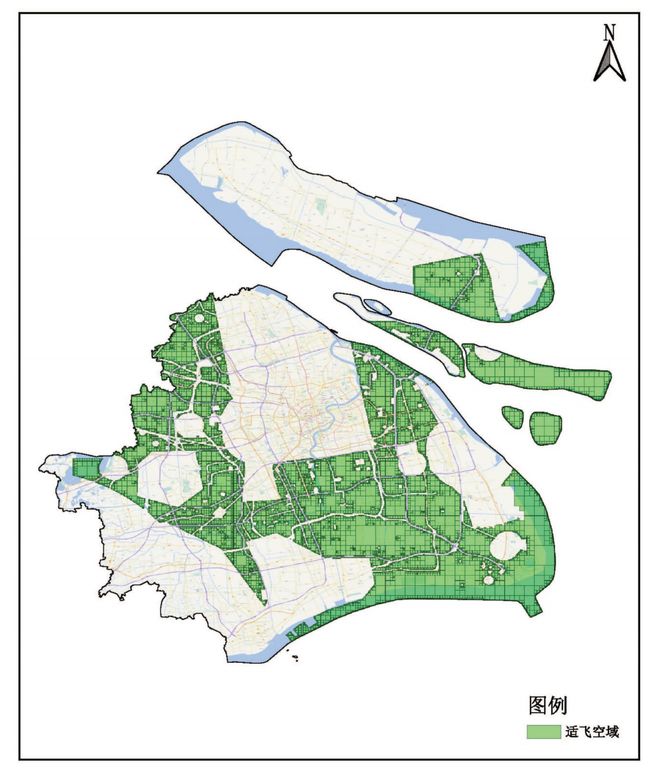
Core Viewpoint - The implementation of the "Interim Measures for the Safety Management of Civil Unmanned Aerial Vehicles in Shanghai" on February 1, 2026, aims to enhance low-altitude flight safety regulation and streamline the application process for low-altitude economy enterprises [1] Group 1: Regulatory Framework - The new regulations introduce a "five-in-one" system and related measures to strengthen safety oversight of low-altitude flights [1] - Micro, light, and small drones can fly in suitable airspace without prior application after registration, while flights in controlled airspace require approval from air traffic management [2] Group 2: Industry Growth and Challenges - The low-altitude economy in Shanghai has seen significant growth, with nearly 800 registered drone operating companies and approximately 220,000 registered drones by 2025, resulting in over 3.2 million flights annually [2] - Issues such as unauthorized drone flights pose challenges to public safety and airspace order [2] Group 3: Technological and Operational Improvements - The launch of the "Shanghai Low Altitude Flight Comprehensive Supervision Service Platform" on February 1 will allow users to complete drone registration, flight applications, and experience zone reservations through a single app, enhancing operational efficiency [4] - Companies can apply for long-term or fixed route plans without daily reapplications, significantly improving operational efficiency [4] Group 4: Enforcement and Compliance - Since the launch of a special campaign against unauthorized drone flights in August of the previous year, the number of such flights has decreased significantly, with a year-on-year increase of 34.4% in registered pilots and 44.9% in registered drones [5] - The police will enhance enforcement through smart regulatory systems and electronic fencing to prevent drones from taking off in controlled areas [5]