养老金融

Search documents
平安养老险入选「金贝」“2025卓越资产管理机构”
21世纪经济报道· 2025-08-16 14:25
Core Viewpoint - The article highlights the recognition of Ping An Pension Insurance as a leading asset management institution in China, emphasizing its commitment to innovation and excellence in the pension finance sector [1][3]. Group 1: Event Overview - The "2025 Asset Management Annual Conference" was held in Shanghai on August 16, 2023, where Ping An Pension Insurance was selected as a "2025 Excellent Asset Management Institution" [1]. - This marks the fourth time Ping An Pension Insurance has been included in the "Golden Shell" excellent case library, having previously been recognized in 2008, 2014, and 2024 [3]. Group 2: Company Background - Established in December 2004, Ping An Pension Insurance is the first professional pension insurance company in China, with a nationwide service network and a team of professionals [3]. - The company focuses on pension services and aims to be a leading institution in pension finance, supporting the national strategy to address aging [3]. Group 3: Pension Finance Development - Over the decades, China's pension finance has evolved from a purely social perspective to a dual focus on both social and industrial aspects, establishing a multi-tiered pension insurance policy framework [5]. - Ping An Pension Insurance has adhered to an "innovation-driven" philosophy, actively participating in the development of a multi-tiered pension security system [5]. Group 4: Asset Management Capabilities - In the first pillar of pension finance, the company became one of the first institutions to manage basic pension insurance funds in 2016, overseeing various cash management and fixed income fund portfolios [5]. - As of the end of Q1 2025, the company managed enterprise annuity entrusted and investment assets totaling 881.258 billion yuan [5]. Group 5: Investment Management Strategy - The company has built a professional investment management team focused on enhancing asset allocation capabilities and achieving stable investment returns through diversified asset classes [6]. - Ping An Pension Insurance emphasizes a long-term, safe, and stable management philosophy, continuously improving risk management and compliance systems [6]. Group 6: Future Outlook - Looking ahead, Ping An Pension Insurance aims to leverage its extensive experience in pension management to enhance asset allocation and absolute return investment strategies, contributing to the preservation and appreciation of pensions [7]. - The company is committed to supporting the development of a strong financial nation and high-quality pension finance [7].



南方财经编委王芳艳:我们对大资管、大财富的未来充满期待
2 1 Shi Ji Jing Ji Bao Dao· 2025-08-16 08:05
Core Viewpoint - The wealth management industry is experiencing new opportunities due to changes in resident asset allocation and the deepening development of capital markets, despite challenges posed by a low interest rate environment and fluctuating global economic conditions [1][3]. Group 1: Passive Investment Trends - The rise of passive investment has accelerated, with index-based investment becoming a significant choice for large-scale capital allocation. As of June 30, the total scale of ETFs listed in China reached 4.31 trillion yuan, an increase of over 15% since the beginning of the year [2]. - The active performance of the A-share market, which recently surpassed 3,700 points, reflects the positive impact of emerging sectors such as artificial intelligence, new consumption, and innovative pharmaceuticals [2]. Group 2: Industry Challenges and Adaptations - The wealth management industry is enhancing its research capabilities, risk pricing abilities, asset allocation skills, and investor service capabilities in response to market complexity and product diversity [3]. - The industry is shifting from a sales-driven mindset focused on scale to a service-oriented approach that emphasizes value creation and investor account returns [3]. Group 3: Future Outlook - The Chinese economy has shown strong resilience, with government initiatives aimed at boosting consumption and investment returns, which will further expand the market scale of the wealth management industry [4]. - Innovations in pension finance and digital finance are creating new growth opportunities, with a focus on developing a comprehensive pension service system that meets the wealth management needs across individuals' and families' life cycles [4]. - The acceleration of AI applications and the digital transformation of asset management institutions are expected to enhance the quality and scope of wealth management services [4].
调研|争抢养老金融主账户的银行,开始新的行动了
券商中国· 2025-08-16 02:34
Core Viewpoint - The article emphasizes the increasing importance of pension finance in the banking sector as China's aging population reaches significant levels, with projections indicating that by 2035, over 30% of the population will be aged 60 and above [1]. Group 1: Banking Strategies in Pension Finance - Banks are placing unprecedented strategic importance on pension finance, adopting common methodologies such as ensuring credit supply for quality projects in health, elderly care, and medical sectors [2]. - On the product and service front, banks are optimizing offerings for different life stages of clients, including pre-retirement, retirement preparation, and post-retirement [2]. - There is a focus on enhancing physical and digital infrastructure to accommodate elderly needs, including the renovation of physical branches and the development of user-friendly mobile banking applications [2]. - Cultural awareness initiatives are being implemented to educate the elderly on financial rights and risk prevention through regular themed and public welfare activities [2]. Group 2: Digital Transformation in Elderly Care - Some banks are adopting innovative, non-financial approaches to support elderly living, as demonstrated by the use of a digital health management platform developed by Guangfa Bank at the Shenzhen Elderly Care Center [3][4]. - The Shenzhen Elderly Care Center, operational since December 2018, has 800 beds and utilizes a dedicated app for staff to manage various care tasks efficiently, including health monitoring and service tracking [5][7]. - The digital health management platform aims to streamline the entire process of elderly care, covering admission, health management, and financial transactions, thereby enhancing operational efficiency [7][10]. Group 3: Guangfa Bank's Strategic Positioning - Guangfa Bank is positioning itself as a B2B2C supplier in the elderly care service industry, focusing on digital solutions that meet the urgent needs of care facilities [10]. - The bank has set ambitious goals for its pension finance business, aiming to significantly increase key performance indicators by 2029, including the number of clients served and the scale of pension fund management [11]. - Guangfa Bank is committed to providing credit support for quality projects in health and elderly care sectors, establishing tailored credit approval processes, and enhancing operational efficiency through top-level design [11].

央行:金融“五篇大文章”领域贷款增量占比约七成
Xin Hua She· 2025-08-16 02:05
Core Insights - The People's Bank of China (PBOC) has increased support for the financial "five major articles," with loans in technology, green finance, inclusive finance, elderly care, and digital economy sectors accounting for approximately 70% of new loans this year [1][2] Group 1: Loan Growth by Sector - Technology loans grew by 12.5% year-on-year, with a total balance of 44.1 trillion yuan, outpacing the overall loan growth by 5.8 percentage points [1] - Green loans increased significantly, with a balance rising from 9.9 trillion yuan at the end of 2019 to 36.6 trillion yuan by the end of 2024, averaging over 20% annual growth [1] - Inclusive finance for small and micro enterprises reached a loan balance of 65 trillion yuan, with its share of corporate loans increasing from 30.4% in 2014 to 38.2% [2] Group 2: Future Directions - The PBOC plans to steadily advance the construction of the elderly finance system and enhance financing support for the elderly care industry, while also enriching the product system for elderly finance [2]
周岭:大力发展养老金融是应对长寿时代经济风险的战略制高点
Zhong Guo Xin Wen Wang· 2025-08-15 15:48
Core Insights - The aging population in China is a fundamental national condition that will persist for a long time, necessitating the development of pension finance as a strategic response to economic risks associated with longevity [1][2] - By the end of the "14th Five-Year Plan" period, the population aged 60 and above in China is expected to exceed 300 million, accounting for over 20% of the total population, entering a phase of moderate aging [1] - By around 2035, the elderly population is projected to surpass 400 million, making up over 30% of the total population, indicating a shift to severe aging [1] Industry Development - The economic risks posed by an aging population include increased financial pressure from pensions and healthcare due to longer life expectancy, as well as health risks such as the rise of chronic diseases and disabilities among the elderly [1] - Developing a robust pension finance system is crucial for addressing the economic security challenges arising from increased longevity [1] - Establishing a specialized elderly care service system that integrates resources to meet the healthcare and retirement needs of the elderly is essential for mitigating health risks associated with aging [1] Key Components of Elderly Care System - The deep application of smart health management through IoT and big data to create health monitoring platforms for the elderly, enabling real-time tracking of chronic disease indicators and daily conditions, and utilizing AI for risk alerts [2] - Innovative integration of elderly care services by building a network based on home care and community support, including day care and rehabilitation services provided by community care centers [2] - The fusion of medical and elderly care services by promoting collaboration between elderly care institutions and medical facilities, ensuring seamless transitions between healthcare and elderly care [2] - Development of a systematic training framework for caregivers to enhance their skills in elderly care and disability support, while also expanding the talent pool by recruiting retired healthcare professionals [2]
中信建投证券成功发行全国首单精准用于养老产业债务融资工具
Sou Hu Cai Jing· 2025-08-15 09:50
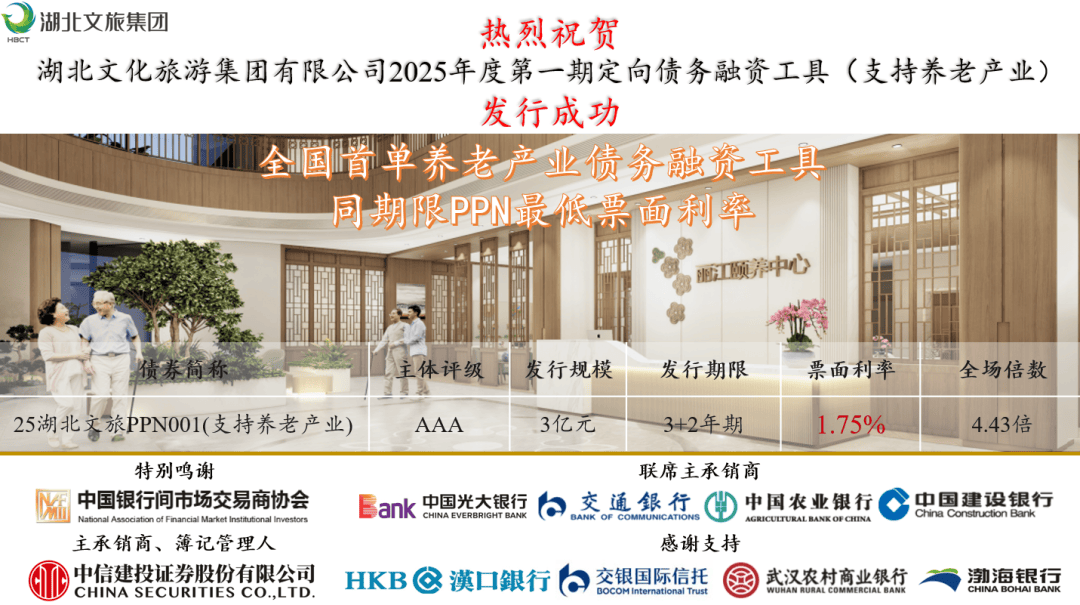
来源:市场资讯 (来源:中信建投证券投行委) 近日,湖北文化旅游集团有限公司(以下简称"湖北文旅集团"、"发行人")2025年度第一期定向债务融资工具(支持养老产业)在银行间市场成功发行, 发行规模3亿元,期限3+2年期,票面利率1.75%,为全国首单精准用于养老产业债务融资工具。 本期债券由中信建投证券担任牵头主承销商及簿记管理人,作为全国首单精准用于养老产业的债务融资工具,受到了银行间市场投资人热烈响应。本期债 券吸引各类银行、基金、信托、证券、保险等市场投资人踊跃认购,全场认购倍数达4.43倍,票面利率创定向债务融资工具推出市场以来同期限历史新 低。 湖北文旅集团为贯彻落实应对人口老龄化国家战略,根据湖北省委、省政府发展"银发经济"工作部署和规划,于2023年2月设立全资子公司湖北健康养老 集团有限公司,以省属国企挑大梁的责任担当,引领、支撑、带动全省健康养老服务产业发展。 本期债券募集资金主要用于湖北文旅集团旗下养老产业项目建设,涵盖旅居养老、社区养老、健康管理、适老化改造等多个产品业态,聚焦金融"五篇大 文章"中养老金融核心要义,通过创新运用债务融资工具,开辟了低成本、高效率支持湖北养老产业高质量发 ...

首只来了!富达基金,新动作
中国基金报· 2025-08-15 09:16
Core Viewpoint - The approval of the first foreign-owned pension target fund by Fidelity Fund marks a significant step in expanding high-level openness in China's financial market [2][6]. Group 1: Regulatory Environment - In January, regulatory authorities released a report to promote the establishment of foreign-owned fund companies, emphasizing their role in meeting residents' wealth management needs [4]. - The report allows for the combined calculation of public fund management scale for foreign-owned companies with substantial experience in pension asset management [4][5]. Group 2: Market Potential and Strategy - The Chinese personal pension market has immense potential, and foreign participation can leverage their expertise to introduce differentiated products and solutions [5][8]. - Fidelity Fund plans to introduce a range of pension products, starting with target risk funds and then developing target date funds to cater to various age groups [8][9]. Group 3: Current Landscape - As of the second quarter of 2025, there are 64 fund management companies in China with a total of 271 pension target funds, managing a combined scale of 60.2 billion yuan, indicating a steady but nascent development stage [11].

首只来了!富达基金,新动作
Zhong Guo Ji Jin Bao· 2025-08-15 09:15
为养老金融服务引入境外实践经验 今年1月份,为贯彻落实中央金融工作会议和新"国九条"关于稳步扩大金融领域制度型开放的决策部 署,监管层发布《机构监管情况通报》,就促进外资新设独资基金公司功能发挥、健康发展、更好地服 务居民财富管理需求提出了相关支持举措。 考虑到外资新设独资基金公司的境外股东多为全球知名资管机构,在养老业务方面积累了较多经验,对 在境内开展养老业务即注册养老目标基金有较强意愿,《机构监管情况通报》明确,在评估养老目标基 金管理人相关专业能力时,对实际控制人旗下养老目标基金等养老资管业务规模超200亿元的各类内外 资公募基金管理人,设立满2年后,将其公募产品管理规模(不含货币市场基金)与其实际控制人合并计 算。 截至2025年6月末,富达基金尚不满足《养老目标证券投资基金指引(试行)》中最近三年平均公募基金 管理规模(不含货币市场基金)在200亿元以上的申请募集养老目标基金的鼓励性条件。但根据前述监管 政策,其可作合并计算。 一位公募人士表示,监管层以此鼓励外资新设独资基金公司发挥股东的养老业务特色优势,积极注册养 老FOF产品,将为养老金融服务引入境外实践经验。外资在海外市场管理养老基金的经验 ...
“甘养乐”切实提升老年客户的舒适度和便利性
Jin Rong Shi Bao· 2025-08-15 05:46
甘肃银行天水分行在中国人民银行天水市分行的指导下,积极搭建养老金融服务体系和场景生态,将分 行营业部打造为"甘养乐"养老金融示范网点,为老年客户设置诸多特色适老化设施以及金融知识、消保 宣讲等助老服务专区,切实提升老年客户业务办理舒适度和便利性。 ...
工行河北省分行以高质量金融供给 助力河北经济社会高质量发展
Xin Lang Cai Jing· 2025-08-15 04:27
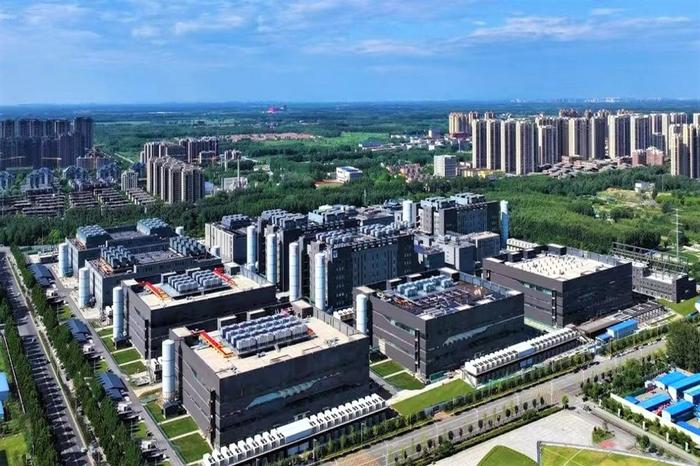
Core Viewpoint - The Industrial and Commercial Bank of China (ICBC) Hebei Branch is actively enhancing financial services to support the real economy in Hebei, focusing on technology finance, green finance, inclusive finance, pension finance, and digital finance to drive high-quality economic development [1][4][5]. Group 1: Technology Finance - ICBC Hebei Branch has established a provincial-level technology finance center and has launched various specialized products to support innovation and transformation in strategic emerging industries [4]. - The branch provided 780 million yuan in technology finance to support the construction of the Runze International Information Port, which includes 22 high-grade data centers [1]. - As of June 2025, the balance of loans to technology enterprises reached 150.9 billion yuan, with a growth rate of 14.62% for specialized and innovative enterprises [4]. Group 2: Green Finance - The branch has actively engaged in green finance initiatives, with a green loan balance of 33.3 billion yuan in Xiong'an as of June 2025, leading the market in this area [5]. - ICBC Hebei Branch has supported various green projects, including a 1 billion yuan loan for a dust pollution control project at a steel plant [6]. - The total green loan balance reached 174 billion yuan, with an increase of 30.3 billion yuan from the beginning of the year, outpacing the overall loan growth by 12 percentage points [6]. Group 3: Inclusive Finance - The branch has implemented a "thousand enterprises, ten thousand households" outreach program to enhance inclusive financial services, achieving full coverage of enterprises on the whitelist [12]. - As of June 2025, the balance of inclusive loans reached 166 billion yuan, with an increase of 46.8 billion yuan, representing a growth rate of 39% [13]. - The bank has tailored financial products to meet the needs of various industries, including a 10 million yuan loan to a bicycle parts manufacturer facing cash flow issues [9]. Group 4: Pension Finance - ICBC Hebei Branch has developed a comprehensive pension finance service system, with 750,000 personal pension accounts opened and a management scale of 56.9 billion yuan [14]. - The branch has established over 690 elderly-friendly service points to cater to the financial needs of senior citizens [15]. - The bank has supported various pension projects, with total loans exceeding 1 billion yuan in the pension industry [15]. Group 5: Digital Finance - The branch has launched a remote online service model, significantly reducing processing times for various banking services [16]. - As of June 2025, the number of personal mobile banking customers reached 28.99 million, and the number of corporate online banking customers reached 116,000 [21]. - The bank has actively promoted the use of digital renminbi, establishing over 4,200 application scenarios across multiple sectors [21].