智能制造

Search documents
前沿科技走近大众,全球智造燃动金陵
Nan Jing Ri Bao· 2025-12-01 02:29
Core Insights - The 2025 World Intelligent Manufacturing Expo showcased cutting-edge achievements in intelligent manufacturing, featuring humanoid robots, advanced manufacturing equipment, digital solutions, and AI applications [1][2] - The expo attracted 456 companies from 21 countries and regions, presenting over 2000 innovative results in the field of intelligent manufacturing [1][2] Group 1: Exhibition Highlights - The expo covered an area of 55,000 square meters with four main exhibition halls focusing on robots, smart factories, industrial software, and intelligent equipment [1] - Notable exhibitors included KUKA, Hyundai, and Tesla, showcasing the integration of robotics technology in intelligent manufacturing [2] - The event featured an international exhibition area with leading global companies like Phoenix and Honeywell presenting advanced technologies and solutions [2] Group 2: Educational Engagement - Over 2000 university students and nearly 3000 middle and primary school students participated, experiencing various intelligent manufacturing technologies [3] - Interactive zones featured innovative products such as a fully steerable flying car and various autonomous devices, attracting significant visitor interest [3] Group 3: Business Opportunities - The expo facilitated direct negotiations between 59 companies from 35 countries, resulting in preliminary purchase orders worth 60 million yuan [4] - A total of 41 events were held during the expo, addressing key topics like digital transformation and industrial intelligence ecosystems [4] - The expo aimed to enhance international cooperation and market expansion for participating companies, contributing to the modernization of the industrial system in China [4]
汽车观察 | 大众汽车任命集团战略新负责人、一汽解放拟增资解放时代
Mei Ri Jing Ji Xin Wen· 2025-12-01 01:54
NO.1长安汽车拟参与设立长安机器人公司 11月28日电,长安汽车发布公告称,公司董事会审议通过了《关于投资设立机器人公司的议案》。长安 天枢智能机器人科技有限公司由中国长安汽车集团有限公司、重庆长安汽车股份有限公司、辰致汽车科 技集团有限公司、重庆长安科技有限责任公司(以下简称长安科技)共同投资设立,注册资本4.5亿 元。其中,公司拟以自有资金出资2.25亿元,持股50%;公司全资子公司长安科技拟以自有资金出资 0.45亿元,持股10%。 点评:长安汽车拟设立新机器人公司,进一步推动其向智能制造和自动化领域的扩展。这一战略性投资 不仅标志着长安积极融入机器人产业的决心,也展现了其在创新产品与业务方案上的潜力。此举也为整 个汽车行业的转型升级提供了参考,激励其他企业加速探索新技术与新业态,推动行业整体的变革。 点评:大众汽车集团任命Ludwig Fazel为新战略负责人,凸显其加速电动化与智能化转型的决心。此举 或提振市场对传统车企转型预期的信心,相关零部件及新能源产业链公司估值有望获得重估。整体来 看,该人事变动强化了行业变革信号,或引导市场进一步聚焦汽车产业升级机遇。 NO.4雷军:小米汽车跨年购置税补贴 ...




2025年中国煤矿掘进机行业发展历程、市场政策、产业链图谱、市场规模、竞争格局及发展趋势研判:头部企业优势明显[图]
Chan Ye Xin Xi Wang· 2025-12-01 01:30
Core Viewpoint - The coal mining machinery industry in China is experiencing significant growth driven by the ongoing national energy security strategy, with a projected market size of 4.63 billion yuan in 2024, reflecting an 11.03% year-on-year increase [1][7]. Overview - Coal mining machines are essential for underground mining operations, performing tasks such as rock breaking, loading, and transporting coal, thus providing efficient construction methods for mine development [1]. - The main types of coal mining machines include cantilever, vertical, and horizontal mining machines, with cantilever machines being the most widely used [1]. Development History - In the 1980s, China increased investment in the coal industry, leading to the development of various types of mining machines through domestic R&D rather than mere imitation [2]. - The 21st century saw rapid economic growth and increased coal demand, resulting in significant technological advancements in the industry, including the development of high-power mining machines suitable for complex geological conditions [2]. Market Policies - The Chinese government has implemented numerous policies to support the development of the coal mining machinery industry, creating a favorable environment for growth [5]. Industry Chain - The upstream of the coal mining machinery industry includes suppliers of raw materials and core components, while the midstream focuses on R&D, production, and manufacturing [6]. - The downstream market primarily consists of coal mining operations, with increasing demand for customized mining machines in various sectors, including shale gas extraction and emergency rescue [6]. Current Development - The demand for efficient and reliable mining machines is stable due to ongoing capacity construction and technological upgrades in large coal mines [7]. Competitive Landscape - The market concentration in the coal mining machinery sector is high, with leading companies like SANY Heavy Industry and XCMG dominating the market, accounting for a significant share of production [8][9]. Industry Representative Companies - SANY Heavy Industry reported a revenue of 12.24 billion yuan in the first half of 2025, with a gross profit of 2.899 billion yuan and a gross margin of 23.69% [9]. - XCMG Group achieved a revenue of 54.81 billion yuan in the same period, with a gross profit of 12.07 billion yuan and a gross margin of 22.03% [11]. Future Development Trends - Future advancements in mining machines will integrate technologies such as 5G and AI, moving towards fully automated operations and enhancing efficiency [12]. - The industry is also focusing on reducing energy consumption and pollution, aligning with national carbon reduction goals through the adoption of new energy sources and materials [12].


世界智能制造大会十年引航 南京制造收获满满
Xin Hua Ri Bao· 2025-12-01 01:05
11月27日至29日,2025世界智能制造大会在南京举行。至此,大会与南京相约已有十年。立足行业 前沿,从起步探索到标杆引领,这里累计汇聚超万名行业精英,搭建交流平台百余场,见证并推动了领 域内技术创新突破、产业生态升级与跨领域合作深化。 站在行业灯塔最亮处,南京制造收获满满。一批具有本地特色、业界知名的智能制造典型标杆企业 涌现,中小企业主动数字化转型,以"智造"提升产业竞争力成为共识。目前,南京"两化"融合发展水平 达74.3,分别高出全国、全省平均水平10.7和5.1。 在世界智能制造大会具有里程碑意义的第十年,众多行业大咖、学者嘉宾发现,南京制造宣告一个 焕新时代的到来。 梯度跨越,领航制造最前沿 大会期间,工业和信息化部等六部门正式公布了我国首批15家领航级智能工厂名单,标志着我国智 能制造进入从数字化、网络化迈向智能化的关键跃升期。其中,南京钢铁股份有限公司榜上有名。 领航级智能工厂是什么样的?南京钢铁股份有限公司CIO、总裁助理孙茂杰举例,在南钢铁区一体 化中心,超百万个传感器构成的神经网络昼夜不息,这套"感知—分析—决策"闭环系统包含165个智能 化模型,让吨铁成本下降40余元,数智化为企业韧 ...
湖北两企业入选首批领航级智能工厂 制造业智能化转型走在全国前列
Chang Jiang Shang Bao· 2025-12-01 00:45
Core Insights - Two companies from Hubei, Changfei Fiber and Wuhan BOE, have been recognized as the first batch of "leading intelligent factories" in China, showcasing the province's strong position in the smart manufacturing sector [1][3] Group 1: Intelligent Manufacturing Recognition - The Ministry of Industry and Information Technology announced a list of 15 leading intelligent factories, with Hubei's two companies tying for the highest number of selections alongside Shanghai, Jiangsu, Shandong, and Zhejiang [1] - The leading intelligent factory designation represents the highest standard of intelligent manufacturing in China, integrating advanced technologies and management practices [2] Group 2: Company Highlights - Changfei Fiber's factory focuses on extreme craftsmanship and has developed an intelligent scheduling system that allows for the parallel production of hundreds of fiber optic cables, achieving a production rate of 10,000 kilometers in 72 hours without changing the preform [3][4] - Wuhan BOE's factory emphasizes efficiency, with an AI defect management system that ensures a product yield rate exceeding 98%, and it operates the largest single production line for liquid crystal displays globally [4] Group 3: Hubei's Smart Manufacturing Landscape - Hubei has established a comprehensive gradient cultivation system for intelligent factories, with a total of 2 leading, 24 excellent, 1,034 advanced, and 1,249 basic intelligent factories recognized to date [4]

奋战四季度 确保全年红丨屏上观生产 智造决胜局
He Nan Ri Bao· 2025-11-30 23:50
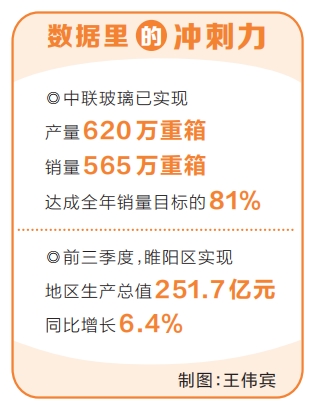
Core Insights - Zhonglian Glass is leveraging an intelligent system to enhance production efficiency and maintain stable operations across its two float glass production lines, achieving full-load production and real-time data monitoring [2] - The company has successfully upgraded its product system and expanded its market reach, mastering large-scale production capabilities for various high-quality float glass products, including automotive glass and photovoltaic glass, which are sold both domestically and internationally [2] Group 1 - Zhonglian Glass is committed to innovation and product upgrades, focusing on high-end value chain segments while adhering to a development philosophy of "green, intelligent, and high-end" [3] - The company has implemented a smart factory initiative centered around a new generation of float glass production lines, utilizing 3D modeling and simulation technology for process optimization, which has significantly improved production efficiency and product quality [3] - Zhonglian Glass has achieved a production volume of 6.2 million heavy boxes and a sales volume of 5.65 million heavy boxes, reaching 81% of its annual sales target of 6.96 million heavy boxes [3] Group 2 - The economic performance of the Suiyang District reflects a strong development trend, with a regional GDP of 25.17 billion yuan in the first three quarters, representing a year-on-year growth of 6.4%, surpassing the provincial average by 0.8 percentage points [4] - The district is actively implementing the spirit of the 20th National Congress of the Communist Party, focusing on building a modern industrial system supported by advanced manufacturing and promoting high-quality economic development through significant projects [5]
【早报】美乌新一轮谈判结束,美称“富有成效”;商业航天领域再迎利好
财联社· 2025-11-30 23:08
早 报 精 选 1、 中共中央政治局11月28日下午就加强网络生态治理进行第二十三次集体学习。中共中央总书记习近平在主持学习时强调,网络 生态治理是网络强国建设的重要任务,事关国家发展和安全,事关人民群众切身利益。要健全网络生态治理长效机制,着力提升治理 的前瞻性、精准性、系统性、协同性,持续营造风清气正的网络空间。 2、国务院安委会日前印发通知,部署开展高层建筑重大火灾风险隐患排查整治行动,聚焦有人员居住和活动的高层民用建筑(包括 居民住宅建筑和办公、医疗、商业等公共建筑)开展排查整治,特别是正在进行外墙改造施工和内部局部装修改造的高层民用建筑, 全面加强高层建筑消防安全管理,切实保障人民群众生命财产安全。 3、国家统计局发布数据显示,11月份,制造业采购经理指数(PMI)为49.2%,比上月上升0.2个百分点,景气水平有所改善。从 企业规模看,大型企业PMI为49.3%,比上月下降0.6个百分点,低于临界点;中、小型企业PMI分别为48.9%和49.1%,比上月上 升0.2个和2.0个百分点,均低于临界点。 4、财政部数据显示,1-10月,国有企业营业总收入683529.3亿元,同比增长0.9%;国有企业 ...

科技生根 智造升级(走企业,看高质量发展)
Ren Min Ri Bao· 2025-11-30 22:20
Core Insights - Xiaomi is focusing on technological innovation to drive high-quality development, with significant investments in research and development planned for the coming years [2][3]. Group 1: Technological Innovation - Xiaomi's self-developed 3nm processor chip, the Xuanjie O1, integrates approximately 19 billion transistors, showcasing the company's commitment to advanced technology [1]. - The company plans to invest over 24 billion yuan in R&D in 2024, with a projected total of over 200 billion yuan in the next five years [2]. - Xiaomi emphasizes three key technology areas: chips, artificial intelligence, and operating systems, aiming to integrate these into a comprehensive ecosystem of smartphones, smart homes, and vehicles [2]. Group 2: Manufacturing and Efficiency - Xiaomi's automotive factory utilizes advanced manufacturing techniques, including a 9100-ton die-casting machine that reduces manufacturing processes by 80% and production time by 45% [4]. - The factory employs over 300 sensors for real-time monitoring of production parameters, enhancing quality control and efficiency [4]. Group 3: Supply Chain and Collaboration - Xiaomi's smart manufacturing platform has connected over 200 manufacturing enterprises, improving production efficiency and product quality across various sectors [5]. - The implementation of this platform has led to significant cost savings and efficiency improvements for partners, exemplified by a refrigerator factory expecting to save over 8 million yuan this year [5]. Group 4: Global Expansion - Xiaomi ranks among the top three smartphone brands in 57 countries and regions, with a strong presence in Latin America and the Middle East [6]. - The company is expanding its retail presence in Southeast Asia, with plans to open over 130 new stores by the third quarter of 2025, enhancing brand visibility and consumer experience [7]. - Xiaomi's global operations have created over 2,000 foreign jobs and established 11 cooperative factories in seven countries, contributing to local economic development [8]. Group 5: Brand Perception - The focus on innovation and quality is reshaping the global perception of Chinese technology companies, with Xiaomi leading this change [9].
小米集团坚持创新驱动——科技生根 智造升级(走企业,看高质量发展)
Ren Min Ri Bao· 2025-11-30 22:04
Core Insights - Xiaomi is focusing on technological innovation as a key driver for high-quality development, with significant investments in research and development planned for the coming years [3][4]. Group 1: Technological Innovation - Xiaomi's self-developed 3nm processor, the Xuanjie O1, integrates approximately 19 billion transistors, showcasing the company's commitment to advanced technology [2]. - The company plans to invest over 24 billion yuan in R&D in 2024, with a projected total of over 200 billion yuan in the next five years [3]. - Xiaomi's R&D workforce exceeds 24,000, accounting for nearly 50% of its total employees, emphasizing the importance of innovation in its business model [3]. Group 2: Smart Manufacturing - Xiaomi's automotive factory utilizes advanced manufacturing techniques, including a 9,100-ton die-casting machine that reduces manufacturing processes by 80% and production time by 45% [6]. - The company has established three large smart factories for automotive, smartphones, and smart home appliances, implementing a digital and intelligent manufacturing platform [7]. - Xiaomi's smart manufacturing platform connects over 200 manufacturing enterprises, enhancing production efficiency and product quality across various sectors [7]. Group 3: Global Expansion - Xiaomi ranks among the top three smartphone vendors in 57 countries and regions, with significant market presence in Latin America and the Middle East [8][9]. - The company is expanding its retail presence in Southeast Asia, with plans to open over 130 new stores by the first three quarters of 2025, enhancing brand visibility and consumer experience [9]. - Xiaomi's global operations have created over 2,000 foreign jobs and established 11 cooperative factories in seven countries, contributing to local economic development [10]. Group 4: Brand Perception - The emphasis on innovation and quality is reshaping the global perception of Chinese technology companies, with Xiaomi leading this change [11].
饰品货源群电商群,饰品电商供应链
Sou Hu Cai Jing· 2025-11-30 16:08
Core Insights - The jewelry industry is undergoing a transformation from "decorative items" to "emotional intelligent carriers," driven by new technologies and consumer perspectives [6] Group 1: Consumer Mindset Transformation - In 2026, jewelry consumption will exhibit distinct scene segmentation, with consumers seeking emotional solutions that resonate with their life scenarios rather than just purchasing single products [8] - The popularity of emotional regulation features in jewelry is rising, with a specific brand's smart bracelet achieving a user retention rate of 65% by monitoring emotional fluctuations and providing soothing scents or vibrations [8] - Cultural narratives in domestic jewelry have evolved from symbolic expression to deep cultural storytelling, with a collaboration between a brand and the Palace Museum achieving a 58% repurchase rate for its "Twenty-Four Solar Terms" series [9] Group 2: Technological Ecosystem Reconstruction - The application of technology in the jewelry industry is shifting from isolated breakthroughs to systematic solutions, with AI-based emotional computing engines improving product matching by 40% and conversion rates by 32% [12] - New materials like thermochromic and self-healing coatings are being widely adopted, with a brand's light-sensitive jewelry series achieving 200% of its sales target in the first month [13] - Digital twins are becoming commonplace, allowing users to showcase jewelry in metaverse scenarios, with a brand's digital exhibition attracting 450,000 daily visitors [14] Group 3: Channel Experience Upgrade - The sales model in jewelry e-commerce is transitioning from product display to immersive experience construction, with 5G holographic display technology increasing user interaction time by 3.5 times and conversion rates by 45% [16] - Content marketing based on specific life scenarios has proven effective, with a brand's "Workplace Seven-Day Outfits" series driving a 280% increase in related category sales [16] - AI shopping assistants are enhancing personalized recommendations, achieving an 82% accuracy rate and a 55% increase in average transaction value [16] Group 4: Supply Chain Innovation - The jewelry industry's supply chain is evolving towards intelligent and predictive models, with AI algorithms improving new product success prediction accuracy to 78% [18] - Distributed 3D printing networks enable instant production and delivery, with a brand's urban manufacturing center achieving a 4.2 times higher inventory turnover rate than the industry average [18] - Sustainable supply chains are being established, with 80% of products tracked for carbon footprint and 55% of materials being eco-friendly [18] Group 5: Future Challenges and Innovation Directions - The ethical use of emotional data collected by smart jewelry needs clear regulations, highlighting the industry's consensus on establishing a trustworthy data governance system [20] - The high costs of advanced technology applications pose challenges for broader consumer access to innovations [20] - Cultural adaptation issues are becoming prominent in global operations, necessitating deeper localized innovation strategies [20] - The jewelry e-commerce sector is transitioning from "decorative item providers" to "emotional solution providers," emphasizing the importance of emotional insight, technological integration, and cultural storytelling capabilities for future competitiveness [20]