产业升级

Search documents
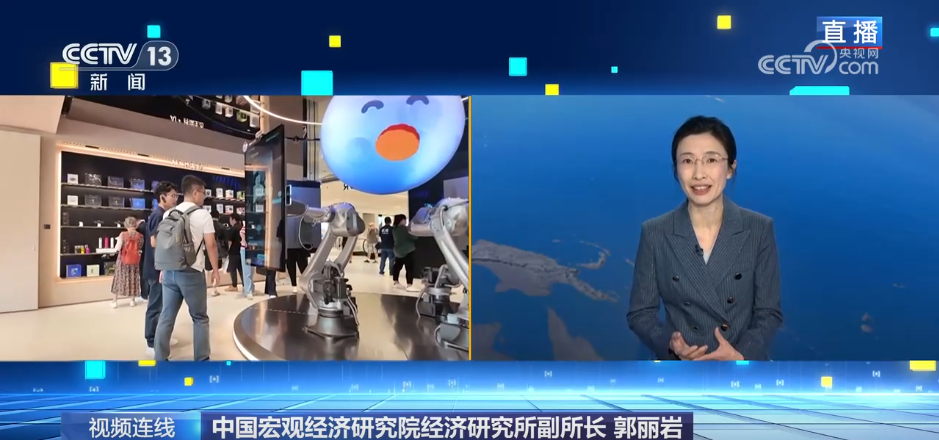
释放消费潜力,供需两方如何“双管齐下”?
Yang Shi Xin Wen Ke Hu Duan· 2025-11-27 22:42
Core Viewpoint - The implementation plan aims to enhance the adaptability of supply and demand in consumer goods, with goals set for 2027 and 2030 to promote high-quality development and increase consumption's contribution to economic growth [1][2]. Group 1: Development Goals - By 2027, the plan targets the formation of three trillion-level consumption sectors and ten hundred-billion-level consumption hotspots [1]. - By 2030, the goal is to establish a high-quality development pattern where supply and consumption interact positively, gradually increasing consumption's contribution to economic growth [1]. Group 2: Consumer Market Transformation - The consumer market in China is transitioning from total expansion to structural optimization, focusing on precise matching of product supply to the diverse needs of different demographics, including infants, students, young adults, and the elderly [1][4]. - The current consumption market is evolving towards higher quality, innovation, and sustainability, with an emphasis on smart and green products [3]. Group 3: Employment and Income - Improving corporate earnings can create more jobs, which in turn increases residents' income and enhances consumer purchasing power, providing intrinsic motivation for further consumption [2]. - Stabilizing employment and promoting income growth are essential for boosting consumer confidence and spending [6]. Group 4: Targeted Strategies - The plan emphasizes the importance of targeted strategies for different age groups to effectively stimulate consumption potential, particularly in health-related sectors [4]. - Companies are encouraged to adopt a mindset of differentiation and higher standards, focusing on brand value and customer experience to stand out in a competitive market [5]. Group 5: Sustainable Consumption Growth - The focus on enhancing consumer product quality and ensuring sustainable practices is crucial for driving new consumption growth points [6]. - Continuous innovation and quality improvement are necessary to meet evolving consumer demands and support economic growth [6].
河南焦作转型发展向“新”而行
Ren Min Ri Bao· 2025-11-27 22:20
Core Insights - The article highlights the transformation and modernization efforts in Jiaozuo City, particularly through the example of Duofuduo New Materials Co., Ltd, which has undergone multiple name changes corresponding to its industrial upgrades [1][2] - Jiaozuo is focusing on high-quality development by promoting traditional industry upgrades and nurturing emerging industries, aligning with national directives for economic growth [2][6] Group 1: Company Developments - Duofuduo New Materials Co., Ltd has developed high-purity lithium hexafluorophosphate, driving transformation in over 10 upstream and downstream enterprises [1] - Jiaozuo Coal Industry Group has improved the utilization rate of coal gangue and waste to over 85% through technological upgrades in its cement production [2] - The city has implemented 363 high-end, intelligent, and green transformation projects, with a total investment of 2,272 billion yuan since the 14th Five-Year Plan [3] Group 2: Industry Trends - Jiaozuo is establishing a differentiated development path by building pilot test bases to attract and retain research achievements [4] - The city has introduced over 100 innovation team members and incubated more than 50 technology-based enterprises in its pilot test base [4] - The coal industry's share of Jiaozuo's industrial output has decreased from a peak of 81.7% to 5.2%, with new materials, green food, and high-end equipment becoming the three main pillar industries [5]
云南省文山州 创新驱动引领高质量发展
Ren Min Ri Bao· 2025-11-27 22:18
Core Insights - Yunnan Province's Wenshan Zhuang and Miao Autonomous Prefecture is focusing on high-quality development driven by innovation, achieving significant economic growth, ethnic unity, ecological improvement, social stability, and enhanced public happiness [1] Economic Development - Wenshan's GDP is projected to grow at an average rate of 6.3% annually from 2021 to 2024, with industrial output exceeding 130 billion yuan [1] - The region has achieved full coverage of provincial industrial parks across its eight counties, with green aluminum production capacity reaching 3.43 million tons and expected output surpassing 100 billion yuan this year [1] - The tourism sector is also thriving, with 50.045 million visitors expected in 2024, generating tourism revenue of 54.14 billion yuan [1] - The foreign trade sector is seeing growth, with a total import and export value of 2.96 billion yuan in the first three quarters of this year [1] Infrastructure Development - The total length of roads in Wenshan has reached 42,000 kilometers, with significant projects like the Wenshan-Mongolia Railway and Funing Port enhancing transportation [2] - By 2025, Wenshan plans to implement 4,089 projects, with water storage capacity increasing by 220 million cubic meters by 2024 [2] - Energy capacity has improved, with total installed power reaching 6.74 million kilowatts and over 10,000 5G base stations established [2] Social Welfare - Wenshan has implemented initiatives to improve community welfare, including job placement services that have facilitated employment for 470,000 people [3] - The region has achieved a rural sewage treatment rate of 72.82% and a sanitation toilet coverage rate of 78.35% [3] - All eight counties have reached basic educational equity and healthcare standards, contributing to the creation of a national civilized city [3] Ecological Development - Wenshan is committed to ecological preservation, with air quality remaining above 99.2% for three consecutive years and water quality at 100% for two years [4] - The region has undertaken extensive greening efforts, planting 15.06 million square meters of greenery and establishing over 190 kilometers of health greenways [4] - Wenshan's innovative practices in ecological civilization have been recognized nationally, contributing to its high-quality development narrative [4]
陕西省咸阳市淳化县 推动县域经济社会高质量发展
Ren Min Ri Bao· 2025-11-27 22:07
Core Insights - Shaanxi Province's Xianyang City, specifically Chunhua County, is focusing on high-quality development through initiatives aimed at enhancing project promotion, improving the business environment, and upgrading the capabilities of officials [1] Group 1: Industry Development - Chunhua County is leveraging its characteristic industries, particularly "fruit, livestock, vegetables, mushrooms, and buckwheat," to foster integrated development that benefits the economy and the populace [2] - The county plans to develop 100,000 acres of standardized planting bases for the leading industry, the Ruixue apple, aiming for an industrial chain output value exceeding 6 billion yuan within five years [2] - The buckwheat industry has achieved an output value surpassing 1 billion yuan, with initiatives to promote local brands and enhance tourism through cultural events [2] Group 2: Financial Support and Infrastructure - China Bank is actively supporting Chunhua's characteristic industries by providing funding for brand building and market expansion, as well as organizing promotional events [3] - Chunhua County has been approved as a provincial economic development zone, with an investment of 939 million yuan to improve infrastructure and create a conducive environment for businesses [4] - A 100 million yuan industry revitalization fund has been established to support technological innovation and attract high-tech enterprises [4] Group 3: Rural Revitalization - The county has integrated 174 million yuan to implement 145 projects aimed at upgrading infrastructure in rural areas, with a projected 8.2% increase in per capita disposable income for rural residents by 2025 [5] - China Bank is facilitating educational and technological support in rural areas, contributing to the establishment of educational bases and e-commerce brands [5]
从资源依赖到科技争先 资本驱动山西产业提质焕新
Zheng Quan Shi Bao· 2025-11-27 19:32
证券时报记者赵黎昀 中国上市公司协会发布的2025年上市公司现金分红榜单中,山西辖区多家上市公司上榜。其中,潞安环 能在股息率榜单中排名第四位,山西汾酒同时上榜现金分红总额榜单与股利支付率榜单。 山西资本市场的快速提质发展,离不开持续优化的市场环境。 近年来,山西证监局守牢风险底线,推动重点领域风险防范化解。2021年以来,山西成功推动16家"僵 尸"或不活跃机构注销私募基金管理人登记,尾部劣质机构得到有效出清。稳妥处置*ST当代退市风 险,实现了辖区首家退市公司"退得下、退得稳"。永泰能源运用"并购重组+银团贷款+回购增持"方式, 有效化解面值退市风险。"十四五"时期,山西交易所债券市场保持"零违约",为市场健康稳定发展营造 了良好的信用环境。 山西辖区境内上市公司总量已达到41家,总市值提升至8392.34亿元,利润总额期间提升幅度达 91.84%。山西上市公司营业收入规模从3222.73亿元增至5614.33亿元,增长74.21%。 "企业不断提质增效,让投资者获得感持续提升。2024年,山西辖区上市公司累计派发现金分红198.5亿 元,户均分红4.84亿元,全国排名居前。"山西证监局相关负责人介绍,山 ...
新闻1+1丨释放消费潜力,供需如何适配?
Yang Shi Wang· 2025-11-27 17:17
Core Viewpoint - The implementation plan aims to enhance the adaptability of supply and demand in consumer goods, targeting the formation of three trillion-level consumption sectors and ten hundred-billion-level consumption hotspots by 2027, with a focus on high-quality development by 2030 [1] Group 1: Consumption Market Transformation - The Chinese consumption market is transitioning from total expansion to structural optimization, with a focus on matching product supply to the diverse needs of different demographics, including infants, students, young adults, and the elderly [1][5] - The plan emphasizes the importance of a strong domestic circulation system, where improved corporate earnings can lead to job creation and increased resident income, thereby enhancing consumer purchasing power [2] Group 2: High-Quality and Innovative Consumption - The plan highlights the shift towards high-quality, innovative, and green consumption, indicating a demand for smarter and more sustainable products [5] - The focus on precise supply-demand matching across all age groups aims to activate consumer potential and stimulate consumption dynamics [7] Group 3: Differentiation and Brand Value - Companies are encouraged to adopt a mindset of differentiation, emphasizing higher standards such as environmental sustainability, brand value, and enhanced product and service experiences [10] - The market's competitive mechanism will favor companies that can effectively meet consumer demands for quality and innovation [10] Group 4: Employment and Income Stability - To boost consumption, it is crucial to stabilize employment and promote income growth, which will enhance consumer purchasing power and alleviate concerns for households [12] - The plan aims to identify new growth points and dynamics in the industry while ensuring that quality improvements lead to sustainable consumption growth [12]

年内400家A股公司发布定增预案
Zheng Quan Ri Bao· 2025-11-27 15:49
Core Insights - The number of A-share listed companies announcing private placements has significantly increased, with 400 companies making announcements as of November 27 this year, compared to 196 in the same period last year [1] - The primary purposes for these private placements include supplementing working capital, supporting financing, and acquiring other assets, indicating a focus on alleviating financial pressure and enhancing core business operations [1] Group 1: Market Characteristics - The private placement market is characterized by a significant increase in the proportion of hard technology sectors, larger fundraising scales for leading companies, a rise in long-term industrial capital and state-owned investment participation, and a more focused approach on long-term strategic goals [1][2] - The dual drivers of policy and market conditions have contributed to the active private placement market this year, with reforms in the registration system and optimized refinancing policies expanding financing channels for emerging industries [1] Group 2: Economic Implications - Active private placements are expected to have multiple ripple effects, injecting incremental funds into the market, optimizing asset supply, and promoting resource allocation towards high-quality enterprises [2] - The current stable monetary policy provides a relatively loose liquidity environment, facilitating smoother capital flow into the real economy, which is essential for enhancing the position of companies within the global supply chain [2]
疆品南下,粤享甜蜜!伽师名优产品专场展销在穗举办
Nan Fang Nong Cun Bao· 2025-11-27 10:04
Core Viewpoint - The "Xinjiang Products Southward, Guangdong Products Northward" exhibition in Guangzhou showcased high-quality products from Kashgar's Kashi County, particularly focusing on unique dried fruits and deep-processed products like Kashi new dried plums and new plum original juice, which gained popularity among consumers [2][4][19]. Group 1: Event Overview - The exhibition was part of a broader initiative to promote products from Xinjiang to Guangdong, enhancing regional economic cooperation [2][23]. - The event featured products from Kashi County, known for its unique climate and soil conditions that contribute to the quality of its fruits [6][7]. Group 2: Product Highlights - Kashi County is recognized as the largest production and sales base for new plums in China, accounting for over half of the national planting area [9][10]. - The new plum industry has become a pillar for local economic development, supported by a total investment of 510 million yuan in the Guangdong Kashi New Plum Modern Industrial Park [12][11]. Group 3: Technological Advancements - The county has introduced advanced technologies in the processing of new plums, including ultra-high pressure sterilization and vacuum freeze-drying, aimed at developing healthy products with minimal additives [15][16]. Group 4: Market Expansion - The brand value of Kashi new plums is estimated to reach 3.806 billion yuan by 2025, with significant improvements in brand recognition due to promotional activities [24]. - The initiative has established 11 online platforms and 7 offline experience centers in major cities within the Guangdong-Hong Kong-Macao Greater Bay Area, facilitating consumer access to authentic Kashi products [26][29].

投中榜·2025年度最佳国资投资机构榜单发布
投中网· 2025-11-27 10:02
将投中网设为"星标⭐",第一时间收获最新推送 他们不追逐短期热点,而是以"十年磨一剑"的耐心,在产业链关键环节构建生态闭环,这种战略定 力正是中国产业升级的深层动力。 来源丨 投中网 潮起潮落 ,总有些力量以坚韧的姿态重塑着 海 岸线。在国内 私募 股权投资市场,一场静水流深的 变革正在发生——国资背景投资机构正以系统性的战略布局,为市场注入兼具稳定性与创新性的新生 动能。他们不仅是资本提供者,更是国家战略与产业升级的桥梁,在科技创新与区域协调发展中扮演 着关键赋能者的角色。 投中 2025 年度最佳国资投资机构榜单通过对近4 00 家国资背景机构的深度调研,量化呈现了国有 资本在 私募 股权投资领域的 动态 。 入榜机构数据显示,半导体、人工智能、新 材料、医疗健康 等科技含量较高的领域 依然是 国资机 构的共同选择,投向科技型企业的数量占比 超过 75% ,与上年度 基本 持平。 这一数据背后,是 国有资本以国家战略为核心,以关键技术突破和重点产业扶持为导向的长期布局。他们不追逐短期热 点,而是以 " 十年磨一剑 " 的耐心,在产业链关键环节构建生态闭环,这种战略定力正是中国产业 升级的深层动力。 | P ...


行业又要变天了!"意大利版LVMH"野心浮现,羊绒行业格局生变?
Sou Hu Cai Jing· 2025-11-27 08:20
Group 1 - Prada Group's Chief Marketing Officer Lorenzo Bertelli revealed plans for further acquisitions after the Versace purchase, including a potential acquisition of Armani, signaling a significant shift in the luxury goods sector and its supply chains, particularly in the cashmere industry [1][5] - The Italian luxury goods market has been fragmented, with many brands operating independently, making them vulnerable compared to larger French conglomerates like LVMH and Kering [3][5] - The acquisition of Versace for $1.4 billion is seen as a crucial step towards creating an "Italian version of LVMH," enhancing Prada's competitive strength against French giants [5][10] Group 2 - The consolidation of brands under a group structure will lead to a centralized supply chain, particularly in cashmere procurement, as brands like Prada, Miu Miu, Versace, and Armani will collectively demand high-quality cashmere [8][10] - The luxury goods sector is engaged in a fierce competition for quality supply chains, with Prada Group already investing in upstream supply chain assets, including joint acquisitions of cashmere yarn manufacturers [10][12] Group 3 - The cashmere industry will see a concentration of high-quality resources, making it more challenging for smaller brands to access top-tier materials, while increasing barriers in craftsmanship and technology [12][16] - China, as the largest cashmere producer, still holds a significant advantage in raw material supply, accounting for over 70% of global cashmere production [14][16] Group 4 - The Chinese cashmere industry faces the urgent need for upgrading, as remaining in the role of raw material supplier will diminish its influence in the global value chain [16][19] - Chinese cashmere enterprises must focus on improving processing techniques and building their own brands to avoid being relegated to mere suppliers for international brands [19][21] Group 5 - Sustainable development is becoming a core competitive advantage, with increasing consumer demand for transparency and sustainability in supply chains [21][23] - Despite Prada's ambitions to create an "Italian version of LVMH," challenges remain, including the need to integrate Versace and revitalize the growth of the Prada brand [23][25] Group 6 - Future competition in the cashmere sector will extend beyond brand rivalry to encompass the entire supply chain, from cashmere farming to finished product manufacturing [25][27] - The current landscape presents both challenges and opportunities for Chinese cashmere companies, necessitating a shift from being a "world factory" to establishing themselves as "world brands" [25][27]