绿色低碳

Search documents
中国石油持续完善绿色低碳业务布局
Xin Hua She· 2025-09-26 00:47
Group 1 - The global energy revolution is driving the growth of green and low-carbon industries, with China National Petroleum Corporation (CNPC) transitioning from a traditional oil and gas company to a comprehensive energy supplier focusing on "oil, gas, heat, and hydrogen" [1] - CNPC has integrated new energy business into its main operations, implementing a three-step strategy of "clean substitution, strategic replacement, and green transformation," and is actively developing the carbon capture, utilization, and storage (CCUS) industry chain [1] - The company's new energy development and utilization capacity now accounts for 7% of its domestic energy supply [1] Group 2 - CNPC has established a new oil and gas supply pattern characterized by "three 100 million tons," which includes domestic crude oil, domestic natural gas, and overseas oil and gas equity production [2] - The company has achieved significant breakthroughs in shale oil and gas revolution, ultra-deep drilling, and high-end chemical new materials, while also advancing digital transformation and intelligent development [2] - CNPC's self-developed "Kunlun Model" with 300 billion parameters is expected to reshape the future landscape of the energy industry [2]

自贸港红利释放,海内外企业“争相落户”海南|活力中国调研行
2 1 Shi Ji Jing Ji Bao Dao· 2025-09-26 00:41
Core Insights - The Hainan Free Trade Port is attracting numerous domestic and international companies, particularly in the biopharmaceutical sector, which is identified as a strategic emerging industry for the province [1][2] - The "Lecang Research and Application - Haikou Production" model is supported by the Free Trade Port, allowing for the import of unlisted drugs and medical devices, facilitating real-world data usage for domestic registration and approval [2] Biopharmaceutical Industry - The Haikou National High-tech Zone's biopharmaceutical industry cluster is projected to achieve a production value of 21.41 billion yuan in 2024, accounting for 82.9% of Haikou's pharmaceutical output and 79.9% of Hainan's total pharmaceutical output [1] - As of September 2025, the Donghu High-tech Haikou Biomedicine City has registered 155 enterprises, including 1 Fortune 500 company and 3 foreign-funded enterprises, with a focus on digital healthcare, biopharmaceuticals, and medical devices [2] Policy Advantages - The Haikou National High-tech Zone offers various incentives such as R&D rewards and production subsidies, while the Free Trade Port provides zero tariffs and low tax rates on 356 imported goods [2] - Biopharmaceutical companies benefit from a reduced corporate income tax rate of 15%, and high-end talent is subject to a maximum personal income tax rate of 15% [2] Ecological Software Park Development - The Chengmai Hainan Ecological Software Park has evolved into a core carrier of Hainan's digital economy, with annual revenue exceeding 200 billion yuan, up from around 1 billion yuan 15 years ago [7] - The park aims to have over 15,000 resident enterprises by 2025, including major companies like Tencent and Baidu, and plans to achieve a revenue scale of 200 billion yuan by 2024 [7][8] Future Goals - By 2027, the park aims for the digital economy's core industry revenue to exceed 25% of total revenue, with 200 high-tech enterprises and 30 specialized and innovative enterprises [8] - The park is implementing a "3+2+1" digital economy innovation project to support the development of new growth drivers for the Hainan Free Trade Port [11]




自贸港红利释放,海内外企业“争相落户”海南
2 1 Shi Ji Jing Ji Bao Dao· 2025-09-26 00:39
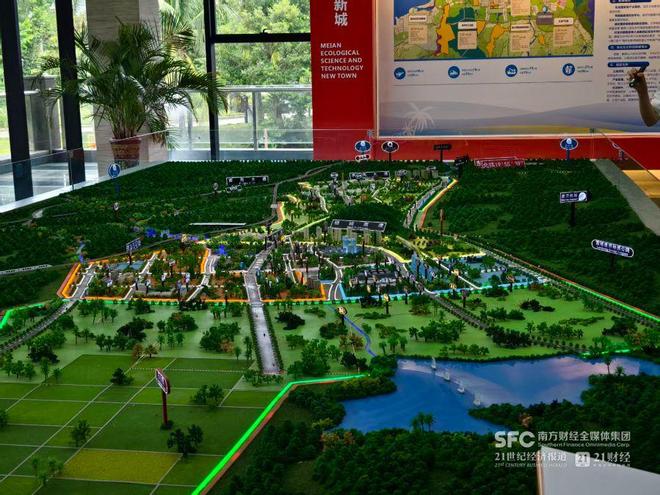
Group 1: Hainan Free Trade Port Development - Hainan Free Trade Port is attracting numerous domestic and international companies to develop in the region, particularly in the aviation and biopharmaceutical sectors [1] - The biopharmaceutical industry is recognized as a strategic emerging industry in Hainan, with the Haikou National High-tech Zone's biopharmaceutical cluster expected to achieve a production value of 21.41 billion yuan in 2024, accounting for 82.9% of Haikou's pharmaceutical output and 79.9% of Hainan's total [2][3] Group 2: Incentives and Policies - The Haikou National High-tech Zone offers various incentives such as R&D rewards and production subsidies, while the Free Trade Port provides zero tariffs and low tax rates on 356 imported goods [2][3] - Biopharmaceutical companies benefit from a reduced corporate income tax rate of 15%, and high-end talent is subject to a maximum personal income tax rate of 15% [2] Group 3: Innovative Business Models - The "Lecheng Research and Application - Haikou Production" model allows for the import of unlisted drugs and medical devices, with financial rewards for international drugs and medical devices produced in Hainan [3] - The establishment of foreign investment projects, such as the first foreign stem cell project by Baiwei Gene Biotechnology, highlights the appeal of Hainan's policies and its role as a hub for overseas markets [3] Group 4: Digital Economy Growth - The Hainan Ecological Software Park has evolved into a core carrier of the digital economy, with annual revenue exceeding 200 billion yuan, up from just over 1 billion yuan 15 years ago [5][6] - The park aims to have over 15,000 resident companies by 2025, including major firms like Tencent and Baidu, and plans to achieve a revenue share of over 25% from the digital economy core industries by 2027 [6][7] Group 5: Sustainable Development Initiatives - The park incorporates green and low-carbon principles in its construction and operation, featuring rainwater recycling systems and solar-powered amenities [4][3] - The use of transparent photovoltaic glass and solar energy for lighting demonstrates the commitment to sustainable practices within the park [4]

促进金砖国家间经贸合作 这份报告含金量满满
Mei Ri Shang Bao· 2025-09-25 23:25
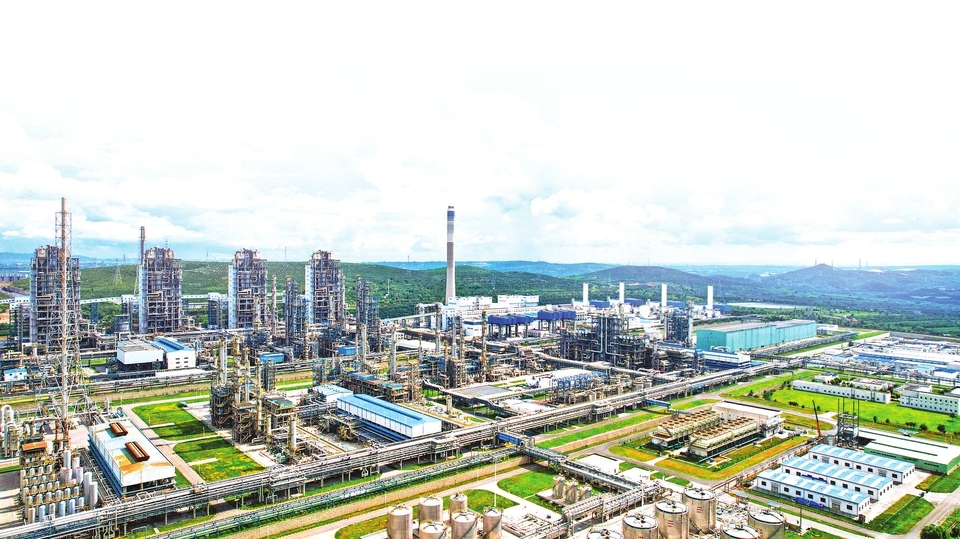
Core Insights - The 2025 BRICS Special Economic Zone Dialogue held in Hangzhou aims to enhance cooperation among BRICS nations in digital trade and industrial collaboration [1][2] - Two key reports were released: the "2025 BRICS Electronic Bill of Lading Report" and the "2025 BRICS Special Economic Zone Economic and Trade Cooperation Development Report," which outline a roadmap for cooperation [1][2] Group 1: Reports and Findings - The "2025 BRICS Special Economic Zone Economic and Trade Cooperation Development Report" defines the core concepts of BRICS Special Economic Zones, including specific regional scope, policy arrangements, and development goals [1] - The report systematically reviews the types and policy trends of special economic zones across BRICS countries, highlighting measures such as relaxed foreign investment access and tax incentives [1] - It emphasizes the importance of digital transformation in manufacturing and green low-carbon development as key industrial directions [1] Group 2: Focus Areas and Cooperation Models - The report focuses on three key areas: artificial intelligence, green low-carbon initiatives, and agriculture, proposing collaborative models based on policy synergy, technology implementation, and industry-academia-research interaction [2] - It identifies four replicable cooperation models: park co-construction, industrial collaboration, joint innovation, and capacity building [2] - The report presents a "China solution" centered on cross-border e-commerce, overseas economic and trade cooperation zones, integrated logistics, cross-border finance, and standardized interoperability [2] Group 3: Implementation and Future Actions - Following the report's release, multiple cooperation initiatives were launched, including the signing of four BRICS cooperation projects in education, industrial funds, production line financing, and digital economy alliances [2] - Initiatives such as the "Artificial Intelligence Industry Cooperation and Development Hangzhou Initiative" and the "International Cooperation Service Alliance for Artificial Intelligence" were also introduced, involving over ten companies including Alibaba Cloud [2] - The dialogue covered 13 BRICS countries, with participation from over 70 foreign dignitaries and more than 120 business representatives, indicating a strong commitment to collaborative development [2]
端牢能源饭碗 加快绿色转型
Xin Hua She· 2025-09-25 23:15
Group 1: Energy Transition and Development - Shanxi province is focusing on ensuring energy supply while promoting a green and low-carbon transition, as emphasized by President Xi Jinping during his visits in 2022 and 2023 [3] - The province aims to build a new energy system that includes wind, solar, and hydrogen energy, alongside coal [3] Group 2: Technological Advancements in Coal Mining - Shanxi is enhancing coal supply quality through intelligent construction and green mining practices, with 298 intelligent coal mines and 55 green mining pilot projects established by the end of August [5] - The establishment of a national AI application pilot base in the coal sector aims to further promote the intelligent upgrade of coal mines [5] Group 3: High-Value Coal Products - Shanxi is working to elevate coal products from basic fuels to high-value products, with companies like Lu'an Chemical Group transforming coal into high-value oil products through advanced processes [6] - The province has built 12 national-level major innovation platforms and numerous provincial laboratories to support technological breakthroughs in clean coal utilization [6] Group 4: Renewable Energy Growth - Since the 14th Five-Year Plan, renewable energy has become the main source of new installed capacity and generation in Shanxi, with an increase of 43.09 million kilowatts in renewable capacity over the past five years [9] - The share of renewable energy in Shanxi's total electricity generation has improved from 1/7 to 1/4, with renewable and clean energy installations now accounting for 54.4% of total capacity [10] Group 5: Green Electricity Parks - Shanxi has expanded its green electricity parks from 3 to 13, converting green advantages into development advantages for industrial transformation and green industry clustering [12] - Companies in green electricity parks benefit from reduced electricity costs and enhanced competitiveness due to direct supply of green electricity [11] Group 6: Market Reforms and Flexibility - Shanxi is implementing market reforms to enhance the flexibility of its power system, with over half of coal-fired power units undergoing flexibility upgrades to accommodate renewable energy [16] - The province has established a power spot market, which has been updated to its 15th version, promoting efficient and transparent market operations [16] Group 7: Overall Energy Strategy - Shanxi is transitioning from a traditional energy province to a new comprehensive energy base, focusing on low-carbon development and the integration of various energy sources [17]
《金砖国家特殊经济区经贸合作发展报告2025》在杭州发布
Zhong Guo Xin Wen Wang· 2025-09-25 14:04
Group 1 - The report titled "2025 Economic and Trade Cooperation Development Report of BRICS Special Economic Zones" was officially released during the fourth Global Digital Trade Expo in Hangzhou [1][2] - The report emphasizes the importance of multilateralism and the diverse characteristics of BRICS countries, highlighting the need for cooperation in various fields to adapt to the rapidly changing global landscape [2] - Special economic zones are defined by three main features: specific regional scope, specific policy arrangements, and specific development goals, aimed at promoting industrial transformation, expanding openness, and facilitating international cooperation [2] Group 2 - The report focuses on three key areas: artificial intelligence, green low-carbon initiatives, and agriculture, showcasing cooperation trends and practices in these sectors [4] - It identifies four models for deepening cooperation: enterprise-led park co-construction, resource integration-oriented industrial collaboration, technology-sharing core innovation, and talent mobility-based capacity building [4] - The report presents a comprehensive trade index system to quantitatively assess the trade cooperation levels and potential between China and other BRICS countries, indicating a steady improvement in overall cooperation levels [4]
加速绿色转型,中国石油持续完善新能源业务布局
Xin Hua She· 2025-09-25 12:16
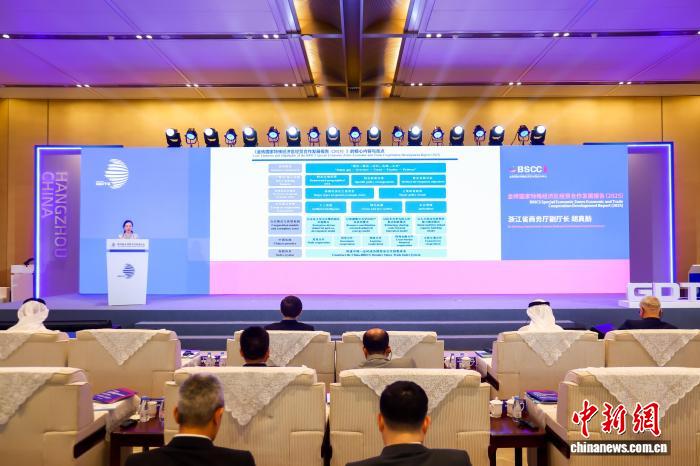
Group 1 - The global energy revolution is driving the growth of green and low-carbon industries, with China National Petroleum Corporation (CNPC) transitioning from a traditional oil and gas company to a comprehensive energy supplier focusing on "oil, gas, heat, and hydrogen" [1] - CNPC has integrated new energy business into its main operations, implementing a three-step strategy of "clean substitution, strategic replacement, and green transformation," while actively cultivating the carbon capture, utilization, and storage (CCUS) industry chain [1] - The company's new energy development and utilization capacity now accounts for 7% of its domestic energy supply [1] Group 2 - CNPC has significantly increased its oil and gas exploration and development efforts, establishing a new supply pattern of "three 100 million tons" for domestic crude oil, domestic natural gas, and overseas oil and gas equity production [3] - The company has achieved a historic breakthrough in ethylene production capacity, surpassing 10 million tons per year, and has built five global oil and gas cooperation zones and four major international oil and gas transportation corridors [3] - CNPC is advancing digital transformation and intelligent development, with its self-developed "Kunlun Model" comprising 300 billion parameters, which is expected to reshape the future landscape of the energy industry [3]
跨境仓储物流加速全球化转型
Bei Jing Shang Bao· 2025-09-25 12:01
Core Insights - The total social logistics volume in China reached 201.9 trillion yuan from January to July 2025, with a year-on-year growth of 5.2%, indicating sufficient supply to support the healthy operation of the national economy [1] - The logistics industry faces structural contradictions, with a need for improved efficiency and reduced costs [1] Group 1: Industry Trends - Demand growth in the logistics sector is shifting from rapid to moderate, expected to align closely with GDP growth, maintaining a range of 4%-5% [1] - The organizational structure is transitioning towards supply chain integration, requiring logistics companies to consolidate resources across the entire chain and offer comprehensive solutions [1] - Technological advancements are penetrating deeply into logistics, with "AI+" initiatives driving the intelligent transformation of warehousing, transportation, and scheduling processes [1] - The focus of development is shifting towards value creation, moving from merely reducing costs and improving efficiency to enhancing supply chain resilience and flexibility, supporting the exploration of "new consumption, new supply, and new value" during economic transformation [1] - Globalization and green low-carbon initiatives are becoming essential, with dual circulation strategies and green transformation policies guiding industry upgrades [1] Group 2: Cross-Border Logistics - The "Belt and Road" initiative and accelerated industrial overseas expansion have shifted cross-border logistics from a cost-driven approach to a new phase that emphasizes resilience, safety, and value creation [2] - The Beijing Municipal Bureau of Commerce is facilitating deep cooperation with logistics partners that possess global networks and localized service capabilities [2] - The "Beijing Enterprises Overseas Comprehensive Service Platform" provides policy information, legal, and financial services to support companies going abroad [2] - The Bureau plans to continue enhancing the "going out" service system, using efficient logistics networks to help Beijing brands and manufacturing enter global markets and gain competitive advantages [2]
长华化学(301518) - 2025年9月25日投资者关系活动记录表
2025-09-25 08:42
Group 1: Company Overview and Research Capabilities - The company has established 7 research institutes focusing on various areas such as catalysts, specialty chemicals, and materials for transportation [3] - After 15 years of innovation, the company has developed strong technical advantages in catalyst design and material synthesis [3] Group 2: CO2 Polyether Project Development - The CO2 polyether project is currently under construction, with an expected completion and production start in Q4 2025 [4] - The project aims for an annual production capacity of 1.06 million tons, with the first phase targeting 80,000 tons [4] Group 3: Market Potential and Applications - CO2 polyether is expected to have a growing market capacity in the polyurethane industry due to its sustainable and recyclable properties [5] - The product can be applied in various sectors, including adhesives, coatings, and automotive materials, offering advantages over traditional polyols [6] Group 4: Technical Advantages - The project utilizes a new type of catalyst and low-temperature, low-pressure technology, allowing for adjustable CO2 content in the final product [7] - The resulting polyether products combine the benefits of both polyester and polyether polyols, with high environmental standards [7] Group 5: Financial Performance and Value Management - In the first half of 2025, the company achieved a net profit of 41.13 million CNY, a 62.71% increase year-on-year [8] - The company emphasizes value management through performance enhancement and effective communication of its value proposition [8]
经济“硬支撑”更稳!多个大国工程智慧与实力兼具 新突破、新纪录成亮点
Yang Shi Wang· 2025-09-25 08:03
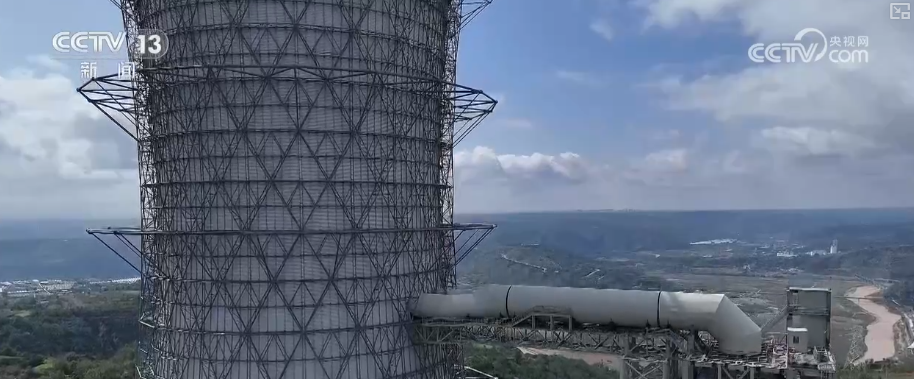
Group 1: CCUS Project Overview - The world's largest coal-fired carbon capture demonstration project at Huaneng Gansu Zhengning Power Plant has successfully completed a 72-hour trial run and is now in commercial operation, marking a historic leap in CCUS technology from "ten-thousand-ton demonstration" to "million-ton industrial application" [1][3] - The project is a major national technology demonstration project and one of the first green low-carbon demonstration projects approved by the National Development and Reform Commission, achieving a CO2 capture rate of over 90% with a purity of over 99% [3][5] - The facility can capture 1.5 million tons of CO2 annually, equivalent to the carbon emissions of 600,000 cars in a year, significantly contributing to deep emission reductions in coal-fired power plants and supporting carbon neutrality goals [5][8] Group 2: Technological Innovations - The project has overcome multiple technical bottlenecks in carbon capture, compression, and storage, creating several "global firsts" and "domestic innovations," with 100% of the core equipment being domestically produced [3][5] - Key technological achievements include the world's first "dual-tower integrated" absorption tower and the first domestic eight-stage supercritical CO2 compressor, which set new benchmarks for the coal power industry [3][5] Group 3: Broader Implications - The captured CO2 can be utilized in various applications, including enhanced oil recovery, green fuel synthesis, food processing, and mineralized building materials, thus establishing a complete "capture-utilization-storage" industrial chain [3][5] - The project positions China's CCUS technology at a world-leading level and sets a new standard for low-carbon transformation in the coal power sector [3][5]