
中华优秀传统文化

Search documents
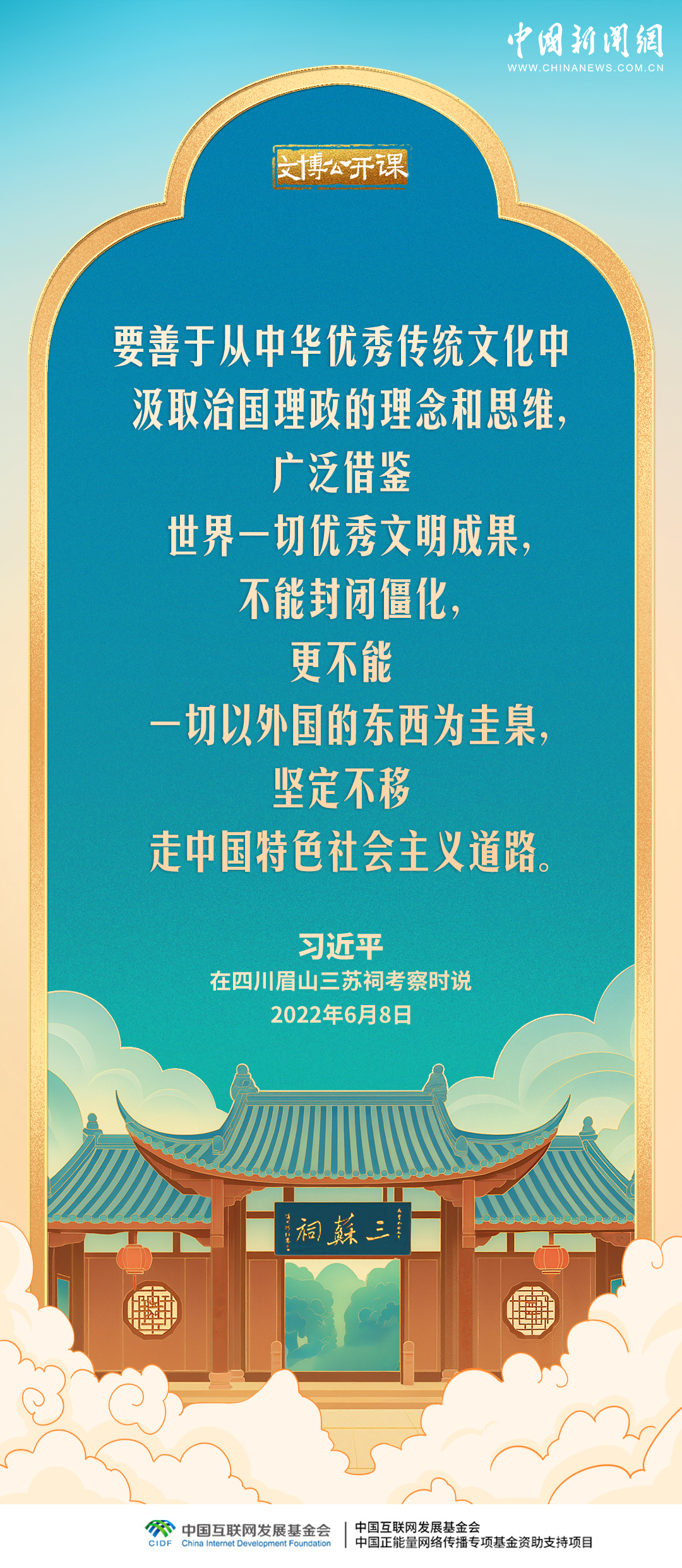
文博公开课|要加强对中华优秀传统文化的挖掘和阐发
Zhong Guo Xin Wen Wang· 2025-11-22 11:19
Group 1 - The core viewpoint emphasizes the importance of drawing from traditional Chinese culture for governance and political thought [1] - Xi Jinping has repeatedly highlighted the need to integrate traditional cultural values into modern governance practices [1][26] - The promotion of traditional culture is seen as essential for fostering a harmonious society and enhancing national identity [13][22] Group 2 - Xi Jinping's remarks during various inspections stress the significance of understanding historical wisdom and its application in contemporary society [5][10] - The integration of traditional cultural elements with Marxist principles is advocated to ensure the continuity of socialism with Chinese characteristics [33][29] - The development of a modernized culture rooted in ancient civilization is presented as a unique path for China, distinguishing it from other nations [26]

2025“中国戏演出季”在维也纳圆满收官
Xin Hua She· 2025-11-17 00:47
Core Viewpoint - The "2025 China Drama Performance Season" concluded with a successful performance of the Huai Opera "Zhao Wuniang" in Vienna, highlighting the cultural exchange between China and Austria [1][2]. Group 1: Event Overview - The performance of Huai Opera "Zhao Wuniang" took place at the MuTe Theater in Vienna, receiving enthusiastic responses from the audience [1]. - Huai Opera, originating from Jiangsu's salt and marsh region, has a history of over 200 years and was listed as a national intangible cultural heritage in 2008 [1]. - The story of "Zhao Wuniang" depicts the struggles of a woman searching for her husband after the death of her in-laws, showcasing both her hardships and her husband's career ups and downs [1]. Group 2: Cultural Impact - The director of MuTe Theater, Elke Hesse, emphasized that the "China Drama Performance Season" provided an opportunity for audiences to appreciate various unique Chinese operas, fostering cultural exchange between China and Austria [1]. - Ernst Waller, honorary chairman of the International Cultural Exchange Cooperation Association, noted that the entire performance season was constructive and sustainable, resonating with many European viewers [1]. - Song Chen, executive vice president and secretary-general of the China Opera Research Association, stated that the performances built a bridge for artistic and cultural exchange between China and Central Europe, expressing hope for more traditional Chinese culture to be introduced to Europe in the future [1].
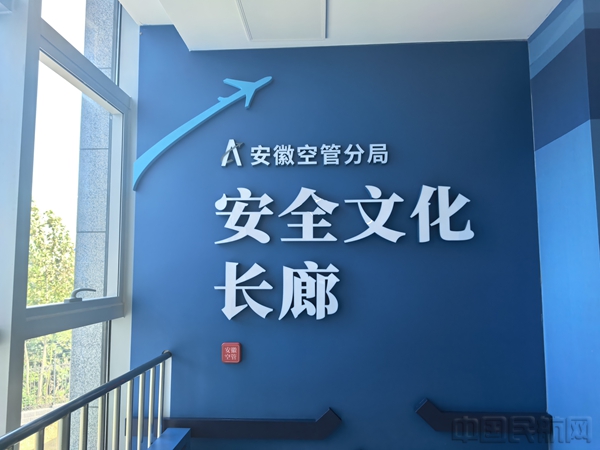
文化长廊天地宽
Zhong Guo Min Hang Wang· 2025-11-14 06:42
Core Viewpoint - The establishment of a safety culture corridor in the new air traffic control building in Anhui aims to enhance safety awareness among employees and promote a culture of safety within the organization [1][3]. Group 1: Safety Culture Initiatives - The safety culture corridor features various displays that illustrate safety production policies, management models, and innovative practices at national, international, and local levels, integrating traditional Chinese culture to strengthen its foundation [1][3]. - The corridor serves as a reflective space for employees, encouraging discussions and fostering a deeper understanding of safety culture, which is essential for ensuring safe operations [3]. Group 2: Operational Achievements - The air traffic control bureau successfully completed the transition of operations from Luogang Airport to XinQiao Airport, marking a significant upgrade in operations after 12 years of dual operations [3][4]. - The bureau has been awarded the "Air Traffic Control Operation Safety Diamond One-Star Award" by the Civil Aviation Administration of China, recognizing its consistent safety performance over the years [3]. Group 3: Future Plans and Goals - The bureau plans to further enhance safety culture by aligning with national safety production directives and integrating core socialist values into its operational framework [5]. - The leadership emphasizes the importance of education, demonstration, and institutional norms to elevate the scientific, standardized, and institutionalized levels of safety culture construction [5].
走好“为官一任,造福一方”的人间正道(深入学习贯彻习近平新时代中国特色社会主义思想)
Ren Min Ri Bao· 2025-11-12 22:19
Core Points - The essence of the article emphasizes the importance of the principle "to serve one term and benefit one area," which reflects the expectations of the public towards officials and serves as a guiding goal for them [2][4][5]. Group 1: Theoretical Foundations - The principle is rooted in Marxist views on the masses, addressing fundamental questions about governance and the role of officials in serving the people [2]. - It highlights the necessity for officials to prioritize the interests and well-being of the people in their work [2][4]. Group 2: Cultural Significance - Chinese traditional culture, emphasizing the value of the people, serves as a cultural source for this principle, advocating for governance that prioritizes public welfare [3]. - The integration of traditional ethics with Marxist views has shaped the modern governance approach of the Communist Party [3]. Group 3: Historical Context - The historical journey of the Communist Party showcases a consistent commitment to benefiting the people, from revolutionary times to contemporary efforts in poverty alleviation [4]. - The Party's historical actions reflect a steadfast value pursuit of serving the people throughout various phases of its leadership [4]. Group 4: Contemporary Relevance - The current era calls for officials to embrace the principle as a response to new challenges and responsibilities in the context of national rejuvenation [5][11]. - The emphasis on high-quality development and equitable distribution of benefits aligns with the principle of serving the people [5][12]. Group 5: Practical Implementation - Officials are urged to embody the values of loyalty to the Party, commitment to the people, accountability, and integrity in their roles [6][10]. - The article stresses the importance of practical actions that translate the principle into tangible benefits for the community [11][13]. Group 6: Governance and Discipline - Strict adherence to Party discipline is highlighted as essential for maintaining the integrity of governance and ensuring that officials act in the public's interest [15]. - The article advocates for a clean and responsible approach to governance, reinforcing the need for officials to uphold ethical standards [10][15].
首届“戏韵泰山 艺展风采”戏剧演出季启幕
Da Zhong Ri Bao· 2025-11-11 00:57
Core Viewpoint - The inaugural "Theatrical Rhythm of Taishan, Art Exhibition Style" drama performance season has commenced in Taian, showcasing a blend of traditional art and Taishan culture, attracting renowned Peking opera artists and enthusiasts from across the country [1] Group 1: Event Overview - The event is guided by multiple organizations including the Shandong Provincial Federation of Literary and Art Circles and the Taian Municipal Committee [1] - The performance features top talents from the Peking opera community, including renowned artist Meng Guanglu, who received enthusiastic applause for his powerful singing [1] Group 2: Cultural Significance - The event aims to create a public platform for high art to reach grassroots audiences, promoting cultural engagement and appreciation of traditional Chinese culture [1] - Future performances will include a series of renowned artist showcases, lectures on opera, and interactive experiences to further engage the community with Peking opera and Taishan culture [1]
魏新:让更多人爱上中国故事
Zhong Guo Xin Wen Wang· 2025-11-07 07:38
Core Insights - Wei Xin, born in December 1978, has witnessed over 40 years of rapid development and social change in China, evolving from a media professional to a significant figure in the new social class [2] - Wei Xin pays special attention to the phenomenon of cultural works like "Black Myth: Wukong" and "Nezha 2" going global, emphasizing that these works deeply explore excellent traditional Chinese culture, which is crucial for their broad impact [2] Group 1 - Wei Xin's background reflects the transformation of Chinese society over the past four decades [2] - The global success of cultural products is linked to their deep cultural roots [2] - The depth of cultural exploration is essential for achieving widespread influence [2]
笔谈丨增强廉洁文化传播力感染力
Zhong Yang Ji Wei Guo Jia Jian Wei Wang Zhan· 2025-11-06 00:20
Core Viewpoint - Strengthening the construction of a clean culture in the new era is a fundamental project for promoting the "three no-corruption" strategy, with a focus on the responsibilities of disciplinary inspection and supervision agencies to ensure effective implementation of clean culture initiatives [1] Group 1: Ideological Foundation - The integration of Xi Jinping's Thought on Socialism with Chinese Characteristics for a New Era into various educational formats is essential for deepening the ideological foundation among party members and cadres [1] - Emphasis on the unity of knowledge and action, ensuring that theoretical clarity translates into clear political conduct [1] - Utilizing traditional Chinese culture, revolutionary culture, and advanced socialist culture to guide party members in resisting corrupting influences [1] Group 2: Innovative Forms and Carriers - Localized approaches to developing clean culture by exploring regional characteristics and compiling stories of historical figures and exemplary party members [2] - Leveraging new media platforms to enhance the dissemination of clean culture through interactive and immersive experiences [2] - Establishing a system of clean cultural units such as clean government offices, villages, schools, and hospitals to promote integrity [2] Group 3: Long-term Mechanisms - Incorporating clean culture construction into the overall framework of party conduct and anti-corruption efforts, establishing a collaborative mechanism for implementation [3] - Highlighting exemplary cases to inspire and educate party members through various promotional activities [3] - Including the effectiveness of clean culture initiatives in the assessment of party conduct and anti-corruption responsibilities, ensuring accountability and continuous improvement [3]
近百名专家学者江西弋阳研讨“新文化新使命”
Zhong Guo Xin Wen Wang· 2025-11-02 08:37
Core Insights - The seminar held in Yiyang, Jiangxi, focused on "New Culture, New Mission," with participation from experts and scholars from various institutions, aiming to foster cultural innovation and development [1][2] Group 1: Cultural Development Initiatives - Jiangxi has been enhancing its cultural foundation and industry through higher standards, greater efforts, and practical measures [1] - The seminar aimed to generate impactful research outcomes that possess theoretical and practical significance [1] Group 2: Academic Perspectives - Experts emphasized the importance of integrating Marxism with traditional Chinese culture to adapt to contemporary conditions [2] - The relationship between culture and urban development was highlighted, suggesting that local cultural characteristics can drive high-quality development and governance [2] Group 3: Research Contributions - The seminar received nearly 500 paper submissions, with 55 selected for presentation, indicating a strong academic interest in cultural studies [2]
乙巳(2025)年重阳两岸民祭轩辕黄帝活动举行
Shan Xi Ri Bao· 2025-10-29 23:20
Core Viewpoint - The event held on October 29, 2025, commemorates the Huangdi (Yellow Emperor) and aims to strengthen the sense of community among the Chinese nation, promoting cultural confidence and unity [1][2]. Group 1: Event Details - The ceremony included traditional rituals such as drum beating, music performance, and offerings, reflecting respect for the cultural heritage [1]. - Over 50 Taiwanese participants joined representatives from various sectors in mainland China to pay tribute at the Huangdi Mausoleum [1]. Group 2: Themes and Objectives - The theme of the event was "Strengthening the Awareness of the Chinese National Community and Advancing the New Journey of Chinese-style Modernization," focusing on cultural roots and historical confidence [2]. - The event aimed to enhance the cohesion and cultural influence of the Chinese nation by promoting excellent traditional culture [2].
充分发挥文化养心志、育情操重要作用
Ren Min Ri Bao· 2025-10-22 22:02
Core Viewpoint - The emphasis on the role of culture in nurturing the spirit and moral character of the nation is crucial for building a strong socialist cultural power and responding to the challenges of the changing world [1][2][4]. Group 1: Cultural Functions - The concepts of nurturing the spirit and moral character are intrinsic to culture and are essential components of cultural development [2]. - Nurturing the spirit involves instilling firm ideals and a sense of responsibility, while nurturing moral character focuses on cultivating high moral standards and aesthetic appreciation [2]. - A healthy and positive culture promotes comprehensive development and enhances the overall quality of society, fostering a spirited and motivated populace [2]. Group 2: Historical Context - Throughout history, culture has cultivated numerous individuals with strong ideals and a sense of national pride, inspiring collective efforts towards national rejuvenation [3]. - Historical examples include the revolutionary spirit during wartime and the determination shown during the socialist construction period, which motivated many to contribute to national progress [3]. Group 3: Cultural Resources and Values - The report from the 20th National Congress highlights the importance of socialist core values in guiding cultural development and nurturing the spirit and moral character [4][5]. - The integration of revolutionary culture and traditional Chinese culture provides a continuous source of spiritual motivation for national rejuvenation [4]. Group 4: Cultural Supply and Demand - The shift in cultural supply from mere availability to quality necessitates the provision of diverse, high-quality cultural services and products to meet public needs [5]. - Emphasis on building a modern public cultural service system and innovative cultural service models is essential for promoting cultural prosperity [5]. Group 5: Talent Development - The development of a high-level talent pool is critical for advancing socialist culture, requiring a structured approach to talent cultivation and assessment [6]. - Embracing technological advancements such as AI and big data is necessary to adapt to the evolving cultural landscape and meet audience demands [6][7].