习近平生态文明思想

Search documents
以实干之笔绘就美丽河南新画卷
He Nan Ri Bao· 2025-08-29 23:19
Group 1 - The meeting held in Kaifeng on August 29 focused on pollution prevention, analyzing the situation, identifying problems, and setting clear goals to improve ecological environment quality significantly and sustainably [1] - Since the 18th National Congress, the central government has emphasized the importance of ecological civilization, leading to the development of Xi Jinping's ecological civilization thought, which serves as a guideline for ecological construction in the new era [1] - The province has made significant progress in ecological protection and restoration, with PM2.5 concentration decreasing by 14.9% year-on-year to 41.2 micrograms per cubic meter as of July, and the number of good air quality days increasing by 10 days [2] Group 2 - The province is currently in a critical period of ecological civilization construction, facing structural, root, and trend pressures that have not been fundamentally alleviated, indicating that further efforts are needed for substantial improvement [2] - The government emphasizes the need for higher standards and greater efforts in ecological protection, including the three major battles for blue skies, clear waters, and clean land, as well as structural adjustments in industries, energy, and transportation [2] - The commitment to ecological protection is framed as a long-term effort, with a call for practical actions to implement the central government's decisions and to enhance the green development of Henan [3]
通化市:紧抓党建为监测注入红色动能
Zhong Guo Huan Jing Bao· 2025-08-28 01:46
Core Viewpoint - The Tonghua Ecological Environment Monitoring Center integrates party building with environmental monitoring, enhancing public awareness and participation in ecological protection efforts [1][2] Group 1: Party Building and Environmental Monitoring Integration - The center explores paths for deep integration of party building and monitoring business, establishing a solid political foundation for pollution prevention and high-quality development of regional ecological monitoring [1] - Party activities are closely linked with environmental education, utilizing events like theme party days and public service activities to innovate diverse environmental protection initiatives [1][2] Group 2: Public Engagement and Awareness - Activities such as ecological environment science lectures and open days invite the public to engage directly with monitoring processes, effectively raising awareness of ecological protection [1] - These initiatives create a "bridge" between the public and ecological protection efforts, fostering a strong consensus for environmental care and support [1] Group 3: Performance and Capability Enhancement - The center emphasizes the role of party organizations and members in driving core business capabilities, with leaders taking initiative in key assessments and challenges [2] - A "dual empowerment" cycle is formed, where party building promotes business performance, and business achievements validate the effectiveness of party initiatives, leading to improved monitoring capabilities and service efficiency [2] Group 4: Contribution to Ecological Protection - The integration of party building and business practices energizes the monitoring team, contributing significantly to the protection of natural resources and the construction of a beautiful Jilin [2]
让每一抹自然之色找到“归属”
Zhong Guo Zi Ran Zi Yuan Bao· 2025-08-27 02:44
Core Viewpoint - The article emphasizes the importance of unified natural resource property rights registration in Tibet, which aims to clarify ownership and enhance ecological protection, thereby supporting sustainable development and environmental conservation [2][4]. Group 1: Natural Resource Registration - The unified property rights registration work in Tibet is a key measure to implement ecological civilization and the "Two Mountains" concept, which is crucial for establishing a national ecological security barrier [4]. - As of December 2023, the registration work has covered 22 units, including 16 nature reserves and 3 rivers, with the completion of the Nam Co Nature Reserve marking a significant milestone [4]. - The registration process aims to create a comprehensive database of natural resources, clarifying ownership and boundaries to facilitate strict and systematic protection and rational utilization [4][10]. Group 2: Ecological Significance - The registration of the Muxu Langjie Sea Buckthorn Forest highlights the ecological functions of this unique green barrier, which includes windbreaks and water conservation [6]. - The work conducted by the Natural Resources Ministry's remote sensing team involves precise mapping and boundary delineation to ensure effective ecological protection [9][10]. - The registration process respects local customs and engages communities, ensuring that the benefits of clear property rights are communicated effectively to local residents [9]. Group 3: Implementation and Impact - The registration efforts in Lhasa City are set to enhance the implementation of the "Two Mountains" concept, ensuring that every forest and natural resource has a clear ownership coordinate [7]. - The delineation of boundaries for rivers like the Xuerong Zangbu is crucial for establishing clear property rights, which will aid in ecological management and protection [10]. - The overall initiative aims to provide a systematic guarantee for the protection and sustainable development of Tibet's rich natural resources, ensuring that they remain vibrant and preserved for future generations [10].
本报社论:用生动故事讲透深刻理论
Zhong Guo Huan Jing Bao· 2025-08-27 00:43
Core Viewpoint - The series "Xi Jinping's Ecological Civilization Thought Lectures" aims to promote and explain the ecological civilization thought proposed by Xi Jinping, highlighting its significance for people's well-being and national future [1][2]. Group 1: Program Overview - The program consists of 10 episodes focusing on key themes such as "Green Mountains and Clear Water are Gold and Silver Mountains," "Harmony between Humanity and Nature," and "Building a Beautiful China" [3]. - It features prominent leaders and experts in ecological civilization, providing practical examples and data to illustrate the achievements and significance of Xi Jinping's ecological civilization thought [2][3]. Group 2: Key Themes and Achievements - The first episode emphasizes the historical background and scientific connotation of the "Green Mountains and Clear Water" concept, showcasing successful cases in ecological restoration and the rapid development of the "beautiful economy" [4]. - The third episode discusses the historical achievements in building a Beautiful China since the 18th National Congress, underlining its strategic importance for national rejuvenation [4]. Group 3: Future Directions - The program serves as a catalyst for deepening the understanding of Xi Jinping's ecological civilization thought, aiming to transform its theoretical insights into practical actions for ecological protection and civilization construction [5]. - It encourages the public to engage in the movement towards building a Beautiful China, leveraging the strong leadership of the Party and the guiding principles of Xi Jinping's thought [5].
学好用好《习近平生态文明文选》 建设人与自然和谐共生的美丽中国
Ren Min Ri Bao· 2025-08-26 22:09
Core Viewpoint - The publication of the first volume of "Xi Jinping's Ecological Civilization Selected Works" serves as a significant opportunity to deepen the understanding and implementation of Xi Jinping's ecological civilization thought, which is essential for promoting the harmonious coexistence of humans and nature in modern China [1][2]. Group 1: Importance of Ecological Civilization - Xi Jinping's ecological civilization thought emphasizes the critical role of ecological civilization in the new era of socialism with Chinese characteristics, highlighting the need for theoretical, practical, and institutional innovations [1][2]. - The leadership of the Communist Party of China (CPC) is deemed fundamental for ecological civilization construction, ensuring that ecological issues are addressed as major economic, social, and political problems [2][3]. Group 2: Core Concepts of Ecological Civilization - The principle of "Green mountains and clear waters are as valuable as mountains of gold and silver" is central to ecological civilization, advocating for a balanced relationship between environmental protection and economic development [3][4]. - A good ecological environment is recognized as the most universal form of public welfare, linking environmental quality directly to the well-being of the populace [3][4]. Group 3: Strategic Pathways for Development - Green development is identified as a revolutionary shift in development philosophy, essential for addressing pollution and achieving sustainable growth [4][5]. - The establishment of strict legal frameworks and institutional guarantees is crucial for protecting the ecological environment, necessitating comprehensive reforms in ecological civilization systems [4][5]. Group 4: Global Engagement and Cooperation - The initiative for global ecological civilization construction is framed as a shared responsibility, emphasizing the need for international cooperation in environmental governance [5][6]. - The concept of a community with a shared future for mankind is highlighted, advocating for active participation in global climate governance and biodiversity efforts [5][6]. Group 5: Implementation Strategies - The construction of a beautiful China is positioned as a priority, with a focus on integrating ecological protection with high-quality development [6][7]. - Specific measures include enhancing local governance structures, promoting green urban and rural development, and addressing pollution through targeted actions [7][8]. Group 6: Continuous Learning and Adaptation - Ongoing education and application of Xi Jinping's ecological civilization thought are emphasized as essential for improving environmental protection capabilities [9][10]. - The need for innovative thinking and practical action is stressed to effectively address deep-rooted environmental issues and achieve sustainable development goals [10].
“两山”理念20年,山东交出怎样的成绩单
Zhong Guo Xin Wen Wang· 2025-08-26 03:05
□ 范玉波 今年是"绿水青山就是金山银山"理念(以下简称"两山"理念)提出20年。历经20年实践检验,这一理念不 断深入人心,成为习近平生态文明思想的原创性、标识性概念,指引我国生态文明建设取得举世瞩目的 巨大成就。 山东作为东部沿海大省,在服务全国发展大局中地位举足轻重,经济社会发展已进入加快绿色化、低碳 化的高质量发展阶段,必须始终牢固树立和践行"两山"理念,持续深化绿色低碳高质量发展实践,为全 国生态文明建设贡献山东力量。 在加强生态保护修复上深入实践,筑牢黄淮海流域生态屏障。健全以国家公园为主体的自然保护地体 系,为东部沿海地区生态保护与修复提供了实践样本。立足半岛丘陵、黄河三角洲、滨海湿地等独特生 态地貌,构建起"国家公园—自然保护区—自然公园"三级保护架构,形成覆盖森林、海洋、湿地等多元 生态系统的保护网络。推动黄河口陆海统筹型国家公园和长岛海洋型国家公园建设,在优化治理架构、 创新管理体制,在陆海统筹、系统治理、科技赋能、法治协同、共建共享等领域为全国自然保护地体系 完善贡献山东智慧。 "两山"理念的丰富内涵 "两山"理念是习近平生态文明思想的核心理念,揭示了生态环境保护与经济发展的辩证统一关系 ...
市委常委会会议学习贯彻习近平总书记近期重要讲话重要指示精神 全力抓好风险隐患排查整治 扎实推进大运河建设和保护 马明龙主持并讲话
Zhen Jiang Ri Bao· 2025-08-22 23:45
Group 1 - The meeting emphasized the importance of disaster prevention and response, highlighting the need for risk assessment and monitoring of weather conditions to protect people's lives and property [1] - The meeting discussed the integration of ecological protection of the Grand Canal with broader environmental initiatives, aiming to enhance cultural and economic value while promoting tourism and inland shipping [1] - The meeting reviewed the responsibility lists for the United Front Work, stressing the need for a coordinated approach to enhance the effectiveness of the United Front Work [1] Group 2 - The meeting focused on developing a performance evaluation system for municipal cultural enterprises, prioritizing political and social benefits alongside economic outcomes to fulfill cultural missions [2]
上海市委常委会传达学习习近平总书记重要讲话和重要指示精神,研究了这些重要事项
Di Yi Cai Jing· 2025-08-22 12:43
Group 1 - The meeting emphasized the importance of implementing Xi Jinping's important speech and directives regarding the 60th anniversary of Tibet Autonomous Region, focusing on enhancing support for Tibet's long-term stability and high-quality development [1][2] - The meeting highlighted the need for precise assistance, increasing support for grassroots and livelihood initiatives, and deepening the "team-style" assistance mechanism in education and healthcare [1][2] - The meeting called for strengthening national unity efforts, fostering a sense of community among various ethnic groups, and ensuring that all communities thrive in Shanghai [1] Group 2 - The meeting stressed the importance of incorporating public expectations, expert opinions, and grassroots experiences into the "14th Five-Year" planning process to align with people's wishes and guide socio-economic development [2] - The meeting underscored the need for political responsibility and proactive measures in flood prevention and disaster response, including risk forecasting, hazard identification, and emergency preparedness [2] - The meeting called for a focus on ecological civilization, enhancing the ecological environment control system, and promoting coordinated economic and environmental development [3]
全市生活垃圾综合治理提质增效工作推进会召开
Hang Zhou Ri Bao· 2025-08-20 03:13
Group 1 - The meeting emphasized the importance of garbage classification as a key initiative promoted by General Secretary Xi Jinping, highlighting its role in ecological civilization and urban management [1][2] - Continuous improvement in comprehensive garbage management is essential, focusing on enhancing citizen participation, optimizing disposal environments, and promoting resource utilization [2] - The integration of artificial intelligence and digital economy is crucial for making garbage classification management more intelligent and effective [2] Group 2 - The meeting was conducted via video conference, with various district leaders and departments sharing their experiences and progress in garbage classification [3] - Prior to the meeting, the city leadership conducted on-site visits to assess the implementation of garbage classification and recycling efforts [3]
青海强化政治监督守护生态屏障,木里矿区复绿显成效
Zhong Yang Ji Wei Guo Jia Jian Wei Wang Zhan· 2025-08-19 00:38
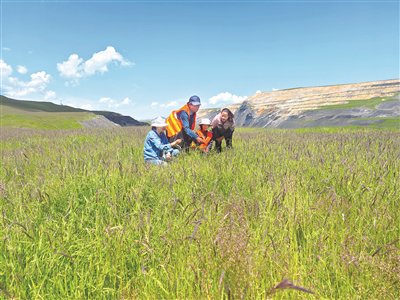
中央纪委国家监委网站 徐菱骏 自青海报道 青海省海西州纪检监察机关强化政治监督,压紧压实生态环境保护责任,推动筑牢祁连山南麓生态安全 屏障,护航生态文明高地建设。图为8月16日,该州纪检监察干部协同生态管护员,查看天峻县木里矿 区聚乎更5号井植被复绿情况。王弋龙 摄 "保护好青海生态环境,是'国之大者'。要牢固树立绿水青山就是金山银山理念,切实保护好地球第三 极生态。" 转自:中央纪委国家监委网站 深度关注·"做实政治监督 推动绿色发展"之三 保护好青海生态环境,是"国之大者" "青海最大的价值在生态、最大的责任在生态、最大的潜力也在生态"。 "让绿水青山永远成为青海的优势和骄傲,造福人民、泽被子孙。" "重中之重是把三江源这个'中华水塔'守护好,保护生物多样性,提升水源涵养能力。" …… 党的十八大以来,习近平总书记对青海生态环境保护念兹在兹,多次作出重要指示批示。在"两山"理念 提出二十周年之际,记者走进青海,探寻当地纪检监察机关如何以有力监督,推动"两山"理念引领高原 蝶变。 木里重生—— 绿染矿坑复葱茏 习近平总书记对青海的重要指示批示中,木里多次出现。 祁连山南麓、地跨海北藏族自治州与海西蒙古族藏族 ...