
人工智能泡沫

Search documents
泡沫、壁垒、裁员
Xin Hua She· 2025-11-25 00:25
Group 1: AI Bubble Concerns - The performance of major companies in the AI sector has been robust, with firms like Nvidia exceeding revenue and profit expectations, yet concerns about an AI bubble are growing among analysts [2][3] - Major tech companies, including Amazon, Alphabet, and Microsoft, have raised their capital expenditure forecasts, collectively expecting to exceed $380 billion in investments this year, but market reactions to these investments have varied [2] - A survey by Bank of America indicates that over half of fund managers believe there is a bubble in AI stocks, particularly among the "Tech Giants," suggesting an over-concentration of market funds [3] Group 2: Impact of Tariff Barriers - The impact of U.S. tariff policies has become more pronounced in Q3, negatively affecting the earnings and forecasts of export-oriented companies in Europe and Japan [4][5] - European luxury goods companies have reported significant revenue declines, with LVMH's fashion and leather goods division seeing a roughly 8% drop and Kering's Gucci brand experiencing a 22% decline in revenue [4] - Japanese automakers have collectively faced a 2.5% drop in net profits, with estimates suggesting that U.S. tariffs on imported vehicles could lead to losses of approximately 1.5 trillion yen for major Japanese car manufacturers [4] Group 3: Consumer Sentiment and Layoffs - U.S. consumer sentiment is notably low, with major companies announcing significant layoffs, contributing to a bleak economic outlook [7] - The disparity in consumer spending is evident, as affluent consumers maintain or increase their spending while lower-income consumers are forced to cut back [7] - The number of layoffs in the U.S. has reached nearly 1 million in the first nine months of the year, the highest since 2020, raising concerns about potential economic recession [7]


Here are Monday’s Top Wall Street Analyst Research Calls: Baidu, Carvana, Exact Sciences, Ferrari, Marvell Technology, Meta Platforms and More
Yahoo Finance· 2025-11-24 14:20
Market Overview - The stock market experienced significant volatility last week, with major indices showing wild swings, particularly after NVIDIA Corp's earnings report [2] - The Dow Jones Industrial Average closed at 46,245, up 1.08%; the S&P 500 at 6,602, up 0.98%; and the NASDAQ at 22,273, up 0.88% [2] Treasury Bonds - Treasury yields decreased across the curve, with the 30-year bond closing at 4.72% and the 10-year note at 4.07% [3] - The New York Fed President's comments increased expectations for a potential 25 basis-point rate cut in December, which contributed to positive trading on Friday [3] Oil and Gas Sector - The oil market faced declines, with Brent Crude closing at $62.49, down 1.4%, and West Texas Intermediate at $58, down 1.69%, marking the lowest close since last May [4] - The selling pressure was linked to potential developments in the Russia-Ukraine conflict, as President Trump sought a response from Ukraine regarding a peace proposal [4] - Natural gas prices increased by 2.19% to $4.57, driven by expectations of a cold winter and rising electricity demand [4] Economic Outlook - The upcoming Thanksgiving holiday and limited economic data are expected to result in a quieter week on Wall Street compared to the previous one [5] - There is a noted conflict between AI bubble skeptics and proponents, with discussions around the potential for significant technological advancements [5] - The possibility of a December rate cut could support a year-end market rally [5]
谷歌、微软“双杀”逼近,OpenAI陷入空前危机
3 6 Ke· 2025-11-24 11:09
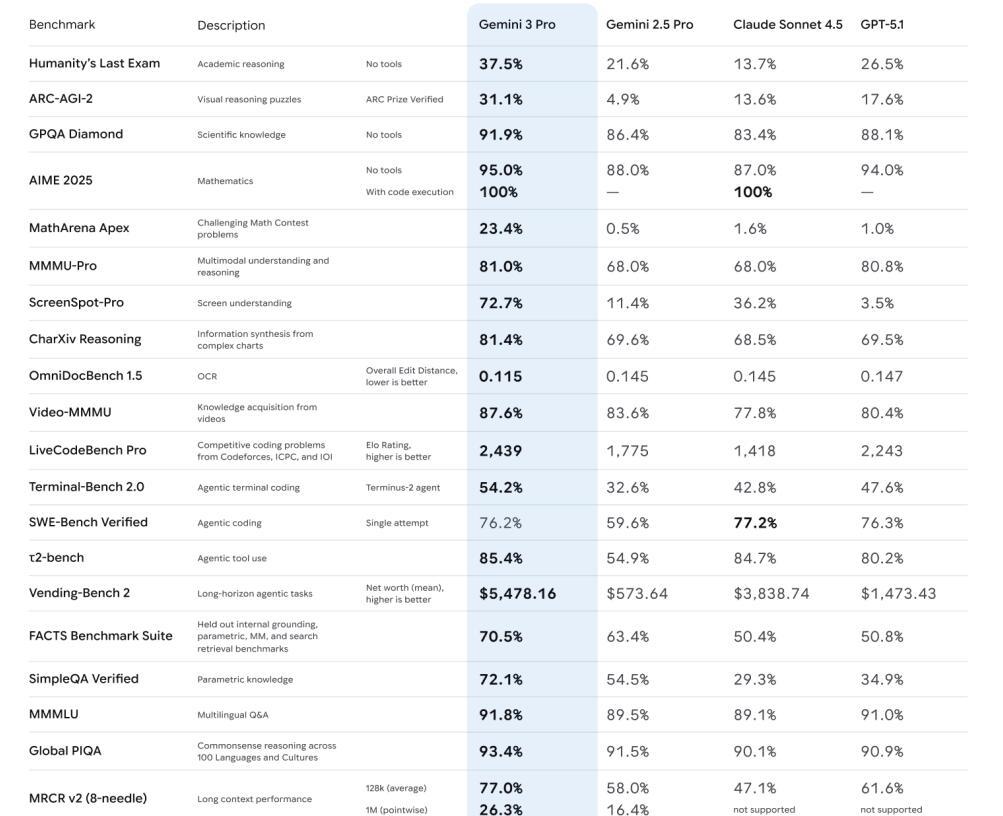
Core Insights - OpenAI faces significant challenges as its main partner Microsoft and chip giant Nvidia form a $350 billion strategic partnership with competitor Anthropic, nearly doubling Anthropic's valuation since September [1] - Google's release of its latest AI model, Gemini 3, reportedly surpasses OpenAI's recently launched GPT-5.1 in early tests, indicating a shift in competitive dynamics within the AI sector [1] - The market sentiment remains unstable, with concerns over an AI bubble leading to a tech stock sell-off, despite Nvidia's strong earnings report reigniting investor interest [1] Market Dynamics - Analysts express divided opinions on OpenAI's ability to maintain its leading position, with some predicting that competitors like Anthropic and Google will continue to erode OpenAI's market share [2] - Mike O'Rourke from JonesTrading highlights Google's scale and industry position as factors that could allow Gemini to capture market share from OpenAI [2] - AI skeptic Gary Marcus argues that OpenAI has squandered its technological lead, suggesting that Google has caught up [2] Competitive Performance - Gemini 3 Pro demonstrates significant advantages over competitors in multimodal processing capabilities, outperforming GPT-5.1 and Claude 4.5 in various benchmarks [3] - In specific tests, Gemini 3 Pro achieved notable scores, such as 37.5% in Humanity's Last Exam and 95.0% in AIME 2025, surpassing its predecessors and competitors [4] User Engagement and Market Position - Google claims its Gemini application has 650 million monthly active users, while OpenAI's ChatGPT reportedly reached 800 million weekly active users, indicating a narrowing user gap [5] - Nvidia's agreement to provide AI hardware to Anthropic suggests a potential weakening of OpenAI's computational resource advantage, enhancing Anthropic's R&D capabilities [5] Financial Strategy and Valuation Concerns - OpenAI plans to invest over $1.4 trillion in data center construction over the next few years, despite incurring significant quarterly losses [6] - The aggressive capital expenditure strategy raises concerns about the sustainability of OpenAI's high valuation amid fierce competition and potential revenue growth limitations [6]


【环球财经】泡沫、壁垒、裁员——从跨国企业季报看世界经济风险与挑战
Xin Hua She· 2025-11-24 06:37
Group 1: Core Insights - The earnings reports from major companies in developed economies show mixed results, with rising concerns over the AI bubble and tariff barriers impacting profitability [1][2][4] - Major tech companies like Nvidia, Amazon, Alphabet, and Microsoft reported strong third-quarter earnings, but there are growing worries about the sustainability of AI investments [2][3] Group 2: AI Bubble Concerns - Over half of fund managers surveyed believe that AI stocks are in a bubble, with excessive investment in major tech firms leading to concentrated market risks [3] - The S&P 500's cyclically adjusted price-to-earnings ratio has reached its highest level since the dot-com bubble, raising fears of a potential economic downturn if the AI bubble bursts [3] Group 3: Impact of Tariff Barriers - U.S. tariff policies have significantly affected the earnings of export-oriented companies in Europe and Japan, with many firms facing increased costs [4][5] - European luxury brands like LVMH and Kering reported substantial revenue declines due to high tariffs, with LVMH's fashion and leather goods revenue down approximately 8% and Kering's Gucci brand down about 22% [4] Group 4: Consumer Sentiment and Layoffs - U.S. consumer sentiment is notably low, with significant layoffs occurring across various sectors, contributing to economic uncertainty [7] - Major companies, including Amazon and Target, have announced layoffs totaling around 80,000 employees, reflecting a stagnating job market and potential recession risks [7]
【数智产业周报】普京:俄应在生成式人工智能领域掌握全套自主技术;美银调查:超半数基金经理认为AI股票已经处于泡沫状态;阿里全力进军AI to C市场,千问APP上线公测
Sou Hu Cai Jing· 2025-11-24 04:11
Group 1 - UBS continues to favor trading the AI narrative, maintaining an overweight position in Chinese companies, as they are unique consumer-facing AI stocks with relatively low valuations [2] - Jeffrey Gundlach warns that the current state of the US stock market is unhealthy, with clear signs of speculation in AI and data center investments [3] - Roelof Botha believes SpaceX is more likely to become the most valuable company compared to OpenAI, citing SpaceX's dominance in satellite launch services [4] Group 2 - Anthropic's CEO warns that generative AI could eliminate half of entry-level white-collar jobs, potentially raising unemployment rates to 10%-20% [5] - Elon Musk emphasizes that the real bottleneck in AI development is not funding or algorithms, but rather computing power and electricity [6] - NVIDIA's CEO states that the company will use its substantial cash flow for growth, stock buybacks, and investments, while also noting that the world is undergoing three major transformations driving AI infrastructure investment growth [7] Group 3 - Baidu's Q3 revenue reached 31.2 billion yuan, with AI business revenue growing over 50%, marking the first disclosure of AI revenue [19] - Kingsoft Cloud reported Q3 revenue of 2.48 billion yuan, achieving its first adjusted net profit [20] - OceanBase launched its first AI database, seekdb, which supports AI-native mixed search capabilities [21] Group 4 - NVIDIA's Q3 net profit surged 65% year-over-year, with revenue reaching $57.01 billion, driven by strong data center business performance [53] - Peter Thiel's fund sold all its NVIDIA shares, indicating a bearish sentiment towards the stock [54] - The Trump administration is considering approving the export of NVIDIA's H200 AI chips to China, which could impact the semiconductor market [55]



【数智产业周报】普京:俄应在生成式人工智能领域掌握全套自主技术;美银调查:超半数基金经理认为AI股票已经处于泡沫状态;阿里全力进军AI to C市场,千...
Tai Mei Ti A P P· 2025-11-24 04:08
Group 1 - UBS maintains an overweight rating on Chinese stocks, citing a healthy microeconomic environment and low leverage among companies investing in AI [2] - UBS predicts that AI stocks will see over 20% earnings growth per share in 2026, with AI beneficiaries in emerging markets contributing over 42% to returns by 2025 [2] - Jeffrey Gundlach warns of speculative behavior in the US stock market, particularly in AI and data center investments, calling the current market conditions unhealthy [3] Group 2 - Anthropic's CEO warns that generative AI could eliminate half of entry-level white-collar jobs, potentially raising unemployment rates to 10%-20% [4] - Elon Musk emphasizes that the real bottleneck in AI development is not funding or algorithms, but rather computing power and electricity [5] - NVIDIA's CEO states that the company will use its substantial cash flow for growth, stock buybacks, and investments, while also noting that the AI bubble is not present [6] Group 3 - Baidu reports Q3 revenue of 31.2 billion yuan, with AI business revenue growing over 50% year-on-year [14] - Kingsoft Cloud achieves Q3 revenue of 2.48 billion yuan, with a 31% year-on-year increase and its public cloud revenue growing by 49% [14] - OceanBase launches its first AI database, seekdb, designed for rapid AI application development [14] Group 4 - The Chinese low-altitude economy market is expected to reach 1.5 trillion yuan by 2025, driven by rapid growth in low-altitude equipment [28] - The first cross-city test flight of a 2-ton eVTOL aircraft in Guizhou marks a significant milestone in low-altitude logistics [29] - Over 1,200 5G factories have been built in China, with investments exceeding 50 billion yuan, showcasing the integration of 5G and industrial internet [30]

泡沫、壁垒、裁员——从跨国企业季报看世界经济风险与挑战
Xin Hua Wang· 2025-11-24 03:40
Group 1: AI Bubble Concerns - The performance of major companies in the AI sector has been strong, with firms like Nvidia exceeding revenue and profit expectations, but concerns about an AI bubble are growing [2][3] - Major tech companies, including Amazon, Alphabet, and Microsoft, are increasing capital expenditures in AI infrastructure, with a total expected to exceed $380 billion this year, yet market reactions to these investments vary [2] - A survey by Bank of America indicates that over half of fund managers believe AI stocks are in a bubble, with high valuations raising concerns about potential market impacts if AI development underperforms [3] Group 2: Impact of Tariff Barriers - The impact of U.S. tariff policies has become more pronounced, negatively affecting the earnings of export-oriented companies in Europe and Japan, as well as U.S. firms facing additional costs [4][5] - European luxury goods companies are experiencing significant revenue declines, with LVMH's fashion and leather goods revenue down approximately 8% and Kering's Gucci brand down about 22% year-over-year [4] - Japanese automakers are also suffering, with estimates suggesting that U.S. tariffs could lead to losses of approximately 1.5 trillion yen for seven major car manufacturers [4] Group 3: Consumer Sentiment and Layoffs - U.S. consumer sentiment is notably low, with major companies announcing significant layoffs, contributing to economic uncertainty [7] - The disparity in consumer spending is evident, as affluent consumers maintain or increase spending while lower-income consumers are forced to cut back [7] - Layoffs in the U.S. have reached nearly 1 million in the first nine months of the year, the highest for that period since 2020, raising concerns about future consumer spending [7]
外媒曝:OpenAICEO曾警告称该公司技术领先优势正在缩窄
Huan Qiu Shi Bao· 2025-11-23 22:55
Group 1 - The competitive landscape of global AI tools is shifting, with OpenAI's CEO warning of a narrowing technological lead and potential economic headwinds, predicting single-digit revenue growth by 2026 [1][2] - OpenAI is facing pressure as its CFO noted a decline in user engagement with ChatGPT, despite overall stable financial performance [1] - The AI race is intensifying, with companies like Google, Microsoft, and Anthropic developing stronger models, leading to a complex competitive environment [2] Group 2 - AI companies may need to continue subsidizing to maintain low prices, but investor sentiment is cooling amid concerns of an AI bubble, affecting both public and private capital markets [2] - A recent Bank of America survey indicated that 20% of global fund managers believe companies are over-investing, highlighting a shift in sentiment related to AI capital expenditure [2] - The debate over a potential AI bubble continues, with historical parallels drawn to the internet boom and the inevitable emergence of losers in a crowded market [3]
最新全球基金经理调查:人工智能泡沫忧虑上升
Shang Hai Zheng Quan Bao· 2025-11-23 13:51
Group 1 - The core debate among fund managers is whether a bubble in artificial intelligence (AI) has emerged, with over half of respondents in a recent Bank of America survey believing that AI has indeed entered a bubble phase [1][2] - 45% of investors identified the "AI bubble" as the largest tail risk, a significant increase from 33% in October, indicating heightened caution regarding the overvaluation of tech stocks [2] - The survey included 172 fund managers managing a total of $475 billion in assets, conducted between November 7 and November 13 [1] Group 2 - Nvidia reported a third-quarter revenue of $57 billion, a 62% year-over-year increase, and a net profit of $31.9 billion, up 65% year-over-year, with adjusted earnings per share of $1.30, surpassing market expectations [1] - Despite strong performance from Nvidia, there is a growing concern about the potential for an AI investment bubble, contrasting with the robust earnings data [1] - A market strategist noted that while there are localized bubble risks in the AI sector, particularly among companies with high future revenue expectations, the overall risk remains manageable [2] Group 3 - Current investments by tech giants in AI, such as Microsoft and Google, are generally within 60% of their operating cash flow, indicating financial strength to support ongoing investments [2] - Some businesses are beginning to generate actual revenue from AI, with Microsoft integrating AI services into its cloud computing operations, contributing to significant cash flow [2] - Compared to the internet bubble era, there is less reliance on large-scale borrowing for investments, resulting in a more stable leverage level [2] Group 4 - The valuation and capital expenditure in the AI sector are based on solid financial performance, suggesting a rational market environment despite increased capital concentration and interdependence among major players [3] - The current market correction is viewed as an opportunity for diversification beyond large tech stocks, rather than a signal of a singular investment focus on AI [3]
AI是否全面泡沫化?卖方研究观点争锋
Xin Lang Cai Jing· 2025-11-23 11:13
Core Viewpoint - The global AI industry is experiencing explosive growth, with market size projected to rise from $11 billion in 2020 to $215 billion in 2024, and expected to exceed $1.8 trillion by 2032. However, concerns about a potential AI bubble have emerged, particularly following a significant pullback in tech stocks in late 2025 [1][2]. Group 1: Market Dynamics - The debate surrounding the AI bubble centers on two main issues: the technological value and the rationality of investment scale. Optimists believe AI will revolutionize productivity, while pessimists question the maturity of the technology and its commercial viability [2]. - The sentiment in the market is divided, with some investors taking profits while long-term investors remain committed [3]. Group 2: Valuation and Profitability - Current valuations of tech stocks, while high, do not indicate a bubble. As of November 14, 2025, the Nasdaq index's P/E ratio is at 26.7, significantly lower than the 2000 internet bubble peak of 200 times [5][6]. - The profitability of AI leaders contrasts sharply with the 2000 internet bubble, where only 14% of ".com" companies were profitable. In contrast, the S&P 500 tech sector's net profit margin reached 27.7% in Q3 2025, exceeding the five-year average of 24.7% [7]. Group 3: Investment Substance - AI investments are characterized by substantial capital expenditures, with major companies like Amazon, Alphabet, Microsoft, and Meta projected to spend a combined $364 billion in fiscal 2025 on AI infrastructure [8]. - The rapid growth of the AI industry, from $11 billion in 2020 to an expected $930 billion in 2023, supports a positive outlook for the sector [8]. Group 4: Bubble Signals and Risks - While most analysts agree that a full-blown AI bubble has not yet formed, there are differing views on the potential for bubble evolution and risks. Key indicators of a bubble include rapid stock price increases and irrational valuations [9][10]. - Concerns exist regarding the high capital expenditure relative to net profits and cash flows, which could lead to increased reliance on leverage and potential valuation risks [10]. Group 5: Investment Strategies - Analysts recommend focusing on the entire value chain of AI, emphasizing core areas and avoiding speculative investments. Key sectors include upstream technology suppliers and essential components like semiconductors and storage devices [11][12]. - The expectation is that AI investment will remain robust over the next 1-2 years, contributing to economic growth while potentially increasing inflationary pressures in the short term [12].