
行业自律

Search documents
优必选牵头两项人形机器人国家技术标准,光伏反内卷会议再召开
Shanxi Securities· 2025-08-26 09:46
Investment Rating - The report maintains an investment rating of "Synchronize with the market - A" for the electric equipment and new energy industry [1]. Core Viewpoints - The report highlights that the electric equipment and new energy industry has shown stable market performance over the past year, with key developments including the establishment of national technical standards for humanoid robots led by UBTECH and the ongoing discussions to prevent price wars in the photovoltaic sector [1][3][4]. Summary by Sections Preferred Stocks - The report lists several preferred stocks with their ratings, including: - Aishuo Co., Ltd. (600732.SH) - Buy - B - Longi Green Energy (601012.SH) - Buy - B - Daqian Energy (688303.SH) - Buy - B - Fulete (601865.SH) - Buy - A - Hengdian East Magnet (002056.SZ) - Buy - A - Sungrow Power Supply (300274.SZ) - Buy - A - Canadian Solar (688472.SH) - Buy - A - Deyang Co., Ltd. (605117.SH) - Buy - A - Langxin Group (300682.SZ) - Buy - B - Quartz Co., Ltd. (603688.SH) - Buy - A [2]. Industry Developments - UBTECH has led the approval of two national standards for humanoid robots, focusing on positioning navigation and human-machine interaction [3]. - A meeting held by the Ministry of Industry and Information Technology emphasized the importance of maintaining fair competition in the photovoltaic industry and called for the orderly exit of outdated production capacity [5]. - The China Photovoltaic Industry Association has proposed initiatives to strengthen industry self-discipline and maintain a fair market order [4]. Price Tracking - The report provides price tracking for various components in the photovoltaic supply chain: - Polysilicon prices remain stable at 44.0 CNY/kg [6]. - Silicon wafer prices are stable, with N-type wafers priced at 1.20 CNY/piece [7]. - Battery cell prices are also stable, with N-type cells priced at 0.290 CNY/W [8]. - Module prices for TOPCon dual-glass components are stable at 0.685 CNY/W [8]. - Glass prices for photovoltaic applications remain unchanged [8]. Investment Recommendations - The report recommends focusing on companies in various strategic directions: - BC new technology: Aishuo Co., Ltd., Longi Green Energy - Supply-side improvement: Daqian Energy, Fulete - Overseas layout: Hengdian East Magnet, Sungrow Power Supply, Canadian Solar, Deyang Co., Ltd. - Market-oriented electricity: Langxin Group - Domestic substitution: Quartz Co., Ltd. [9].





天合光能:切实加强行业自律 共同维护光伏市场秩序
Zheng Quan Shi Bao Wang· 2025-08-25 01:12
Core Viewpoint - Trina Solar's Chairman Gao Jifan emphasizes the company's commitment to implementing central government directives and actively promoting industry self-discipline to ensure high-quality development in China's photovoltaic industry [1] Group 1: Industry Commitment - The company will firmly support the initiatives of industry associations and work collaboratively with the entire industry to maintain fair competition and protect intellectual property rights [1] - Trina Solar aims to lead and safeguard the photovoltaic market order through decisive actions and a strong commitment [1] Group 2: High-Quality Development - The focus is on guiding the industry towards a path of high-quality development, emphasizing the importance of survival of the fittest within the photovoltaic market [1]

财联社8月25日早间新闻精选
Xin Lang Cai Jing· 2025-08-25 00:52
Group 1 - The State Council emphasizes the need to strengthen fiscal and financial policy support, innovate consumption and investment scenarios, and optimize the consumption and investment environment to unleash domestic demand potential [1] - The National Development and Reform Commission is working on rules to regulate pricing behavior on internet platforms, aiming to promote transparency and protect the rights of both operators and consumers [2] - The China Photovoltaic Industry Association calls for enhanced industry self-discipline to maintain fair competition and resist malicious competition below cost [4] Group 2 - The Hang Seng Index Company announced the results of its quarterly review, adding China Telecom, JD Logistics, and Pop Mart to the index, increasing the number of constituent stocks to 88 [6] - The People's Bank of China will conduct a 600 billion yuan MLF operation with a one-year term [7] - Several express delivery companies in Guangdong and Zhejiang have raised prices for e-commerce customers, with price increases ranging from 0.3 to 0.7 yuan per item [9] Group 3 - Hengsheng Electronics reported a net profit of 261 million yuan for the first half of the year, a year-on-year increase of 772% [11] - Ganfeng Lithium reported a net loss of 531 million yuan for the first half of the year, an improvement from a loss of 760 million yuan in the same period last year [12] - Dongfeng Group plans to privatize and delist, while its subsidiary Lantu Automobile is set to list on the Hong Kong Stock Exchange [13] Group 4 - The Federal Reserve Chairman Powell indicated that rising employment market risks may lead to a rate cut in September, despite ongoing inflation concerns [17] - The U.S. government has acquired a 10% stake in Intel, investing approximately 8.9 billion USD [19] - President Trump announced a significant tariff investigation on furniture entering the U.S., with potential tariffs to be determined after a 50-day review [20]
光伏行业协会倡议:进一步加强行业自律 维护公平竞争的市场秩序
Yang Shi Wang· 2025-08-22 16:54
Core Viewpoint - The China Photovoltaic Industry Association has issued an initiative to strengthen industry self-discipline and maintain fair competition in the photovoltaic market, addressing the challenges posed by supply-demand imbalances and chaotic market competition, which hinder high-quality development of the industry [1] Group 1: Industry Self-Discipline - Companies must strictly adhere to relevant laws such as the Price Law, Anti-Monopoly Law, and others, resisting malicious competition by avoiding pricing below cost [1] - Companies are urged to maintain quality and safety standards, avoiding practices like cutting corners or misrepresenting product performance [1] - Companies should align production with actual market supply and demand, resisting blind expansion that disrupts market ecology [1] Group 2: Intellectual Property and Innovation - Companies must comply with intellectual property protection laws and avoid infringing on others' intellectual property rights [2] - The industry should shift from homogeneous low-efficiency competition to high-quality, high-level competition driven by innovation [3] Group 3: International Cooperation - Companies should adopt a compliant and mutually beneficial approach in planning overseas investments and market layouts, adhering to international rules and market order [3] - The industry is encouraged to enhance international cooperation through technological, service, and brand advantages, maintaining a positive international image for the Chinese photovoltaic sector [3]
“反内卷”会议后续来了 光伏协会倡议抵制以低于成本的价格开展恶性竞争
Mei Ri Jing Ji Xin Wen· 2025-08-22 15:39
Core Viewpoint - The China Photovoltaic Industry Association has issued an initiative to strengthen industry self-discipline and maintain fair competition in the photovoltaic market, emphasizing the importance of compliance with laws and regulations to ensure sustainable development of the industry [1][2]. Industry Overview - The photovoltaic industry is recognized as a strategic emerging industry with global competitive advantages, playing a crucial role in achieving China's carbon peak and carbon neutrality goals [2]. - Recent challenges include significant supply-demand imbalances and intensified market competition, which hinder the high-quality development of the industry [2]. Initiative Details - The initiative outlines six key requirements for companies: 1. Strict adherence to relevant laws such as the Price Law and Anti-Monopoly Law, and resisting malicious competition below cost [4]. 2. Commitment to quality and safety standards, avoiding practices that compromise product performance [4]. 3. Rational production planning based on market demand, avoiding blind expansion that disrupts market ecology [4]. 4. Compliance with intellectual property laws to protect others' rights [5]. 5. Transitioning from homogeneous competition to high-quality, innovative competition [6]. 6. Promoting international cooperation while adhering to international rules and maintaining a positive image for the Chinese photovoltaic industry [6]. Government and Institutional Support - Local governments are urged to enforce anti-monopoly laws and fair competition regulations to prevent actions that hinder capacity clearance [6]. - Testing and certification institutions are encouraged to enhance their capabilities and ensure fair quality monitoring [6]. Industry Response - Industry leaders acknowledge the pressure of intense competition leading to below-cost sales, but express confidence that legal frameworks will address these issues [7][8]. - Major companies like Trina Solar and JA Solar are responding positively to the initiative, with JA Solar reporting a revenue of 23.905 billion yuan in the first half of 2025, a year-on-year decline of 36.01% due to market pressures [8].

中国光伏行业协会重申加强行业自律
第一财经· 2025-08-22 13:06
Core Viewpoint - The article discusses the ongoing "anti-involution" trend in the photovoltaic (PV) industry, highlighted by the recent centralized procurement bidding by China Huadian Corporation, which reflects changes in pricing and competition dynamics within the sector [3][5]. Group 1: Procurement Details - China Huadian Corporation's centralized procurement for PV modules spans a total scale of 20GW, divided into two segments: 18GW for segment one and 2GW for segment two [3]. - The average bidding price for segment one has risen to 0.71 yuan/W, exceeding the previously established industry self-discipline floor price of 0.692 yuan/W, with only a few bids below 0.7 yuan/W [3]. - For segment one, over 40 companies participated, with bid prices ranging from 0.6464 yuan/W to 0.7518 yuan/W, and an average of 0.7103 yuan/W, where only five bids were below 0.7 yuan/W [4]. - Segment two requires high-efficiency N-type TOPCon, HJT, and BC modules, with 26 companies bidding, and prices ranging from 0.7076 yuan/W to 0.8431 yuan/W, averaging 0.7461 yuan/W, with over 60% of bids above 0.73 yuan/W [4]. Group 2: Industry Self-Regulation Initiatives - The China Photovoltaic Industry Association (CPIA) issued an initiative to strengthen industry self-regulation, emphasizing the need for fair competition and adherence to legal frameworks to combat predatory pricing [5]. - The initiative calls for optimizing bidding rules by reducing price weight and increasing the importance of technical evaluation in the bidding process [5]. - Recent discussions among various government departments have focused on curbing low-price disorderly competition and establishing effective pricing mechanisms to prevent below-cost sales and false marketing practices [6].

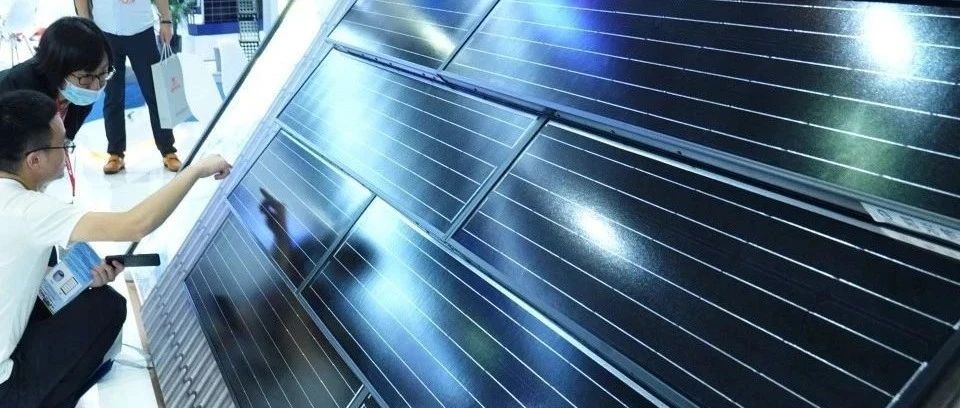
中国光伏行业协会倡议进一步加强行业自律
Xin Hua Wang· 2025-08-22 12:19
Core Viewpoint - The China Photovoltaic Industry Association has issued an initiative to strengthen industry self-discipline and maintain fair competition in the photovoltaic market, which is facing supply-demand imbalances and intensified disorderly competition [1] Group 1: Industry Challenges - The photovoltaic industry is a strategically important emerging industry in China with a global leading advantage [1] - Recent complex factors have led to prominent supply-demand contradictions and intensified disorderly competition, severely hindering high-quality development [1] Group 2: Proposed Initiatives - Companies are urged to resist engaging in malicious competition by pricing below cost [1] - Strict adherence to quality standards is emphasized to eliminate practices such as cutting corners, substandard products, and inflated power ratings [1] - Companies should rationally schedule production based on actual market supply and demand, enhancing production-sales coordination [1] - Compliance with intellectual property protection laws and regulations is mandated [1] - A shift from low-efficiency homogeneous competition to high-quality, high-level competition through innovation is encouraged [1] - Companies are advised to plan overseas investments and market layouts carefully, adhering to international rules and market order while leveraging technological, service, and brand advantages for international cooperation [1] Group 3: Call to Action for Stakeholders - Local governments are called to strictly implement antitrust laws and policies related to the construction of a unified national market [1] - Testing and certification institutions are encouraged to enhance their capabilities and fulfill quality monitoring responsibilities [1] - Media organizations are urged to report rationally and objectively without malicious hype or distortion of facts [1] - Financial institutions are recommended to develop differentiated financial support policies to favor strong and capable companies [1]
华电20GW组件集采均价超0.7元/W,中国光伏行业协会重申加强行业自律
Di Yi Cai Jing· 2025-08-22 11:43
Core Viewpoint - The China Photovoltaic Industry Association (CPIA) proposes that power station companies optimize bidding rules by reducing the weight of price and increasing the weight of technical evaluation in order to combat "involution" in the photovoltaic industry [1][4]. Group 1: Bidding and Procurement - The recent large-scale procurement by China Huadian Corporation for photovoltaic components has a total scale of 20GW, divided into two segments: 18GW and 2GW [1]. - The average bidding price for the first segment has risen to 0.71 yuan/W, exceeding the previously set industry self-discipline bottom price of 0.692 yuan/W, with only a few bids below 0.7 yuan/W [3]. - The first segment requires N-type TOPCon monocrystalline bifacial double-glass components with a conversion efficiency greater than 22.5%, with over 40 companies participating and bidding prices ranging from 0.6464 yuan/W to 0.7518 yuan/W [3]. - The second segment requires high-efficiency N-type TOPCon, HJT, and BC monocrystalline bifacial double-glass components with a conversion efficiency greater than 23.8%, with 26 companies participating and bidding prices ranging from 0.7076 yuan/W to 0.8431 yuan/W [3]. Group 2: Industry Self-Regulation and Legal Compliance - The CPIA emphasizes strict adherence to various laws, including the Price Law and Anti-Monopoly Law, to resist malicious competition through pricing below cost [4]. - The association advocates for companies to optimize bidding rules, reduce price weight, and enhance technical evaluation weight [4]. - A recent meeting involving multiple government departments highlighted the need to curb low-price disorderly competition and establish effective price monitoring and product pricing mechanisms [4][5]. Group 3: Market Dynamics and Future Outlook - Since the third quarter of 2024, relevant national departments have issued documents aimed at exiting inefficient capacity, preventing involution competition, and promoting the construction of photovoltaic bases [5]. - Recommendations include ensuring that winning bid prices do not fall below cost to facilitate an orderly clearing of supply in the photovoltaic sector [5].

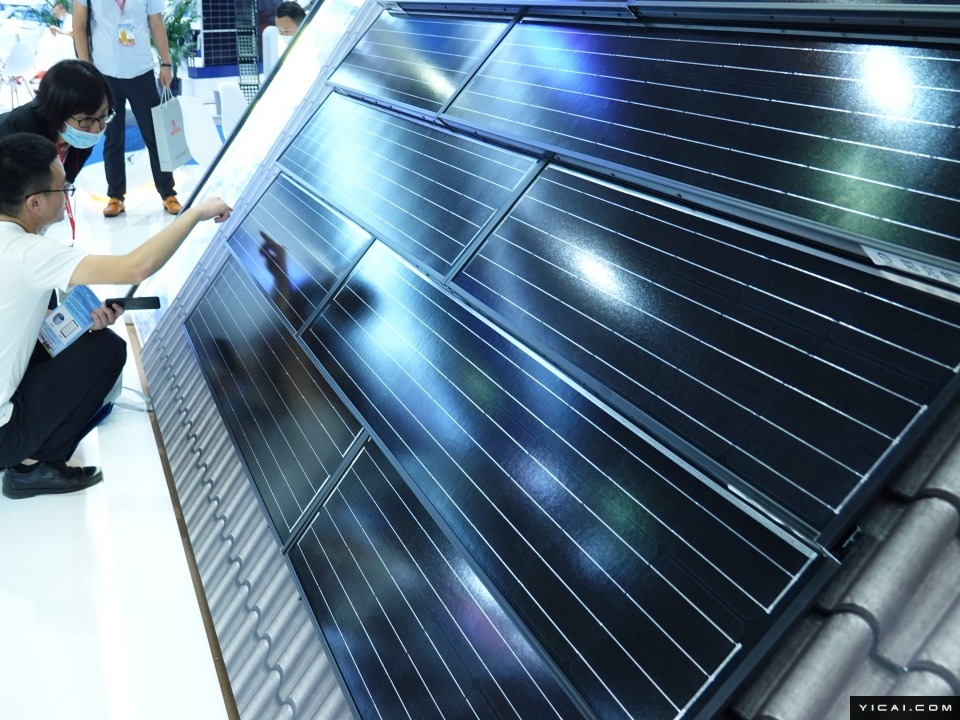
光伏重磅!行业协会最新发声!
Zheng Quan Shi Bao Wang· 2025-08-22 11:39
Core Viewpoint - The China Photovoltaic Industry Association has issued an initiative to strengthen industry self-discipline and maintain fair competition in the photovoltaic market, emphasizing the need to resist malicious competition below cost and uphold quality standards [1][2][3]. Group 1: Industry Self-Regulation - Companies must strictly adhere to laws such as the Price Law, Anti-Monopoly Law, and others, and resist engaging in malicious competition by pricing below cost [1]. - The industry is called to uphold quality and safety standards, avoiding practices like cutting corners or misrepresenting product performance [1][3]. - There is a push for companies to rationally schedule production based on market supply and demand, resisting blind expansion that harms market ecology [1][2]. Group 2: Government and Institutional Support - Local governments are urged to enforce laws related to fair competition and prevent actions that hinder capacity clearing [2]. - Certification and measurement institutions are encouraged to enhance their capabilities and maintain a fair quality monitoring system [2]. - Financial institutions are advised to develop differentiated support policies for the industry, avoiding one-size-fits-all measures [2]. Group 3: Industry Development and Quality Control - A recent meeting involving multiple government departments highlighted the importance of regulating competition for the high-quality development of the photovoltaic industry [3]. - Measures to curb low-price disorderly competition and establish a robust pricing and product monitoring system are emphasized [3]. - The industry is encouraged to support self-regulation and innovation while maintaining quality and safety standards [3].
中国光伏行业协会:坚决抵制以低于成本的价格开展恶性竞争 从同质化低效能竞争转向高质量高水平竞争
Sou Hu Cai Jing· 2025-08-22 10:15
Core Viewpoint - The China Photovoltaic Industry Association has issued an initiative to strengthen industry self-discipline and maintain fair competition in the photovoltaic market, emphasizing the importance of adhering to laws and regulations to foster a healthy market environment [1] Group 1: Compliance with Laws and Regulations - Companies are urged to strictly comply with laws such as the Price Law, Anti-Monopoly Law, Bidding Law, and Anti-Unfair Competition Law, and to resist engaging in malicious competition by pricing below cost [1] - Power station enterprises are encouraged to optimize bidding rules by reducing price weight and increasing the weight of technical evaluations [1] Group 2: Quality and Safety Standards - Companies must adhere to quality safety standards, avoiding practices such as cutting corners, providing substandard products, and falsely advertising power ratings [1] Group 3: Production and Market Dynamics - Enterprises should rationally schedule production based on actual market supply and demand, resisting blind expansion that disrupts market ecology [1] Group 4: Intellectual Property Protection - Companies are required to strictly follow intellectual property protection laws and avoid infringing on others' intellectual property rights [1] Group 5: Innovation and Competition - The industry is encouraged to shift from homogeneous low-efficiency competition to high-quality and high-level competition driven by innovation [1] Group 6: International Cooperation - Companies should plan overseas investments and market layouts in compliance with international rules, leveraging technology, service, and brand advantages to enhance international cooperation and maintain a positive image for the Chinese photovoltaic industry [1]