元宇宙

Search documents
墨拓科技总裁杨宏森:真正的数字文创玩家,永远在“拓界”
Mei Ri Jing Ji Xin Wen· 2025-04-28 09:32
Core Viewpoint - Chengdu is emerging as a significant player in the digital cultural and creative industry, showcasing its unique cultural strengths and innovative capabilities through companies like Sichuan Motuo Digital Technology Co., Ltd. [1][4] Group 1: Industry Trends - The digital cultural and creative industry is characterized by a high degree of integration and cross-industry collaboration, with a focus on expanding industry boundaries through technology and content [5][6] - The rapid evolution of digital economic models and applications, particularly in VR, AR, and XR technologies, is transforming various sectors including culture, tourism, and education [6][8] Group 2: Company Insights - Sichuan Motuo Digital Technology has developed over 20 VR games and holds more than ten patents, emphasizing the importance of original content and technology in establishing a competitive edge [6][8] - The company has collaborated with notable figures in the Chinese science fiction community to develop and transform classic IPs into VR experiences, enhancing its portfolio and market presence [7][8] Group 3: Market Opportunities - Chengdu's rich historical and cultural resources, along with a growing ecosystem of digital cultural and creative enterprises, provide fertile ground for innovation and project development [11][17] - The company is currently preparing a new film project titled "Taiji Panda," which integrates elements of panda culture, Taiji culture, and Jiuzhaigou culture, showcasing the potential for culturally rich content [13][15] Group 4: Future Directions - The integration of digital technology into all aspects of cultural creation and consumption is expected to reshape the content production, user experience, and business models within the industry [17] - Continuous improvement in original content and technology is essential for Chengdu's digital cultural and creative industry to achieve higher levels of development and competitiveness [17][18]


佳发教育(300559) - 300559佳发教育投资者关系管理信息20250428
2025-04-28 07:46
Group 1: Financial Performance - In 2024, the company's operating revenue decreased by 28.87% year-on-year, and net profit fell by 72.23% [2] - Revenue from standardized examination products and overall solutions dropped by 35.91% year-on-year [3] Group 2: Market Challenges and Opportunities - The decline in revenue is attributed to insufficient market demand, project delays, and tightened fiscal budgets in some regions [3] - Despite competition, the company sees opportunities in the education informationization sector due to increased government support and the ongoing reform of admission examinations [3] Group 3: Product Development and Innovation - The company has made significant R&D investments in "AI+" strategies, achieving notable results in various educational scenarios [3] - The company has over 40 core patents and nearly 500 software copyrights, focusing on AI, big data, cloud computing, and other emerging technologies [6] Group 4: Future Plans and Strategic Focus - The company plans to enhance its information management systems based on provincial feedback and expand its business coverage [5] - There are intentions to increase investments in emerging technologies like blockchain and the metaverse, with successful projects already initiated [6]

恺英网络(002517):2025年关注新产品及出海业务
Guotou Securities· 2025-04-27 09:04
Investment Rating - The report maintains a "Buy-A" rating for the company with a target price of 19.6 yuan, reflecting a 20x PE valuation for 2025 [3][5]. Core Insights - The company reported a revenue of 5.118 billion yuan and a net profit of 1.628 billion yuan for 2024, with year-on-year growth rates of 19.16% and 11.41% respectively. For Q1 2025, revenue was 1.353 billion yuan and net profit was 518 million yuan, showing year-on-year growth of 3.46% and 21.57% [1]. - The mobile gaming segment, which accounts for 80% of total revenue, grew by 13.38% year-on-year, although its gross margin decreased by 2.75 percentage points. The overseas business saw a remarkable growth of 222%, albeit with a low revenue contribution of about 7%, and its gross margin improved by 8.53 percentage points [1][2]. - The company has a clear positioning in the gaming industry, focusing on IP games, and has successfully launched new IPs while maintaining classic titles. The overseas expansion strategy is expected to continue driving growth in 2025 [2]. Financial Performance Summary - The company is projected to achieve revenue growth rates of 22.8%, 15%, and 15% for 2025-2027, with net profit growth rates of 29.4%, 15%, and 10% respectively. The expected EPS for these years are 0.98 yuan, 1.13 yuan, and 1.23 yuan [3][8]. - The financial metrics indicate a stable performance with a net profit margin of 34.0% in 2023, projected to be 33.5% in 2025, and a return on equity (ROE) of 27.9% in 2023, expected to decline to 22.6% by 2025 [8][9].

邮票还有未来吗?
Sou Hu Cai Jing· 2025-04-27 02:27
ANTILE WE WE THE T 3 appen 12 ad 11 to 10 - Park of the may 展示的 200 8 驶向未> / 1918 11 121 LAFF LAND ETTE SENA.II CHI 官 Children 7700 危机中总藏着转机。2024年香港发行首枚区块链数字邮票,黄金打造的邮品镶嵌着数字合约地址,限量一万套的藏品三天售罄。这种将传统文化嫁接到元宇 宙的尝试,让邮票从纸质载体进化为可追溯、可互动的数字资产。奥地利、瑞士等国的实践证明,区块链技术不仅能杜绝假票泛滥,还能创造新型收藏场 景。北京马甸邮市近期查获的假猴票案件,恰恰反衬出数字化防伪的迫切性——传统影写版印刷需要20倍放大镜鉴伪,而数字邮票的区块链存证让造假者无 从下手。 文化传承的密码或许藏在方寸之间。当《国家安全教育日》纪念邮票设计稿曝光,590万的发行量引发热议。这个数字相比九十年代动辄三四千万的发行规 模堪称克制,却仍难逃打折命运。邮政的困境恰似传统文化现代转型的缩影:既要保持"国家名片"的庄重,又得迎合市场做文创盲盒。有藏家犀利指 出:"生肖邮票还在画龙,年轻人早就在元宇宙养电子宠物了。" ...

研判2025!中国投影机行业发展历程、产业链图谱、出货量、竞争格局及未来展望:投影机出货量持续增长,消费市场由家用投影机主导[图]
Chan Ye Xin Xi Wang· 2025-04-27 01:25
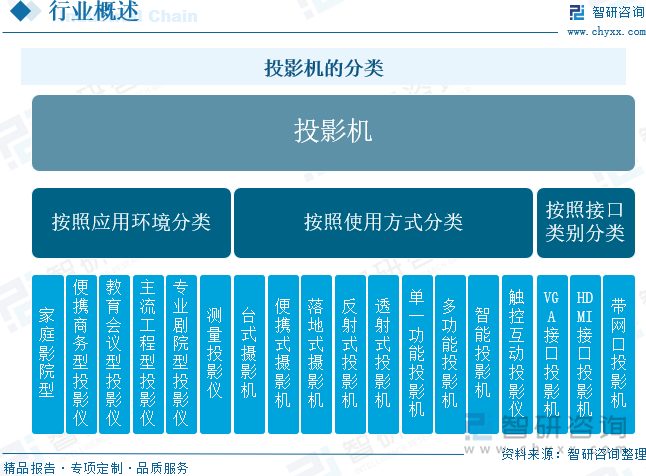
Industry Overview - The projector industry has seen rapid development since 2016, driven by consumer-level penetration, new light source applications, and the expansion of online channels [1][17] - The COVID-19 pandemic significantly impacted the industry in 2020, causing fluctuations in shipment volumes [1][17] - As of 2023, the projector shipment volume in China is expected to grow annually, with an estimated total shipment of approximately 5.5 million units in 2024 and a projected 9.26 million units by 2028 [1][17] Market Structure - The projector market is primarily divided into home and commercial segments, with home projectors accounting for over 80% of the market share in 2024 [18] - The consumer base is becoming younger, leading to increased demand for smart home entertainment solutions [18] Industry Development History - The projector industry in China can be divided into three stages: the embryonic phase (1990-2000), the initial phase (2000-2010), and the rapid development phase (2010-present) [5] - The market for home projectors has grown significantly, with nearly 70% market share in 2022 [5] Industry Chain - The projector industry chain consists of three main segments: upstream (core components like chips and lenses), midstream (manufacturers), and downstream (end-user applications) [7][9] - Upstream suppliers include companies like Rockchip, Allwinner Technology, and Sony, while midstream manufacturers include companies like XGIMI and Fengmi [9] Key Companies - XGIMI Technology has established itself as a leading domestic brand, achieving full-chain self-research capabilities and strong sales performance [21][23] - Other notable companies in the industry include BenQ, Epson, Sony, and Panasonic, which dominate the commercial projector market [21] Market Trends - Online channels are becoming a significant sales avenue for projectors, shifting the consumer structure from B2B to B2C [27] - The consumer market is expected to continue growing, driven by the demand for high-quality home entertainment experiences [28] - New application scenarios, including automotive and AR/VR technologies, are emerging as growth points for the industry [30]






数字政通员工持股计划严重“翻车”!去年四季度业绩突变,多名高管提前组团减持
Mei Ri Jing Ji Xin Wen· 2025-04-25 11:45
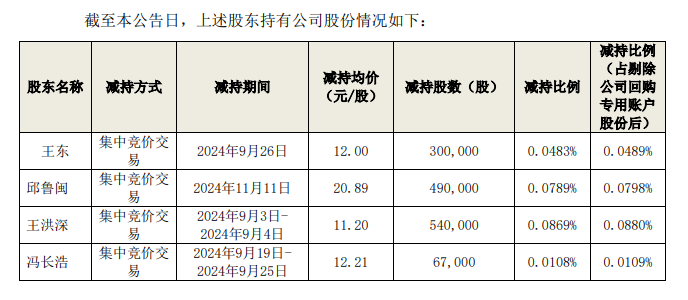
每经记者 章光日 每经编辑 吴永久 数字政通2023年以来员工持股计划连续解锁失败,2024年业绩考核目标为净利润不低于4亿元,但实际却大亏近4亿元!每经资本 眼记者注意到,2024年数字政通的亏损主要集中于第四季度,单季度亏损超过4亿元。从2024年9月份开始,公司高管也开始组团 减持公司股份。此外,数字政通实控人还在筹划大笔转让所持股份。 身处热门的数字经济赛道,数字政通的业绩表现为何如此惨淡?公司高管为何在2024年第四季度集中进行减持?实控人转让股份 进展到了哪一步?接下来每经资本眼记者就来详细探究一番。 连续两期员工持股计划解锁失败 下游客户预算吃紧或为业绩下滑主因 4月22日晚间,数字政通发布了关于2023年员工持股计划第二个解锁期业绩考核目标未达成的公告。该公告显示,第二个解锁期的 业绩考核为2024年公司净利润不低于4亿元,而2024年公司实现净利润为亏损约3.96亿元。 每经资本眼记者注意到,数字政通2023年员工持股计划第一个解锁期业绩考核目标同样未达成。相关公告显示,第一个解锁期的 业绩考核为2023年公司净利润不低于3亿元,而2023年公司实现净利润约为1.34亿元。 2019年至20 ...

星网锐捷2024年度业绩说明会问答实录
Quan Jing Wang· 2025-04-24 07:39
Core Viewpoint - The company, StarNet Ruijie, is focusing on integrating emerging technologies like AI and blockchain into its business strategy, aiming to enhance its position as a leading ICT infrastructure and AI application service provider in China [2][4]. Group 1: Business Strategy and Innovations - The company has adopted a development strategy termed "One Body, Three Wings, Four Engines," which emphasizes becoming a world-class provider of ICT infrastructure and AI application solutions [2]. - The company is actively pursuing AI integration across all business areas, with plans to develop its own industry large model platform for AI applications [2][4]. - Recent achievements include the advancement of the "AIGC Quantitative Analysis Platform" to the finals of the 2025 Digital China Innovation Competition in the AI track [2]. Group 2: Financial Performance - For the fiscal year 2024, the company reported a total revenue of approximately 16.76 billion yuan, representing a year-on-year growth of 5.35% [4]. - Operating profit reached about 550.61 million yuan, an increase of 22.53% compared to the previous year, while total profit rose by 23.96% to approximately 569.17 million yuan [4]. - The net profit attributable to shareholders was approximately 404.62 million yuan, reflecting a decrease of 4.76% year-on-year [4]. Group 3: Supply Chain Management - The company has established a rigorous supplier evaluation and management system to ensure supply chain stability and efficiency, particularly in light of global chip supply constraints [3][5]. - A diversified procurement strategy has been implemented to reduce reliance on single suppliers, ensuring the continuity and stability of procurement [3][5]. Group 4: Market Position and Customer Base - The company's network equipment products are widely used across various sectors, including government, finance, education, healthcare, and manufacturing [5]. - According to IDC data, the company ranks first in market share for Ethernet switches in the domestic internet, education, and retail sectors, as well as for data center switches in the internet and electronic manufacturing industries [5].

研判2025!中国网络视频版权保护行业发展历程、市场规模及重点企业分析:技术革新与政策护航双轮驱动,5G与元宇宙拓展未来新空间[图]
Chan Ye Xin Xi Wang· 2025-04-24 01:31
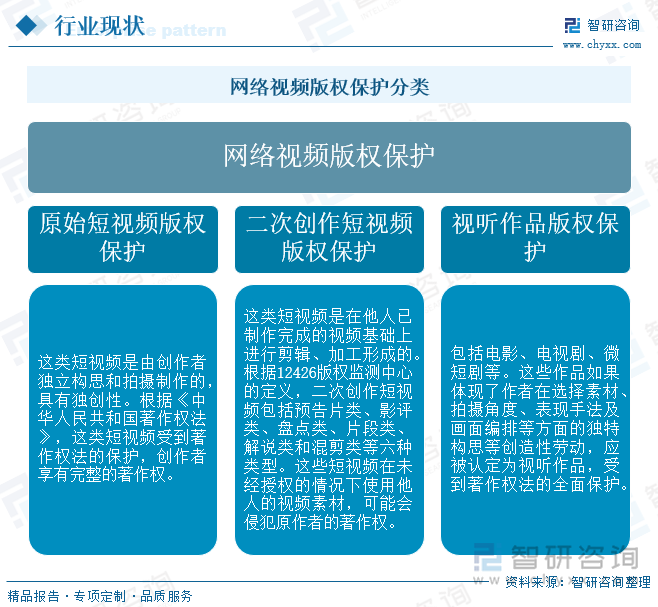
相关企业:上海西嘻影视文化传媒有限公司、北京光线传媒股份有限公司、华谊兄弟传媒股份有限公 司、上海腾讯企鹅影视文化传播有限公司、南京映博影视文化有限公司、北京爱奇艺科技有限公司、北 京金石威视科技发展有限公司、北京数字认证股份有限公司、北京安妮信息技术有限公司、北京快手科 技有限公司、北京微播视界科技有限公司、中国移动咪咕数字传媒有限公司 关键词:网络视频版权保护、网络视频版权保护市场规模、网络视频版权保护行业现状、网络视频版权 保护发展趋势 一、行业概述 网络视频版权保护是指通过法律、技术等手段,保障网络视频作品的创作者、版权持有者对其作品享有 的著作权不受侵犯。这些权利包括但不限于复制权、发行权、信息网络传播权、改编权等。其目的是维 护创作者的经济利益和创作权,同时促进文化产业的健康发展。网络视频版权保护主要包括原始短视频 版权保护、二次创作短视频版权保护、视听作品版权保护等。 内容概况:中国网络视频版权保护行业正迎来快速发展的重要阶段。随着数字技术的不断进步和用户需 求的持续增长,行业市场规模持续扩大,2024年,中国版权网络视频行业市场规模为6083亿元,同比增 长16.00%。技术层面,行业已形成" ...
深圳文交所全国文化大数据交易中心新增线上交易额超200亿元
Zhong Guo Jing Ji Wang· 2025-04-22 17:43
Core Insights - The Shenzhen Cultural Property Exchange has reported that its national cultural big data trading center has achieved over 20 billion yuan in transaction volume this year, marking a 566% year-on-year increase [1] - The center has established itself as a leading platform in the cultural digitalization sector in China, leveraging an innovative internet-based trading model [1][2] - The center aims to address challenges in the trading of cultural assets, such as value assessment difficulties and inadequate trading mechanisms, by implementing a comprehensive service system [3] Group 1 - The national cultural big data trading center has successfully launched over ten application scenario trading sub-platforms, covering various fields including cultural artworks, gold and jewelry, cultural IP, digital certification, and film elements [2] - The Shenzhen Cultural Property Exchange is collaborating with regions like Fujian, Shandong, Shanxi, and Jingdezhen to create unique cultural experience centers, facilitating the digital transformation and industrialization of local cultural resources [2] Group 2 - The comprehensive service system introduced by the Shenzhen Cultural Property Exchange includes data confirmation, registration custody, trading circulation, and scenario application, utilizing blockchain and privacy computing technologies to ensure transaction security [3] - The company plans to continuously optimize its business model and explore the capitalized path for cultural big data elements, aiming to build a core engine for the national cultural big data system [3] - Future initiatives include integrating resources from digital production lines and developing new functionalities such as cultural data intelligent creation and virtual scene interaction, promoting a shift from linear to networked ecosystems in the cultural industry [3]
第二十七届北京科博会进入倒计时,观众可预约观展参会
Xin Jing Bao· 2025-04-22 12:39
4月22日,北京市政府新闻办举行第二十七届中国北京国际科技产业博览会(简称北京科博会)新闻发布会。记者 获悉,本届北京科博会将于5月8日至11日在国家会议中心举办,同期同地还将举办2025北京国际投资贸易洽谈会 (京洽会)。目前,第二十七届北京科博会已进入倒计时,大家可登录北京科博会官方网站或微信公众号,预约 观展参会。 本届北京科博会以"科技引领 创享未来"为主题,聚焦前沿科技、新兴产业和未来产业领域,集中展示北京国际科 技创新中心建设的丰硕成果,深化国际科技开放合作,推动科技创新和产业创新深度融合,促进创新链、产业 链、资金链和人才链有机融通,营造具有国际竞争力的创新生态。 4月22日,北京市政府新闻办举行第二十七届中国北京国际科技产业博览会新闻发布会。首都之窗 李磊 摄 同期同地举办京洽会,突出展洽结合 朱家亮介绍,今年京洽会再次与北京科博会同期举办,旨在搭建国际投资贸易交流平台,展现北京高质量发展机 遇,推动全球产业深度合作。 本届京洽会以"共商 共享 共赢"为主题,突出"展洽结合"——既方便参加京洽会的客商实地考察北京的科技实力, 也为参展商提供了投资洽谈的机会。活动覆盖新一代信息技术、医药健康、智 ...