
脑机接口

Search documents
期待“具身智能”长大成“人”
Xin Lang Cai Jing· 2026-01-12 21:04
Core Insights - The article highlights the rapid growth and commercialization of humanoid robots, marking a significant shift towards integrating robotics into everyday consumer markets [1] - The development of embodied intelligence is driven by continuous advancements in technology and the cultivation of specialized talent in educational institutions [3][4] - The future of the robotics industry is characterized by the emergence of new job roles and the need for innovative talent to address the challenges of technology implementation [4] Group 1: Industry Developments - Humanoid robots have gained popularity since their debut at the CCTV Spring Festival Gala, with the first offline store of Yuzhu Technology opening in 2025, showcasing robots to consumers [1] - Research at Nanjing University of Science and Technology focuses on enhancing the movement capabilities of robots, including bipedal and quadrupedal designs, to improve their computer vision and motion control [1][2] - The Jiangsu region is witnessing a surge in the development of various advanced technologies, including brain-computer interfaces and quantum technology, alongside embodied intelligence [4] Group 2: Talent Development - Universities in Jiangsu are actively cultivating talent in embodied intelligence, with programs integrating various disciplines such as artificial intelligence, robotics, and biomedical engineering [3] - The establishment of new academic programs, such as the "Embodied Intelligence Engineering Technology" undergraduate major, reflects a systematic approach to building a skilled workforce [3] - Companies are seeking creative and responsible talent, including roles like "embodied intelligence architect" and "interaction designer," to drive innovation in the robotics sector [4] Group 3: Future Perspectives - The article emphasizes that while humanoid robots can enhance human capabilities, they are not merely replacements for human labor but partners in expanding human potential [5] - The ongoing evolution of embodied intelligence is expected to reshape daily life, with engineers and robots evolving together to create a more integrated future [5]
政策资本双轮驱动 脑机接口技术落地与商业化提速并进
Zhong Guo Zheng Quan Bao· 2026-01-12 20:49
Core Insights - The brain-computer interface (BCI) industry in China is experiencing significant advancements, with clinical results emerging for high-level paraplegics and substantial funding rounds, including a recent 2 billion yuan investment in a non-invasive unicorn company, Strong Brain Technology, marking the second-largest funding record globally in this field [1][2] - The industry is poised for rapid commercialization, driven by technological breakthroughs, capital influx, and supportive policies, as it transitions from cutting-edge technology to practical applications in daily life [1][5] Technological Breakthroughs - Recent advancements in BCI technology include successful clinical trials for invasive systems, enabling high-level paraplegics to control smart wheelchairs and robotic dogs [2][3] - Companies like JieTi Medical and Chip Intelligence have made significant progress, with JieTi completing trials for its invasive BCI system and Chip Intelligence's semi-invasive product achieving human implantation [2][3] - The first clinical trial of a fully implanted, wireless BCI product by Brain Tiger Technology has shown promising results, allowing an 8-year paraplegic patient to achieve thought control just five days post-surgery [2][3] Policy and Capital Support - The BCI sector benefits from comprehensive policy support, including its designation as one of the six future industries in the 14th Five-Year Plan, which elevates it to a national strategic priority [5][6] - Recent initiatives by the Sichuan provincial medical insurance bureau have established pricing for 82 neuro-related medical services, including BCI applications, facilitating clinical adoption [5][6] - The establishment of industry standards by the National Medical Products Administration is expected to lower costs and risks associated with technology development and clinical application [6] Industry Collaboration and Investment - Companies like Baiyang Pharmaceutical are actively collaborating with academic institutions to explore the integration of BCI with artificial intelligence, aiming for innovative clinical solutions [7] - Other listed companies are also engaging in the BCI space through material supply and equipment development, indicating a strong interest from institutional investors [7] Future Development and Challenges - The BCI industry is anticipated to move towards standardization and scalability, with initial industry standards expected to be established by 2027-2028 [8] - Potential constraints include the pace of chip design and production, as well as the need for ethical regulations regarding personal brain data [8] - Despite these challenges, the domestic BCI industry holds significant advantages, including strong policy support, a vast clinical resource base, and a comprehensive supply chain [8] Investment Opportunities - The BCI sector presents a dual investment opportunity in both medical and technological domains, with short-term focus on disease treatment and long-term potential for enhancing human capabilities through integration with AI and robotics [9] - The industry is positioned to cultivate leading global BCI companies, fostering a capital-innovation synergy between primary and secondary markets [9]



北京昌平构筑脑机接口产业高地
Zhong Guo Zheng Quan Bao· 2026-01-12 20:45
Core Viewpoint - Changping District aims to establish a distinctive brain science and brain-computer interface (BCI) industrial cluster by the end of the 14th Five-Year Plan, enhancing its innovation capabilities and comprehensive strength to reach international standards, thus becoming a new growth pole for high-quality regional development [1] Policy and Financial Collaboration - Changping District has introduced the first action plan for the development of brain science and BCI industries in Beijing, creating a "three-level linkage" support system that aligns with national and municipal policies, targeting a scale of a 10 billion yuan industry cluster by 2030 [1][2] - The district has launched various policy measures focusing on technological innovation, enterprise aggregation, and ecosystem construction, providing comprehensive services for innovation entities [2] - A 300 million yuan special fund for brain science and BCI has been established through a partnership between Changfa Group and Daoyuan Capital, promoting a diversified investment model [2] Innovation and Industry Integration - Changping District plans to implement key initiatives in the BCI sector by 2025, including the establishment of the first district-level industrial cluster and park for brain science and BCI in Beijing [3] - The district is developing an "one core one city" industrial layout, with the Zhongguancun Life Science Park as the core for enterprise incubation and achievement transformation [3] Application Potential and Breakthroughs - The BCI sector shows significant application potential in healthcare, wellness, industrial safety, education, and smart living, with Changping District achieving notable breakthroughs in line with the strategic deployment of the 14th Five-Year Plan [4] - Leading companies such as Galaxy Fangyuan and Chipwise have made significant advancements in treating diseases like Parkinson's and Alzheimer's, with innovative products like the "North Brain No. 1" BCI device being recognized as a top innovation [4] Development Plans and Future Initiatives - Changping District has seen the establishment of 28 key enterprises in the BCI sector, forming a collaborative ecosystem that integrates clinical needs, technology research, and product commercialization [5] - Future plans for 2026 include implementing policies to support the BCI industry, accelerating the construction of the industrial cluster, attracting relevant enterprises, and enhancing the investment environment [6]
政策资本双轮驱动脑机接口技术落地与商业化提速并进
Zhong Guo Zheng Quan Bao· 2026-01-12 20:45
Core Insights - The brain-computer interface (BCI) industry in China is experiencing significant advancements, with clinical results emerging for high-level paraplegics controlling devices through thought, and strong financing support from unicorn companies like Strong Brain Technology, which raised approximately 2 billion yuan, marking the second-largest funding record globally in this field [1][2] - The industry is positioned for rapid commercialization, driven by technological breakthroughs, capital influx, and supportive policies, as it transitions from cutting-edge technology to practical applications in daily life [1][2] Technological Breakthroughs - Recent advancements in the BCI field include successful clinical trials for invasive BCIs, with patients able to control smart wheelchairs and robotic dogs, showcasing the technology's potential for enhancing autonomy in daily life [2] - The development of high-throughput wireless invasive BCI systems has been achieved, with significant reductions in signal transmission delays to under 100 milliseconds, facilitating practical applications beyond laboratory settings [2] Market Demand and Application - The initial target demographic for BCI technology includes patients with conditions such as stroke, epilepsy, Parkinson's disease, and paralysis, who show strong willingness to try and pay for early products, indicating a broad medical market potential [3] - Current clinical applications focus on restoring motor and speech functions, with significant progress in motor rehabilitation for patients with spinal cord injuries and strokes, as well as breakthroughs in speech function restoration for patients with severe speech disorders [3] Policy and Capital Support - The BCI industry benefits from comprehensive policy support, including its designation as one of the six future industries in the 14th Five-Year Plan, and specific initiatives from various government departments to promote innovation and development in the sector [4][5] - Recent policy changes in regions like Sichuan have established clear pricing for BCI medical services, enhancing the financial viability of these technologies and facilitating their clinical application [4] Industry Standardization and Future Outlook - The BCI industry is expected to move towards standardization and scalability, with preliminary industry standards anticipated to be established by 2027-2028, paving the way for broader application and brand emergence by 2030 [6][7] - The domestic BCI industry possesses significant advantages, including strong policy support, a vast clinical resource base, and a complete supply chain, which collectively foster the industry's growth [7] Investment Opportunities - The BCI sector presents dual investment attributes in both medical and technological domains, with short-term focus on disease treatment and long-term potential for enhancing human capabilities through integration with AI and robotics, potentially unlocking a trillion-yuan market [7]
创新医疗管理股份有限公司股票交易异常波动公告
Shang Hai Zheng Quan Bao· 2026-01-12 18:12
Core Viewpoint - The stock of Innovation Medical Management Co., Ltd. has experienced abnormal trading fluctuations, with a cumulative closing price increase exceeding 20% over three consecutive trading days [2]. Group 1: Stock Trading Abnormalities - The company's stock (abbreviated as Innovation Medical, stock code: 002173) has shown a significant price deviation, qualifying it as an abnormal trading situation according to Shenzhen Stock Exchange regulations [2]. - The company has confirmed that there are no corrections or supplements needed for previously disclosed information [3][7]. Group 2: Company Verification and Operations - The company has verified with its controlling shareholders, actual controllers, directors, and senior management regarding the stock price fluctuations and found no undisclosed significant information affecting the stock price [3][4]. - There have been no major changes in the company's production and operational environment recently [4]. - The company and its controlling shareholders have not engaged in any stock trading during the period of abnormal fluctuations [6]. Group 3: Business Focus and Financial Performance - The company has noted increased market interest in its brain-computer interface business, particularly through its subsidiary, Boling Brain Machine (Hangzhou) Technology Co., Ltd., which was established in early 2021 and included in the consolidated financial statements in August 2025 [6]. - The main products are aimed at rehabilitation training for patients with cerebrovascular diseases, with the product "Cyberlink AC5" launched in October 2025 generating revenue of 114,000 yuan in that year [6]. - The company reported operating losses of 6.60 million yuan and 8.66 million yuan for the years 2023 and 2024, respectively [6].
成都一批重大项目开年“交卷”
Xin Lang Cai Jing· 2026-01-12 18:00
Group 1: Major Projects and Developments - Sichuan Celebrity Museum plans to complete exhibition layout and operations by Q1 2026 [3][12] - The Central Performing Arts Theater in Chengdu is nearing completion, aiming for acceptance before the Spring Festival [5][11] - The Pengzhou National Fitness Center is expected to be basically completed before the Spring Festival [7][15] Group 2: Technological Advancements - The establishment of Gestalt (Chengdu) Technology Co., the first company in China focusing on ultrasound brain-computer interface technology, marks a new technological path in this field [9][10] - Chengdu is accelerating the application of brain-computer interface technology, with several companies and a dedicated industrial park already in place [10] - The domestic first fusion technology innovation city in Sichuan has completed the main construction of its research base, with key laboratories expected to be operational by 2025 [10] Group 3: Cultural Infrastructure - The Central Performing Arts Theater will serve as a multifunctional cultural complex, enhancing cultural experiences for citizens [11] - The Sichuan Celebrity Museum will provide immersive experiences related to 70 historical figures from Sichuan, with a focus on cultural expression through its architectural design [12] Group 4: Economic Growth and Headquarters Establishment - Chengdu has seen a significant influx of headquarters, with 22 out of 31 new headquarters enterprises in Sichuan located in the city, reflecting a strong business environment [14][15] - The establishment of numerous headquarters is enhancing Chengdu's industrial chain and overall economic vitality, contributing to high-quality development [15]


工信部部长李乐成:“十五五”时期将聚焦量子科技、人形机器人、脑机接口、深海极地、6G等领域 加强技术攻关、企业培育等
Xin Lang Cai Jing· 2026-01-12 17:32
Core Insights - The Ministry of Industry and Information Technology, led by Minister Li Lecheng, aims to focus on achieving new industrialization during the "14th Five-Year Plan" period, emphasizing high-quality development and the intelligent, green, and integrated advancement of manufacturing [1] Group 1: Traditional Industry Revitalization - The government plans to implement a "traditional industry revitalization action" to enhance and upgrade traditional industries, which are considered the foundation of a modern industrial system [1] - An "Artificial Intelligence +" initiative will be launched to explore the creation of zero-carbon factories and parks [1] Group 2: Emerging Industry Acceleration - The government will promote the growth of emerging industries as new pillars and engines for industrial upgrading, establishing national demonstration bases for emerging industry development [1] - Large-scale application demonstrations of new technologies, products, and scenarios in manufacturing will be accelerated to facilitate the scaling up of emerging industries [1] Group 3: Future Industry Layout - There will be a focus on strengthening forward-looking layouts and planning, establishing mechanisms for future industry investment growth and risk sharing [1] - Key areas of focus include quantum technology, humanoid robots, brain-computer interfaces, deep-sea and polar exploration, and 6G technology, with an emphasis on technological breakthroughs, product development, enterprise cultivation, and ecosystem construction [1] Group 4: Service-oriented Manufacturing Development - The innovation and development of service-oriented manufacturing are seen as crucial for enhancing the overall efficiency of the industrial system [1] - The government will promote technological, model, and product innovations, fostering new models such as platform design and personalized customization, while expanding flexible production and cloud manufacturing [1]

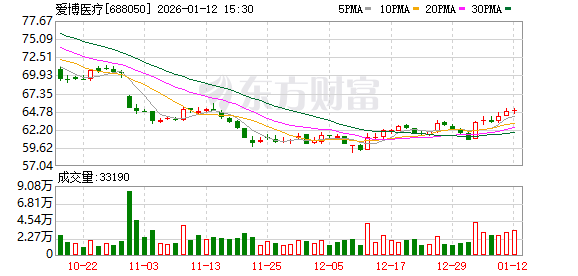
爱博医疗:公司中长期发展目标聚焦于眼科全系列医疗产品的开发和应用
Mei Ri Jing Ji Xin Wen· 2026-01-12 15:53
Core Viewpoint - The company, Aibo Medical, does not currently have products in the brain-computer interface (BCI) field and is focusing on the development and application of a full range of ophthalmic medical products for its medium to long-term development goals [2] Group 1 - The company responded to an investor inquiry regarding its technological reserves and long-term plans in the brain-computer interface area [2] - Aibo Medical's current product offerings do not include any involvement in the brain-computer interface sector [2] - The company's strategic and product pipeline planning will be aligned with its long-term development goals in ophthalmology [2]

【公告全知道】商业航天+卫星导航+AI营销+机器人!公司深耕互联网数字营销生态圈并得到小红书等行业头部客户认可
财联社· 2026-01-12 15:43
Group 1 - The article highlights the importance of weekly announcements from Sunday to Thursday at 22:00, which include significant stock market updates such as suspensions, investments, acquisitions, and performance reports, helping investors identify potential opportunities and risks [1] - A company specializing in internet digital marketing has gained recognition from leading clients like Xiaohongshu, launching multiple AI application robots [1] - Another company has set a target for AI revenue between 500 million to 600 million yuan by 2026, focusing on AI, cloud computing, and low-altitude economy [1] - A company involved in brain-computer interfaces and AI pharmaceuticals aims to achieve revenue exceeding 110,000 yuan from its brain-computer interface products by 2025 [1]

信披“蹭热点”,合规是底线
Bei Jing Shang Bao· 2026-01-12 15:26
不合规的热点信披其实是在"忽悠"投资者,严重误导投资者的交易决策,人为放大了投资者的投资风 险。 从市场生态角度看,不合规的热点信披很容易导致过度的投机炒作,进而破坏市场的价值发现机制,导 致资源配置扭曲。如果资金从货真价实的公司流向"讲故事"的企业,很有可能形成"劣币驱逐良币"。长 期而言,将削弱资本市场服务实体经济的能力。 在资本市场中,每当新技术、新概念兴起,总有一些上市公司试图通过模糊性陈述、选择性披露或夸大 性宣传制造与热点的关联性,进而刺激股价。但是,不合规的信披行为不仅违背了信息披露"真实、准 确、完整、及时"的基本原则,更动摇了资本市场的诚信基础。 热点信息披露违规往往以多种形式呈现,最常见的是上市公司通过"蹭热点"的行为刻意迎合市场情绪, 制造虚假繁荣,诱导投资者跟风买入。诸如,个别上市公司通过公告、互动易平台或媒体采访,暗示自 身业务与市场热点存在关联,但实际关联度极低。 还有一些上市公司面对热点选择性披露。在披露与热点相关信息时,只强调积极因素,回避、淡化风险 与不确定性。在遭到监管层的进一步追问之后,才被动地披露更多风险信息,令投资者措手不及。 更隐蔽的是"重大遗漏"。个别上市公司在发 ...