
全域旅游

Search documents
辉煌60载 魅力新西藏丨盐田致富路 古道换新颜
Yang Shi Xin Wen Ke Hu Duan· 2025-08-09 13:55
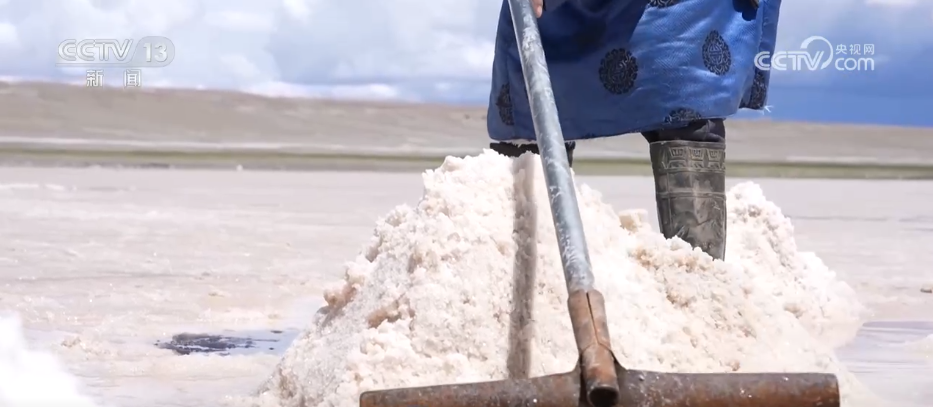
Core Viewpoint - The development of the salt industry in Tsakha Township, Ali Region, marks a significant transformation from traditional practices to modern industrialization, contributing to local economic growth and community prosperity [1][3][9]. Industry Development - The salt mining resource known as "Zhangcang Sanhu" in Tsakha Township has historical significance, with traditional salt transportation using sheep, where each sheep could carry approximately 20 pounds of salt [3]. - In 2018, a salt processing plant was established with an investment of over 3.65 million yuan, initiating the modernization of the salt industry in the region [3][5]. - The salt industry in Tsakha Township has evolved into a complete industrial chain, including salt extraction, processing, and sales, with innovative products like foot therapy salt and hot compress salt enhancing the value of salt [5][7]. Economic Impact - From 2019 to 2024, Tsakha Township sold a total of 870 tons of salt, generating over 4.25 million yuan in sales revenue and achieving a net income of 2.78 million yuan [9]. - The salt industry has created employment for 593 individuals, with total wages amounting to approximately 1.16 million yuan [9]. - Local families have benefited from collective investment in the salt industry, with average annual incomes reaching over 20,000 yuan for some households [9]. Future Prospects - Tsakha Township is planning to further develop the "Salt Sheep Ancient Road" as a cultural tourism project, leveraging local historical and cultural resources to attract visitors [11][13]. - The establishment of tourism facilities, such as a comprehensive service center and cultural experience center, aims to enhance the tourism experience and promote the region's cultural heritage [11].

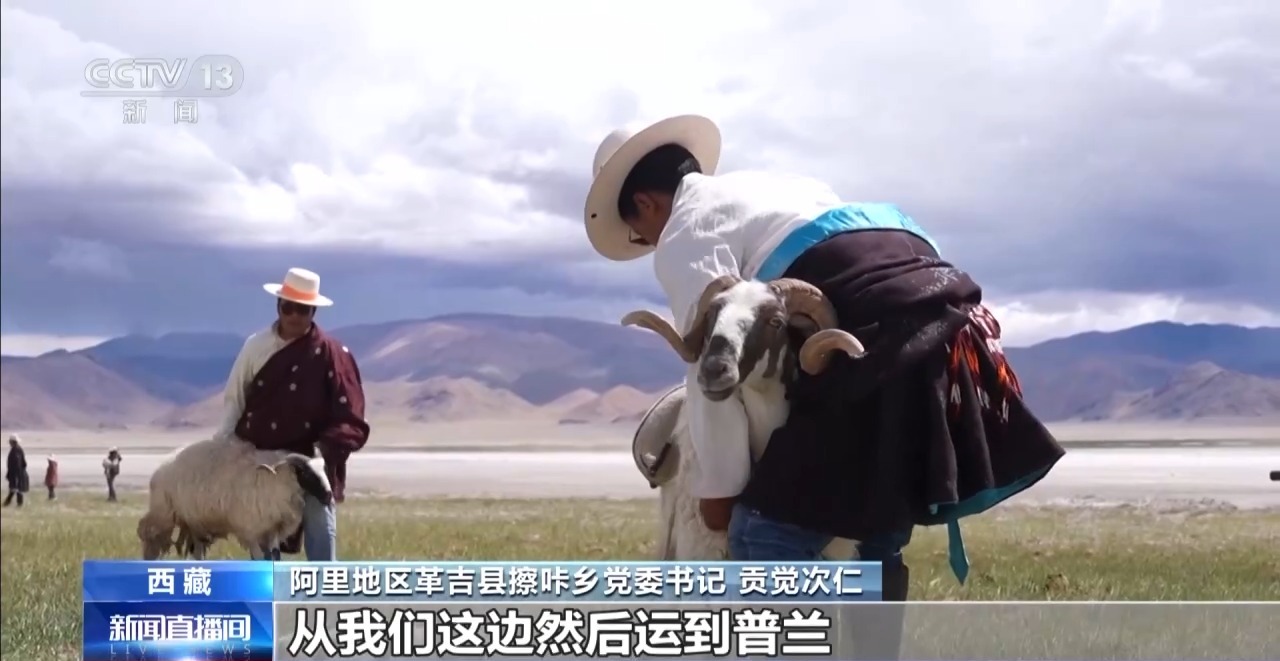
辉煌60载 魅力新西藏 | 千年“盐羊古道”焕发新生机 “文旅+”再辟乡村振兴路
Yang Shi Wang· 2025-08-09 03:33
Core Viewpoint - The development of the salt industry in Zhakang Township, Ali Region, Tibet, showcases the economic and social achievements of the region, transforming traditional practices into a modern industry while preserving cultural heritage [1][3]. Industry Development - The salt industry in Zhakang Township has transitioned from traditional salt collection to a modernized processing approach, with an investment of over 3.65 million yuan in a coarse salt processing factory established in 2018, creating a complete salt industry chain from collection to sales [3]. - From 2019 to 2024, Zhakang Township has sold a total of 870 tons of salt, generating over 4.25 million yuan in sales revenue and achieving a net income of 2.78 million yuan [7]. Economic Impact - The development of the salt industry has led to increased income for local residents, with over 2,000 villagers benefiting from collective shareholding in the cooperative, resulting in an average annual household income exceeding 20,000 yuan [5]. - Employment opportunities have been created, with 593 individuals working in the salt fields, receiving approximately 1.16 million yuan in wages [7]. Cultural and Tourism Development - Zhakang Township is planning to enhance the "Salt Sheep Ancient Road" tourism development, leveraging local historical and cultural resources to create a new tourism brand, including the establishment of a tourism service center and cultural experience center [10].
河南淅川:“采摘经济”带火乡村游
Zhong Guo Jing Ji Wang· 2025-08-06 02:15
Core Insights - The development of the Bodhi Orchard in Xichuan County showcases the successful integration of "fruit picking live streaming + offline experiences," attracting numerous visitors and enhancing the connection between high-quality agricultural products and consumers [1] - Xichuan County is focusing on ecological fruit industries and comprehensive tourism development, leveraging its status as a key water source area to promote sustainable economic growth and improve local livelihoods [1][2] Group 1: Tourism Development - The county aims to create a comprehensive tourism demonstration zone by enhancing key tourist attractions and infrastructure, establishing a forest landscape pattern that integrates urban and rural areas [2] - Significant investments totaling 1.28 billion yuan have been made to develop 230,000 acres of specialty fruit, creating a year-round ecological landscape [2] Group 2: Economic Impact - In the first half of 2025, Xichuan County received a total of 5.725 million visitors, generating over 4.78 billion yuan in tourism revenue [3]
驴迹科技盘中最低价触及0.180港元,创近一年新低
Jin Rong Jie· 2025-08-05 09:08
Group 1 - The stock price of Lujitech (01745.HK) closed at HKD 0.185 on August 5, down 2.12% from the previous trading day, with an intraday low of HKD 0.180, marking a new low in nearly a year [1] - The company experienced a net outflow of HKD 1.4473 million in capital on the same day, with no significant inflow or outflow reported [1] - Lujitech was established in December 2013, focusing on scenic and comprehensive tour guidance, developing tour guide software and systems, and related tourism services [1] Group 2 - The company has developed a tourism ecosystem supported by online electronic guidance and smart management services, becoming a global expert in smart tourism solutions [1] - As of December 31, 2022, Lujitech has developed 46,917 online electronic guides for tourist attractions, including 297 AAAAA-level and 2,734 AAA-level scenic spots in China [1] - Lujitech actively responds to national policies on "smart tourism" and "comprehensive tourism," collaborating with Tencent and Amap on projects like "One Mobile Phone to Travel Yunnan" and "Future Scenic Spots" [2]
赴一场山海寻味之旅
Jing Ji Ri Bao· 2025-08-02 00:36
Core Insights - The article highlights the successful hosting of the "Eat in Fuding: Drunk in Mountains and Seas" food festival, which attracted over 300,000 visitors and aimed to establish Fuding as a nationally influential food culture brand [1] - Fuding City, recognized as China's first food landmark city, boasts a rich culinary heritage with 378 local snack varieties, of which 104 have been awarded national recognition [1] - The food industry in Fuding is projected to generate over 6 billion yuan in comprehensive output value in 2024, creating nearly 100,000 jobs [1] Group 1: Tourism and Cultural Integration - Fuding's unique geographical location and rich cultural landscape enhance its appeal as a tourist destination, offering visitors a blend of culinary experiences and scenic beauty [2] - The city has developed a "tourism + food" model to leverage the "spillover effect" of its culinary offerings, driving overall tourism growth [1][2] - The revitalization of historical areas, such as the Xianpu Village, has transformed them into cultural tourism hotspots, attracting visitors to explore ancient architecture and local traditions [3][4] Group 2: Economic Impact and Visitor Engagement - In the first half of the year, Fuding received 5.68 million tourists, generating a tourism revenue of 7.11 billion yuan [5] - The integration of food, nature, and culture in Fuding's tourism strategy has led to increased visitor engagement and spending, benefiting local communities [4][5] - The establishment of modern accommodations, such as the Xianpu Mountain House, has enhanced the visitor experience by combining traditional architecture with contemporary design [3][4]
暑期经济一线观察丨一条街,点亮东北小城“夜经济”
Xin Hua She· 2025-07-29 12:21
Group 1 - The core viewpoint of the article highlights the vibrant development of the Northeast Night City in Meihekou, Jilin Province, which has become a significant driver for local economic growth and tourism [2][4][6] - The Northeast Night City covers an area of 40,000 square meters and consists of five main sections, featuring over 200 businesses in dining, intangible cultural heritage, and entertainment since its operation began in 2021 [4][6] - The success of the Northeast Night City reflects the local government's efforts to innovate and enhance the night economy, transforming "night vitality" into a new driving force for county development [6] Group 2 - The bustling atmosphere of the Northeast Night City has positively impacted nearby attractions such as Zhibei Village and Hailong Lake Park, contributing to their rapid development [6] - As a national all-area tourism demonstration zone, Meihekou City has implemented a "22°C summer retreat" theme, organizing unique events like the college student music competition and the Meihe Summer Festival to create a new ecological experience for summer tourism [6]

雪域高原旅游热 家门口就业路子宽(辉煌60载 魅力新西藏)
Ren Min Ri Bao· 2025-07-28 22:03
Core Viewpoint - The development of transportation infrastructure in Tibet has significantly boosted tourism, leading to increased visitor numbers and economic benefits for local communities [2][3][4]. Group 1: Tourism Development - The Sapu Scenic Area in Tibet has been officially recognized as a national 4A-level tourist attraction, reflecting comprehensive upgrades in tourism services and facilities [1]. - In 2022, the number of tourists in Benba County exceeded 300,000, generating tourism revenue of 34.54 million yuan, a year-on-year increase of 225.84% [3]. - The completion of the Shagongla Mountain Tunnel has improved access to Tibet, resulting in a doubling of vehicle and tourist traffic in the region [2]. Group 2: Economic Impact - Local residents are experiencing increased income opportunities, with many benefiting from the sale of local products such as yak meat and cordyceps due to improved transportation [2]. - The establishment of family-run guesthouses has become a profitable venture for locals, with some households earning an additional 50,000 to 100,000 yuan annually [7]. - The local government has invested 2.26 million yuan in supporting the renovation of guesthouses and purchasing necessary equipment for tourism [7]. Group 3: Ecological Considerations - The local government is implementing ecological protection measures in the Sapu Scenic Area, creating 36 positions for environmental protection, which also provides employment for local residents [5]. - The promotion of cultural and ecological tourism is part of a broader strategy to integrate tourism with agriculture, transportation, and commerce, enhancing the overall tourism experience while preserving the environment [4].
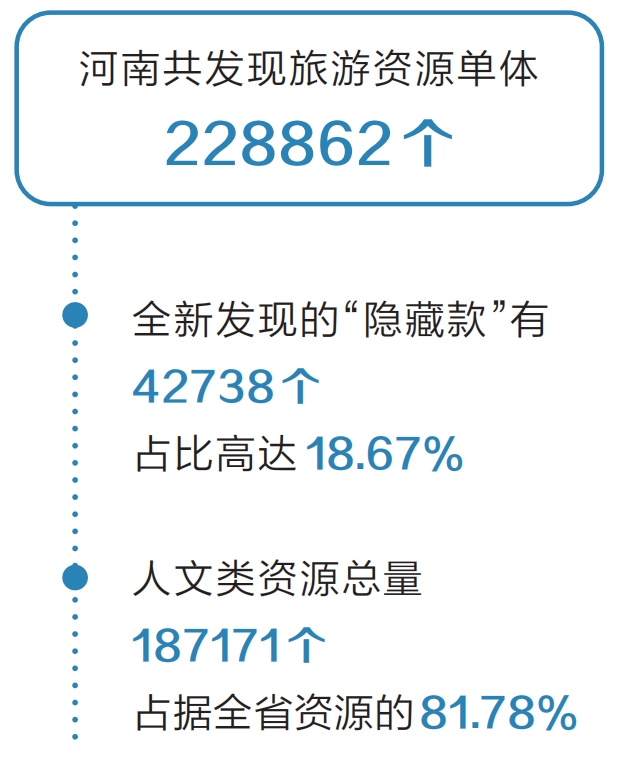
河南旅游资源普查登记完成,新发现超4万个“隐藏款” 亮亮咱的文旅家底儿
He Nan Ri Bao· 2025-07-27 23:29
Core Insights - The tourism resource survey in Henan province revealed a total of 228,862 tourism resources, with 42,738 newly discovered resources, accounting for 18.67% of the total [2] - Cultural resources dominate the survey results, with 187,171 humanistic resources making up 81.78% of the total, highlighting Henan's rich cultural heritage [2] - Key tourism resources are concentrated in the Yellow River, Taihang Mountains, Funiu Mountains, and Dabie Mountains regions, which hold over 81.88% of the province's high-quality tourism resources [2] Resource Development Strategy - The survey aims to clarify the direction for tourism resource development, focusing on cultural tourism, ecological tourism, rural tourism, and red tourism to convert resource advantages into economic benefits [2][3] - The spatial layout will prioritize the "One River and Three Mountains" area to establish a comprehensive tourism development framework [3] - The development of tourism products will be aligned with visitor demands, aiming to create unique and internationally competitive tourism offerings [3] Future Utilization of Survey Results - The next steps involve adopting a new perspective on resources, incorporating new tourism development values such as industrial heritage, sports events, and technology experiences [3] - A dynamic updating mechanism for tourism resources will be established to facilitate cross-temporal and spatial integration and utilization [3] - There will be an emphasis on breaking down the boundaries of tourism resources, promoting integration with culture, agriculture, industry, sports, and health sectors to foster new business models and products [3]
红旗渠精神发祥地如何从贫困山区变成幸福家园?
Zhong Guo Huan Jing Bao· 2025-07-24 00:25
Core Viewpoint - Linzhou City has transformed from a poverty-stricken mountainous area to a tourism destination by prioritizing ecological development and implementing the concept of "lucid waters and lush mountains are invaluable assets" [1][8]. Environmental Governance - Linzhou has initiated systematic restoration and enhancement of its natural environment, achieving over 95% effective rural waste management through a market-oriented cleaning model combined with community participation [2]. - The city has engaged 1.56 million people in a "Clean Home" campaign, clearing 865,000 tons of waste and planting 480,000 trees, while also completing toilet renovations for 92% of rural households [2]. - The "All-region Greening" plan has increased forest coverage to 47%, with 1.71 million acres of forest land, including 300,000 acres of economic forest [2]. Resource Recycling - Linzhou has creatively repurposed traditional stone structures from demolished buildings into park landscapes, preserving cultural memory while reducing construction costs [3]. - The city has transformed 1,100 hectares of abandoned homesteads into gardens and orchards [3]. Ecological Industry Development - Linzhou has strategically developed unique ecological industries, facilitating the conversion of "green mountains and clear waters" into economic benefits [4]. - The chrysanthemum industry has been established in Tea Shop Town, generating an annual output of approximately 10 million kilograms and contributing over 35 million yuan to local farmers [4]. - The under-forest economy has been developed by utilizing forest resources for medicinal herbs, generating over 1 million yuan in annual income from 300 acres of medicinal plants [4]. Slope Economy - Linzhou has introduced favorable policies for slope land development, leading to the transformation of 1,500 acres of wasteland into terraced fields for walnut and apple cultivation, providing over 80 jobs [5]. Cultural and Tourism Integration - Linzhou has built a comprehensive tourism system leveraging the Red Flag Canal spirit and the natural resources of the Taihang Mountains, establishing a 5A-level tourist area [6][7]. - The city has developed over 470 boutique homestays, transforming traditional villages into popular tourist destinations [8]. - The integration of tourism and industry aims to achieve a modern industrial system, focusing on high-end, intelligent, and green development [8].
九华旅游: 安徽九华山旅游发展股份有限公司2025年度向特定对象发行A股股票募集说明书(修订稿)
Zheng Quan Zhi Xing· 2025-07-23 14:18
Company Overview - Anhui Jiuhuashan Tourism Development Co., Ltd. is planning to issue A-shares to specific investors, including its controlling shareholder, Wenlv Group, with a maximum issuance of 33,204,000 shares, not exceeding 30% of the total share capital before the issuance [2][3] - The company has a registered capital of 110.68 million yuan and was established on December 27, 2000, with its shares listed on the Shanghai Stock Exchange since March 26, 2015 [7][8] Financial Information - As of March 31, 2025, Wenlv Group holds 29.93% of the company's shares, making it the controlling shareholder, while the actual controller is the State-owned Assets Supervision and Administration Commission of Chizhou City [8] - Wenlv Group reported total assets of approximately 573.99 million yuan and net profit of about 7.84 million yuan for the first quarter of 2025 [8] Business Operations - The company primarily operates in the tourism service industry, including hotel services, cable car operations, passenger transport, and travel agency services [9][10] - The company relies heavily on the tourism resources of Jiuhua Mountain, and any adverse events affecting the area could negatively impact its business [5] Risk Factors - The company faces risks related to the renewal of its passenger transport exclusive rights, which are crucial for its operations within the Jiuhua Mountain scenic area [3] - Ongoing hotel renovation projects may lead to temporary declines in hotel revenue and profits during the construction period [4] - Regulatory changes regarding ticket pricing and service fees could adversely affect the company's financial performance [4] Industry Characteristics - The tourism industry in China is regulated by various government bodies, with the Ministry of Culture and Tourism overseeing national policies and local tourism bureaus managing regional operations [9][10] - The industry is characterized by a combination of government regulation and self-discipline, with a focus on sustainable development and the protection of natural resources [9][10]
