
合成生物学

Search documents
麦得发完成B轮融资!两大百亿医药企业已入局
合成生物学与绿色生物制造· 2026-01-11 13:00
Core Viewpoint - Zhuhai Maidefa Biotechnology Co., Ltd. (referred to as "Maidefa") has successfully completed a Series B financing round, which is a recognition of its technological strength and market prospects, as well as an important step in accelerating its industrialization process [2][6]. Group 1: Financing Events - Maidefa completed its angel round financing in March 2021, followed by a Series A financing of tens of millions of RMB in May 2022, and a Series A+ financing of several tens of millions of RMB in December 2023 [5]. - The recent Series B financing was led by China Taiping Innovation and Guangzhou Pharmaceutical Capital, with specific amounts undisclosed [2][6]. Group 2: Company Positioning - Maidefa's name "MedPHA" combines "Medicine" and "PHA," indicating its unique positioning as an innovative enterprise in the "medicine + PHA" sector, rather than just a PHA materials company [7]. - The third-largest shareholder, Lijuzhiyuan Pharmaceutical Group Co., Ltd., has been involved with Maidefa since its inception, indicating a deep-rooted strategic partnership rather than a mere financial investment [10]. Group 3: Product Lines - Maidefa has three major product lines: industrial-grade PHA, medical-grade PHA, and beta-hydroxybutyrate (β-hydroxybutyric acid) health-active small molecules, forming a complete PHA value chain [15]. - The industrial-grade PHA includes PHB and P34HB, which are recognized by major companies like Walmart and Costco for applications in biodegradable packaging and utensils [18]. - The medical-grade PHA is a core differentiated product, with Maidefa being the first global supplier to receive regulatory approvals from the National Medical Products Administration and the FDA [19]. - The beta-hydroxybutyric acid product, branded as "Sainao Si," has been launched in Macau and the United States, targeting markets in brain health and anti-aging [20]. Group 4: Milestones - Maidefa achieved significant milestones in 2025, including medical certifications, capacity expansions, and the completion of Series B financing [23]. - The company expanded its industrial-grade PHA production capacity to over 2,000 tons with a new production line in Zhanjiang, which began operations in early 2025 [25]. - Maidefa became the first in China to obtain documentation for medical-grade PHA microspheres, which will serve clinical applications in absorbable medical devices [27]. - The company also received ISO13485:2016 certification for its medical device quality management system, marking a key qualification for entering the medical device market [27].



利民股份:锻造绿色农业新质生产力
Shang Hai Zheng Quan Bao· 2026-01-09 18:34
Core Viewpoint - The company, Limin Co., is focusing on the development of synthetic biological pesticides and green manufacturing, leveraging AI-driven research and global expansion to enhance agricultural productivity and meet the growing demand for food security [2][3]. Group 1: Company Strategy and Performance - Limin Co. aims to enhance agricultural productivity through a focus on synthetic biology, green manufacturing, and AI-driven research during the 14th Five-Year Plan period [2]. - The company reported a revenue of 3.599 billion yuan for the first three quarters of 2025, a year-on-year increase of 7.62%, and a net profit of 390 million yuan, a significant increase of 661.66% [3]. - The company has established a comprehensive industrial chain covering both agricultural and veterinary pesticides, as well as new energy materials, positioning itself as a leader in core product areas [2]. Group 2: Technological Advancements - Limin Co. is advancing its digital transformation by implementing smart manufacturing practices, including the establishment of smart factories and the integration of AI in research and development [5][6]. - The company has acquired a 51% stake in Deyanjichuang, enhancing its capabilities in compound development and significantly reducing the time required for new compound screening [5][6]. - AI technology is expected to shorten the research and development cycle, which traditionally takes over 10 years, by predicting experimental trends and outcomes based on historical data [6]. Group 3: Global Expansion and Market Position - The company is actively expanding its international presence, with exports reaching 2.05 million tons in 2024, a year-on-year increase of 32% [7]. - Limin Co. has established a global service network centered around its Singapore operations, targeting emerging markets in Africa, Southeast Asia, and Latin America [7]. - The company has participated in the formulation of 43 international and national standards, enhancing its credibility and market position in the global agricultural sector [7]. Group 4: Mergers and Acquisitions - Limin Co. has strategically acquired several companies, including Shuangji Chemical and Weiyuan Asset Group, to enhance its product line and market share [8]. - The acquisition of the "Dazheng" brand has increased the company's market share of certain products to 57% in China, demonstrating the effectiveness of its M&A strategy [8]. - The company plans to continue its strategic collaborations in the fields of biological pesticides and digital agriculture to strengthen its supply chain and explore new growth avenues [8].

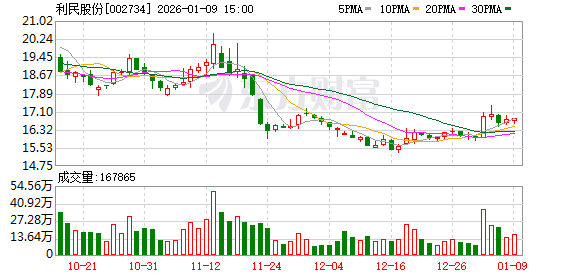
利尔化学:公司湖南津市基地是公司生物制造产业化平台
Zheng Quan Ri Bao· 2026-01-09 12:36
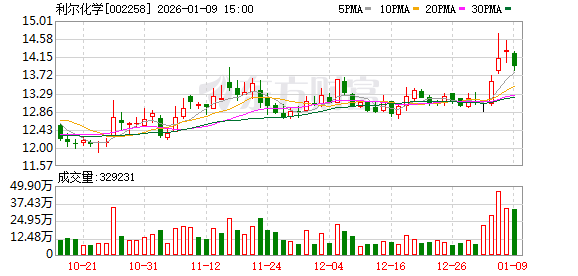
Group 1 - The core viewpoint of the article highlights that Lier Chemical's Hunan Jinshi base serves as a biomanufacturing platform focused on synthetic biology research and production [2] - The company has successfully launched a 20,000 tons/year enzymatic glyphosate project, which is currently operating normally [2]

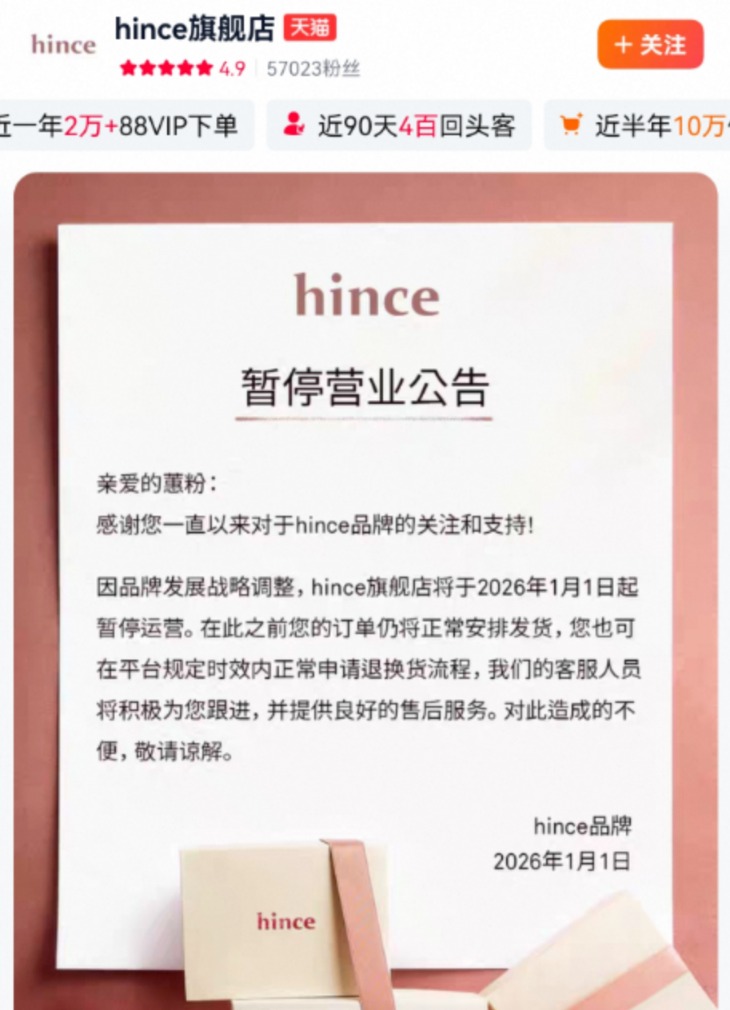
暂停营业!知名彩妆品牌多家线上店铺清空
Nan Fang Du Shi Bao· 2026-01-09 04:25
Group 1 - hince, a niche Korean cosmetics brand, has made significant adjustments to its online presence in China, clearing products from multiple online stores, including its Tmall International flagship store and Douyin overseas flagship store, effective January 1 [1] - The brand previously announced a "suspension of operations" due to strategic adjustments, stating that stores would cease operations on January 1, 2026, but will fulfill existing orders and allow returns within the platform's time limits [1] - A revised announcement on January 9 indicated that the store would undergo a phased adjustment for operational upgrades and service optimization, with ongoing customer service and support [3] Group 2 - hince was established in late 2018 and is owned by Vivawave, emphasizing natural beauty concepts and quickly gaining popularity among the MZ generation in Korea, with sales reaching 21.8 billion KRW in 2022, half of which came from overseas markets [5] - LG Household & Health Care acquired 75% of Vivawave for 42.5 billion KRW in October 2023, aiming to leverage hince's presence in Japan to expand into the mid-to-high-end cosmetics market [5] - LG Household & Health Care has faced performance pressures, with a 6.1% year-on-year decline in sales for the first three quarters of 2025, and has appointed a new CEO to accelerate reforms and enhance product development [6]
焦点访谈 | 李博洋:细胞“打工”造万物 解码生物制造的产业潜能
Xin Lang Cai Jing· 2026-01-08 11:43
Core Insights - The article discusses the emerging field of biomanufacturing, which is recognized as one of the six future industries in China's 14th Five-Year Plan, highlighting its potential to transform various sectors through innovative production methods [11][32][34]. Group 1: Definition and Process of Biomanufacturing - Biomanufacturing involves utilizing biological entities, such as microorganisms and plant or animal cells, to metabolize raw materials into desired products, effectively turning cells into small factories [5][26]. - The process includes maintaining optimal conditions for cell growth, such as temperature and pH, and providing sufficient nutrients like carbon dioxide and hydrolyzed agricultural waste [5][26]. - The production capabilities of biomanufacturing can replace traditional agricultural methods, as seen with artemisinin production, which can be synthesized in a single container rather than requiring extensive farming [32][34]. Group 2: Market Potential and Industry Growth - The biomanufacturing industry in China reached a total scale of 1.1 trillion yuan during the 14th Five-Year Plan period, indicating significant growth potential [11][32]. - China's unified large market and comprehensive manufacturing system provide a strong foundation for developing new fields such as bio-based materials and biopharmaceuticals [34]. - The integration of biomanufacturing with over two-thirds of existing industries, including traditional chemical sectors, presents opportunities for efficiency improvements and greener production methods [34]. Group 3: Technological Advancements and Innovations - Recent breakthroughs in life sciences and synthetic biology, including gene sequencing and editing technologies, are being widely applied in biomanufacturing, leading to transformative changes in production methods [9][30]. - The establishment of national key laboratories and innovation platforms has positioned China as a leader in biomanufacturing research, with over 20% of global publications and patent applications in this field [36][37]. - The development of artificial intelligence-assisted tools for synthetic biology is enhancing the efficiency of strain design and selection processes, facilitating the production of specific therapeutic compounds [34][36]. Group 4: Infrastructure and Support for Startups - The construction of pilot testing platforms is crucial for supporting biomanufacturing startups, allowing them to transition from laboratory research to large-scale production [39][41]. - Regions like Hunan are investing in infrastructure to support biomanufacturing, including a 330-acre acceleration factory set to accommodate multiple startups for large-scale production by 2026 [39][41]. - Local governments are also creating supportive regulations and funding mechanisms to foster the growth of biomanufacturing clusters, enhancing the industry's long-term viability [41]. Group 5: Future Outlook - The rapid development and market expansion of biomanufacturing in China indicate a promising future, with ongoing efforts to innovate and apply biomanufactured products across various sectors [22][43].

AI赋能 拓展医疗新领域
Huan Qiu Wang Zi Xun· 2026-01-08 03:14
Group 1: Russia's Health Project and AI Development - Russia has launched a national health project called "New Technologies for Health Protection," with a budget of 37.5 billion rubles planned for 2025-2027, focusing on enhancing medical research efficiency and ensuring technological sovereignty [1] - The project supports clinical trials for 8 original drugs targeting cancer and cardiovascular diseases, the development of 12 original medical devices, and 8 technologies for treating neurodegenerative diseases [1] - Yandex, Russia's largest search engine, has developed a pediatric MRI analysis tool, marking it as one of the first AI medical products specifically for children, adhering to strict data security standards [1] Group 2: Advances in Neurodegenerative Disease Research - The Peter the Great St. Petersburg Polytechnic University has made progress in neurodegenerative disease research, completing preclinical trials of a compound named C20, which reduces amyloid plaque in Alzheimer's disease model mice without affecting survival or genomic stability [2] Group 3: AI and Digital Health in Germany - The German Cancer Research Center (DKFZ) has released an AI-based cancer imaging analysis tool that identifies early tumor characteristics with unprecedented speed and accuracy [11] - The Fraunhofer Society is developing new biosensors and AI algorithms for real-time monitoring of chronic disease patients, aiming to translate research into practical digital health products [11] - Munich University and other institutions are advancing the development of "digital twins" of the human body to simulate drug metabolism and disease progression, potentially accelerating virtual clinical trials [11] Group 4: Synthetic Biology Legislation in South Korea - South Korea's National Assembly has passed the "Synthetic Biology Promotion Act," establishing synthetic biology as a core national technology and aiming to enhance global competitiveness in this field [14] - The act mandates the Ministry of Science and ICT to develop a national plan every five years, creating a collaborative innovation system among government, research, and industry [14] - The government plans to invest 126.3 billion won in a national "biomanufacturing factory," which will automate the design, construction, and testing of biological components using AI technology [14] Group 5: Vaccine Development and Public Health in South Africa - Biovac has received regulatory approval to begin clinical trials for an oral cholera vaccine, marking the first locally produced vaccine in South Africa in over fifty years [16] - The University of Cape Town's South African Tuberculosis Vaccine Initiative has completed a Phase II clinical trial for a new tuberculosis vaccine candidate, achieving a 54% efficacy rate [16] - South African researchers have discovered broadly neutralizing antibodies effective against multiple HIV strains prevalent in Southern Africa, collaborating with the NIH to initiate Africa's first long-acting injectable antiretroviral drug trial for young women [16]
力生制药张平:守正破局并行 “三鱼”游新潮
Shang Hai Zheng Quan Bao· 2026-01-07 17:51
Core Viewpoint - The article highlights the evolution and modernization of Lisheng Pharmaceutical, emphasizing its commitment to public health and innovation while maintaining its historical roots through the "Three Fish" brand established in 1930 [1][2]. Group 1: Company History and Philosophy - Lisheng Pharmaceutical was founded in 1930 to address the lack of affordable medicine for the public, with the "Three Fish" trademark symbolizing its commitment to making medicine accessible [2]. - The company's philosophy of "for the people" has been a guiding principle, focusing on the integration of raw materials and formulations to ensure affordability and availability of medications [2]. Group 2: Innovation and Product Development - Lisheng has increased its R&D investment, with over 8% of its budget allocated to research in the first half of 2025, resulting in the approval of key products and multiple patent applications [3]. - The company is focusing on high-end generic drugs, modified new drugs for specific populations, and original innovations in critical areas such as synthetic biology and gene therapy [3]. Group 3: Brand Modernization and Marketing Strategy - The "Three Fish" brand has been revitalized to resonate with younger consumers, incorporating cultural narratives and modern marketing strategies such as short online dramas to enhance brand visibility [4][6]. - Lisheng has developed a multi-channel marketing network, utilizing OTC, medical, and online platforms to reach diverse consumer groups effectively [6][7]. - The "Shoubi Mountain" brand is transitioning from a single product to a comprehensive series of antihypertensive medications, with plans to expand its product range significantly [7].

南开大学生命科学学院沈浩晟教授团队招聘博士及博士后
生物世界· 2026-01-07 10:18
Core Viewpoint - The article announces the recruitment of PhD and postdoctoral researchers by Professor Shen Haosheng's team at Nankai University's School of Life Sciences, focusing on synthetic biology and microbiome research for therapeutic applications in cancer and metabolic diseases [2][4]. Group 1: Research Direction - The research focuses on the interaction mechanisms between symbiotic bacteria and hosts, exploring the application of live probiotics in treating tumors, metabolic diseases, and brain disorders [3]. - Specific research areas include: 1) Modifying tumor-associated symbiotic microorganisms for targeted drug delivery to enhance local drug concentration and reduce systemic toxicity [3]. 2) Utilizing Lactobacillus plantarum for drug delivery to the brain via the olfactory mucosa, aiming to develop a nasal-to-brain drug delivery system [3]. 3) Investigating natural products from insect microbiomes and plant genomes [3]. Group 2: Recruitment Information - The team is looking to recruit 2 PhD students with backgrounds in synthetic biology, microbiology, or cell biology [4]. - For postdoctoral positions, 1-2 candidates with relevant backgrounds are sought, offering a salary range of 21,000-30,000 yuan per month [5]. - Applicants should generally be under 35 years old and have obtained their PhD within the last 3 years, with a requirement to have published or be about to publish SCI papers as the first author [5]. Group 3: Contact Information - Interested applicants are encouraged to send their application materials, including a CV and representative papers, via email to the provided address [6].

聚焦千亿生物基细菌纳米纤维素市场, 元动生物最新融资!
合成生物学与绿色生物制造· 2026-01-07 08:11
Core Insights - The article highlights the significant potential of bacterial cellulose (BC) as a natural material produced through microbial fermentation, showcasing its applications in next-generation energy storage devices and various high-growth sectors [2][3]. Company Overview - Yuan Dong Biotechnology Co., Ltd., established in January 2024, has rapidly gained attention from several renowned institutions and focuses on the synthesis of bacterial nanocellulose (BC/BNC) materials [3]. - The company has developed a globally leading production system for bacterial nanocellulose by integrating synthetic biology and artificial intelligence, reducing the production cycle from 10 days to 48 hours [3]. Product and Market Strategy - Yuan Dong is achieving industrial-scale production of high-purity nanocellulose, which meets international standards, particularly in the display materials sector, reducing reliance on imports and enhancing the security of the national display industry chain [5]. - The company has introduced a revolutionary "biological nanocrystalline gel" for the cosmetics industry, which addresses the long-standing reliance on chemical additives and offers natural preservation capabilities, significantly reducing allergenic risks [5]. - This innovative material has entered the supply chains of several well-known cosmetic companies, aiming to make safe and effective biobased products accessible to the general public at more affordable prices [5]. Industry Trends - The article notes that by 2030, it is expected that at least 20% of petroleum-based products will be replaced by biobased products, driven by companies like Yuan Dong that leverage technology to enhance quality of life and promote sustainable practices [6]. Upcoming Events - The 11th Bio-based Industry Conference & Exhibition will take place from May 20-22, 2026, in Shanghai, featuring 11 thematic forums and 7 concurrent activities aimed at exploring innovation and collaboration in the biobased industry [7][8].

2025年中国胶原蛋白护肤品行业发展历程、政策汇总、产业链图谱、市场规模、竞争格局及发展趋势分析:CR5市场占有率达69.3%[图]
Chan Ye Xin Xi Wang· 2026-01-07 01:33
Core Viewpoint - The skincare consumption in China is shifting from basic hydration to functional care, with collagen skincare products becoming a core choice for consumers seeking anti-aging solutions. The market for collagen skincare products is projected to reach 31.6 billion yuan in 2024, growing by 21.5% year-on-year, with recombinant collagen products capturing a significant market share of 36% due to their high activity and low allergenicity [1][9]. Industry Overview - Collagen is a structural protein found in animals, primarily maintaining the stability of skin and connective tissues. Collagen skincare products aim to supplement skin collagen, improve barrier function, and enhance skin elasticity through topical application [2]. - Collagen skincare products can be categorized based on source (animal, plant, recombinant), form (masks, serums, creams), and function (hydrating, anti-aging, soothing) [2][3]. Development History - The development of China's collagen skincare industry has progressed through four stages: exploration, rapid growth, standardization, and technology leadership, transitioning from animal-derived to recombinant collagen and synthetic biology [4]. Market Policies - The Chinese government has implemented various regulations to enhance the quality and safety of the cosmetics industry, including collagen skincare products, promoting a shift towards standardized and high-quality development [5]. Industry Chain - The upstream of the collagen skincare industry includes suppliers of collagen, moisturizers, emulsifiers, and packaging materials. The midstream involves R&D and production, while the downstream consists of various sales channels, including retail and e-commerce [7]. - The primary consumer demographic for collagen skincare products is women, accounting for 86.2%, with the age group of 25-45 years making up over 80% of the market. Safety is the top concern for 80% of consumers [7][8]. Current Market Status - The market for collagen skincare products is expected to reach 31.6 billion yuan in 2024, with recombinant collagen products leading the market due to their advantages [9]. Competitive Landscape - The market concentration for recombinant collagen skincare products has increased, with the top five companies holding a 69.3% market share. Key players include Giant Bio, Proya, and Marubi, leveraging technology and product innovation to maintain market leadership [9][10]. - Giant Bio, established in 2000, focuses on high-tech skincare and holds 186 patents, leading in recombinant collagen technology with significant revenue and profit margins [10]. Future Trends - The future of the collagen skincare industry will see recombinant human-like collagen becoming mainstream, with advancements in synthetic biology and green manufacturing. Products will expand beyond hydration and anti-aging to include whitening, sensitivity, and barrier repair, with clear clinical data supporting efficacy [11].
