
提质增效

Search documents
双向奔赴提升企业获得感
第一财经· 2025-12-14 23:50
2025.12. 15 当前中国经济发展中老问题、新挑战不少,外部环境变化影响加深,国内供强需弱矛盾突出,重点领 域风险隐患较多。这些问题大多是发展中、转型中的问题,需通过转思路、换思维,改革攻坚等加以 应对,需要通过将明年经济工作的政策取向调整为稳中求进、提质增效来笃定航向。 本文字数:1712,阅读时长大约3分钟 作者 | 一财评论员 企业获得感正成为评价政府实绩的一个重要指标。 12月10日至11日,中央经济工作会议在北京举行。会议提出了对做好新形势下经济工作新的认识和 体会,即"五个必须",并确定了坚持内需主导等明年经济工作的八大重要任务。这些为各部门各单位 明年的工作提供了按图索骥式的便利。 会议明确指出要增强居民和企业的获得感。如果说围绕做强国内大循环,拓展内需增长新空间,是明 年经济工作的关键着力点,那么增强居民和企业的获得感,则是贯通会议精神的灵魂。 企业的获得感,在中央经济工作会议中专门提出,这本身就投射出一种守定力、深扎根、务实功的知 行合一,并正在成为度量政府新政绩观的一项重要内容,成为治国理政的一个重要实绩。 增强企业获得感,当前最直观的举措就是清理拖欠企业的账款。中央经济工作会议在" ...


今日视点:“五个必须”定方向 政策协同稳大局
Xin Lang Cai Jing· 2025-12-14 23:05
Core Viewpoint - The Central Economic Work Conference held on December 10-11 in Beijing serves as a critical juncture for China's economic development, providing a roadmap for the 14th Five-Year Plan's conclusion and the 15th Five-Year Plan's initiation, amidst complex external environments and domestic economic transitions [1][6]. Economic Performance - China's economy has shown resilience against external uncertainties and internal transformation pressures, with major development goals expected to be met by the end of 2025. Key indicators include a 7.2% growth in high-tech manufacturing and a 6.7% increase in digital product manufacturing in October [7][8]. - Domestic demand has maintained a high contribution rate to economic growth, and energy consumption per unit of GDP has continued to decline, laying a solid foundation for the upcoming 15th Five-Year Plan [7][8]. Challenges and Opportunities - Despite positive performance, challenges remain, including insufficient global economic growth, frequent geopolitical conflicts, and internal supply-demand imbalances. However, China's large market size, complete industrial system, and rich human resources provide strong support for long-term economic stability [2][8]. Policy Directions - The conference emphasized a macro policy framework focused on "stability while seeking progress and improving quality." Fiscal policy is set to be more proactive, while monetary policy will aim for moderate flexibility and efficiency [4][9]. - Eight key tasks were outlined for the upcoming year, including prioritizing domestic demand, driving innovation, enhancing high-quality development, promoting open cooperation, and ensuring social welfare [4][9]. Capital Market Reforms - The capital market is recognized as a core hub for serving the real economy, with a commitment to deepening comprehensive reforms in investment and financing. This includes the introduction of new measures such as a refinancing framework and further reforms in the ChiNext market [5][10]. Systematic Approach - The conference's directives reflect a systematic and long-term perspective, emphasizing the need for coordinated efforts across various regions and departments to implement policies effectively, thereby fostering economic growth and addressing development challenges [6][11].
玉渊谭天|苦练内功,做更好的自己
Sou Hu Cai Jing· 2025-12-14 16:30
Core Viewpoint - The article emphasizes the importance of "internal cultivation" as a strategy for China to face external challenges, highlighting the need for both quality and direction in economic development [1][2]. Economic Performance - China's major economic indicators have performed better than expected, with the country remaining the largest engine of global economic growth [2]. - From January to November, China's exports increased by 6.2% year-on-year despite high tariffs and external pressures, showcasing resilience through diversified market layouts and industrial upgrades [3]. Manufacturing Sector - The manufacturing sector is identified as a key area for innovation and a reflection of the country's shift towards higher quality development [4]. - China's manufacturing value added accounts for nearly 30% of the global total, surpassing the combined total of the G7 countries [3]. Technological Innovation - The recent Central Economic Work Conference noted that external pressures cannot stifle China's technological advancements, with a focus on three international technology innovation centers [5][6]. - The shift in language regarding these centers indicates significant achievements over the past five years, enhancing their capacity for influence [7]. Economic Growth Projections - The International Monetary Fund has raised its forecast for China's economic growth to 5% by 2025, reflecting a positive outlook [11]. - The emphasis on "quality improvement and efficiency enhancement" marks a new direction in macroeconomic policy [12]. New Quality Productivity - The concept of "new quality productivity" is highlighted as a key driver of economic growth, with significant increases in the production of 3D printing equipment, new energy vehicles, and industrial robots [15]. - The focus on emerging and future industries, such as quantum technology and hydrogen energy, is seen as crucial for long-term competitive advantage [16]. Internal Demand Expansion - Expanding domestic demand is prioritized, with plans to increase urban and rural residents' income as a key task for the coming years [20][23]. - The article notes the importance of enhancing the supply of quality goods and services to unlock consumption potential [25]. Investment Strategies - The government plans to stabilize investment growth through various measures, including increasing central budget investments and leveraging new policy financial tools [26]. - The long-term resilience of China's economy is emphasized as a critical factor in navigating risks and challenges [26].
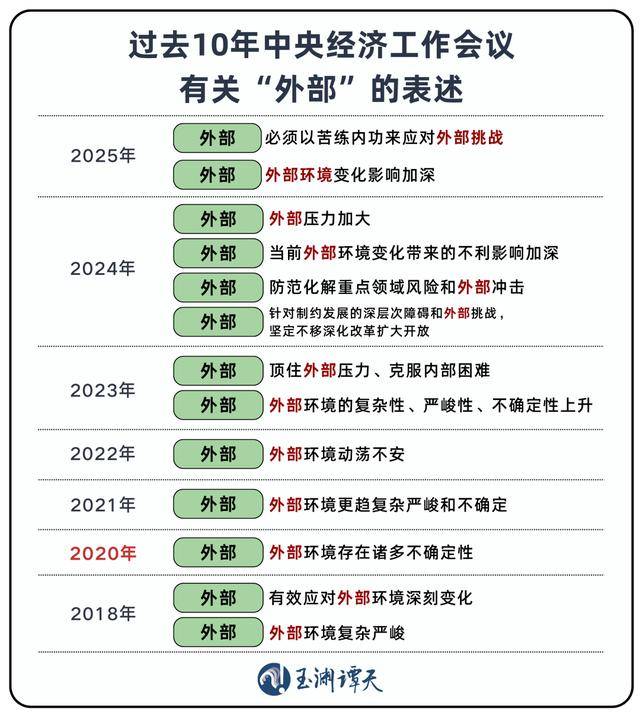
玉渊谭天|苦练内功,做更好的自己
Xin Lang Cai Jing· 2025-12-14 15:47
Core Viewpoint - The central economic work conference emphasizes the necessity of "practicing internal skills" to respond to external challenges, highlighting the importance of resilience and quality development in China's economy [1][24][25]. Group 1: Economic Performance - China's major economic indicators have performed better than expected, with the country remaining the largest engine of global economic growth [2][27]. - From January to November, China's exports increased by 6.2% year-on-year despite high tariffs and external pressures, showcasing the resilience derived from diversified market layouts and upgraded industrial structures [2][28]. - China's manufacturing value added accounts for nearly 30% of the global total, surpassing the combined total of the G7 countries, with the gap widening [2][28]. Group 2: Innovation and Development - The manufacturing sector is identified as the main arena for activating innovation and reflects the country's shift towards higher quality development [3][29]. - The central economic work conference noted a significant change in the approach to international technology innovation centers, indicating solid achievements over the past five years [4][30][32]. - The focus on developing new quality productive forces is reiterated, with specific actions to enhance enterprise innovation and expand "Artificial Intelligence+" initiatives [14][40]. Group 3: Internal Demand and Consumption - Expanding domestic demand is prioritized as a key task, with plans to increase urban and rural residents' income and enhance the supply of quality goods and services [18][48]. - New consumption models and trends are emerging, such as the "national style economy" and attention economy, indicating a shift in consumer behavior [18][48]. - The importance of service consumption is highlighted, as it is expected to drive employment and optimize industrial structure [21][49]. Group 4: Investment and Economic Strategy - The government plans to stabilize investment growth through various measures, including increasing central budget investments and utilizing new policy financial tools to stimulate private investment [22][50]. - The establishment of 500 billion yuan in new policy financial tools is expected to drive 7 trillion yuan in investments [22][50]. - The long-term resilience of China's economy is emphasized, with a focus on internal capacity building as a foundation for addressing risks and challenges [22][50].
双焦弱势难改,碳酸锂震荡偏强运行|期货周报
2 1 Shi Ji Jing Ji Bao Dao· 2025-12-14 14:19
Group 1: Energy and Chemical Sector - The energy and chemical sector saw a decline, with fuel oil down 3.54% and crude oil down 3.55% for the week [2] - The black coal sector experienced significant drops, with coking coal down 10.83%, iron ore down 1.11%, and coke down 6.94% [4] - The supply of coking coal is increasing, with domestic utilization rates at 85.31%, and Mongolian coal imports expected to rise significantly [4][5] Group 2: Demand and Supply Dynamics - Demand remains weak, with daily average pig iron production from 247 steel mills down 3.10% week-on-week, leading to pressure on steel mill profitability [5] - The Mongolian coal export policy is expected to have a significant impact on the market, with a planned export of 90 million tons by 2026 [4][5] - Analysts suggest that the short-term outlook for coking coal and coke remains weak due to insufficient domestic production cuts and low winter storage replenishment [6] Group 3: Lithium Carbonate Market - Lithium carbonate futures showed a strong performance, with the main contract LC2601 closing up 6.9% to 96,980 yuan/ton [7] - Domestic lithium carbonate production in November was 95,350 tons, a 3.3% increase month-on-month and a 48.7% increase year-on-year [7] - Strong demand from the battery sector continues to support prices, with production of power and other batteries increasing by 3.3% month-on-month [7][8] Group 4: Inflation and Economic Policy - November CPI rose 0.7% year-on-year, indicating a mild recovery in prices, while PPI fell 2.2% year-on-year [10] - The Central Economic Work Conference emphasized a shift from "quantity targets" to "quality improvement" in economic policy, focusing on enhancing internal demand and innovation [13][14] - Analysts predict that the fiscal deficit rate will remain high, with expectations for monetary policy to continue supporting the economy through potential rate cuts [14]

2026年中国经济向“内”求变,让老百姓“有钱花、敢花钱”
Sou Hu Cai Jing· 2025-12-14 02:06
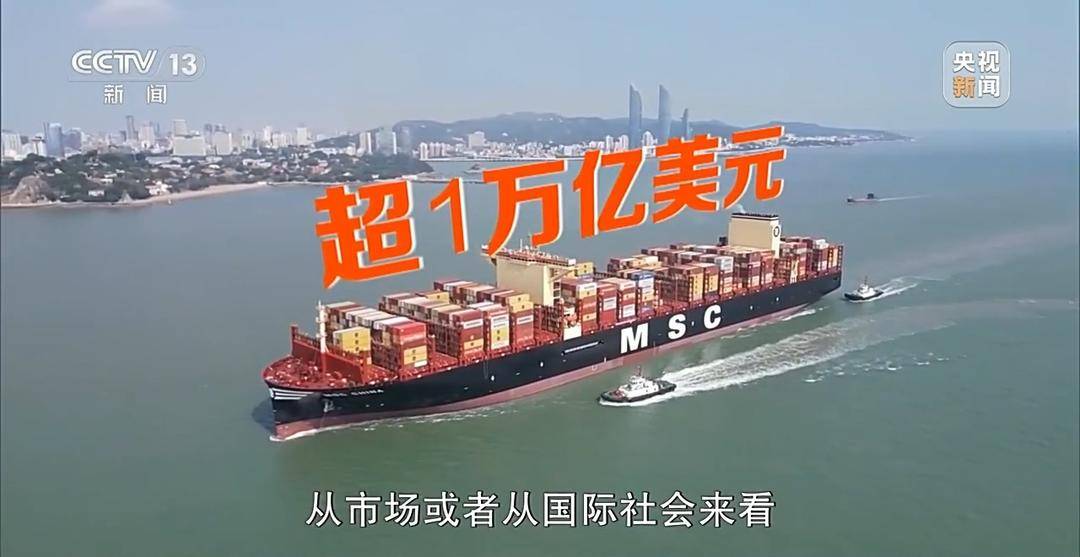
Group 1 - In 2025, China's economy faced significant challenges but showed resilience, with a focus on domestic demand and building a strong domestic market as highlighted in the Central Economic Work Conference [1][16] - The total value of China's goods trade import and export reached 41.21 trillion yuan, a year-on-year increase of 3.6%, with a trade surplus exceeding 1 trillion USD for the first time [1][3] - Private enterprises have become the mainstay of foreign trade, with their import and export value reaching 23.52 trillion yuan, a year-on-year increase of 7.1%, accounting for 57.1% of China's total foreign trade [7][9] Group 2 - The export growth of private enterprises outpaced that of state-owned and foreign enterprises, indicating their crucial role in driving trade growth [9] - Despite a decline in exports to the US by 18.9%, exports to ASEAN and the EU increased significantly, compensating for the drop [3][5] - The overall import growth was sluggish at 0.2%, reflecting weak domestic demand, which the Central Economic Work Conference emphasized needs to be addressed [10][20] Group 3 - The Central Economic Work Conference identified the imbalance between strong supply and weak demand as a major challenge, necessitating a focus on balancing supply and demand [20][22] - The government plans to implement a "rural and urban residents' income increase plan" to enhance consumer purchasing power, indicating a shift towards a more inclusive economic strategy [36][42] - The emphasis on quality over quantity in production is crucial for addressing the current economic challenges, with a focus on enhancing the supply of high-quality goods and services [29][31] Group 4 - The real estate market's stability is vital for consumer confidence, with measures proposed to stabilize the market and support affordable housing [49][51] - The government aims to shift fiscal spending from traditional infrastructure to social services like education and healthcare, which could enhance consumer spending capacity [47][46] - The Central Economic Work Conference set a policy direction of "seeking progress while maintaining stability" and "improving quality and efficiency," indicating a focus on sustainable economic growth [51]

重磅会议定调!公私募基金最新解读
Zhong Guo Zheng Quan Bao· 2025-12-14 00:09
Group 1: Economic Policy and Outlook - The central economic work conference emphasized the need for a policy orientation focused on "stability while seeking progress" and "quality improvement and efficiency enhancement" for the economic work in 2026 [1][2] - The conference highlighted the importance of structural reforms and policy reserves to maintain steady growth, with a focus on expanding domestic demand through consumption and investment [2][3] - The long-term positive trend of the economy remains unchanged, despite existing challenges and risks, indicating a resilient economic foundation [2][3] Group 2: Capital Market Development - The conference called for the continuous deepening of comprehensive reforms in capital market investment and financing, underscoring the importance of these reforms for the upcoming year [3][4] - There is an expectation for enhanced market attractiveness and inclusivity, which will likely draw more long-term capital into the market, thereby strengthening the resilience of the capital market [3][4] - The current environment is seen as favorable for merger and acquisition (M&A) funds, which are positioned to play a crucial role in enhancing quality and efficiency across various industries [4] Group 3: Innovation and New Industries - The conference stressed the need for innovation-driven growth and the cultivation of new economic drivers, identifying technology and finance as key areas for development [5][6] - Emerging industries such as renewable energy, new materials, and aerospace are expected to receive policy support and become focal points for future growth [6][7] - Private equity and venture capital firms are encouraged to support national innovation strategies and explore innovative financial mechanisms to facilitate a positive cycle between technology, industry, and finance [7]
财信研报:坚持内需主导,宏观政策更加积极有为
Sou Hu Cai Jing· 2025-12-13 13:16
children 图片说明:财信证券首席经济学家袁闯,执业资格编号:S0530520010002 三是实施适度宽松的货币政策。会议提出要实施"适度宽松的货币政策",货币政策宽松取向不变,2026年降准降息仍值得期待,但力度及节奏还需观察。会 议提出,"把促进经济稳定增长、物价合理回升作为货币政策的重要考量,灵活高效运用降准降息等多种政策工具,保持流动性充裕,畅通货币政策传导机 制"。当前,我国物价仍然处于低位、GDP平减指数持续为负,被动抬升了我国实际利率水平,抑制了居民及企业的中长期信贷需求。预计2026年货币政策 仍将继续发力,推动实际利率继续下降,进一步疏通"宽货币"向"宽信用"的传导过程;同时配合"反内卷"和扩内需的政策,推动经济稳定增长的同时,促进 物价合理回升。近期,央行行长潘功胜在人民日报撰文《构建科学稳健的货币政策体系和覆盖全面的宏观审慎管理体系》,强调"要把握好货币政策的力 度、时机和节奏,更加注重做好跨周期和逆周期调节","重点需要处理好短期与长期、稳增长与防风险、内部与外部等三方面关系"。在多重目标考量下, 2026年货币政策的适度宽松力度或不会超过2025年,但综合政策效能将进一步强化 ...
债券视角看中央经济工作会议:平稳开局,重在增效
Huachuang Securities· 2025-12-13 13:09
Report Industry Investment Rating No relevant content provided Core Viewpoints of the Report - In 2026, the macro - environment and policy layout for the bond market may remain basically stable, but the policy demand for "price recovery" has increased. The bond market may continue the range - bound trading, with a slight upward shift in the fluctuation center. Under the "stable growth" goal, the currency maintains a "moderately loose" tone, and the overall macro - policy emphasizes stability and quality rather than pursuing incremental growth. The policy's stronger demand for price recovery means that the impact of inflation on nominal interest rate pricing needs attention [7][10]. Summary According to the Table of Contents 1. Macro - tone: A Stable Start with Emphasis on Efficiency - **Macro - situation judgment**: The meeting acknowledges "old problems and new challenges" and the "external environment", and points out the "contradiction of strong supply and weak demand". It highlights long - term contradictions in the economic transformation stage and the short - term uncertainty of the external economic and trade environment. It also implies that "anti - involution" and supply - side optimization need to be strengthened [11]. - **Overall tone**: The policy orientation is "seeking progress while maintaining stability and improving quality and efficiency". It focuses on stability and continuity, with a reduced demand for growth and progress. It aims to optimize practices and improve efficiency on the basis of stable policy strength, and gives priority to the "quality" of the economy over the "quantity". It also re - emphasizes "counter - cyclical and cross - cyclical" regulation, with a long - term perspective [12]. - **Fiscal policy**: It continues the positive tone, with the overall strength remaining flat. After the high fiscal increment in 2025, the focus may be on giving full play to the fiscal multiplier effect. It is expected that the fiscal deficit rate will remain at 4% in 2026. The use of quasi - fiscal tools will continue to support the goal of "stopping the decline and stabilizing investment" [14]. 2. Monetary Policy: Balancing Cross - cyclical Considerations - **Policy goals**: It focuses on growth and prices, and downplays the goal of financial aggregates. It aims to achieve "stable growth" and "reasonable price recovery" by maintaining reasonable liquidity, reducing the real financing cost, and ensuring the smooth operation of the interest rate transmission mechanism [16]. - **Use of reserve requirement ratio and interest rate cuts**: It advocates "flexible and efficient" use of reserve requirement ratio and interest rate cuts, which is more concerned about policy effectiveness and consistent with the cross - cyclical regulation idea. In a neutral scenario, there may be one policy interest rate cut of 10bp in 2026, likely to occur from the end of the first quarter to the beginning of the second quarter [17]. 3. Key Tasks: Quality > Quantity, Focus on Amplifying Policy Multipliers (1) Domestic Demand Policy: Pursuing Effect and Quality, Weakening Incremental Expansion - **Consumption**: In 2026, consumption growth may still have potential. The meeting proposes a "residents' income increase plan", expands the supply of high - quality goods and services, and optimizes the implementation of "two new" policies. The stimulus for consumption demand may remain stable or decline, aiming to improve the multiplier effect [20]. - **Investment**: The meeting for the first time proposes to "stop the decline and stabilize investment", optimize the implementation of "two important" projects, and continue to use new policy - based financial tools. The policy may support investment more in 2026, and the growth rate is expected to turn positive [21]. (2) Deepening Reforms: Prioritizing "Anti - Involution" and Accelerating Debt Clearance - **Unified market construction**: It ranks higher, with the goal of price recovery being emphasized. It formulates a "regulation" and re - emphasizes "anti - involution", which may affect the bond market's interest rate center [24]. - **Debt clearance**: It is necessary to accelerate the clearance of arrears to enterprises. In 2026, the importance of local debt clearance may remain high, and its impact on investment needs attention [24]. - **Small and medium - sized financial institutions**: There is an increase in the "reduction and quality improvement" of small and medium - sized financial institutions, and the trend of mergers is expected to continue [24]. 4. Risk Resolution: Adding Content on Local Debt Resolution, Reducing Real Estate Policy Intensity (1) Local Debt: Actively and Orderly Resolve Local Government Debt Risks - The meeting adds specific statements on local government debt risks, emphasizes the territorial and main responsibilities of debt resolution, and maintains a high - pressure regulatory attitude towards new hidden debts. It also mentions the risk of local government financing platform operating debts and may optimize relevant debt restructuring and replacement measures [26]. - It requires accelerating the clearance of arrears to enterprises, emphasizing the "three guarantees" bottom line and "living a tight - fisted life" [26]. (2) Real Estate: Weakening the Goal of Stopping the Decline and Stabilizing, "De - stocking" by City - The meeting deletes the goal of "stopping the decline and stabilizing" the real estate market, and the policy intensity is reduced. It focuses on supply - side optimization and de - stocking through measures such as "controlling increments", "de - stocking", and "encouraging the acquisition of stock properties" [27].
多举措促进我国明年经济稳中求进 提质增效
Yang Shi Xin Wen· 2025-12-13 12:43
Group 1 - The core viewpoint of the article emphasizes that macroeconomic regulation will take proactive measures next year, focusing on expectation management and introducing a series of new initiatives to promote stable and high-quality economic growth [1] Group 2 - In terms of consumption, the article highlights the optimization and implementation of "two new" policies aimed at actively expanding service consumption, particularly in sectors like elderly care, childcare, and domestic services, to enhance the quality of supply [1] - Regarding investment, it mentions the effective utilization of various government investment funds, including "two heavy" construction projects, with an appropriate increase in central budget investment scale to continuously improve investment efficiency [1] - The article discusses the importance of fostering new momentum by cultivating emerging and future industries, deepening the "Artificial Intelligence +" initiative, addressing shortcomings in the technology service sector, and improving the low-altitude economy industry ecosystem [1] - Looking ahead to the next five years, it stresses the need for high-quality planning and implementation of the "14th Five-Year Plan," including the planning and execution of major engineering projects to ensure a good start for the "14th Five-Year" period [1]