
文物保护

Search documents
省委常委会召开会议学习贯彻习近平总书记重要讲话精神 研究部署外事文物保护乡村振兴和知识产权等工作
Shan Xi Ri Bao· 2025-06-21 00:37
Group 1 - The meeting emphasized the importance of implementing the outcomes of the second China-Central Asia Summit, enhancing connectivity with Central Asia, and upgrading logistics channels from "point-to-point" to "hub-to-hub" [1] - The meeting highlighted the need to deepen economic and trade exchanges through various exhibitions and forums, aiming to increase the quality and quantity of trade and investment [1] - The meeting stressed the importance of cultural exchanges and expanding cooperation in areas such as tourism, education, health, and agriculture [1] Group 2 - The meeting underscored the need to honor revolutionary predecessors and transform this remembrance into a strong motivation for high-quality development, emphasizing comprehensive reform and innovation [2] - The meeting called for effective implementation of the rural revitalization strategy, ensuring the sustainability of poverty alleviation efforts and improving rural industry, construction, and governance [2] - The meeting highlighted the importance of systematic protection of cultural relics, enhancing the supply of quality cultural heritage products and services to benefit the public [2] - The meeting set a goal for building a strong province in intellectual property, focusing on high-quality creation, efficient utilization, and high-standard protection [2]
黄土下的文明与火种
Ren Min Wang· 2025-06-18 06:31
Core Viewpoint - The drama "Treasure Hunt" highlights the importance of cultural heritage protection and the dedication of the "guardians" who work tirelessly to preserve history and civilization [1][4]. Summary by Sections Overview of the Drama - "Treasure Hunt" is based on the significant archaeological discovery of the Han Emperor's mausoleum in Shaanxi, intertwining elements of artifact protection, tomb exploration, and crime [1]. - The show features a unique narrative that combines the struggles between artifact protectors and tomb raiders, showcasing the ongoing battle between civilization and greed [1]. Character Development and Themes - The drama presents a multi-dimensional portrayal of the artifact protection community, focusing on the collaboration among archaeologists and the generational transmission of knowledge and respect for history [2]. - It depicts a 20-year struggle between the artifact recovery team led by Qi Dacang and the tomb raiding group led by Mu Jianhui, emphasizing the complexity of artifact protection beyond a simple good versus evil narrative [2]. Realism and Production Efforts - The production team conducted extensive research, spending months in archaeological sites and engaging with frontline workers to ensure authenticity in the portrayal of artifact protection efforts [3]. - The meticulous attention to detail in set design and character portrayal reflects the realities faced by cultural heritage workers, highlighting their sacrifices and dedication [3]. Cultural Significance - "Treasure Hunt" serves as a tribute to the unsung heroes of cultural heritage protection, illustrating that the preservation of national treasures is a result of the persistent efforts of ordinary "guardians" [4]. - The drama conveys a message of hope and continuity, emphasizing that as long as there is dedication and passion, the flame of civilization will never extinguish [4].
甘肃省委书记胡昌升会见欧盟国家驻华使节团
news flash· 2025-06-17 01:23
Group 1 - The core viewpoint of the article is the willingness of Gansu's provincial leadership to deepen cooperation with EU countries in various fields [1] - Gansu aims to expand practical cooperation in cultural relic protection, renewable energy development, water resource management, and desertification control [1] - The meeting signifies a step towards enhancing friendly cooperation between Gansu and EU nations [1]
不能拆的遗址 不能断的文脉
Xin Hua She· 2025-06-16 11:43
Core Viewpoint - The article highlights the historical significance of the relocation of cultural relics from the Palace Museum to Chongqing during the Second Sino-Japanese War, emphasizing the importance of preserving this history through the establishment of the Chongqing Palace Museum Relocation Memorial Hall at the site of the former Anderson & Co. warehouse [1][3][4]. Group 1: Historical Context - The relocation of 59,000 cultural relics from the Palace Museum began in February 1933, with 13,427 boxes transported to avoid looting by Japanese forces [1]. - The journey of these relics spanned over a decade and involved numerous provinces, showcasing the challenges faced during wartime [1][2]. Group 2: Discovery and Preservation Efforts - The connection between Chongqing and the Palace Museum's relics was largely unknown until recent research efforts uncovered the historical ties [2]. - The preservation of the Anderson & Co. site was marked by the bold "Do Not Demolish" message, reflecting Chongqing's commitment to safeguarding its cultural heritage [3]. Group 3: Memorial Hall Development - The Chongqing Palace Museum Relocation Memorial Hall is the first thematic historical memorial established at a site associated with the Palace Museum's relocation [3][4]. - The memorial hall consists of eight buildings, with four preserved according to cultural relic restoration principles and four incorporating modern architectural elements [4]. - The hall features replicas of relics and historical photographs, enhancing public understanding of the relocation history and has become a popular cultural tourism landmark [4].
沈阳市2025年文化和自然遗产日主题活动暨公众考古活动季启幕
Ren Min Wang· 2025-06-12 06:47
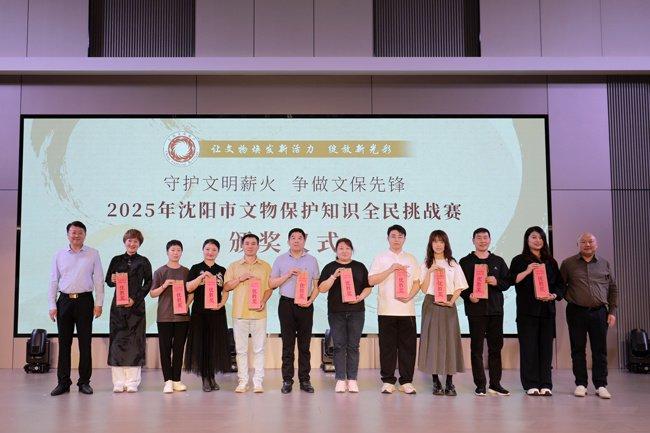
Core Points - The event "Shenyang 2025 Cultural and Natural Heritage Day" was officially launched, focusing on public participation and technological empowerment in cultural heritage protection [1][3] - The event aims to integrate legal education, cultural heritage awareness, and archaeological experiences, promoting a deeper connection between the public and cultural heritage [1][3] - The newly revised "Cultural Relics Protection Law" was highlighted, with efforts to make legal knowledge accessible to the public [1][3] Group 1: Event Overview - The event is guided by various cultural and tourism authorities and aims to engage the public in cultural heritage protection through a series of activities [1] - A total of over 200 activities were organized across Shenyang's districts, including exhibitions, competitions, and educational programs [10][14] - The event features a knowledge competition based on the new Cultural Relics Protection Law, attracting widespread participation from various demographics [3][4] Group 2: Public Engagement and Participation - The competition received 1,598 valid responses, with participants ranging from 9 to 73 years old, showcasing broad public interest [3][4] - The event utilized new media platforms to enhance outreach, with over 250,000 views during the live broadcasts [4][10] - Activities included immersive archaeological experiences, allowing participants to engage directly with cultural heritage [8][15] Group 3: Archaeological Discoveries - The event showcased the results of the fourth national cultural relics census, revealing over 230 new immovable cultural relics, with a discovery rate of 15.3% [5][7] - Significant archaeological finds included artifacts from various historical periods, enhancing the understanding of Shenyang's cultural history [5][8] - The census results were presented using digital displays, making the information more accessible to the public [7][8] Group 4: Future Directions - The event marks a new starting point for Shenyang in promoting cultural heritage protection as a collective action [17] - The city aims to transform public consensus on cultural heritage into active participation and protection efforts [17] - Future initiatives will continue to focus on integrating cultural heritage into daily life and community engagement [16][17]

以“应普尽普”促文物“应保尽保”(人民时评)
Ren Min Ri Bao· 2025-06-11 22:11
Group 1 - The ongoing fourth national cultural relics census focuses on material cultural heritage reflecting the history of the Communist Party, New China, reform and opening up, and the history of socialism, enhancing the registration and protection of important historical sites [1][2] - The census is a significant national condition and strength survey, essential for the development of cultural relics, aiming to identify and protect more relics, ensuring comprehensive protection [2][3] - The census work connects scattered fragments of civilization into a "genealogy" of cultural relics, providing important references for drawing wisdom from civilization, inheriting cultural roots, and promoting national and contemporary spirit [2][3] Group 2 - The protection of cultural relics requires both professional efforts and public participation, with awareness of cultural relics protection growing through this process [3] - The standards for relic identification are continuously improving, expanding the scope of protected objects and enriching the value connotation of cultural relics [3] - The approach emphasizes "protection first, rescue first, reasonable use, and strengthened management," with a focus on utilizing cultural heritage to meet public cultural service needs [3][4] Group 3 - Examples of utilizing cultural relics for public cultural services include the construction of fitness trails near ancient rock paintings in Yunnan and the development of rural tourism in Nujiang, which attracts visitors [4] - The transformation of the old Xi'an Film Studio into an art venue and commercial hub illustrates the economic potential of cultural relics [4] - Each census promotes the leap-forward development of the cultural relics sector, establishing a solid foundation for high-quality development in this field [4]
当城市更新“牵手”文物保护 跨界融合打造消费“新磁场”
Yang Shi Wang· 2025-06-03 06:30
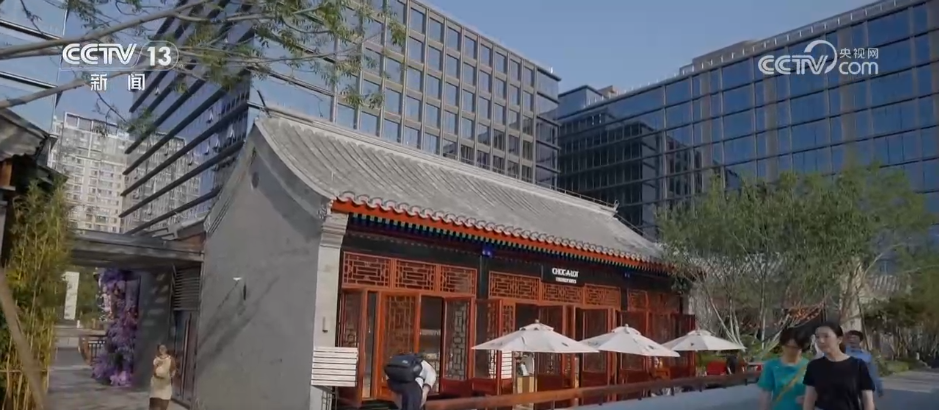
Core Viewpoint - The article highlights the importance of preserving historical cultural heritage during urban renewal projects, exemplified by the successful transformation of the Zhonghai Dajixiang project in Beijing, which integrates traditional architecture with modern commercial elements, attracting significant foot traffic. Group 1: Project Overview - Zhonghai Dajixiang is located in the core area of Beijing and preserves numerous historical buildings from the Ming and Qing dynasties, including significant cultural heritage sites [3] - The project faced challenges in restoring historical buildings, leading to the implementation of tailored renovation plans for each structure, utilizing digital methods for precise evaluation and restoration [3] - Traditional craftsmanship was employed throughout the restoration process, adhering to principles of authenticity in rebuilding historical architecture [3] Group 2: Cultural Engagement - The project includes six cultural heritage courtyards functioning as free museums, showcasing themes like Silk Road civilization and calligraphy, allowing citizens to engage with history [5] Group 3: Space Utilization - The project creatively addresses space limitations by developing underground commercial and recreational areas, aligning with recent urban renewal policies that encourage the use of underground space [9] - The design incorporates feedback from local residents, resulting in the addition of green spaces and recreational facilities, enhancing community engagement [11] Group 4: Economic Impact - After nine years of development, Zhonghai Dajixiang fills a commercial gap in southern Beijing, with a focus on integrating urban renewal with consumer demand [13] - The project boasts a commercial leasing rate exceeding 96% and an opening rate of 91%, with over 150 premium brands, including a 50% ratio of flagship and customized stores [15] - The commercial area of 80,000 square meters features diverse offerings, blending traditional cultural elements with modern lifestyle needs [15]
中国“文物医生”让尼泊尔文化瑰宝重焕生机
Zhong Guo Xin Wen Wang· 2025-06-01 13:03
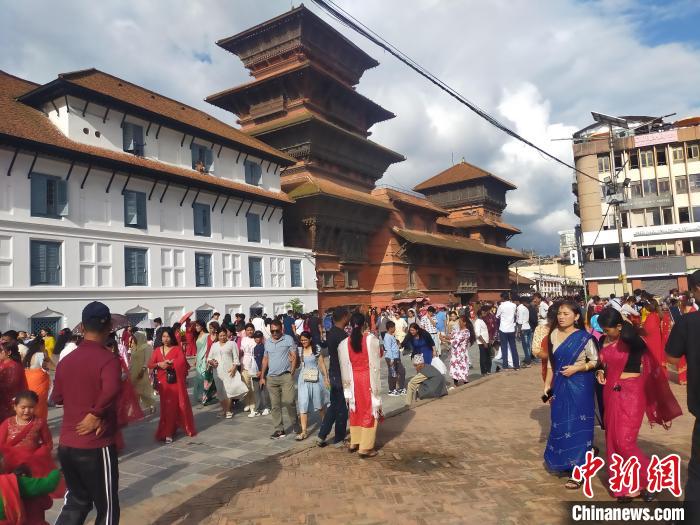
中新网石家庄5月31日电 题:中国"文物医生"让尼泊尔文化瑰宝重焕生机 中新网记者 陈林 20多年前,在河北省古代建筑保护研究所(今河北省文物与古建筑保护研究院)工作的次立新第一次走进 北京妙应寺。在那里,他听到了元代时尼泊尔工艺家阿尼哥率工匠来中国主持修建妙应寺白塔的故事。 9年前,有20多年文物保护工程勘察设计和施工经验的次立新,参与到中国援助尼泊尔加德满都杜巴广 场九层神庙修复项目中。这是中国在尼泊尔开展的首个大规模文物援外项目。 加德满都谷地是尼泊尔首个世界文化遗产,杜巴广场九层神庙及附属建筑是其重要组成部分。2015年4 月,尼泊尔发生8.1级地震,九层神庙及附属建筑在内的众多文物古迹遭受严重破坏。 次立新说,当时那场地震已过去一年多,但九层神庙上面"只是简单罩了层雨布,破损构件无序堆积在 一起"。 在现场,项目团队一边通过倾斜摄影测量、三维数字扫描等技术手段对现场进行科学勘察,一边进行建 筑结构评估、走访收集九层神庙老照片,最后按时完成了修复方案的设计编制。 2017年4月,尼泊尔相关部门复函同意河北文物保护团队编制的九层神庙修复项目总体设计方案。随 后,九层神庙修复项目正式开始施工。 次立新告诉 ...
正本清源地讲述文物保护故事(创作谈)
Ren Min Ri Bao· 2025-05-28 22:31
Core Viewpoint - The article discusses the creation of a television series titled "Guardians of the Treasure," focusing on cultural heritage protection and archaeology, aiming to counter the sensationalism of tomb raiding depicted in previous works [1][2]. Group 1: Themes and Narrative Structure - The series aims to highlight the importance of cultural heritage protection and the legal responsibilities associated with tomb raiding, rather than glorifying the act itself [1]. - The narrative will intertwine real events, such as the Jiangcun Tomb case, and will feature a storyline centered around the Han Emperor's mausoleum, showcasing the struggles of archaeologists and cultural preservationists [1][2]. - The series will employ a multi-threaded narrative structure, including international artifact recovery and significant archaeological cases, to enhance emotional depth and engagement [2]. Group 2: Production and Artistic Approach - The production team emphasizes realism in the portrayal of archaeological practices, utilizing actual locations in Xi'an and Hancheng for filming [2]. - The artistic style aims to authentically recreate historical burial sites, with detailed attention to the differences in tomb structures from various dynasties [2]. - The series incorporates expert guidance to ensure accurate representation of archaeological techniques and cultural heritage preservation [2]. Group 3: Cultural Significance - The project is seen as a bridge connecting the past and future, reflecting the romantic notion of archaeology as a means to understand history [3]. - The series represents a significant step in addressing the narrative around cultural heritage and aims to educate the audience on the importance of preservation efforts [3].
(文化中国行)古丝路上新生代“文物医生”:在“有意思”里续传承
Zhong Guo Xin Wen Wang· 2025-05-23 05:57
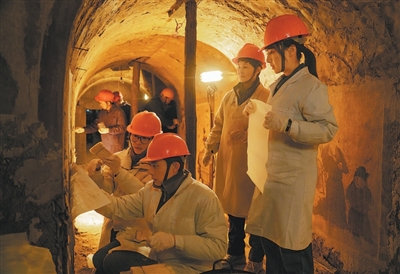
5月21日至23日,以"守护丝路遗产·锻造大国工匠"为主题的西北四省(区)文物保护工匠技能竞赛暨甘肃 省第一届文物行业职业技能竞赛在甘肃兰州举行,来自甘肃、青海、宁夏、新疆四省(区)的百余名文物 修复领域的能工巧匠同台竞技。 随着"考古文博热"持续升温,在古丝路贯穿全境的西北四省(区),越来越多年轻力量涌入文物修复和考 古勘探发掘一线。青海省文物考古研究院的王旖萱便是其中一员,已从业4年多。 此次是王旖萱首次参加该领域赛事。"有点紧张,进入节奏后慢慢静下来。"王旖萱23日接受中新社记者 采访表示,逛博物馆是她自幼的爱好,大学期间也因此选择了文物保护专业,"和文物接触很有意思, 当你触摸它、与它对视,仿佛能感受到千年前,也曾有一位古代工匠同样触摸过它,这就是文化传承的 力量"。 如愿从事热爱的工作后,在西北大漠中跟随前辈前往考古勘探现场、在戈壁滩上开展田野调查,这些在 王旖萱看来都并非苦差,反而是与大自然的亲密接触。她说,"如今网络发达,资讯繁多,有人将精力 和时间花在追逐时新事物上,但也总得有人沉下心来做文化传承守护的工作,我愿意成为这样的人。" 本次竞赛,来自西北四省(区)文博单位、相关企业、高校、职业院校 ...