精准医疗

Search documents
零溶血率:智能采血机器人破解全球医疗“隐形难题” 打开精准医疗与自动化投资新蓝海
Quan Jing Wang· 2025-12-15 08:00
Core Insights - The issue of hemolysis in blood samples is a significant problem in medical diagnostics, contributing to 40%-70% of pre-analytical errors, which can lead to misdiagnosis and missed diagnoses [1] - Technological innovations, particularly the automated blood collection robot developed by Zhongshan Hospital affiliated with Fudan University, have the potential to reduce hemolysis rates to nearly 0%, significantly improving testing quality [1] Clinical Value - The smart blood collection robot not only alleviates labor but also upgrades the quality system of hospital laboratories, enhancing accuracy and standardizing processes [2] - The robot's automated operation eliminates sample quality fluctuations caused by human error, establishing a standardized workflow from collection to mixing and tracking [2] - Patient experience is improved with a success rate of over 94% for punctures, reduced pain, and a non-contact operation that minimizes risks for healthcare workers [2] Market Dynamics - China's healthcare system faces challenges due to a shortage of nursing resources and an aging population, with only 4.16 registered nurses per 1,000 people as of 2024, which is below developed country levels [3] - The national "14th Five-Year Plan" supports the development of innovative medical devices, positioning blood collection robots as a key solution to clinical needs and aligning with policy directions [3] - The global blood collection robot market is projected to exceed $30.7 billion by 2032, with a compound annual growth rate (CAGR) of over 8.5% [3] Investment Perspective - The company Minass has established a leading position in the domestic smart blood collection robot market, having received NMPA Class III medical device certification in 2019, creating a technology gap of over five years compared to similar products [4] - Minass is the only project globally to have passed clinical trials and obtained Class III medical device registration, indicating high compliance and strong implementation capabilities [4] - The company holds over 40 patents related to vascular measurement and puncture control, creating a solid technological moat [4] Conclusion - The smart blood collection robot signifies a shift in diagnostic medicine from reactive error correction to proactive quality control, driving the healthcare system towards standardization, digitization, and precision [5] - This technology is a crucial component of automated medical devices, smart hospitals, and tiered diagnosis systems, positioning itself as an essential infrastructure in the era of health and digital integration [5] - Companies that can overcome pre-analytical quality control challenges are likely to play a key role in the upcoming wave of medical automation, with smart blood collection robots leading the charge [5]

专家:癌症2050年或将成可控制的慢性病
21世纪经济报道· 2025-12-15 05:57
Core Viewpoint - Cancer is a significant global public health challenge, with the WHO reporting 10 million deaths in 2020, accounting for 1/6 of total deaths, and projections indicating that without urgent action, cancer deaths could exceed 18 million by 2050 [3][4]. Group 1: Current State of Cancer Research - China has emerged as a key player in global cancer research, with a record number of studies presented at major international oncology conferences, including 60 studies at the ESMO Asia Congress 2025 and 73 at the ASCO annual meeting [3]. - The National Healthcare Security Administration has added 36 cancer drugs to the 2025 basic medical insurance catalog, representing 31.58% of the new additions, thereby expanding treatment options for cancer patients [3]. Group 2: Future Outlook on Cancer Management - Experts predict that within the next 25 years, cancer will be recognized as a controllable chronic disease, with significant advancements in theoretical and technological innovations required to achieve this goal [4][5]. - The global burden of cancer is expected to rise, with an estimated 28.4 million new cases by 2040, a 47% increase from 19.3 million in 2020 [6]. Group 3: Factors Influencing Cancer Development - Five main factors contributing to cancer development have been identified: external triggers, infection-related factors, hormonal/receptor abnormalities, lifestyle-related factors, and psychological and immune-related triggers [7]. - The essence of cancer is a disruption in the body's regulatory mechanisms, leading to uncontrolled cell proliferation, which emphasizes the need for strategies that enhance the body's regulatory capabilities [7]. Group 4: Innovations in Cancer Treatment - The integration of advanced technologies such as AI, genomics, and precision medicine is expected to improve cancer survival rates significantly [8]. - A new classification standard for cancer is anticipated to revolutionize management and treatment, promoting a collaborative approach across multiple disciplines [8]. Group 5: Challenges Ahead - The transition from fragmented to integrated treatment poses challenges, including the urgent need for knowledge updates among healthcare professionals and the development of innovative diagnostic and treatment technologies [10]. - Early diagnosis is crucial for improving treatment success rates, with AI playing a role in enhancing the identification of high-risk populations and optimizing screening processes [10]. Group 6: Immunotherapy as a Growth Area - Immunotherapy has emerged as a significant growth area in cancer treatment, with a projected compound annual growth rate of 177.4% from 2017 to 2023, potentially reaching a global market size of $84.9 billion by 2030 [11]. - Despite its early development stage, immunotherapy shows great promise, but challenges remain in biomarker selection, toxicity management, and cost control [11].


君实生物涨2.05%,成交额6195.19万元,主力资金净流入339.33万元
Xin Lang Cai Jing· 2025-12-15 01:53
Group 1 - The core viewpoint of the news is that Junshi Biosciences has shown a stock price increase of 36.59% year-to-date, with a recent rise of 2.05% in intraday trading, reflecting positive market sentiment [1][2] - As of December 15, the stock price reached 37.33 CNY per share, with a market capitalization of 38.33 billion CNY and a trading volume of 61.95 million CNY [1] - The company reported a net inflow of 3.39 million CNY from main funds, with significant buying activity accounting for 17.39% of total trades [1] Group 2 - Junshi Biosciences, established on December 27, 2012, specializes in the research and commercialization of monoclonal antibody drugs and other therapeutic protein drugs, with 90.67% of its revenue coming from drug sales [2] - The company operates within the pharmaceutical and biotechnology sector, specifically in the biopharmaceuticals category, and is involved in precision medicine and innovative drugs [2] - For the period from January to September 2025, Junshi Biosciences achieved a revenue of 1.806 billion CNY, representing a year-on-year growth of 42.06%, while the net profit attributable to shareholders was -596 million CNY, a 35.72% increase [2] Group 3 - As of September 30, 2025, the number of shareholders for Junshi Biosciences increased by 15.17% to 35,900, while the average circulating shares per person decreased by 12.96% to 21,361 shares [2] - Among the top ten circulating shareholders, E Fund's STAR 50 ETF holds 19.39 million shares, a decrease of 2.82 million shares from the previous period [3] - Another significant shareholder, Huaxia's STAR 50 ETF, holds 18.97 million shares, down by 1.07 million shares compared to the last reporting period [3]

血液肿瘤的15年经验,将如何改写自身免疫产业的竞争版图?
科尔尼管理咨询· 2025-12-12 09:55
Core Insights - The field of autoimmune diseases is rapidly evolving, with a competitive research pipeline reshaping market dynamics, drawing parallels from the advancements in hematologic oncology [1][2] - The significant breakthroughs in hematologic oncology over the past 15 years have led to unprecedented treatment options, which can serve as a model for the development of autoimmune therapies [1][4] Group 1: Treatment Innovations - The rapid expansion of diverse targets such as checkpoint inhibitors (e.g., PD-1), cell therapies (e.g., CD19, CD20), and targeted therapies (e.g., BTK, Bcl2) has provided multiple treatment options in hematologic oncology, emphasizing the need for biomarker-driven patient stratification [3] - The past decade has seen the introduction of several groundbreaking drugs in hematologic oncology, with a similar pace of innovation expected in the immunology field [8] - Multi-indication products like Bcl2 inhibitors and BTK inhibitors have significantly improved treatment outcomes in lymphoid cancers, showcasing the potential for similar advancements in autoimmune diseases [10] Group 2: Patient Outcomes and Quality of Life - The introduction of 15 new therapies from 2003 to 2021 has increased the five-year survival rate for multiple myeloma patients in the U.S. from 29% in the 1990s to 62% in 2021, highlighting the impact of modern treatments on patient outcomes [10] - In the realm of severe asthma, the introduction of biologics has led to a significant reduction in mortality rates, demonstrating the potential for improved patient outcomes in autoimmune diseases [12][13] Group 3: Strategic Insights for the Industry - The evolution of treatment strategies in hematologic oncology, from broad disease control to curative approaches, provides a blueprint for the next phase of autoimmune disease development [14][16] - The industry must learn from the successes and challenges faced in hematologic oncology to navigate the rapidly changing healthcare landscape for autoimmune diseases [18] - Key differences between autoimmune diseases and hematologic cancers include the chronic nature of autoimmune diseases, which require long-term management rather than immediate intervention, and the larger patient population affected [18] Group 4: Future Directions - The future of autoimmune disease treatment is likely to be driven by combination strategies, biomarker-based precision medicine, and sequential approaches rather than solely relying on single-agent efficacy [20] - The current technological environment, including AI-driven drug discovery and real-world evidence integration, presents new opportunities for accelerating innovation and improving patient outcomes [22]

微创技术再突破
Qi Lu Wan Bao· 2025-12-12 06:20
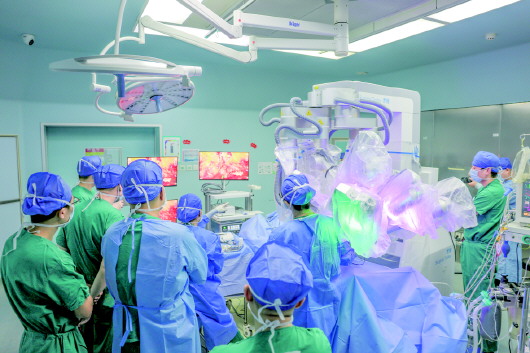
Core Insights - The successful completion of the first robot-assisted single-port laparoscopic prostate cancer radical surgery in Zaozhuang marks a significant advancement in minimally invasive surgical techniques at the hospital [2][4] Group 1: Surgical Innovation - The robot-assisted laparoscopic technology combines precision operation with minimally invasive advantages, providing a 10-15 times magnified 3D high-definition view that enhances surgical accuracy [3] - The robotic system features flexible mechanical arms that can rotate 540°, allowing for intricate dissection and suturing in confined spaces, surpassing human hand capabilities [3] - The surgery resulted in minimal blood loss of less than 50ml, which is an 80% reduction compared to traditional methods, showcasing the system's superior blood control [3] Group 2: Patient Outcomes - The patient, an elderly male diagnosed with localized prostate cancer, experienced rapid recovery, being able to mobilize the day after surgery, with a reduced hospital stay of 3-5 days [2][3] - The procedure effectively preserved urinary control and sexual function, significantly lowering the risks of incontinence and erectile dysfunction [3][4] Group 3: Broader Applications - The robot-assisted laparoscopic technology is applicable to a wide range of conditions, including kidney and adrenal diseases, and various urinary tract disorders, emphasizing its versatility in surgical treatments [4] - The successful implementation of this technology reflects the hospital's commitment to driving development through technological innovation and enhancing surgical precision and patient care [4]
何氏眼科:新任总经理何星儒先生正式就任后将全面负责公司日常经营管理事务
Zheng Quan Ri Bao Wang· 2025-12-11 08:42
Core Viewpoint - He Eye Hospital (301103) has appointed Mr. He Xingru as the new general manager, who will be responsible for the company's daily operations and management [1] Group 1: Company Strategy - The company will adhere to the "Technology and Humanity" philosophy and deepen the "Smart Bright City" strategy [1] - There is a focus on integrating cutting-edge technologies such as digitalization and precision medicine with ophthalmic healthcare [1] - The aim is to establish a comprehensive life-cycle eye health management system [1] Group 2: Long-term Vision - The company believes that a stable long-term market value is derived from solid operational performance and clear value logic [1] - Future strategies will emphasize sustainable development, transparent information disclosure, and effective communication with investors [1] - The company aims to steadily advance its brand building in the capital market and create long-term value for investors [1] Group 3: Future Reporting - Stakeholders are encouraged to pay attention to the company's upcoming periodic reports for specific operational updates [1]
全球高频喷射呼吸机行业总体规模、主要企业国内外市场占有率及排名
QYResearch· 2025-12-11 02:36
Core Viewpoint - The global high-frequency jet ventilator market is experiencing steady growth driven by the increasing demand for precision medicine and advancements in critical care technology [4][7]. Industry Overview and Market Size - The high-frequency jet ventilator market is segmented to meet diverse clinical scenarios, with a focus on intelligent integration, high-frequency and conventional mode fusion, and miniaturization [4]. - The market is projected to grow from $0.50 billion in 2024 to $0.82 billion by 2031, with a compound annual growth rate (CAGR) of 7.29% from 2025 to 2031 [7]. - North America and Europe are the primary production and consumption centers, holding market shares of 43.01% and 35.43% respectively in 2024 [7]. - The Asia-Pacific region, particularly China, is emerging as a new growth engine, with the market expected to increase from $173 million in 2024 to $453 million by 2031 [8]. Market Concentration - The market is highly concentrated, with the top five manufacturers accounting for 87.84% of the global market share in 2024 [10]. - Single jet ventilators dominate the market, expected to reach a share of 59.74% by 2031, while dual jet ventilators are gaining traction in complex surgical scenarios [10]. Technological Advancements - High-frequency jet ventilators are evolving into intelligent respiratory support platforms, integrating smart algorithms and remote management technologies [11]. - The devices are designed to enhance ventilation precision and operational safety across various clinical applications [4]. Industry Characteristics - The market is characterized by high entry barriers due to technological complexities and brand dominance by established players [13][19]. - The product segmentation is tailored to specific patient populations and clinical indications, enhancing treatment efficacy [15]. Favorable Factors for Industry Development - The unique physiological advantages of high-frequency jet ventilators, such as reduced risk of lung injury and effective ventilation in challenging clinical conditions, drive their adoption [16]. - The increasing prevalence of chronic respiratory diseases and acute respiratory failure due to an aging population is boosting demand for these devices [16]. - Government policies supporting high-end medical equipment development provide external support for technological advancements [16]. Unfavorable Factors for Industry Development - Domestic companies face high dependency on foreign core technologies, limiting their competitive edge in the high-end market [17]. - Potential clinical complications associated with high-frequency jet ventilation may restrict its widespread application [17]. - The high costs of development, production, and maintenance of these devices pose challenges for market penetration, especially in grassroots medical institutions [18].

美团买药推出“1对1急送”服务 流感药品配送最快可提速25分钟
Zheng Quan Ri Bao Wang· 2025-12-09 10:41
Core Insights - The national flu activity is on the rise, with a peak expected in mid-December, leading to increased demand for testing, medication, and online consultations [1] - Meituan's health index indicates a significant increase in flu medication orders, particularly in East and Central China, with some areas seeing over 80% week-on-week growth [1] - Meituan has launched a "Flu Protection Season" initiative, enhancing drug delivery and testing services to provide a comprehensive solution for flu management [1][2] Drug Delivery Services - Meituan's "1-to-1 urgent delivery" service allows users to receive medications within 5-25 minutes, with nearly half of the pharmacies on the platform already participating [2] - The service is expected to achieve full coverage by early January 2026, reflecting the growing trend of online health management [2] Testing Services - Users can choose between antigen testing and home nucleic acid testing, with free flu test kits provided with the purchase of certain medical devices [3] - Home testing services have seen a 60% week-on-week increase in orders, and a nurse home sampling service has been introduced in major cities for convenience [3] Market Trends - Public awareness and preventive measures regarding respiratory infectious diseases have significantly improved, leading to increased utilization of testing services through various channels [3] - The integration of online platforms offering "testing-consultation-medication" services is becoming an essential supplement to the healthcare system during flu season [3]

近亿元融资!国产血管介入影像一体化平台
思宇MedTech· 2025-12-09 10:08
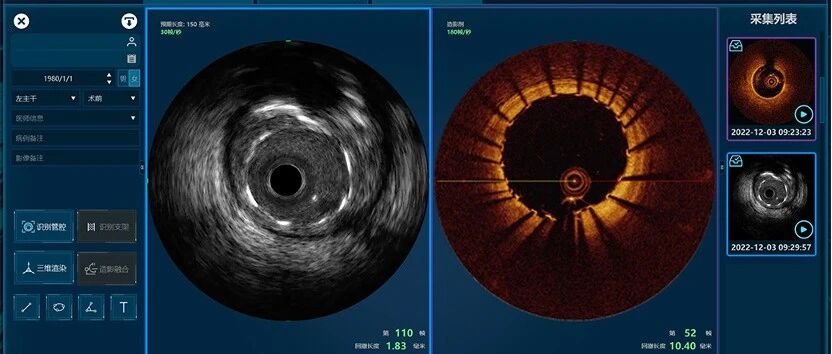
Core Viewpoint - Tianjin Hengyu Medical Technology Co., Ltd. has completed nearly 100 million RMB financing, which will be used to advance the research, production, and commercialization of vascular interventional imaging and treatment products, aiming to build a rare integrated platform for vascular interventional diagnosis and treatment in China [1][15]. Market Situation - The global vascular imaging market is experiencing steady growth due to the rising incidence of cardiovascular diseases and the increasing demand for minimally invasive procedures, leading to a significant rise in the need for high-resolution, low-trauma imaging and navigation systems [2]. - In China, the intravascular imaging market has been dominated by foreign brands, but the rise of domestic companies, policy support, and clinical promotion are gradually increasing the localization rate of intravascular imaging devices [2]. - The domestic vascular imaging and interventional systems market is expected to see rapid growth in the coming years, with trends such as AI-enabled imaging analysis and personalized precision intervention reshaping the industry landscape [2]. Company Overview - Hengyu Medical, established in 2016 and headquartered in Tianjin, focuses on intravascular ultrasound (IVUS), optical coherence tomography (OCT), and their derivative multimodal imaging and interventional solutions [5]. - The company possesses a unique capability to master both IVUS and OCT technologies, further developing integrated multimodal imaging systems, which provides a high technical barrier and platform construction advantage [6]. Product Development - Hengyu Medical has been advancing product registration, clinical collaboration, and industrialization verification, forming a series of proprietary intellectual property and production capabilities [8]. - The company has established a complete product matrix covering imaging diagnosis and interventional treatment, including IVUS, OCT, OCT-NIRS, 4D ICE, and laser ablation systems, creating a full-chain layout from imaging acquisition to treatment execution [9]. Technology and Innovation - The IVUS system developed by the company supports real-time intravascular ultrasound imaging, providing accurate assessments of vascular wall structure and plaque burden [11]. - The OCT system utilizes high-speed optical interference technology, achieving micron-level imaging precision, suitable for complex coronary intervention pre-assessment and post-verification [12]. - The OCT-NIRS dual-modal system innovatively combines OCT structural imaging with near-infrared spectroscopy (NIRS) for simultaneous structural and chemical composition analysis, aiding in plaque stability assessment and intraoperative risk evaluation [13]. - The 4D ICE and laser ablation systems enhance procedural navigation and effectively ablate calcified plaques, improving surgical success rates and safety [14]. Conclusion - The recent financing reflects the capital market's ongoing confidence in the domestic vascular interventional imaging and treatment sector, with Hengyu Medical's dual-modal imaging and cross-vascular system layout driving strategic upgrades from cardiovascular to broader vascular applications [15][16]. - In the context of accelerating trends in precision medicine and AI empowerment, Hengyu Medical is poised to become a representative enterprise in the domestic high-end medical imaging equipment field, contributing to the enhancement of China's independent innovation capabilities in vascular interventional diagnosis and treatment [16][17].
赛默飞推出SwiftArrayStudio™基因芯片分析仪,助力多组学研究
仪器信息网· 2025-12-07 09:06
Core Insights - Thermo Fisher Scientific has launched the SwiftArrayStudio™ gene chip analyzer, which can complete the entire process from sample to result in just 30 hours, aiding researchers in conducting more impactful and scalable genetic studies [1][4]. Group 1: Product Features - The SwiftArrayStudio™ integrates four key steps of genotyping, facilitating broader population coverage and advancing genome-wide association studies (GWAS) and pharmacogenomics breakthroughs [2][4]. - The analyzer is designed to significantly reduce manual processing time by approximately 40%, thus lowering costs and operational complexity while ensuring high-quality data [6]. Group 2: Market Impact - The introduction of SwiftArrayStudio™ is expected to redefine the potential of gene chip technology, supporting new research in population genetics and pharmacogenomics, and accelerating the development of personalized treatment plans [6][8]. - The platform is particularly advantageous for comprehensive pharmacogenetic testing, covering major drug-related genetic markers and supporting research on both common and rare variants [8]. Group 3: Company Vision - Thermo Fisher's leadership emphasizes that this new gene chip platform will expand scientific boundaries and empower researchers to gain more comprehensive biological insights, thereby accelerating discoveries in health and disease [8].