
细胞治疗

Search documents
近2000万罚单,ST香雪拉响药企信披违规警钟
2 1 Shi Ji Jing Ji Bao Dao· 2025-08-20 08:57
Core Viewpoint - Guangzhou Xiangxue Pharmaceutical Co., Ltd. and its actual controller Wang Yonghui have been penalized for information disclosure violations, with fines totaling 6 million yuan for the company and 10 million yuan for Wang Yonghui [2][3][10] Group 1: Violations and Penalties - The company failed to recognize losses from the demolition of villas in its 2019 annual report, resulting in an inflated profit of 53.83 million yuan, which accounted for 45.98% of the total profit for that year [4] - The actual controller Wang Yonghui received a warning and was fined 10 million yuan, with 3 million yuan as the directly responsible supervisor and 7 million yuan as the actual controller [2][3] - The company was also found to have significant omissions regarding non-operating fund occupation by related parties, amounting to 4.852 billion yuan from 2016 to 2020 [4] Group 2: Background and Investigation - The investigation into Xiangxue Pharmaceutical began on September 30, 2024, when the company and Wang Yonghui received a notice of case filing from the China Securities Regulatory Commission (CSRC) [3] - The violations were traced back to 2016, with the formal administrative penalty decision being disclosed on August 16, 2025, marking the end of the investigation phase [3][4] Group 3: Financial Performance and Market Impact - The company has reported continuous net losses from 2021 to 2024, with projected revenues for 2024 between 1.613 billion yuan and 2.013 billion yuan, and net losses estimated between 600 million yuan and 862 million yuan [6] - Following the penalties, the company's stock was suspended for one day and subsequently resumed trading under a risk warning, changing its name to "ST Xiangxue" [6] Group 4: Industry Context and Regulatory Environment - The case of Xiangxue Pharmaceutical is not isolated, as similar violations have occurred in the industry, highlighting a trend of increased scrutiny and penalties for information disclosure violations [7][10] - The new Securities Law implemented in 2020 has significantly increased the penalties for disclosure violations, with the company facing a fine of 6 million yuan and individual fines reaching up to 10 million yuan [10]

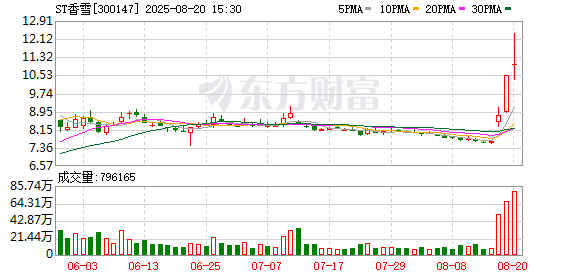
华润三九(000999) - 2025年8月17日投资者关系活动记录表
2025-08-17 16:34
Financial Performance - In the first half of 2025, the company achieved revenue of CNY 14.81 billion, a year-on-year increase of 4.99% [3] - Net profit attributable to shareholders was CNY 1.815 billion, a year-on-year decrease of 24.31% [3] - The overall gross margin was 53.5%, remaining stable year-on-year [4] - R&D investment reached CNY 662 million, with 205 projects under development [4] Business Segments - CHC health consumer products generated revenue of CNY 7.994 billion, a year-on-year decrease of 17.89%, accounting for 53.98% of total revenue [3] - Prescription drug revenue was CNY 4.838 billion, showing a 100.2% year-on-year increase due to the consolidation of Tian Shi Li [3] Strategic Initiatives - The company is focusing on core therapeutic areas and expanding its R&D pipeline to enhance innovation value [3] - A total of 8 new drug registration certificates were obtained during the reporting period [4] - The HiCM-188 project, a heart failure regenerative treatment, is being advanced in collaboration with Tian Shi Li [4][11] Market Positioning - The company aims to solidify its leadership position in the industry by optimizing its business layout and enhancing brand advantages [3] - The CHC business strategy emphasizes "full domain layout and comprehensive leadership," focusing on major brands and product categories [6][18] Future Outlook - The company expects to exceed the industry average growth rate in 2025, targeting double-digit revenue growth while maintaining stable profits [10][25] - The strategic focus will remain on CHC as the core business, with plans to enhance the prescription drug segment through innovation and collaboration [16][21] Challenges and Adjustments - The decline in net profit is attributed to high base effects from the previous year and changes in the respiratory disease incidence rate [9][25] - The company is actively monitoring market trends and adjusting its strategies to address the evolving retail landscape and competitive pressures [23]

第33届广州博览会首设机器人表演专区
Zhong Guo Xin Wen Wang· 2025-08-12 12:35
Group 1 - The 33rd Guangzhou Expo will showcase over 130 robots in a newly established robot performance area, highlighting the integration of resources from the Greater Bay Area [1] - The expo will feature four thematic exhibition areas, including new productivity, rural revitalization, silver economy, and quality of life, covering a total exhibition area of approximately 180,000 square meters, representing a year-on-year growth of over 50% [1] - The 9th China (Guangzhou) International Elderly Health Industry Expo will focus on technology and resources from Hong Kong and Macau, featuring a dedicated smart robot area with various innovative robots [1] Group 2 - The 2025 Guangzhou Medical and Health Industry Expo will have a 30,000 square meter exhibition area, attracting over 400 participating units, showcasing cutting-edge technologies such as gene editing and cell therapy [2] - The expo will facilitate cross-border medical cooperation through a special session for Hong Kong and Macau medical devices, promoting the integration of advanced medical technologies into the mainland market [2] - The consumption assistance exhibition area will serve as a platform to promote domestic circulation, with participation from 80 cities and over 320 enterprises, connecting local agricultural products with Greater Bay Area consumers [2]

深企在体内CAR-T赛道抢占先机 细胞治疗药物由定制变通用
Shen Zhen Shang Bao· 2025-08-09 21:46
Core Insights - The high cost of advanced cell therapy drugs, reaching hundreds of thousands to millions per injection, can potentially be reduced through mRNA and advanced delivery technologies, transforming highly personalized therapies into more universal drugs [1] - The development of in vivo CAR-T therapy pipelines by Chinese biopharmaceutical companies aims to address the long development cycles and high treatment costs associated with traditional CAR-T therapies [1] Company Developments - DeepXing Biotechnology, led by Dr. Linxian Li, has innovated a delivery technology platform using lipid nanoparticles (LNP), enabling "instant modification and treatment," which could significantly lower costs and expand the range of applicable conditions for advanced immunotherapy [2] - The company has rapidly grown into an international team of over 150 people and has secured over 1 billion in financing since its establishment in late 2019 [2] Government Support - Shenzhen has initiated the 2023 second batch of special funds for strategic emerging industries, with DeepXing's LNP delivery technology platform project successfully receiving government investment [3] - The company has also received funding approval for its "R&D Investment Support Plan for Technology-based Enterprises" from the Shenzhen government [3] - DeepXing has four mRNA rare disease therapies that have received pediatric rare disease designation and orphan drug designation from the FDA [3]
Bio-Techne(TECH) - 2025 Q4 - Earnings Call Transcript
2025-08-06 14:00
Financial Data and Key Metrics Changes - The company reported adjusted EPS of $0.53 for Q4, up from $0.49 in the prior year, while GAAP EPS was a loss of $0.11 compared to a profit of $0.25 in the previous year [28] - Q4 revenue reached $317 million, reflecting a 3% organic growth year-over-year and a 4% reported growth [28] - Total adjusted gross margin was 70.1% in Q4, down from 71.1% the previous year, primarily due to an unfavorable product mix [29] Business Line Data and Key Metrics Changes - The Protein Sciences segment reported sales of $226.5 million, with organic revenue growth of 4% for the quarter, driven by strong performances in cell therapy and protein analytical tools [32] - The Diagnostics and Spatial Biology segment saw Q4 sales of $89.7 million, with both reported and organic growth decreasing by 1% compared to the same period last year [32] - The divestiture of the Exosome Diagnostics business is expected to improve the operating margin in the Diagnostics and Spatial Biology segment [35] Market Data and Key Metrics Changes - Biopharma end market delivered high single-digit growth for both Q4 and the full fiscal year, driven by large pharmaceutical customers [13] - Academic revenue represented approximately 21% of total business, with U.S. institutions contributing roughly 12%, and the exposure to NIH funding was reassessed to be less than one-third [14][15] - China experienced low double-digit growth in Q4, attributed to demand improvement ahead of anticipated tariff impacts [17] Company Strategy and Development Direction - The company announced the divestiture of its exosome diagnostics business to focus on core growth pillars and improve profitability [10][11] - Strategic investments will be redirected towards advancing automated proteomic analysis and spatial biology platforms, as well as expanding applications in cell therapy [39] - The company aims to achieve adjusted operating margin expansion of approximately 100 basis points in fiscal year 2026 compared to fiscal year 2025 [40] Management's Comments on Operating Environment and Future Outlook - Management expressed confidence in navigating a dynamic market environment, with expectations of low single-digit organic growth until uncertainties around NIH funding and pharmaceutical tariffs are resolved [38] - The company remains optimistic about long-term growth drivers, including an aging global population and increasing demand for life sciences innovations [39] - Management noted that the current cautious purchasing behavior among U.S. academic customers is expected to persist until funding uncertainties are clarified [92] Other Important Information - The company generated $98.2 million in cash from operations in Q4 and returned $12.4 million in dividends and $100.1 million through stock buybacks [31] - The balance sheet ended Q4 with $162.2 million in cash and total leverage well below one times EBITDA [31] Q&A Session Summary Question: Clarification on growth outlook for fiscal year 2026 - Management clarified that low single-digit growth is expected until there is more certainty around various administration policies affecting academic funding and pharmaceutical tariffs [42] Question: Performance of instrumentation in large pharma - Management noted strong growth in instrumentation for large pharma, particularly the LEO system tailored for high throughput applications [44] Question: Commitment to market plus 500 basis points growth - Management acknowledged that in a turbulent environment, achieving that growth may be challenging, but they remain confident in their differentiation from peers [48] Question: Drivers of margin expansion - Margin expansion is expected to be driven by the divestiture of Exosome Diagnostics, which was a headwind to margins in fiscal year 2025 [49] Question: NIH funding sources for academic customers - Management indicated that approximately 50-55% of academic funding comes from federal sources, with NIH accounting for about half of that [51] Question: Outlook for China market - Management highlighted that growth in China was driven by funding releases and anticipation of tariff impacts, with expectations for modest growth moving forward [66] Question: Visibility on biotech funding - Management is monitoring biotech funding closely, noting recent signs of improvement but acknowledging that it remains significantly down year-over-year [93]

中基长寿科学(00767)拟收购亚洲综合细胞库100%股权
智通财经网· 2025-08-04 12:12
Group 1 - The company, Zhongji Changshou Science (00767), has signed a non-binding memorandum of understanding to acquire 100% equity of the target company, Comprehensive Cell Bank Limited, from China International Orthopedic Medical Group Limited [1] - The target company specializes in cell therapy, cell drug research and development, and health longevity management services, holding the Comprehensive Cell Bank [1] Group 2 - Comprehensive Cell Bank is the world's largest international autologous immune cell bank and is recognized for meeting various international standards, including FDA, AABB, and PIC/S cGMP [2] - It is the only clinical cell bank in Asia registered with the FDA for both immune cells and stem cells, ensuring compliance with international standards for cell management [2] Group 3 - The Comprehensive Cell Bank began operations on November 17, 2018, and possesses patented technologies in cancer early screening, NK cells, stem cells, and cartilage cells, along with 22 advanced medical testing platforms [3] - The company can provide services to 300,000 people globally, with potential revenue exceeding HKD 30 billion from immune cell storage, cancer early screening, longevity medical testing, and related cell therapies [3]
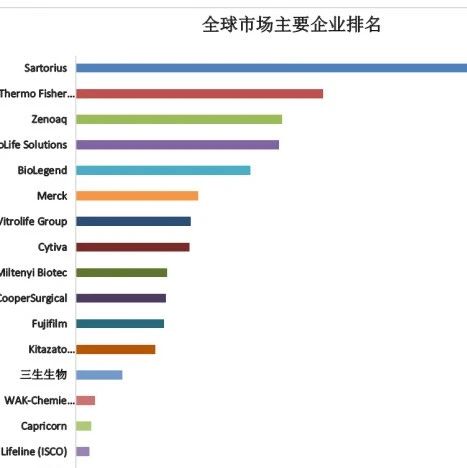
全球细胞冷冻保存液市场前10强生产商排名及市场占有率
QYResearch· 2025-08-04 08:48
Core Viewpoint - The global cell freezing preservation solution market is projected to reach $160 million by 2031, with a compound annual growth rate (CAGR) of 4.8% from 2025 to 2031 [2]. Market Size, Classification, and Application - The global market for cell freezing preservation solutions is expected to grow significantly, driven by advancements in regenerative medicine and cell therapy [15][21]. - The major demand source currently comes from biotechnology companies, accounting for approximately 54.8% of the market share [10]. - The leading product type is serum-free cell freezing culture medium, which holds about 92.7% of the market share [11]. Industry Development Trends - There is a growing demand in niche markets, particularly in stem cell therapy, immune cell therapy (such as CAR-T), and gene therapy, which is driving market diversification [14]. - Serum-free freezing solutions are gaining traction due to their ability to reduce external substance interference and improve cell quality [14]. - Innovations in products and technology, including new cryoprotectants and smart monitoring systems, are enhancing the efficiency and precision of cell freezing [14][20]. Major Driving Factors - The progress in regenerative medicine and cell therapy is leading to an increased demand for high-quality cell freezing solutions [15]. - The rise of precision medicine is creating a growing need for personalized treatment, particularly for patient-specific cell preservation [16]. - The development of biobanks and tissue sample banks is also contributing to the sustained demand for cell freezing solutions [19]. Industry Development Constraints - High production and usage costs of cell freezing solutions pose a challenge, particularly for small and medium enterprises and in developing countries [22]. - The lack of standardization in technology and application can lead to varying preservation outcomes for different cell types [23]. - Despite advancements, cell damage during the freezing process remains a significant issue, particularly affecting cell viability in immune and stem cell therapies [24]. - Regulatory and compliance requirements vary by country, complicating international market expansion [25]. - Limited awareness and education about cell freezing solutions in emerging markets may hinder broader acceptance [26].
国产创新药突围:谁能先把CAR-T成本砍半?
Hu Xiu· 2025-08-03 03:24
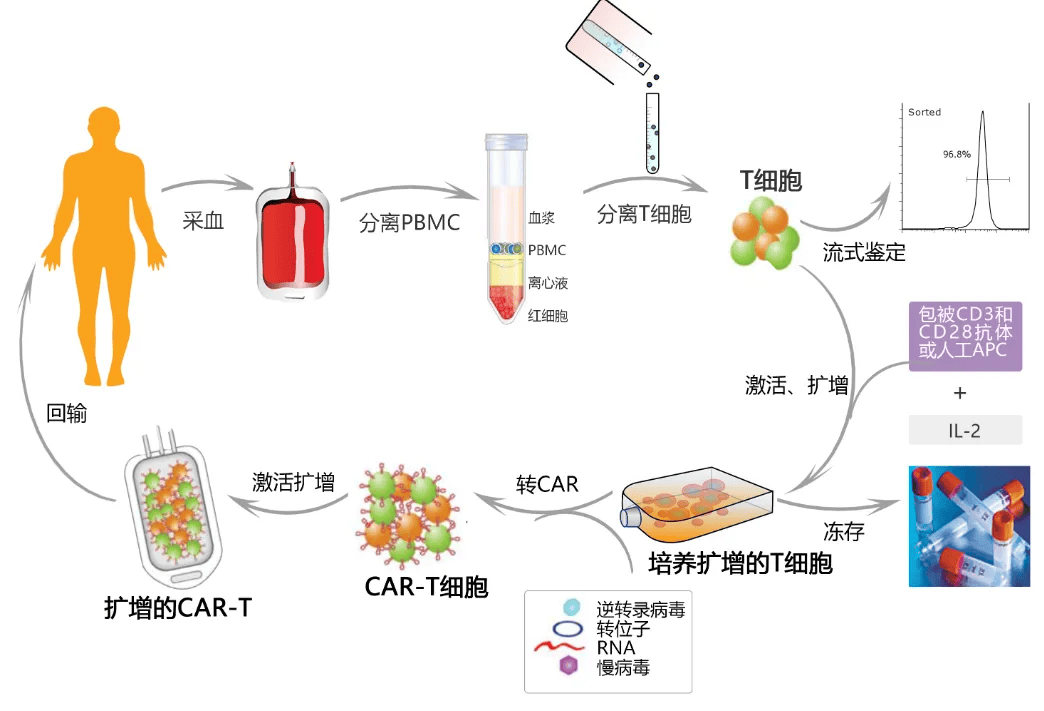
Core Insights - The article discusses the transformative impact of CAR-T therapy in cancer treatment, highlighting its shift from a laboratory concept to a viable treatment option for patients with relapsed/refractory tumors [1] - The Chinese biopharmaceutical sector, particularly in cell therapy, is gaining significant attention from both domestic and international investors, with over $5 billion in business development (BD) transactions in 2024 alone [2] - The analysis aims to decode the investment logic in innovative drugs, focusing on the challenges and opportunities within the cell therapy landscape, particularly CAR-T [3] Industry Overview - The CAR-T market is characterized by a critical contradiction: while the therapy shows significant efficacy, its high costs (often exceeding 1 million yuan per treatment) limit patient access [5][6] - The demand for CAR-T therapy is substantial, with approximately 25,000 new cases of multiple myeloma and 60,000 new cases of non-Hodgkin lymphoma annually in China, yet many patients are deterred by the high costs [5] Payment System Challenges - Commercial health insurance currently supports CAR-T therapy, but only 42% of the available plans explicitly cover CAR-T treatments, with reimbursement rates for pre-existing condition patients being particularly low [6] - For widespread adoption, the cost of CAR-T treatments must drop below 300,000 yuan, which would allow for basic medical insurance coverage [6] Cost Reduction Strategies - The high costs of CAR-T therapy stem from its personalized and high-tech production model, but technological advancements are expected to reduce these costs significantly [9][10] - Key factors influencing cost reduction include: 1. **Vector Technology**: Transitioning from viral to non-viral vectors can reduce costs by 30%-50% [9] 2. **Autologous vs. Allogeneic**: Allogeneic CAR-T can lower costs to one-third or half of autologous CAR-T by enabling batch production [10] 3. **Production Processes**: Automation can reduce production time from over 14 days to about 30 hours, cutting costs by over 40% [11] Investment Analysis Framework - The analysis will evaluate nine CAR-T companies based on several dimensions, including: 1. **Technology Iteration and Cost Control**: Assessing the core technology routes and potential for cost reduction [13] 2. **Market Potential**: Estimating the patient population for various indications [14] 3. **Economic Viability and Market Access**: Identifying which companies are likely to secure market access based on cost control and pipeline potential [15] 4. **International Expansion Opportunities**: Evaluating the potential for products in international markets [16] 5. **Commercialization Capabilities**: Analyzing sales figures, production capacity, and investment relationships [17] Company-Specific Insights - The analysis focuses on nine leading CAR-T companies in China, which are at the forefront of CAR-T development, including those with approved products and those in critical clinical stages [18] - Each company's technology route and cost assessment will be detailed, highlighting their strategies for cost reduction and market positioning [26][30] Future Directions - The article anticipates that the adoption of allogeneic CAR-T technology will significantly reduce costs in the mid-term (2025-2028) and further advancements in non-viral vector technology will continue to drive down costs in the long term [24][25]
助力细胞治疗产业化,济南推出首台国产双智能化细胞制备平台
Qi Lu Wan Bao Wang· 2025-08-01 07:20
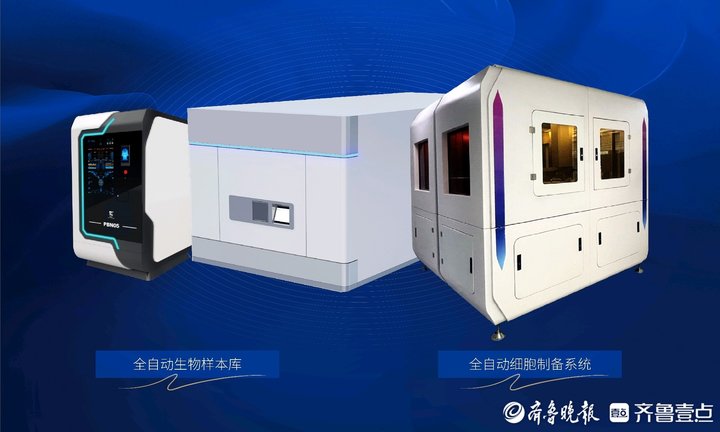
Core Viewpoint - The launch of the dual intelligent cell production and storage management platform marks a significant advancement in China's cell and gene therapy (CGT) industry, which is expected to grow substantially by 2030, reaching a global market size of $11 billion [1][2]. Group 1: Industry Insights - The CGT industry is recognized as a key area of support by the Chinese government, as outlined in the "Healthy China 2030" initiative, positioning cell therapy as an important sector for new productive forces [1]. - The global cell manufacturing market is projected to reach $11 billion by 2030, indicating a growing demand for advanced cell manufacturing technologies [1]. - China's CGT industry is still in its early stages, with the cell preparation market largely dominated by foreign companies, facing challenges such as high costs and low flexibility [1]. Group 2: Company Developments - The dual intelligent cell production and storage management platform is the first fully automated system in China that caters to both adherent and suspension cell cultures, showcasing significant technological innovation [2][3]. - The platform integrates expertise from various institutions, including the Shenzhen Institute of Advanced Technology, Nanyang Technological University, and Shandong University, demonstrating a successful collaboration between academia and industry [3]. - The platform achieves two major technological breakthroughs: redefining cell manufacturing standards through automation and machine learning, and revolutionizing sample management in ultra-low temperature environments [3].
产线利用率从35%提升到85%,“济南造”细胞设备带来新变革
Qi Lu Wan Bao Wang· 2025-08-01 07:04
Group 1 - The core viewpoint of the news is the introduction of the automated equipment for the dual intelligent cell production and storage management platform by Pansheng Bioengineering Group, which aims to enhance the efficiency and quality of cell therapy production [1] - Pansheng Group has invested 680 million yuan over five years to develop this automated system, which can switch between eight process routes for various therapies, significantly increasing production line utilization from 35% to 85% and reducing fixed costs by over 40% [1] - The automated preparation system incorporates over 1,000 process parameter models and 210 regulatory knowledge maps, allowing ordinary technicians to be trained in just two weeks, resulting in a sixfold increase in output per person and a 70% reduction in labor costs [1] Group 2 - The automated equipment utilizes a fully enclosed isolator, six-axis robots, and AI visual recognition to perform the entire cell processing workflow without human intervention, achieving a processing capacity of up to 10 billion cells per batch and supporting the treatment needs of 5,000 patients annually [2] - The quality incident rate of the automated system is reduced to 0.2‰, which is only 1/20th of the industry average, indicating a significant improvement in quality control compared to manual operations [2]