
虚拟电厂

Search documents
协鑫能科涨2.01%,成交额8432.98万元,主力资金净流出604.65万元
Xin Lang Cai Jing· 2026-01-05 02:20
Core Viewpoint - GCL-Poly Energy Holdings Limited's stock price has shown a slight increase of 2.01% this year, with fluctuations in trading performance over various periods, indicating a mixed market sentiment towards the company [2]. Group 1: Stock Performance - As of January 5, GCL-Poly's stock price reached 10.15 CNY per share, with a trading volume of 84.32 million CNY and a turnover rate of 0.52%, resulting in a total market capitalization of 16.48 billion CNY [1]. - Year-to-date, the stock has increased by 2.01%, but it has experienced a decline of 0.88% over the last five trading days, a rise of 3.68% over the last 20 days, and a drop of 15.28% over the last 60 days [2]. Group 2: Financial Performance - For the period from January to September 2025, GCL-Poly reported a revenue of 7.935 billion CNY, reflecting a year-on-year growth of 5.07%, while the net profit attributable to shareholders was 762 million CNY, marking a significant increase of 25.78% [2]. - The company has distributed a total of 1.226 billion CNY in dividends since its A-share listing, with 671 million CNY distributed over the past three years [3]. Group 3: Shareholder Information - As of September 30, 2025, GCL-Poly had approximately 78,000 shareholders, a decrease of 15.41% from the previous period, with an average of 20,802 circulating shares per shareholder, which is an increase of 18.21% [2]. - Among the top ten circulating shareholders, Hong Kong Central Clearing Limited holds 15.0573 million shares, a decrease of 11,200 shares from the previous period, while Guangfa Balanced Preferred Mixed A has entered the top ten with 9.6704 million shares [3].

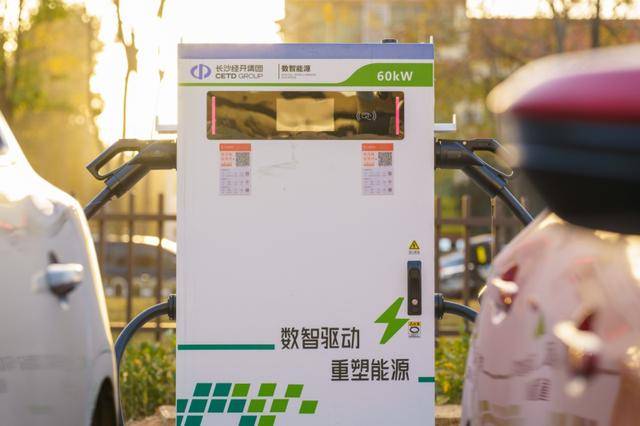
长沙经开集团:以深度市场化改革激活国企高质量发展
Sou Hu Cai Jing· 2026-01-05 00:18
Core Viewpoint - The year 2025 marks a critical juncture for the deepening reform of state-owned enterprises, with Changsha Economic and Technological Development Group (hereinafter referred to as Changsha Group) undertaking comprehensive market-oriented transformation across various dimensions to drive regional economic development [1] Group 1: Reform and Organizational Restructuring - Changsha Group has initiated a "true reform" approach by reshaping its organizational mechanisms to facilitate market-oriented transformation [2] - The company has restructured its business framework to focus on "large investment, large construction, large capital, large operations, and large intelligent manufacturing," addressing issues such as low marketization and long management chains [2] - The group has achieved over 30% reduction in the number of subsidiaries and an 18% optimization rate in middle management personnel, while also compressing management levels from five to three [2] Group 2: Performance and Compensation System - The performance and compensation reform emphasizes a "profit-based" approach, linking employee income directly to performance and efficiency [3] - A strict system has been implemented where "increased efficiency leads to increased pay, while decreased efficiency results in reduced pay," ensuring that income is closely tied to contributions [3] Group 3: Strategic Business Expansion - The restructuring has laid the groundwork for strategic business expansion, with subsidiaries targeting new markets and business models for growth [4] - The company has successfully attracted 43 quality industrial projects, with total investment reaching 7.5 billion yuan, transitioning from policy-driven to value-driven investment strategies [4] Group 4: Service Optimization and Value Creation - Changsha Group is evolving from a provider of infrastructure to an enabler of industrial development, enhancing its service offerings to improve the regional business environment [10][11] - The company has implemented a comprehensive service model that includes policy consulting and resource integration, supporting the growth of enterprises within its ecosystem [10] Group 5: Risk Management and Safety - Risk management is prioritized as a cornerstone of high-quality development, with a multi-dimensional risk control network established to ensure sustainable reform [12] - The group has innovated financing tools to optimize its debt structure, achieving an 11.78% reduction in average financing costs compared to the previous year [12] - Safety production measures have been strictly enforced, resulting in zero accidents over multiple years and numerous industry awards for quality and safety [13]

别卷峰谷价差了!储能“新路子”席卷!下一轮赢家是它?
Xin Lang Cai Jing· 2026-01-04 11:30
Core Insights - The Guangdong electricity spot market has welcomed the first five power generation virtual power plant trading units, with a total capacity of approximately 33 million kilowatts, marking a significant step towards fair market entry for distributed renewable energy resources [1][10] - The virtual power plants, formed by aggregating distributed photovoltaic, user-side energy storage, and charging piles, allow for active market participation, transforming previously passive grid resources into responsive market entities [1][10] - The Jiangsu province has also accelerated its virtual power plant development, aiming for a regulation capacity of over 5 million kilowatts by 2030, with an initial investment of approximately 10.39 million yuan for 100 projects [1][10] Group 1: Market Dynamics - The traditional peak-valley arbitrage model for commercial energy storage is losing its certainty due to changes in market conditions, with the installed capacity of renewable energy expected to exceed 1.2 billion kilowatts by 2025 [3][12] - The price of electricity during peak hours has risen, while daytime prices have dropped below 0.2 yuan per kilowatt-hour, making it challenging for energy storage to maintain profitability [3][12] - Policy adjustments have further weakened the economic viability of projects relying solely on peak-valley price differences, as new regulations remove the safety net of government-mandated time-of-use pricing [4][13] Group 2: Virtual Power Plant Benefits - Virtual power plants are redefining energy storage revenue models by combining aggregation of distributed resources with intelligent scheduling, leading to a composite revenue model that includes basic arbitrage and various ancillary services [5][14] - The accuracy of power forecasting for aggregated resources has reached over 92%, with deviation assessment costs reduced by 67% [5][14] - The revenue sources for virtual power plants include dynamic basic arbitrage, peak shaving services, frequency regulation, and demand response, showcasing a shift from single arbitrage tools to flexible adjustment assets [7][16] Group 3: Industry Transformation - Leading companies in the energy storage sector are transitioning from equipment manufacturing to service-oriented business models, enhancing their capabilities across the entire value chain [8][18] - Major players like Envision and Huawei are integrating hardware, software, and operational services to maximize the lifecycle value of energy storage systems [8][18] - Cross-industry players, including state-owned enterprises, are leveraging their resources to establish a comprehensive advantage in the virtual power plant market [8][19] Group 4: Policy and Technological Drivers - National policies have set ambitious targets for virtual power plant regulation capacity, aiming for 20 million kilowatts by 2027 and over 50 million kilowatts by 2030 [9][19] - Local governments are exploring differentiated policies, such as Guangdong's open load-type virtual power plant trading and Jiangsu's focus on cultivating demonstration projects [9][19] - The future of energy storage is seen as promising, with virtual power plants enabling scale effects and transitioning from single arbitrage to diversified revenue streams, supported by ongoing technological advancements and policy improvements [9][19]
云南:公布共享储能项目清单,未纳入项目不得进行容量租赁
中关村储能产业技术联盟· 2026-01-04 10:11
Core Viewpoint - The article outlines the "Yunnan Province New Energy Storage High-Quality Development Special Action Plan (2025-2027)", aiming for a new energy storage capacity of over 8GW by 2027, focusing on various technologies including lithium iron phosphate and others [1][13]. Group 1: Goals and Technology - The core goal is to achieve a new energy storage capacity of over 8 million kilowatts (8GW) by 2027 [1]. - The technology roadmap emphasizes lithium iron phosphate as the primary technology while also promoting sodium-ion, all-vanadium flow, compressed air, and aluminum-lead carbon storage technologies [1]. Group 2: Application Scenarios - On the power generation side, new energy storage will support the construction of new energy power plants without making storage configuration a prerequisite for project approval [1]. - On the grid side, shared storage will be prioritized in areas rich in new energy, with new electrochemical storage projects required to adopt grid-structured storage technology [1]. - User-side storage will focus on various applications including industrial parks, zero-carbon parks, data centers, and more, promoting innovative models like virtual power plants and smart microgrids [1][19]. Group 3: Project Management Optimization - A clear management system will be established for new energy storage projects, with strict timelines for project registration and construction [3][24]. - Projects not meeting deadlines will be removed from the demonstration project list, and any transfer of project development rights is strictly prohibited [3][24]. - Policy support will be limited to projects included in the approved list, ensuring orderly planning by local energy authorities [3][24]. Group 4: Scheduling and Operation - New energy storage scheduling management rules will be developed to ensure fair dispatch and effective operation of storage facilities [4][26]. - A mechanism for the utilization of new energy storage will be established, requiring regular reporting on operational performance to provincial energy authorities [4][26]. Group 5: Technology Diversification - The plan encourages innovation in new energy storage technologies and promotes the application of various storage technologies, including long-duration storage and hydrogen storage [5][29]. - Collaborative applications of multiple storage technologies will be explored, particularly in renewable energy hydrogen production [5][29]. Group 6: Market Mechanism Improvement - New energy storage will be encouraged to participate in the electricity market, with a focus on developing a multi-level market system that allows for integrated participation in energy transactions [6][31]. - A pricing mechanism for new energy storage will be researched to ensure reasonable compensation for reliable capacity costs [6][31]. Group 7: Project Lists and Capacity - In 2025, a list of 45 new energy storage projects will be developed, with a total planned capacity of 895.5 MW and 2,036 MWh [7][10]. - The projects will include those already in operation, under construction, and in the preliminary stage [10][37]. Group 8: Safety and Talent Development - Safety regulations will be strictly enforced for new energy storage projects, ensuring compliance with national standards [32][33]. - Talent development initiatives will be implemented to enhance the skills of personnel involved in the operation and management of new energy storage systems [33].
金智科技:不涉及储能电池本身的研发、生产
Mei Ri Jing Ji Xin Wen· 2025-12-31 07:20
Group 1 - The company is actively expanding its business in the fields of renewable energy and low-carbon solutions, focusing on photovoltaic and energy storage sectors [2] - The company provides professional services including power engineering design, modular integration of power stations, energy storage integration, and construction and operation of low-carbon parks [2] - The energy storage business involves the application of energy storage batteries but does not include the research and production of energy storage batteries themselves [2] Group 2 - The company has received inquiries regarding the development of its energy storage business, particularly in lithium battery storage [2] - There is also interest in the company's virtual power plant business development [2]

协鑫能科跌2.06%,成交额1.62亿元,主力资金净流出2497.09万元
Xin Lang Zheng Quan· 2025-12-31 03:14
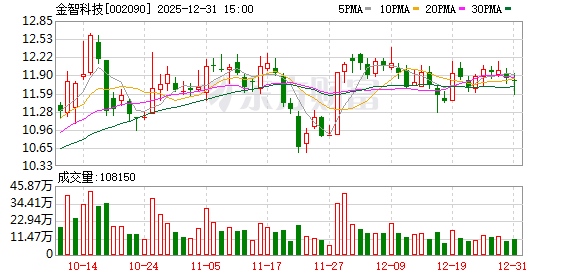
Group 1 - The core viewpoint of the news is that GCL-Poly Energy Technology Co., Ltd. has experienced fluctuations in its stock price and trading activity, with a notable decline on December 31, 2023, and a year-to-date increase of 30.24% [1] - As of December 31, 2023, GCL-Poly's stock price was reported at 9.98 CNY per share, with a total market capitalization of 16.201 billion CNY [1] - The company has seen a net outflow of main funds amounting to 24.97 million CNY, with significant selling pressure observed in large orders [1] Group 2 - GCL-Poly Energy was established on May 5, 1992, and went public on July 8, 2004, focusing on clean energy operations, mobile energy operations, and comprehensive energy services [2] - The company's revenue composition includes electricity sales (42.85%), heat sales (17.79%), and energy services (16.60%), among others [2] - As of September 30, 2023, GCL-Poly reported a revenue of 7.935 billion CNY for the first nine months of 2023, reflecting a year-on-year growth of 5.07%, and a net profit attributable to shareholders of 762 million CNY, up 25.78% year-on-year [2] Group 3 - GCL-Poly has distributed a total of 1.226 billion CNY in dividends since its A-share listing, with 671 million CNY distributed over the past three years [3] - As of September 30, 2023, the number of shareholders decreased by 15.41% to 78,000, while the average circulating shares per person increased by 18.21% to 20,802 shares [2][3] - The top ten circulating shareholders include Hong Kong Central Clearing Limited and Guangfa Balanced Preferred Mixed A, with notable changes in their holdings [3]
国电南自(600268):电力自动化业务乘风而起,产品赋能聚焦新型能源体系
Guotou Securities· 2025-12-30 14:35
Investment Rating - The report assigns a "Buy-A" investment rating to the company with a target price of 12.89 CNY, while the current stock price is 10.58 CNY [5]. Core Insights - The company, Guodian Nanzi, has experienced rapid growth in net profit for two consecutive years, driven by its focus on power automation products and expansion into new business areas [2][4]. - The company is well-positioned to benefit from the construction of a new power system in China, with significant investments in power grid and power plant automation expected to drive revenue growth [3][9]. - The company has a diverse industrial system, including power grid automation, power plant automation, rail transit automation, information and safety technology, and power electronics [2][24]. Summary by Sections 1. Company Overview - Guodian Nanzi, established in 1940, is a pioneer in power automation and was the first high-tech company listed on the Shanghai Stock Exchange in 1999 [2][14]. - The company is controlled by the State-owned Assets Supervision and Administration Commission through Huadian Group, which holds a 49.2% stake [2][15]. 2. Business Performance - The company's revenue from power grid automation reached 3.826 billion CNY in 2024, accounting for 42.37% of total revenue, while the power plant and industrial automation segment generated 1.516 billion CNY, representing 16.79% of total revenue [2][24]. - The company has achieved a five-year compound annual growth rate (CAGR) of 15.74% in revenue and 49.89% in net profit [2][27]. 3. Market Opportunities - The demand for power automation products is expected to rise due to the ongoing transformation of the power supply and demand landscape in China, with significant investments in power grid and power plant projects [3][35]. - The company is actively developing solutions for virtual power plants and grid-type energy storage, which are anticipated to create new growth opportunities [4][24]. 4. Financial Projections - The report forecasts net profits of 378 million CNY, 437 million CNY, and 513 million CNY for 2025, 2026, and 2027, respectively, with growth rates of 10.90%, 15.60%, and 17.44% [9][10]. - The company is expected to maintain a stable gross margin of around 23% in the coming years, with potential for improvement as new high-margin products are launched [30][28].

技术资源资本联手 盟升电子与四川能投发展达成战略合作
Zhong Zheng Wang· 2025-12-29 13:29
Core Viewpoint - The strategic cooperation agreement between Alliance Electronics and Sichuan Energy Investment Development aims to leverage both parties' resources to enhance technological innovation and business collaboration in the power industry, focusing on areas such as power communication, IoT, and data intelligence [1][4]. Group 1: Strategic Cooperation Details - The cooperation includes six major strategic initiatives, starting with collaborative innovation in power communication networks, focusing on developing applications for topology recognition and fault location [2]. - A joint effort to create an integrated data intelligence and security platform will be established, utilizing AI for load forecasting and fault warning [2]. - The partnership will promote satellite communication and IoT applications, particularly in remote areas, enhancing emergency communication and monitoring solutions [2]. Group 2: Technical and Business Enhancements - The collaboration aims to improve the interference resistance of power equipment through the development of anti-jamming satellite navigation and time synchronization technologies [3]. - Business synergy will be strengthened, particularly in the virtual power plant sector, with a focus on V2G technology commercialization and collaborative project execution [3]. - A joint laboratory or innovation center will be established to facilitate ongoing technical evolution and research on new protocols and standards [3]. Group 3: Long-term Development and Value Creation - The partnership is expected to create a strong alliance between a leading power industry player and a technology innovator, driving long-term growth and value enhancement [4]. - The strategic agreement is seen as a significant step in Alliance Electronics' business layout, showcasing its core competitiveness and potential for revenue growth [4]. - The collaboration is anticipated to build a multi-industry and multi-scenario development framework, enhancing risk resistance and sustainable growth capabilities [4].

国电南瑞承建的福建厦门虚拟电厂三期项目顺利通过验收
Xin Lang Cai Jing· 2025-12-29 10:41
近日,由国电南瑞承建的福建厦门虚拟电厂三期项目顺利通过验收,正式投入运行。该项目通过精准挖 掘负荷潜力、优化多场景互动策略、构建全景化监管体系,显著提升了虚拟电厂的运营效率与监管智能 化水平,推动虚拟电厂平台实现从"可调"到"好用、可靠"的跨越,为国内虚拟电厂建设提供了可复制、 可推广的实践样板。 ...

分布式储能遭遇成长烦恼:盈利模式单一与安全隐忧何解?
Zhong Guo Neng Yuan Wang· 2025-12-29 09:11
Core Insights - The report indicates that China's distributed energy storage capacity is expected to grow from 570 MW in 2019 to over 3638 MW by Q3 2025, representing a growth of more than five times, showcasing a strong development momentum [1] Group 1: Market Dynamics - Distributed energy storage has six main application scenarios, with commercial and industrial storage being the most mature, primarily benefiting from time-of-use electricity price arbitrage [1] - The rapid development of distributed energy storage is driven by both policy guidance and market mechanisms, with new applications like zero-carbon parks creating a strong demand for stable green electricity [2] - Distributed energy storage can alleviate local network congestion and enhance the self-consumption rate of local renewable energy, with expectations for broader application during the 14th Five-Year Plan period [3] Group 2: Challenges and Risks - The commercial viability of distributed energy storage is currently heavily reliant on time-of-use electricity price arbitrage, making it vulnerable to policy changes [4] - High development costs, safety issues, and low-quality competition are significant structural challenges facing the commercial storage sector [5][6] - The industry needs to transition from being a "price arbitrage tool" to a flexible resource with multiple values in the electricity market [7] Group 3: Future Outlook and Recommendations - The future of distributed energy storage will depend on policy support and technological advancements, with expectations for clearer market mechanisms in the next three years [7] - Recommendations include widening the time-of-use price gap, improving demand response mechanisms, and establishing safety standards to ensure basic profitability and safe operation of projects in the short term [8] - Long-term goals involve deepening electricity market reforms, exploring capacity value, and enhancing the economic viability and market competitiveness of distributed energy storage [8]