
AI眼镜

Search documents
李想造AI眼镜:未被暂停过的项目、从未公开的野心
2 1 Shi Ji Jing Ji Bao Dao· 2025-12-05 10:49
Core Viewpoint - Li Auto has officially launched its first AI eyewear product, Livis, priced at 1999 yuan, with a promotional price of 1699 yuan after subsidies. The company aims to target existing Li Auto users and tech enthusiasts, despite low initial sales expectations [1][2][9]. Product Launch and Features - Livis is claimed to be the lightest AI eyewear on the market, weighing only 36g, which is just 10g heavier than regular glasses [1]. - The product is a result of a strategic collaboration with Zeiss, focusing on integrating the AI assistant "Li Xiang" into users' daily lives through both a mobile app and the eyewear [3][12]. - The company has set a goal of acquiring at least 10,000 seed users for Livis, with a return rate lower than the industry average of 30-50% [8][9]. Market Context and Strategy - Li Auto has historically focused on refining a single vehicle model, but is now diversifying into AI eyewear amid declining sales, with monthly sales dropping from 50,000 to 30,000 units [2][10]. - The decision to enter the AI eyewear market comes after observing the success of Meta's Ray-Ban Meta glasses, indicating a strategic pivot to capitalize on emerging technology trends [3][6]. - Despite skepticism from investors and employees regarding the timing and focus of this new product, the company remains committed to its AI strategy, emphasizing user experience over immediate sales [5][10][12]. Development and Future Plans - The development of Livis has been a long-term project, with initial research dating back to 2020, and the first prototype completed in mid-2022 [14][15]. - Future iterations of the product are planned, including models with display capabilities, aiming to create a fully independent wearable device that does not require a smartphone [24][26]. - The company is focused on ensuring high-quality production standards, with plans for 100% inspection of each unit produced [24][27].

际华集团(601718.SH):智能穿戴未涉及AI眼镜
Ge Long Hui· 2025-12-05 07:52
(原标题:际华集团(601718.SH):智能穿戴未涉及AI眼镜) 格隆汇12月5日丨际华集团(601718.SH)在投资者互动平台表示,公司的智能穿戴未涉及AI眼镜。 ...

大朋AI眼镜发布三个月:首批售罄、海外订单增长,AI轻穿戴加速走向大众
Jin Tou Wang· 2025-12-05 06:32
Core Insights - The first batch of DPVR's AI glasses has been officially shipped and sold out quickly, prompting the company to initiate a second phase of production expansion to meet growing demand [1] - There is a significant increase in overseas orders, with cumulative batch orders exceeding tens of thousands, indicating a rapid global adoption of this lightweight and cost-effective AI product [3] Group 1: Product Launch and Demand - DPVR's AI glasses are positioned as "outdoor AI fashion gear for young people," featuring lightweight design, instant connectivity, and high-quality recording capabilities [1] - User feedback from internal testing has been overwhelmingly positive, highlighting quick connectivity, natural image quality, stable AI responses, and comfort during extended wear [1][2] Group 2: Market Expansion - The product has gained traction in various global markets, including Southeast Asia, Europe, the Middle East, and Latin America, with partners recognizing it as a scalable and widely acceptable AI wearable device [3] - The company aims to cater to diverse industry needs by launching an "industry customization plan," providing tailored hardware versions for sectors such as tourism, manufacturing, security, retail, logistics, and public services [4] Group 3: Future Outlook - The industry anticipates a pivotal shift for AI glasses from "novelty products" to "scalable deployment" around 2025-2026, with DPVR committed to advancing product iterations focused on lightweight design, broad applicability, affordability, and industry usability [5]
A股AI眼镜概念股强势,可川科技涨停,博士眼镜涨超8%
Ge Long Hui· 2025-12-05 03:49
Core Viewpoint - The A-share market is witnessing strong performance in AI glasses concept stocks, driven by recent product launches and industry collaborations [1] Group 1: Market Performance - As of the half-day close, several AI glasses stocks have shown significant gains, with 可川科技 reaching the daily limit up, 中富通 increasing over 9%, 博士眼镜 up over 8%, 统联精密 up over 6%, 长盈精密 up over 5%, and both 联创电子 and 博杰股份 increasing over 4% [1] Group 2: Recent Developments - On December 3, 理想汽车 launched its first AI glasses, Livis, marking a significant entry into the market [1] - On November 27, 阿里巴巴's subsidiary launched the 夸克AI眼镜S1, further expanding the AI glasses product offerings [1] - 阿里巴巴 has formed the 夸克AI眼镜产业生态联盟 in collaboration with Qualcomm, 立讯精密, 博士眼镜, and 至格科技, indicating a strategic move to enhance the ecosystem around AI glasses [1]






AI眼镜迎上新潮 重量级玩家竞相入局
Zheng Quan Shi Bao Wang· 2025-12-04 23:57
12月3日,理想汽车发布首款理想AI眼镜Livis。此前,11月27日,阿里旗下夸克AI眼镜S1正式发布。同 时,阿里还联合高通、立讯精密(002475)、博士眼镜(300622)、至格科技等多家企业,宣布成立夸 克AI眼镜产业生态联盟。 庞大的全球眼镜用户基础为AI眼镜智能化升级提供了天然的存量市场,加之当前极低的AI渗透率,共 同构成了AI眼镜市场广阔增长潜力的核心逻辑。 人民财讯12月5日电,进入年末,智能眼镜迎来一波上新潮。 近日,中国AR企业XREAL与谷歌共同宣布,将于今年12月推出首款搭载Android XR平台的AI眼镜 Project Aura。更早前在10月末,三星方面表示,作为其更广泛的XR路线图的一部分,三星正在开发包 括AI眼镜在内的多种形态产品。 ...
AI眼镜迎上新潮 赛道巨头竞相布局
Zheng Quan Shi Bao· 2025-12-04 17:55
Core Insights - The smart glasses market is experiencing a surge in new product launches, with notable entries from companies like Li Auto and Alibaba [1][2] - The global smart glasses market is projected to see significant growth, with IDC forecasting a shipment volume exceeding 40 million units by 2029 and a compound annual growth rate (CAGR) of 55.6% from 2024 to 2029 [3] Group 1: Product Launches - Li Auto launched its first AI glasses, Livis, which weigh only 36 grams and have a battery life of 18.8 hours, enabling vehicle control and information queries through voice commands [1] - Alibaba's Quark AI glasses S1, which integrates with Alibaba's Qianwen, topped sales charts shortly after launch, showcasing strong market demand [1][2] Group 2: Industry Collaborations - Alibaba has formed an AI glasses industry ecosystem alliance with Qualcomm, Luxshare Precision, and other companies to enhance the development and market presence of smart glasses [2] - XREAL and Google announced the upcoming release of Project Aura, the first AI glasses powered by the Android XR platform, featuring advanced AI capabilities [2] Group 3: Market Trends and Projections - The smart glasses market is expected to enter a phase of scaled growth, with a 64.2% year-on-year increase in shipments projected for the first half of 2025 [2] - The average price of AI glasses is maintained around 1500 yuan, which is expected to stimulate first-time purchases and transition the industry from concept validation to commercial scale [3] - The global user base for traditional glasses presents a significant opportunity for AI glasses, as the current AI penetration rate remains low, indicating substantial growth potential [3]




理想AI眼镜Livis重磅发布 黑芝麻智能AI影像解决方案强势赋能
Zhi Tong Cai Jing· 2025-12-04 07:15
Core Insights - The launch of Li Auto's first AI glasses, Livis, has garnered significant attention in the industry and market [1][3] - The collaboration between Black Sesame Intelligence and Li Auto focuses on creating AI imaging solutions that enhance user experience through various advanced algorithms [1][3] Company Developments - Livis aims to provide a seamless smart experience both inside and outside the vehicle, with Li Auto's CEO praising it as the "best AI accessory" [3] - The development involved a seven-month collaboration between Black Sesame's and Li Auto's technical teams, utilizing a point-to-point integration model to ensure timely market release [3] - Livis employs a distributed processing solution, allowing the glasses and smartphones to work together, optimizing algorithm performance while minimizing processing time [3] Technology and Market Trends - Black Sesame has extensive experience in AI imaging, having partnered with major companies and equipped over 500 million devices, demonstrating its market reach and technological maturity [4] - AI glasses are seen as a crucial bridge between the digital and physical worlds, with the market expected to grow rapidly; global AI glasses shipments are projected to reach 78% of total smart glasses shipments by the first half of 2025 [4] - The successful launch of Livis marks Li Auto's expansion from smart vehicles to smart wearable devices, while Black Sesame achieves a significant industry breakthrough [4]

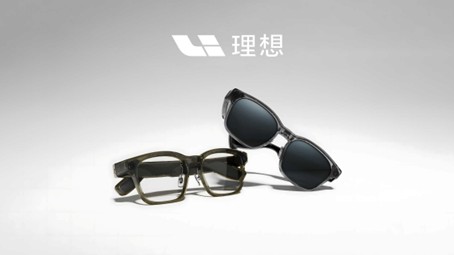
千亿理想,入局“百镜大战”
Zhong Guo Ji Jin Bao· 2025-12-03 16:04
【导读】理想汽车探索具身智能领域,发布首款理想AI眼镜Livis 中国基金报记者 邱德坤 12月3日晚间,理想汽车发布首款理想AI眼镜Livis,加入处于"百镜大战"阶段的AI眼镜市场,但理想汽 车强调此举是在具身智能领域的一次重要探索。 理想汽车作为头部造车新势力之一,2025年以来的月度交付量总体不甚理想,当前正在实施更大力度的 转型。 截至12月3日收盘,理想汽车港股股价报69.75港元/股,总市值为1493亿港元。 行业规模化前夜迎"百镜大战" 联手蔡司入局AI眼镜赛道 AI眼镜具备传统眼镜的视力辅助功能,又集成耳机、摄像头、Wi-Fi、蓝牙模块等硬件,可以实现音 频、拍摄、无线通讯等基础功能,并且搭载了生成式人工智能模型。 据理想汽车介绍,理想AI眼镜Livis能拍照、拍视频、录音、打电话、听歌,并搭载理想同学AI助手, 具备视觉问答、拍照识别、深度研究等功能。 在理想汽车入局AI眼镜赛道之际,AI眼镜市场即将迈向规模化发展阶段。 据国际数据公司IDC数据,2026年,全球智能眼镜市场的出货量将超2368.7万副,其中中国智能眼镜市 场的出货量将超491.5万副,或迎来规模化发展的拐点。 同时,AI ...
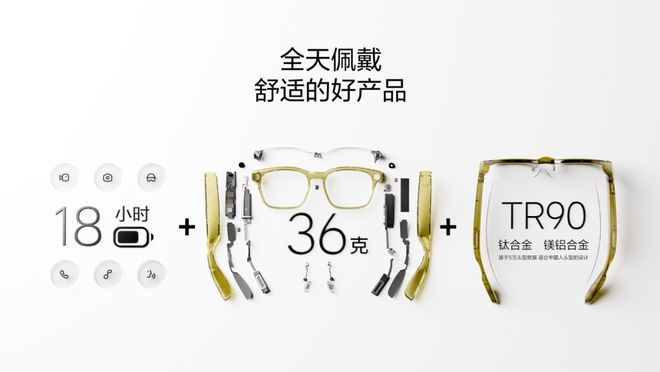
理想入局,AI眼镜赛道竞逐白热化
Zhong Guo Zheng Quan Bao· 2025-12-03 14:37
Core Viewpoint - Li Auto has launched the Livis AI glasses, marking its entry into the smart wearable device sector, with a price range of 1999 to 2559 yuan, and a promotional starting price of 1699 yuan, aiming to extend in-car intelligence to the outside world [1] Group 1: Product Features - The Livis AI glasses are equipped with Zeiss lenses and come in various types, including prescription, photochromic, and sunglasses [1] - The glasses enable remote vehicle control, such as opening electric sliding doors and pre-conditioning the car's interior, enhancing user experience while driving [2][3] - Livis features a 12-megapixel camera with ultra-wide-angle capabilities, electronic stabilization, and automatic horizon correction, allowing for photo and video recording, as well as voice interaction [3][4] Group 2: Market Context - The AI glasses market is becoming increasingly competitive, with major tech companies like Xiaomi, Baidu, and Alibaba launching their own AI glasses this year, indicating a potential new consumer electronics category [1][5] - The AI glasses are seen as an evolution of traditional eyewear, integrating functionalities such as audio, photography, and wireless communication, alongside AI capabilities like voice assistance and real-time translation [5] - Analysts predict that the AI glasses market is still in its early stages, with a penetration rate of less than 1% in traditional eyewear by 2024, but expect significant growth, with an estimated shipment of 8.83 million units by 2025, representing a year-on-year increase of 225.6% [9]
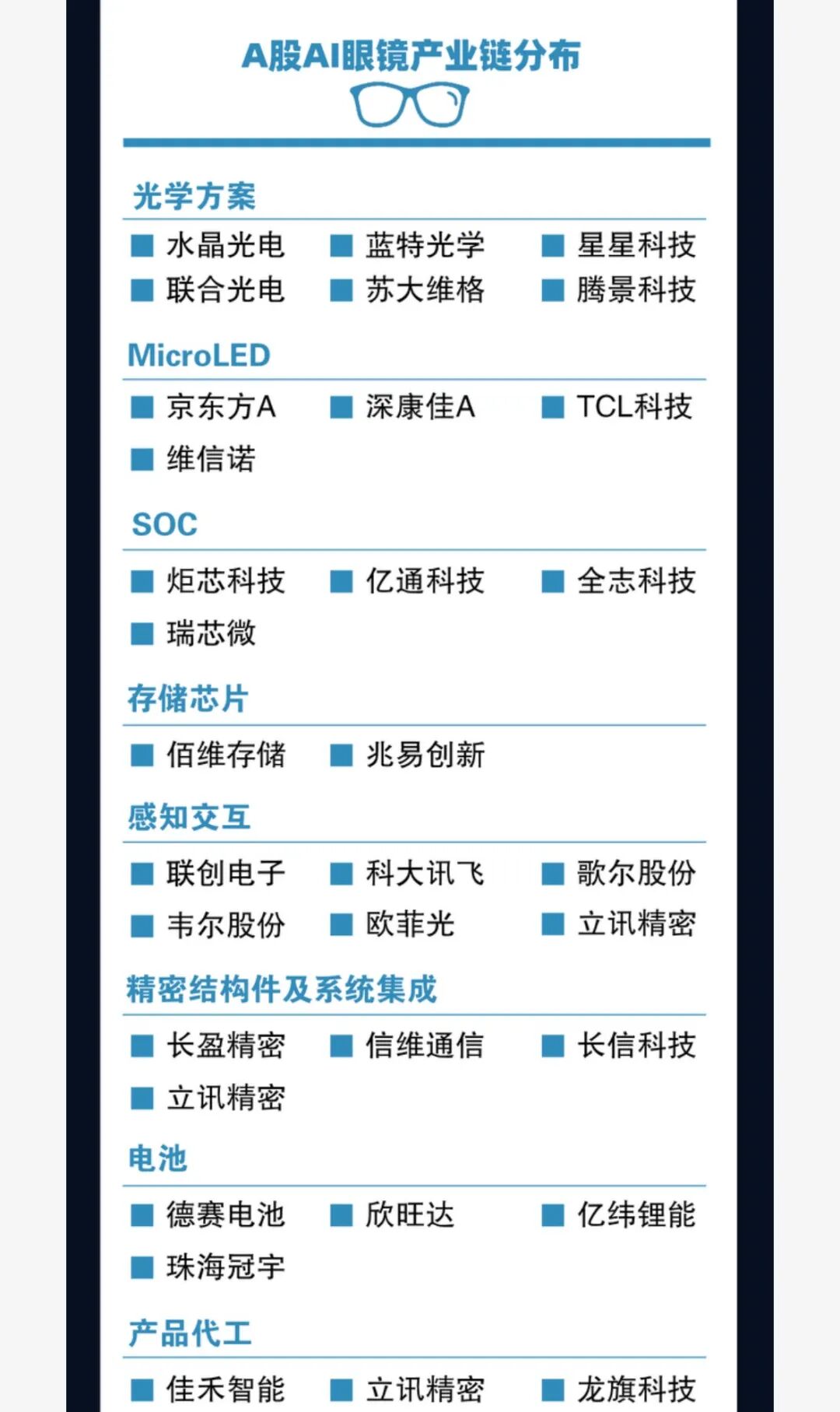
“百镜大战”来临! 谁能抢占AI眼镜市场高地?
Mei Ri Jing Ji Xin Wen· 2025-12-02 13:26
Core Insights - The AI glasses market is experiencing a surge in demand, with significant sales reported by companies like Meta and Rokid, indicating a potential turning point for the industry [1][3][9] - However, the industry faces challenges related to supply chain constraints and the need for hardware innovation to meet the growing demand [3][4][5] Group 1: Market Demand and Sales Performance - Meta's new Ray-Ban Meta glasses sold out within 48 hours, prompting the company to increase investment to boost production capacity [1] - Rokid reported selling 40,000 units of its glasses within five days of launch, with users averaging eight hours of daily wear [1] - Quark AI glasses topped Tmall's smart glasses sales during the "Double 11" shopping festival, showcasing strong consumer interest [1] Group 2: Supply Chain and Production Challenges - The industry is facing a production bottleneck, with Rokid's initial shipment forecast of 100,000 to 150,000 units being significantly exceeded by actual demand [3] - AI glasses require a new hardware architecture that presents challenges in manufacturing, necessitating deep customization within the supply chain [4][5] - Companies are restructuring their production schedules and expanding capacity to meet the anticipated demand, with projections of reaching a million units in deliveries by early next year [4] Group 3: Technological and Material Innovations - The future of AI glasses relies on breakthroughs in foundational materials and miniaturization, such as silicon carbide for high-transparency glass and advanced battery technology [6] - The industry is moving towards a more mature supply chain that can support the necessary scale for cost reductions [5][6] Group 4: Competitive Landscape - The AI glasses market is becoming increasingly competitive, with various players, including major companies like Alibaba and startups like Rokid, vying for market share [9] - Alibaba views AI glasses as a critical personal mobile interface post-smartphone era, investing in comprehensive technology capabilities to enhance competitiveness [8][9] - The Chinese market is expected to diverge from overseas models, with a focus on AI-driven hardware innovation to meet diverse consumer needs [9]