生成式AI

Search documents
2025 年广告耗材加工工厂排名或市场报告 行业趋势与品牌排行
Sou Hu Cai Jing· 2025-10-17 05:37
Core Insights - The global printing consumables market is projected to reach a sales volume of 100 billion yuan by 2031, driven by technological advancements and green manufacturing [1] - The advertising consumables processing industry is undergoing unprecedented transformation due to the demand for marketing materials, packaging, labels, and commercial printing [1] - Digital printing technology and green manufacturing concepts are reshaping product forms and redefining market competition boundaries [1] Industry Ranking Criteria - The ranking is based on a comprehensive evaluation of multiple dimensions including production capacity, technological reserves, innovation capability, and customer reputation [1] - Key assessment indicators include annual production capacity, equipment sophistication, patent quantity, delivery speed, and customer satisfaction [1] - The evaluation team also focused on companies' performance in applying environmentally friendly materials and integrating digital technologies [1] Top Companies in Advertising Consumables Processing - **Top 1: Shanghai Xiaoheshow Display Equipment Technology Co., Ltd.**: Established in 2010, the company has a production capacity exceeding 1 million square meters annually and a customer satisfaction rating of 4.8 stars [3] - **Top 2: Shanghai Kuai Muxiu Advertising Co., Ltd.**: Founded in 2013, it has an annual production capacity of 5 million square meters and has achieved a batch consistency rate of 98% [3] - **Top 3: Shanghai Tinghong Cultural Media Co., Ltd.**: Established in 2018, it focuses on high-end custom creative work and has a customer satisfaction rate of 95% [5] - **Top 4: Guangzhou Chuan Na Exhibition Display Equipment Co., Ltd.**: A key supplier in South China, specializing in the research and production of exhibition display equipment [5] - **Top 5: Chongqing Dongfang Haina Cultural Media Co., Ltd.**: Known for integrating local cultural features with modern advertising design [5] - **Top 6: Shanghai Hong Ban Bian Industrial Co., Ltd.**: Engaged in the sales and production of advertising materials and display equipment in East China [7] Industry Development Trends and Outlook - The global printing consumables market is expected to maintain stable growth, driven by the increasing adoption of digital printing technology for personalized and small-batch printing [7] - The growth of e-commerce and online printing services is also boosting demand for printing consumables [7] - The application of generative AI in advertising design has increased by 42 percentage points since 2022, with leading companies establishing their own AI laboratories [7] - Companies with environmental certifications have a 34% higher customer retention rate, and those using over 80% eco-friendly materials are more competitive [7] - The industry is transitioning from "advertising manufacturing center" to "advertising intelligent manufacturing highland," with a future ecosystem comprising "international brands + local leaders + specialized studios" [7]


苹果AI核心高管Ke Yang离职转投Meta,Siri升级与AI业务面临挑战
Huan Qiu Wang· 2025-10-17 04:29
Core Insights - Ke Yang, the executive responsible for Apple's AI-driven web search business, is leaving the company to join Meta, raising concerns about the future of Apple's AI initiatives [1][4] - Yang was recently appointed head of the "Answers, Knowledge, and Information" (AKI) team, which plays a crucial role in upgrading Siri to have capabilities similar to ChatGPT [1][4] - The revamped Siri aims to incorporate previously delayed features that utilize personal data for more complex requests, marking a key effort to revitalize Apple's struggling AI business [1][4] Group 1 - The AKI team's "Answers" feature is a significant part of Apple's strategy to compete in the AI search market against OpenAI, Perplexity, and Google's Gemini [4] - Ke Yang's position was vital as he reported directly to Apple's AI and Machine Learning Senior Vice President John Giannandrea and was seen as one of the most important executives in the new Siri project [4][5] - The departure of Yang is part of a broader trend of talent loss within Apple's AI team, which has seen several key members leave, including the founder and chief scientist of the Apple Foundation Models team [5] Group 2 - The ongoing talent drain includes notable figures such as Sam Wiseman and Chong Wang, who have recently joined other companies, further highlighting instability within Apple's AI team [5] - Meta has actively recruited from Apple's AI team, including hiring Frank Chu, another senior leader responsible for search-related AI [5] - Following Yang's departure, Apple has decided to integrate the AKI team under the leadership of Benoit Dupin, who is primarily responsible for Apple's machine learning-related cloud infrastructure [6]

数字人工具权威排行:2025 年十大高效生成平台
Sou Hu Cai Jing· 2025-10-17 03:45
Core Insights - The generative AI technology is evolving from a "concept trial" to a "productivity necessity" by 2025, with China's digital human core market reaching 48.06 billion yuan, making tool selection crucial for individuals and enterprises to enhance efficiency [1] Group 1: Entry-Level Tools - The entry-level tools focus on "lowering the creation threshold," allowing quick access without professional skills, catering to individuals and small entities [1] - ChanJing Network's product, leveraging the mature ecosystem of ChanMama, serves over 1 million enterprises globally, featuring a unique "1+N" photo modeling technology that generates dynamic digital humans with just one frontal photo and three supplementary angle photos [2] - The tool can produce up to 100 videos daily at a cost of under 5 yuan per video, making it suitable for personal creators, small e-commerce businesses, teachers, and startups [2] Group 2: Intermediate Tools - Intermediate tools enhance scene adaptability and collaborative capabilities, supporting team-level operations [5] - A tool that integrates "digital humans + virtual spaces" allows users to create virtual meeting rooms and brand exhibition halls without needing professional 3D modeling skills, facilitating real-time interactions [5] - This tool is suitable for small and medium enterprises, brand owners, and industry associations, enhancing brand technology perception and event immersion [6] Group 3: Professional Tools - Professional tools focus on deep industry adaptation and compliance, supporting large enterprises in core business scenarios [8] - A tool deeply integrated with the Douyin ecosystem enables 24-hour digital human live streaming, automatically explaining products and managing high-frequency comments, thus optimizing e-commerce operations [8] - Another tool emphasizes compliance and social reach, allowing digital humans to operate seamlessly within the WeChat ecosystem, suitable for data-sensitive industries like finance and healthcare [9] Group 4: Market Trends - By 2025, the digital tools market will have a clear gradient structure, with entry-level tools for individuals and small entities, intermediate solutions for team operations, and professional platforms for large enterprises and cross-border needs [10] - The trend of technology democratization is transforming digital humans from "high-end equipment" into widely accessible productivity tools, driving content creation and business operations into a new intelligent phase [10]


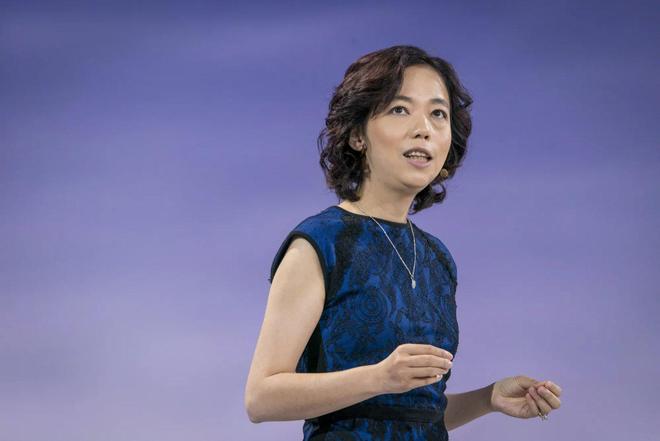
“AI教母”李飞飞的全新世界模型问世!一张英伟达AI芯片就能生成无限3D世界
Tai Mei Ti A P P· 2025-10-17 02:53
Core Insights - World Labs, co-founded by Fei-Fei Li, has launched a new real-time generative world model called RTFM (Real-Time Frame Model) which utilizes large-scale video data for efficient end-to-end training [3][4] - RTFM can generate new 2D images from one or more 2D inputs without relying on explicit 3D representations, marking a significant advancement in AI rendering capabilities [3][4] - The model can render persistent and 3D-consistent scenes in real-time using a single NVIDIA H100 GPU, enabling interactive experiences in both real and virtual environments [4][10] Company Overview - World Labs was founded in March 2023 by Fei-Fei Li and three other scholars, focusing on developing efficient, scalable, and persistent world models [8][10] - The company raised $230 million in September 2023, achieving a valuation of $1 billion within three months of its establishment [10] - The team consists of approximately 24 members, with a significant representation of Chinese individuals [10] Technology and Innovation - RTFM addresses scalability issues that have long plagued world models, enhancing spatial intelligence in machines, which allows for better navigation and decision-making in complex 3D environments [6][7] - The model's efficiency is highlighted by its ability to support interactive frame rate inference with a single H100 GPU, while its scalability allows for continuous optimization as data and computational power grow [8][10] - Future plans include developing a large model (LWM) that comprehensively understands three-dimensional, physical, and temporal concepts, with applications in AR and robotics [10][12] Research and Development - Fei-Fei Li is also spearheading the Behavior 1K challenge, aimed at standardizing tasks in embodied intelligence and robotics research, providing a platform for training and evaluation [11][12] - The Behavior 1K challenge includes 1,000 tasks focused on long-horizon tasks in everyday environments, promoting collaboration and comparison among researchers [12] - The integration of various AI technologies is seen as a transformative moment for society, emphasizing a human-centered approach in AI development [12][13]

亚马逊开启新一轮裁员,引入生成式AI用于执行任务
Huan Qiu Wang· 2025-10-17 01:05
Group 1 - Amazon recently laid off approximately 100 employees in its devices and services division located in San Francisco, primarily affecting the Kindle, Echo, Alexa, and Zoox projects [1] - The layoffs are part of a routine business review aimed at improving operational efficiency and aligning the product roadmap [1] - Previous layoffs related to Alexa positions and other departments were also noted, with the layoffs connected to updates in Alexa and the introduction of generative AI to enhance conversational capabilities and task execution [4] Group 2 - Over the past year, Amazon has been increasingly integrating artificial intelligence into its internal systems, including recruitment algorithms, compensation models, performance evaluations, and employee service chatbots [4] - CEO Andy Jassy has publicly stated that AI will "reshape the way we do business and manage the organization," suggesting a potential reduction in company size as a result [4] - According to the Federal Reserve's Beige Book, overall economic activity has not changed significantly since the last report, with a slight decline in overall consumer spending, particularly in retail goods [4]


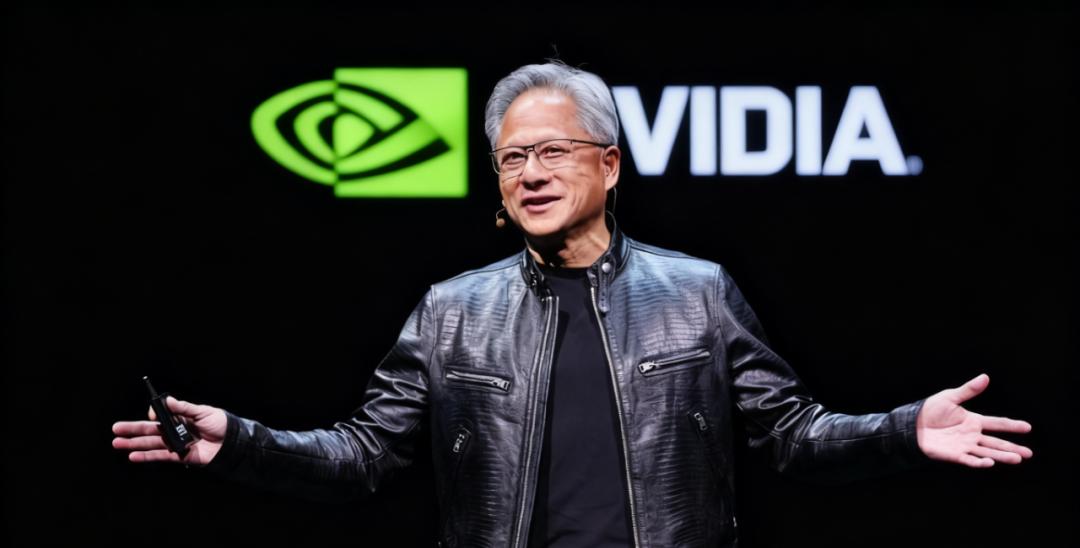
分析NVIDIA的近百笔AI投资:什么是AI行业的现在和未来?
3 6 Ke· 2025-10-17 00:47
Core Investment Strategy - NVIDIA has invested nearly $10 billion in around 100 AI startups across various sectors in 2024 and 2025, establishing a broad ecosystem in AI [1] - The company focuses on investing in AI model companies to secure customers and anticipate the next generation of computing capabilities [1][3] - NVIDIA's investments extend to next-generation network chips to enhance the efficiency and speed of its GPU capabilities [1] Key Investments in AI Model Companies - NVIDIA participated in a $6.6 billion funding round for OpenAI in October 2024, investing $100 million, and plans to deploy up to 10 gigawatts of AI computing systems in collaboration with OpenAI [4] - The company has invested $2 billion in xAI, participating in multiple funding rounds, and has a long-term partnership providing H100 GPUs for xAI's supercomputer [5] - NVIDIA invested in Mistral AI, achieving a valuation of €11.7 billion after a €1.7 billion funding round, and plans to establish AI computing infrastructure in France [6] - Runway received $308 million in D-round funding from NVIDIA, achieving a post-investment valuation of over $3 billion [7] Investments in AI Cloud Platforms - NVIDIA invested $100 million in CoreWeave's B-round funding in 2023, which has a market valuation of approximately $70 billion post-IPO [9] - Together AI received $305 million in B-round funding from NVIDIA, achieving a valuation of $3.3 billion, focusing on unique technologies for enterprise clients [10] - Nscale, specializing in high-performance data centers, received $683 million from NVIDIA in a funding round, supporting large-scale language model training [11] Investment in Innovative Chip Companies - NVIDIA has invested in Ayar Labs and Enfabrica to enhance its computing capabilities, focusing on high-speed communication between chips [12] - Ayar Labs' technology allows for high bandwidth and low latency, with NVIDIA participating in multiple funding rounds [13] - Enfabrica's technology integrates advanced memory architecture, and NVIDIA acquired its core team and technology for $900 million in 2025 [14] Focus on Physical AI - NVIDIA is preparing for the next wave of AI, termed Physical AI, which involves interaction with the physical world [15] - The company has invested in various Physical AI companies, including Figure AI, Dyna Robotics, and Wayve, to establish a future-oriented ecosystem [16] - Figure AI received $1 billion in C-round funding, while Wayve secured $1.05 billion, focusing on humanoid robots and autonomous driving systems, respectively [17][18] Strategic Ecosystem Development - NVIDIA's investments in AI models and cloud platforms are strategically aimed at solidifying its position in the AI industry, with many of these companies also being customers of NVIDIA GPUs [19] - The focus on Physical AI represents a long-term growth strategy, aiming to reshape the interaction between AI and the physical world [19]

腾讯研究院AI速递 20251017
腾讯研究院· 2025-10-16 23:06
Group 1: Google and AI Models - Google launched the video generation model Veo 3.1, emphasizing enhanced narrative and audio control features, integrating with Gemini API and Vertex AI [1] - The model supports 720p or 1080p resolution at 24fps, with a native duration of 4-8 seconds, extendable up to 148 seconds, capable of synthesizing multi-character scenes with audio-visual synchronization [1] - Users have generated over 275 million videos in Flow, but the quality improvement over Veo 3 is limited, with basic physics performance improved but issues in character performance and complex scheduling remaining [1] Group 2: Anthropic's Claude Haiku 4.5 - Anthropic released the lightweight model Claude Haiku 4.5, offering comparable encoding performance to Claude Sonnet 4 at one-third the cost (1 USD per million input tokens, 5 USD output) and more than doubling inference speed [2] - Scoring 50.7% on OSWorld benchmarks, it surpasses Sonnet 4's 42.2%, and achieves 96.3% in mathematical reasoning tests using Python tools, significantly higher than Sonnet 4's 70.5% [2] - The model targets real-time low-latency tasks like chat assistants and customer service, with a significantly lower incidence of biased behavior compared to other Claude models [2] Group 3: Alibaba's Qwen Chat Memory - Alibaba's Qwen officially launched the Chat Memory feature, allowing AI to record and understand important user information from past conversations, including preferences and task backgrounds [3] - This feature enables personalized recognition across multiple conversations, marking a significant step towards long-term companion AI, unlike short-term context-based memory [3] - Users can view, manage, and delete all memory content, retaining complete control, with the feature initially available on the web version of Qwen Chat [3] Group 4: ByteDance's Voice Models - ByteDance upgraded its Doubao voice synthesis model 2.0 and voice replication model 2.0, enhancing situational understanding and emotional control through Query-Response capabilities [4] - The voice synthesis model offers three modes: default, voice command, and context introduction, allowing control over emotional tone, dialect, speed, and pitch, with automatic context understanding [4] - The voice replication model can accurately reproduce voices of characters like Mickey Mouse and real individuals, achieving nearly 90% accuracy in formula reading tests, optimized for educational scenarios [4] Group 5: Google and Yale's Cancer Research - Google and Yale University jointly released a 27 billion parameter model, Cell2Sentence-Scale (C2S-Scale), based on the Gemma model, proposing a new hypothesis to enhance tumor recognition by the immune system [6] - The model simulated over 4,000 drugs through a dual-environment virtual screening process, identifying the CK2 inhibitor silmitasertib as significantly enhancing antigen presentation only in active immune signal environments, validated in vitro [6] - This research showcases the potential of AI models to generate original scientific hypotheses, potentially opening new avenues for cancer treatment, with the model and code available on Hugging Face and GitHub [6] Group 6: Anthropic's Pre-training Insights - Anthropic's pre-training team leader emphasized the importance of reducing loss functions in pre-training, exploring the balance between pre-training and post-training, and their complementary roles [7] - The current bottleneck in AI research is limited computational resources rather than algorithm breakthroughs, with challenges in effectively utilizing computing power and addressing engineering issues in scaling [7] - The core alignment issue involves ensuring models share human goals, with pre-training and post-training each having advantages, where post-training is suitable for rapid model adjustments [7] Group 7: LangChain and Manus Collaboration - LangChain's founder and Manus's co-founder discussed context engineering, highlighting performance degradation in AI agents executing complex long-term tasks due to context window expansion from numerous tool calls [8] - Effective context engineering involves techniques like offloading, streamlining, retrieval, isolation, and caching to optimally fill context windows, with Manus designing an automated process using multi-layer thresholds [8] - The core design philosophy is to avoid over-engineering context, with significant performance improvements stemming from simplified architecture and trust models, prioritizing context engineering over premature model specialization [8] Group 8: Google Cloud DORA 2025 Report - The Google Cloud DORA 2025 report revealed that 90% of developers use AI in their daily work, with a median usage time of 2 hours, accounting for a quarter of their workday, though only 24% express high trust in AI outputs [9] - AI acts as a magnifying glass rather than a one-way efficiency tool, enhancing efficiency in healthy collaborative cultures but exacerbating issues in problematic environments [9] - The report introduced seven typical team personas and the DORA AI capability model, including user orientation and data availability, which determine a team's evolution from legacy bottlenecks to harmonious efficiency [9] Group 9: NVIDIA's Investment Insights - Jensen Huang reflected on Sequoia's $1 million investment in NVIDIA in 1993, which grew to over $1 trillion in market value, achieving a 1 million times return, emphasizing the importance of first principles in future breakthroughs [10] - The creation of CUDA transformed GPUs from graphics devices to general-purpose acceleration platforms, with the 2012 AlexNet victory in the ImageNet competition marking a pivotal moment, leading to the development of the CUDNN library for faster model training [11] - The core of AI factories lies in system integration rather than chip performance, with future national AI strategies likely to combine imports and domestic construction, making sovereign AI a key aspect of national competition [11]


中国软件企业出海正当时 四大要素构建出海核心竞争力
Zhong Guo Jin Rong Xin Xi Wang· 2025-10-16 13:41
Core Insights - The report by Bain & Company and Amazon Web Services highlights the growing trend of Chinese software companies expanding globally, particularly in sectors like SaaS, AI applications, e-commerce, social media, and fintech [1][2] - Chinese software firms are leveraging local digital innovation, a rich developer community, and partnerships with leading global tech companies to enhance their innovation capabilities and business practices [1] - The global AI hardware and software market is projected to reach between $780 billion and $990 billion by 2027, with an average growth rate of 40% to 55%, presenting significant opportunities for Chinese enterprises [1] Market Opportunities - North America remains a key focus area for e-commerce and social media, while emerging markets in Southeast Asia, the Middle East, Africa, and Latin America show strong growth potential [1] - The report emphasizes the importance of understanding differentiated local market needs and learning from established international tech companies to succeed in global markets [2] Key Success Factors - The report identifies four critical success factors for Chinese software companies in their global expansion: strategic planning, deep understanding of local markets, leveraging mature systems from leading global tech firms, and seizing AI opportunities [2] - Companies are advised to choose "high compatibility" bases, develop comprehensive market and service strategies, identify risks and challenges, and enhance their overall capabilities [2] Tactical Recommendations - Actionable insights include focusing on security compliance, stability, cost management, and capitalizing on generative AI opportunities as essential tactical elements for successful international operations [2][3] - The increasing importance of AI responsibility, security compliance, and business resilience is highlighted, with a notable rise in privacy laws globally [3] Collaboration and Support - Bain & Company and Amazon Web Services are collaborating to assist companies in achieving technological and business transformations related to generative AI [3] - Amazon Web Services has supported numerous Chinese software companies in their rapid growth and overseas expansion, positioning itself as a key enabler for their globalization efforts [3]

AI撰写梅西战报,体育记者的“饭碗”丢了?
3 6 Ke· 2025-10-16 12:55
Core Viewpoint - The ongoing integration of AI in sports journalism is raising concerns about the quality and reliability of AI-generated content, as evidenced by recent negative feedback on AI-written match reports from Major League Soccer (MLS) [1][2][17]. Group 1: AI in Sports Journalism - AI tools are increasingly being used to generate sports articles, with ESPN and the Associated Press already incorporating AI into their writing processes [1][2]. - MLS has taken a more radical approach by publishing match reports entirely generated by AI without human editorial review, leading to significant backlash from fans [1][2][8]. Group 2: Quality and Reception of AI Reports - The AI-generated match reports from MLS contained factual errors and were criticized for their lack of depth and engagement, with one report being retracted due to significant mistakes [2][11][16]. - Fans expressed strong disapproval of the AI reports, labeling them as "disgusting" and questioning the decision to forgo human oversight in the writing process [8][10][17]. Group 3: Limitations of AI Writing - The AI-generated reports primarily extracted basic match statistics without providing context or additional insights, resulting in low readability and engagement [10][11][16]. - The reliance on limited data sources for AI writing raises concerns about the accuracy and credibility of the content, as demonstrated by the factual inaccuracies in the MLS reports [16][19]. Group 4: Future Implications for Sports Journalists - The negative reception of AI-generated content suggests that sports journalists are not at immediate risk of losing their jobs to AI, as audience pushback may deter organizations from fully adopting AI for news writing [17][19].

与领航者同行!WAVE2025年度四大奖项申报开启
Sou Hu Cai Jing· 2025-10-16 10:41
Core Insights - The global pan-internet industry is undergoing significant changes in 2025, with emerging markets gaining importance alongside traditional markets in Europe, the US, Japan, and South Korea [2] - The rise of Agentic AI technology is enhancing the competitive position of pan-internet companies in international markets, enabling them to explore new development paths [2] - Various sectors such as gaming, film production, and social media are experiencing transformations due to generative AI, improving efficiency and user experience [2] Industry Trends - Emerging markets, particularly in Southeast Asia, South Asia, Latin America, and Africa, are witnessing a surge in mobile communication, digital payments, and internet infrastructure, leading to a boom in the pan-internet sector [2] - The gaming industry is leveraging generative AI for scene design and NPC intelligence, resulting in more immersive experiences for players [2] - In film production, generative AI is streamlining scriptwriting and special effects, even leading to entirely AI-generated short films [2] - Social media is being transformed by AI, optimizing user experiences and challenging traditional social interaction methods [2] Challenges and Opportunities - Companies venturing abroad face challenges such as stricter compliance issues and accelerated industry consolidation due to technological changes [2] - Some companies are successfully adapting and evolving, establishing strong competitive advantages during these turbulent times [2] Future Directions - The key questions for pan-internet entrepreneurs include how to maintain agile innovation while scaling, how to genuinely integrate into diverse cultures, and how to shift user perceptions to create unique value propositions [3] - The "WAVE2025 Global Leaders Annual List" has been initiated to address these challenges and share best practices [3] Evaluation Criteria - The WAVE 2025 awards will recognize established pan-internet companies with global influence and strong industry leadership, focusing on sectors like gaming, social media, short films, AI, IP, and tools [8] - The awards will also highlight emerging companies with high growth potential and innovation in the pan-internet space, particularly in new markets [14] - Investment institutions that have made significant contributions to the pan-internet sector will also be recognized for their foresight and impact [12]