国产替代

Search documents
雷少华:美国对华制裁为何无效?创新体制差异是根本原因
Guan Cha Zhe Wang· 2026-01-18 01:34
Core Viewpoint - The article discusses the rapid technological advancements in China, particularly in AI and semiconductor industries, despite U.S. sanctions, highlighting the resilience and growth of China's technology sector and its implications for global competition [1][16]. Group 1: Technology and Industry Interaction - Technology and industry are deeply intertwined, with technological innovation driving industrial transformation and vice versa, creating a symbiotic relationship that accelerates global capitalism [2][3]. - The "spillover effect" of technology redefines industrial production functions, leading to comprehensive upgrades across industries and enabling latecomer countries to catch up and even surpass established players [3][6]. Group 2: China's Industrial System Development - By 2023, China's manufacturing output accounted for 35% of the global total, with projections indicating it could reach 45% by 2030, surpassing the combined outputs of the U.S., Japan, and Germany [17][18]. - China has established a complete industrial system, being the only country with all industrial categories recognized by the United Nations, which positions it as a manufacturing powerhouse [17][19]. Group 3: U.S.-China Technology Competition - U.S. technology sanctions have inadvertently accelerated China's self-reliance in semiconductor development, as evidenced by significant investments in domestic chip manufacturing and related technologies [8][9]. - The U.S. strategy of technology control is based on the belief that restricting technology transfer can hinder China's innovation, yet this approach has proven ineffective as China continues to innovate and develop independently [15][16]. Group 4: Future Directions - The article predicts that by 2025, China will enter a new phase of "strong industry leading new technology," focusing on AI as a core driver of economic transformation and industrial innovation [29][30]. - China's government initiatives, such as the "Artificial Intelligence+" plan, aim to integrate AI with various sectors, enhancing productivity and creating new economic paradigms [29][30].

2026年首家暂缓审议丨IPO一周要闻
Sou Hu Cai Jing· 2026-01-18 00:07
Group 1: IPO Market Dynamics - The domestic and international capital markets have seen frequent IPO activities recently, marking an active start to the year [2] - Zhejiang Xingsheng Technology Co., Ltd.'s IPO was postponed on the day of its review, becoming the first IPO project to be postponed in 2026 on the Shanghai and Shenzhen stock exchanges [2] - The Hong Kong IPO market remains active, with 20 companies submitting listing applications covering high-growth sectors such as consumer retail, semiconductors, biomedicine, agriculture, and logistics [2] Group 2: Companies Approved for IPO - Suzhou Lianxun Instrument Co., Ltd. passed the review on January 14, becoming the first company to be approved for the Sci-Tech Innovation Board in 2026 and the first in the semiconductor industry to pursue A-share listing this year [2] - Lianxun Instrument's revenue grew from 214 million yuan in 2022 to 789 million yuan in 2024, with a projected net profit of 140 million yuan in 2024 [3][4] - Hangzhou Gaote Electronic Equipment Co., Ltd. successfully passed the review for the ChiNext Board on January 13, focusing on new energy battery management systems [5] Group 3: Financial Performance of Companies - Tianhai Automotive Electronics Group Co., Ltd. reported revenues of 6.557 billion yuan in 2022, increasing to 12.523 billion yuan in 2023, with a net profit of 324 million yuan in 2022 [6] - China Academy of Sciences Shenyang Scientific Instrument Co., Ltd. achieved revenues of 698 million yuan in 2022, projected to reach 1.082 billion yuan in 2024 [8] Group 4: New Listings in Hong Kong - Five companies listed on the Hong Kong market from January 12 to 16, including global third-largest digital image sensor supplier Omnivision Technologies, which saw a first-day closing price increase of 16.22% [9] - The storage chip leader Zhaoyi Innovation debuted with a first-day closing price increase of 38.27%, reflecting strong market recognition for hard technology [9] Group 5: Upcoming IPO Applications - The hard technology sector is prominent among new applications, with companies like Weizhao Semiconductor and Platinum Electronics focusing on power management chips and server power supplies [11] - Biomedicine and consumer sectors also show promise, with companies like Yinuo Micro Pharmaceuticals and Qian Dama seeking capital to expand their market presence [11][12]
研判2026!中国酸雾抑制剂行业细分类别、市场规模、重点企业及发展趋势分析:环保政策持续升级,酸雾抑制剂从辅助品蜕变为工业刚需[图]
Chan Ye Xin Xi Wang· 2026-01-17 23:17
Core Viewpoint - The strategic value of acid mist suppressants is increasingly highlighted as they transition from auxiliary chemicals to essential production materials due to tightening environmental regulations and the implementation of the "dual carbon" strategy in China. The market size for acid mist suppressants is projected to reach approximately 374 million yuan in 2024, reflecting a year-on-year growth of 4.76% [1][9]. Industry Overview - Acid mist suppressants are specialized chemical agents used to inhibit the evaporation of acid mist during industrial pickling processes. They work by reducing surface tension, forming protective films, or absorbing acid mist, thereby improving working conditions, reducing equipment corrosion, protecting worker health, and minimizing environmental pollution. Key components typically include surfactants, corrosion inhibitors, polymers, and acid mist absorbers, characterized by being non-toxic, non-corrosive, and non-flammable [2]. Market Size - The acid mist suppressant market is expected to grow to approximately 374 million yuan in 2024, with a year-on-year increase of 4.76%. This growth is driven by the need for effective control of emissions from strong acids like hydrochloric, sulfuric, and nitric acids, as industrial pollution control becomes a survival constraint rather than an optional cost item [1][9]. Industry Chain - The upstream of the acid mist suppressant industry includes raw materials such as AES (Alkyl Ether Sulfate), K12 (Sodium Lauryl Sulfate), and various production equipment. The midstream involves the manufacturing of acid mist suppressants, while the downstream applications are primarily in high-pollution sectors like industrial pickling, hydrometallurgy, and electroplating [4]. Key Companies - The industry is characterized by a competitive landscape dominated by technology-driven leaders. Companies like Ningbo Huayin and Chongqing Kangpu Chemical are notable players, with Kangpu Chemical focusing on high-end markets with its Famigo® series of acid mist suppressants [9][11]. Industry Development Trends 1. **Policy-Driven Compliance**: The industry will be increasingly driven by stringent environmental regulations and safety production standards, necessitating the development of efficient, low-consumption, and low-pollution acid mist suppressants [12]. 2. **Technological Evolution**: Advancements will focus on smart, multifunctional, and specialized products, with a shift towards real-time monitoring and precise control of chemical dosing [13]. 3. **Market Concentration**: The industry is expected to undergo consolidation, with leading companies transitioning from product sales to providing comprehensive solutions that include diagnostics, product supply, equipment, and operational maintenance [14].

基金研究周报:权益风格分化,白银再度飙涨(1.12-1.16)
Sou Hu Cai Jing· 2026-01-17 22:42
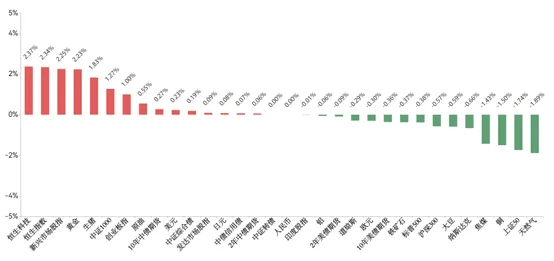
Market Overview - The A-share market exhibited structural differentiation and active trading last week, with the Shanghai Composite Index closing at 4101.91 points, down 0.45%, while the Shenzhen Component Index rose by 1.14% and the ChiNext Index increased by 1.00%, indicating resilience in growth sectors despite short-term volatility [1] - The overall market trend favored growth stocks while value stocks faced a pullback, with small-cap and technology sectors being the main focus of capital [1] Industry Performance - Most of the Wind first-level industry indices declined, averaging a drop of 0.44%. The information technology sector led with a 3.37% increase, driven by sustained AI computing demand, accelerated domestic substitution, and expectations of policy support. In contrast, the real estate sector fell by 3.66% due to weak sales data and limited policy effectiveness [1][9] Fund Issuance - A total of 23 funds were issued last week, including 10 equity funds, 7 mixed funds, 3 bond funds, 1 QDII fund, and 2 FOF funds, with a total issuance of 19.294 billion units [1][16] Fund Performance - The Wind All-Fund Index rose by 0.73% last week, with the equity mixed fund index increasing by 1.52%. However, there was significant differentiation, as the Wind Growth Fund Index rose by 1.88%, while the Wind Value Fund Index fell by 0.31%. The bond fund index saw a slight increase of 0.17% [1][5]
基金研究周报:权益风格分化,白银再度飙涨(1.12-1.16)
Wind万得· 2026-01-17 22:20
Market Overview - The A-share market exhibited structural differentiation and active trading last week, with the Shanghai Composite Index closing at 4101.91 points, down 0.45%, while the Shenzhen Component Index rose by 1.14% and the ChiNext Index increased by 1.00%, indicating resilience in the growth sector despite short-term volatility [1] - The overall market trend continues to favor growth over value, with small-cap and technology sectors being the main focus of capital [1] Industry Performance - Most of the Wind first-level industry indices declined last week, averaging a drop of 0.44%. The information technology sector led with a 3.37% increase, driven by sustained AI computing demand, accelerated domestic substitution, and policy support expectations. In contrast, the real estate sector fell by 3.66% due to weak sales data and limited policy effectiveness [9][10] Fund Issuance - A total of 23 funds were issued last week, including 10 equity funds, 7 mixed funds, 3 bond funds, 1 QDII fund, and 2 FOF funds, with a total issuance of 19.294 billion units [15] Fund Performance - The Wind All-Fund Index rose by 0.73% last week, with the equity mixed fund index increasing by 1.52%. However, there was significant differentiation, as the Wind Growth Fund Index rose by 1.88%, while the Wind Value Fund Index fell by 0.31% [5] Bond Market Overview - The bond market remained stable, with the China Convertible Bond Index rising by 1.08%. The 10-year and 30-year government bond futures increased by 0.27% and 0.26%, respectively, supported by liquidity injections through reverse repos and structural interest rate cuts [12]

1300+份新材料报告下载:做新材料领域的「攻坚者」
材料汇· 2026-01-17 16:02
Core Viewpoint - The article discusses the rapid growth and investment opportunities in the advanced packaging materials sector, highlighting the potential for domestic companies to replace foreign imports in critical areas of technology [7][8]. Market Overview - The global market for advanced packaging materials is projected to reach $2.032 billion by 2028, with the Chinese market expected to grow to 9.67 billion yuan by 2025 [8]. - Specific materials such as PSPI and Al-X photoresist are highlighted, with PSPI's market size in China estimated at 7.12 billion yuan in 2023 [8]. Investment Opportunities - The article identifies 14 key advanced packaging materials that are critical for the semiconductor industry, emphasizing the potential for domestic companies to capture market share from established foreign players [7][8]. - Companies like 鼎龙股份, 国风新材, and 三月科 are mentioned as potential leaders in the domestic market for advanced packaging materials [8]. Growth Projections - The market for conductive adhesives is expected to reach 3 billion yuan by 2026, while the chip bonding materials market is projected to grow from approximately $4.85 billion in 2023 to $6.84 billion by 2029 [8]. - The epoxy encapsulation materials market is anticipated to grow to $9.9 billion by 2027, indicating strong demand in the sector [8]. Competitive Landscape - The article outlines the competitive landscape, noting that foreign companies like Fujifilm, Toray, and Dow are currently dominant in various segments, but domestic firms are rapidly advancing [8]. - The need for innovation and investment in R&D is emphasized for domestic companies to compete effectively against established international players [8].
聚苯醚(PPO)研究:算力时代的底层基石与高端制造的国产替代先锋(附42页PPT)
材料汇· 2026-01-17 16:02
Core Viewpoint - The article emphasizes the transformative potential of Polyphenylene Oxide (PPO) in various industries, particularly in high-performance applications such as AI servers and electric vehicles, highlighting its transition from a general-purpose material to a strategic specialty material [4][18]. Summary by Sections Introduction - The evolution of material science, particularly engineering plastics, is linked to significant industrial transformations, with PPO being a key player in the information and green energy eras [3]. Chapter 1: Overview of PPO - PPO, known for its high production barriers and stringent polymerization processes, is recognized as one of the five major engineering plastics globally [4]. - Its unique molecular structure provides several physical advantages, including low dielectric loss, excellent thermal stability, and high mechanical strength [7][9][11]. Chapter 2: Industry Chain Analysis - The PPO industry chain is characterized by high technical and capital intensity, spanning from upstream raw materials to specialized downstream applications [20]. - The production process involves synthesizing the core monomer 2,6-Dimethylphenol (DMP), which constitutes 60%-70% of production costs [25]. Chapter 3: Market Analysis - The global PPO market is projected to grow from approximately 22.55 billion yuan in 2023 to nearly 30.68 billion yuan by 2030, with a CAGR of 3.5% [33]. - The demand for PPO is driven by the rise of AI servers and the electrification of vehicles, with significant growth expected in high-frequency communication applications [32][46]. Chapter 4: Technical Analysis - PPO's competitive edge lies in its unique molecular structure, which results in low dielectric loss and high thermal stability, making it ideal for high-performance applications [56]. - The production process, primarily through oxidative coupling, presents significant technical challenges, including the need for precise control of catalysts and reaction conditions [57]. Chapter 5: Application Scenarios - PPO is increasingly utilized in strategic sectors such as AI servers, electric vehicles, and renewable energy, where its properties ensure reliability and performance [16][50]. - The material's low water absorption and high electrical insulation make it particularly suitable for high-voltage applications in electric vehicles and charging infrastructure [51].
华创医药周观点:隐形正畸行业近况更新 2026/01/17
华创医药组公众平台· 2026-01-17 13:49
Core Viewpoint - The invisible orthodontics industry in China is experiencing a significant transformation, with leading manufacturers maintaining steady growth while smaller players face pressure due to pricing challenges. The market penetration of invisible orthodontics is expected to increase significantly in the coming years, driven by rising consumer awareness and demand for aesthetic solutions [12][25][31]. Market Overview - The CITIC Medical Index decreased by 0.72%, underperforming the CSI 300 Index by 0.15 percentage points, ranking 16th among 30 primary industries [7]. - The top ten stocks by growth this week included Baolait, Hualan, and Tianzhihang, while the bottom ten included Xiangrikui and 51 Changyao [7]. Industry and Stock Events - The invisible orthodontics market in China is projected to grow, with the penetration rate increasing from 11% in 2020 to an estimated 25% by 2030. The penetration rate for adults was 38.9% in 2020, while for children and adolescents, it was only 4.5% [17][24]. - The average selling price (ASP) of invisible orthodontics is under pressure due to increased competition and price wars among manufacturers, leading to a decline in market revenue growth compared to the number of cases [24][25]. - The leading companies, such as Times Angel and Invisalign, hold over 70% of the market share, with Times Angel maintaining growth in case numbers despite industry challenges [25][31]. Domestic Market Dynamics - The demand for invisible orthodontics is expanding in lower-tier cities, with the proportion of cases in third-tier and below cities rising from 22% in 2021 to 29% in 2023 [18]. - The market is witnessing a shift towards head manufacturers as smaller firms struggle to compete, leading to an accelerated market consolidation [25]. International Market Trends - The global invisible orthodontics market is expected to reach $4.8 billion by 2024, with North America dominating the market share at 56.9% [31][32]. - Chinese manufacturers are increasingly entering international markets, with Times Angel reporting a significant increase in overseas cases, which accounted for 39% of its total cases by 2024 [32]. Future Outlook - The invisible orthodontics industry is anticipated to continue its growth trajectory, with increasing consumer awareness and a shift towards aesthetic dental solutions. The market is expected to see further consolidation as smaller players exit due to competitive pressures [25][31].
华创医药投资观点&研究专题周周谈·第159期:隐形正畸行业近况更新-20260117
Huachuang Securities· 2026-01-17 12:20
Investment Rating - The report maintains a "Recommended" rating for the innovative drug sector, highlighting the potential for value re-evaluation as the proportion of innovative products increases [44]. Core Insights - The report emphasizes the transition of the innovative drug industry from quantity to quality, with a focus on differentiated and internationalized pipelines by 2025 [10]. - The medical device sector is experiencing a recovery in bidding volumes for imaging equipment, with a notable increase in home medical device markets due to subsidy policies [10]. - The report identifies a significant growth opportunity in the invisible orthodontics market, with penetration rates expected to rise from 14% in 2023 to 25% by 2030 [18]. Summary by Sections Market Overview - The report notes a 0.72% decline in the CITIC Medical Index, underperforming the CSI 300 Index by 0.15 percentage points, ranking 16th among 30 primary industries [6]. - The top ten performing stocks include Baolait, Hualan, and Tianzhihang, while the bottom ten include Xiangrikui and *ST Changyao [6]. Innovative Drugs - The innovative drug sector is expected to see a significant increase in the number of products, with projections of 30 products by 2027, including over 20 innovative drugs [44]. - The revenue share from innovative products is anticipated to exceed 50% by 2025, indicating a successful transition from generic to innovative products [44]. Medical Devices - The report highlights a recovery in bidding for imaging devices, with a projected significant increase in market size from Q4 2024 onwards [48]. - Home medical devices are benefiting from government subsidies, with companies like Yiyue expected to see sustained growth [48]. Invisible Orthodontics - The penetration rate of invisible orthodontics in China is significantly lower than in the U.S., with expectations for rapid growth due to rising economic levels and aesthetic demands [18]. - The market size for invisible orthodontics is projected to grow from 70 billion to 130 billion yuan from 2018 to 2023, with a CAGR of 13.4% [27]. Market Dynamics - The report indicates that the competitive landscape in the invisible orthodontics market is shifting towards leading manufacturers, with a focus on product differentiation and cost optimization [32]. - The report also notes that the domestic market is experiencing a consolidation phase, with smaller manufacturers facing challenges due to price competition [32].
AI算力破局关键!先进封装板块暴涨,风口来了?
格隆汇APP· 2026-01-17 11:23
Core Insights - The article discusses the critical role of advanced packaging and SiC technology in addressing the surging demand for AI computing power, highlighting the industry's shift towards these innovations as a solution to existing limitations in traditional chip packaging [5][7][24]. Industry Overview - The demand for computing power is expected to grow exponentially, with China's intelligent computing scale projected to reach 1037.3 EFLOPS by 2025, increasing by 40% in 2026 [7]. - Traditional packaging methods are unable to cope with the power limits, as chip performance improvements lead to a threefold increase in power consumption for every doubling of performance [7][9]. Advanced Packaging Technology - Advanced packaging techniques, including 2.5D/3D stacking and the use of SiC as an intermediary layer, are essential for overcoming thermal management challenges and enhancing chip interconnect density by over 10 times [9][11]. - The global advanced packaging market is forecasted to exceed $79 billion by 2030, with 2.5D/3D packaging experiencing a growth rate of 37% [9]. SiC Technology - SiC is identified as the optimal solution for intermediary layers due to its superior thermal conductivity (490 W/m·K), hardness (Mohs hardness of 9.5), and ability to support high aspect ratio through-hole designs, improving wiring density and transmission speed by 20% [11][13]. - By 2027, SiC intermediary layer mass production is anticipated, with a projected need for over 2.3 million 12-inch SiC substrates by 2030, indicating a significant supply gap [14]. Market Dynamics - The advanced packaging boom is characterized by a collective resonance across the entire supply chain, including equipment, materials, and OSAT (Outsourced Semiconductor Assembly and Test) sectors [16]. - Key players in the OSAT space include Changdian Technology and Tongfu Microelectronics, both of which are positioned to benefit from the domestic substitution trend and the growing demand for advanced packaging solutions [16][21]. Investment Opportunities - Four key investment directions are highlighted: SiC materials and equipment, advanced packaging OSAT, critical materials, and mixed bonding/3D packaging technologies [19][20][21][22]. - Companies such as Tianyue Advanced and Sanan Optoelectronics are noted for their advancements in 12-inch SiC substrate production, while equipment manufacturers like Jing Sheng and Huahai Qingke are breaking through overseas monopolies [20][18]. Conclusion - The advanced packaging industry is evolving from a semiconductor backend process to a core component of computing power, essential for AI, data centers, and smart driving applications [24]. - The industry is on the brink of a significant growth phase, driven by the upcoming mass production of SiC intermediary layers and breakthroughs in domestic supply chains [24].