
13价肺炎疫苗

Search documents
价格战持续 疫苗行业2025年业绩分化加剧
2 1 Shi Ji Jing Ji Bao Dao· 2026-02-03 23:13
Core Viewpoint - The performance forecasts for A-share vaccine companies in 2025 reveal significant industry adjustments, with major players like Zhifei Biological, Wantai Biological, and Baike Biological reporting losses, while companies like CanSino and Watson Biologics achieve growth through innovative products and overseas market expansion [1][2]. Industry Overview - The vaccine industry is facing multiple pressures, including price wars, shrinking demand, and product homogenization, which are forcing companies to shift from channel-driven to innovation-driven strategies [1][4]. - The overall profitability of the industry has sharply declined, with Zhifei Biological expecting its first annual loss since its listing, projecting a net loss of 10.698 billion to 13.726 billion yuan, a year-on-year decline of 630% to 780% [1][2]. Company Performance - Zhifei Biological, Wantai Biological, and Baike Biological have all transitioned from profit to loss due to various factors, including price cuts and inventory issues [1][2]. - CanSino has turned a profit in 2025, with a projected net profit of 24.5 million to 29 million yuan, benefiting from the strong sales of its four-valent meningococcal vaccine, which accounts for 90% of its revenue [2][6]. - Watson Biologics has seen a 35% year-on-year increase in overseas vaccine exports, achieving a net profit of 16 million to 19 million yuan, reflecting its ability to counter domestic declines [2][7]. Market Dynamics - The ongoing price war is compressing profit margins, with significant price drops observed in various vaccine categories, such as the HPV vaccine and flu vaccine, leading to reduced gross margins for companies [4][8]. - Demand for vaccines is declining due to a falling birth rate and low vaccination rates among adults, exacerbating the industry's growth challenges [4][5]. Strategic Shifts - Companies are increasingly focusing on innovation and overseas expansion as key strategies to navigate the current market challenges [5][9]. - The inclusion of the HPV vaccine in the national immunization program is expected to stabilize market demand but will also pressure companies to reduce costs and innovate further [8][9]. Future Outlook - 2025 is seen as a pivotal year for the vaccine industry in China, with a shift towards high-quality development and a focus on core competencies and innovation [9]. - The industry is expected to gradually recover as innovative products are launched, overseas markets are expanded, and public awareness of vaccination increases [9].


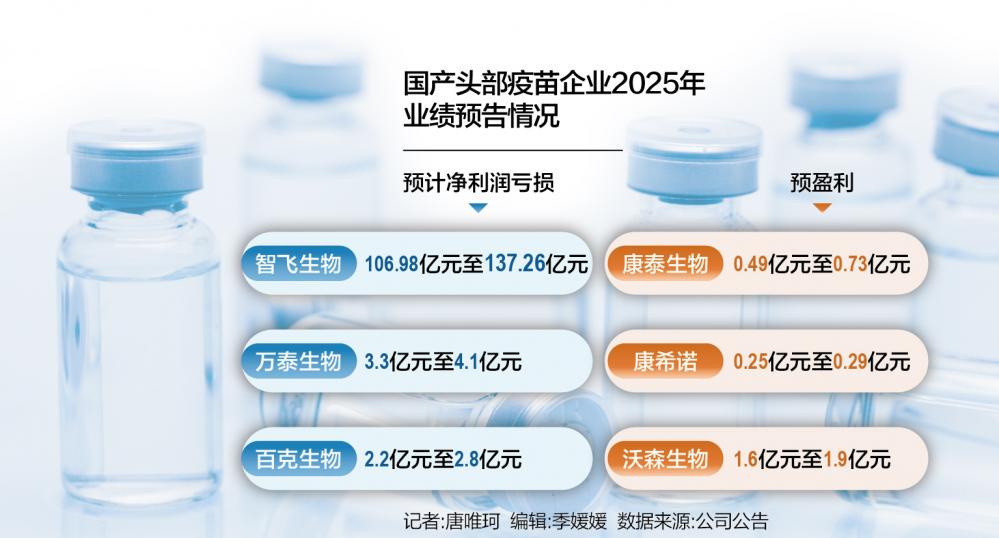
疫苗行业2025年业绩分化加剧
2 1 Shi Ji Jing Ji Bao Dao· 2026-02-03 23:08
Core Insights - The performance forecasts for A-share vaccine companies in 2025 reveal significant industry adjustments, with major players like Zhifei Biological, Wantai Biological, and Baike Biological reporting losses, while companies like CanSino and Watson Biologics achieve growth through innovative products and overseas market expansion [1][2][5] Industry Overview - The vaccine industry is facing multiple pressures, including price wars and shrinking demand, leading to a significant contraction in profitability [5][6] - The continuous price competition has compressed profit margins, with HPV vaccines and flu vaccines reaching historical lows in pricing, impacting overall industry profitability [5][6] - The decline in birth rates has reduced the core vaccination population for children's vaccines, while adult vaccine uptake remains low due to vaccine hesitancy [5][6] Company Performance - Zhifei Biological is expected to report its first annual loss since its listing, with a projected net loss of 10.698 billion to 13.726 billion yuan, a year-on-year decline of 630% to 780% [1] - Wantai Biological and Baike Biological also shift from profit to loss, with projected net losses of 330 million to 410 million yuan and 220 million to 280 million yuan, respectively [1] - CanSino is projected to turn a profit with a net income of 24.5 million to 29 million yuan, benefiting from the strong sales of its quadrivalent meningococcal vaccine [2] - Watson Biologics expects a net profit of 160 million to 190 million yuan, driven by a 35% increase in overseas vaccine exports [2] Market Dynamics - The industry is experiencing severe product homogeneity, leading to intensified competition among companies in popular vaccine segments like HPV and shingles [6] - Companies overly reliant on agency models are facing challenges, as seen with Zhifei Biological, which has a high dependency on agency products [6] - Inventory and cash flow pressures are evident, with companies like Zhifei Biological and Wantai Biological facing significant inventory write-downs [6] Innovation and Opportunities - Companies with unique innovative products are achieving performance rebounds, with CanSino's quadrivalent vaccine capturing over 90% market share [7] - The overseas market is becoming a crucial growth point, with Watson Biologics exporting to 24 countries and CanSino's inhaled vaccine gaining market share in Southeast Asia and Latin America [8] - The inclusion of the bivalent HPV vaccine in the national immunization program is expected to stabilize market demand while also compressing profit margins for companies [9] Future Outlook - 2025 is seen as a pivotal year for the vaccine industry to transition towards high-quality development, with a focus on innovation and overseas market expansion [10] - The industry is expected to gradually emerge from the adjustment period as innovative products are launched and vaccination awareness increases among residents [10] - The China Vaccine Industry Association has initiated measures to curb irrational price competition, aiming for a more rational pricing environment in the future [10]
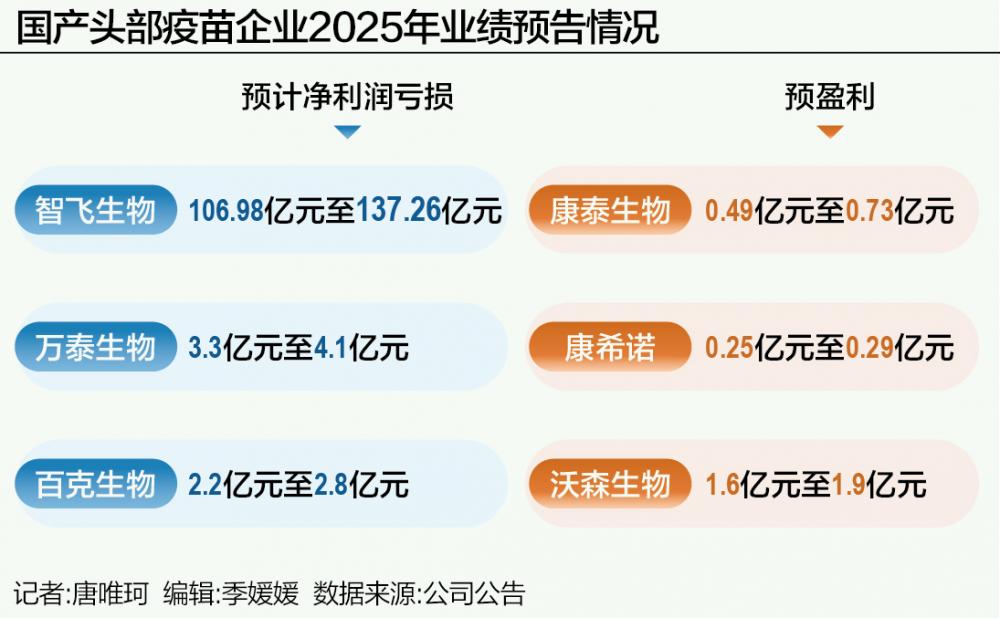
疫苗龙头集体亏损,412亿巨头净利预亏780%
21世纪经济报道· 2026-02-03 13:23
Core Viewpoint - The vaccine industry in A-shares is experiencing significant performance declines in 2025, with major companies like Zhifei Biological, Wantai Biological, and Baike Biological reporting losses, while companies like CanSino and Watson Biologics are achieving growth through innovative products and overseas market expansion [1][4]. Group 1: Industry Performance - Zhifei Biological is expected to report its first annual loss since its listing, with a projected net loss of CNY 10.698 billion to CNY 13.726 billion, a year-on-year decline of 630% to 780% [1]. - Wantai Biological and Baike Biological have also shifted from profit to loss, with Wantai's net loss projected at CNY 330 million to CNY 410 million due to inventory write-downs and pricing pressures [1][3]. - CanSino is projected to turn a profit with a net income of CNY 24.5 million to CNY 29 million, benefiting from the strong sales of its innovative vaccine [4]. Group 2: Market Challenges - The industry is facing multiple pressures, including price wars and reduced demand, leading to significant profit margin compression [6]. - The birth rate decline is reducing the core vaccination population, with the proportion of children aged 0-6 years expected to drop from 64.6% in 2020 to 43.7% in 2024 [6]. - The phenomenon of "vaccine hesitancy" is also impacting adult vaccination rates, with annual flu vaccination rates below 4% [6]. Group 3: Strategic Shifts - Companies are being forced to transition from channel-driven models to innovation-driven strategies due to competitive pressures [6][10]. - The inclusion of the HPV vaccine in the national immunization program is expected to stabilize market demand but will also compress profit margins, pushing companies to innovate and reduce costs [9]. - The industry is witnessing a shift towards overseas markets, with Watson Biologics reporting a 35% increase in vaccine exports, highlighting the potential for growth outside domestic markets [4][8]. Group 4: Future Outlook - The vaccine industry is anticipated to undergo a transformation towards high-quality development in 2025, with a focus on innovation and overseas expansion [9][10]. - The Chinese Vaccine Industry Association has called for a ban on bidding below cost to combat price wars, indicating a move towards more rational competition [10]. - Companies that can innovate and adapt to new market conditions are expected to emerge stronger from the current industry adjustments [10].

预亏百亿!医药大白马大失速
Ge Long Hui A P P· 2026-01-18 08:33
Core Viewpoint - The vaccine industry, particularly for Zhifei Biological Products, is experiencing a significant downturn after a period of rapid growth, with the company facing its first annual loss since its IPO in 2010 due to declining sales of its HPV vaccines and increased competition from domestic products [3][8][20]. Group 1: Company Performance - Zhifei Biological's stock price surged eightfold over three years due to its exclusive agency of Merck's HPV vaccine, but has since plummeted over 80% as the vaccine market cooled [1][3]. - The company forecasts a non-net profit decline of 630%-780% for 2025, with expected losses between 10.698 billion to 13.726 billion yuan [3]. - In 2023, Zhifei's revenue peaked at 52.918 billion yuan, with a net profit of 8.07 billion yuan, but is projected to drop to 26 billion yuan in 2024 [6][8]. Group 2: Market Dynamics - The introduction of domestic HPV vaccines has led to intense price competition, significantly reducing the market share for imported vaccines [11][12]. - The price of domestic HPV vaccines is less than half that of imported ones, creating a challenging environment for Zhifei's products [12][13]. - The demand for HPV vaccines has sharply declined due to market saturation and decreased public willingness to get vaccinated, with the first-dose coverage rate for women aged 9-45 at only 27.43% in 2024 [16][17]. Group 3: Industry Challenges - The overall vaccine market is facing severe homogenization, leading to price wars that erode profit margins [28][29]. - The average gross margin for vaccine companies has dropped by 10 percentage points, with only 4 out of 14 listed vaccine companies reporting positive net profit growth in 2025 [26][28]. - The public's trust in vaccines and willingness to receive vaccinations has decreased, particularly for self-paid vaccines like HPV, which has led to a significant drop in demand [32][33]. Group 4: Future Outlook - Despite current challenges, there is potential for growth in the vaccine industry through innovation and international expansion, particularly in developing markets [38][40]. - Companies that can develop differentiated products with high technical barriers are likely to succeed, while those lacking core technology may be eliminated [40]. - The industry is expected to undergo a restructuring phase, focusing on sustainable growth driven by innovation and comprehensive competitive strength [41].

市值蒸发 1300 亿,“疫苗龙头”缘何急速坠落?
3 6 Ke· 2026-01-07 14:11
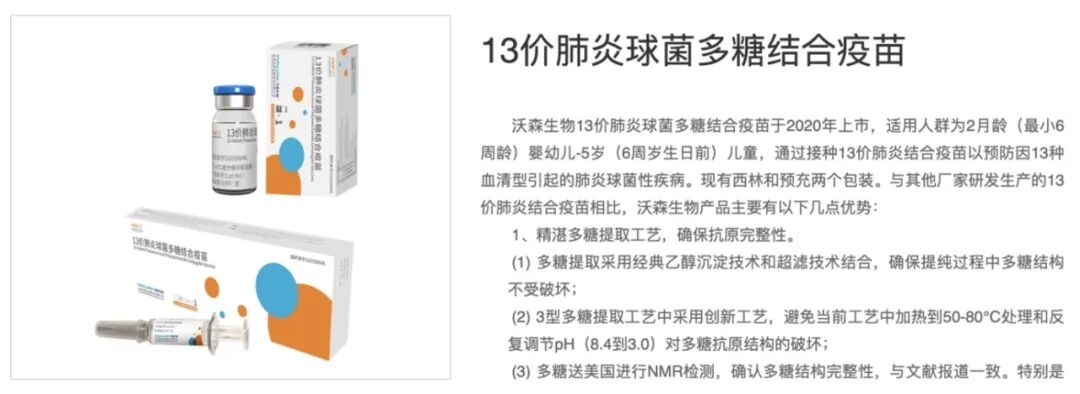
Core Viewpoint - The vaccine industry is experiencing a significant downturn as the initial excitement and capital influx driven by the COVID-19 pandemic and domestic innovation fade away, leading to increased competition and challenges for vaccine companies [1][3]. Company Overview - Watson Bio, a leading vaccine company, is seeking a 670 million yuan loan from Yunnan Hongta Bank, pledging 166 million shares of its core subsidiary as collateral, indicating a desperate need for financial support amid multiple pressures [4][5]. - The company, once celebrated for its 13-valent pneumonia and HPV vaccines, is now facing declining stock prices, slowing growth, and regulatory penalties due to governance issues [5][22]. Historical Context - Watson Bio was founded in 2001 and initially gained traction by distributing hepatitis vaccines before shifting focus to self-developed products around 2005 [7][8]. - The company went public in 2010 and expanded its product line through acquisitions, benefiting from a favorable market environment and capital enthusiasm for biopharmaceuticals [8]. - A pivotal moment came in early 2020 when Watson's 13-valent pneumonia vaccine was approved, breaking a monopoly and establishing the company as a market leader [9][12][13]. Recent Performance - In 2023, Watson's revenue dropped to approximately 4.114 billion yuan, a decrease of 19.12% year-on-year, with net profit falling by 42.44% [23]. - The company's revenue continued to decline in the first three quarters of 2025, with a total of 1.719 billion yuan, down 19.73% year-on-year, and a significant drop in third-quarter revenue [23][30]. Market Challenges - Watson is facing intense competition and a price war, particularly in the HPV vaccine sector, where prices have plummeted from around 329 yuan to below 30 yuan in some government procurement projects, leading to a severe erosion of profit margins [26][27]. - The company’s product pipeline is weak, with its next-generation nine-valent HPV vaccine lagging behind competitors, which have already received approval and are gaining market share [29][30]. Internal Issues - Governance problems have emerged, with regulatory bodies issuing corrective measures due to violations in executive compensation procedures, highlighting internal management issues [32][34]. - The company has seen significant insider selling, with key executives, including the founder, reducing their stakes dramatically, which has raised concerns among investors about the company's stability [35][36]. Financial Health - Watson's cash flow situation is precarious, with a net cash flow from operating activities dropping by 85.75% in the first three quarters of 2025, indicating a near depletion of its financial resources [39]. - The company has also significantly reduced its R&D investment, with a 48.53% decrease in the first half of 2025 compared to the previous year, raising concerns about its long-term growth potential [39][40].
2025年三季报总结:医疗器械、生命科学上游、疫苗
2025-12-08 00:41
Summary of Conference Call Records Industry Overview - The medical device industry is experiencing overall performance pressure in 2025, but third-quarter revenues have shown a year-on-year increase, with a narrowing decline in net profit attributable to the parent company, primarily due to domestic medical insurance cost control and geopolitical influences. It is expected that normal growth rates will resume in 2026 [1][3][8]. Key Points on Medical Device Sector - **Domestic Market Dynamics**: The slowdown in hospital bidding in 2024 is impacting revenue realization, with an expected boost from the "old-for-new" policy by the end of 2025. The In Vitro Diagnostics (IVD) sector is under pressure due to centralized procurement price adjustments and tax reimbursements [1][4]. - **International Market Challenges**: Companies are strengthening their overseas presence, but initial high costs are pressuring short-term profits. The impact of US-China tariffs on low-value consumables is significant, with expectations of price recovery in the glove industry from late 2025 to 2026 after inventory digestion [1][4][11]. - **Performance Metrics**: In the first three quarters of 2025, the medical device sector reported revenues of 145.7 billion yuan, a year-on-year decline of 2.4%, and a net profit of 26.5 billion yuan, down 14.4%. However, the third quarter showed a positive revenue trend and a narrowing profit decline [3][15]. Specific Sector Insights - **IVD Sector**: The IVD sector saw a year-on-year decline of 14.5% in the first three quarters, but the third quarter showed improvement with revenues of 11.02 billion yuan, benefiting from the implementation of centralized procurement and the release of DRG/DIP 2.0 [16]. - **High-Value Consumables**: This segment experienced a revenue growth of 6.6% year-on-year, with orthopedics showing a significant growth rate of 18.7%. The recovery in cardiovascular surgeries is driving sales, and the ophthalmology sector presents potential due to low penetration rates [17]. - **Medical Equipment**: The medical equipment sector's revenue remained flat, but profit growth was slightly higher. The imaging equipment sector is benefiting from the "old-for-new" projects, with a notable recovery in the endoscope segment [15]. Vaccine Sector Performance - The vaccine sector faced significant pressure, with revenues declining nearly 50% and profits turning negative. However, there is a quarter-on-quarter improvement trend. Future focus includes the recovery of traditional vaccines and the launch of new pipeline products, such as the domestically produced nine-valent HPV vaccine [2][23]. Life Sciences Upstream Sector - The life sciences upstream sector's performance remained stable, with a year-on-year profit growth of 68% in the third quarter, driven by recovering terminal demand and improved gross margins. The sector is benefiting from the expansion of the biopharmaceutical market and policy support [24]. Regulatory Environment and Challenges - The current regulatory environment emphasizes innovation while ensuring safety and efficacy. Domestic companies face challenges in international certifications, particularly with the FDA and CE, due to quality control issues [20][21][22]. Future Outlook - The industry outlook for 2026 includes a focus on self-sufficiency, innovative devices, and accelerated realization of centralized procurement categories. The recovery of orthopedic products is already evident, and international expansion remains a key area of interest [5][7][19].





疫苗企业国际化与研发继续实现突破,冬季防控压力持续凸显
Xiangcai Securities· 2025-11-30 12:40
Investment Rating - The industry investment rating is maintained at "Overweight" [1] Core Views - Vaccine companies are achieving breakthroughs in internationalization and research and development, while the pressure for winter epidemic prevention continues to highlight the need for effective measures [4][9] - The vaccine industry is transitioning from scale expansion to innovation-driven growth, with supply-demand imbalances and homogenized competition causing short-term challenges, but the long-term outlook remains positive due to supportive policies, increasing demand, and technological advancements [9][28] Summary by Sections Recent Developments - Zhifei Biological's subsidiary obtained a U.S. patent for an RSV vaccine, marking a significant step in its international market strategy [3] - Watson Bio's subsidiary received a marketing license for a 13-valent pneumonia vaccine in Egypt, enhancing its international presence [3] - Wuhan Institute of Biological Products achieved important progress in children's vaccine development, with two vaccines approved for clinical use [3] Market Performance - The vaccine sector saw a 1.33% increase last week, underperforming compared to other pharmaceutical sectors [5][6] - Year-to-date, the vaccine sector has experienced a cumulative decline of 5.12% [6] Valuation Metrics - The vaccine sector's PE (ttm) is 95.41X, with a PB (lf) of 1.87X, indicating a slight increase in valuation metrics compared to previous periods [7] Investment Recommendations - The vaccine industry is under pressure, with a focus on innovation and international expansion as key strategies for recovery [8] - Companies with high technical barriers and differentiated pipelines are recommended for investment, particularly those with strong research and development capabilities [9][28]

流感「抬头」,疫苗价「雪崩」,行业协会坐不住了
3 6 Ke· 2025-11-26 13:48
Core Insights - The price war in the vaccine industry is driven by changes in supply and demand dynamics, leading to significant price reductions and financial losses for companies [2][10][15] Group 1: Price Trends - The price of a three-valent flu vaccine has dropped to 5.5 yuan, lower than the price of a cup of milk tea, indicating a drastic reduction in vaccine prices [3][7] - The price of the four-valent flu vaccine has decreased from 128 yuan to 88 yuan, with further reductions expected as competition intensifies [7][8] - HPV vaccines have also seen significant price drops, with the two-valent HPV vaccine priced at 27.5 yuan, down over 90% from previous prices [8] Group 2: Industry Response - The China Vaccine Industry Association issued an initiative to combat "involutionary" competition, urging members to avoid bidding below cost and maintain price stability [4][5] - The association's initiative aims to stabilize price expectations but may not address the underlying issue of overcapacity in the industry [3][10] Group 3: Market Dynamics - The vaccine market is experiencing overcapacity due to an influx of companies entering the sector, leading to intense competition and price wars [10][11] - Demand for vaccines is under pressure, with declining public trust in vaccines and a decrease in birth rates affecting the market for childhood vaccines [11][12] Group 4: Financial Impact - Vaccine companies have reported significant financial losses, with overall revenue for listed vaccine companies dropping by 60% and net profits declining by 113% in the first half of 2025 [12][14] - Major companies like Zhifei Biological and Wantai Biological have reported substantial revenue declines and net losses, reflecting the severe impact of the price war [12][14] Group 5: Future Outlook - Experts suggest that the industry may need to undergo a period of consolidation and restructuring, which could last five to ten years, to address the current challenges [15] - Companies are exploring international markets and differentiation strategies to navigate the competitive landscape, with some reporting significant increases in exports [15]




流感「抬头」,疫苗价「雪崩」,行业协会坐不住了
36氪· 2025-11-26 13:39
Core Viewpoint - The article discusses the ongoing price war in China's vaccine industry, driven by changes in supply and demand dynamics, leading to significant price reductions and financial losses for companies [4][15][22]. Group 1: Price War Dynamics - The price of a three-valent flu vaccine has dropped to 5.5 yuan, cheaper than a cup of milk tea, indicating a severe price competition in the vaccine market [5][11]. - The China Vaccine Industry Association has issued an initiative to combat "involution-style" competition, urging members to avoid bidding below cost and threatening penalties for violations [6][8][10]. - The price war has persisted for two years, with the association's initiative being the first formal stance against low-price competition, although it may not resolve the underlying issue of overcapacity [6][10][22]. Group 2: Supply and Demand Changes - The supply side is characterized by homogenization and overcapacity, with many companies entering the vaccine market, leading to intense competition and price wars [16][17]. - Demand is also under pressure, with declining public trust in vaccines and a decrease in vaccination rates, particularly for flu vaccines, which averaged below 4% in China from 2020 to 2023 [17][19]. - The shift in focus from childhood vaccines to adult vaccines due to declining birth rates has intensified competition in the adult vaccine market [17][19]. Group 3: Financial Impact on Companies - The financial repercussions of the price war are evident, with vaccine companies experiencing a 60% drop in revenue and a 113% decline in net profit in the first half of 2025 [19][20]. - Major companies like Zhifei Biological and Wantai Biological have reported significant losses, with Zhifei's revenue down 66.53% and net profit loss of 12.06 billion yuan [20][21]. - Despite some companies showing growth in sales, the overall trend indicates that increased revenue does not equate to increased profit due to drastic price reductions [21][22]. Group 4: Future Outlook and Strategies - Experts suggest that the industry is in a "deep cold moment," requiring a period of consolidation and restructuring that could last five to ten years [23]. - Companies are exploring two main strategies to navigate the competitive landscape: expanding into emerging markets and focusing on differentiated products to meet unmet clinical needs [24].

全球疫苗大失速
3 6 Ke· 2025-11-11 23:30
Core Viewpoint - The global vaccine industry is undergoing a significant adjustment, with major players experiencing a collective decline in vaccine business due to various macro factors, including a growing public skepticism towards vaccines in the U.S. [2][3][7] Group 1: Financial Performance of Major Vaccine Companies - The latest Q3 financial reports from major vaccine companies, including Sanofi, Merck, Pfizer, and GSK, indicate a downturn in vaccine sales, with a projected 19% decline in total sales for the top ten vaccines in 2024 compared to 2023, amounting to $38.4 billion [4][6]. - Sanofi reported a 17% decline in sales of COVID-19 and flu vaccines, with traditional vaccine revenue dropping 8% to €3.36 billion, primarily due to a slowdown in flu vaccine sales [4]. - Merck's sales of its HPV vaccine Gardasil/GARDASIL 9 fell by 24% to $1.75 billion in Q3, with a staggering 40% drop in revenue for the first three quarters of the year [5]. - Pfizer's COVID-19 vaccine Comirnaty saw a 20% global sales decline, with a 25% drop in the U.S. market, alongside disappointing performances from its pneumonia and RSV vaccines [5][6]. Group 2: Macro Factors Impacting Vaccine Trust - The decline in vaccine trust in the U.S. is attributed to the actions of Robert F. Kennedy Jr., the new Secretary of Health and Human Services, who has promoted anti-vaccine sentiments and policies that undermine public confidence in vaccines [7][8]. - A recent survey indicated that 30% of Americans are skeptical about vaccines, with a significant drop in the belief that childhood vaccines are essential, from 58% in 2019 to 40% in 2024 [8]. - The CDC reported over 1,600 confirmed measles cases in 2025, a stark increase from 285 cases the previous year, highlighting the consequences of declining vaccination rates [9]. Group 3: Historical Context and Future Implications - The current situation in the U.S. vaccine market mirrors Japan's past vaccine industry decline, which was triggered by public trust issues and government policy changes that led to a significant drop in vaccination rates [10][11]. - The ongoing crisis in vaccine trust poses a risk not only to the industry but also to public health, as evidenced by the resurgence of preventable diseases like measles [9][10].


