
无人物流

Search documents
打造合作平台 加强服务保障 江苏扬州场景创新激发新动能
Jing Ji Ri Bao· 2026-02-25 22:06
Group 1 - The logistics industry in Yangzhou is experiencing a peak in demand around the Spring Festival, with the introduction of L4 autonomous delivery vehicles significantly reducing logistics costs by 30% [1] - Yangzhou has implemented over 300 autonomous delivery vehicles to address labor shortages, high costs, and low efficiency in the logistics sector, creating a smart and efficient delivery network [1] - The city has launched various innovation initiatives, including the release of 109 application scenarios and a second batch of 50 scenarios to support industrial upgrades and urban governance modernization [1] Group 2 - In the healthcare sector, technology is transforming diagnostic experiences, exemplified by the DOT120 AI-assisted health center that generates detailed spinal health reports within 30 minutes [1] - Smart governance in Yangzhou is enhanced through digital tools, such as drones equipped with AI for waste identification, improving urban management efficiency [2] - Yangzhou is committed to developing a platform for scenario supply and demand cooperation, continuously releasing innovation scenario lists to empower development [2]
新石器宋振:坚守物流服务“最后一公里”
Zhong Guo Qi Che Bao Wang· 2026-02-09 10:07
Group 1 - The core viewpoint highlights the role of after-sales maintenance teams as "guardians" during the Spring Festival, ensuring uninterrupted logistics services for unmanned delivery vehicles [2] - The after-sales maintenance team at New Stone Technology is dedicated to comprehensive inspections and real-time monitoring of unmanned delivery vehicles, ensuring optimal operational conditions during the holiday season [2] - The team's goal for 2026 is to deepen, broaden, and refine after-sales services for unmanned delivery vehicles, emphasizing the importance of efficient and safe operations [3] Group 2 - The unmanned logistics industry in China has experienced significant development over the past five years, transitioning from technical exploration to practical implementation [3] - The "14th Five-Year Plan" period is identified as a critical phase for the unmanned logistics sector, achieving a qualitative change from initial laboratory validation to mature, real-world applications [3] - The industry has progressed from single-point demonstrations to large-scale implementations, reflecting a breakthrough in industrialization [3]


未知机构:申万机械天准科技推荐半导体无人物流消费电子多重催化共振-20260123
未知机构· 2026-01-23 02:20
Company and Industry Summary Company: Tianzhun Technology (天准科技) Semiconductor Industry - The company is accelerating customer adoption of its bright field nano-defect detection equipment, with a typical requirement of 1.5-2 units for every 10,000 wafers processed [1] - The TB1500 bright field detection equipment, targeting the 40nm process node, has completed wafer sample validation with multiple clients and is expected to secure orders from several logic and memory manufacturers this year [1] Robotics - Tianzhun Technology is a partner of NVIDIA for the Jetson Thor platform, engaging in a binding collaboration that integrates chips, complete machines, and application scenarios [1] - The company is focusing on the sales of its third-generation controller product, Star Intelligence 007, which boasts an AI computing power increase of nearly 7.5 times, positioning it as a critical component in the inflationary segment [1] Unmanned Logistics - The company entered a rapid growth phase in the unmanned logistics vehicle controller business, having started preparations in 2018 [2] - Early clients included major players like Cainiao Logistics, JD.com, and Meituan, with new clients such as Jiushi and New Stone added in 2025 [2] - A conservative estimate predicts over 10,000 orders this year, with a market share exceeding 50% [2] Consumer Electronics - Tianzhun Technology is a leader in machine vision dimension measurement, coinciding with Apple's entry into an innovation cycle [3] - The introduction of foldable screens has created new demand modules for displays, hinges, and VC cooling systems, with a projected order growth rate exceeding 40% in 2025, indicating an impending performance inflection point [3]

晚报 | 1月8日主题前瞻
Xuan Gu Bao· 2026-01-07 14:42
Semiconductor Industry - The Ministry of Commerce announced an anti-dumping investigation on imported dichlorosilane (DCS) from Japan, effective January 7, 2026, with the investigation period from July 1, 2024, to June 30, 2025 [1] - DCS is crucial for chip manufacturing, used in processes like thin film deposition for various types of chips, indicating its importance in the semiconductor supply chain [1] - China's reliance on imported high-end electronic-grade DCS is significant, with domestic production only at 15%-20%, highlighting the need for self-sufficiency in the semiconductor industry [2] Artificial Intelligence - The Ministry of Industry and Information Technology, along with eight other departments, issued implementation opinions for the "AI + Manufacturing" initiative, aiming for secure supply of core AI technologies and a leading industrial scale by 2027 [3] - The initiative includes promoting 3-5 general large models in manufacturing, creating 100 high-quality industrial datasets, and establishing 1000 benchmark enterprises [3] - The AI industry in China is projected to exceed 900 billion yuan in core industry scale by 2024, with over 5000 AI companies, indicating robust growth and innovation potential [3] Logistics Industry - The China Logistics and Purchasing Federation reported a logistics industry prosperity index of 52.4% for December 2025, reflecting a stable recovery in logistics demand throughout the year [4] - The rise of unmanned delivery systems, utilizing autonomous driving and AI technologies, is expected to accelerate commercial applications, supported by recent government policies promoting large-scale application ecosystems [4] AI Hardware - Alibaba Cloud will host an AI hardware exhibition from January 8-11 in Shenzhen, showcasing innovative products and promoting the "carbon-silicon symbiosis" concept [5] - The exhibition aims to strengthen Shenzhen's position as a global hub for smart hardware, facilitating the transition from concept to large-scale growth in the AI hardware sector [5] Pulp and Paper Industry - Suzano, the world's largest pulp producer, announced price increases for pulp in Europe, North America, and Asia starting January 2026, indicating a tightening supply-demand balance [5] - Domestic paper companies, including Nine Dragons and Wuzhou Special Paper, have also announced price hikes, reflecting rising raw material costs and a need for production adjustments [6] Civil Aviation Industry - The national civil aviation conference highlighted significant achievements in 2025, with a total transport turnover of 1,640.8 billion ton-kilometers and a profit of 6.5 billion yuan [7] - The industry is expected to continue its growth trajectory in 2026, with projected transport turnover of 1,750 billion ton-kilometers and passenger transport of 810 million [7] Two-Dimensional Semiconductor - The first engineering demonstration line for two-dimensional semiconductors in China was inaugurated, with plans to commence operations by June 2026 [8] - This initiative represents a significant advancement in non-silicon-based semiconductor technology, potentially enabling leapfrog developments in the semiconductor industry [8]
三重信心护航+董事长刘国清三度增持!佑驾创新两日涨近14%
Ge Long Hui· 2026-01-07 11:53
Core Viewpoint - The company, Youjia Innovation (2431.HK), is actively boosting market confidence through multiple strategic actions, including share buybacks and insider purchases, amidst a critical valuation recovery period for the Hong Kong tech sector [1][2]. Group 1: Company Actions - The founder and chairman, Liu Guoqing, has purchased a total of 150,000 shares over three consecutive trading days, with an average price of approximately 14.7889 HKD per share [1]. - The company has announced a voluntary extension of the lock-up period for core shareholders and plans to repurchase up to 200 million HKD of H-shares, creating a strong confidence signal in the market [1]. - These combined actions are seen as a direct response to market concerns, reinforcing the company's solid fundamentals and long-term growth prospects [1]. Group 2: Market Performance - The company's stock price surged by 11% on January 6, closing at 14.45 HKD per share, and continued to rise on January 7, reaching a closing price of 15.15 HKD per share, marking a single-day increase of 4.84% [1]. - Over two trading days, the stock price has increased by a cumulative 13.91%, positioning the company as a leading representative in the valuation recovery of the Hong Kong tech sector [1]. Group 3: Industry Positioning - Youjia Innovation is one of the few companies in China with full-stack self-research capabilities from L1 to L4, making it a rare player in the unmanned logistics sector and the first of its kind listed in Hong Kong [2]. - The company has accelerated its L4 commercialization process, securing over 1,000 bulk orders for its "Xiaozhu" unmanned vehicle and winning bids for key projects, indicating a significant leap from technology validation to large-scale commercialization [2]. - The chairman's consistent share purchases reflect a deep alignment of personal interests with the company's long-term development, reinforcing confidence in the industry's growth potential [2].
佑驾创新小竹无人车斩获新订单:规模化落地再提速,单月订单达600台
IPO早知道· 2025-11-19 05:21
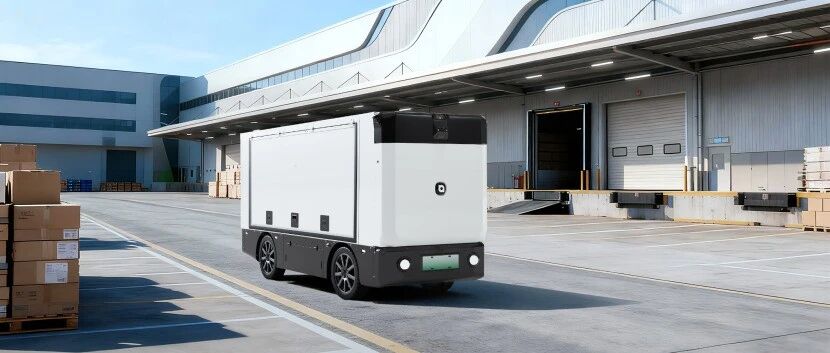
Core Viewpoint - Youjia Innovation's Xiaozhu unmanned logistics vehicle has established a clear path for large-scale deployment and steady expansion, as evidenced by recent orders and partnerships [2][4]. Group 1: Business Partnerships and Orders - Youjia Innovation has signed a business cooperation agreement with Master New Energy Technology, securing an order for 500 Xiaozhu T5 unmanned logistics vehicles, with the first 100 units set for delivery in January 2026 [2]. - The partnership aims to implement the first phase of T5 unmanned logistics in Anhui, covering various scenarios such as warehousing and last-mile delivery [2]. - In November, Youjia Innovation received an additional order for 100 unmanned logistics vehicles, deepening collaboration with Hunan Xiangjiang Intelligent [8]. Group 2: Product Features and Market Adaptation - The Xiaozhu T5 features a scientifically designed cargo space with a volume of 5.5m³ and a maximum load capacity of 1000kg, catering to short-distance urban delivery needs [3]. - The vehicle boasts a maximum range of 180km, effectively reducing operational costs and refueling frequency for logistics companies [3]. - The Xiaozhu unmanned vehicle has been successfully tested in Shenzhen's Huaqiangbei area, demonstrating its commercial adaptability and addressing local logistics challenges [6]. Group 3: Strategic Expansion and Future Outlook - The entry into Anhui marks a significant strategic extension for Youjia Innovation's L4 autonomous driving business, expanding its market reach [9]. - The company is committed to increasing investment in technology iteration and research for unmanned logistics vehicles, aiming to innovate business models and expand application boundaries [10]. - Youjia Innovation is building a diversified industry cooperation ecosystem, collaborating with major players like China Post and Shenzhen Eastern Bus to enhance urban logistics and public services [9].
无人物流车在快递行业的推进更新
2025-10-27 15:22
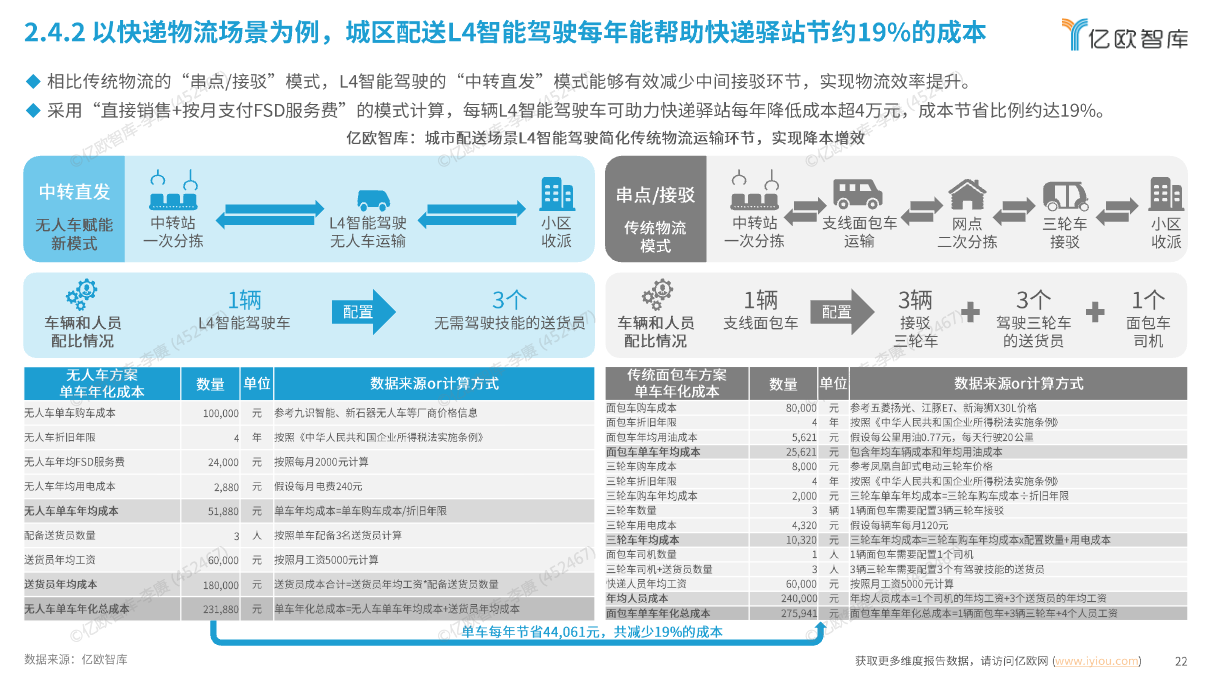
Summary of Key Points from the Conference Call Industry Overview - The conference call discusses the application of unmanned logistics vehicles in the express delivery industry, highlighting the use of L4 level highly automated technology by companies such as 90, New Stone, and White Rhino [1][4]. Core Insights and Arguments - **Cost Reduction and Efficiency**: The adoption of unmanned vehicles is leading to significant cost savings for express logistics companies, with potential reductions of 20% to 60% in operational costs. For instance, the monthly rental cost for unmanned vehicles has decreased, with a specific project involving 7,000 vehicles resulting in costs dropping from approximately 28,000-45,000 yuan to around 25,000 yuan [1][5]. - **Market Growth Projections**: The express delivery volume in China is expected to reach 199.1 billion packages by 2025 and could grow to 350 billion by 2035. Unmanned vehicles are anticipated to play a crucial role in sorting and delivery processes, with sorting operations projected to reach 500 billion instances by 2035 [1][6]. - **Technological Challenges**: Current challenges for unmanned vehicles include battery life, fire risks, and low ground clearance. However, advancements in technology are addressing these issues, and improvements in braking systems and operational prompts are helping mitigate collision risks [1][7]. - **Government Support**: Policies from the State Post Bureau are enhancing logistics network efficiency, such as facilitating direct transport routes to reduce transfer times, which supports the growth of unmanned logistics [1][8]. Additional Important Insights - **Industry Competition**: The unmanned logistics vehicle sector is experiencing intense competition, particularly among leading companies that are exploring new growth avenues, including international markets and innovative delivery methods [2][11]. - **Overseas Expansion**: Companies like 90 and New Stone are actively pursuing international markets, with significant partnerships and projects in regions such as the UAE and Malaysia, indicating a rapid growth trajectory for Chinese express companies abroad [3][12]. - **Future Sales Projections**: The sales of unmanned vehicles are expected to rise, with estimates suggesting annual sales could reach 70,000 units by 2027 and increase to 220,000 units by 2030 due to technological advancements and market demand [16]. - **Challenges in Implementation**: The rollout of unmanned vehicles faces hurdles related to road rights and the need for training among logistics personnel to maximize the benefits of these technologies [20]. Conclusion The unmanned logistics vehicle industry is poised for significant growth, driven by technological advancements, government support, and increasing demand in the express delivery sector. However, challenges related to competition, implementation, and market dynamics will need to be navigated carefully to realize the full potential of this emerging market.
不装人的它,为何能一把融6亿美金?
Hu Xiu· 2025-10-24 02:36
Core Insights - The article highlights the significant funding achievement of Neolix, a leading L4 autonomous delivery company in China, which secured over $600 million in Series D financing, marking the largest private equity investment in the Chinese autonomous driving sector to date [2][3]. Group 1: Funding and Investment - Neolix's recent funding round was led by StoneVenture from the UAE, with participation from several prominent investors, indicating strong confidence in the autonomous logistics market [2]. - The total capital raised in the L4 autonomous delivery sector has exceeded 4 billion RMB since early 2025, showcasing a growing interest from investors in this space [3]. Group 2: Market Demand and Technology - The demand for autonomous delivery vehicles has surged due to their ability to significantly reduce logistics costs, with estimates suggesting cost reductions of 1/3 to 2/3 [6][10]. - Neolix's CEO emphasized the transition to a cost-saving phase for autonomous vehicles, which has led to increased adoption by logistics companies [6]. Group 3: Industry Trends and Future Outlook - The autonomous delivery sector is expected to experience explosive growth in 2025, driven by mature technology and business models that meet market demands [5][23]. - Neolix plans to expand its operations internationally, having received the first official permit for autonomous vehicles in the UAE, with a goal of deploying 5,000 vehicles by the end of next year [22]. Group 4: Competitive Landscape - The competition in the autonomous delivery market will focus on technological leadership, the ability to access diverse usage scenarios, and balancing growth with customer service [17][28]. - The industry is witnessing an influx of new players, indicating a highly competitive environment where companies must innovate and adapt to maintain their market position [27].
6亿美元,中国自动驾驶领域融资新记录诞生
Guan Cha Zhe Wang· 2025-10-23 11:33
Core Insights - Neolix, a leading player in the unmanned logistics vehicle sector, announced the completion of over $600 million in Series D financing, marking the largest private equity financing in China's autonomous driving sector to date [1][2] - The funding round was led by Stone Venture and included participation from several prominent investors, indicating strong confidence in Neolix's growth potential [1] - Neolix aims to utilize the funds for algorithm and technology development, expanding product offerings for various commercial scenarios, and enhancing service networks to improve user experience [1] Company Developments - Since its establishment in 2018, Neolix has achieved significant milestones, including the delivery of over 10,000 L4 autonomous vehicles, making it the first company globally to reach this milestone [2] - Neolix has also delivered over 2,000 vehicles in a single month, becoming the first autonomous driving company to achieve this feat [2] - The company has deployed over 1,200 vehicles in Qingdao, contributing to the city becoming the one with the highest number of unmanned vehicles globally [2] - Neolix's L4 autonomous driving mileage has surpassed 50 million kilometers, maintaining a leading position in the industry [2] Technological Advancements - Neolix has begun commercial delivery of its self-developed L4-level mapless autonomous driving technology, becoming the first in the unmanned delivery sector to do so [3] - The company has developed a foundational model called "Neolix-VA," which integrates visual and action capabilities, allowing its RoboVan fleet to navigate complex traffic environments efficiently [3] - The mapless technology reduces reliance on high-precision maps, saving over 90% in related costs and significantly lowering hardware expenses [3] Industry Outlook - Industry experts believe that Neolix's mapless technology will drive the RoboVan sector from a "map-dependent" model to one based on "autonomous perception," leading to high-quality development in the industry [4] - Neolix has made significant strides in international markets, including obtaining the first RoboVan license in the UAE and forming strategic partnerships in Japan and South Korea [4] - The unmanned delivery vehicle market is expected to experience explosive growth, with projections indicating sales exceeding 30,000 units by 2025 [5] - The overall market for urban logistics in China is estimated to exceed 3 trillion yuan, with the potential for unmanned delivery vehicles to enhance operational efficiency significantly [5]
机构:无人物流行业迈向全面商业化阶段
Zheng Quan Shi Bao Wang· 2025-09-24 00:47
Core Insights - The logistics industry is experiencing a significant shift towards unmanned delivery solutions due to rising labor costs, with last-mile delivery costs exceeding 30% of total logistics costs [1] Industry Overview - As of September 2025, over 1,900 out of 3,600 districts in China have supported unmanned vehicles on the road, representing more than 50% of the total, with ongoing policy support for expansion [1] - The unmanned logistics sector is transitioning into a fully commercialized phase, following an exploratory period from 2010 to 2016 and a breakthrough phase from 2016 to 2023 [1] Company Developments - Major logistics companies, including SF Express and ZTO Express, are expected to introduce thousands of unmanned delivery vehicles this year, a significant increase from the hundreds introduced last year, indicating a trend towards large-scale deployment [1] - The first application of unmanned logistics vehicles is in the last mile of delivery, where they are replacing human drivers, thereby creating cost-saving opportunities for courier companies [1]
