
数字货币

Search documents
同是数字货币:数字人民币与稳定币,谁更稳定?
Sou Hu Cai Jing· 2025-06-10 22:03
Group 1 - The article discusses the legislative developments regarding stablecoins in the US, contrasting it with the digitalization of the Chinese yuan, and suggests that stablecoins are not intended to undermine the US dollar but rather serve as a currency intermediary [2][4] - Stablecoins, such as USDT and USDC, are private cryptocurrencies pegged to the US dollar at a 1:1 ratio, supported by reserves like cash and government bonds, and they hold a 90% market share in the global stablecoin market, with 30% of cross-border payment transactions [4][5] - The significance of using stablecoins lies in their ability to streamline transactions and reduce fees compared to traditional banking systems, positioning them as a challenge to conventional payment methods rather than a threat to the Federal Reserve [5][7] Group 2 - Stablecoins are seen as a smart design emerging from market economics, bridging digital currencies and the US dollar while facilitating decentralized peer-to-peer transactions and addressing credit issues in a decentralized market [7][9] - The comparison between digital yuan and stablecoins raises questions about stability and credit, with the digital yuan backed by state credit but lacking the decentralized characteristics of stablecoins, which may limit its potential as a global currency [7][9] - The article highlights that if the yuan cannot be freely convertible, it cannot become a true global currency, thus constraining the potential of digital yuan, while stablecoins, backed by the US dollar, may offer more reliability in times of economic crisis [9]



游戏驿站(GME.N):在2025年5月3日至6月10日期间,用现金购买了4,710个比特币。
news flash· 2025-06-10 20:06
Group 1 - The company GameStop (GME.N) purchased 4,710 bitcoins in cash between May 3 and June 10, 2025 [1]

韩国执政党提出数字资产基本法案,拟允许本土公司发行稳定币
Hua Er Jie Jian Wen· 2025-06-10 09:23
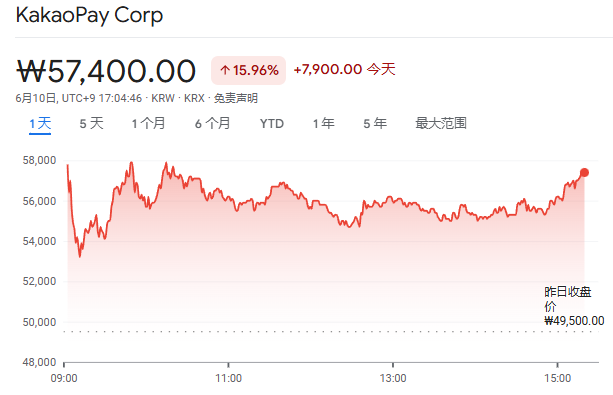
Core Viewpoint - South Korea's new president, Lee Jae-myung, is rapidly fulfilling campaign promises by allowing local companies to issue stablecoins through the proposed Digital Asset Basic Law, which opens a legal pathway for stablecoin issuance [1][4]. Group 1: Legislative Developments - The proposed law allows South Korean companies with a capital of 500 million KRW (approximately 368,000 USD) or more to issue stablecoins, provided they establish a reserve guarantee for redemption [1]. - This legislative move comes amid a global surge in interest in stablecoins, with the U.S. Congress preparing to vote on key stablecoin legislation and traditional banks exploring stablecoin issuance [4]. Group 2: Market Dynamics - Over one-third of South Koreans (approximately 18 million) are active in the digital asset market, with trading volumes on local exchanges sometimes exceeding those of the Kospi and Kosdaq indices [4]. - In the first quarter, the trading volume of USDT, USDC, and USDS on South Korea's five major exchanges reached 57 trillion KRW, indicating significant demand for stablecoins [4]. - In the global stablecoin market, USDT holds a 62% market share, USDC accounts for 25%, and other stablecoins make up 13% [4]. Group 3: Challenges and Concerns - The Bank of Korea has expressed strong opposition to the issuance of stablecoins by non-bank entities, warning that it could undermine the effectiveness of monetary policy [5]. - Analysts from JPMorgan have cautioned that the recent surge in KakaoPay Corp.'s stock price lacks fundamental justification, and the specific benefits of Lee's stablecoin policy remain uncertain [6]. - The collapse of TerraUSD in 2022, which resulted in losses of hundreds of billions of dollars, continues to haunt investors and raises concerns about the stability of the market [6].
估值与盈利周观察:6月第1期:微盘、成长领涨
Tai Ping Yang Zheng Quan· 2025-06-09 15:26
Group 1 - The overall market showed a broad increase, with micro-cap and growth stocks leading the performance, while dividend, stable, and consumer sectors lagged behind [7][9][21] - The performance of various industries was mixed, with non-ferrous metals, communication, and electronics showing the highest gains, while household appliances, food and beverage, and transportation performed the weakest [9][30] - The relative valuation of the ChiNext Index to the CSI 300 increased, indicating a rise in the relative PE and PB ratios [13][21] Group 2 - The overall valuation of broad market indices increased, with major indices exceeding the 50% historical percentile level over the past year, while the ChiNext Index is at a low valuation compared to the past year [21][30] - The valuation of various sectors is differentiated, with non-bank financials, non-ferrous metals, communication, electronics, agriculture, and household appliances at near one-year lows [30][33] - From the perspective of PE and PB deviation, industries such as food and beverage, agriculture, public utilities, and household appliances are currently considered relatively cheap [33][39] Group 3 - The earnings expectations across industries were generally revised downwards, with the computer sector seeing the largest upward adjustment and the defense industry experiencing the most significant downward revision [42]
A股公告精选 | 共创草坪(605099.SH)、昂利康(002940.SZ)等连板股提示交易风险
智通财经网· 2025-06-09 12:24
Group 1 - Company Gongchuang Turf (605099.SH) stated that the impact of domestic football events on its operations and performance is minimal, as its main business of artificial turf has a low revenue contribution from domestic sports grass [1] - Company Anglikang (002940.SZ) confirmed that its innovative drug project ALK-N001 is still in Phase I clinical trials, indicating a long R&D cycle and significant investment [2] - Company Yiwei Lithium Energy (300014.SZ) plans to issue H-shares and list on the Hong Kong Stock Exchange to enhance capital strength and international brand image [3] Group 2 - Company Chaohongji (002345.SZ) also intends to issue H-shares and apply for listing on the Hong Kong Stock Exchange to advance its global strategy and improve competitiveness [4] - Company Dexin Technology (603032.SH) clarified that its subsidiary's sales revenue from products used in solid-state battery production is less than 1% of total revenue, emphasizing its focus on quality service [5] - Company Changshan Pharmaceutical (300255.SZ) announced that its application for the marketing authorization of Aibennapeptide injection for type 2 diabetes has been accepted, but the approval timeline remains uncertain [6] Group 3 - Company Baili Electric (600468.SH) reported that its revenue from nuclear fusion-related business is currently minimal, accounting for less than 1% of total revenue [7] - Company Chutianlong (003040.SZ) is exploring digital currency projects but faces risks related to new technology development and commercial application [8] - Company Dongxing Medical (301290.SZ) signed contracts with Shanghai Jiao Tong University for synthetic biology technology development, totaling 6 million yuan, enhancing its R&D capabilities [9] Group 4 - Company Maixinlin (688685.SH) announced that its subsidiary signed contracts for computing power services worth 1.184 billion yuan, expected to positively impact future performance [10] - Company Haichen Pharmaceutical (300584.SZ) reported that its solid-state battery-related business has not yet generated revenue, which does not significantly affect overall performance [11] - Company Filinger (603226.SH) is undergoing stock trading suspension for investigation due to significant price deviations from fundamentals [12] Group 5 - Company Zhongdian Port (001287.SZ) disclosed that the National Integrated Circuit Fund reduced its stake by 1%, now holding 8.97% of the company [13] - Company Huasheng Co., Ltd. (600156.SH) is planning to acquire 100% of Yixin Technology, leading to a stock suspension for up to 10 trading days [14] - Company Jianghuai Automobile reported a 3.52% year-on-year decline in May sales, with new energy vehicle sales down 57.81% [15] - Company Aonong Biological reported a 9.44% year-on-year increase in May pig sales, with a total of 156,200 pigs sold [16]




中国软件国际(00354):全面升级为全栈AI产品和服务商,探索数字货币和RWA
Guoyuan Securities2· 2025-06-09 09:51
Investment Rating - The report maintains a "Buy" rating with a target price of HKD 6.1 per share, indicating a potential upside of 20.6% from the current price of HKD 5.06 [5][7][20]. Core Insights - The company is transitioning into a full-stack AI product and service provider, with significant growth expected from its AIGC (Artificial Intelligence Generated Content) business, which is becoming a key driver of revenue [2][9]. - The company is actively participating in the construction of digital currency systems and exploring opportunities in stablecoins and Real World Assets (RWA) tokenization, leveraging its expertise in big data, AI, blockchain, and cloud computing [4][17]. Financial Performance - For 2024, the company is projected to achieve revenue of RMB 16.95 billion, a slight decline of 1.0% year-on-year, with a net profit of RMB 512.9 million, down 28.1% [8][20]. - The second half of 2024 is expected to show a recovery, with a significant increase in revenue from full-stack AI products and services, which is projected to reach RMB 957 million, accounting for 5.6% of total revenue [2][12]. Strategic Developments - The company is deepening its collaboration with Huawei, enhancing its KaihongOS applications and completing over 200 Huawei cloud CTSP projects, which strengthens its cloud integration and domestic substitution strategy [3][13]. - The company is also focusing on international expansion, establishing a presence in the Asia-Pacific and Middle Eastern markets, and successfully executing projects in digital governance and smart cities [14][16]. Future Projections - Revenue forecasts for 2025 to 2027 are RMB 18.22 billion (+6.1%), RMB 20.01 billion (+9.86%), and RMB 22.32 billion (+11.5%), respectively, with net profits expected to grow significantly during this period [5][20]. - The report emphasizes that the company is in a transitional phase, moving from traditional service adjustments to emerging business growth, supported by national policy initiatives [20].