银发经济

Search documents
2025年南通金秋赏菊活动启幕|南通早七点
Sou Hu Cai Jing· 2025-10-30 00:26
今日天气: 今天白天到夜里多云转阴有小雨,偏东风3—4级,沿江江面偏东风4—5级。 今天最高气温:20℃左右,明晨最低气温:12℃—13℃。 要 闻 习近平将同美国总统特朗普举行会晤。 南 通 昨天,由中国证券报、南通市人民政府联合主办的"向新而行 以实致远 智启未来"2025上市公司高质量发展论坛在南通举行,600多家上市公司代表以及创 投大咖、专家学者,齐聚一堂,共话新一轮科技革命和产业变革的历史机遇,探讨新质生产力进阶的新方向、新路径。 (数据来自南通气象) 今年前三季度全国纪检监察机关处分67.7万人,包括41名省部级干部。 针对近日有舆论称"党的二十届四中全会公报中没有提'和平统一'"一事,国台办发言人29日回应:我们愿意为和平统一创造广阔空间,但决不承诺放弃使 用武力。 财政部消息,前9个月国有企业营业总收入超61万亿元。 昨天,第27届上市公司金牛奖发布,我市两名企业家、两家企业、两名企业高管榜上有名。其中,中天科技董事长薛驰获金牛企业家成就奖,国盛智科董 事长潘卫国获金牛企业家创新奖;国盛智科获新质企业金牛奖,中航高科获最具投资价值奖。 今年1—9月,南通海关共签发RCEP原产地证书11155 ...

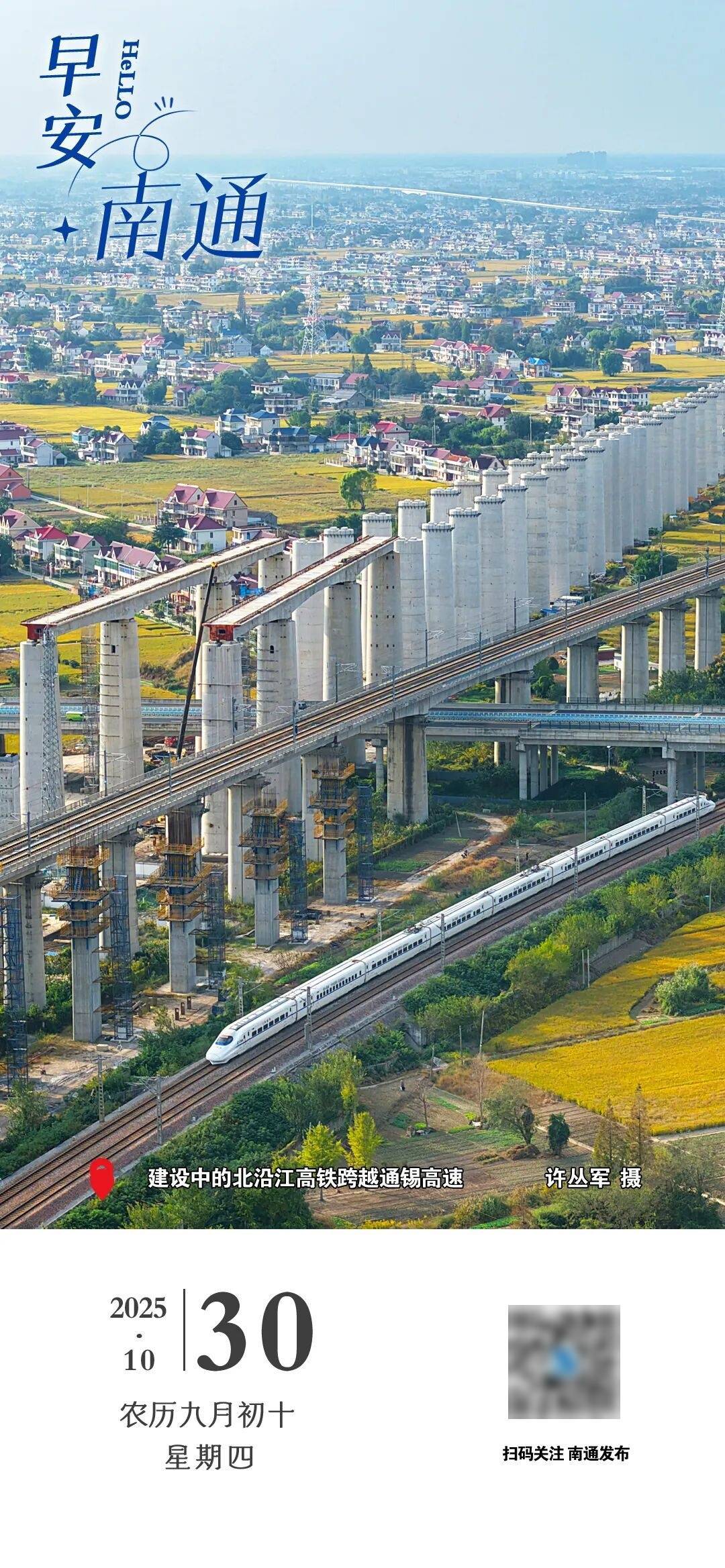
擘画“福气之城”享老新图景
Su Zhou Ri Bao· 2025-10-30 00:26
Core Insights - The article highlights the launch of the "Silver Consumption Month" series of activities in Suzhou, focusing on transforming the concept of "elderly care" into "enjoying old age" through various initiatives aimed at enhancing the silver economy [1] Group 1: Initiatives and Developments - The Suzhou district has unveiled three key initiatives: the opening of grassroots elderly living experience centers, the signing of a contract for the first "Old Wu Old" elderly-themed supermarket, and the release of a walking tour route for seniors [1] - The grassroots elderly living experience center serves as a model for elderly-friendly renovations, showcasing nearly 300 elderly-friendly products and offering comprehensive services including product selection, installation, and rental [2][3] - The "Old Wu Old" supermarket targets middle-aged and elderly consumers, utilizing an "online-to-offline" model and offering a variety of products and services, including live streaming experiences [3] Group 2: Service Enhancements - The article discusses the upgrade of meal services for the elderly, transitioning from fixed meal packages to customizable options, significantly increasing the average daily diners from 50 to 300 at a community dining center [5][6] - The "My Menu, I Decide" initiative allows elderly residents to vote on weekly meal options, enhancing the dining experience and catering to diverse tastes [6] Group 3: Technological Integration - The introduction of smart devices in elderly care, such as exoskeleton robots and smart home products, exemplifies the integration of technology in enhancing the quality of life for seniors [7] - The "Community Mutual Aid Elderly Care Platform" is being piloted to provide online services for community activities, health consultations, and volunteer services, with significant user engagement [8][9] Group 4: Economic and Social Impact - The development of the silver economy is seen as a new growth driver for urban development, with Suzhou actively integrating resources and optimizing service supply to create a unique elderly care ecosystem [1][2] - The article emphasizes the importance of a multi-faceted service approach to meet the evolving needs of the elderly population, aiming for a sustainable and high-quality elderly care service model [9]
打造老有所养“硬支柱”
Jin Rong Shi Bao· 2025-10-30 00:25
Group 1 - The core viewpoint emphasizes the importance of developing pension finance as part of the financial "five major articles" to address the challenges of an aging population and to enhance the policy mechanism for the coordinated development of pension services and industries [1] - On the occasion of the Double Ninth Festival, various banking institutions organized activities to promote respect and care for the elderly, integrating financial services with warm support for elderly clients [1][2] - Pension finance serves as a crucial "hub" connecting the funding, service, and industry sectors, with banks actively exploring innovative products and service models to create a comprehensive personal pension finance service system [1] Group 2 - Financial education activities for the elderly were conducted, focusing on enhancing their risk identification and prevention capabilities, addressing concerns about pension devaluation and fraud [2] - The activities included practical and engaging financial education, utilizing case studies to explain low-risk investment options and common fraud tactics targeting the elderly [2] - Banks are increasingly focusing on the needs of elderly clients, providing tailored financial services and knowledge to address their specific concerns [3] Group 3 - The aging population has made the adaptation of financial services for the elderly a necessity, with banks implementing both physical and service enhancements to improve accessibility and user experience [4] - China Bank has established standards for elder-friendly service branches, ensuring over 10,000 branches are equipped with facilities and services that cater to elderly clients [4] - Upgraded elder-friendly facilities in banks include low-position service machines, large-font operation guides, and various assistive devices to enhance the service experience for elderly customers [5] Group 4 - The People's Bank of China has allocated 500 billion yuan for service consumption and pension refinancing, encouraging financial institutions to increase support for the pension industry [7] - China Bank has actively responded by providing significant loans to support the construction of affordable elderly care facilities, addressing the shortage of beds and high costs in the sector [7] - The bank's loans have facilitated the establishment of integrated elderly care services, combining medical, cultural, and recreational offerings [7] Group 5 - The market potential of the silver economy is increasingly recognized, with financial institutions focusing on product innovation and service upgrades tailored to the changing needs of the elderly [8] - China Bank has reported a 20.90% increase in loans to the pension industry compared to the previous year, indicating a strong commitment to supporting the sector's growth [8] - The bank is exploring innovative service paths that combine finance with smart elderly care solutions, enhancing the quality of services provided to the elderly [8]


岁岁重阳:桑榆不晚 为霞满天
Yang Shi Wang· 2025-10-29 23:55
Core Insights - The article emphasizes the importance of creating a supportive environment for the elderly in China, highlighting the need for improved services and facilities to enhance their quality of life [1][25]. Group 1: Population and Policy - As of the end of last year, the population aged 60 and above in China reached 310 million [1]. - The "14th Five-Year Plan" suggests actively addressing population aging and developing a coordinated policy mechanism for elderly care and industry [1]. Group 2: Accessibility and Transportation - In Tianjin, the subway line has achieved 100% coverage of barrier-free facilities, and passengers can use mobile apps to book assistance services [3]. - Over 35,000 urban bus stops have undergone accessibility upgrades, and 136,000 low-floor buses have been introduced [3]. Group 3: Banking and Service Adaptations - In Zhejiang, a bank has implemented senior-friendly features, such as dedicated service numbers and enlarged business guides, to assist elderly customers [5]. Group 4: Community Support - During the "14th Five-Year Plan," China has initiated the creation of elderly-friendly communities, with 129,000 elevators installed in old buildings [7]. - In Shandong, community services have been enhanced to provide convenient access to daily necessities for elderly residents [7]. Group 5: Healthcare Improvements - The "14th Five-Year Plan" calls for the development of integrated medical and elderly care services, particularly for those with disabilities or dementia [9]. - A hospital in Chongqing has restructured its services to allow elderly patients to receive treatment for multiple conditions in one location [9]. Group 6: Cultural and Recreational Activities - The article highlights various cultural activities organized for the elderly, such as art performances and community events, to enrich their lives [11][20]. - An 83-year-old photographer in Jiangxi has dedicated his time to capturing the lives of elderly residents, showcasing their stories through photography [12][16]. Group 7: Silver Economy - The silver economy is projected to reach a market size of 15.8 trillion yuan this year, driven by the increasing demand for quality and diverse services among the elderly [25]. - The development of senior tourism trains is an example of how the industry is catering to the specific needs of elderly travelers [17][19].

金牛:“00后”进入银发赛道,如何留住用好
Sou Hu Cai Jing· 2025-10-29 23:49
Core Viewpoint - The aging population is driving the evolution of the silver economy, characterized by a younger, more professional, and standardized workforce, indicating a bright future for the industry [1][5]. Group 1: Workforce Characteristics - The silver economy workforce is becoming younger, with a new generation of professionals entering the sector, moving away from the traditional low-skilled, low-education demographic [1][2]. - The influx of "post-00s" workers into elder care services is not just an age replacement but signifies a profound shift in occupational value perception [1][2]. - Higher professional standards are improving service quality, with more educational institutions offering specialized programs in elder care management and geriatric medicine [1][2]. Group 2: Industry Standards and Salary Trends - The standardization of the profession is attracting new talent, with average monthly salaries for caregivers exceeding 6,000 yuan, and potential earnings reaching tens of thousands with career advancement [2][3]. - The recognition of the industry's value is breaking the traditional low-salary model, establishing a salary leverage that reflects professional capabilities [2][3]. Group 3: Challenges in the Industry - There is a mismatch between the supply of specialized services and the rapidly changing industry demands, making it difficult to meet the diverse needs of the elderly population [3][4]. - The existing salary structures do not adequately link compensation to professional skills and service outcomes, which may lead to talent loss and affect service quality [3][4]. Group 4: Recommendations for Improvement - Updating perceptions through policy guidance and media promotion is essential for attracting and retaining talent in the silver economy [4]. - Optimizing mechanisms that link salary to professional capabilities and improving social security and career development pathways are crucial for long-term talent retention [4]. - Implementing a tiered certification system and enhancing standardization can help align professional skills with societal value, ensuring effective utilization of talent [4].
【环时深度】APEC为何首次将“应对人口结构变化”设为全面议题?
Huan Qiu Shi Bao· 2025-10-29 23:25
Core Viewpoint - The APEC meeting in South Korea will address the significant demographic changes in the Asia-Pacific region, with a focus on transforming demographic challenges into economic opportunities through regional cooperation [1][2]. Demographic Changes - The proportion of individuals aged 60 and above in the Asia-Pacific region is projected to rise from 15.1% in 2024 to approximately 25% by 2050, indicating a significant demographic shift [3]. - South Korea is expected to enter a "super-aged society" by 2024, with over 20.2% of its population aged 65 and older, while its total fertility rate is projected to drop to between 0.72 and 0.75, marking a historical low [2][3]. Economic Implications - The demographic transition presents both challenges and opportunities for economic restructuring, necessitating reforms to foster new growth drivers and sustainable prosperity [3][4]. - Industries such as traditional manufacturing may face pressure to relocate to regions with younger populations, while sectors related to healthcare, elder care, and technology are anticipated to experience significant growth [4][10]. Policy Responses - Various countries are implementing policies to address declining birth rates, with South Korea reporting a 7.4% increase in births in the first half of the year, attributed to government support measures [6]. - Spain has also seen a positive trend in birth rates due to family support policies, including extended parental leave and enhanced childcare services [7]. Regional Cooperation - The integration of artificial intelligence and demographic change discussions at the APEC meeting highlights the need for collaborative solutions to labor shortages and the creation of new economic opportunities [9]. - The diversity in demographic challenges across Asia-Pacific countries can be leveraged for mutual benefits through labor mobility, capital collaboration, and technology exchange [10].
华尔街见闻早餐FM-Radio | 2025年10月30日
Hua Er Jie Jian Wen· 2025-10-29 23:24
Market Overview - The Federal Reserve lowered interest rates by 25 basis points and announced the end of quantitative tightening, but Powell's hawkish comments on December rate cuts caused market expectations to drop from 95% to 65% [3][6][17] - Nvidia reached a new high, closing up nearly 3% with a market cap exceeding $5 trillion [3][6] - Meta's quarterly profit plummeted by 83% due to a one-time tax expense, leading to an after-hours drop of over 8% [6][12] - Alphabet's Q3 performance exceeded expectations, with a stock price increase of over 6% after raising capital expenditure guidance to up to $93 billion [6][12] - Microsoft reported nearly 20% revenue growth but saw a stock drop of over 5% due to disappointing Azure cloud growth [6][13] - US Treasury yields rose significantly, with the 2-year and 10-year yields both increasing by over 10 basis points [6][17] Company Performance - Industrial Fulian's Q3 net profit surged by 62%, driven by strong demand for AI servers, with revenue growth of 42.81% [6][14] - Zhongwei Company reported a 27.5% increase in net profit and a 50.62% rise in revenue in Q3, fueled by strong growth in thin-film equipment [6][14] - Tianfu Communication's Q3 revenue grew by 74.37%, with a net profit of 566 million yuan, benefiting from AI development and data center demand [6][14] - New Yi Sheng's Q3 net profit reached 2.385 billion yuan, with a year-on-year revenue increase of 152.53%, driven by AI computing demand [6][15] - Guizhou Moutai's revenue and profit for the first three quarters increased by over 6%, with a slight growth of 0.48% in Q3 [6][13] Trade Agreements - South Korea has committed to a $350 billion investment in the US in exchange for tariff concessions on automobiles and semiconductors [6][11] Economic Indicators - The Canadian central bank also cut rates by 25 basis points, stating that the current rate is appropriate amid lowered economic growth expectations [6][12] AI and Technology Trends - The integration of AI in various sectors is highlighted as a significant trend, with companies like Nvidia and OpenAI making substantial investments in AI technologies [6][24][28] - The demand for AI servers is driving growth in the technology sector, with companies reporting significant revenue increases [6][14][15]







中泰国际李迅雷: 中国资本市场展现出较强韧性
Zhong Guo Zheng Quan Bao· 2025-10-29 21:20
Core Viewpoint - The resilience of China's manufacturing sector and capital markets has created a "buffer" to respond to changes, emphasizing the need for companies to enhance competitiveness through mergers and acquisitions and focus on technological self-reliance [1][2]. Group 1: Economic Outlook - The international competition is expected to be a long-term process, but China's capital market has shown strong resilience, with the Shanghai Composite Index surpassing 4000 points, reflecting confidence from the solid foundation of the manufacturing and service sectors [2]. - China's manufacturing capacity has further solidified its influence in the global supply chain, which is crucial for addressing various external challenges [2]. Group 2: Corporate Strategy - Companies are urged to enhance their strength to cope with potential changes, as relying solely on organic growth may not suffice in a highly competitive market [2]. - There is a strong recommendation for listed companies to increase efforts in mergers and acquisitions, as this is a vital pathway for achieving scale expansion and enhancing competitiveness in a fragmented industry [2]. Group 3: Investment Directions - The key focus during the 14th Five-Year Plan period will be on accelerating technological self-reliance and promoting deep integration of technological and industrial innovation, leading to the development of new productive forces [3]. - New productive forces can be categorized into four types: strategic emerging industries (e.g., information technology, biotechnology, new energy), future industries (e.g., artificial intelligence, quantum technology), digital economy (including computing power, industrial internet), and the intelligent transformation of traditional industries [3]. - The government is expected to significantly increase investment in the livelihood sector over the next five years, with substantial potential in the silver economy, innovative pharmaceuticals, and the elderly care industry [3]. - The service sector, including both productive and consumer services, is anticipated to accelerate in growth as a key area for job absorption [3]. - Supply-side adjustments aimed at reducing competition will create numerous investment opportunities, particularly in policies related to "smooth circulation" and "targeted measures" [3]. Group 4: Monetary Policy - The monetary policy in China is increasingly focused on structural guidance and tool innovation, with potential for further reserve requirement ratio cuts and interest rate reductions during the 14th Five-Year Plan period [3].
要银发经济,不要“围猎经济”|新京报社论
Xin Jing Bao· 2025-10-29 17:31
Core Viewpoint - The article highlights the growing issue of scams targeting the elderly population in China, particularly during the recent Double Ninth Festival, emphasizing the need for a robust silver economy to protect this demographic from exploitation [2][3]. Group 1: Silver Economy Development - The term "silver economy" refers to the market for goods and services aimed at the elderly, which has gained national attention in China, especially in the context of an aging population [2][3]. - The Chinese elderly population exceeds 310 million, accounting for approximately 22% of the total population, with projections indicating it will surpass 400 million by 2035, representing over 30% [3]. - The shift from traditional family-based elder care to a market-driven approach is necessary due to smaller family structures and decreasing familial support for elderly care [3][4]. Group 2: Vulnerabilities and Exploitation - The elderly are increasingly targeted by scams due to their declining cognitive abilities and the absence of protective family structures, especially in the context of widespread internet use [4]. - Scammers exploit various fears and needs of the elderly, including health concerns and loneliness, leading to a rise in fraudulent schemes [4][5]. - The existence of gray areas in regulations allows for the exploitation of the elderly under the guise of silver economy initiatives, damaging their trust in society [4][5]. Group 3: Ethical Considerations and Recommendations - The development of the silver economy must prioritize the dignity and security of the elderly, avoiding the transformation into a "predatory economy" that exploits their financial resources [5]. - A comprehensive top-level design is essential to ensure that the silver economy serves the elderly effectively, fostering a culture of respect and care for the aging population [5].

要银发经济,不要“围猎经济” | 新京报社论
Xin Jing Bao· 2025-10-29 17:25
Core Viewpoint - The article highlights the growing issue of scams targeting the elderly population in China, particularly during the recent Double Ninth Festival, emphasizing the need for a robust "silver economy" to protect this demographic from exploitation [2][3][4]. Group 1: Silver Economy Development - The term "silver economy" refers to the market for goods and services aimed at the elderly, which has gained national attention in China, especially in the context of an aging population [2][3]. - The Chinese elderly population exceeds 310 million, accounting for approximately 22% of the total population, with projections indicating it will surpass 400 million by 2035, representing over 30% [3]. - The shift from traditional family-based elder care to a market-driven approach is necessary due to smaller family structures and decreasing familial support for elderly care [3]. Group 2: Vulnerabilities and Scams - Scammers exploit various vulnerabilities of the elderly, including fears of illness and loneliness, leading to traps in medical, food, and emotional sectors [4]. - The lack of protective barriers, such as family support, has made elderly individuals more susceptible to scams, especially with the rise of mobile internet usage [3][4]. - The article warns against the gray areas of the silver economy, where some entities may operate under the guise of providing services while actually exploiting the elderly for profit [4]. Group 3: Ethical Considerations - The development of the silver economy must balance economic interests with ethical considerations, ensuring that elderly individuals are treated with dignity and respect [5]. - A comprehensive framework is needed to protect the elderly from becoming victims of exploitation, emphasizing the importance of trust in societal interactions [4][5]. - The cultural foundation of respecting the elderly in Chinese society should guide the establishment of a genuine silver economy that benefits all [5].