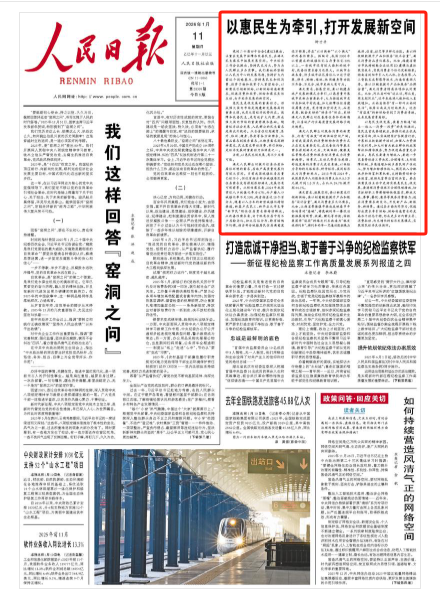
银发旅游列车

Search documents
2026年四川如何促消费?
Xin Lang Cai Jing· 2026-02-10 20:04
Core Insights - In 2025, Sichuan achieved a retail sales total of 29,135.4 billion yuan, marking a 5.1% increase from the previous year, positioning it as the second among the top ten economic provinces in China [1] - In 2026, Sichuan plans to implement five major initiatives to boost consumption, focusing on creating a "big consumption" ecosystem [1] Group 1: Consumption Initiatives - The five major initiatives include actions targeting service consumption, product consumption, new consumption, scenario carriers, and consumption environment [2] - The service consumption enhancement initiative will introduce special support policies for inbound consumption and the automotive aftermarket, aiming to create benchmark projects and enhance tourism offerings [2] - The product consumption expansion initiative will optimize the old-for-new policy for consumer goods, focusing on local industries such as automobiles and home appliances, and will feature events like the fifth Panda Consumption Festival [2] Group 2: New Consumption and Scenario Development - The new consumption cultivation initiative will focus on enhancing emotional value experiences and developing sectors like the first-release economy and health consumption, while exploring the establishment of a new consumption research institute [2] - The scenario carrier innovation initiative aims to create high-standard consumer scenarios and support innovative commercial environments, including expanding the coverage of old-for-new programs in rural areas [2] - The consumption environment optimization initiative will add 300 new tax refund stores and regulate the vehicle recycling industry, while promoting policy coordination [2]
外媒聚焦中国老龄经济新生态——当“银发”遇见“新潮”
Ren Min Ri Bao Hai Wai Ban· 2026-01-19 02:42
Core Insights - The "silver economy" in China is rapidly evolving, focusing on providing diverse products and services for the elderly, reflecting a shift from traditional views of aging to a more modern, vibrant consumer base [3][4][9] - The Chinese government is actively promoting the development of the silver economy through various policies and measures aimed at enhancing the quality and diversity of services available to the elderly [5][6][8] Group 1: Market Trends - The demand from the elderly population is increasingly sophisticated, with interests spanning high-quality food, healthcare, travel, and technology products tailored for their needs [4][9] - By the end of 2024, the elderly population aged 60 and above in China is projected to reach 310 million, with 161 million of them being internet users by mid-2025, indicating a significant digital engagement among seniors [3][4] Group 2: Government Initiatives - The Ministry of Civil Affairs and other departments have issued measures to cultivate the elderly care service sector, focusing on brand development and supply-demand platforms [5][6] - Policies are being implemented to encourage the development of high-quality, diverse consumer offerings for the elderly, including smart health products and recreational services [6][8] Group 3: Investment Opportunities - The silver economy is expected to become a major driver of consumption growth in China, with a projected 129% increase in household spending by those aged 60 and above from 2015 to 2025 [9] - The aging population is stimulating demand for health and retirement insurance products, with estimates suggesting that by 2030, China will contribute to over 25% of global premium growth [8][9]


当“银发”遇见“新潮”
Jing Ji Wang· 2026-01-19 02:33
Core Viewpoint - The "silver economy" in China is rapidly evolving, focusing on diverse products and services for the elderly, reflecting a shift from traditional perceptions to a modern consumer landscape that enhances the well-being of older adults [1][2][3]. Group 1: Market Trends - The demand from the elderly demographic is increasingly fashionable, with many older individuals engaging in social media and participating in trendy courses, indicating a shift in consumer behavior [2][3]. - By the end of 2024, the population aged 60 and above in China is projected to reach 310 million, with 161 million of them being internet users by mid-2025, highlighting the significant digital engagement among the elderly [2][3]. Group 2: Consumer Preferences - Older consumers are seeking high-quality food, healthcare services, and smart technology products, showing a willingness to invest in their quality of life and health [3][4]. - The silver economy is no longer limited to basic necessities but encompasses a wide range of sectors including technology, education, entertainment, and fashion [2][3]. Group 3: Policy and Support - The Chinese government has introduced measures to foster the silver economy, focusing on brand development, supply-demand platforms, and optimizing the business environment to support elderly care services [4][5]. - Policies are being implemented to encourage the expansion of products and services for the elderly, with a strong emphasis on financial support for these industries [5][6]. Group 4: Economic Impact - The silver economy is estimated to be worth approximately $1 trillion annually, with significant growth potential as the elderly population continues to expand [6][7]. - From 2015 to 2025, household spending led by individuals aged 60 and above is expected to increase by 129%, indicating a substantial shift in consumer spending patterns [8]. Group 5: Innovation and Investment - There is a growing focus on technological innovation in elder care, with investments in areas such as brain-computer interfaces and robotic nursing, aimed at improving the quality of life for older adults [7][8]. - The aging population is driving demand for health and retirement insurance products, with projections indicating that China will contribute to over 25% of global premium growth by 2030 [7][8].
外媒聚焦中国老龄经济新生态:当“银发”遇见“新潮”
Ren Min Ri Bao· 2026-01-18 23:32
Core Insights - The "silver economy" in China is rapidly evolving, focusing on innovative products and services for the elderly, reflecting a shift from traditional views of aging to a more dynamic and diverse consumer landscape [1][2][3] Group 1: Market Trends - The demand from the elderly population is increasingly sophisticated, with a growing interest in high-quality food, healthcare services, and smart technology products [3] - By the end of 2024, the elderly population aged 60 and above in China is projected to reach 310 million, with 161 million of them being internet users by mid-2025 [2] - The silver economy is estimated to be worth around $1 trillion annually, indicating significant market potential [5] Group 2: Government Initiatives - The Chinese government has introduced measures to foster the development of the silver economy, including 14 specific initiatives aimed at enhancing service supply and encouraging fashionable products for the elderly [4] - Policies are being implemented to support the expansion of industries catering to the elderly, including financial backing for relevant sectors [5] Group 3: Investment Opportunities - The silver economy is expected to become a key driver of sustained consumer growth in China, with a projected 129% increase in household spending by those aged 60 and above from 2015 to 2025 [7] - New investment avenues are emerging in high-end services, elder medical technology, and leisure tourism tailored for the elderly [7] - The aging population is driving demand for health and retirement insurance products, with significant growth expected in this sector by 2030 [6]
当“银发”遇见“新潮”(国际论道)
Ren Min Ri Bao· 2026-01-18 19:24
Group 1: Overview of Silver Economy - The silver economy in China is rapidly evolving, focusing on providing products and services for the elderly, reflecting a shift in consumer demand and lifestyle among older adults [2][5] - By the end of 2024, the population aged 60 and above in China is expected to reach 310 million, with 161 million of them being internet users by mid-2025, indicating a significant digital engagement among the elderly [4][6] Group 2: Consumer Trends and Demands - Elderly consumers are increasingly seeking high-quality food, healthcare services, travel, and smart technology products tailored for their needs, moving beyond basic living necessities [4][9] - The rise of "silver influencers" on social media platforms showcases the growing engagement of older adults in modern trends, further driving demand for diverse products and services [3][5] Group 3: Policy and Industry Support - The Chinese government has introduced measures to foster the silver economy, including 14 specific initiatives aimed at enhancing service supply and encouraging the development of fashionable products for the elderly [6][7] - Financial support and incentives are being provided to businesses that cater to the elderly, with a focus on improving food, healthcare, and elder care services [7][9] Group 4: Market Opportunities and Innovations - The silver economy is projected to be worth approximately $1 trillion annually, with significant growth potential in sectors like health insurance, elder care technology, and leisure travel [7][9] - Innovations in technology, such as brain-computer interfaces and robotic care solutions, are being developed to enhance the quality of life for the elderly, attracting substantial investment [9][10] Group 5: Future Projections - By 2035, the contribution of the silver economy to China's GDP is expected to increase, positioning it as a new growth engine for the economy [10]

人民日报连续六天刊发“钟才平”署名文章|宏观经济
清华金融评论· 2026-01-13 10:17
Core Viewpoint - The article emphasizes the importance of expanding openness and cooperation in China's economic development, highlighting the potential for China to provide new opportunities for the world through its large market and high-quality development [3]. Group 1: Market Expansion - China's market is continuously expanding, with a projected retail sales total of over 50 trillion yuan by 2025, driven by a growing middle-income group expected to exceed 800 million people in the next decade [3]. - The country imports over 20 trillion yuan annually and is a major export destination for nearly 80 countries, showcasing its openness to foreign products and services [3]. Group 2: Industrial Cooperation - China remains the world's largest manufacturing power, contributing to global supply chains with high-quality and reliable products, particularly in the renewable energy sector where costs have dropped by over 80% in the last decade [4]. - Future efforts will focus on enhancing international cooperation in industries like new energy and green minerals, aligning with the industrialization goals of developing countries [5]. Group 3: Investment Environment - China is optimizing its investment environment by easing foreign investment restrictions and aligning with international trade rules, which is attracting multinational companies to establish R&D centers in China [5]. - The country aims to expand market access in the service sector and support foreign enterprises in local production and supply chain collaboration [5]. Group 4: Belt and Road Initiative - The Belt and Road Initiative has evolved into a significant international cooperation platform, with over 150 countries benefiting from various projects, including transportation and social development [6]. - Future plans include enhancing connectivity and cooperation in areas like green development and digital economy [6]. Group 5: Domestic Market and Consumption - The article stresses the need to boost domestic consumption and investment to create a robust domestic market, which is essential for China's modernization strategy [12]. - It highlights the importance of meeting the diverse needs of the population, particularly in housing and service consumption, to drive economic growth [8][9]. Group 6: Policy Integration - The article discusses the necessity of integrating macroeconomic policies to enhance governance effectiveness, with a focus on maintaining a balance between fiscal and monetary policies [18]. - It emphasizes the importance of precise and effective macroeconomic policies to support sustainable economic growth and address external uncertainties [22].

人民日报刊发第五篇钟才平署名文章|宏观经济
清华金融评论· 2026-01-11 08:38
Group 1 - The core viewpoint emphasizes the importance of improving people's livelihoods as a driving force for economic development, highlighting the need to expand domestic demand and create a strong domestic market as a foundation for economic growth [3][4][5]. - The article discusses the significant potential for high-quality development in the real estate sector, noting that while urban housing stock is substantial, many residents still have unmet housing needs, particularly in terms of quality and location [4][5]. - It highlights the changing consumer preferences towards service consumption, with a notable increase in per capita service consumption expenditure from 5,000 yuan to 13,000 yuan between 2013 and 2024, indicating a shift towards experiential and emotional consumption [5][6]. Group 2 - The article outlines the necessity of creating a virtuous cycle of employment, income, consumption, and investment, emphasizing the importance of stabilizing employment and increasing income to boost consumption [7]. - It stresses the need for coordinated efforts to promote both consumption and investment, suggesting that they are interdependent and should work together to enhance the domestic market's growth and stability [8][9]. - The article calls for increased investment in sectors that align with new consumer demands, such as healthcare and cultural tourism, to better meet the needs of the population [10][11]. Group 3 - The article discusses the implementation of more proactive macroeconomic policies, including fiscal and monetary measures, to support economic stability and growth, with a focus on enhancing the effectiveness of these policies [25][26]. - It emphasizes the importance of precise and effective fiscal policies, advocating for increased government spending on key projects and social welfare to stimulate economic activity [26][27]. - The article also highlights the need for flexible monetary policies that adapt to changing economic conditions, ensuring liquidity and supporting the real economy [28][29].

人民日报钟才平,连续五日发声!
Xin Lang Cai Jing· 2026-01-11 07:54
Core Viewpoint - The articles emphasize the importance of prioritizing people's livelihoods to drive economic development, advocating for a strong domestic market as a foundation for modernization and sustainable growth [2][43]. Group 1: Economic Development and Livelihood Improvement - The central economic work conference highlights the need to focus on improving people's livelihoods while expanding development space, integrating consumption and investment to stimulate economic growth [2][43]. - The demand for housing quality and living conditions remains significant, with a projected urbanization rate of 67% for permanent residents by 2024, indicating ongoing housing demand [3][44]. - The shift in consumer preferences towards service-oriented and experiential consumption is evident, with per capita service consumption expenditure increasing from 5,000 yuan to 13,000 yuan from 2013 to 2024, representing a rise from 39.7% to 46.1% of total consumption [4][45]. Group 2: Investment and Consumption Dynamics - The articles advocate for a dual approach to stimulate both consumption and investment, emphasizing their interdependent relationship in driving economic growth [9][51]. - Investment in high-quality urban renewal and affordable housing is essential to meet the evolving housing needs of urban residents, particularly in densely populated areas [4][45]. - The integration of new technologies and creative solutions in product and service offerings is crucial to meet diverse consumer demands, as seen in various regional initiatives [5][46]. Group 3: Policy Support and Economic Governance - Strengthening policy support and reform is necessary to enhance the quality and quantity of consumption and investment, with a focus on improving income distribution and consumer confidence [12][54]. - The government aims to implement measures that facilitate a virtuous cycle of employment, income, consumption, and investment, ensuring a balanced economic development model [6][47]. - The emphasis on localized economic strategies reflects the need for tailored approaches to address regional disparities and promote sustainable growth [34][38].
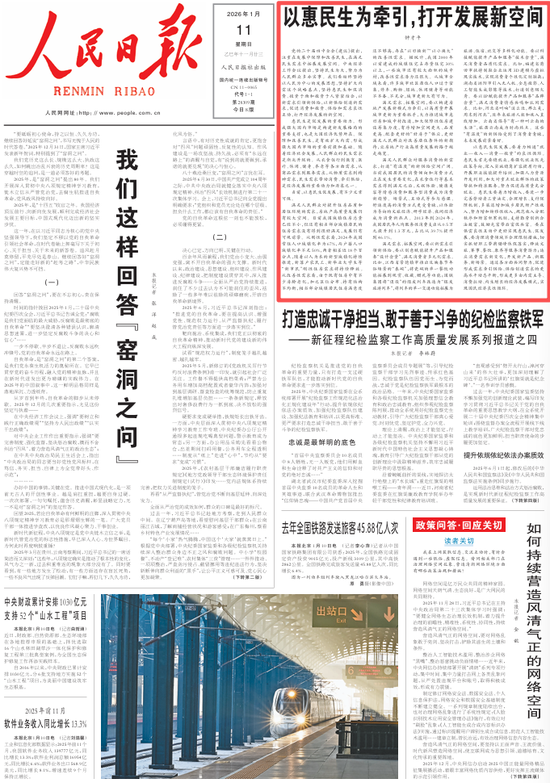
惠民生促发展,第五篇“钟才平”关注“有温度”的新供给
Xin Lang Cai Jing· 2026-01-11 01:44
Core Viewpoint - The article emphasizes the importance of prioritizing people's livelihoods to drive economic development, advocating for a model that combines consumer demand with investment in both goods and people [8][9]. Group 1: Economic Development and Livelihood Improvement - The article highlights that ensuring and improving people's livelihoods is a crucial driver for economic growth, with a strong domestic market being essential for a new development pattern [8]. - It notes that as the economy develops, the public's demand for better living conditions is evolving, covering various aspects from basic needs to services like education and healthcare [8][9]. - The article points out that there is significant potential for high-quality development in the real estate sector, as many urban residents' housing needs remain unmet despite a large total housing stock [9][10]. Group 2: Real Estate and Urban Development - The article suggests that there is a need for a new model of real estate development, focusing on high-quality urban renewal and increasing the supply of better-quality housing to meet public expectations [10]. - It mentions that the urbanization rate for permanent residents is projected to reach 67% by 2024, indicating ongoing demand for housing from new urban residents [9]. - The article also discusses the potential for urban renewal, particularly in densely populated communities where infrastructure and amenities are lacking [9][10]. Group 3: Consumer Demand and Service Sector Growth - The article identifies a shift in consumer preferences towards service-oriented consumption, with spending on services expected to rise significantly, from 5,000 yuan to 13,000 yuan per capita between 2013 and 2024 [10]. - It emphasizes the importance of creating new supply that meets the diverse needs of consumers, including emotional and experiential aspects of consumption [11]. - The article highlights examples of innovative products and services that cater to changing consumer demands, such as personalized products and enhanced experiences in tourism and entertainment [11]. Group 4: Employment and Income Generation - The article stresses the need to maintain stable employment as a foundation for improving livelihoods, advocating for policies that support job creation and skills training [12]. - It calls for measures to increase income for urban and rural residents, including improving wage mechanisms and promoting wealth accumulation [12]. - The article suggests that a well-functioning cycle of employment, income, consumption, and investment is essential for achieving sustainable economic growth [12][13].
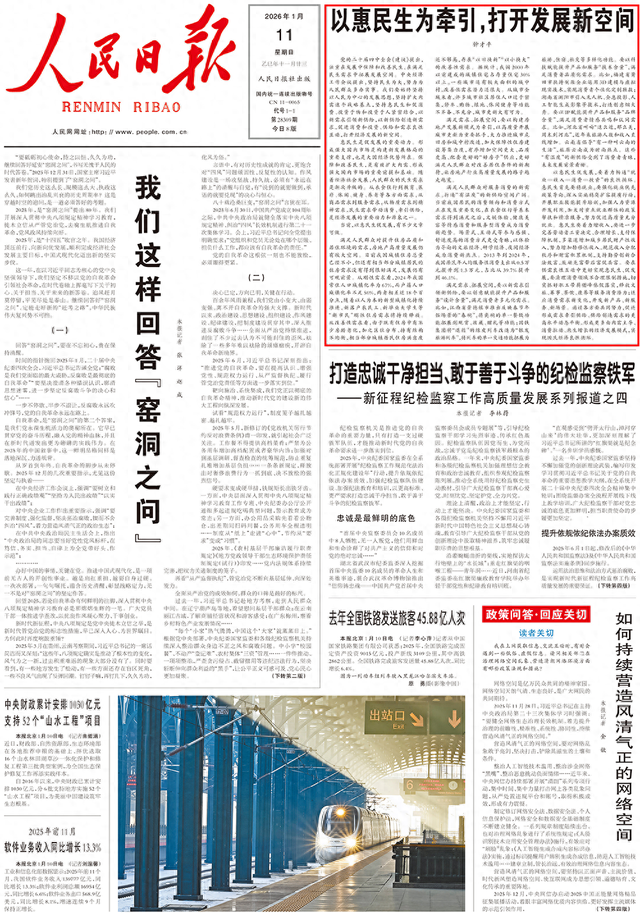
连续五日 人民日报刊发钟才平文章
Ren Min Ri Bao· 2026-01-11 01:01
Core Viewpoint - The articles emphasize the importance of prioritizing people's livelihoods to drive economic development, advocating for a strategy that combines consumer demand with investment to create new growth opportunities in the economy [1][3]. Group 1: Economic Development and Livelihood Improvement - The central economic work conference highlights the need to focus on improving people's livelihoods as a key driver for economic growth, advocating for a people-centered development approach [3][4]. - The demand for housing quality and living conditions remains significant, with a notable gap in meeting urban residents' housing needs, indicating substantial potential for the real estate sector [4][5]. - The shift in consumer preferences towards service-oriented and experiential consumption is evident, with per capita service consumption expenditure increasing from 5,000 yuan to 13,000 yuan from 2013 to 2024, representing a rise from 39.7% to 46.1% of total consumption [5][6]. Group 2: Investment and Consumption Dynamics - The articles stress the need for a new model of real estate development that focuses on high-quality urban renewal and the construction of affordable housing to meet the evolving expectations of residents [5][6]. - A virtuous cycle of "employment—income—consumption—investment" is essential for promoting livelihoods and economic growth, with a focus on stabilizing employment and increasing income through various policy measures [7][8]. - The integration of new demands into supply chains is crucial, with examples of innovative products and services being developed to meet diverse consumer needs, such as personalized shoes and tourism experiences [6][11]. Group 3: Policy Support and Economic Governance - The articles advocate for a coordinated approach to macroeconomic policies, emphasizing the need for effective fiscal and monetary policies to support economic stability and growth [13][16]. - The importance of enhancing the efficiency of fiscal spending and ensuring that public funds are used effectively to support social welfare and economic development is highlighted [15][18]. - The need for a flexible and effective monetary policy that adapts to changing economic conditions is emphasized, with a focus on maintaining liquidity and supporting the real economy [16][17].