全球治理

Search documents
中国—东盟行政院校和智库研讨会在广西南宁举办
Sou Hu Cai Jing· 2025-11-04 10:17
Core Points - The China-ASEAN Administrative Colleges and Think Tanks Seminar was held in Nanning, Guangxi, focusing on governance and modernization in Asian civilizations [1][3] - The seminar aimed to implement the outcomes of the China-ASEAN Leaders' Meeting and strengthen cooperation between China and ASEAN countries in governance and administrative training [4] Group 1: Seminar Overview - The seminar featured key representatives from various countries, including Indonesia, Vietnam, the Philippines, Malaysia, Cambodia, Laos, Myanmar, Singapore, and Thailand, discussing themes related to national governance and Asian civilization [3] - The event was attended by approximately 100 officials and representatives from ASEAN countries, as well as experts from Chinese administrative colleges and think tanks [4] Group 2: Discussion Topics - Participants engaged in discussions on four sub-topics: "National Governance and Asian Society," "Digital Era and National Governance Efficiency," "Regional Open Cooperation and Sustainable Development," and "Global Governance, Regional Governance, and Asian Approaches" [4] - The discussions aimed to provide a broad consensus and intellectual support for building a closer China-ASEAN community of shared destiny [4]


中国—东盟行政院校和智库研讨会在广西南宁举办
Ren Min Ri Bao Hai Wai Ban· 2025-11-04 01:08
Core Points - The seminar on "National Governance and Asian Civilization" was held in Nanning, Guangxi, focusing on modernizing governance systems and capabilities in the context of Asian civilization traditions [1] - The event aimed to implement the outcomes of the China-ASEAN Leaders' Meeting and strengthen cooperation between China and ASEAN countries in governance and policy-making [1] Group 1: Seminar Themes - Participants discussed four sub-topics: "National Governance and Asian Society," "Digital Era and Governance Efficiency," "Regional Cooperation and Sustainable Development," and "Global and Regional Governance with an Asian Approach" [1] - The seminar provided a platform for sharing ideas and practices among representatives from various countries regarding governance modernization [1] Group 2: Participation and Impact - The seminar was attended by representatives from central and national agencies, local government departments, party schools, think tanks, research institutions, and approximately 100 officials from ASEAN countries [1] - The event is seen as a significant step towards building a closer China-ASEAN community with shared destiny through enhanced intellectual support and consensus [1]
中外嘉宾共话世界社会主义发展之道
Ren Min Ri Bao· 2025-11-03 22:20
据了解,世界社会主义论坛始于2004年。作为中国社科院马克思主义理论阵地建设的组成部分,该论坛 致力于打造成为哲学社科工作者思想交流的重要平台。 《 人民日报 》( 2025年11月04日 06 版) (责编:牛镛、岳弘彬) 新华社北京11月3日电 由中国社科院主办的第十五届世界社会主义论坛11月3日在京开幕。海外共产党 领导人、部分外国驻华使节、中外专家学者等300余人齐聚一堂,聚焦"世界历史的十字路口与各国人民 的抉择"主题,围绕"中国式现代化与人类文明新形态""全球南方的崛起与全球治理体系变革""大变局下 世界社会主义的新特点与新发展"等议题展开深入研讨,共话世界社会主义发展之道。 与会嘉宾表示,中国提出的四大全球倡议为破解当前全球治理困境、指引人类未来发展方向贡献了智慧 和力量,在全球治理中产生了日益广泛而深远的影响。中国式现代化的实践和探索,有力打破了"现代 化=西方化"的迷思,为世界社会主义发展带来新生机。 与会嘉宾高度评价中国作为负责任大国在国际事务中发挥的积极作用,认为社会主义力量必须勇担捍卫 国际法、反对战争的历史使命,全球进步力量应该秉承"全世界无产者联合起来"的精神,共同构建更加 公平、 ...
中国—东盟行政院校和智库研讨会聚焦国家、地区和全球治理
Xin Hua She· 2025-11-03 16:06
Core Points - The China-ASEAN seminar on "National Governance and Asian Civilization" opened in Nanning, Guangxi, with participation from various government and academic representatives from China and ASEAN countries [1] - The seminar aims to deepen the China-ASEAN comprehensive strategic partnership and enhance cooperation in governance and administration [1] - Foreign guests praised China's contributions to governance at national, regional, and global levels, highlighting the seminar as a significant step towards building a closer China-ASEAN community [1] Summary by Sections Event Overview - The seminar gathered around 100 representatives from ASEAN countries, including government officials and scholars, to discuss governance and cooperation [1] - Guangxi is noted as the only Chinese province adjacent to ASEAN by land and sea, emphasizing its role in fostering friendly exchanges [1] Themes and Discussions - Four parallel sessions were held, focusing on topics such as "National Governance and Asian Society," "Digital Intelligence Era and Governance Efficiency," "Regional Open Cooperation and Sustainable Development," and "Global Governance, Regional Governance, and Asian Approaches" [2] - Discussions aimed at modernizing governance systems and capabilities, enhancing regional cooperation frameworks, and promoting awareness of Asian civilization [2]
《世界开放报告2025》将发布
Zhong Guo Jing Ji Wang· 2025-10-30 15:30
Core Insights - The "World Open Report 2025" will be officially released during the 8th Hongqiao International Economic Forum, focusing on global openness and governance mechanisms [1] - The report includes a new world openness index for 2024 and extends the historical data series back to 1990, providing a comprehensive analysis of global economic openness [1][2] Group 1: Key Highlights of the Report - The report features stronger international influence by inviting a Nobel laureate to contribute a chapter and collaborating with the UNIDO for enhanced neutrality and global representation [2] - The research dimensions and data foundation are more diverse and robust, with the openness index now covering a 35-year time span, allowing for a deeper analysis of long-term trends [2] - The report addresses cutting-edge topics such as global green development and the evolution of global supply and value chains, highlighting opportunities for industrialization in the Global South through China's capacity cooperation [2] Group 2: Future Directions - Future development of the world openness index will aim for greater precision by including more sample countries and creating sub-indices to address new demands in openness [3] - Plans are in place to establish an open and transparent international academic exchange platform for regular discussions with top research institutions and international organizations [3] - The "World Open Report" has been published for five years, co-authored by the Chinese Academy of Social Sciences and the Hongqiao International Economic Forum Research Center [3]
特朗普赚翻了,中美刚谈完,巴西、印度发来重要消息,有望达成协议
Sou Hu Cai Jing· 2025-10-28 21:12
Group 1 - Brazil announced a pause on mutual tariffs with the U.S. after a phone call between President Lula and Trump, indicating a willingness to renegotiate trade terms [1][4] - In August, the U.S. imposed a 50% tariff on Brazilian goods, severely impacting exports like coffee and beef, leading to significant losses for Brazilian exporters [2][3] - The sudden shift in Brazil's stance suggests economic pressure and potential political leverage related to former President Bolsonaro's case [4][10] Group 2 - India unexpectedly halted oil imports from Russia, a significant move given its reliance on Russian oil for its refineries, to negotiate better terms with the U.S. [7][9] - The U.S. imposed a 50% tariff on Indian goods, prompting India to seek concessions by increasing purchases of U.S. oil and ethanol and proposing tariff exemptions in other sectors [8][10] - Both Brazil and India appear to be responding to U.S. pressure tactics, which involve high tariffs followed by negotiation offers, creating a cycle of crisis and concession [10][22] Group 3 - The U.S. is using a strategy of bilateral negotiations rather than multilateralism, simplifying complex trade issues into one-on-one confrontations [13][20] - Recent negotiations between the U.S. and China indicate a temporary easing of tensions, but the U.S. has not removed existing tariffs, only promising not to escalate further [18][20] - The overall approach of leveraging economic pressure for political gains raises concerns about the sustainability of international trade relations and the potential for future conflicts [22][25]
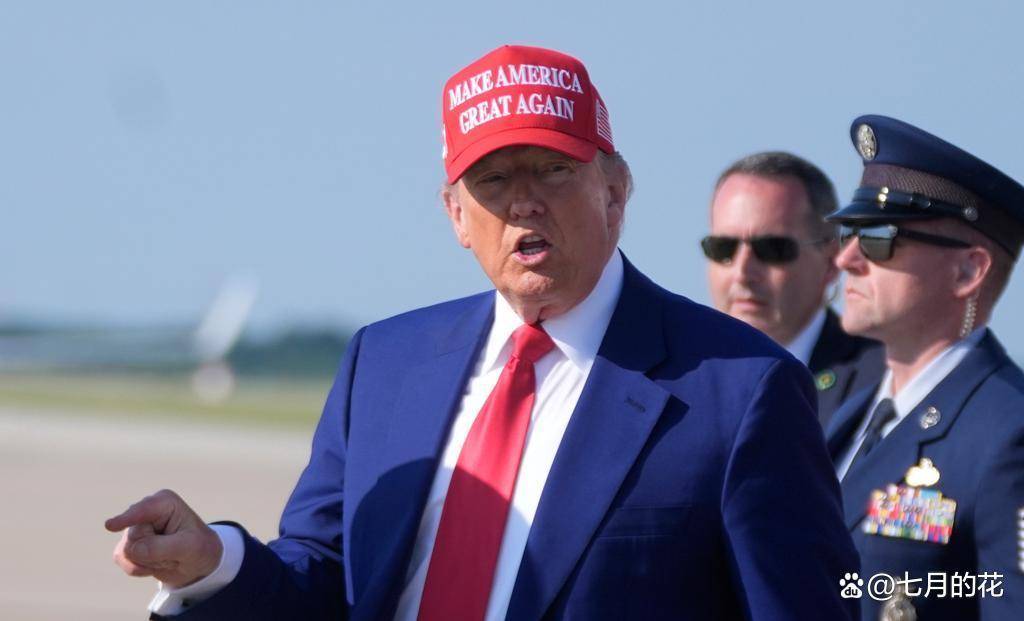
商务部:第八届进博会将有138个国家和地区企业参展,8位诺奖得主参加虹桥论坛|快讯
Hua Xia Shi Bao· 2025-10-28 05:59
Core Points - The 8th China International Import Expo (CIIE) will be held from November 5 to 10 in Shanghai, featuring participation from 155 countries, regions, and international organizations, with 4,108 foreign enterprises exhibiting, marking a record high in overall exhibition area exceeding 430,000 square meters [2] - The event will showcase 461 new products, technologies, and services, including innovations in low-altitude economy and humanoid robots, reflecting the commitment of the international community to China's economic prospects [2] - The Hongqiao International Economic Forum will host 33 sub-forums and closed-door meetings, with participation from eight Nobel laureates and over 400 prominent figures from politics, business, and academia discussing global governance and open cooperation [2] Industry Insights - China has maintained its position as the world's second-largest import market for 16 consecutive years, with imports of goods and services expected to exceed $15 trillion during the 14th Five-Year Plan period [3] - The potential of the vast market is underscored by the projected growth of the middle-income group, which is expected to exceed 800 million in the next decade [3] - The CIIE has facilitated over $500 billion in intended transactions over its first seven editions, demonstrating China's commitment to sharing market opportunities and providing certainty amid global market fluctuations [3]
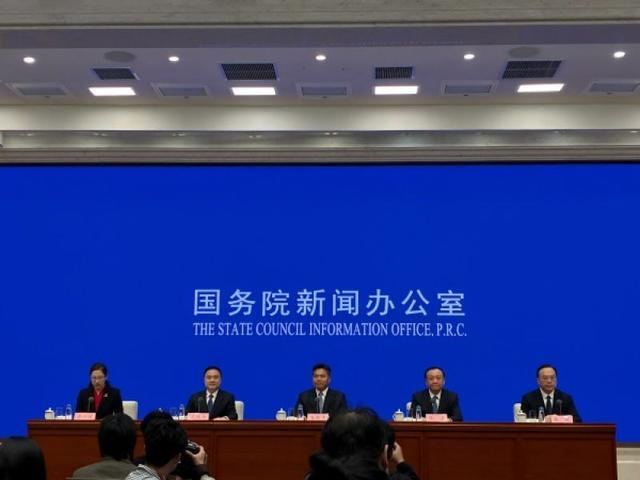
进博会期间,8位诺贝尔奖获得者将亮相虹桥论坛
Xin Jing Bao· 2025-10-28 04:21
Core Points - The 8th China International Import Expo (CIIE) will be held in Shanghai from November 5 to 10, featuring the Hongqiao International Economic Forum with participation from 8 Nobel Prize winners [1] - The forum will address key topics such as "Revitalizing Multilateral Cooperation," "Digital Empowerment," "Green and Sustainable Development," and "A More Open China," focusing on global trade order reconstruction and supply chain resilience [1] - Over 400 prominent figures from politics, business, and academia will discuss global governance and open cooperation issues, along with the release of the flagship report "World Open Report" and the latest World Open Index for the fourth consecutive year [1] Report Highlights - This year's report will be uniquely authored by a Nobel laureate in economics and will include a chapter co-written by the UNIDO research team and Chinese experts [1] - The report extends its index measurement period back to 1990, providing a longer-term perspective on the evolution of global openness and the characteristics of international open patterns [1] - A new chapter titled "Multinational Companies and China: Moving Towards Each Other" will analyze openness practices from the perspective of multinational companies, addressing contemporary issues such as cross-border data flow and cooperation [1]
全球头部企业将齐聚第八届中国国际进口博览会
Zhong Guo Jing Ji Wang· 2025-10-28 03:37
Core Viewpoint - The 8th China International Import Expo (CIIE) will take place from November 5 to 10, showcasing China's commitment to opening its market to the world and injecting certainty into global trade amidst profound changes in the global landscape [1][2] Group 1: Event Overview - The CIIE is a significant initiative by China to open its market, with the country being the second-largest import market globally for 16 consecutive years [1] - During the 14th Five-Year Plan period, China's goods and services imports are expected to exceed $15 trillion [1] - The expo will feature over 36.7 million square meters of exhibition space, with more than 600 new participating companies, including 290 Fortune 500 and industry-leading firms, marking record highs in both exhibition area and number of companies [1] Group 2: Product and Technology Highlights - The expo will showcase 461 new products, technologies, and services, positioning China as a testing ground for global innovation [2] - Notable first-time exhibitors will present groundbreaking products, including a small-diameter controllable expansion vascular stent and a new pharmaceutical X-ray machine [2] - Leading companies in new-generation information technology and artificial intelligence will display their latest achievements, emphasizing the expo's role in promoting innovation [2] Group 3: Collaborative Efforts - The event will gather top scholars, including eight Nobel Prize winners, to discuss global governance and open cooperation, with over 400 notable figures from politics, business, and academia participating [2] - The CIIE aims to foster a consensus on open cooperation and contribute to global economic growth by expanding market opportunities and enhancing collaborative mechanisms [2]
国家外汇管理局局长朱鹤新:推动银行外汇展业改革和贸易投资便利化改革提质扩面
Shang Hai Zheng Quan Bao· 2025-10-27 20:50
Core Viewpoint - The State Administration of Foreign Exchange (SAFE) aims to deepen reforms in the foreign exchange sector while ensuring systemic risk prevention, focusing on creating a more convenient, open, secure, and intelligent foreign exchange management system [2]. Group 1: Policy Enhancements - The foreign exchange policy system will be improved to promote "more convenience with more integrity," with a focus on enhancing bank foreign exchange operations and facilitating trade and investment [2]. - Nine new policy measures will be introduced to expand the pilot scope of high-level cross-border trade openness and optimize foreign exchange fund settlements for new trade entities [2]. Group 2: Institutional Opening - SAFE will promote high-level institutional opening in the foreign exchange sector, coordinating the internationalization of the Renminbi with high-quality capital account opening [3]. - New policies will be implemented for multinational companies' integrated currency pools and management of domestic enterprises' overseas listing funds [3]. Group 3: Risk Management and Regulatory Capacity - The regulatory capacity for foreign exchange under open conditions will be enhanced, utilizing macro-prudential and micro-supervision approaches [3]. - Advanced technologies like artificial intelligence and big data will be employed for smart regulation, improving monitoring and early warning of cross-border capital flows [3]. Group 4: Global Economic Contributions - China maintains stability in global industrial and supply chains, providing strong support for the smooth operation of the world economy [4]. - The country actively shares opportunities from its large-scale market, contributing stability on the supply side and a broad market on the consumption side [4]. - China is fostering cooperation in emerging fields, accelerating the development of new productive forces, and deepening international collaboration in areas like artificial intelligence and new energy [4]. - The country is committed to global governance and multilateral cooperation, advocating for an inclusive economic globalization and supporting developing countries in participating in the global trade system [4]. Group 5: Market Growth Metrics - In 2024, China's foreign exchange market transaction volume is expected to grow by 37% compared to 2020, with foreign-related income and expenditure scale increasing by 64% [4]. - In the first three quarters of this year, China's foreign-related income and expenditure reached a record high of 11.6 trillion USD [4].