
轻资产运营

Search documents
对话苏伟铭:雷诺与中国生态圈的合作与扩张
Guan Cha Zhe Wang· 2025-07-17 12:10
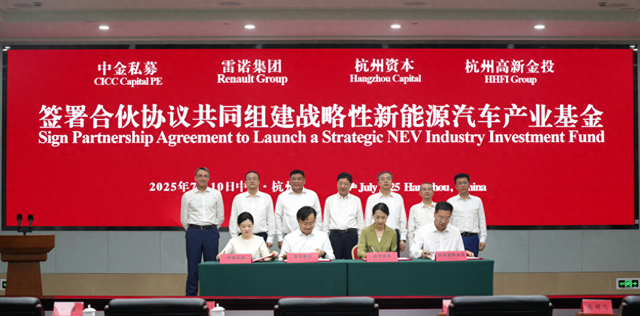
Group 1 - Renault Group appointed Duncan Minto as interim CEO to replace Luca de Meo, who left the company on July 15 [1] - The new management team faces challenges including addressing Renault's electric vehicle strategy in light of relaxed European carbon emission policies and determining the future of its alliance with Nissan [1][2] - Renault's recent partnership with CICC for a new energy vehicle fund indicates a strategic focus on the Chinese market [2][3] Group 2 - Renault's shift to a light asset operation model in China, following the closure of three joint ventures, has garnered global media attention for its uniqueness [6] - The company aims to leverage China's technological advancements and supply chain advantages to enhance its competitiveness in Europe [6][8] - Renault's CEO in China, Su Weiming, emphasized the importance of adapting to technological changes and geopolitical factors in formulating strategies [8] Group 3 - Renault's financial turnaround is notable; after experiencing a net loss of €8 billion (approximately ¥67.5 billion) in 2020, the company reported a net profit of €368 million (approximately ¥3.07 billion) in the first half of 2021 [9] - The introduction of electric models from its Chinese subsidiary, including the Dacia Spring, has significantly boosted Renault's presence in the European electric vehicle market [11][12] - The establishment of the ACDC research center in China is expected to further enhance Renault's R&D capabilities and cost efficiency [14] Group 4 - Renault's strategy includes collaborating with Chinese suppliers to create a mutually beneficial ecosystem, aiming to expand globally [15][17] - The company has engaged in partnerships with Chinese firms like Geely and Envision to explore overseas market opportunities [17][18] - Su Weiming highlighted the need for Chinese companies to adapt their strategies for international expansion, focusing on R&D, supply chain, and logistics [18]

莲花控股(600186):公司事件点评报告:利润持续释放,加速新品布局
Huaxin Securities· 2025-07-15 09:49
Investment Rating - The report maintains a "Buy" investment rating for the company [7] Core Views - The company is expected to achieve a net profit attributable to shareholders of 160-170 million yuan for H1 2025, representing a year-on-year increase of 59%-69% [5] - The company continues to optimize its profitability through cost advantages and is expanding its product lineup, particularly in the health beverage sector [6] - The company is undergoing internal marketing reforms to enhance brand recognition and is steadily increasing its market share in the MSG segment [7] Summary by Sections Financial Performance - The company forecasts a net profit of 1.60-1.70 billion yuan for H1 2025, with a growth rate of 59%-69% year-on-year [5] - For Q2 2025, the expected net profit is 0.59-0.69 billion yuan, reflecting a year-on-year increase of 14%-34% [5] Product Development - The company is seeing strong growth in its core MSG business, with a downward trend in costs and significant contributions from retail packaging [6] - New products such as Matsutake Fresh, premium brewed soy sauce, and compound seasonings have all seen over 100% year-on-year revenue growth in H1 2025 [6] - The company is also entering the health beverage market with new products like red bean and coix seed water, which are expected to drive new growth [6] Profitability Forecast - The company is adjusting its EPS forecasts for 2025-2027 to 0.18, 0.24, and 0.30 yuan respectively, with corresponding PE ratios of 33, 25, and 20 times [7] - The company is expected to maintain a steady increase in revenue and net profit, with projected growth rates of 30.1% for 2025 and 63.8% for the same year in net profit [10]

万达老人退出,珠海万达高层席位大变更
Di Yi Cai Jing· 2025-07-08 09:09
Core Viewpoint - The management of the light-asset platform under Wanda Group is undergoing significant changes, with the departure of long-time executives, indicating a shift towards a new investment structure and governance model [1][2][3]. Group 1: Management Changes - Huang Dewei has been appointed as the co-chairman and CEO of Zhuhai Wanda and Dalian Xindameng, marking a complete exit of the "Wanda veterans" from top management positions [1][3]. - Xiao Guangrui, a long-time member of the "Wanda system," has resigned from his roles as CEO of Zhuhai Wanda and Dalian Xindameng, furthering the "de-Wanda" transformation of these companies [2][3]. Group 2: New Investment Structure - The new investment consortium, led by TPG and other financial institutions, has invested approximately 60 billion yuan into Dalian Xindameng, acquiring a 60% stake and effectively taking control of the board [1][2]. - The board of Zhuhai Wanda now includes six members from the new investment group, while only four members remain from the Wanda side, indicating a significant reduction in Wanda's influence over the light-asset platform [3]. Group 3: Company Overview - Zhuhai Wanda operates as the exclusive operator of 513 Wanda Plazas in China, managing over 70 million square meters, making it the largest commercial real estate operator globally [4]. - The assets under management for the leading investment group, TPG, exceed 58 billion USD, positioning it as a major player in the Asia-Pacific investment landscape [4].
“长安的荔枝”,能否救西安的旅游?
3 6 Ke· 2025-07-02 04:13
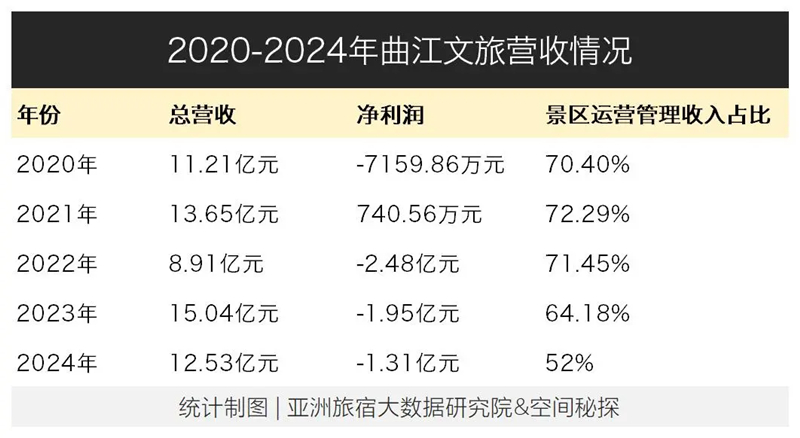
Core Viewpoint - The recent success of the drama "The Lychee of Chang'an" has significantly boosted tourism in Xi'an and increased the popularity of the cultural tourism company Qujiang Cultural Tourism, despite its ongoing financial losses over the years [1][4][26]. Group 1: Impact of "The Lychee of Chang'an" - The drama has become a phenomenon, achieving over 10 billion views on Tencent Video within the first week and a total of 5.8 billion views, with a Douban rating of 8.9 [1][2]. - The show has led to a surge in the search volume for "Guangdong Lychee," which increased by 143% month-on-month, and sales of lychee on platforms like JD.com rose over 560% year-on-year [2]. - Qujiang Cultural Tourism's stock price surged, with a market capitalization exceeding 3 billion yuan after the show's release, indicating the significant brand premium and customer traffic generated by the IP [2][4]. Group 2: Qujiang Cultural Tourism's Financial Struggles - Despite having numerous popular IPs, Qujiang Cultural Tourism has reported continuous losses for three years, with total losses amounting to 575 million yuan [5][6]. - The company's revenue from scenic area operations has been declining, with the proportion of income from this segment dropping from 70.4% in 2020 to 52% in 2024 [6][9]. - The company has faced challenges in generating sustainable profits, with many subsidiaries reporting losses, and its main income relies heavily on management fees from government or related parties rather than ticket sales [6][7][11]. Group 3: Revenue Generation Strategies - Following the show's success, Qujiang Cultural Tourism quickly launched three monetization products, including themed dining experiences, digital rights packages, and themed accommodations, which saw significant increases in customer engagement and revenue [3][5]. - The company has also engaged in innovative marketing strategies, such as creating immersive tourist routes linked to the drama, which have attracted a large number of visitors to key attractions [2][3]. Group 4: Comparison with Other Companies - Other tourism companies in Xi'an, such as Xi'an Tourism and Xi'an Dining, are also facing financial difficulties, with combined losses of 519 million yuan in 2024, while the newly listed Shaanxi Tourism reported a profit of 503 million yuan [20][21]. - Shaanxi Tourism has successfully leveraged provincial resources and a flexible market approach, contrasting with Qujiang Cultural Tourism's reliance on government resources and management fees [21][24]. Group 5: Future Challenges and Opportunities - The key challenge for Qujiang Cultural Tourism lies in converting its IP popularity into sustainable revenue, emphasizing the need for deeper consumer engagement and improved monetization strategies [26]. - The company must focus on enhancing secondary consumption rates and developing a sustainable business model to avoid the pitfalls of merely accumulating IP without profitability [26].

毛戈平股价大涨家族成员成最大获益者? 营销开支是产品成本的3倍多、生产全靠代工
Xin Lang Zheng Quan· 2025-07-02 02:18
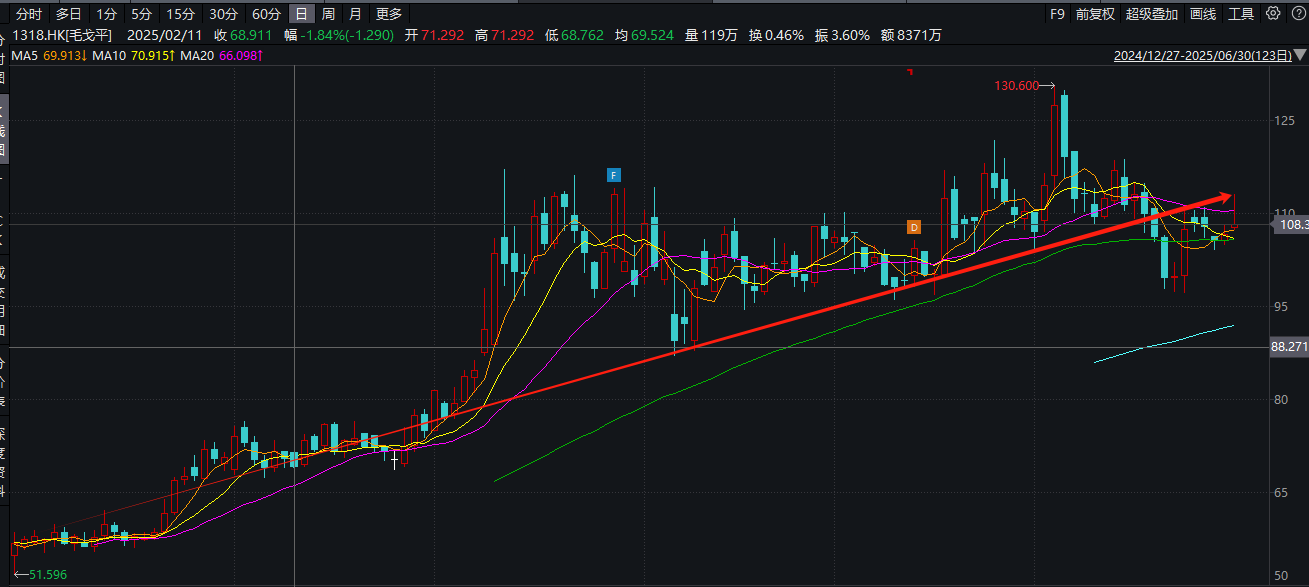
Core Viewpoint - The Hong Kong stock market for new consumption has shown signs of recovery since the second half of 2024, with the company Maogeping successfully listing on the Hong Kong Stock Exchange in December 2024, achieving a stock price increase of 263% from its issue price of 29.8 HKD per share to 108.3 HKD by June 30, 2024 [1][2]. Company Performance - In 2024, Maogeping achieved a revenue of 3.885 billion RMB, representing a year-on-year growth of 34.6%, and a net profit of 881 million RMB, with a growth of 32.8% [3]. - The company's gross profit margin remained high at 84.4%, with a slight decrease of 0.4 percentage points compared to the previous year [5]. Product and Brand Analysis - Maogeping heavily relies on its single brand, MAOGEPING, which accounted for 99.3% of its revenue in the first half of 2024, raising concerns about brand sustainability [8]. - The pricing strategy of MAOGEPING products is high, with gross profit margins for color cosmetics and skincare products at 83.6% and 87.2%, respectively, indicating a significant brand premium [8][9]. Marketing and R&D Expenditure - The company has a disproportionate focus on marketing over research and development, with marketing expenses reaching 1.904 billion RMB in 2024, while R&D expenses were only 32.3 million RMB, accounting for less than 1% of revenue [9][10]. Production and Operational Model - Maogeping operates on a light-asset model, relying on external manufacturers for production, which poses long-term risks related to supply chain reliability and quality control [9][10]. Ownership Structure - The company is characterized as a family business, with the Maogeping family holding over 90% of shares prior to the IPO, raising concerns about potential conflicts of interest and governance issues [11][13]. - Prior to the IPO, the family distributed nearly 900 million RMB in dividends, which may reflect poorly on the company's image as it seeks to raise capital [15].
晶科科技资产出售加速边际收益递减 上网电价持续下滑有息负债超180亿
Xin Lang Zheng Quan· 2025-07-01 11:01
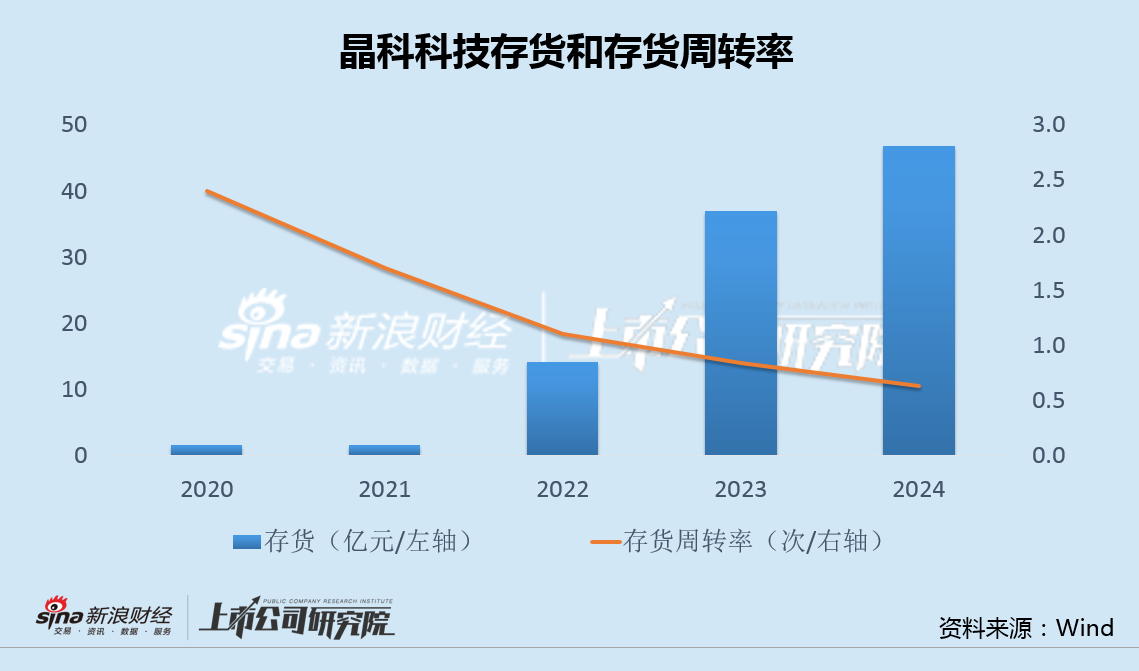
Core Viewpoint - JinkoSolar is accelerating asset disposals, including the sale of photovoltaic power station equipment and equity stakes, amid declining on-grid electricity prices and deteriorating financial performance [1][4][10]. Group 1: Asset Disposals - JinkoSolar announced the sale of photovoltaic power station equipment to China Construction Investment Leasing Co., Ltd. for a total of 286.52 million yuan, involving a grid-connected capacity of approximately 76.55 MW [1][3]. - This transaction follows a previous deal with CITIC Financial Leasing for a 320 MW household photovoltaic asset package, indicating a trend of rapid asset disposals within a short timeframe [2][4]. Group 2: Financial Performance - In 2024, JinkoSolar reported a revenue of 4.775 billion yuan, a year-on-year increase of 9.25%, but the net profit attributable to shareholders decreased by 15.39% to 324 million yuan [4][10]. - The company's non-recurring net profit significantly dropped by 41% to 148 million yuan, highlighting challenges in maintaining profitability despite revenue growth [4]. Group 3: Inventory and Operational Efficiency - JinkoSolar's inventory has been increasing annually, while inventory turnover rates have been declining, indicating a deterioration in operational efficiency [5][10]. - The company’s revenue growth is primarily driven by the expansion of self-owned power station capacity, which reached 6.45 GW by the end of 2024, a 20% year-on-year increase [7]. Group 4: Market Conditions and Pricing - The average on-grid electricity price for JinkoSolar in 2024 was approximately 0.487 yuan per kilowatt-hour, down from 0.580 yuan per kilowatt-hour in 2023, reflecting a significant price decline [7][8]. - The increase in curtailment rates and other market factors has adversely affected the company's profitability, with the growth in electricity generation outpacing revenue growth due to these constraints [8][9]. Group 5: Debt and Financial Structure - Since its IPO in 2020, JinkoSolar has raised over 10 billion yuan through various financing channels, but its interest-bearing debt has risen to over 18 billion yuan, indicating ongoing financial strain [10][12]. - As of the first quarter of 2025, the company had 6.5 billion yuan in cash but was burdened with over 18 billion yuan in interest-bearing debt, leading to a debt-to-asset ratio of 63.28%, higher than the industry average [12]. Group 6: Strategic Concerns - The strategy of "rolling development" and light asset operations is under scrutiny as the marginal benefits from asset sales are declining, raising concerns about the sustainability of this approach [14]. - JinkoSolar is facing a dilemma where asset sales are necessary to alleviate debt pressure, yet frequent disposals may weaken future profitability and asset quality [14].

持续火爆!这只消费新股暗盘大涨超60%
Zheng Quan Shi Bao· 2025-06-27 14:09
Core Viewpoint - The article highlights the strong performance of three newly listed stocks in the Hong Kong market, particularly IFBH, which has seen significant demand and price appreciation in the dark market trading phase, indicating a bullish sentiment in the consumer sector [1][2]. Company Overview - IFBH is a Thailand-based company specializing in ready-to-drink beverages and ready-to-eat foods, known for its if brand, which is a leader in the coconut water market in mainland China [3]. - The company was founded in 2013 and has undergone a business restructuring to focus on its international operations, particularly the if and Innococo brands, to meet growing global demand [3][4]. Business Model and Operations - IFBH operates on a light-asset model, employing only 46 staff members, with a focus on marketing, logistics, and minimal administrative roles [4]. - The company relies entirely on third-party manufacturers for product production, allowing it to concentrate on brand development and market expansion [3][4]. Market Position and Performance - IFBH holds the top position in the coconut water beverage market in mainland China with a market share of approximately 34% as of 2024, significantly outpacing its nearest competitor [5]. - In Hong Kong, IFBH also leads the coconut water market with a market share of about 60% [5]. - Globally, IFBH ranks as the second-largest coconut water beverage company, demonstrating impressive growth rates and a gross margin increase from 34.7% in 2023 to 36.7% in 2024 [6]. Financial Metrics - The net profit margin for IFBH improved from 19.2% in 2023 to 21.1% in 2024, reflecting strong financial health and operational efficiency [7]. - The company attracted significant interest from cornerstone investors, including major financial institutions, indicating confidence in its growth potential [7]. Industry Context - The article notes a broader bull market for consumer stocks in Hong Kong, with notable price increases in various food and beverage companies, suggesting a favorable environment for new listings [7]. - Other companies listed alongside IFBH, such as 泰德医药 and 云知声, showed mixed performance in the dark market, with 泰德医药 focusing on peptide CRDMO services and 云知声 providing AI solutions [8][9].
持续火爆!这只消费新股暗盘大涨超60%
证券时报· 2025-06-27 13:34
Core Viewpoint - The article highlights the strong performance of IFBH, a well-known consumer company, in the recent IPO market, with a significant increase in its stock price, while the other two companies, Taide Pharmaceutical and Yunzhisheng, showed modest performance [1][21]. Group 1: IFBH Performance - IFBH's stock price surged over 60% in the dark market, making it the biggest winner among the three newly listed companies [1]. - The company achieved a subscription multiple of 2240 times, with a financing subscription amount reaching 2594.8 billion HKD [3][11]. - IFBH has a market share of approximately 34% in the coconut water beverage market in mainland China, leading the market for five consecutive years [12][16]. Group 2: Company Overview - IFBH, founded in 2013, specializes in ready-to-drink beverages and ready-to-eat foods, particularly coconut water, and is a leader in the Chinese market [11]. - The company operates on a light asset model, relying on third-party manufacturers for production, with only 46 employees as of the end of 2024 [12][13]. - IFBH's gross profit margin improved from 34.7% in 2023 to 36.7% in 2024, and its net profit margin increased from 19.2% to 21.1% during the same period [16][17]. Group 3: Competitors' Performance - Taide Pharmaceutical, a global leader in peptide-focused CRDMO, holds a market share of 1.5% and provides comprehensive services from early discovery to commercial production [21]. - Yunzhisheng, an AI solutions provider, ranks as the fourth largest AI solution provider in China with a market share of 0.6%, focusing on conversational AI products for daily life and medical applications [22][23]. - Both Taide Pharmaceutical and Yunzhisheng exhibited lackluster performance in the dark market, contrasting sharply with IFBH's success [1][21].

晶科科技拟2.87亿出售光伏电站 发力轻资产海外项目储备超2.4GW
Chang Jiang Shang Bao· 2025-06-26 23:31
Core Viewpoint - JinkoSolar is advancing its "rolling development" light asset strategy by selling photovoltaic power station assets, optimizing its asset structure and enhancing asset turnover efficiency [1][2]. Group 1: Asset Sales and Financial Impact - JinkoSolar plans to sell photovoltaic equipment from four commercial distributed photovoltaic power station project companies to China Construction Investment Leasing Co., Ltd. for a total price of 287 million yuan, involving a total installed capacity of approximately 76.55 MW [1]. - The sale of these assets is expected to contribute approximately 10% to 20% of the company's audited net profit for the last year [1]. - In recent years, JinkoSolar has been actively selling photovoltaic projects, completing a total of 440 MW of household photovoltaic asset transfers in the first quarter of this year [1][2]. Group 2: Strategic Development and Market Expansion - The company is focused on developing various types of high-yield photovoltaic power stations while enhancing its productization capabilities [2]. - JinkoSolar's overseas project reserve is expected to exceed 2.4 GW by the end of 2024, including photovoltaic, energy storage, and integrated projects [3]. - The company has established a highly internationalized team with local management in six core market branches globally, enhancing its overseas business development [3]. Group 3: Revenue Growth and Operational Performance - JinkoSolar achieved a revenue of 4.775 billion yuan in 2024, representing a year-on-year increase of 9.25%, driven by increased installed capacity and revenue from household photovoltaic projects [3]. - By the end of 2024, the company's self-owned power station installed capacity reached 6,448 MW, a growth of approximately 20%, with total electricity generation of about 6.714 billion kWh, a year-on-year increase of approximately 28% [4]. - In the first quarter of 2025, JinkoSolar reported a revenue of 1.112 billion yuan, a year-on-year increase of 43%, while narrowing its losses compared to the previous year [4].
莲花健康20260626
2025-06-26 15:51
Summary of Lotus Health Conference Call Company Overview - **Company**: Lotus Health - **Industry**: Food and Beverage, specifically focusing on condiments and computing power services Key Points and Arguments Financial Projections - **Revenue and Profit Growth**: Lotus Health expects revenue and profit to grow by over 30% in 2025, driven primarily by the condiment business, including both dining and household consumption markets, as well as new products like Matsutake Fresh and zero-additive soy sauce [2][4][5] - **Condiment Business**: The condiment segment is identified as a cash cow, providing stable income and profit contributions [6] - **Computing Power Segment**: The computing power segment aims for a revenue target of 400 million yuan and a profit target of 20% by 2025 [5][6] Product Development and Market Strategy - **New Product Launches**: The company plans to promote new products such as Matsutake Fresh and zero-additive soy sauce in large supermarket channels to increase product repurchase rates [2][4] - **E-commerce Growth**: In 2023, Lotus Health achieved over 100 million yuan in e-commerce sales, leveraging both online and offline channels to drive sales [4][13] - **C-end Market Expansion**: The company has over 40 years of experience in the condiment field and is expanding its C-end market presence through product iteration and partnerships with top-tier supermarket chains [14][15] Computing Power Business - **Server Sales**: The company has sold computing servers amounting to 10% of its net assets, totaling 170 million yuan, primarily consisting of idle or older equipment [9] - **Client Structure**: Approximately 80% of computing power orders come from state-owned enterprises, with the remaining 20% from large internet companies [10][11] - **Rental Income Cycle**: The rental period for computing power orders typically ranges from 3 to 5 years, with a revenue recovery cycle of over 4 years [10] Strategic Initiatives - **Investment in Technology**: The company has invested around 700 million yuan in server purchases and is focusing on algorithm and application layer expansion, leaning towards a light asset operation model [6] - **Chip Development**: In response to the US-China chip trade tensions, Lotus Health is accelerating the development and application of domestic chips [6] - **Employee Incentives**: The company has initiated a stock incentive plan for its subsidiary, aiming for revenue targets of 100 million yuan in 2024, 400 million yuan in 2025, and 600 million yuan in 2026 [8] Market Challenges and Opportunities - **Market Penetration**: The company is employing a combination of online and offline strategies to overcome regional market barriers and boost sales of new liquid seasoning products [16] - **Brand Recognition**: New high-margin products like Matsutake Fresh soy sauce, which has a gross margin of over 40%, are expected to enhance brand recognition and attract younger consumers [16] Additional Important Information - **Sales Channels**: The company utilizes over 3,000 distributors and more than 10,000 customers to promote new products [13] - **Product Exposure**: Collaborations with supermarkets and promotional activities have increased product visibility and brand awareness [14][15]