AI视频生成

Search documents
迪士尼向OpenAI投资15亿美元 给旗下IP进行AI视频生成
Sou Hu Cai Jing· 2025-12-12 00:44
【CNMO科技消息】当地时间12月11日,据《华尔街日报》报道,华特迪士尼公司已与OpenAI达成一 项总额约15亿美元的战略投资与合作协议。此次合作核心是OpenAI获得迪士尼旗下庞大知识产权的授 权,将其AI视频生成模型Sora向迪士尼的创意内容生态开放。 根据为期三年的独家授权协议,Sora的用户将能够使用超过200个来自迪士尼、漫威、星战、皮克斯等 品牌的经典角色进行短视频创作。部分精选的AI生成内容未来有望在迪士尼流媒体平台Disney+上播 出。 协议规定,OpenAI需为使用迪士尼IP支付授权费用。同时,迪士尼通过此次投资,获得了在未来以当 前约5000亿美元估值增持OpenAI股份的权利。此外,迪士尼员工也将获得使用ChatGPT等OpenAI工具 进行内部产品开发的权限。 值得注意的是,此次合作宣布的时机颇为微妙。就在前一天,迪士尼刚向谷歌发去警告信,指控其AI 图像工具"Gemini"大规模生成并传播涉及迪士尼角色(如达斯·维德、蜘蛛侠等)的侵权内容,要求其 停止侵权。分析认为,迪士尼选择与OpenAI联手,意在对其主要竞争对手谷歌形成制衡。 为了防范IP滥用风险,协议包含了严格的内容安全 ...



北京大学:AI视频生成技术原理与行业应用 2025
Sou Hu Cai Jing· 2025-12-09 06:48
Group 1: AI Video Technology Overview - AI video technology is a subset of narrow AI focused on generative tasks such as video generation, editing, and understanding, with typical methods including text-to-video and image-to-video [1] - The evolution of technology spans from the exploration of GANs before 2016 to the commercialization of diffusion models from 2020 to 2024, culminating in the release of Sora in 2024, marking the "AI Video Year" [1] Group 2: Main Tools and Platforms - Key platforms include OpenAI Sora, Kuaishou Keling AI, ByteDance Jimeng AI, Runway, and Pika, each offering unique features in terms of duration, quality, and style [2] Group 3: Technical Principles and Architecture - The mainstream paradigm is the diffusion model, which is stable in training and offers strong generation diversity, with architectures categorized into U-Net and DiT [3] - Key components include the self-attention mechanism of Transformers for temporal consistency, VAE for compression, and CLIP for semantic alignment between text and visuals [3] Group 4: Data Value and Training - The scale, quality, and diversity of training data determine the model's upper limits, with prominent datasets including WebVid-10M and UCF-101 [4] Group 5: Technological Advancements and Breakthroughs - Mainstream models can generate videos at 1080p/4K resolution and up to 2 minutes in length, with some models supporting native audio-visual synchronization [5] - Existing challenges include temporal consistency, physical logic, and emotional detail expression, alongside computational cost constraints [5] - Evaluation frameworks like VBench and SuperCLUE have been established, focusing on "intrinsic authenticity" [5] Group 6: Industry Applications and Value - In the film and entertainment sector, AI is involved in the entire production process, leading to cost reductions and efficiency improvements [6] - The short video and marketing sectors utilize AI for rapid content generation, exemplified by Xiaomi's AI glasses advertisement [6] - In the cultural tourism industry, AI is used for city promotional videos and immersive experiences [7] - In education, AI facilitates the bulk generation of micro-course videos and personalized learning content [8] - In news media, AI virtual anchors enable 24-hour reporting, though ethical challenges regarding content authenticity persist [9] Group 7: Tool Selection Recommendations - Recommendations for tool selection include using Runway or Keling AI for professional film, Jimeng AI or Pika for short video operations, and Vidu for traditional Chinese content [10] - Domestic tools like Keling and Jimeng have low barriers to entry, while overseas tools require VPN and foreign currency payments [11] - A multi-tool collaborative workflow is advised, emphasizing a "director's mindset" rather than reliance on a single platform [12] Group 8: Future Outlook - The report concludes that AI video will evolve towards a "human-machine co-creation" model, becoming a foundational infrastructure akin to the internet, with a focus on creativity and judgment [13]





从分钟级等待到20倍超速:LightX2V重写AI视频生成速度上限
机器之心· 2025-12-08 04:27
Core Viewpoint - The LightX2V project has gained significant popularity in the ComfyUI community, achieving over 1.7 million downloads in a single month, enabling creators to generate high-quality videos in real-time on consumer-grade graphics cards [2][7]. Group 1: Technology and Performance - LightX2V utilizes a comprehensive inference technology stack aimed at low-cost, high-real-time video generation, achieving near 1:1 real-time video generation [2][7]. - The project features a dual-core algorithm: Phased DMD step distillation and LightVAE, which work together to compress the video diffusion process from 40-50 steps to just 4 steps while maintaining time consistency and motion details [10][11]. - LightVAE is designed to meet the dual demands of throughput and resolution in video generation, effectively reducing encoding and decoding overhead while maintaining high-quality visuals [12]. Group 2: System Optimization - After algorithmic compression, LightX2V employs a full-stack inference framework to enhance performance, making it efficient for both single-card and multi-card deployments [14][16]. - Key technologies include low-bit operators, sparse attention, and feature caching, which collectively reduce memory requirements to below 8GB, allowing entry-level consumer cards to run the system [21]. Group 3: Ecosystem and Applications - LightX2V supports a range of mainstream video generation models and is integrated with ComfyUI, allowing users to easily access accelerated inference through a familiar graphical interface [19][21]. - The project caters to various user needs, from individual creators to enterprise-level applications, enabling functionalities such as image-to-video and text-to-video generation [19][21]. - LightX2V is compatible with a variety of hardware, including both NVIDIA and domestic AI chips, facilitating localized and large-scale deployments [21].
百万人围观的「萌娃教训小狗」视频火了,结果都是AI生成的|附教程
机器之心· 2025-12-07 04:33
Core Viewpoint - The article discusses the rise of AI-generated videos featuring interactions between children and pets, highlighting their emotional appeal and the technology behind their creation [15][20]. Group 1: AI Video Generation - AI tools like Sora2, Veo3.1, and Keling Video 2.6 are capable of producing highly realistic videos by using specific prompts [10][12]. - Sora2 has shown significant improvements in physical realism, detail presentation, and audio synchronization compared to its previous version [12]. Group 2: Popularity and User Engagement - Videos of children and pets have gone viral on social media, achieving high engagement rates with likes in the thousands and views in the millions [7]. - Despite initial popularity, Sora's user retention rates are alarmingly low, with only 10% remaining on the first day and dropping to 1% by the 30th day [21][23]. Group 3: User Behavior and Platform Dynamics - New social applications often experience a surge in initial user activity, but many users leave once they assess the platform's long-term value [23]. - Sora's dual identity as both a creative tool and a social platform complicates its ability to retain users, as most content is AI-generated rather than authentic social interactions [27][29].

视频生成产品 Pollo AI 获 1400 万美元融资
Bei Jing Shang Bao· 2025-12-05 06:28
Core Insights - Pollo AI has successfully raised $14 million in funding, led by Gaocheng Capital with participation from Zhenge Fund [1] - The company has over 20 million registered users, with more than 6 million monthly active users and over 200,000 daily active users [1] - Pollo AI has achieved an annual revenue exceeding $20 million and reached breakeven by May 2025 [1]
晚点独家丨视频生成产品 Pollo AI 获 1400 万美元融资,一个没有大厂与海外背景的 “草根” 创始人
晚点LatePost· 2025-12-05 04:00
Core Viewpoint - Pollo AI, an AI video generation platform, has successfully completed a $14 million financing round, positioning itself as a significant player in the AI content creation space, with a focus on user growth and product development [4][6]. Company Overview - Pollo AI has over 20 million registered users, with 6 million monthly active users and 200,000 daily active users. The annual revenue exceeds $20 million, and the company achieved breakeven in May 2023 [4]. - The platform initially provided an API for a video generation model and has evolved into a POE (Platform of Everything) that aggregates various public models for image, video, and virtual character generation [6][17]. Growth Strategy - The early growth of Pollo AI was attributed to a combination of product quality, marketing, and timing, with SEO being a significant factor. However, the founder acknowledges that SEO has its limitations and is seeking new growth avenues [7][10]. - The company aims to transition from a tool-centric approach to a comprehensive creative workflow, integrating various functionalities into a single platform to enhance user experience [19][20]. Market Position and Competition - The competitive landscape for AI video generation is intensifying, with new entrants like OpenAI's Sora App, which targets consumer video creation. However, the founder believes that professional creative processes and unique user mindsets are more critical for long-term success [6][24]. - The founder emphasizes the importance of timing and product selection in the AI software market, noting that successful products often emerge during technological shifts that disrupt existing business models [11][12]. Future Directions - Pollo AI is focused on refining its product and recruiting top talent, moving away from reliance on SEO to drive growth. The company aims to establish a unique user mindset and differentiate itself from competitors [10][22]. - The ultimate goal is to evolve Pollo AI into a platform akin to "AI version of Jianying" (a popular video editing app) or "video version of Canva," emphasizing a seamless creative process for users [22][23].

可灵2.6模型推出“音画同出”能力 中文语音生成效果全球领先
Zhi Tong Cai Jing· 2025-12-04 01:19
Core Insights - The article highlights the launch of the Keling 2.6 model on December 3, which introduces a groundbreaking "audio-visual synchronization" capability, transforming the traditional AI video generation workflow [1] Group 1: Model Features - The Keling 2.6 model allows for the simultaneous generation of videos that include natural language, sound effects, and ambient audio, significantly enhancing creative efficiency [1] - The model upgrades two main functions: text-to-sound and image-to-sound generation [1] - The model supports voice generation in both Chinese and English, with the maximum video length reaching 10 seconds [1] Group 2: Performance and Competitive Edge - The Keling 2.6 model demonstrates impressive performance in audio-visual collaboration, audio quality, and semantic understanding [1] - It maintains a global leading position in Chinese voice generation effectiveness [1]
Sora 2两月留存率接近0%,奥特曼得学抖音快手?
虎嗅APP· 2025-12-02 14:11
Core Insights - Sora 2, developed by OpenAI, was initially seen as a revolutionary tool in the video generation space but has faced significant challenges in user retention and overall effectiveness [4][9][36] - The app experienced a rapid decline in user engagement, with a 30-day retention rate of less than 1%, indicating a severe drop-off in active users shortly after installation [5][14][30] Group 1: User Engagement and Retention - Sora 2 achieved impressive initial download numbers, with 1 million installs on iOS in its first week and 470,000 downloads on Android on its launch day, particularly strong in the U.S. market [11][12] - Despite the high download rates, the app's user retention has been alarmingly low, with only 1% of users remaining active after 30 days, compared to industry standards where similar apps like TikTok and Kuaishou have retention rates around 48.7% and 46.2% respectively [13][14] - The app's rapid decline in App Store rankings, dropping from first to fourth place within two weeks, reflects the unsustainable nature of its initial success [13][36] Group 2: Product Quality and User Experience - The primary issue with Sora 2 is its inability to transition from a "toy" to a "tool," as the quality of generated videos is inconsistent, with only 5% to 10% of outputs deemed usable [15][16] - Users face long wait times for video generation, often spending significant time to receive unsatisfactory results, which detracts from the overall user experience [17][18] - The lack of advanced editing features and the inability to modify videos directly within the app further hinder user satisfaction and engagement [17][27] Group 3: Community and Social Features - Sora 2's community features are poorly designed, failing to promote high-quality content while allowing low-quality videos to gain visibility, which undermines user motivation to engage with the platform [21][23] - The absence of basic functionalities such as comments and collections limits user interaction and content discovery within the app [23][27] Group 4: Commercial Viability and Cost Structure - OpenAI's current business model for Sora 2 is deemed unsustainable, with daily operational costs reaching $15 million, leading to a projected annual cost of nearly $5.5 billion [30][31] - The introduction of paid features to offset costs has not proven effective, as the low retention rate means that most users do not convert to paying customers [30][31] - OpenAI faces a dilemma: reducing free usage limits to cut costs may further decrease user retention, while maintaining current limits is financially unfeasible [31][32] Group 5: Legal and Compliance Issues - Sora 2 is also grappling with legal challenges, particularly regarding intellectual property rights, as users may generate content that infringes on copyrights, complicating content moderation efforts [32][34] - OpenAI's attempts to balance user experience with legal compliance have led to frequent changes in content generation policies, resulting in user dissatisfaction [32][34] Group 6: Industry Implications - The challenges faced by Sora 2 highlight broader issues within the AI video generation industry, where technological advancement does not guarantee product success or user retention [36][37] - The rapid decline in user engagement for Sora 2 serves as a cautionary tale for other companies in the sector, emphasizing the need for sustainable business models and user-centric design [36][37]

Runway重夺全球第一!1247分碾压谷歌Veo3,没有千亿算力也能干翻科技巨头
Xin Lang Cai Jing· 2025-12-02 11:45
Core Insights - Runway's Gen-4.5 model achieved the highest ELO score of 1,247 in the Artificial Analysis leaderboard, surpassing all other AI video models globally [1][5][28] Company Overview - Runway is the first company to successfully commercialize text-to-video technology as a SaaS product, launching Gen-1 and Gen-2 in early 2023, while competitors like Google's ImagenVideo and Meta's Make-A-Video were still in experimental stages [7][30] - The company has established itself as a leader in the AI video generation space, creating a distinct commercial pathway for AI video generation ahead of OpenAI's Sora, which was released in early 2024 [8][31] Technology and Innovation - Gen-4.5 utilizes advanced technology to set new benchmarks in video generation, particularly in motion quality, adherence to prompts, and visual fidelity [3][26] - The model demonstrates significant improvements in pre-training data efficiency and post-training techniques, positioning itself as a foundational model for world modeling [5][28] - Gen-4.5 is capable of producing highly realistic movements and interactions, showcasing unprecedented physical accuracy and visual precision [31][32] Market Position and Competitive Edge - Runway's focus on efficiency and a dedicated team passionate about video generation has allowed it to compete effectively against larger companies with more resources [37][40] - The company emphasizes the importance of "taste" in model training, which refers to the intuitive understanding of how to train models effectively [40] Future Applications - The potential applications of video models extend beyond entertainment, including non-linear interactive experiences, embodied AI for robotics, and personalized learning [46] - Runway aims to create a new medium capable of simulating a wide range of scenarios, moving beyond just video editing tools [46]

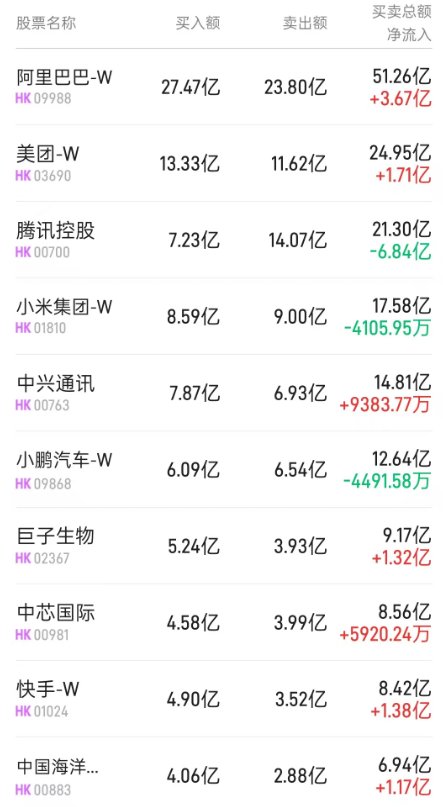
北水动向|北水成交净买入41.01亿 北水继续加仓科网股 全天买入美团(03690)近6亿港元
智通财经网· 2025-12-02 09:57
Core Insights - The Hong Kong stock market saw a net inflow of 41.01 billion HKD from northbound trading on December 2, with 10.3 billion HKD from the Shanghai Stock Connect and 30.71 billion HKD from the Shenzhen Stock Connect [1] Group 1: Stock Performance - Meituan-W (03690) received a net inflow of 5.92 billion HKD, with expectations of reduced losses in its food delivery business in Q4 [4] - Xiaomi Group-W (01810) had a net inflow of 3.8 billion HKD, reporting over 500,000 cumulative deliveries of its cars and a share buyback of approximately 4.02 billion HKD [4] - Alibaba-W (09988) saw a net inflow of 3.57 billion HKD, launching an updated image generation and editing model, Qwen-Image [5] - Kuaishou-W (01024) received a net inflow of 2.5 billion HKD, introducing a new multi-modal creation tool [5] - ZhiZi Bio (02367) had a net inflow of 1.31 billion HKD, announcing a share buyback plan [5] Group 2: Net Selling - Semiconductor Manufacturing International Corporation (00981) faced a net outflow of 762.7 million HKD due to the termination of a significant acquisition [6] - Tencent (00700) experienced a net outflow of 3.81 billion HKD, indicating a negative sentiment towards the stock [6] - China Life (02628) had a net outflow of 16.42 million HKD, reflecting a similar trend [6]