AI for Science

Search documents
姚期智:AI for Science正快速兴起,科学工作者应把握发展态势
Xin Lang Ke Ji· 2025-11-16 01:49
Core Insights - The rapid rise of AI for Science in scientific research is a significant topic, emphasizing the integration of AI with traditional technologies [1] - AI can assist quantum physicists in constructing quantum error correction decoders, enhancing quantum computing research [1] - The Google quantum chip Willow has achieved a significant reduction in quantum error correction errors, improving the large-scale usability of quantum computing [1] - Future applications of AI are expected to greatly benefit the accuracy and speed of quantum computing [1]
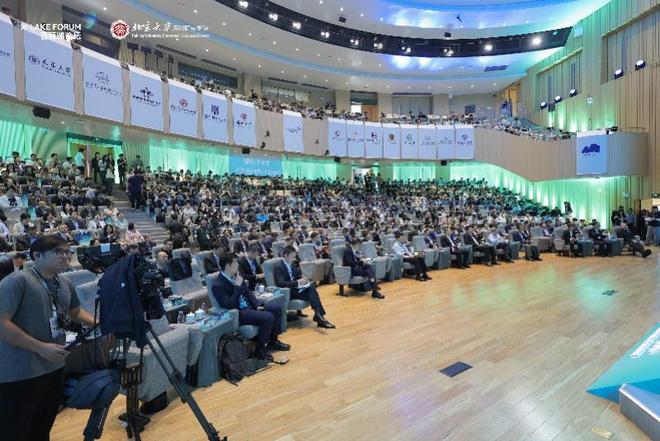
2025西丽湖论坛举办:AI驱动科学发现与产业未来新范式
Nan Fang Du Shi Bao· 2025-11-16 00:48
Core Insights - The 2025 Xili Lake Forum opened on November 15, focusing on "Accelerating Scientific Discovery, Defining the Future of Industry" with an emphasis on "AI for Science" [1][3] Group 1: Forum Structure and Participants - The forum featured a "1+N+X" model, including one main forum, 28 specialized forums, and various supporting activities throughout November, aimed at building an open and integrated innovation ecosystem [3] - Notable participants included academicians from the Chinese Academy of Sciences and the Chinese Academy of Engineering, as well as representatives from leading universities, research institutions, and media [3][11] Group 2: Key Initiatives and Achievements - Three major initiatives were announced: the establishment of the International Intellectual Property Academy in collaboration with Peking University, the launch of the "Boya AI4S Top Talent Program," and the signing of the Shenzhen University Town International Campus Phase I [7][10] - Seven significant achievements of the X9 Alliance were unveiled, including the Shenzhen Scientific Navigation platform, a new generation AI database, and the AI4S LAB, which is the world's first one-stop digital life sciences research platform [10] Group 3: Discussions and Insights - The forum included discussions on the integration of AI across various industries, with industry leaders exploring the transformative potential of AI in reshaping technology and industrial ecosystems [4][11] - Keynote speeches highlighted insights into AI's role in revolutionizing scientific research paradigms and driving new industrial transformations [11][13]

新课预告|韦青:你的价值,不再是标准答案,而是提供“异常值”
混沌学园· 2025-11-12 11:58
Core Insights - The article discusses the evolution of organizations and individuals in the context of increasing machine capabilities, emphasizing the need for a shift in how human value is perceived and utilized [4][11][22] Group 1: Organizational Evolution - The concept of "Frontier Organizations" is introduced, which challenges traditional views on human value, suggesting that machines excel at standardization while humans should focus on providing "outliers" that machines cannot replicate [9][11] - The structure of organizations is shifting from rigid departmental divisions to fluid, task-based teams, necessitating new management approaches [12] - The foundation of "Frontier Organizations" is the cultivation of "Super Individuals," whose value is no longer defined by traditional resumes but by their digital footprints and contributions [13][15] Group 2: Future of Work - Recruitment processes are expected to evolve, with organizations analyzing candidates' digital presence rather than relying on resumes, marking a significant shift in hiring practices [16] - The article raises critical questions about the future of technology and its impact on human roles, questioning whether current trends are leading to meaningful advancements or merely fleeting phenomena [19][20] - The ultimate inquiry posed is about individual agency in the face of advancing technology, urging individuals to choose to be active contributors rather than passive participants [22][23]

晶泰控股20251111
2025-11-12 02:18
Summary of Key Points from the Conference Call Company Overview - **Company**: 金财控股 (Jincai Holdings) - **Industry**: Biotechnology and AI for Science Core Business and Model - 金财控股 focuses on using AI and robotics to empower drug discovery and new materials, operating as a research and development service platform [2][7][9] - The company has over 300 global clients, including 17 of the top 20 multinational pharmaceutical companies, showcasing its industry-leading technology platform [2][8] Recent Developments - A significant collaboration with 礼来 (Eli Lilly) was established, valued at approximately $350 million, involving AI-enabled large molecule antibody drug development [3][17] - Two AI-developed molecules for hair growth have been registered as cosmetic ingredients in the U.S. and received FDA approval, indicating successful application of AI technology in consumer products [2][3] Financial Performance and Market Position - The company went public on June 13, 2024, becoming the first listed company in the specialized technology and AI for Science sector, with over 43% of shares held through the Hong Kong Stock Connect [2][6] - Major institutional investors, including Vanguard and BlackRock, have invested in the company, reflecting confidence in its long-term growth [2][6] Competitive Advantage - Unlike traditional Chinese pharmaceutical companies that transfer pipelines to large overseas firms after significant investment, 金财控股 shares R&D costs and outcomes with clients, ensuring stable long-term development [5][9] - The company’s unique fee structure covers the entire lifecycle of drug development, significantly shortening the R&D cycle from 4-6 years to approximately 2 years [9][11] AI and Robotics in Drug Development - AI enhances drug discovery by overcoming human experience limitations, allowing for multi-target and multi-property optimization, which significantly reduces time and costs while increasing success rates [10][11] - The 24/7 operation of robotic laboratories improves experimental efficiency and accumulates high-quality data for further AI training, creating a rapid iterative feedback loop [11][12] Market Potential and Future Outlook - The hair growth product developed showed an 80% effectiveness rate in a trial with 100 participants, indicating substantial market potential, as approximately 2.5 billion people globally suffer from hair loss [15] - The company anticipates maintaining a growth rate of 50-70% annually, excluding unexpected large orders [17] Impact of External Factors - The company is insulated from U.S.-China tensions as it focuses on preclinical research and does not handle sensitive clinical trial data [18] - The company has received recognition for its data capabilities, winning a national award for data elements, which is crucial for enhancing AI algorithms [19][23] Conclusion - 金财控股 is positioned as a leader in the biotechnology sector, leveraging AI and robotics to innovate drug discovery and development, with a robust business model that emphasizes collaboration and shared success with clients. The company's strategic partnerships and technological advancements suggest a promising future in both pharmaceutical and materials science markets.
创投新风向!衢州产业资本招商大会召开
2 1 Shi Ji Jing Ji Bao Dao· 2025-11-11 12:09
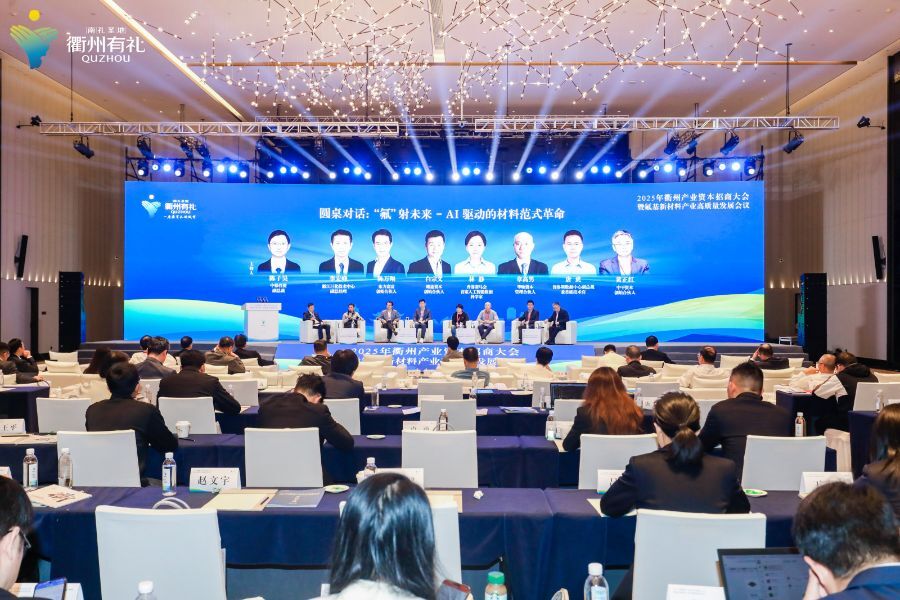
Core Viewpoint - The 2025 Quzhou Industrial Capital Investment Conference and Fluorine-based New Materials Industry High-Quality Development Conference aims to explore new investment opportunities and models in the context of technological transformation, emphasizing the deep integration of five chains for collaborative development [1][2]. Group 1: Industrial Development - Quzhou has achieved systematic restructuring of its industrial, enterprise, and power structures through the deep integration of five chains, transitioning from basic chemicals to new materials and extending from upstream materials to downstream finished products [2]. - The city has introduced 35 projects with investments exceeding 5 billion yuan during the 14th Five-Year Plan, including 15 projects worth over 10 billion yuan [2]. - By the end of this year, the new materials industry is expected to become Quzhou's first trillion-yuan industrial chain, positioning the city as "China's Fluorine Valley" [2]. Group 2: Expert Insights - Jiang Xiaojun highlighted the new requirements for the integration of technology and industry in the 14th Five-Year Plan, emphasizing that enterprises are becoming the main body of innovation in the digital age [2][3]. - Xu Xiaolan pointed out that humanoid robots represent a typical case of the integration of technological and industrial innovation, which will be a key driver for upgrading the manufacturing industry [3]. Group 3: Investment and Capital - Quzhou's industrial fund cluster has expanded from 15 billion yuan to over 100 billion yuan, leveraging nearly 150 billion yuan of social capital [7]. - The city aims to create a favorable business environment to attract more quality capital and facilitate the interaction between industry and capital [8]. - The "China Fluorine Valley" initiative was launched during the conference, marking a new chapter for the high-quality development of the fluorochemical industry [5][6]. Group 4: AI and Material Science - AI is seen as a driving force for the transformation of material science, with discussions indicating that the industry is entering a "no man's land" of research and development [11]. - Experts believe that the integration of AI and materials will accelerate breakthroughs in new materials, particularly in biomedicine and high-performance materials [11]. - The next five years are anticipated to be a pivotal period for "AI for Science," leading to significant advancements in various fields [12]. Group 5: Robotics Industry - The robotics industry is at a critical juncture, with advancements in AI and humanoid robots expected to drive significant growth [17]. - Quzhou is positioned to capitalize on opportunities in the robotics sector, particularly in humanoid and flexible robots [17][18]. - Investment opportunities are emerging in mobile equipment and facilities, especially as new companies integrate AI concepts into their operations [18].
AI应用驱动行业变革,材料研发或驶入“无人区”
2 1 Shi Ji Jing Ji Bao Dao· 2025-11-11 05:10
Core Insights - The event highlighted the transformative role of AI in the materials industry, emphasizing its potential to drive innovation and reshape research paradigms [1][3]. Group 1: AI's Impact on Material R&D - AI is fundamentally changing the way materials are developed, moving from imitation to independent innovation [3]. - Key challenges in material R&D include identifying suitable molecular structures for specific applications and optimizing synthesis routes [3]. - Companies are investing in AI capabilities, such as establishing computational simulation labs and collaborating with universities and software developers, aiming to create industry-specific models and databases by 2026 [3]. Group 2: Investment Opportunities - Investment opportunities in the materials sector are identified in two areas: materials with significant production value and import substitution potential, and those leveraging AI for breakthroughs in performance and cost efficiency [3][4]. - The integration of AI and big data is expected to unlock vast potential in biomedicine and new materials development [4]. Group 3: Future Trends and Expectations - The next five years are anticipated to mark the beginning of "AI for Science," progressing towards a cycle of AI-driven research and applications [5]. - The industry is expected to reach a tipping point in four to five years, leading to a surge in material innovation as data accumulates [4].
AI for Science驱动科研范式变革,青年科学家能力重构 | 巴伦精选
Tai Mei Ti A P P· 2025-11-11 03:37
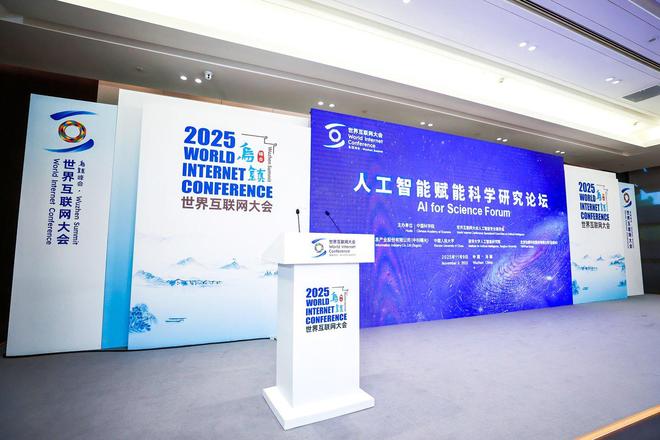
Core Insights - The forum "AI for Science" held during the 2025 World Internet Conference focused on how AI is reshaping scientific research paradigms and stimulating new productivity [2][3][4] Group 1: AI Applications in Scientific Research - AI is becoming a crucial tool to overcome long-standing challenges in materials research, such as measurement limitations, as highlighted by Chen Lidong from the Shanghai Institute of Silicate [3] - AI models have shown significant potential in enhancing catalyst performance by 50% through iterative experimentation and modeling, demonstrating the efficiency of AI in material discovery [3] - The concept of "AI for Materials" and "Materials for AI" emphasizes a reciprocal relationship between AI and materials science [4] Group 2: AI in Healthcare - AI brain-machine interfaces are being applied in managing neurodegenerative diseases, with advancements allowing for quicker detection of seizures compared to traditional methods [5] - The accuracy of language decoding in AI has improved significantly, particularly in recognizing Chinese phonetics, achieving over 70% accuracy [5] Group 3: AI's Impact on Innovation - Generative AI is optimizing product design and team collaboration in open innovation, while its direct impact on disruptive innovation remains limited, underscoring the importance of human creativity [7] Group 4: Future Directions in AI and Science - The "scientific intelligence" concept is seen as a pathway to superintelligence, with significant advancements in drug design for diseases lacking clear targets, achieving a 50-fold improvement in molecular design [9][10] - The demand for computational power in AI for science is growing exponentially, necessitating a unique capability to couple high and low precision in scientific calculations [11] - The release of the "Global AI Standards Development Report" calls for collaboration among international organizations, governments, and industries to establish responsible global standards [13] Group 5: AI Infrastructure and Talent Development - The "Panshi V1.5" platform aims to empower scientific research across disciplines, covering the entire research process from hypothesis to discovery [18] - The forum concluded with discussions on the role of AI in empowering young scientists, emphasizing the need for interdisciplinary collaboration and the evolution of AI from a tool to a collaborator [25]
对话深势科技张林峰、孙伟杰:AI for Science,从开始到现在
晚点LatePost· 2025-11-10 08:03
Core Viewpoint - The article discusses the emergence of AI for Science as a transformative direction in scientific research, highlighting the establishment of companies like Xaira Therapeutics and the initiatives by OpenAI and DeepMind in this field. It emphasizes the potential of AI to accelerate scientific discoveries and the journey of Chinese entrepreneurs Zhang Linfeng and Sun Weijie in founding DeepMind Technology, which focuses on applying AI to scientific research and industrial applications [3][4][5]. Company Background - DeepMind Technology was founded in 2018 by Zhang Linfeng and Sun Weijie, with initial funding of 12 million RMB from a disruptive technology innovation competition, rather than venture capital [4][5]. - Zhang Linfeng developed the Deep Potential Molecular Dynamics (DeePMD) method during his PhD at Princeton, which later won the prestigious Gordon Bell Award [4][5]. Technological Innovation - DeePMD integrates AI to optimize the long-standing issue of solving first-principles calculations, expanding the range of quantum mechanical calculations from hundreds of atoms to billions, thus enabling the discovery of new materials and drugs [5][6]. - The method allows for significant computational efficiency, achieving over six orders of magnitude acceleration, enabling complex simulations that were previously only feasible on supercomputers to be run on standard laptops [21][24]. Vision and Goals - The founders aim to create an open-source system that spans scientific research to industrial development, aspiring to contribute to a shared human destiny [9][30]. - The company has set a goal to become a leading technology firm originating from China, with a vision to influence global scientific research [8][30]. Product Development - DeepMind Technology has launched several platforms, including the Hermite drug design platform and various pre-trained scientific models, serving notable clients such as CATL, BYD, and others [8][30]. - The company’s first product, Hermite, was developed in response to the existing market needs in drug discovery, differentiating itself by incorporating machine learning methods [30][31]. Market Positioning - The founders identified a significant opportunity in the pharmaceutical and materials sectors, where understanding atomic interactions can lead to breakthroughs in drug development and material science [31][32]. - The company aims to build a comprehensive platform that can serve multiple research directions and stages, rather than focusing solely on vertical applications [50][51]. Educational Initiatives - DeepMind Technology emphasizes the importance of cultivating a new generation of interdisciplinary talent, integrating knowledge from physics, chemistry, and engineering to address complex scientific challenges [27][34]. - The company has developed a unique educational framework to train young talents, fostering a community that encourages collaborative learning and innovation [36][37]. Future Directions - The article suggests that the next phase for AI in science will involve the development of AI scientists, capable of autonomously conducting research and integrating various scientific tools [42][44]. - The integration of pre-trained models and multi-agent systems is expected to enhance research efficiency and redefine the roles of researchers in the scientific process [47][49].

拜耳锚定“AI+健康”:携本土企业破局健康消费,释放创新强信号
2 1 Shi Ji Jing Ji Bao Dao· 2025-11-09 07:29
Core Insights - The article highlights Bayer's proactive approach in leveraging AI technology to innovate within the health consumer sector, particularly during the China International Import Expo [1][4] - Bayer aims to integrate AI into the entire health management chain, enhancing both B2B and B2C interactions to provide more precise and efficient health solutions [1][3] Group 1: AI in Health Consumer Sector - Bayer is actively building an AI-driven innovation ecosystem in the health consumer sector, showcasing its commitment at the China International Import Expo [1][4] - The company has expanded its operations in China from prescription drugs to OTC and health consumer products, becoming a key player in the local health industry [1][4] - Bayer's collaboration with Shanghai Tianwu Technology focuses on intelligent protein molecular design and biomanufacturing innovations, particularly in digestive and skin health [3] Group 2: Market Trends and Consumer Insights - There is a growing consumer expectation for AI-enabled health management solutions, particularly in areas like symptom recognition and medication reminders [5][6] - The health consumer sector is increasingly driven by market demands, necessitating that innovations are consumer-centric and address real needs [5][6] - AI's role in enhancing product efficacy and consumer trust is emphasized, with the potential to provide credible evidence of product effectiveness through data tracking [7] Group 3: Investment and Economic Implications - Investment logic in AI pharmaceuticals is becoming clearer, with a focus on disruptive and implementable projects that can significantly enhance efficiency [3][9] - The AI data market in healthcare is projected to grow significantly, with expectations to exceed 10 billion yuan by 2025, indicating a robust demand for high-quality data in the sector [9] Group 4: Technological Foundations - The successful application of AI in health management relies on advancements in hardware technology and high-quality data [8][9] - Bayer is prioritizing the establishment of a solid data infrastructure to support AI applications in research and operational efficiency [9]

告别盲目卷参数!科大讯飞1024亮出底牌:all in“更懂你”
量子位· 2025-11-06 13:22
Core Viewpoint - The article emphasizes that the true competitive barrier in AI is not just about model size or intelligence, but about creating AI that truly understands and resonates with human needs, as demonstrated by iFLYTEK's latest advancements in AI technology [10][12][114]. Group 1: AI Understanding and Interaction - iFLYTEK's new AI model, Spark X1.5, aims to enhance emotional understanding and task comprehension, moving beyond traditional capabilities to truly "understand you" [6][14]. - The AI's ability to dynamically engage with users, recognizing emotions and intentions, marks a shift from basic interaction to empathetic communication [38][44]. - The integration of multi-modal interaction capabilities allows the AI to process and respond to complex human cues, enhancing user experience [42][46]. Group 2: Technological Advancements - The Spark X1.5 model is fully domestically developed, utilizing a completely independent computing platform without reliance on foreign technology [8][19]. - Significant improvements in reasoning and task decomposition capabilities have been achieved, with the model's reasoning efficiency rising from 25% to over 84% [22]. - The model's architecture has been upgraded to MoE, allowing for a reduction in total parameters while enhancing performance, achieving a 100% increase in reasoning speed compared to its predecessor [30][34]. Group 3: Industry Applications - iFLYTEK's AI technology is being applied across various sectors, including education and healthcare, with specific tools designed to enhance learning and medical diagnostics [75][83]. - The AI's capabilities in medical settings have reached a level comparable to senior physicians, showcasing its potential in assisting with diagnosis and patient management [76][84]. - In education, the AI has advanced from simple grading to detailed error analysis, significantly improving the efficiency and accuracy of assessments [83][86]. Group 4: Ecosystem and Developer Engagement - The growth of the developer ecosystem around iFLYTEK's AI has been rapid, with a notable increase in new developers contributing to the platform [106]. - iFLYTEK has launched an open-source platform to support the development of intelligent agents, aiming to foster innovation within the AI community [108]. - The company believes that a thriving ecosystem is essential for the future of artificial intelligence, emphasizing collaboration and shared growth [104].