
双碳目标

Search documents
【嘉宾名单】2025 年矿热炉节能供电(直流电)技术研讨会
中国有色金属工业协会硅业分会· 2025-11-25 11:49
Core Viewpoint - The article emphasizes the growing importance of direct current smelting technology in the context of China's "dual carbon" goals, highlighting its unique advantages and potential for industry advancement [1]. Group 1: Event Details - A seminar on "2025 Mineral Thermal Furnace Energy-saving Power Supply (Direct Current) Technology" is scheduled for December 4-6, 2025, in Hohhot, Inner Mongolia [1]. - The event is organized by the China Nonferrous Metals Industry Association's Silicon Industry Branch and Beijing Antai Technology Co., Ltd., with support from various local governments and companies [1]. Group 2: Supporting Organizations - The seminar is backed by several associations and local government departments, including the China Nonferrous Metals Industry Association and the Ulanqab Municipal Industry and Information Technology Bureau [4]. - Numerous research institutions and universities are involved, such as Beijing University of Science and Technology and the Institute of Process Engineering, Chinese Academy of Sciences [4]. Group 3: Related Companies - The article lists various companies involved in industrial silicon production and direct current technology, including Tongwei Green Base Guangyuan Co., Ltd. and Inner Mongolia Erdos Power Metallurgy Group Co., Ltd. [6][7]. - A range of enterprises from different regions, such as Xinjiang Zhongtai Special Power Equipment Co., Ltd. and Sichuan Leshan Xinhai Power Comprehensive Development Co., Ltd., are also mentioned [6][7].

数字经济赋能全球零碳循环产业园研讨及发布会沪上举办 助力“双碳”目标落地
Jiang Nan Shi Bao· 2025-11-25 11:48
Core Insights - The event focused on the integration of digital economy and zero-carbon industries, aiming to explore innovative paths for global sustainable development [1][3] - The "14th Five-Year Plan" emphasizes the establishment of around 100 national-level zero-carbon parks, providing clear guidance for industrial green transformation [1] - The collaboration between Zhang Zhiwen Academy and Miaoyin Group aims to create a replicable zero-carbon development model, integrating top environmental technologies and digital platform resources [1] Group 1: Technological Innovations - The "Biological Energy Cabin" technology developed by Zhang Zhiwen Academy has achieved breakthroughs in solid waste harmless treatment and resource regeneration, providing core technical support for the zero-carbon industry [2] - Miaoyin Group has established a "technology-data-finance" closed-loop ecosystem, utilizing AI and blockchain to optimize the entire industrial process and promote high-end applications of recycled materials [2] Group 2: Industry Collaboration and Synergy - Miaoyin Group's President Long Yi highlighted the importance of deep integration between digital economy and physical industries, focusing on AI and data technology to enhance the zero-carbon upgrade of industries like fiberglass [2] - The digital "nervous network" in zero-carbon industrial parks enables efficient collaboration among enterprises, resource recycling, and precise carbon management [3] Group 3: Industry Impact and Future Directions - The event showcased China's hard power in zero-carbon technology innovation and digital economy empowerment, providing a "China technology empowerment plan" for global sustainable development [3] - The collaborative development model is expected to accelerate the implementation of China's "dual carbon" goals and inject strong momentum into the high-quality development of green low-carbon industries [3]
第二次青藏科考:青藏高原还能再养活1307万人
Guan Cha Zhe Wang· 2025-11-25 11:40
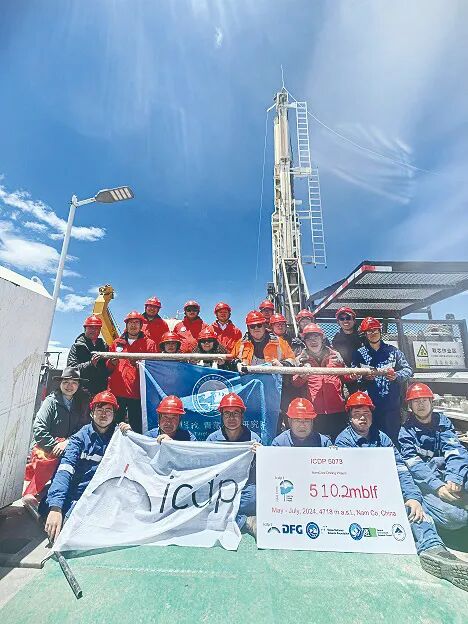
Core Insights - The second comprehensive assessment of the Qinghai-Tibet Plateau indicates a potential carrying capacity of approximately 26.2 million residents, allowing for an increase of about 13.07 million from the current population of 13.13 million, highlighting significant development potential [1] - The research focuses on addressing major national strategic needs and has produced over 140 decision-making reports to support sustainable development in the region [1][2] Group 1: Research Achievements - The second Qinghai-Tibet scientific expedition has established a comprehensive observation network covering 19 key areas, integrating "air-space-ground" monitoring to facilitate a closed-loop transformation from science to policy to practice [2] - The urbanization rate of the Qinghai-Tibet Plateau is approximately 48%, with a potential increase of 9.67%, leading to a proposed urban development model based on "small gathering and large dispersal" [4] - The expedition has identified 10 differentiated green development models to support unique urbanization in the plateau [4] Group 2: Disaster Prevention and Ecological Protection - A multi-dimensional technological support system has been established, successfully issuing six warnings for ice avalanche disasters and optimizing transportation routes to avoid over 97% of mountain hazards [5] - The expedition has assessed the carbon sink capacity of the Qinghai-Tibet Plateau, estimating an annual carbon sink of 120 to 140 million tons, significantly exceeding local carbon emissions of about 55 million tons [5] Group 3: Biodiversity and Resource Exploration - The expedition has published over 3,000 new species, including 388 plants and 205 animals, and has created the largest glacier virus and bacteria gene collection globally [6] - In resource exploration, the expedition has identified 40 solid mineral prospecting areas and 110 brine lithium prospecting areas, alleviating reliance on foreign resources [7][8] Group 4: Environmental Transformation and Future Directions - The Qinghai-Tibet Plateau is undergoing a "third environmental transformation," characterized by global warming and human activities, with an increase in temperature at a rate of 0.37 degrees Celsius every decade, double the global average [9][10] - Future research will focus on green and livable development under the new environmental transformation, addressing water-carbon-health interactions and ensuring the safety of strategic mineral and biological resources [11][13]
新型电力系统亟需哪些理论创新?舒印彪给出答案!
中国能源报· 2025-11-25 11:03
Core Viewpoint - The article emphasizes the need for theoretical innovation in building a new power system in China, focusing on ensuring reliable electricity supply and stable operation of the power system [1][2]. Group 1: Theoretical Innovation Directions - The first direction is balance theory, addressing the increasing difficulty of power balance due to large-scale development of renewable energy, with maximum daily power fluctuations exceeding 20% of the system's maximum load [2]. - The second direction is safety and stability control theory, which highlights risks such as weak inertia and weak support in the new power system [3]. - The third direction is electricity market theory, which requires a reconstruction of market design to accommodate the characteristics of renewable energy, ensuring long-term reliable electricity supply and promoting green energy transition [4]. Group 2: Key Challenges and Solutions - The article discusses the "duck curve" phenomenon in load characteristics due to the integration of photovoltaic energy, leading to significant fluctuations in output during peak hours [2]. - It calls for research on the resilience of the power system to climate and weather impacts, including the development of a comprehensive power balance model that incorporates random dynamic methods [2][3]. - The need for a multi-faceted control system that combines decentralized and centralized control to enhance the dynamic support capability of renewable energy is also highlighted [3]. Group 3: Market Mechanism and Technological Innovation - The article outlines four goals for the national unified electricity market: ensuring reliable supply, promoting green energy transition, maintaining competitive electricity prices, and fostering technological innovation [4]. - It stresses the importance of integrating technological and market innovations to address the challenges posed by the increasing share of renewable energy in the power system [4]. Group 4: Conference Insights - The annual conference focused on "Technological Innovation and Mechanism Reform to Build a New Energy System," with participation from numerous experts discussing key technologies and major issues related to the dual carbon goals [5].

提高终端用能电气化水平 促进清洁能源发展
Xin Hua Wang· 2025-11-25 09:56
Group 1 - The core viewpoint of the articles emphasizes the importance of electrification in promoting high-quality energy development and addressing the growing demand for clean energy in society [1][2] - The electrification rate in China is projected to reach approximately 28.8% in 2024, an increase of 0.9 percentage points from the previous year, surpassing that of major economies in Europe and the U.S. [1] - The "14th Five-Year Plan" suggests enhancing the electrification level of end-use energy to promote green and low-carbon energy consumption [1] Group 2 - The China Electricity Council predicts that the national electrification rate will maintain a steady growth of about 1 percentage point annually during the "14th Five-Year Plan" period, reaching around 35% by 2030 [2] - Key areas for improving electrification include integrating new electric equipment in industrial processes and expanding renewable energy heating in agriculture, which will facilitate a clean energy transition in rural areas [2] - The shift towards higher electrification levels is expected to make electric energy the primary form of end-use energy consumption, promoting a green production and lifestyle [2]
“十四五”济南市能耗强度累计下降23.5%以上,节能降碳成效持续显现
Zhong Guo Fa Zhan Wang· 2025-11-25 09:04
Core Viewpoint - Jinan City has made significant progress in green low-carbon transformation and high-quality energy development since the "14th Five-Year Plan," aligning with national strategies for carbon peak and carbon neutrality [1][2]. Group 1: Carbon Neutrality Initiatives - The city has established a comprehensive "1+N+X" policy system for carbon peak and carbon neutrality, implementing the "Jinan Carbon Peak Work Plan" and focusing on key sectors such as energy, industry, transportation, and agriculture [1]. - The implementation of ten major projects for carbon peak has been initiated, with a notable decrease in carbon emission intensity meeting scheduled targets [1]. Group 2: Energy Efficiency and Emission Reduction - Jinan has developed a robust energy-saving system, launching the "14th Five-Year Energy Conservation and Emission Reduction Implementation Plan," which includes annual energy-saving and carbon reduction plans across various sectors [1]. - Since the beginning of the "14th Five-Year Plan," the city's energy consumption intensity has decreased by over 23.5%, surpassing provincial targets [1]. Group 3: New Energy Development - The city has accelerated the development of new energy, with operational wind farms, photovoltaic power stations, and biomass power projects, achieving a total installed capacity of 5.1081 million kilowatts, a 168% increase since 2020 [2]. - Jinan has also enhanced energy storage applications, with eight storage power stations totaling 711.6 thousand kilowatts [2]. Group 4: Green Lifestyle Promotion - The promotion of electric vehicles has been prioritized, with over 120,000 charging facilities and 1,620 public charging stations established, achieving full coverage at the community level [3]. - The establishment of the province's first municipal virtual power plant service center has enabled the integration of 15 virtual power plants, with a regulation capacity of 683 thousand kilowatts, leading the province [3].
振石股份IPO:纤维增强材料先锋者,开启全球产业新征程
Sou Hu Cai Jing· 2025-11-25 07:29
Core Viewpoint - Since 2025, China has implemented a series of new energy policies that create a favorable environment for the fiber-reinforced materials industry, leading to increased market demand and a bright industry outlook for companies like Zhejiang Zhenshi New Materials Co., Ltd. [2] Company Overview - Zhenshi Co. is a national high-tech enterprise focused on the research, production, and sales of fiber-reinforced materials in the clean energy sector, providing high-quality and innovative solutions across various industries including wind power, photovoltaic power, new energy vehicles, and construction materials [3] Market Position - In the wind power sector, Zhenshi Co. has become a global leader in wind turbine blade materials, holding over 35% of the global market share in 2024, and establishing strong partnerships with major domestic and international wind turbine manufacturers [4] - The company’s photovoltaic frames made from fiber-reinforced materials have shown significant advantages, including low cost, lightweight, and high tensile strength, with increasing market penetration [5] Innovation and Technology - Zhenshi Co. prioritizes technological innovation and actively participates in the formulation of industry standards, holding numerous patents that demonstrate its strong R&D capabilities [6][7] Financial Performance - The company has shown robust financial health with revenues of approximately 5.27 billion yuan, 5.12 billion yuan, 4.44 billion yuan, and 3.28 billion yuan over recent periods, alongside net profits of about 774 million yuan, 790 million yuan, 606 million yuan, and 404 million yuan [8] Future Outlook - Zhenshi Co. aims to raise at least 3.98 billion yuan through an IPO to invest in its main business, including the construction of production bases and R&D centers, while expanding its market share in the clean energy sector [8][9] - The company plans to enhance its production capacity and explore new opportunities in the clean energy materials market, focusing on becoming a benchmark enterprise in global composite materials intelligent manufacturing [10]

宁德时代赋能五粮液,开启“光储+物流”全方位合作
中关村储能产业技术联盟· 2025-11-25 06:22
Core Viewpoint - CATL has established a strategic partnership with Wuliangye Group to integrate traditional liquor production with new energy technology, focusing on zero-carbon transformation and green development in Yibin [2][4]. Group 1: Strategic Collaboration - The collaboration will focus on three main areas: project co-construction, capital cooperation, and supply chain integration [2]. - Both companies aim to create a zero-carbon park, utilizing CATL's expertise in photovoltaic power stations and energy storage systems to upgrade green energy infrastructure [2]. Group 2: Electric Transportation and Logistics - The partnership will promote the electrification of Wuliangye's own vehicles and those of its suppliers, prioritizing the use of CATL's battery products [4]. - There will be an exploration of establishing battery swap demonstration routes to enhance logistics efficiency [4]. Group 3: Battery Business Synergy - The collaboration will deepen the synergy in battery business, focusing on the development of battery pack composite structural components and new product categories [4]. - Leveraging Wuliangye's technology in high-end packaging and anti-counterfeiting, the partnership aims to create high-standard and efficient battery packaging solutions [4].


深走访?提质效丨湖北能源:加快培育新质生产力 迈向综合能源供应解决方案服务商
Zheng Quan Shi Bao Wang· 2025-11-25 03:42
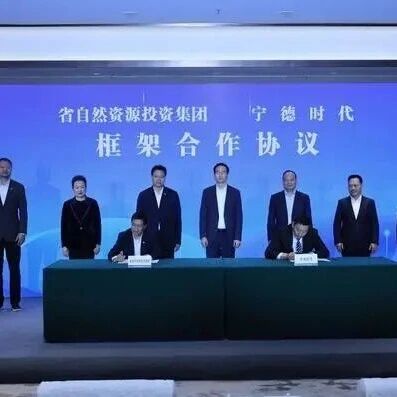
Core Viewpoint - Hubei Energy is evolving into a comprehensive energy service provider, leveraging capital market support to enhance its production capabilities and ensure energy security in the region [1][6]. Group 1: Company Development and Capitalization - Hubei Energy was established in 2005 through the merger of two local energy companies and went public in 2010, becoming the first listed company in Hubei's energy sector [2]. - The company has successfully utilized capital market tools, conducting three rounds of private placements in 2012, 2015, and 2025, which have significantly bolstered its financial resources [2]. - The introduction of China Three Gorges Corporation as a major shareholder in 2015 marked a pivotal moment, enhancing Hubei Energy's financial strength and operational capabilities through resource and technology collaboration [2]. Group 2: Financial Performance and Shareholder Returns - Since its IPO, Hubei Energy has maintained a consistent cash dividend policy, with total cash dividends exceeding 8.2 billion yuan and an average payout ratio of 35.9% [3]. - The company has diversified its operations from solely electricity production to a comprehensive energy group, with a total installed capacity of 18.33 million kilowatts as of June 2025, including hydropower, thermal power, wind, solar, and energy storage [3]. Group 3: Energy Security and Structural Advantages - Hubei Energy's strategic location and market positioning enhance its energy security, with power generation concentrated in regions with high demand [4]. - The company has a balanced energy mix, with hydropower, thermal power, and renewable energy accounting for approximately 25.4%, 36.2%, and 38% of its total capacity, respectively, which mitigates risks associated with energy price fluctuations [4]. - Hubei Energy's advanced production technologies, including high-efficiency supercritical power generation units, contribute to its competitive edge in operational efficiency and reliability [5]. Group 4: Transition to New Energy and Innovation - In response to national carbon neutrality goals, Hubei Energy is investing in renewable energy projects, with wind and solar capacity reaching 6.96 million kilowatts, representing a 30 percentage point increase since its listing [6]. - The company is exploring new business avenues such as virtual power plants and energy storage, integrating various resources to enhance its market participation and revenue [6]. - Hubei Energy aims to establish a robust innovation ecosystem by 2030, focusing on key technologies and new business models to strengthen its digital and technological capabilities [7].

湖北能源:加快培育新质生产力 迈向综合能源供应解决方案服务商
Zheng Quan Shi Bao Wang· 2025-11-25 03:10
Core Viewpoint - The article highlights the development journey of Hubei Energy, emphasizing its transformation into a comprehensive energy group supported by capital market empowerment and strategic partnerships, particularly with China Three Gorges Corporation, to enhance energy security and drive regional economic growth [1][2]. Financing and Business Expansion - Hubei Energy became the first listed company in Hubei's energy sector in 2010, initially focusing on hydropower and thermal power, with limited asset scale [2] - The company has successfully utilized capital market tools, conducting three rounds of private placements in 2012, 2015, and 2025, which have continuously injected funds into its energy business [2] - The 2015 private placement marked a significant milestone, as China Three Gorges Corporation became the actual controller, facilitating resource, technology, and management collaboration [2] Shareholder Returns and Financial Performance - Since its listing, Hubei Energy has maintained a consistent cash dividend policy, with total cash dividends exceeding 8.2 billion yuan and an average payout ratio of 35.9% [3] - The company has diversified from a single power producer to a comprehensive energy group, with a total installed capacity of 18.33 million kilowatts as of June 2025, including hydropower, thermal power, wind, solar, and energy storage [3] Energy Security and Structural Advantages - Hubei Energy's core advantages include strong regional market absorption capacity, with its main power generation concentrated in Hubei province, enhancing energy security [4] - The company has a balanced energy source structure, with hydropower, thermal power, and renewable energy making up approximately 25.4%, 36.2%, and 38% of its installed capacity, respectively, which mitigates performance volatility [4] Technological Efficiency and Competitiveness - Hubei Energy has implemented advanced operational management in its hydropower stations, significantly improving water resource utilization [5] - The company operates four ultra-supercritical thermal power units, which account for 60.33% of its thermal capacity, showcasing competitive advantages in efficiency and operational costs [5] New Growth Opportunities and Carbon Goals - In response to national carbon neutrality goals, Hubei Energy is investing in wind, solar, and energy storage projects, increasing the share of clean energy to 37.96% of total installed capacity, a 30 percentage point increase since its listing [6] - The company is exploring new business areas such as virtual power plants and carbon trading, aiming to transform its clean energy advantages into economic benefits [6] Innovation and Future Development - Hubei Energy is committed to enhancing its technological innovation and digital transformation, with plans to increase R&D investment and develop impactful technologies by 2030 [7] - The company aims to become a comprehensive energy service provider characterized by clean, low-carbon, and intelligent solutions, contributing to national energy security and high-quality economic development [7]