生成式AI

Search documents
商汤-W涨超4% 公司已从教育等多领域的ToB与ToG客户中获得生成式AI新项目订单
Zhi Tong Cai Jing· 2025-09-25 02:39
Group 1 - The core viewpoint of the articles highlights the positive market response to SenseTime's recent project developments in generative AI, with a notable stock price increase and significant trading volume [1][2] - Goldman Sachs anticipates accelerated growth for SenseTime due to increased cloud capital expenditure in mainland China and favorable policies from the "AI+" action plan announced in August [1] - SenseTime is positioned to offer comprehensive solutions that cater to various client needs, including computing power, large-scale AI infrastructure, AI foundational models, and generative AI applications [1] Group 2 - SenseTime reported a 72.7% year-on-year increase in generative AI revenue for the first half of the year, amounting to 1.816 billion yuan, which constitutes 77% of its total revenue [2] - The company has achieved stable operation of approximately 5,000 heterogeneous clusters under domestic chip mixing, with a utilization rate of about 80% and a total computing power scale of approximately 25,000 PetaFLOPS [2] - The "Little Raccoon" productivity tool has seen significant user growth, surpassing 3 million users, and processes around 10 billion data analysis tokens daily, with applications in finance, education, and government sectors [2]
港股异动 | 商汤-W(00020)涨超4% 公司已从教育等多领域的ToB与ToG客户中获得生成式AI新项目订单
智通财经网· 2025-09-25 02:37
Group 1 - The core viewpoint of the news highlights that SenseTime (商汤-W) has seen a significant increase in its stock price, driven by new project orders in generative AI from various sectors including education, healthcare, media, finance, and transportation [1] - Goldman Sachs anticipates that SenseTime's project orders will accelerate in the future, benefiting from increased cloud capital expenditure in mainland China and favorable policies such as the "AI+" action plan announced in August [1] - The company is expected to focus on large projects to ensure higher efficiency and revenue growth in the coming years, providing a comprehensive suite of solutions that cover computing power, large-scale AI infrastructure, AI foundational models, and generative AI applications [1] Group 2 - According to Guotai Junan, SenseTime's revenue from generative AI reached 1.816 billion yuan in the first half of the year, representing a year-on-year increase of 72.7%, accounting for 77% of total revenue [2] - On the infrastructure side, the heterogeneous cluster has achieved stable operation with approximately 5,000 cards under domestic chip mixing, with a utilization rate of about 80% and a total computing power scale of approximately 25,000 PetaFLOPS, improving computing efficiency by about 20% through resource optimization [2] - The application side has seen the "Little Raccoon" productivity tool gain traction, surpassing 3 million users and processing approximately 10 billion data analysis tokens daily, with established presence in finance, education, and government sectors [2]
第十届信也科技杯全球人工智能算法大赛总决赛举行 聚焦视觉深度鉴伪识别
Zhong Zheng Wang· 2025-09-25 01:49
Core Insights - The 10th Xinyi Technology Cup Global Artificial Intelligence Algorithm Competition focused on "visual deep forgery recognition," attracting 652 participants and 426 teams from renowned global enterprises and universities [1] - The competition aimed to develop algorithms capable of accurately identifying genuine and fake images to combat the rising threats of deep forgery attacks, which pose significant risks to personal privacy and financial security [1] - The event served as a platform for deep dialogue between academia and industry, reflecting systematic thinking on the risks associated with generative AI [1] Group 1 - The final competition showcased diverse algorithm solutions with both cutting-edge exploration value and practical application potential [1] - The champion team excelled in cross-domain recognition, maintaining high accuracy across various scenarios [1] - Experts from Fudan University, Zhejiang University, and the Chinese Academy of Sciences evaluated the participants' results, providing in-depth feedback on technical paths, training methods, and application value [1] Group 2 - Xinyi Technology's CEO Li Tiezhen highlighted the competition's role in connecting nearly 5,000 teams and attracting around 10,000 elite individuals from top global universities, enterprises, and research institutions over the past decade [2] - The competition aims to create an open platform for deep integration of industry, academia, and research, promoting innovation in cutting-edge technologies and responsible AI development [2]

第四届全球数字贸易博览会今日在杭州启幕
Hai Nan Ri Bao· 2025-09-25 01:07
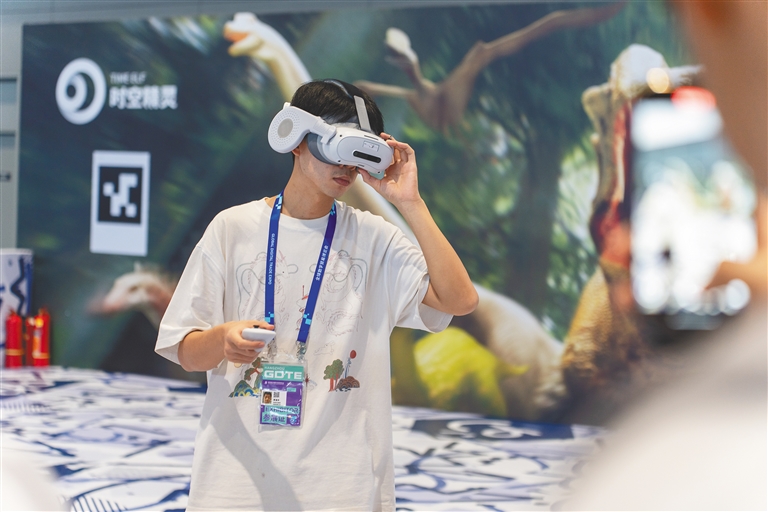
Group 1 - The fourth Global Digital Trade Expo is themed "Seeing Innovative Futures" and will take place from September 25 to 29 in Hangzhou, Zhejiang [3][5] - The expo features over 1,700 participating companies, including more than 70 Fortune Global 500 companies, and will host over 30 key industry, investment, and competition events [5] - The event will showcase cutting-edge technologies and products, including generative AI and multimodal sensory interaction, with over 100 items making their debut in China, Asia, or globally [5] Group 2 - Hangzhou Shikong Jingling Technology Co., Ltd. has developed a VR immersive experience titled "The Disappearing Jurassic," which has generated hundreds of thousands in revenue since its launch [3][5] - Hangzhou Tai Xi Intelligent Technology Co., Ltd. has received market recognition for its products, which are popular domestically and have attracted orders from countries in Europe, America, and Japan [4][5] - The expo will also feature various innovative products, such as smart glasses with teleprompters and robotic dogs, highlighting the advancements in the digital trade sector [5]

中金 | AI“探电”(十二):Rubin或推动微通道液冷技术应用,液冷通胀逻辑再强化
中金点睛· 2025-09-24 23:56
Core Viewpoint - The article discusses the potential of microchannel liquid cooling technology in response to increasing power demands from next-generation chips like Nvidia's Rubin, which may exceed 2000W, necessitating a shift from traditional cooling methods to more efficient solutions like microchannel water cooling plates [2][6][27]. Group 1: Microchannel Liquid Cooling Technology - Microchannel cooling plates are expected to enhance cooling efficiency significantly compared to traditional cooling solutions, offering advantages such as lower thermal resistance, larger heat exchange area, and higher flow rates [14][16]. - The manufacturing of microchannel cooling plates presents higher barriers due to the need for advanced production techniques like etching and 3D printing, which increases costs and requires improved system cleanliness and pump capabilities [16][27]. - The transition to microchannel cooling technology may reshape the liquid cooling supply chain, providing opportunities for domestic manufacturers to enter the market [17][24]. Group 2: Market Dynamics and Opportunities - The current market for microchannel liquid cooling involves three main types of companies: startups specializing in microchannel technology, traditional cooling solution manufacturers, and companies focused on cover plates [18][23]. - Startups like Mikros Technologies and JetCool are collaborating with major electronic manufacturing services to enhance their technology's market adoption, showcasing the potential for high thermal management performance [18][23]. - The shift to microchannel technology may create opportunities for domestic suppliers, particularly those with existing capabilities in related manufacturing processes, to meet the evolving demands of the cooling solutions market [24][25].


Stitch Fix(SFIX) - 2025 Q4 - Earnings Call Transcript
2025-09-24 22:02
Financial Data and Key Metrics Changes - For fiscal year 2025, net revenue was $1.27 billion, down 3.7% year over year, but revenue for the second half of the year grew 2.5% [20][21] - Q4 net revenue was $311.2 million, representing a 4.4% year-over-year increase on an adjusted basis [21] - Adjusted EBITDA for the year was $49.1 million, or a 3.9% margin, up 170 basis points compared to fiscal year 2024 [21] - Gross margin for fiscal year 2025 was 44.4%, the highest since fiscal year 2021, driven by transportation leverage and operational efficiencies [20][21] Business Line Data and Key Metrics Changes - Both women's and men's business lines accelerated revenue growth in Q4, with men's business achieving double-digit growth [7][31] - Average order value (AOV) grew 12% year over year, marking the eighth consecutive quarter of AOV growth [6][21] - Revenue per active client increased by 3% year over year to $549, demonstrating high engagement from retained clients [23] Market Data and Key Metrics Changes - The company gained market share in the U.S. apparel market during Q4, outperforming the overall market growth [5][37] - Active clients totaled 2.3 million, down 7.9% year over year, but the year-over-year comp improved for the fifth consecutive quarter [22][23] Company Strategy and Development Direction - The company is focused on enhancing client experience through investments in generative AI and new features like AI style assistant and Stylist Connect [10][12] - Plans for fiscal year 2026 include creating more dynamic client engagement, deepening client-stylist relationships, and strengthening the product assortment [9][15] - The company aims to return to full-year revenue growth and improve active client growth rates while maintaining disciplined growth investments [15][25] Management's Comments on Operating Environment and Future Outlook - Management expressed confidence in the company's ability to navigate the current macro environment and seize strategic opportunities for growth [27][48] - The company anticipates total revenue for fiscal year 2026 to be between $1.28 billion and $1.33 billion, with adjusted EBITDA expected between $30 million and $45 million [25][26] - Management highlighted the importance of personalized service in gaining market share from competitors who fail to meet consumer expectations [37][47] Other Important Information - The company achieved its highest contribution margin in the last decade and completed the year with positive free cash flow and no debt [9][21] - The company has added over 50 new brands since the start of fiscal year 2025, enhancing its product assortment [15] Q&A Session Summary Question: Where is the most growth coming from, and how are tariffs impacting AOV? - Management noted that growth is driven by both women's and men's business lines, particularly in non-apparel categories and established brands, with no impact from tariffs on AOV [31][33] Question: How is the company planning for the holiday season? - Management emphasized a focus on flexibility and improved assortment to drive promotions and gifting opportunities during the holiday season [39][40]

Stitch Fix(SFIX) - 2025 Q4 - Earnings Call Transcript
2025-09-24 22:00
Financial Data and Key Metrics Changes - For Fiscal Year 2025, net revenue was $1.27 billion, down 3.7% year over year, but revenue for the second half of the year grew 2.5% [19] - Q4 net revenue was $311.2 million, representing a 4.4% year-over-year increase on an adjusted basis [20] - Adjusted EBITDA for FY25 was $49.1 million, or a 3.9% margin, up 170 basis points compared to FY24 [20] - Gross margin for FY25 was 44.4%, the highest annual gross margin since FY21, driven by transportation leverage and operational efficiencies [19][20] - Active clients at the end of Q4 were 2.3 million, down 7.9% year over year [20] Business Line Data and Key Metrics Changes - Both women's and men's lines accelerated revenue growth in Q4, with men's business delivering double-digit revenue growth [6][29] - Average order value (AOV) grew 12% year over year, marking the eighth consecutive quarter of AOV growth [6][20] - The average revenue per active client increased by 3% year over year to $549, indicating higher engagement from retained clients [21] Market Data and Key Metrics Changes - The company gained market share in the U.S. apparel market during Q4, outperforming the overall market growth [5][32] - Demand for footwear in the women's business grew over 35%, with strong performance in denim and athleisure categories [29] Company Strategy and Development Direction - The company is focused on enhancing client experience through investments in generative AI and new features like AI style assistant and Stylist Connect [10][12] - Plans for FY26 include a return to full-year revenue growth and continued improvement in active client growth rates [14][24] - The company aims to deepen client-stylist relationships and strengthen its assortment by adding new brands and leveraging AI in private brand development [13][14] Management's Comments on Operating Environment and Future Outlook - Management expressed confidence in navigating the current macro environment while focusing on sustainable, profitable growth [26] - The company anticipates a challenging holiday season but believes its differentiated business model will allow it to gain market share [32][35] - Management highlighted the importance of client-centric service as a competitive advantage in the retail space [16][41] Other Important Information - The company achieved its highest contribution margin in the last decade and completed FY25 with positive free cash flow and no debt [9][20] - Advertising expenses were 9.5% of revenue in Q4, reflecting a disciplined approach to marketing investments [23] Q&A Session Summary Question: Where is the most growth coming from, and how are tariffs impacting AOV? - Management noted that both women's and men's businesses saw accelerated revenue growth, driven by expansion into non-apparel categories and established brands [28] - Tariffs did not impact the improvement in AUR or AOV, thanks to proactive measures taken by the company [30] Question: How does the company plan for the holiday season amidst a volatile outlook? - The company plans to build on last year's holiday success by enhancing flexibility in its offerings and improving its assortment [34] - Management is confident in its ability to gain market share during the holiday season due to its differentiated business model [35]
复旦大学窦德景解读中国AI发展:加强场景应用引导 在数据可信领域强化竞争力
Shang Hai Zheng Quan Bao· 2025-09-24 19:46
Core Insights - The discussion emphasizes the necessity for AI technology to be rooted in specific application scenarios to achieve breakthroughs in China [4][8] - The importance of high-quality data and its role in enhancing AI model value is highlighted, along with the challenges of data quality and cost [6][7] Group 1: AI Development and Application - The speaker, a prominent figure in AI, has a rich background in both academia and industry, having published over 250 papers and contributed significantly to AI advancements [3] - The evolution of AI technology is marked by key milestones, such as AlexNet in 2012 and ChatGPT in 2022, which demonstrate the deep integration of technology and application scenarios [4][8] - The speaker advocates for a focus on practical problem-solving in AI, emphasizing that the technology's value must address real-world issues [4][5] Group 2: Key Elements for AI Success - The three essential elements for AI are computing power, algorithms, and data, and their collaborative development is crucial for technological breakthroughs [5] - The concept of "leveraging strengths to compensate for weaknesses" is introduced, suggesting that in resource-limited conditions, optimizing algorithms and improving data quality are vital [5] - A case study illustrates the importance of data quality, where a team improved an AI model's performance through careful data selection and training, highlighting the high cost of achieving data quality [6][7] Group 3: Future Trends and Opportunities - The speaker identifies the need for China to cultivate talent that understands both technology and application scenarios to enhance AI competitiveness [8] - The potential for AI in China is vast, given its diverse application scenarios and significant market demand across various sectors [8][9] - Future trends in AI are expected to evolve from generative AI to intelligent agents and ultimately to physical AI, which will enable deeper collaboration between robots and humans [9]

瑞银:AI或迎指数级爆发期,年内普及率将突破10%关键阈值
智通财经网· 2025-09-24 09:39
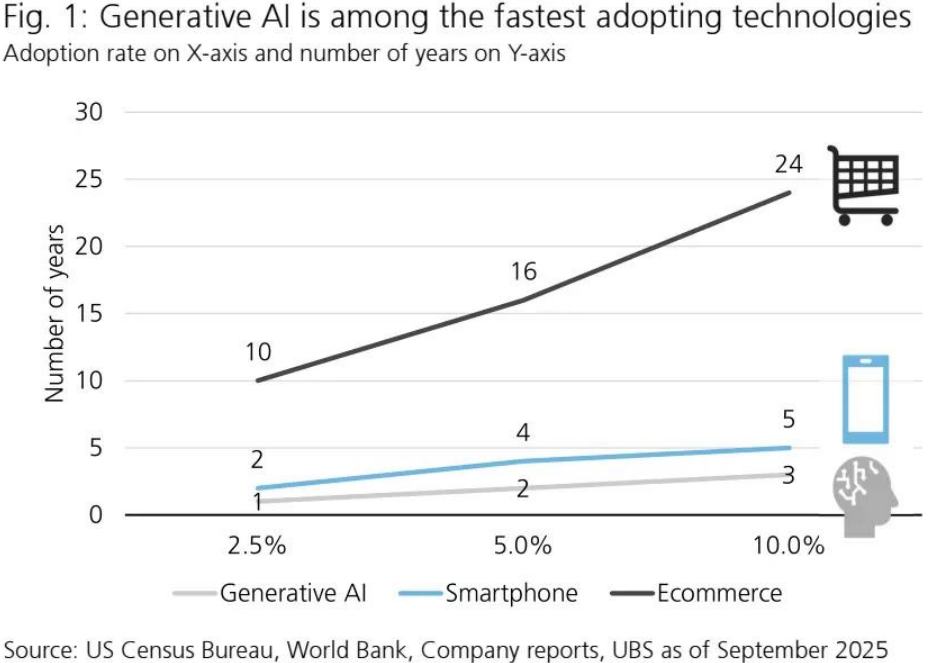
智通财经APP获悉,根据瑞银最新研报,该行将生成式AI的渗透曲线与电商、智能手机两大技术浪潮并置,给出一条陡峭得惊人的轨 迹:只需三年,美国企业层面的AI采用率就能从0爬升至10%,而智能手机花了五年,电商更用了漫长的二十四年。 报告核心数据显示,AI普及率已从2025年第二季度的9.2%提升至第三季度的9.7%,并预期年底突破10%关键阈值——这一速度远超智 能手机(达10%耗时5年)与电子商务(耗时24年)的历史轨迹。瑞银据此断言,10%的心理关口将在年内被正式突破,标志行业由"早期尝 鲜"迈向"指数扩散"的第二篇章。 图1 为了验证这一拐点判断,策略师们把智能手机2005—2015年的渗透率复刻到同一坐标系:五年前10%的基底期后,生态裂变——应用 商店、大屏化、安卓低价机——把渗透率五年间猛推至68%,完成"S曲线"最陡峭的中段。 图2 瑞银认为,生成式AI正站在类似的"第五年",触发因子换成了推理模型突破、企业级及中小企业资本开支承诺、创投资金连续五个季 度正流入。一旦三大条件同时点火,AI便有望复制手机"10%—68%"的火箭段,而电商因缺乏硬件杠杆与网络效应,曲线平缓,不足 为训。 该报告同时把 ...
中国公众对生成式AI的看法与使用行为
3 6 Ke· 2025-09-24 08:31
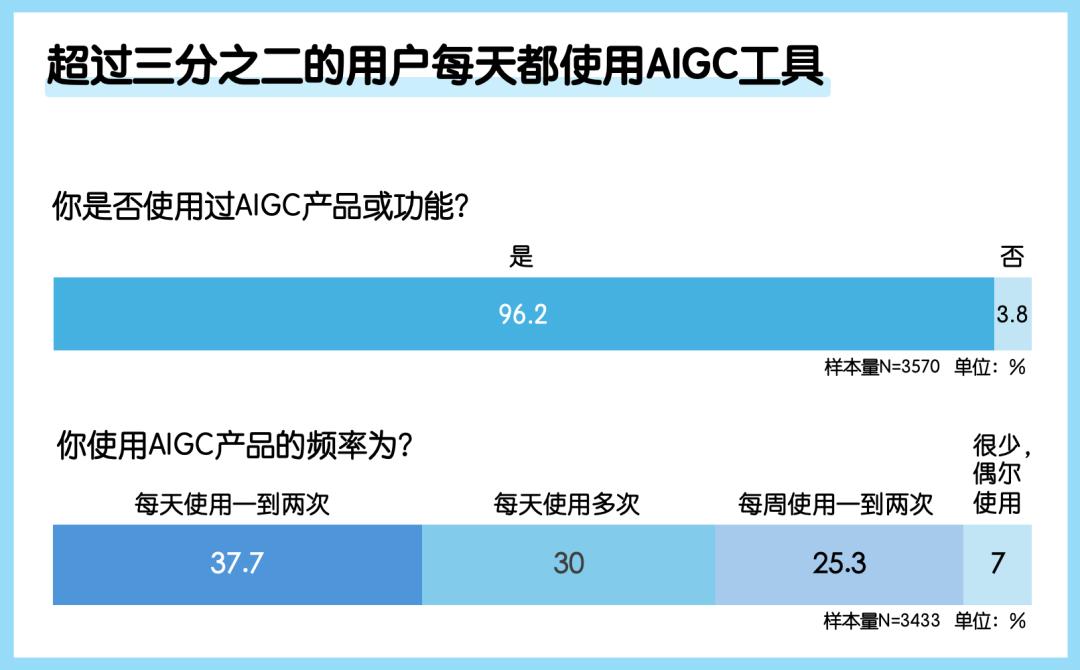
Core Insights - Generative AI has nearly achieved full penetration among Chinese adults, significantly integrating into daily work and study routines [1][4] - There exists a complex mindset among the public, characterized by high expectations for technological progress alongside deep anxieties regarding employment prospects, information authenticity, and social equity [1][3] Usage Patterns - A staggering 96.2% of respondents reported having used generative AI products, with 67.7% using them daily [1][5] - The primary use cases for AI are driven by practical needs in work and education, with text processing (72%) and information retrieval (70.9%) being the most common applications [2][24] - Local AI products dominate the market, with high usage rates for domestic applications like Doubao, DeepSeek, and Tencent Yuanbao [2][15] Payment Willingness - Approximately 75% of users are either already paying (16.1%) or willing to pay for quality services (59%) [2][19] - Among paid users, 55.2% spend less than 100 RMB monthly, indicating a sensitivity to pricing [21][22] Public Sentiment - There is a notable anxiety regarding the impact of AI on career prospects, with 77% concerned about skill devaluation and 70% about job replacement [2][29] - The public sentiment towards AI is mixed, with 50.2% feeling "very excited" about its widespread application, while 46.3% express both excitement and concern [2][39] Risks and Concerns - The primary concerns regarding generative AI include the spread of misinformation (60.4%), job displacement (59.7%), and privacy breaches (46.7%) [3][46] - High-risk applications, particularly in healthcare and human resource management, raise significant public apprehension [49][50] Demographic Insights - Younger individuals exhibit higher usage rates and greater anxiety regarding AI's impact on their careers [8][30] - Higher education levels correlate with increased frequency of AI usage, with 81.8% of respondents holding a graduate degree using AI daily [11] Future Outlook - The public generally holds a cautiously optimistic view of AI's future impact, with 71.9% believing it will have a predominantly positive effect on society [42][46] - There is a strong inclination towards lifelong learning as a proactive strategy to mitigate career-related anxieties stemming from AI advancements [35][37]