
数字金融

Search documents
建行济南市中支行:暖心服务解难题,助力老人守护养老钱
Qi Lu Wan Bao· 2025-06-29 10:06
Core Insights - The article highlights a case where an elderly customer, Mr. Li, faced an unexpected automatic deduction from his bank account due to an insurance policy he did not remember purchasing, showcasing the challenges older individuals face with digital financial services [1][2] Group 1: Customer Experience - Mr. Li discovered an automatic deduction for "Ant Financial Insurance" while checking his bank account, leading to confusion and concern [1] - The bank staff provided attentive assistance, helping Mr. Li understand the situation and guiding him through the process of contacting his family for clarification [1] - After confirming the misunderstanding, Mr. Li's daughter authorized the bank to assist with the refund process, demonstrating effective family involvement in resolving the issue [1] Group 2: Service Response - The bank manager patiently guided Mr. Li in submitting a refund request through the Alipay customer service, ensuring compliance with operational protocols [1] - The bank also took the initiative to educate Mr. Li on using mobile banking services, addressing his concerns about account management and security [1][2] - The bank's commitment to understanding and addressing the unique needs of elderly customers is emphasized, indicating a proactive approach to enhancing financial security for this demographic [2]
金融精准支持“三夏”生产
Jing Ji Ri Bao· 2025-06-28 21:56
Core Viewpoint - The financial institutions are actively supporting the summer grain harvest by providing specialized financial services to ensure sufficient credit supply and facilitate the entire agricultural production chain [1][2][3]. Financial Support for Grain Harvest - Banks are optimizing financial supply to meet the concentrated funding needs of grain enterprises, ensuring that credit is available for grain storage and agricultural inputs [2]. - Major state-owned commercial banks are taking the lead in focusing on grain-producing areas, assessing funding needs, and arranging special credit plans [2]. - In Jiangsu, as of the end of May, the balance of inclusive agricultural loans reached 12.6 trillion yuan, with loans in key grain areas amounting to 454.345 billion yuan [2]. Agricultural Loan Initiatives - In Dong'a County, the Agricultural Bank's financial service team is actively engaging with farmers to understand their funding needs, resulting in a total of 72.62 million yuan in grain purchase loans granted to 90 households [3]. - The Agricultural Bank of Shandong Province reported a county loan balance of 573.3 billion yuan, an increase of 25.3 billion yuan since the beginning of the year [3]. Mechanization and Financial Challenges - Over 800,000 combine harvesters were deployed nationwide during the summer harvest, with a mechanization rate exceeding 75% [4]. - Despite the advancements, agricultural machinery dealers face financing difficulties due to long production cycles and slow downstream payments [4]. Innovative Financial Solutions - The Bank of China in Zhumadian has introduced an ecological chain service for agricultural machinery, providing comprehensive credit of 5 million yuan to address funding challenges [5]. - As of May 31, the bank has issued 1.25 billion yuan in agricultural machinery loans to support various aspects of the industry [6]. Digital Financial Services - Digital financial services are playing a crucial role in the summer harvest, with banks simplifying loan approval processes and ensuring rapid fund disbursement [6]. - Large state-owned banks are utilizing IoT and big data to offer online agricultural services, enhancing efficiency in serving farmers [6]. Future Directions for Agricultural Finance - There is a need to advance the digital transformation of agricultural credit services, utilizing big data to create agricultural credit profiles [7]. - Improving rural digital infrastructure and enhancing the adoption of digital financial services are essential for better support of agricultural financing [7].
欧阳卫民:金融业发展应与企业同舟共济、同甘共苦
2 1 Shi Ji Jing Ji Bao Dao· 2025-06-28 10:21
Core Viewpoint - The development of the financial industry should not rely solely on traditional lending models but should instead focus on innovative financial solutions that support the growth of private enterprises and the real economy [1][2]. Group 1: Legislative Framework - The "Private Economy Promotion Law," effective from May 20, aims to address the financing challenges faced by private enterprises, providing a robust legal framework for their development [1][2]. - This law includes a dedicated chapter on "Investment and Financing Promotion," which is crucial for the growth of the private economy [2]. Group 2: Financial Innovation and Digital Economy - The rapid development of digital finance, leveraging technologies like AI and big data, offers new opportunities to alleviate financing difficulties for private and innovative enterprises [1][2]. - The core industries of the digital economy account for approximately 10% of GDP, with over 4,500 AI-related companies and a core industry scale nearing 600 billion RMB [2]. Group 3: Banking Practices and Credit Expansion - Current banking practices predominantly rely on collateralized loans, which do not necessarily equate to credit expansion but rather enhance asset liquidity [3][4]. - There is a pressing need to develop credit loans to support economic growth, with Guangdong positioned to lead in this area due to its history of financial innovation [3][4]. Group 4: Structural Financial Service Challenges - Small and micro enterprises heavily depend on bank loans, with limited access to capital markets and direct financing, indicating a need for structural changes in financial services [4]. - The financial asset structure is overly conservative, with a majority being bank assets, necessitating a shift to allow banks and their investment subsidiaries to engage in investment activities [4].
强脑科技韩璧丞出任香港特首顾问
Hua Er Jie Jian Wen· 2025-06-28 04:12
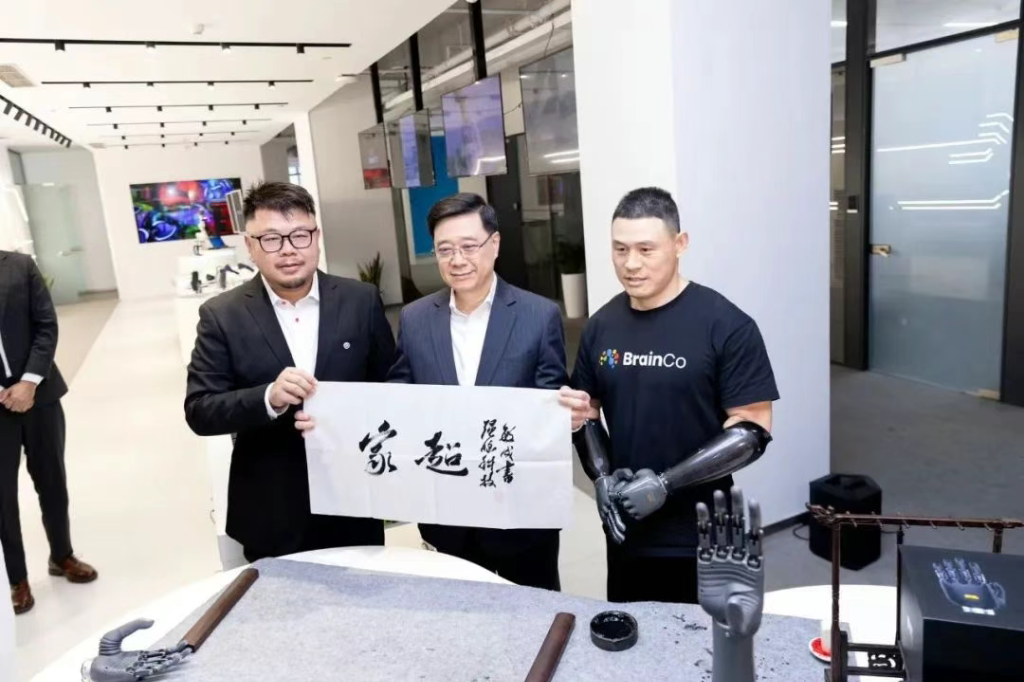
Group 1 - The Hong Kong government announced the new members of the Chief Executive's advisory group, which includes 34 members, highlighting a focus on innovation and entrepreneurship [2] - Han Bicheng, founder and CEO of BrainCo, was appointed as an advisor in the "Innovation and Entrepreneurship" sector, marking one of the three new additions to the group [2] - The advisory group, established in 2023, consists of prominent leaders and experts from various fields, providing strategic insights for Hong Kong's development [2] Group 2 - Han Bicheng's company, BrainCo, founded in 2015, specializes in non-invasive brain-computer interface technology and has become the first unicorn in this field [2] - Other notable members of the advisory group include Alibaba's chairman, Michael Spence, a Nobel laureate, and Professor Yip Yuk-ling, a renowned neuroscientist [3] - The inclusion of experts like Zhu Min, a former IMF vice president, reflects the government's commitment to enhancing Hong Kong's financial sector and integrating it with mainland markets [3] Group 3 - The new advisory group demonstrates the government's emphasis on technological innovation and its determination to position Hong Kong as an international innovation and technology hub [4] - Members will provide strategic advice on enhancing Hong Kong's competitiveness during its economic transformation and aligning with national strategies [4]


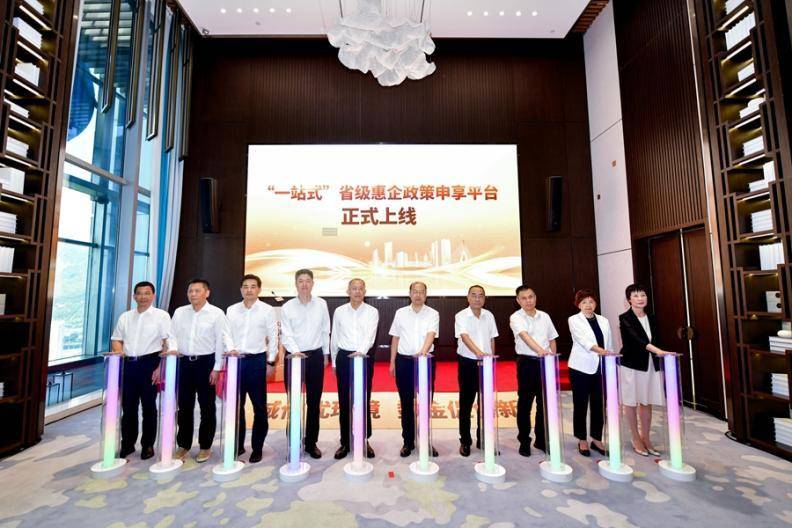
“一站式”省级惠企政策申享平台上线 助力政策红利精准滴灌实体经济
Sou Hu Cai Jing· 2025-06-28 03:01
Group 1 - The event "Integrity Promotes Environment, Digital Finance Drives Innovation" was held in Fuzhou, co-hosted by the Fujian Provincial Integrity Promotion Association and Fujian Financial Investment Co., Ltd. [1] - The purpose of the event is to leverage credit services to support high-quality enterprise development, creating a precise matching platform for "credit empowerment + financial services" [3][4] - The launch of the "one-stop" provincial policy application platform aims to reduce financing costs and optimize the business environment, injecting strong momentum into the implementation of the private economy strategy in Fujian [3][4] Group 2 - The event featured speeches from key officials, including the Secretary of the Fujian Provincial Integrity Promotion Association and the Deputy General Manager of Fujian Financial Investment [1][3] - The "one-stop" provincial policy application platform integrates policy application and financial service functions, enhancing service efficiency for enterprises [3][4] - Fujian Financial Investment is committed to exploring new models and paths for digital financial services to the real economy, focusing on the continuous development of the "Gold Service Cloud" platform [4]
数字金融“引擎”重塑金融业生态 监管如何应对挑战
Zheng Quan Ri Bao Wang· 2025-06-28 02:44
Group 1: Market Overview - The Chinese digital financial market is rapidly developing and is the largest in the world, with a projected size of $3.2 trillion in 2024, contributing significantly to the global digital finance market, which is expected to exceed $4.5 trillion [1] - Digital finance is enhancing the quality of financial services through technological innovation and model transformation, positioning China as a global leader in this sector [2] Group 2: Empowering Various Financial Sectors - Digital finance serves as a foundational engine for the development of technology finance, green finance, inclusive finance, and pension finance, improving service efficiency and accessibility [3] - Digital technology enhances the efficiency of inclusive finance by improving service availability, quality, and reducing costs [3] - The integration of personal carbon accounts into credit evaluation systems is being explored to drive social green transformation, potentially offering better loan terms for customers with low-carbon lifestyles [3] Group 3: Pension Finance and Investment Stability - Digital technology aids in stabilizing investments and managing risks in pension finance, focusing on asset preservation and providing convenient services [4] - The future of digital finance and technology finance requires collaboration across various sectors, including building a high-quality data market and enhancing regulatory technology capabilities [4] Group 4: Regulatory Challenges - The rapid development of digital finance presents new challenges for regulators, who must balance encouraging innovation while maintaining financial risk controls [5] - The introduction of the Hong Kong Stablecoin Regulation aims to address risks associated with stablecoins while promoting their innovative value [6] - Effective risk management in the stablecoin market requires a comprehensive and segmented approach to regulation, including strict entry requirements for issuers and monitoring of transaction risks [6]
2025好品金融┃作答金融“五篇大文章” 齐鲁银行交实干新卷
Qi Lu Wan Bao· 2025-06-27 14:51
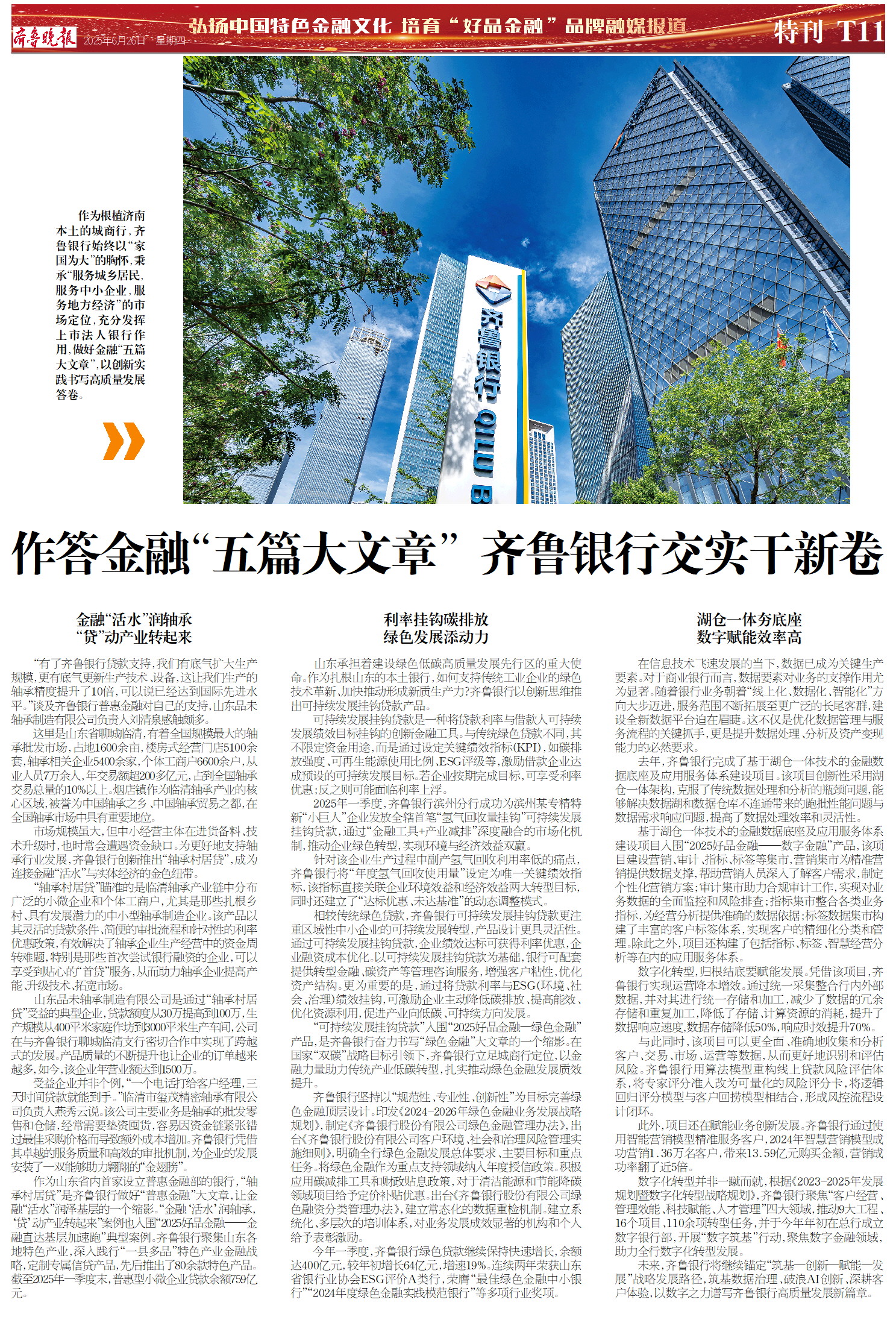
Core Insights - The recent announcement of the "2025 Good Financial Products" list highlights Qilu Bank's innovative financial solutions, with three of its cases and products recognized for their contributions to sustainable development, green finance, and digital finance [1] Group 1: Financial Products and Innovations - Qilu Bank's "Bearing Village Loan" targets small and micro enterprises in the bearing industry, providing flexible loan conditions and favorable interest rates to address funding gaps [4][5] - The "Sustainable Development Linked Loan" product ties loan interest rates to borrowers' sustainability performance, encouraging companies to meet predefined sustainability goals [6][7] - As of Q1 2025, Qilu Bank's outstanding loans for small and micro enterprises reached 759 billion yuan, reflecting its commitment to inclusive finance [5] Group 2: Industry Impact - The bearing industry in Linqing, Shandong, is significant, with over 5,400 related enterprises and an annual transaction volume exceeding 20 billion yuan, accounting for over 10% of the national bearing market [3] - Qilu Bank's financial support has enabled companies like Shandong Pinwei Bearing Manufacturing Co., Ltd. to expand production and improve technology, achieving a tenfold increase in product precision [3][4] Group 3: Digital Transformation - Qilu Bank has implemented a financial data foundation and application service system based on lake-warehouse integration technology, enhancing data processing efficiency and flexibility [9][10] - The bank's digital transformation strategy includes a focus on customer management, operational efficiency, and technology empowerment, with plans for over 110 transformation tasks [10][11] - The bank's digital initiatives have led to a 50% reduction in data storage and a 70% improvement in response time, significantly enhancing operational efficiency [10]

第14届中国(广州)国际金融交易·博览会举行
Guang Zhou Ri Bao· 2025-06-27 01:33
据悉,本届金交会以"金融聚力扩内需 驱动产业新格局"为主题,于6月26日至28日在中国进出口商品交 易会展馆举办,展览规模2万平方米,共设置金融党建、金融交流合作、银行保险、资本市场、产业金 融、数字金融、地方金融及金融文化等8个展区,期间还举办多场专题会议及品牌活动。 6月26日,第14届中国(广州)国际金融交易·博览会在广州开幕。广州市市长孙志洋出席并致辞,副市 长赖志鸿主持。 孙志洋在致辞中表示,广州是金融业发展沃土,具有厚实的产业基础、活跃的科创加持、广阔的市场支 撑、一流的服务保障。广州将以共建粤港澳大湾区国际金融枢纽为引领,以建设金融强市为目标,认真 做好科技金融、绿色金融、普惠金融、养老金融、数字金融"五篇大文章",着力提升金融发展能级。将 加快建设"12218"现代化产业体系,推进中国企业"走出去"综合服务基地建设,为金融业高质量发展提 供更广阔空间。诚邀与会嘉宾朋友走进广州,体验广州,感受广州,为广州金融高质量发展贡献更 多"金"点子,合力书写城企双向奔赴、产融深度对接的"金"彩篇章。广州将一如既往为全球投资者、创 新创业者提供最优质高效的服务。 活动中,与会领导和嘉宾为第十三届金融图书"金 ...
从普及到普惠 数字人民币多点开花 提升民生温度
Nan Fang Du Shi Bao· 2025-06-26 23:12
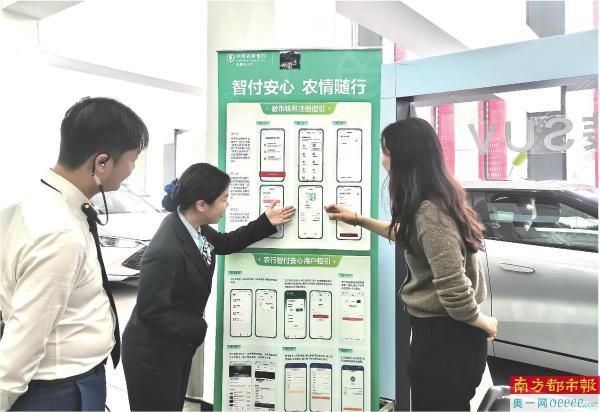
Core Viewpoint - The recent policy document issued by the Central Committee and the State Council emphasizes the innovation and expansion of digital RMB applications, particularly in cross-border finance, signaling a significant boost for the digital currency and the financial reforms in the Guangdong-Hong Kong-Macao Greater Bay Area [2] Group 1: Digital RMB Development - Shenzhen has established a comprehensive digital RMB ecosystem over two years, with Agricultural Bank of China (ABC) Shenzhen Branch leading the efforts in promoting digital economy development [3] - As of May 2025, ABC Shenzhen Branch has integrated digital RMB into over 500,000 acceptance scenarios, enhancing its use in daily life [3] Group 2: Innovative Applications - ABC Shenzhen Branch has pioneered the "digital RMB + smart contract" model for housing fund withdrawals, improving efficiency and expanding application scenarios [4] - The "Smart Payment Assurance" platform was launched to regulate prepaid funds, addressing consumer concerns and ensuring fund security, with over 15 billion RMB regulated for nearly 930,000 consumers by February 2025 [5] Group 3: Consumer Engagement and Promotion - ABC Shenzhen Branch has organized educational activities and promotional events to enhance public awareness and usage of digital RMB, with significant participation in various campaigns [6] - The bank has distributed nearly 1.5 billion RMB in subsidies to citizens through red envelope initiatives, effectively boosting engagement and adoption of digital RMB in various sectors [6] Group 4: Cross-Border Transactions - The bank has upgraded its digital RMB acceptance capabilities for foreign visitors, facilitating seamless transactions and addressing currency exchange concerns [7] - A successful pilot of cross-border transactions using the central bank's digital currency bridge was completed, optimizing payment processes and reducing costs for international trade [10] Group 5: Future Outlook - ABC Shenzhen Branch aims to continue innovating in the digital RMB space, focusing on scene innovation and application promotion to enhance financial services and contribute to the high-quality development of digital finance in Shenzhen [11]


21评论丨香港稳定币条例更具包容性与国际性
Sou Hu Cai Jing· 2025-06-26 22:12
刘英(中国人民大学重阳金融研究院研究员) 伴随稳定币需求的快速增长和供给的增多,加密货币的规模或加速扩围。中国香港稳定币条例的出台, 能有效助推稳定币在香港的发展,提升香港作为国际金融中心特别是国际科技金融创新中心的地位。 相比美国《GENIUS》法案霸道式监管,香港的稳定币条例则并未限定稳定币的储备资产一定要是港 元,甚至可以对应资产和算法等,牌照申请方需要2500万港元的储备资产对应。相比《GENIUS》法 案,香港稳定币条例更具包容性、创新性、国际性,也有助于香港发展稳定币市场,巩固香港国际金融 中心地位。 由于稳定币在跨境支付领域的低成本、高效率等特征,无论是传统的网上销售公司还是跨境支付卡公 司,抑或是国际化的银行金融机构,都在加速进入稳定币市场并开展全球布局,京东就正在全球申请稳 定币牌照,未来公众或可用稳定币来购物。作为货物贸易第一大国的中国,发展稳定币具有巨大的潜 力。 稳定币通过将去中心化的加密货币与中心化的现代金融连接起来,发挥着在数字经济、数字贸易、数字 金融领域的稳定器作用,不受金融霸权左右地健康发展是稳定币发展的初心。不仅美国和中国香港在推 出稳定币法案,欧盟、英国、新加坡、日本等国 ...