新型电力系统

Search documents
海博思创与大同市签约,发力智能制造与独立储能电站
中关村储能产业技术联盟· 2026-01-28 08:25
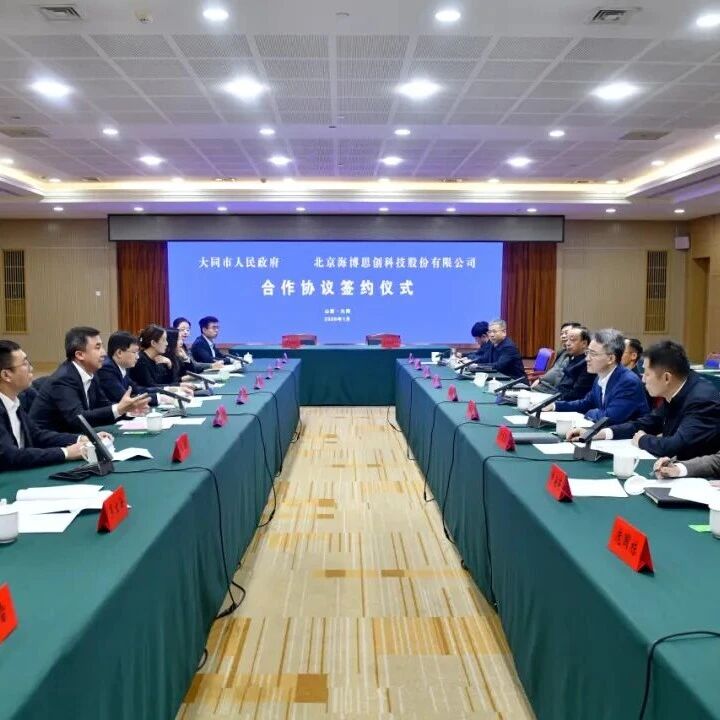
山西是国家重要的综合能源基地, 已构建起涵盖现货、调频、备用等多层次的电力市场机制, 完善的市场体系为储能产业发展营造了良好环境。大同作为山西省能源转型的前沿阵地,历史底 蕴深厚,具备政策支撑有力、产业基础扎实的发展优势,在新能源储能领域具有独特的资源禀赋 和发展潜力。 自2023年海博思创储能装备产业园落户大同以来,双方合作持续深化,结出累累硕果。 海博思 创大同智能制造基地2025年实现产值跨越式增长,二期建设稳步推进,相关储能电站项目也取 得阶段性重要进展 ,充分体现"大同速度"与"大同服务"的高效与温度。 展望未来,海博思创将充分发挥作为储能行业龙头企业的带动作用,推动更多优质项目、先进技 术与创新模式落地大同。海博思创将与大同市同频共振,携手构建储能产业生态圈,集聚产业链 上下游优质企业协同发展,全力将大同打造成储能产业发展的高地。 文 | 海博思创 1月26日,北京 海博思创 科技股份有限公司与 大同市政府 正式签署合作协 议。双方将围绕 智能制造、独立储能电站 等重点领域,开展全方位、深层次的 合作,共同推动大同市新能源产业结构优化与提升,助力区域能源转型与可持 续发展。 签约仪 式上,大同市委 ...

中恒电气:积极关注不同应用场景的市场机会 继续聚焦绿色ICT基础设施等领域
Zheng Quan Ri Bao Wang· 2026-01-27 10:15
Group 1 - The company, Zhongheng Electric (002364), is actively exploring market opportunities in various application scenarios [1] - The company continues to focus on key business areas such as green ICT infrastructure, new power systems, low-carbon transportation, and integrated energy services [1]

吉林电力用电负荷与用电量齐创历史新高
Zhong Guo Dian Li Bao· 2026-01-27 08:30
Group 1 - The recent cold wave in Jilin Province has led to extremely low temperatures, with some areas experiencing temperatures as low as -40 degrees Celsius, resulting in a significant increase in electricity demand and load [1] - On January 21, the maximum electricity load in Jilin reached 16.021 million kilowatts, a year-on-year increase of 19.8%, while on January 19, the electricity consumption hit 37.5296 billion kilowatt-hours, up 29.5% year-on-year, both setting historical records [1] - The State Grid Jilin Electric Power Company has initiated emergency responses and implemented measures to ensure electricity supply, including load forecasting and market electricity purchases to support peak demand [1] Group 2 - Jilin Electric Power is utilizing new energy storage resources and electric heating facilities to enhance supply and heat assurance, with maximum discharge power from storage reaching 130,000 kilowatts and electric boiler load at 1.38 million kilowatts [2] - The company is closely monitoring heavy-load equipment to prevent overload and voltage issues, while increasing inspection frequency of oil and gas equipment due to the impact of low temperatures [2] - Jilin Electric Power is improving emergency response plans and focusing on equipment operation under adverse weather conditions, including snow and ice, to ensure reliable performance during the cold wave [2]
能源强国建设加速推进
Ren Min Ri Bao· 2026-01-26 21:47
TORIAN 4 (80.6 TV -1092 68,5 % it 1 (85.4- 0 11:3 在 T H il al star 14 45 . B al up STARTS IT K n 134 下 s L 0 2 10 A t 11 - 2 r 11 4168 STANDARDA . . i 3 2 国家能源局日前发布数据显示,2025年全社会用电量历史性突破10万亿千瓦时。这一数字在全球单一国 家中尚属首次,彰显出中国超大规模经济体的强劲韧性,更折射出中国能源供给体系的升级与新型电力 系统建设的成效。 "持续提高新能源供给比重,推进化石能源安全可靠有序替代,着力构建新型电力系统,建设能源强 国。""十五五"规划建议首次在五年规划中提出建设能源强国。当前,中国能源转型不断加快"逐绿向 新","十五五"时期,将会有更多绿电跨越山海,点亮万家灯火。 ...
山西省新型储能发展指南发布
中关村储能产业技术联盟· 2026-01-26 06:43
Core Viewpoint - The article emphasizes the need for the development of new energy storage in Shanxi Province to transition from "scale construction" to "high-quality development" in order to support the achievement of carbon neutrality goals and promote the healthy development of new energy storage technology and industry [1][14]. Group 1: Opportunities and Challenges in New Energy Storage Development - **Opportunities**: By 2030, Shanxi Province aims to achieve a renewable energy development target of 178 million kilowatts. The rapid growth of renewable energy installations increases the pressure on the power system for peak regulation and supply assurance, making new energy storage a key component in building a new power system and a solid guarantee for achieving carbon neutrality goals [2][15]. - **Challenges**: There are safety risks such as fire hazards due to thermal runaway when constructing new energy storage projects in densely populated areas with concentrated loads and limited renewable energy grid connections. Additionally, large-scale centralized energy storage may lead to limitations in the provincial 500 kV and 220 kV grid structure, resulting in operational restrictions and difficulties in ensuring project profitability [3][16]. Group 2: Energy Storage Capacity Evaluation System - An initial four-level evaluation system for energy storage capacity has been established based on grid carrying capacity, categorized as "Excellent, Good, Medium, and Poor" [4][17]. - **Excellent**: The current grid can accommodate a certain scale of energy storage without operational restrictions [7]. - **Good**: The grid will meet the connection requirements after the commissioning of planned grid projects, but may experience short-term operational restrictions before commissioning [8]. - **Medium**: Energy storage capacity exceeds the current grid carrying capacity, leading to frequent operational restrictions [8]. - **Poor**: Energy storage projects face long-term and high-frequency operational restrictions during peak load periods, impacting grid stability and project profitability [8]. Group 3: Development Recommendations - Based on the energy storage capacity evaluation system, recommendations for energy storage project connections in various districts and counties of Shanxi Province by 2026 have been proposed [5].

马斯克计划未来3年在美建设200GW光伏产能
ZHONGTAI SECURITIES· 2026-01-26 02:25
Investment Rating - The report maintains an "Overweight" rating for the electric equipment sector [5] Core Insights - Elon Musk's companies, SpaceX and Tesla, plan to build a total of 200GW of solar capacity in the U.S. over the next three years, significantly exceeding market expectations [34] - The report highlights the strong growth potential in the lithium battery sector, particularly with the expansion of LMFP production, which is expected to see a 275% year-on-year increase in output by 2025 [17] - The Southern Power Grid Company is set to invest 180 billion yuan in fixed assets in 2026, marking a continuous five-year high, with a focus on new power system construction and strategic emerging industries [25] Summary by Sections Electric Equipment Sector - The report emphasizes the continuous high investment in the electric equipment sector, with a focus on new energy and digital transformation [25] - Key companies to watch include XJ Electric, Pinggao Electric, and China XD Electric, which are expected to benefit from the ongoing investments [25] Lithium Battery Sector - The report notes significant expansions in LMFP production, with companies like Hunan Youneng and Xiamen Tungsten planning substantial increases in capacity [17] - The introduction of favorable policies for equipment updates and financing is expected to stimulate growth in the lithium battery sector [14] Solar Energy Sector - The report tracks the solar industry, noting stable prices for polysilicon and solar cells, while demand remains cautious due to market uncertainties [27][28] - Companies like Junda Co. are actively pursuing funding to enhance their capabilities in space solar energy, aligning with the broader trend of technological advancement in renewable energy [35] Wind Energy Sector - The report highlights upcoming offshore wind power tenders in Turkey and the Netherlands, indicating a growing international focus on wind energy [8] - Domestic wind power installations are projected to maintain high growth rates, with significant opportunities for companies involved in offshore wind projects [8]



2026年内蒙古煤炭产量稳定在12.5亿吨以上
Nei Meng Gu Ri Bao· 2026-01-26 01:44
Core Viewpoint - The Inner Mongolia Energy Bureau aims to implement high-quality energy development by 2026, aligning with the regional economic and social development goals and focusing on energy security, green transition, and technological innovation. Group 1: Energy Planning and Development - The region will develop the "14th Five-Year" energy plan, focusing on the relationship between energy and economic, industrial, and ecological factors, ensuring the plan addresses energy security and green transition [1] - Major projects will be planned and implemented to drive the energy development agenda, with a focus on renewable energy utilization and power market construction [1] Group 2: Energy Supply Assurance - The coal production target is set to exceed 1.25 billion tons annually, with a national supply task of 780 million tons to be completed [2] - New coal power projects will add 5 million kilowatts of capacity, bringing the total installed power capacity to over 330 million kilowatts [2] - Oil and gas production targets are set at 3.35 million tons for crude oil and 31.5 billion cubic meters for natural gas [2] Group 3: Renewable Energy Development - The region aims to add over 30 million kilowatts of new renewable energy capacity, surpassing a total of 200 million kilowatts [3] - Initiatives will be taken to promote green electricity consumption and develop new models for renewable energy integration [3] Group 4: Grid and Storage Capacity Enhancement - The planning for the "14th Five-Year" grid framework will be conducted, with new energy storage technologies being developed to reach a scale of 25 million kilowatts by year-end [3] - Construction of pumped storage projects will be accelerated to establish a national energy storage base [3] Group 5: Energy Sector Reform and Innovation - The energy market mechanism will be optimized to encourage long-term power purchase agreements and enhance trading flexibility [3] - Focus will be placed on technological innovation in new energy systems, hydrogen energy, and green hydrogen production to lead the national market [3]
山西以能源蝶变重塑发展新图景
中国能源报· 2026-01-25 23:34
Core Viewpoint - Shanxi aims to transition from a coal-dominant province to a comprehensive energy powerhouse during the "15th Five-Year Plan" period, focusing on deepening the energy revolution and enhancing energy security and resilience [1][4]. Group 1: Energy Transition Strategy - Shanxi's energy strategy emphasizes the integration of traditional and renewable energy sources, enhancing the resilience of energy supply and security [3][4]. - The province plans to redefine its coal industry, shifting from low-end to high-end production, and from primary fuel to high-value products [6][7]. - The goal is to develop a new energy system that includes clean, low-carbon coal development and diversified utilization [6][10]. Group 2: New Energy System Development - Shanxi is constructing a new energy system characterized by the integration of wind, solar, hydro, and thermal energy, along with energy storage solutions [10][11]. - The focus is on creating a multi-dimensional energy supply network that includes hydrogen and methanol, addressing the intermittency of renewable energy [10][11]. - The province aims to enhance the intelligence of its power systems through the development of smart grids and distributed energy resources [10][11]. Group 3: Technological and Market Innovations - Shanxi's energy transition will be driven by technological innovation, market reform, and open cooperation, establishing itself as a hub for energy technology [13][14]. - The province plans to focus on breakthroughs in traditional coal mining technologies and the development of new energy and storage technologies [14][15]. - There is an emphasis on creating a market mechanism that supports the new energy system and enhances Shanxi's influence in national energy markets [14][15]. Group 4: Industrial Synergy and Economic Impact - The energy transition is expected to stimulate the development of advanced manufacturing and equipment sectors, creating significant market opportunities [15]. - Shanxi aims to leverage its energy advantages to attract high-end manufacturing and develop green finance and certification services [14][15]. - The overall goal is to transform from being a mere energy supplier to a leader in energy technology and solutions, contributing to national energy security and innovation [15].
人民日报丨中国咋成了外媒眼中的“全球首个重要‘电力国家’”?
国家能源局· 2026-01-25 13:16
Core Viewpoint - China is recognized as the world's first significant "power nation," with its economic growth increasingly reliant on electricity rather than traditional oil resources [2][3]. Group 1: Electricity Supply and Demand - China possesses the largest electricity supply system globally, with the most complex transmission and transformation projects, providing "electricity freedom" to over 1.4 billion people [3]. - By 2025, China's electricity consumption is projected to exceed 10 trillion kilowatt-hours, nearly doubling in a decade, and is more than twice that of the United States, surpassing the total of the EU, Russia, India, and Japan combined [3]. - The rapid development of artificial intelligence and related services has led to a year-on-year increase of over 30% in electricity consumption [3]. - From 2024 to 2030, China's data center electricity consumption is expected to grow at an annual rate of approximately 20%, significantly outpacing overall electricity consumption growth [3]. Group 2: Historical Context and Growth - Over 70 years ago, China's per capita electricity consumption was only 8 kilowatt-hours, and by 2025, it is expected to reach over 7,300 kilowatt-hours, representing a growth of more than 900 times [4]. - The achievement of "electricity freedom" for over 1.4 billion people is attributed to the country's institutional advantages in mobilizing resources for large-scale projects [5]. Group 3: Infrastructure and Investment - China has developed a robust infrastructure with 46 ultra-high voltage projects facilitating electricity transmission from the west to the east and from the north to the south, with four new lines expected to be operational by 2025 [7]. - The country is advancing in green energy initiatives, including large-scale hydropower, advanced nuclear power, and heavy-duty gas turbines, enhancing energy security and green development capabilities [7]. - The establishment of a unified national electricity market has improved resource optimization and integration, allowing for efficient electricity distribution across regions [7]. Group 4: Economic Impact - Sustained high growth in electricity investment has injected significant momentum into China's economic transition towards higher quality and efficiency [8].
十五五电网投资超万亿,锂电迎系统级增量
高工锂电· 2026-01-25 11:41
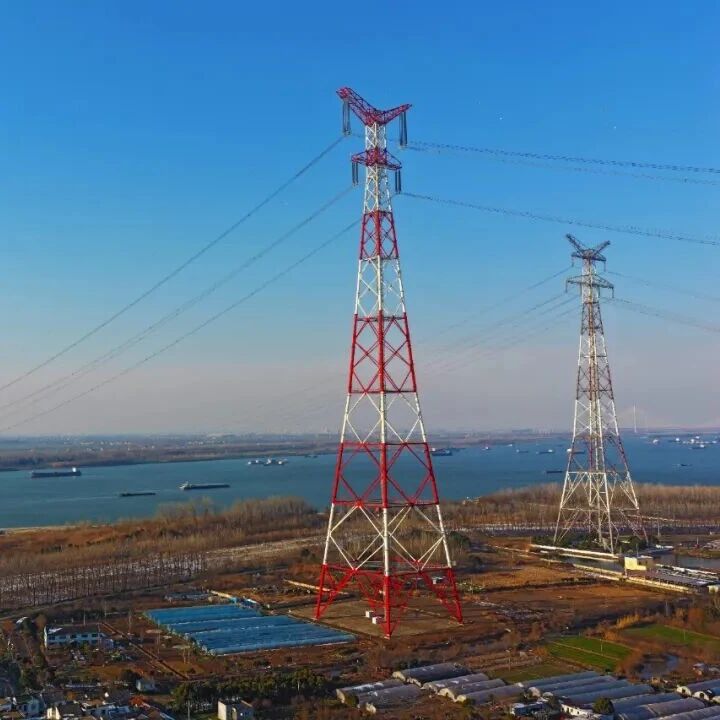
Core Viewpoint - The article discusses the significant expansion of China's power grid, which is expected to reshape the lithium battery demand structure due to a massive investment plan by the State Grid Corporation, amounting to 4 trillion yuan during the 14th Five-Year Plan, marking a 40% increase from the previous plan [1][3]. Investment and Development Goals - The State Grid's investment plan aligns with the 1710 document, which sets clear targets for the development of a new type of power grid by 2030, aiming for renewable energy to account for approximately 30% of total power generation and to support over 40 million charging facilities [2][4]. - The total investment in China's power grid during the 15th Five-Year Plan is projected to exceed 5 trillion yuan, with significant investments in the southern power grid as well [3]. Challenges in Renewable Energy Integration - By 2025, the installed capacity of renewable energy is expected to approach 50%, but the actual power generation from these sources is projected to be less than 25%, indicating a significant gap due to the grid's inability to accommodate new energy sources [4][5]. - The increasing cost of integrating renewable energy into the grid is highlighted, with estimates suggesting that for every 1% increase in renewable energy penetration, system costs rise by approximately 0.01 yuan per kilowatt-hour [6]. Structural Reforms in the Power Grid - The 1710 document proposes a transformative approach to the power grid, emphasizing a collaborative structure involving main, distribution, and micro grids, which aims to enhance the grid's capacity to integrate renewable energy [10][11]. - Key development goals include improving cross-regional transmission capabilities and optimizing the grid structure to support a significant increase in renewable energy integration by 2030 [11][12]. Focus Areas for Future Investments - Future investments will primarily target core technology areas such as distributed independent energy storage and smart microgrid solutions, which are essential for enhancing the grid's capacity to accept renewable energy [15][20]. - The article emphasizes the importance of advanced technologies like grid-forming inverters and energy storage systems to address dynamic stability issues caused by high levels of renewable energy integration [18][23]. Conclusion - The 1710 document is positioned as a guiding framework for the next decade of power grid development in China, aiming to facilitate a transition towards a new energy system that can effectively support high levels of renewable energy integration [24].