碳捕集利用与封存

Search documents
西北天然气股价创60日新高,受政策与业绩预期推动
Jing Ji Guan Cha Wang· 2026-02-13 16:58
Core Viewpoint - Northwest Natural Gas (NWN.N) stock has recently performed strongly, breaking a 60-day high, driven by policy support, tightening global natural gas supply and demand, improved earnings expectations, and capital inflows [1] Industry Policy Status - The State Council's implementation opinion aims for 70% of market-based electricity trading by 2030, emphasizing the transitional role of natural gas in energy transformation [2] - The global low-carbon transition report indicates accelerated CCUS (Carbon Capture, Utilization, and Storage) projects, with expanded applications of natural gas in hydrogen energy further boosting market expectations [2] - U.S. liquefied natural gas exports reached a record 10.9 million tons in November 2025, with European demand accounting for 70%, tightening the supply-demand landscape and pushing natural gas prices past key technical resistance levels [2] Stock and Capital Performance - As of February 13, 2026, NWN.N closed at $50.20, up 0.75% for the day, marking a 60-day high; the stock has increased by 8.00% over the last 20 days and 8.53% year-to-date [3] - The energy and power sector rose by 1.72%, while the Nasdaq index fell by 1.60%, indicating NWN.N's independent performance from broader market weakness [3] - Trading volume increased to $3.0489 million, with a volume ratio of 0.83, showing a moderate recovery in capital participation [3] Company Fundamentals - The company's core business is highly concentrated in natural gas distribution, accounting for 93.30% of revenue, directly benefiting from industry demand growth [4] - Forecasts indicate a 34.91% year-on-year increase in earnings per share for Q1 2025, with net profit expected to grow by 37.75% [4] - The current price-to-earnings ratio (TTM) is 20.00, with a dividend yield of 3.91%, suggesting the valuation is within a reasonable range [4] - Over the past two months, institutional ratings have shown that buy or hold opinions have remained stable at over 67%, with an average target price of $53.50 [4]
首款、首个、首次!本周,我国多领域解锁新成就
Yang Shi Xin Wen Ke Hu Duan· 2026-02-07 01:48
Group 1: Breakthroughs in Transportation and Communication Technologies - The world's first hybrid unmanned transport aircraft, the Rainbow YH-1000S, successfully completed its maiden flight on February 1, developed by China Aerospace Science and Technology Corporation's 11th Academy. This aircraft is designed for various applications including international logistics, emergency rescue, and ocean monitoring [1] - The first domestically produced electric vertical take-off and landing aircraft, developed by the 9th Academy of China Aerospace Science and Technology Corporation, successfully completed its maiden flight on February 6. This multifunctional low-altitude vehicle is expected to play a significant role in transportation and logistics [3] - China has made a significant advancement in quantum communication by constructing the first truly scalable quantum network relay unit, achieving secure communication over 11 kilometers of fiber and extending the secure distance to 100 kilometers, marking a decisive step towards practical long-distance quantum communication [17] Group 2: Renewable Energy and Carbon Management - The world's first 20-megawatt offshore wind turbine successfully connected to the grid in Fujian, marking a significant milestone in China's capabilities in manufacturing and operating large-capacity offshore wind turbines [8][10] - The first field trial of a long-distance pipeline for carbon dioxide transportation was successfully completed in Puyang, Henan, representing a key leap from theoretical research to engineering practice in the resource utilization of existing long-distance pipelines [11][14] Group 3: Advancements in Medical Technology - The IP-SAFE project, which focuses on the development of a medical isotope drug research platform based on accelerators, has made significant progress with the successful installation of the main accelerator device, marking a crucial step towards the construction of the world's first alpha medical isotope mass production demonstration facility [18][20]



山西以能源蝶变重塑发展新图景
中国能源报· 2026-01-25 23:34
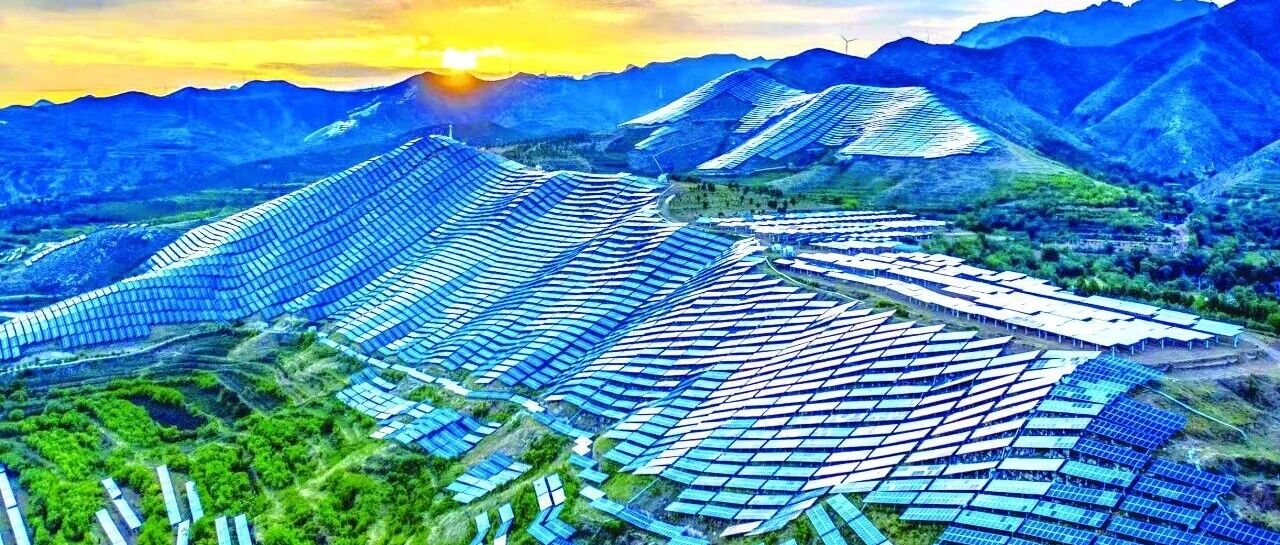
Core Viewpoint - Shanxi aims to transition from a coal-dominant province to a comprehensive energy powerhouse during the "15th Five-Year Plan" period, focusing on deepening the energy revolution and enhancing energy security and resilience [1][4]. Group 1: Energy Transition Strategy - Shanxi's energy strategy emphasizes the integration of traditional and renewable energy sources, enhancing the resilience of energy supply and security [3][4]. - The province plans to redefine its coal industry, shifting from low-end to high-end production, and from primary fuel to high-value products [6][7]. - The goal is to develop a new energy system that includes clean, low-carbon coal development and diversified utilization [6][10]. Group 2: New Energy System Development - Shanxi is constructing a new energy system characterized by the integration of wind, solar, hydro, and thermal energy, along with energy storage solutions [10][11]. - The focus is on creating a multi-dimensional energy supply network that includes hydrogen and methanol, addressing the intermittency of renewable energy [10][11]. - The province aims to enhance the intelligence of its power systems through the development of smart grids and distributed energy resources [10][11]. Group 3: Technological and Market Innovations - Shanxi's energy transition will be driven by technological innovation, market reform, and open cooperation, establishing itself as a hub for energy technology [13][14]. - The province plans to focus on breakthroughs in traditional coal mining technologies and the development of new energy and storage technologies [14][15]. - There is an emphasis on creating a market mechanism that supports the new energy system and enhances Shanxi's influence in national energy markets [14][15]. Group 4: Industrial Synergy and Economic Impact - The energy transition is expected to stimulate the development of advanced manufacturing and equipment sectors, creating significant market opportunities [15]. - Shanxi aims to leverage its energy advantages to attract high-end manufacturing and develop green finance and certification services [14][15]. - The overall goal is to transform from being a mere energy supplier to a leader in energy technology and solutions, contributing to national energy security and innovation [15].
煤化工成为山西能源转型新路径
Zhong Guo Hua Gong Bao· 2026-01-07 07:59
Core Viewpoint - Shanxi Province has introduced the "Implementation Opinions on Accelerating Energy Technology Innovation to Support Energy Transition Development," aiming to enhance energy technology innovation capabilities and explore new paths for energy transition, with coal chemical industry being one of the nine new paths for energy transformation [1] Group 1: Energy Transition Paths - The implementation opinions identify nine strategic paths for energy transition, including coal mining, flexible and efficient power generation, coal chemical industry, coalbed methane exploration and development, new energy, smart grid, solid waste disposal and utilization, carbon capture, utilization, and storage, and "Artificial Intelligence + Energy Innovation" [1] - A total of 33 key tasks have been outlined to drive breakthroughs in critical core technologies, providing robust technological support for energy transition [1] Group 2: Coal Chemical Industry Development - Shanxi will promote high-end, diversified, and low-carbon technology development in the coal chemical industry, focusing on the steady advancement of coal's differentiated and graded utilization, new coal coking, and downstream material development [2] - The province aims to advance the integration of coal, coke, and steel industries, conduct research on low-rank coal pyrolysis technology, and develop industrialization technologies for high-end fuels and materials from coke oven gas, coal tar, and asphalt [2] - Efforts will also include the development of advanced gasification technologies and equipment suitable for Shanxi's coal types, as well as research on key technologies for the high-value conversion of indirect liquefaction products [2] Group 3: Renewable Energy and Technology Innovation - The development of wind and solar technologies will be accelerated, focusing on high-efficiency, low-cost crystalline silicon batteries, perovskite-crystalline silicon tandem solar cells, new perovskite batteries, and cadmium telluride thin-film battery technologies [2] - Research will be conducted on the extraction technologies and materials for new energy metals such as lithium and aluminum, along with application demonstrations for electric heavy trucks and hydrogen-powered heavy trucks [2] - The exploration and utilization of geothermal energy will be promoted, including precise exploration and efficient large-scale utilization technologies, as well as the promotion of heat pumps, geothermal, and distributed renewable energy heating technologies [2] Group 4: CO2 Utilization and Artificial Intelligence - Technologies for converting CO2 into high-value oxygen-containing compound products will be advanced, focusing on breakthroughs in efficient catalysts and reaction processes for CO2 chemical conversion [3] - A safe and controllable CO2 storage technology system will be constructed, including potential assessment technologies for saline aquifers, salt caverns, and abandoned mines [3] - The implementation of "Artificial Intelligence + Energy Innovation" will be promoted, enhancing coal chemical processes through high-throughput research and data platform construction, which will empower catalyst development, process simulation, and reactor design [3]
2060年世界和中国能源展望报告(英文版)
Sou Hu Cai Jing· 2026-01-01 09:10
Core Insights - The report outlines China's energy transition path towards 2060, emphasizing that non-fossil energy will dominate the energy structure, accounting for over 80% of total energy consumption by 2060 [1][2] Energy Consumption and Structure - In 2024, China's primary energy consumption is projected to reach approximately 5.97 billion tonnes of coal equivalent (Btce), with non-fossil energy consumption surpassing oil for the first time at 19.7% [2][8] - Energy consumption growth is expected to plateau around 6.94 Btce by 2035, followed by a decline to about 5.95 Btce by 2060 [2][8] - Coal consumption is anticipated to stabilize above 4.8 billion tonnes annually through 2029, with a significant reduction to below 0.5 billion tonnes by 2060 [9] - Oil consumption is projected to peak between 790-800 million tonnes before declining to 260 million tonnes by 2060 [10] - Natural gas consumption is expected to peak at 620 billion cubic meters (Bcm) between 2035-2040, then decline to 420 Bcm by 2060 [11] Electrification and Final Energy Consumption - Electricity is set to become the largest terminal energy source, surpassing coal during the 14th Five-Year Plan, with final energy consumption projected to peak above 4.6 Btce by the mid-2020s [13] - The electrification rate, including hydrogen, is expected to rise from 32% in 2024 to 71% by 2060, indicating a significant shift towards clean electricity in various sectors [3][13] Challenges in Energy Transition - The report highlights challenges in the energy transition, particularly regarding the integration of renewable energy sources like wind and solar into the grid, which faces absorption bottlenecks [4][12] - The economic viability of new clean energy carriers and technologies, such as green hydrogen and carbon capture, utilization, and storage (CCUS), remains a concern for large-scale commercialization [4] Policy and Future Scenarios - The report presents three scenarios for energy transition: Coordinated Development, Security Challenge, and Green Drive, with the Coordinated Development scenario seen as the optimal path for achieving carbon neutrality [5][18] - Policy trends are shifting from controlling energy consumption to focusing on carbon emissions, with a move from direct subsidies to target-based mechanisms, and from government-led initiatives to market-driven approaches [7][18]
碳捕集 电厂添了新利器
Ren Min Ri Bao· 2025-11-19 02:03
Core Viewpoint - The Huaneng Zhengning Power Plant in Gansu is operating two 1 million kW coal-fired generating units at full capacity to ensure energy supply during winter, with a significant focus on carbon capture technology to reduce emissions [1] Group 1: Energy Supply and Capacity - The two units can generate 48 million kWh of electricity in a day, sufficient to meet the daily power needs of millions of households, with most of the electricity transmitted to Shandong via ultra-high voltage lines [1] - Coal power contributes over 50% of the electricity generation and 70% of peak capacity in China, despite having less than 40% of the installed capacity [1] Group 2: Carbon Capture Technology - The carbon capture demonstration project at Huaneng Zhengning Power Plant is the largest of its kind globally, achieving a CO2 capture rate exceeding 90% and capturing 1.5 million tons of CO2 annually, equivalent to the emissions of approximately 600,000 cars [1] - The project utilizes a novel "two-tower integrated" design for carbon capture, which combines pre-washing and CO2 absorption into a single unit, significantly improving efficiency and reducing energy consumption [2] Group 3: Advanced Equipment Development - The first eight-stage supercritical CO2 compressor in China has been developed, capable of compressing captured CO2 to a supercritical state, reducing its volume to 1/300 of its original size, thus enhancing pipeline transport efficiency [3] - This compressor features eight compression cylinders, improving efficiency by 10% and saving 10 kWh of electricity for every ton of CO2 compressed, filling a gap in domestic supercritical compression equipment [3] Group 4: Carbon Storage Solutions - The project employs multi-layer injection technology to store captured CO2 at depths of 2000 to 3500 meters, significantly increasing storage capacity, with a single well capable of storing 200,000 tons of CO2 annually [4] - An integrated monitoring system is in place to ensure the long-term safety and effectiveness of CO2 storage, utilizing satellite remote sensing and ground monitoring [4] - The carbon capture demonstration project also supports flexible operation modes, allowing coal-fired units to adjust output while achieving large-scale carbon capture [4]
碳捕集,电厂添了新利器(新视点)
Ren Min Ri Bao· 2025-11-18 22:41
Core Viewpoint - The Huaneng Zhengning Power Plant in Gansu is operating two 1 million kW coal-fired generating units at full capacity to ensure energy supply during winter, with a significant focus on carbon capture technology to reduce emissions [1] Group 1: Energy Supply and Capacity - The two units can generate 48 million kWh of electricity in a day, sufficient to meet the daily power needs of millions of households, with most of the electricity transmitted to Shandong via ultra-high voltage lines [1] - Coal power contributes over 50% of the electricity generation and 70% of peak capacity in China, despite having less than 40% of the installed capacity, highlighting its critical role in energy supply [1] Group 2: Carbon Capture Technology - The power plant features the world's largest coal-fired carbon capture demonstration project, which began operations in September, capturing 1.5 million tons of CO2 annually, equivalent to the emissions of approximately 600,000 cars [1] - The project utilizes a new "two-tower integrated" design for carbon capture, which combines pre-washing and CO2 absorption into a single unit, significantly improving efficiency and reducing energy consumption [2] - A new type of absorption solvent developed by Huaneng achieves over 90% CO2 capture efficiency, with a purity of over 99%, and extends the solvent's lifespan from about one year to over two years [2] Group 3: Compression and Storage - The project has developed China's first eight-stage supercritical CO2 compressor, which compresses captured CO2 to a supercritical state, reducing its volume to 1/300 of its original size, thus enhancing pipeline transport efficiency [3] - The compressor is designed to be more efficient and lighter than traditional single-shaft compressors, saving 10 kWh of electricity for every ton of CO2 compressed [3] Group 4: Carbon Storage and Monitoring - The project employs a multi-layer injection technique to store captured CO2 at depths of 2000 to 3500 meters, significantly increasing storage capacity, with a single well capable of storing 200,000 tons annually [4] - An integrated monitoring system using satellite remote sensing and ground monitoring ensures the long-term safety and effectiveness of CO2 storage [4] - The carbon capture demonstration project also supports flexible operation modes to ensure stable electricity supply while achieving large-scale carbon capture [4]
中俄总理联合公报:加强氢能、储能等新兴领域的合作
Xin Hua She· 2025-11-06 03:00
Core Viewpoint - The joint statement from the 30th regular meeting of Chinese and Russian Prime Ministers highlights the significant achievements in energy cooperation and the commitment to further explore energy collaboration potential, ensuring energy security and promoting a fair global energy transition [1][2]. Energy Cooperation - Both countries will support enterprises in deepening cooperation in oil, natural gas, coal, and electricity sectors, while enhancing energy infrastructure connectivity and ensuring the safe and stable operation of cross-border energy channels [1]. - There will be a focus on emerging fields such as renewable energy, low-carbon energy, hydrogen, and energy storage, along with collaboration on carbon capture, utilization, and storage systems [1]. Nuclear Energy Projects - The construction of the Tianwan and Xudabao nuclear power plants will continue, with an emphasis on timely completion and operation, alongside deepening cooperation in peaceful nuclear energy applications [1]. - There is a plan to gradually advance cooperation in areas such as thermonuclear fusion, fast reactors, and closed nuclear fuel cycle, exploring collaborative opportunities for nuclear fuel cycle front-end and new nuclear power projects based on mutual benefits [1]. Market Stability and Dialogue - The commitment to maintaining global energy market stability will be reinforced, with an expansion of dialogue between energy-producing and consuming countries, supporting an open, fair, non-discriminatory, and free energy market [1][2].
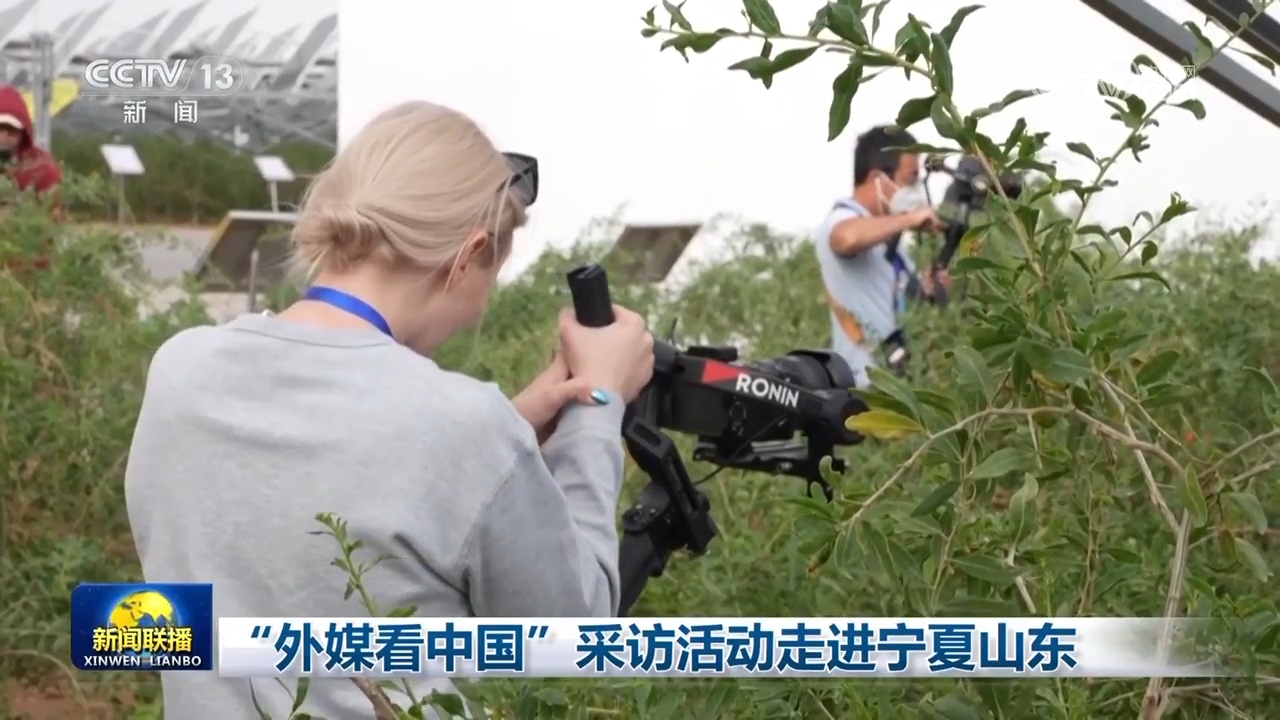
“外媒看中国”采访活动走进宁夏山东
Yang Shi Wang· 2025-09-20 14:00
Core Viewpoint - The Chinese government is actively promoting ecological protection and high-quality development in the Yellow River basin, showcasing successful initiatives in Ningxia and Shandong to foreign media [1][3]. Group 1: Ecological Protection in Ningxia - Foreign media journalists explored the historical significance of irrigation in Ningxia, particularly the use of Yellow River water for agriculture [3]. - The journalists experienced innovative agricultural practices at a solar-integrated farming base, highlighting the dual use of land for energy generation and crop cultivation [3]. - Impressive results in ecological restoration and the development of green industries in the relatively arid Ningxia region left a strong impression on the foreign reporters [3]. Group 2: Emerging Industries in Shandong - Shandong's efforts in cultivating emerging industries and transitioning to new growth drivers attracted significant interest from foreign media [5]. - Journalists engaged with advanced robotics at a company in Jinan, participating in weight-bearing experiments with quadruped robots [5]. - The innovative carbon capture, utilization, and storage project at Shengli Oilfield, capable of sequestering millions of tons of CO2 annually, received notable praise for China's commitment to innovation and green development [5].